The historical sediment of London settles deepest along the winding north bank of the River Thames, on what was once an untamed marshy sandbank known as Thorney Island. Tracing the chronicles back to the eleventh century, the devout Anglo-Saxon monarch Edward the Confessor chose this secluded stretch of land to establish the first royal palace alongside the adjacent Westminster Abbey. Under the reigns of successive Norman kings, the complex evolved beyond a lavish royal residence to become the administrative, judicial, and political heart of the entire foggy realm. Standing steadfast through the ages, Westminster Hall witnessed the birth of one of the world’s oldest constitutional parliaments, where supreme royal authority gradually shared space with the voices of the nobility and townsfolk through landmark decrees that shaped human history.
Nevertheless, the fate of this seat of power was perpetually intertwined with fierce purges and tumultuous historical upheavals. In 1512, a devastating fire razed much of the royal residential quarters, prompting King Henry VIII to relocate his entire court to the Palace of Whitehall and officially hand Westminster over to the two Houses of the English Parliament to operate independently. Less than a century later, on the night of November 5, 1605, one of the most shocking political conspiracies in Western history nearly reduced the site to ashes: the Gunpowder Plot. Guy Fawkes and a group of disgruntled Catholic conspirators secretly smuggled thirty-six barrels of gunpowder into the undercroft beneath the House of Lords, plotting to assassinate King James I and the entire ruling elite during the State Opening of Parliament, before the scheme was uncovered at the eleventh hour and etched permanently into the nation’s collective memory.
The ultimate tragedy struck this historic ensemble on the evening of October 16, 1834, when a catastrophic Great Fire erupted after overheated stoves burning obsolete wooden tally sticks in the basement ignited the structure. Towering flames lit up the night sky over London, devouring almost the entire medieval palace complex save for the resilient Westminster Hall, dating back to the reign of William Rufus. Confronted with the smoldering ruins, a grand architectural competition was launched to resurrect the supreme symbol of the empire. Master architect Sir Charles Barry and his brilliant collaborator Augustus Pugin won resounding acclaim with an exemplary Gothic Revival design. Begun in 1840, the new edifice seamlessly fused Barry’s classical, symmetrical spatial layout with Pugin’s brooding, opulent, and deeply spiritual medieval carvings.
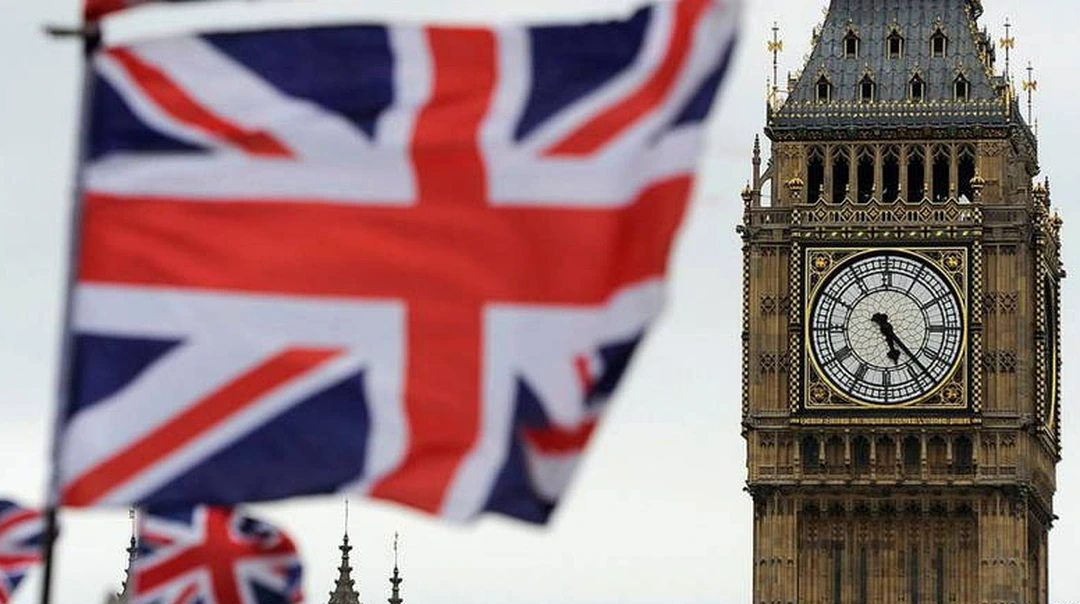
The proud centerpiece rising into the skyline of that reconstruction plan was the iconic clock tower, whose foundations were officially laid in 1843 and whose towering form was completed in 1859. Standing over 96 meters tall, it was originally named the Clock Tower before the United Kingdom ceremonially renamed it Elizabeth Tower in 2012 to mark the Diamond Jubilee celebrating the sixty-year reign of Queen Elizabeth II. Housed at the pinnacle of the structure is the legendary Great Bell, Big Ben, weighing a massive 13.7 tonnes. This colossal bell underwent two arduous castings; after the first bronze casting cracked during striking tests, the renowned Whitechapel Bell Foundry successfully cast the second version in 1858. Whether named after First Commissioner of Works Sir Benjamin Hall or heavyweight boxing champion Benjamin Caunt, the moniker Big Ben quickly transcended a mere timekeeping mechanism to embody the very heartbeat of a civilization.
The enduring resilience of the Palace of Westminster and its centennial tower was further forged during the darkest hours of modern history, most notably the Blitz—the sustained aerial bombing campaign carried out by the Nazi Luftwaffe during World War II. During a horrific air raid on the night of May 10, 1941, incendiary bombs tore through and completely gutted the House of Commons chamber while severely damaging the belfry roof. Yet amidst the hail of bombs and billowing smoke enveloping London, the magnificent timepiece kept ticking relentlessly, and the chimes of Big Ben continued to resonate across international radio airwaves as an indomitable beacon, testifying to the steadfast resolve and permanence of democratic institutions through every storm of history.
Positioned precisely at the geographic coordinates of 51°30′02″ North latitude and 0°07′28″ West longitude, the ensemble of the Big Ben Clock Tower and the Palace of Westminster presides majestically over the north bank of the River Thames, where a natural river bend forms an auspicious landscape backed by high ground and facing water. Seen through both Eastern landscape feng shui and the medieval site-selection traditions of the British monarchy, this alluvial riverbank—originating from the raised gravel eyot of Thorney Island nestled between former tributaries of the River Tyburn—forms an embracing water configuration in which curving currents cradle the seat of sovereign power. This expansive waterfront not only once served as a natural moat shielding the court from external threats, but also creates an unobstructed foreground that mirrors the soaring silhouette of Elizabeth Tower across the glassy surface of London’s river.
Concealed beneath the grandeur of its Gothic limestone facades lies an exceptionally complex and treacherous geological foundation that demanded masterstrokes of both pre-industrial civil engineering and high Victorian mechanical ingenuity. The substructure of Westminster rests entirely upon Quaternary terrace gravels (Shepperton Gravel), which spread across and bear down upon the notorious London Clay. Though moderately compressible, this clay layer is highly sensitive to hydrological shifts and uneven load pressures, making it prone to micro-subsidence. When architects resolved to erect a bell tower weighing thousands of tonnes alongside an expansive palace complex, foundation engineering became a monumental feat. Engineers executed an unprecedented program of land reclamation and dredging, driving thousands of oak timber piles deep into the earth and reinforcing them with solid concrete blocks to form a colossal raft foundation capable of supporting the massive masonry structure atop low-lying, flood-prone alluvial silt.
The existential threat to the riverside landmark stemmed not only from weak subsoil below, but also from the relentless force of the river outside, where tidal ranges fluctuate by an average of 7 meters per cycle. To permanently safeguard the heart of Parliament, a historic riverside embankment was constructed along the shore: the Victoria Embankment, masterminded by chief engineer Sir Joseph Bazalgette. This monumental retaining wall of meticulously dressed solid granite rises well above extreme high-water marks, functioning not merely as a flood barrier but also housing an immense subterranean intercepting sewer system that rescued the city from the sanitation crises of the era. The granite embankment narrowed and straightened the Thames through Westminster, accelerating water flow to naturally scour the riverbed while creating an impregnable riverside promenade protected against natural disasters.
Thanks to resilient civil infrastructure and centuries of ecological restoration, the scenery around the base of Big Ben today is free from the industrial soot and murky waters of the past. Beneath Bazalgette’s granite wall, the Thames ecosystem has undergone a miraculous revival, becoming home to more than 125 species of fish, ranging from shimmering sea bass and European eels to pollution-sensitive Atlantic salmon. On misty mornings or at sunset when golden light gilds the water, flocks of gulls, grebes, and cormorants glide past moored riverboats, composing a living symphony between tranquil nature and the timeless solemnity of Britain’s political foundation.
Rising imposingly along the north bank of the Thames, the Palace of Westminster and Elizabeth Tower stand as the quintessential monument of the Gothic Revival movement—an artistic masterpiece reviving medieval splendor while concealing the most advanced metallurgy and mechanical engineering of the Industrial Revolution within. Behind its ancient, venerable exterior lies an intricate load-bearing cast-iron structural frame paired with fireproof brick vaulting, representing cutting-edge nineteenth-century engineering designed to permanently banish the specter of the devastating fire that had leveled the old palace. The sweeping riverfront facade was clad in Anston magnesian limestone quarried in Yorkshire, though decades of urban pollution later led restoration specialists to source Clipsham limestone from Rutland to replace weathered stone and preserve every delicate molding and carved motif. Spanning an immense floor area of approximately 112,500 square meters, the palace encompasses an architectural labyrinth of over 1,100 functional rooms, 100 staircases, and 3.2 kilometers of winding corridors, built at a staggering cost of 2.5 million pounds sterling upon completion in 1870.
Westminster’s spatial triumph lies not only in its monumental scale, but also in the forward-thinking engineering of Dr. David Boswell Reid, who pioneered an aerodynamic heating and ventilation system seamlessly integrated into the fabric of the building. Fresh air was drawn in from lower levels, circulated through chambers for humidification, heating, or cooling before entering the debating chambers, and then channeled up through concealed convective shafts to exit via Victoria Tower. Standing 98.5 meters tall at the southwest corner, Victoria Tower once held the record as the tallest square stone tower in the world, serving both as the nation’s priceless legislative archive and as the ceremonial entrance for the sovereign during the State Opening of Parliament.
The interior floor plan of the palace is tightly organized along a linear axis of power rich in political symbolism, running from south to north. The ceremonial route begins at the Sovereign’s Entrance beneath Victoria Tower, passes through the stately Royal Gallery adorned with monumental historical frescoes, and leads directly into the House of Lords Chamber. The Lords Chamber glows in regal crimson across its traditional sheepskin-upholstered benches, anchored by the intricately carved and gilded Sovereign’s Throne beneath a richly coffered timber ceiling. Passing through the soaring octagonal Central Lobby with its massive stone vaulting—where constituents and parliamentarians converge—the axis transitions into the House of Commons Chamber. In stark contrast to the aristocratic opulence of the Lords, the Commons presents a dignified, austere aesthetic defined by understated green leather benches, striking a visual balance between royal authority and representative democracy.
The grand culmination of this axis of power is Elizabeth Tower, standing gracefully at the northeast corner and soaring 96.3 meters into the London sky. Reaching the belfry that houses the legendary nearly fourteen-tonne Big Ben requires climbing 334 narrow, steep spiral stone steps. The tower’s most captivating visual feature is its four enormous clock dials, each 7 meters in diameter and intricately assembled like a giant stained-glass window from over 300 pieces of translucent opal glass. When night falls, backlighting shines through the opal glass panels to illuminate the cast-iron hour hands and four-meter-long copper minute hands, transforming this extraordinary timepiece into a radiant beacon reflected in the calm waters of the Thames.
As twilight fades across the rippling surface of the River Thames, the Palace of Westminster and Elizabeth Tower do not drift into slumber; instead, they enter an enchanting nocturnal spectacle of urban architectural lighting. The entire exterior of this Gothic Revival masterpiece glows brilliantly through a sophisticated blend of traditional metal-halide floodlights and multi-layered modern LED systems. This warm spectrum embraces every block of famed Clipsham limestone from Rutland, awakening the intricate carvings, pointed arches, flying buttresses, and network of reliefs crafted in the nineteenth century by the masterful hand of Augustus Pugin. The stark contrast between London’s velvety night sky and the luminous halo crowning the soaring spires transforms the legislative palace into a silent, deeply evocative open-air stage.
Crowning the very pinnacle of Elizabeth Tower, above the four massive clock dials and the legendary belfry of Big Ben, shines the Ayrton Light—a historic beacon steeped in constitutional monarchy tradition. First installed in 1885 at the explicit command of Queen Victoria, this distinctive lantern was designed to signal to the sovereign whenever Parliament remained in session after sunset. From Buckingham Palace, the Queen could gaze across St. James’s Park to watch for that distant gleam of parliamentary duty. To this very day, whenever either the House of Commons or the House of Lords sits late into the night, the Ayrton Light casts its soft white beam through the London mist, symbolizing the tireless diligence of British democracy.
The vantage point for admiring this magnificent panorama reaches perfection as travelers stroll along the stone balustrades of Westminster Bridge or wander leisurely along the breezy South Bank. From here, the centennial landmark not only commands the skyline but also casts a breathtaking reflection into the depths of the River Thames. Gentle ripples on the water act as a colossal mirror doubling the stately silhouette of the Palace of Westminster, fracturing golden lights into thousands of shimmering, gilded waves. Blending with this tranquil dance of light are the deep, resonant chimes of the Great Bell marking each quarter hour across the quiet river, creating a contemplative cadence amid the vibrant pulse of a global metropolis.
Behind the dazzling veil of exterior illumination and open-air architecture unfolds a disciplined and secretive nocturnal routine within the heritage complex itself. Once Members of Parliament and administrative staff depart for the evening, one of the strictest security protocols in the country is activated across all 1,100-plus rooms, 100 staircases, and nearly five kilometers of winding corridors inside the Palace of Westminster. Coordinated by the Metropolitan Police and the Office of the Serjeant at Arms of the House of Commons, security teams systematically sweep every corner, preserving the centuries-old ceremonial search of the cellars dating back to the Gunpowder Plot. This interplay between silent vigilance within and serene, luminous beauty along the water creates an unmistakable atmosphere, turning a London night beside Big Ben into an unforgettable cultural experience.
Beneath the soaring Gothic vaults and long corridors of the Palace of Westminster exists a quiet culinary microcosm where heritage recipes of the British Isles have been faithfully preserved across centuries of parliamentary history. Dining inside this legislative palace is far more than simple gastronomic indulgence; it reflects traditional British aristocratic taste refined through time-honored service rituals. The heart of this culinary culture beats inside the stately Members’ Dining Room, lined with ancient oak paneling and portraits of illustrious statesmen, alongside the Strangers’ Dining Room—which welcomes distinguished guests, scholars, and visiting dignitaries into a regal hospitality setting.
The culinary repertoire of Westminster’s dining rooms celebrates prized regional produce from across the United Kingdom. Discerning diners are captivated by the classic Scotch egg, wrapped skillfully in seasoned sausage meat from the heritage Gloucestershire Old Spot pig—a famed breed of the Severn Valley prized for its rich, sweet marbling—coated in crisp breadcrumbs and fried to a golden crunch around a soft, runny yolk. Alongside it, Cumbria’s famous Cumberland sausage is coiled into its traditional spiral, generously spiced with black pepper, sage, and nutmeg, and seared to evoke the rustic aromas of northern England. Traditional steak and ale pie transports diners back to medieval culinary craft, featuring tender beef slow-braised in a rich, malty ale gravy and sealed beneath a flaky, golden puff-pastry crust fragrant with fresh butter. Balancing these hearty classics is delicate, premium Scottish smoked salmon, harvested from the icy glacial rivers of the Highlands and slowly cold-smoked over oak shavings from aged whisky casks to impart a glossy sheen and a lingering maritime finish.
Afternoon tea within the Palace of Westminster opens another refined tier of enjoyment, celebrating the unhurried elegance of British society. Warm, freshly baked buttermilk scones are gently broken by hand and layered with ruby-red wild strawberry jam and authentic clotted cream hailing from the lush pastures of Devon and Cornwall—a thick, golden-crusted cream slowly scalded over hours for supreme richness. Accompanying the delicate pastry tier is the bespoke Palace of Westminster Breakfast tea blend, an exquisite marriage of full-bodied Assam black tea leaves from India and crisp Ceylon tea from the highlands of Sri Lanka, yielding a luminous amber liquor and bold aroma capable of dispelling the chilly Thames mist beyond the windowpanes.
The Adjournment Bar, affectionately known as the Strangers’ Bar, is where politicians and guests sip traditional cask-conditioned real ales drawn straight from wooden casks, preserving their velvety head and vibrant live yeast character. Yet the most fascinating quirk of parliamentary dining culture is the inescapable call of the Division Bell. Whenever its urgent electric ring echoes through the dining rooms, bars, and corridors of the palace, lively conversations and formal banquets halt instantaneously; Members of Parliament have precisely eight minutes to dash up stone staircases to the chambers to cast their votes, leaving behind swirling glasses of wine and steaming plates of game—a one-of-a-kind cultural ritual found nowhere else in the seat of British power.
Unlike static royal residences or conventional museums, the Palace of Westminster and Elizabeth Tower remain the active, day-and-night seat of supreme legislative power in the United Kingdom’s constitutional monarchy. It does not operate as a walk-in tourist attraction, instead requiring thoughtful advance planning from every visitor. To step through these historic gates, international travelers must book tickets in advance via the official UK Parliament online portal. Visitor experiences are primarily offered in two formats: a roughly ninety-minute guided tour led by an expert historian through centuries of institutional drama, or a self-paced multimedia audio tour available in multiple languages that lets visitors explore each grand hall at their own rhythm.
Reaching the architectural complex via London’s public transit system is remarkably seamless thanks to the world’s most iconic underground rail network. Westminster Underground Station is the ideal gateway, served directly by three major arteries: the Jubilee, District, and Circle lines. The moment you ascend from the station’s subterranean concourse, the towering silhouette of Elizabeth Tower and the resonant chimes of Big Ben burst dramatically into view. Alternatively, travelers eager to savor scenic vistas of the Thames can ride an iconic red double-decker bus across Westminster Bridge or board an Uber Boat by Thames Clippers river bus to Westminster Millennium Pier to take in panoramic views of the Gothic Revival facade shimmering across the water.
Given its status as a working national legislature, security screening for visitors entering through Cromwell Green mirrors international airport standards. All personal bags pass through dedicated X-ray scanners, and guests must walk through metal detectors. Visitors must strictly refrain from bringing sharp objects, pepper spray, weapons, or liquids exceeding permitted limits. Dress standards likewise reflect the solemnity of Parliament; smart, respectful attire is strongly encouraged, avoiding overly casual beachwear or clothing displaying provocative political slogans. Once inside, visitors are permitted to take photographs inside the millennium-old Westminster Hall, but photography and filming are strictly prohibited inside the main debating chambers of the House of Commons and House of Lords to preserve parliamentary order and security.
One of the most coveted cultural privileges for savvy travelers is watching live parliamentary debates unfold between Britain’s leading politicians. Every Wednesday at noon while Parliament is in session, Prime Minister’s Questions in the House of Commons chamber draws intense international attention. Visitors can queue at the public entrance for free gallery admission passes, securing a seat overlooking the chamber to witness razor-sharp exchanges on national policy between the Prime Minister and the Leader of the Opposition. Ticket prices for general palace tours vary by age and tour format, with discounted rates available for students, seniors, and children accompanied by families. The best time of year to leisurely admire all of the opulent rooms is during Parliament’s Summer Recess, when extended tour routes open the debating chambers to the public.
After immersing yourself in centuries of political intrigue and glorious history, a leisurely sunset stroll along London’s South Bank to watch Big Ben illuminate against the twilight sky provides a poetic finale to an unforgettable day. For a seamless journey where every moment is curated without the hassle of visa paperwork, parliamentary reservations, or transit logistics, travelers can explore our all-inclusive England – Scotland tour itinerary crafted for depth and comfort.