Tracing the glorious historical pages of the mountainous expanse of Chongqing, the Longshuixia Fissure in Wulong is intimately linked with historical evolution, where every single inch of land is imbued with the breath of China’s feudal dynasties. In ancient times, this region was named Qianzhou, with an administrative system established as early as the Jin and Han dynasties. According to deeply researched records in the “Book of Han – Treatise on Geography,” this territory once fell under the direct jurisdiction of Ba Commandery, serving as a strategic defensive barrier in the Southwest. Entering the Tang dynasty, specifically in the second year of Wude, corresponding to the year 619 CE, the imperial court formally elevated Qianzhou to Wuzhou, marking a turning point that shaped a centralized administrative management space. By the first year of Tianbao in 742 CE, due to the perilous terrain of the critical mountain known as Wulong Mountain—now the ancient Bai Ma Mountain—with steep, sheer cliffs standing tall like rows of valiant warriors on duty, the imperial court officially issued an edict renaming the place to Wulong County, a name that has endured and resounded through the centuries.
Throughout the course of history, the rugged terrain of Longshuixia and the surrounding Wulong area was not merely a natural boundary but also a complex cultural intersection point between the indigenous ancient Ba people and the border region connecting the state of Yelang and the powerful state of Ba. As the Tang dynasty expanded its influence while simultaneously tightening political discipline, the solemn landscapes and deep abysses here suddenly became places of remote exile for out-of-favor senior ministers and poets harboring melancholic sentiments about the times. Historical chronicles and literary anecdotes have preserved the nostalgic footsteps of brilliant literary masters such as Li Bai and Liu Yuxi, who once passed through this land, only for the majestic yet desolate nature of Wulong’s mountains to inspire immortal literary works binding their destinies to the mountains of the Southwest.
The flow of time continued rolling onward into the Ming dynasty, when the central imperial court recognized the strategic importance of the trade route connecting the two provinces of Sichuan and Guizhou. Around the Hongwu era, the court ordered a major restoration of the legendary Ancient Tea-Horse Road (also known as the Sichuan-Qian Ancient Road), while simultaneously establishing a strict patrol inspection office right at the foot of Tianlong Bridge within the Three Natural Bridges complex. This checkpoint was created to maintain public security, prevent local hereditary chieftains from rising in rebellion, and suppress bandit gangs rampaging along the treacherous gorge. Consequently, Longshuixia and its neighboring valleys served not only as hidden natural wonders but also as vital commercial and military lifelines crucial to the stability of a vast border region.
By the modern era, specifically in the twenty-first year of the Republic (corresponding to 1932 CE), the historical context of this land welcomed another milestone of practical scientific and military significance. At that time, the Sichuan warlord industrial expeditionary force, in coordination with units of the Shu army, specifically dispatched professional surveying teams deep into these profound valleys to conduct the very first preliminary terrain survey and measurement steps. In archival documents and geographical research texts published during that period, the gorge area and its surrounding magnificent structures were frequently designated by rustic yet highly figurative names such as “Heavenly Natural Stone Arch Bridge” or “Heavenly Natural Three-Section River Stone Cave.” These precious materials not only laid the foundation for modern geological research but also opened the door for posterity today to access, decode, and cherish an invaluable natural and historical heritage nestled in the heart of Wulong’s vast forests.
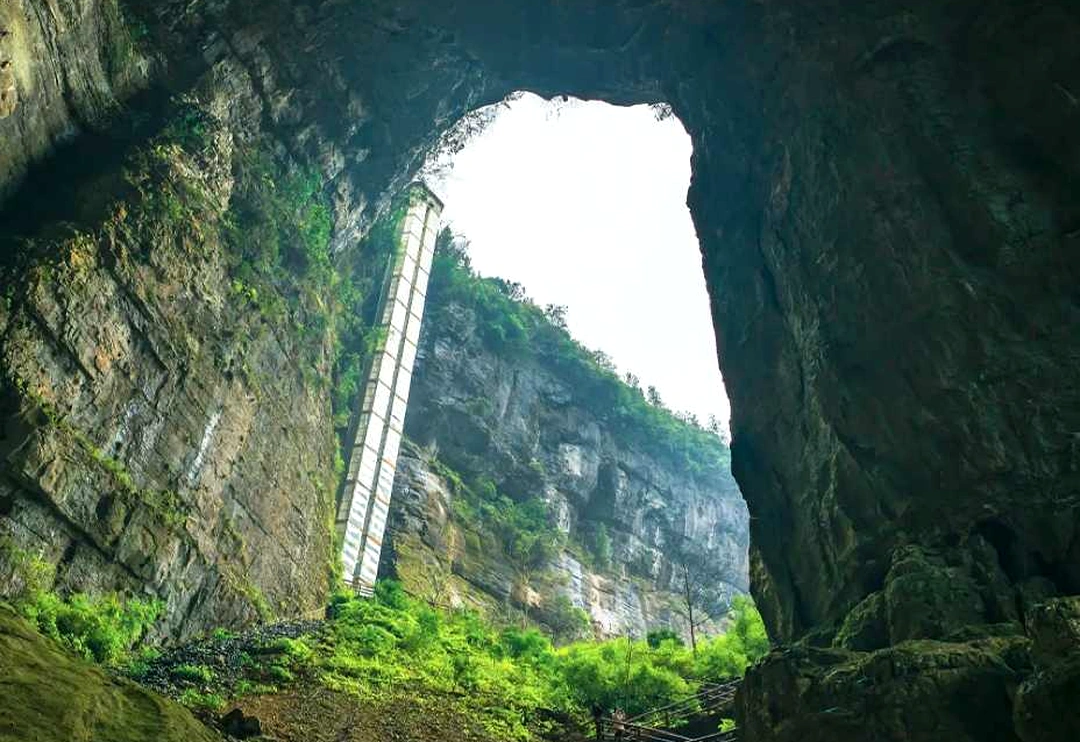
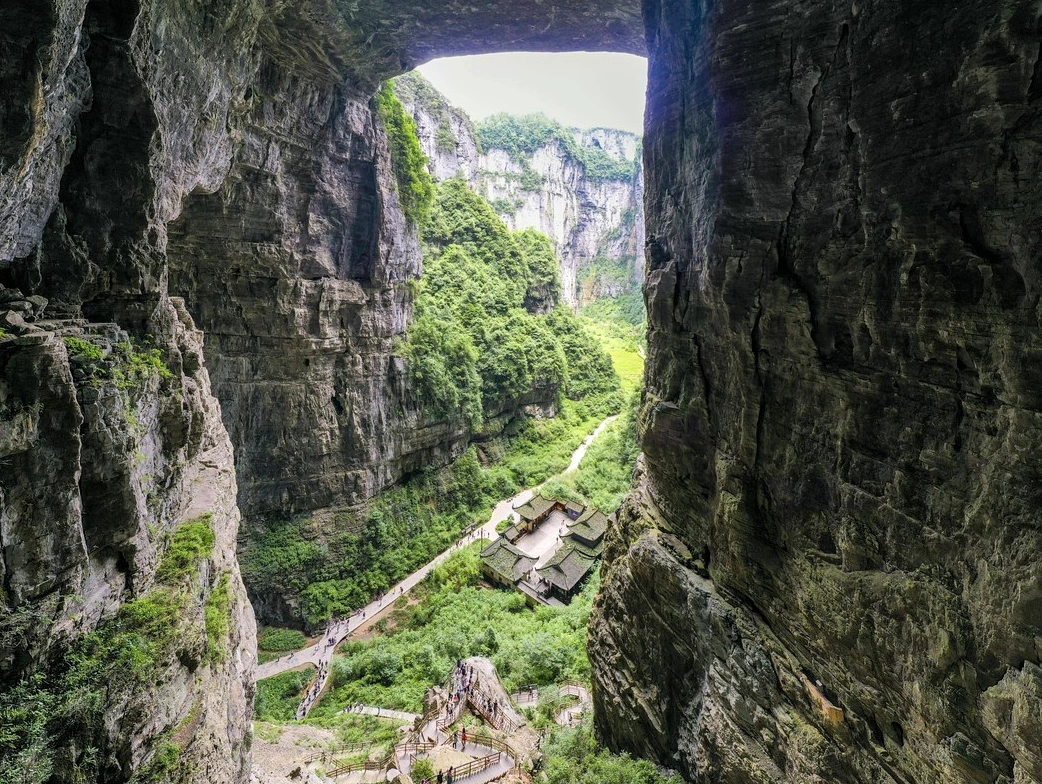
Stepping foot into the land of Chongqing, where mountains and waters harmonize into a magnificent natural masterpiece, the Longshuixia Fissure in Wulong emerges as a unique geological wonder belonging to the core area of the National Geopark, and serves as an inseparable part of the South China Karst World Natural Heritage. Investigated from a geological perspective, the exposed strata here are primarily formed from carbonate sediments stretching from the Lower Cambrian to the Middle Triassic, consisting mainly of durable limestone and dolomite. The formation of this magnificent complex is the result of a series of grand geological upheavals beginning in the Cretaceous period, directly affected by intense Himalayan tectonic movements. As the Earth’s crust continuously uplifted with a large amplitude, combined with the long-term corrosive process of subterranean underground drainage systems, primitive cave vaults underwent a stage where their roofs gradually thinned and ultimately collapsed under the action of gravity. This process sculpted a perfect symbiotic ecosystem among three colossal sinkholes—Tianlong Sinkhole, Qinglong Sinkhole, and Shenying Sinkhole—along with three oversized natural bridges known as Tianlong Bridge, Qinglong Bridge, and Heilong Bridge, forming a classic sinkhole-arch geomorphological structure of humanity.
Delving deeper into topographical planning and natural tectonic engineering processes, if the three natural bridge areas bear the heavy imprint of cave collapses, the Longshuixia Fissure is a living testament to a specialized erosive fissure landform. Under the powerful influence of neotectonics causing the Earth’s crust to uplift abruptly, surface runoff from the Yangshui River persistently utilized structural faults and fissures to carve deeply and continuously over millions of years, creating a profound abyss cutting across the mountain core. Through the annals of nature, rushing water incessantly honed and cleaved a narrow, sheer gorge with towering cliffs where sunlight can only penetrate in small beams through foliage gaps, illuminating the humid, somber space below. The sudden altitude difference between the mountain peaks and the bottom of the gorge has turned this place into a living museum of geomorphology, preserving the complete traces of weathering, river flow, and crustal fault tectonics, attracting special attention from the global geological research community.
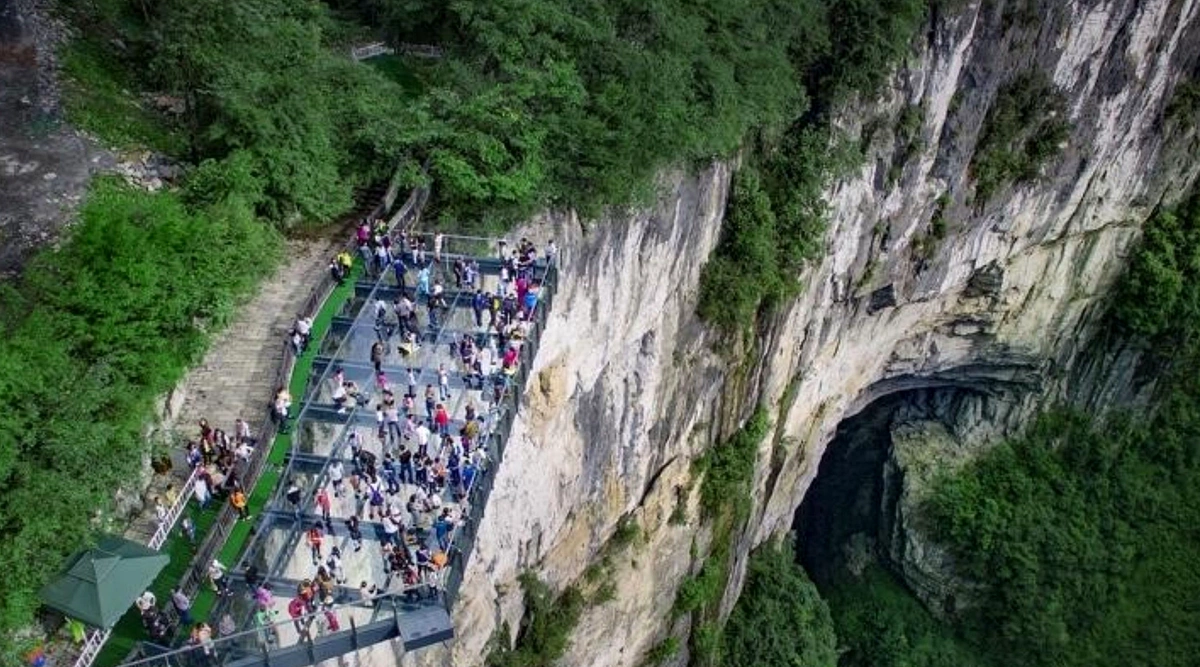
Viewed through the lens of traditional feng shui, the overall space of Wulong harbors an exceptionally magnificent terrain, considered to possess converged waters, gathered winds, and prime locations par excellence in Eastern natural landscape composition. The Tianlong Sinkhole area lies entirely within the embrace of three colossal stone bridges, standing tall to act as sturdy natural screens blocking fierce winds from all four directions; surrounded on all sides by towering vertical cliffs hundreds of zhang high, external winds are utterly barred from entering, allowing internal energy to condense and create a peaceful, tranquil yet immensely powerful energy field. Conversely, contrasting with the somber and enclosed nature of the sinkholes, the terrain of the Longshuixia Fissure exhibits the characteristics of a deep subterranean stream where source waters gather and gurgle through geological strata, forming the feng shui model of “giant absorbing water” alongside the fiercely majestic “hidden dragon and crouching tiger” terrain. This contrasting yet harmonious combination of the stillness and energy-gathering of the sinkholes and the churning, hidden nature of underground water within fissures established a highly symbolic closed ecosystem representing yin-yang balance in ancient Eastern geographical philosophy.
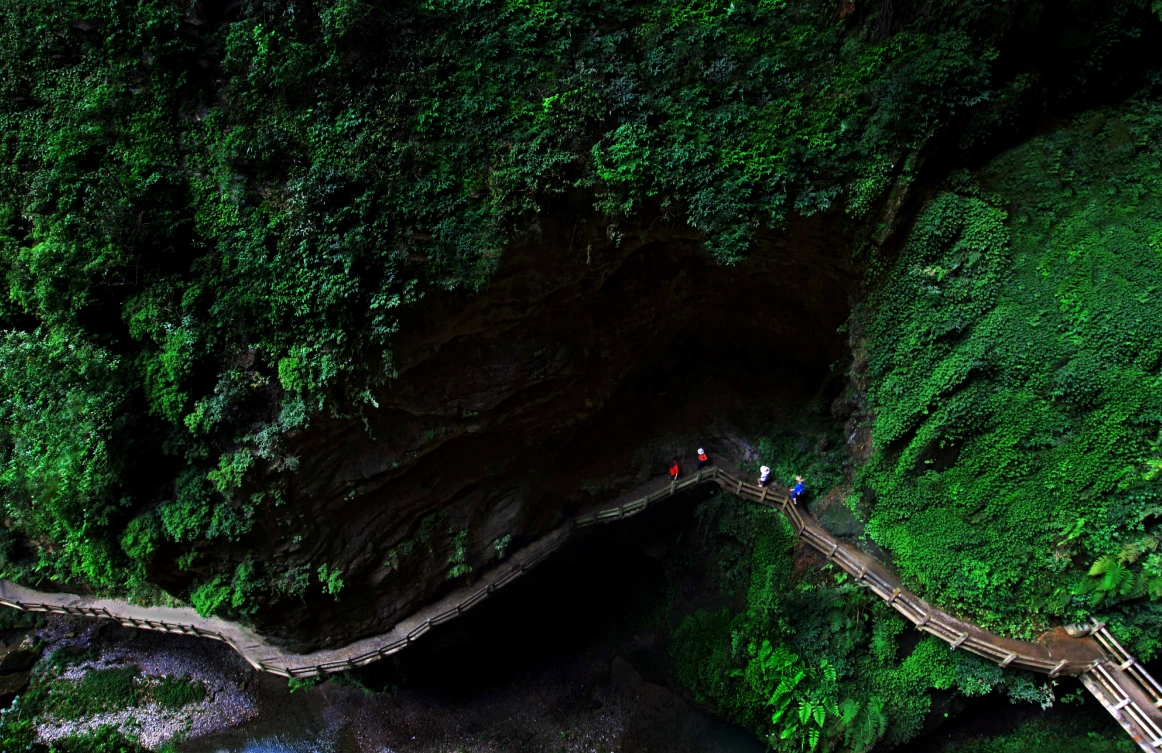
The characteristic landscape experience at Longshuixia thus delivers a uniquely distinct visual and mental journey for travelers coming to explore. When moving from above and looking down, the gorge resembles a giant slash cut horizontally across the heart of the great forest by an invisible deity, with vertical cliffs bearing somber gray striations marking the movement of geological time. Following the winding trail designed to hug the perilous rock slopes, visitors witness firsthand majestic waterfalls cascading turbulently from the peak of the gorge down below, most prominently the Milky Way Flying Spring waterfall gushing day and night with foaming white spray, blending with the resounding echo of subterranean streams to create a pristine harmony of heaven and earth. At the bottom of the gorge, high humidity and low light nurture a rich virgin flora featuring ancient ferns and mosses blanketing large boulders scattered along crystal-clear stream waters, all merging with the ethereal mists shrouding the area year-round to create a true earthly fairyland, captivating any explorer or romantic traveler seeking the pristine origins of the cosmos.
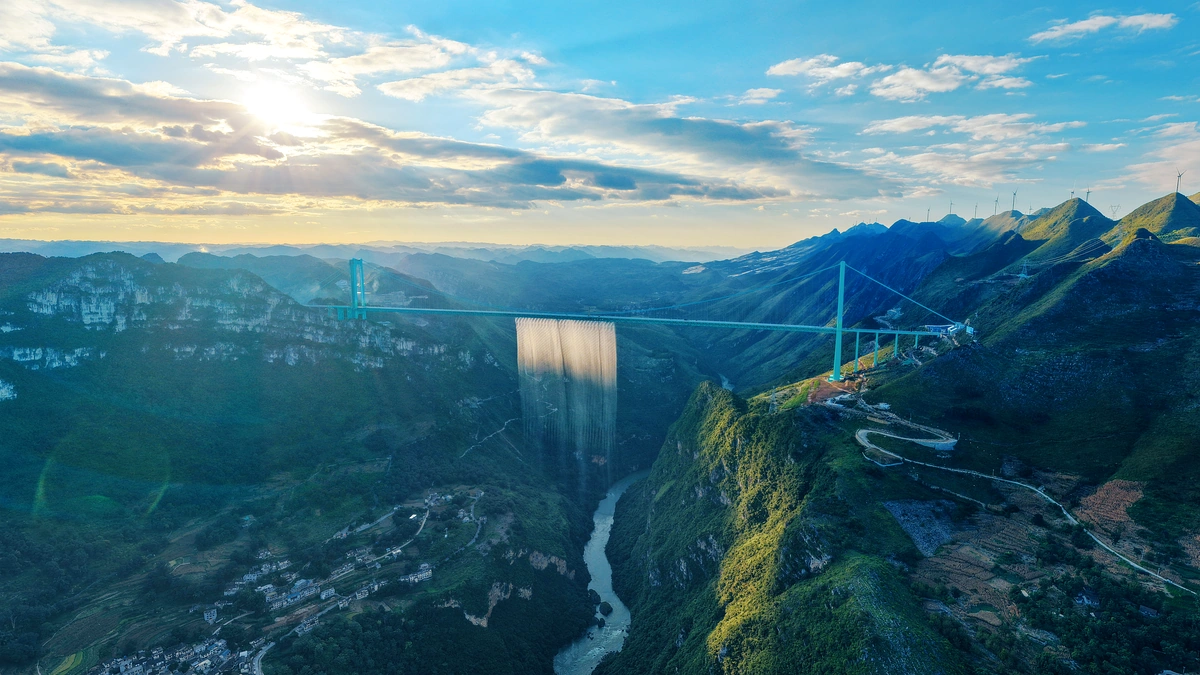
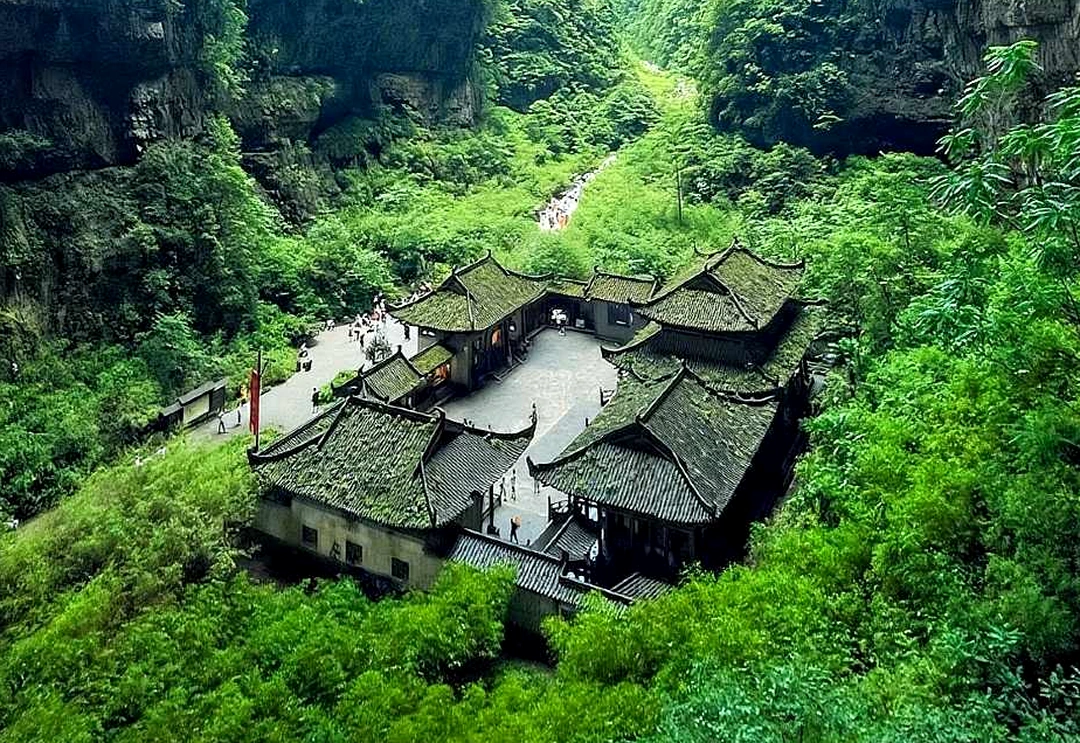
Immersing oneself in the geological depth and architectural annals of Wulong’s great land, the most symbolic spatial segment at Longshuixia Fissure is not limited to magnificent natural creation, but also opens up a humanistic masterpiece imbued with feng shui and traditional craftsmanship: Tianfu Official Posthouse. Located spectacularly right at the foot of Tianlong Bridge within the neighboring Three Natural Bridges complex, this structure is one of the rare surviving oasis posthouses completely preserving Ming and Qing stylistic wooden architecture deep within colossal geological sinkholes. Stepping into this space, travelers journey backward in time to the previous century, where humanity and nature harmonize through the lens of extreme yet delicate survival-adaptive building philosophy.
Regarding spatial structure and practical planning, Tianfu Official Posthouse is shaped by the narrow, elongated basin terrain characteristic of the sinkhole floor. Ancient artisans and carpenters skillfully deployed layouts using two primary forms—the linear shape (一字形) and the courtyard shape (合院式)—to maximize cramped space while avoiding harsh wind currents originating from towering cliffs. The entire load-bearing structural system of the building masterfully employs traditional timber engineering, perfectly combining post-and-beam (抬樑式) and pillar-and-tie (穿斗式) framing systems. This coordination not only establishes firm connections among chambers but also evenly distributes gravitational force, enabling the structure to adapt flexibly to high humidity and narrow temperature ranges characteristic of deep gorge floors.
Delving into detailed craftsmanship, ancient master carpenters left behind astonishing technical achievements across foundations and wooden joinery. Foundation bases were reinforced using hand-carved blue stone (青石) plinths supporting columns, elevating wooden pillar shafts between 20 to 40 centimeters above ground. While seemingly simple, this technical solution is vital for underground structures, completely isolating wood from capillary groundwater rise and effectively preventing termite infestations and rot caused by high humidity. For enclosing walls, local Chinese fir wooden planks were tightly fitted together to form thick plank wall systems, coated externally with traditional tung oil (桐油) to enhance waterproofing and natural antibacterial resistance against moisture evaporating from the gorge floor.
Beyond frames and walls, the roof of Tianfu Official Posthouse serves as a profound lesson in architectural adaptation to harsh natural environments. Roofs were tiled using traditional yin-yang tiles of southeastern Guizhou province (commonly called butterfly tiles – 蝴蝶瓦), featuring moderate weight and flexible layered construction ensuring rapid rainwater drainage during heavy storms plummeting into the gorge. Notably, to combat the “chimney effect” (or wind-pulling effect) formed by compressed air currents channeled along sheer cliffs of the Longshuixia Fissure, master carpenters applied pinnacle traditional wood-joint arts. Entire framing connections utilized no iron nails whatsoever, relying instead on dovetail joints (燕尾榫), half-lap joints (半榫), and through-tenons (穿銷) allowing structural play and elasticity, thereby absorbing and neutralizing mechanical shock forces generated by gales.
Admiring the scale and architectural philosophy of Tianfu Official Posthouse amidst Longshuixia Fissure, we not only understand ancient “conform to nature” mindsets but deeply feel the spirit of “pragmatic, responsive, overcoming hardship” (務實、應急、克難) in habitat creation. Every roof beam, stone plinth, and butterfly tile encapsulates centuries of accumulated wisdom, transforming an isolated posthouse at the bottom of a deep sinkhole into an eternal symbol defying both natural erosion and historical turbulence.
When night falls, shrouding the million-year-old tectonic faults of the Longshuixia Fissure in Wulong with a quiet, mystical timbre, the space does not slumber forever but transforms into one of Southwest China’s most magnificent live-action stages. As part of the scenic management’s night economy promotion strategy, the entire landscape of this geological paradise underwent a breathtaking yet ecologically cautious makeover. Unlike mass tourist destinations overusing glaring industrial lighting, the night illumination upgrade project here strictly adheres to ecological principles, entirely banning high-intensity lights, strobe lights, or blue lights harmful to local flora and fauna ecosystems, replacing them with a philosophy minimizing harsh interventions while maximizing visual aesthetic effects.
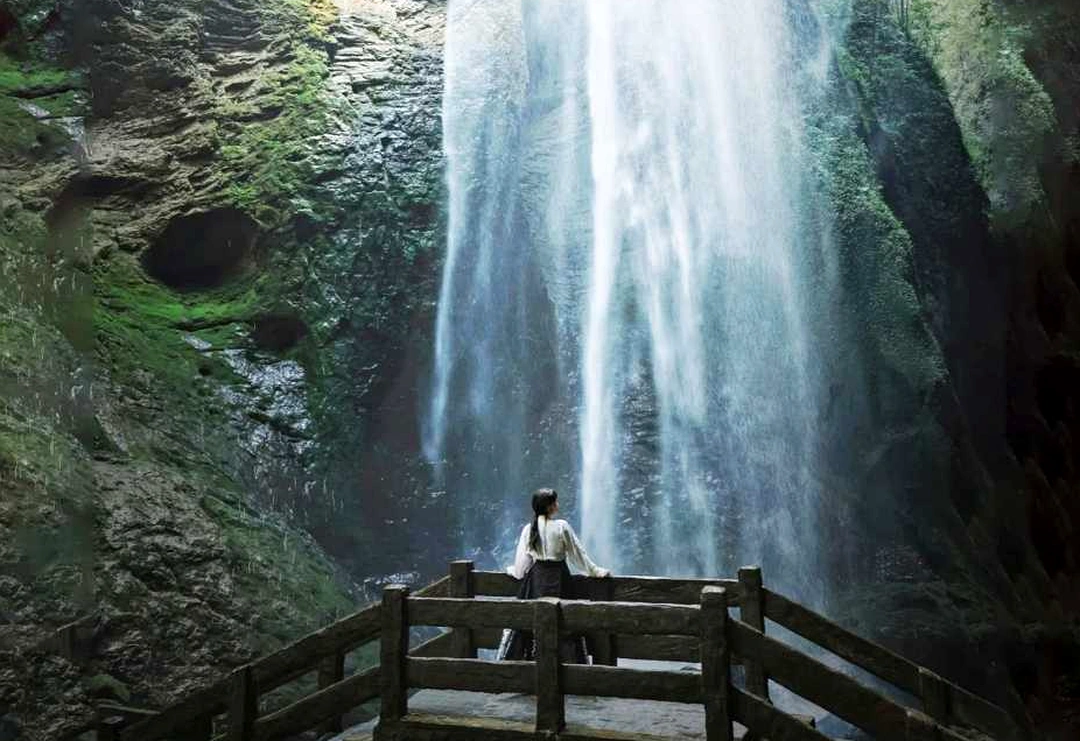
Strolling along perilous pathways at that hour, visitors marvel at elaborately designed lighting blending precise color temperatures ranging from 3000K to 3500K, imparting warm, soothing hues embracing towering cliffs. By cleverly positioning hidden uplights, wall-washing lights, and spotlights embedded within rock crevices, lighting art fully honors nature’s grand architectural lines. Million-year-old sedimentary blocks and millennia-eroded limestone layers suddenly emerge sharply with distinct vertical geological strata, while down in the deep abyss, cold and warm lights intertwine, reflecting through the misty spray of subterranean waterfalls and hidden rivers to create a magical optical illusion—truly embodying “golden brilliance intertwined with profound indigo”—transforming the gorge into a real-life mythological labyrinth on earth.
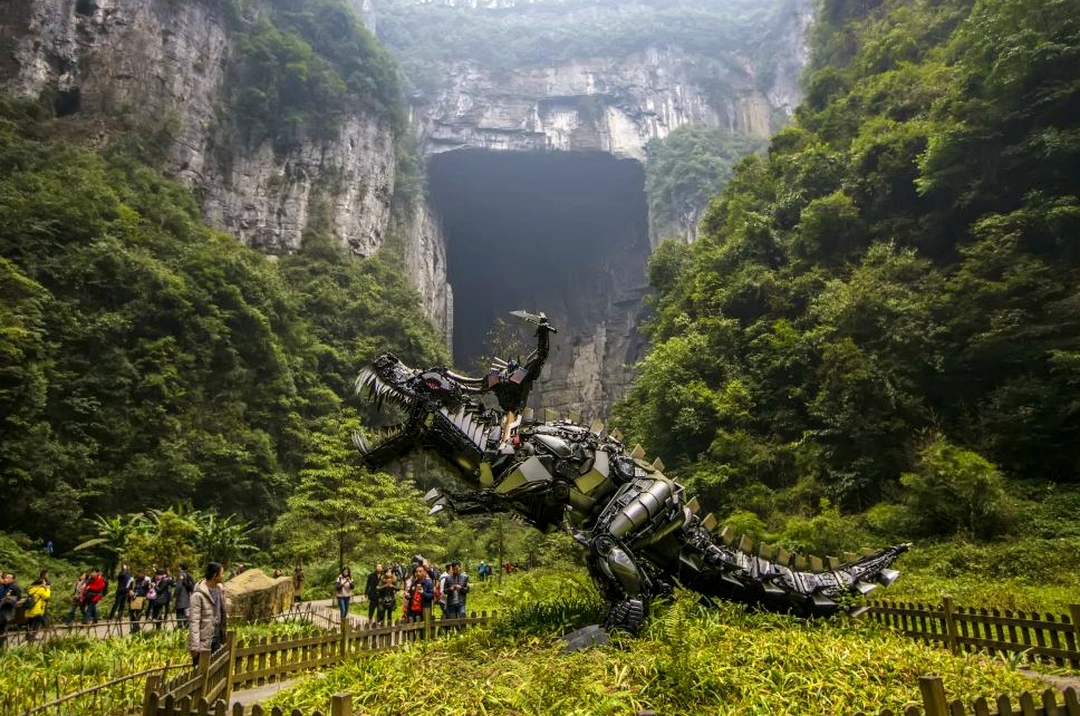
Beyond natural landscapes embellished by artistic lighting, nightlife here is heavily imbued with pop-cultural cross-currents driven by blockbuster Hollywood and Chinese cinematic films that previously chose this location for filming. The vibrant vitality of silver-screen masterpieces such as Zhang Yimou’s “Curse of the Golden Flower” and Michael Bay’s “Transformers: Age of Extinction” has been integrated into the night tourism experience. At Tianfu Official Posthouse and rugged cliff sections, management skillfully incorporates interactive performance art featuring NPCs (non-player characters) in traditional costumes or CGI-inspired outfits, vividly recreating classic movie segments right within the pristine spaces where they originally appeared.
This bold combination creates a multi-dimensional artistic appreciation space where boundaries between Western industrial cinema and Eastern classical aesthetics dissolve, offering visitors sensations of time travel into a fantasy dimension. Beneath starry night skies peeking through narrow clefts of thousand-zhang cliffs, the roaring cascade blends with audio from live performances reenacting the magnificent vigor of feudal dynasties or alien robot roars, delivering an incomparable auditory and visual experience. This is not merely tourism exploitation, but an intertemporal dialogue among pristine nature, global cinematic heritage, and sustainable tourism thinking, making Longshuixia Fissure an immortal symbol of contemporary night landscape art.
Following moments immersed in the stillness of sheer cliffs and silver waterfalls plunging from the heavens into the Longshuixia Fissure, the discovery experience opens up the distinctive culinary culture of Chongqing. Local gastronomy represents a unique synthesis, seamlessly blending the numbing spiciness characteristic of Ba-Yu culture, the bold sour-spicy flavors of northern Guizhou, and rustic, mountainous touches of the Tujia ethnic minority. This cross-current not only crafts dishes warming generations of hearts but preserves centuries-old family recipes, vividly reflecting the harmonious lifestyle shared between humanity and nature in mountain regions.
Mentioning Wulong’s culinary heritage, one cannot overlook Yangjiao Dried Tofu (羊角豆干), a gastronomic treasure recognized as a National Intangible Cultural Heritage of China. Originating from the ancient town of Yangjiao winding along the historical Wulong River, tofu-making art here demands meticulous care across strict stages. Artisans select the plumpest soybeans combined with pure spring water from mountain cores to craft batches of rich soy milk. The crux of its fame lies in a seasoning formula combining over twenty natural herbs with traditional pressing methods. Upon tasting, each piece of dried tofu offers balanced chewiness and crispness, with rich flavors penetrating deeply into food fibers, lingering on the palate and recalling bustling merchant boat docks of the past.
Departing from tofu’s refined flavors, diners warm their bodies with renowned Wulong Yuanyang Mutton Soup (武隆碗碗羊肉), a dish tailored for deep valley humid climates. The primary ingredient is highland mountain sheep raised freely along the Wulong River basin, typified by the Banjiao breed famed for firm, lean, aromatic meat. Mutton is cleaned and stewed with local bean paste, fragrant Sichuan peppercorns, and over ten precious traditional Chinese medicinal herbs inside small clay pots set over simmering fires for hours. The “freshly slaughtered, freshly cooked” motto and “original broth transforms original food” philosophy are strictly observed, preserving authentic flavors. The thick broth, spiced with fiery chili, numbing peppercorns, and herbaceous aromas, awakens all senses while offering restorative warmth and expelling dampness—a wonderful gift of nature bestowed by Wulong locals upon travelers crossing distant mountains.
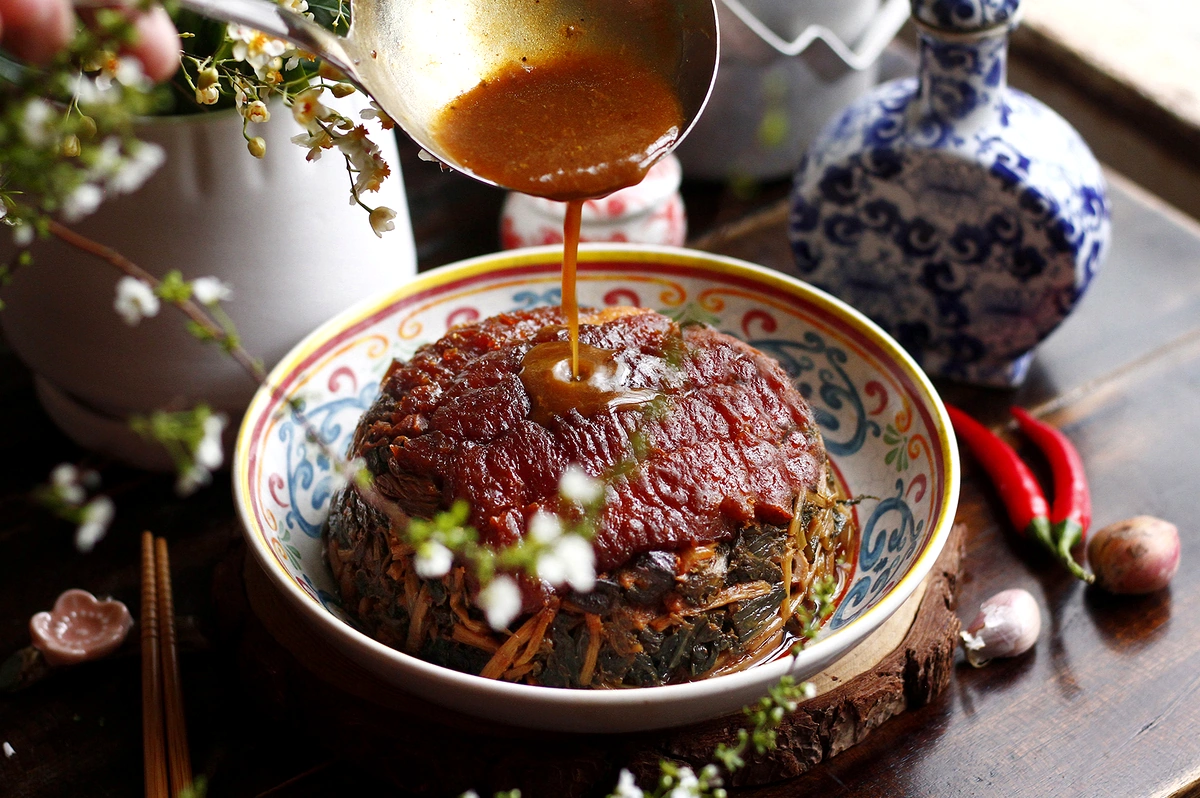
Additionally, local culinary canvases are adorned with agricultural products bearing strong mountain stamps, such as free-range hill chickens and cured bacon from the Fairy Mountain and Bai Ma Mountain plateaus. Chickens roam freely at elevations exceeding twelve hundred meters above sea level, foraging on wild seeds and drinking spring water, yielding firm, sweet meat with crispy skin. Meanwhile, indigenous smoked pork belly undergoes meticulous seasoning before being smoke-cured over pine branches and citrus peels following ancient traditions. Transparent fat layers and rosy red lean meat saturated with smoky yet mellow aromas, when thinly sliced and stir-fried with wild bamboo shoots or fresh garlic, generate rich yet non-greasy flavors encapsulating the essence of Wulong’s wilderness in cozy hearthside family meals.
To explore Chongqing’s most magnificent geological wonder, mastering practical details from operating hours and transport options to personal protective guidance ensures a seamless experience. Based on expert field surveys, scenic area management schedules clear seasonal operating windows to optimize natural light and ensure safety. During peak season running from March 1 to October 31, gates open at 08:30 AM and close at 16:30 PM; conversely, during low season from November 1 to February 28 of the following year, hours shift later from 09:00 AM to 16:00 PM to cope with cold, foggy mountain weather. Crucially, the scenic area implements a full-network real-name electronic ticketing system, requiring visitors to book online in advance—especially during peak seasons when booking one to three days ahead secures schedules.
Approaching the destination from major urban centers requires smooth coordination between high-speed rail systems and modern road networks. From Chongqing North Railway Station, travelers board high-speed bullet trains directly to Wulong Station in about two hours, opening train windows to shifting views from bustling industrial metropolises to rugged karst topography. For private vehicles or rented cars, the Yuji Expressway (G65) leads straight to the Wulong interchange before turning down local road networks. At the visitor service center, dedicated shuttle buses continuously transport groups to the Three Natural Bridges area before transferring to the Longshuixia Fissure located about fifteen kilometers away, establishing a convenient closed-loop transport network demanding strict adherence to schedules.
Regarding physical exertion and viewing route layouts, each component of the wonder poses distinct biological challenges for human bodies. The Three Natural Bridges tour spans approximately 2.5 to 3 kilometers, mainly featuring downhill staircases and flat paved boardwalks, relatively accessible to diverse visitors. Conversely, entering the deep space of Longshuixia Fissure confronts travelers with a walking trail spanning about 4 kilometers, plunging 500 meters deep into the gorge where steel boardwalk structures hug vertical cliffs alongside thousands of steep steps requiring exceptional stamina. Due to this deep basin terrain with perilous steps, medical experts advise visitors with severe hypertension, chronic heart disease, acrophobia, or knee joint injuries to carefully consider before entering this subterranean valley.
Beyond physical endurance, clothing preparation and personal protective gear dictate the success of this Southwestern geological expedition. Natural canyon features ensure that Longshuixia Fissure receives year-round dripping water from high rock crevices, keeping stone pathways and boardwalks wet and dangerously slippery without proper footwear. Visitors must wear high-traction hiking boots or trekking shoes, avoiding soft-soled fashion shoes. Furthermore, damp, chilly valley bottoms require waterproof windbreakers paired with thin raincoats, while long-handled umbrellas are discouraged since swirling canyon drafts can snap umbrellas and compromise safety. For practical insights, detailed itinerary preparations, and smooth support services, explore further details in all-inclusive tour packages for a safe, complete, and exciting expedition.