Situated at the foot of the majestic Simatai section of the Great Wall and embracing the pristine Mahui Lake, Gubei Water Town emerges as a vivid, exquisite natural landscape and a tourism masterpiece blending pristine nature with man-made heritage. Geographically, this ancient town belongs to Miyun District, located in the northeastern suburbs of Beijing, China, roughly 140 km from the city center. This location places Gubei Water Town in an exceptionally prime strategic position, forming an ideal stopover on the journey exploring classic Chinese tourist routes, especially when combined with bustling metropolitan hubs and southern ancient water towns such as Beijing, Shanghai, Hangzhou, Suzhou, and Wuzhen.
The historical background of Gubei Water Town is not only tied to centuries of Chinese feudal dynasties but also carries distinct marks of frontier culture. This area was historically a military stronghold of paramount importance for protecting the imperial capital of Beijing from northern invasions. The ancient city walls, hazardous fortifications, and majestic watchtowers still standing proudly on the surrounding mountain ranges bear living testimony to a heroic yet smoke-filled historical era. However, unlike traditional ancient towns in southern China that exude the soft beauty of Jiangnan waterways, Gubei Water Town possesses a completely unique style: a bold fusion of southern water town architecture and the grandeur and grit of northern border defense systems.
The symbolic significance of Gubei Water Town lies in its ability to realize the dream of a “Northern Wuzhen” on an international scale and with a far grander magnitude. Invested and constructed methodically by China’s leading financial and tourism conglomerate, it is not merely a replica of ancient relics, but a meticulously planned complex cultural-tourism enclave. It represents peak cultural intersection, where visitors can both enjoy the picturesque scenery of winding canals and mossy stone bridges while gazing at the most beautiful and original section of the Great Wall winding across mountain peaks, appearing and disappearing amidst misty clouds.
Within VDS Travel’s tourism ecosystem, Gubei Water Town is positioned as a “must-visit at least once in a lifetime” destination for photography, architecture, and traditional culture enthusiasts. It preserves ancient architectural values while breathing modern vitality into every corner through high-end accommodations, natural hot springs, and world-class contemporary artistic performances. This very uniqueness elevates Gubei Water Town beyond an ordinary sightseeing spot into a symbol of the renaissance and preservation of Chinese cultural heritage in the modern era.
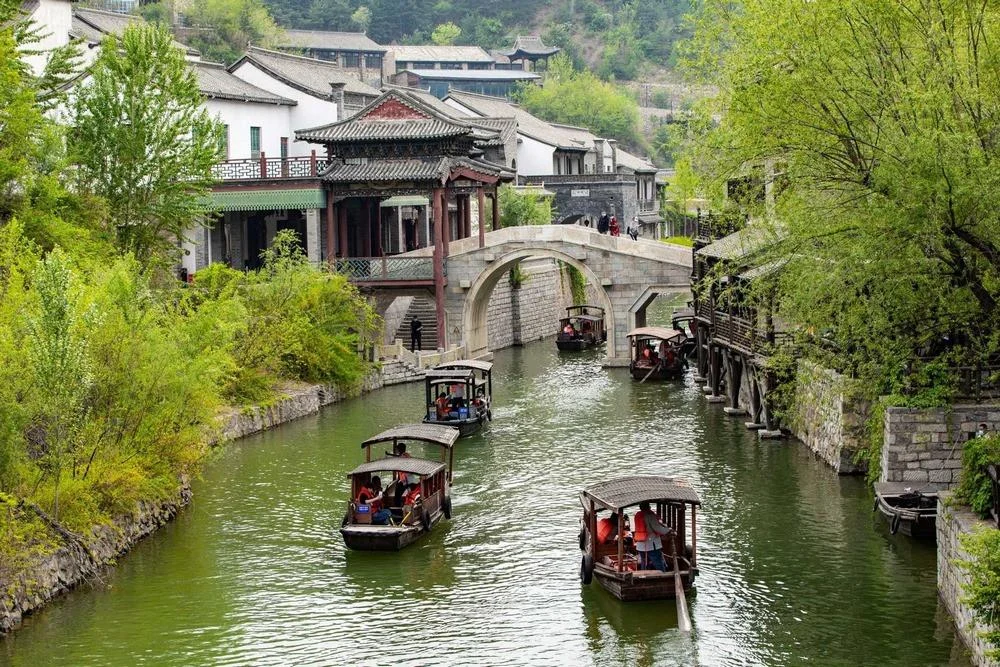
River view with tourist boats carrying visitors at Gubei Water Town
Gubei Water Town boasts an impressive scale with a total area exceeding 9 square kilometers (over 900 hectares), divided into distinct functional zones interconnected closely through dense waterways and cobbled ancient alleys. The entire town serves as an open architectural museum, gathering construction essences from both the Ming and Qing dynasties. Houses here are reconstructed based on prototypes of northern ancient villages combined with traditional southern Jiangnan residential construction techniques, creating an ensemble that feels both familiar and remarkably novel to every gaze.
The first and most powerful visual highlight upon setting foot in Gubei Water Town is the overwhelming yet harmonious presence of the Simatai Great Wall. Unlike excessively restored sections of the wall at Badaling, the Simatai section retains almost pristine, rugged, and perilous beauty. As twilight falls, smart lighting systems illuminate to trace the breathtaking winding curves of the wall atop the mountains, forming a brilliant ribbon of fire across Beijing’s night sky.
At the foot of the mountain, the water town stretches with an intricate network of canals, where wooden paddle boats guide visitors winding through dozens of ancient stone bridges featuring unique arched architectural styles. Prominent structures within the town include:
Mide Street (Folk Ancient Street): Gathering handicraft shops, textile workshops, traditional pharmacies, and nostalgic teahouses. Simatai Wine Cultural Zone: Recreating traditional brewing processes with neatly lined large wine vats exuding rich aromas of fermented grains. Yinghua Academy: An ancient school imbued with Confucian architecture featuring mossy courtyards, exquisitely carved wooden screens, and a serene, contemplative ambiance. Gubei Theater: A bold blend of modern and traditional architecture hosting major cultural events and mesmerizing visual art plays.
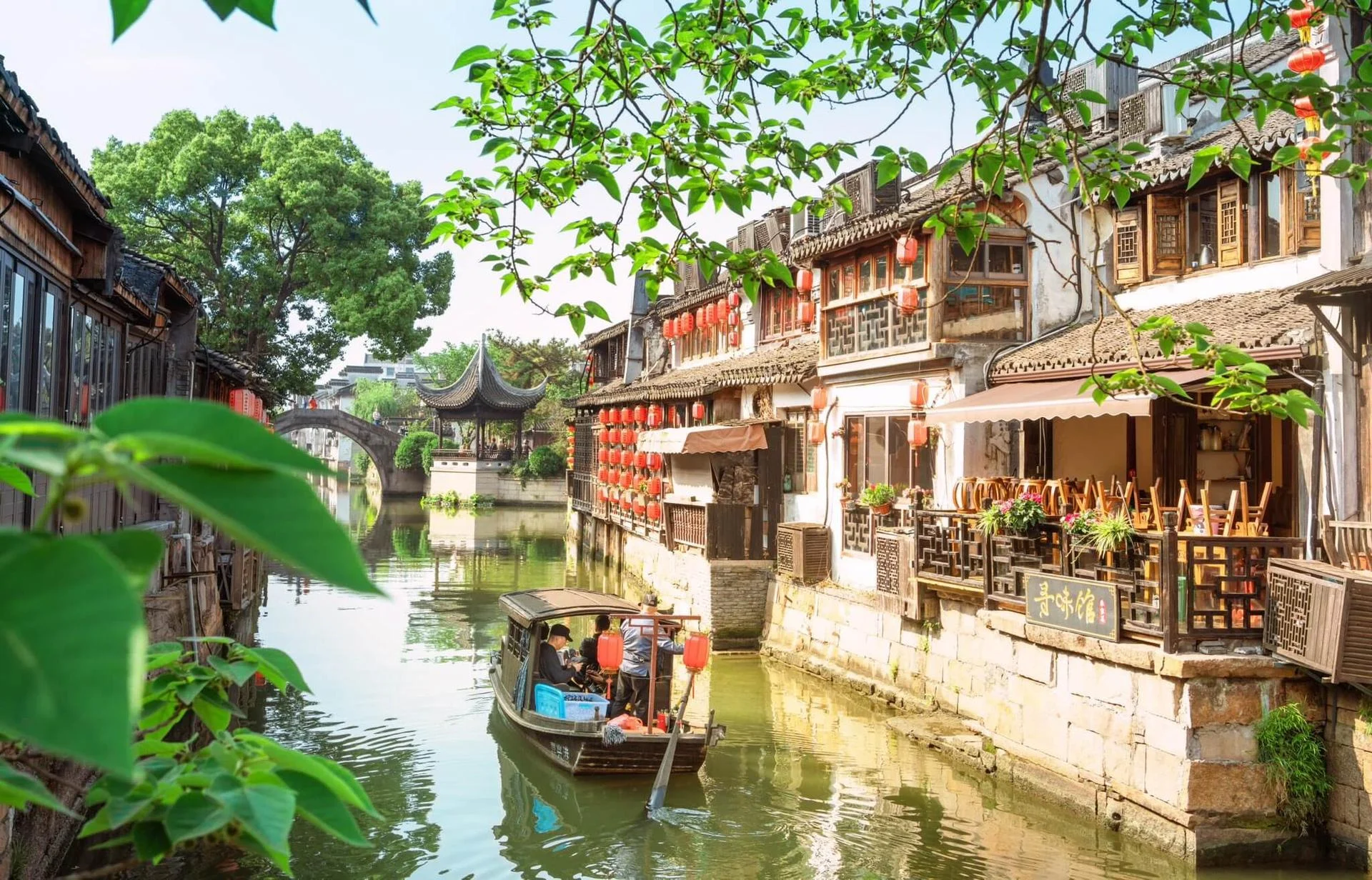
Water scenery at an ancient town in China with tourist boats and riverside houses.
Every street corner, glazed tile roof, green brick, or carved wooden pillar in Gubei Water Town is meticulously cared for down to the smallest detail. The skillful arrangement of natural daylight by day and glowing red lanterns by night transforms this place into a massive historical film set, offering visitors truly overwhelming and unforgettable visual experiences.
A complete exploration journey of Gubei Water Town requires visitors to allocate at least 2 days and 1 night to fully absorb its slow, peaceful pace of life. The opening experience not only involves renting a small wooden boat, dressing in traditional period costumes or elegant coats, and leisurely drifting down Mahui Lake. The feeling of cool breezes brushing cheeks while watching ancient houses gradually recede as the majestic Great Wall looms above delivers an extremely poetic and carefree emotion.
For photography enthusiasts and social media lovers, Gubei Water Town features countless “million-like” check-in angles that no visitor can afford to miss:
Sunset viewing platform area at Simatai Winery: Capturing the moment the sun sets behind the Great Wall, when end-of-day sunlight bathes a corner of the valley in golden hues. Glass bridges and ancient stone arch spans: Standing on bridges crossing the river for wide-angle shots toward clustered grey-tiled ancient houses with wall watchtowers in the background. Ancient Christian Church Square: A space blending European and Eastern architectural vibes, creating an intriguing visual contrast. Great Wall watchtower summit at night: Panoramic views of the town flooded with brilliant lantern light from above, resembling a grand epic space in real life.
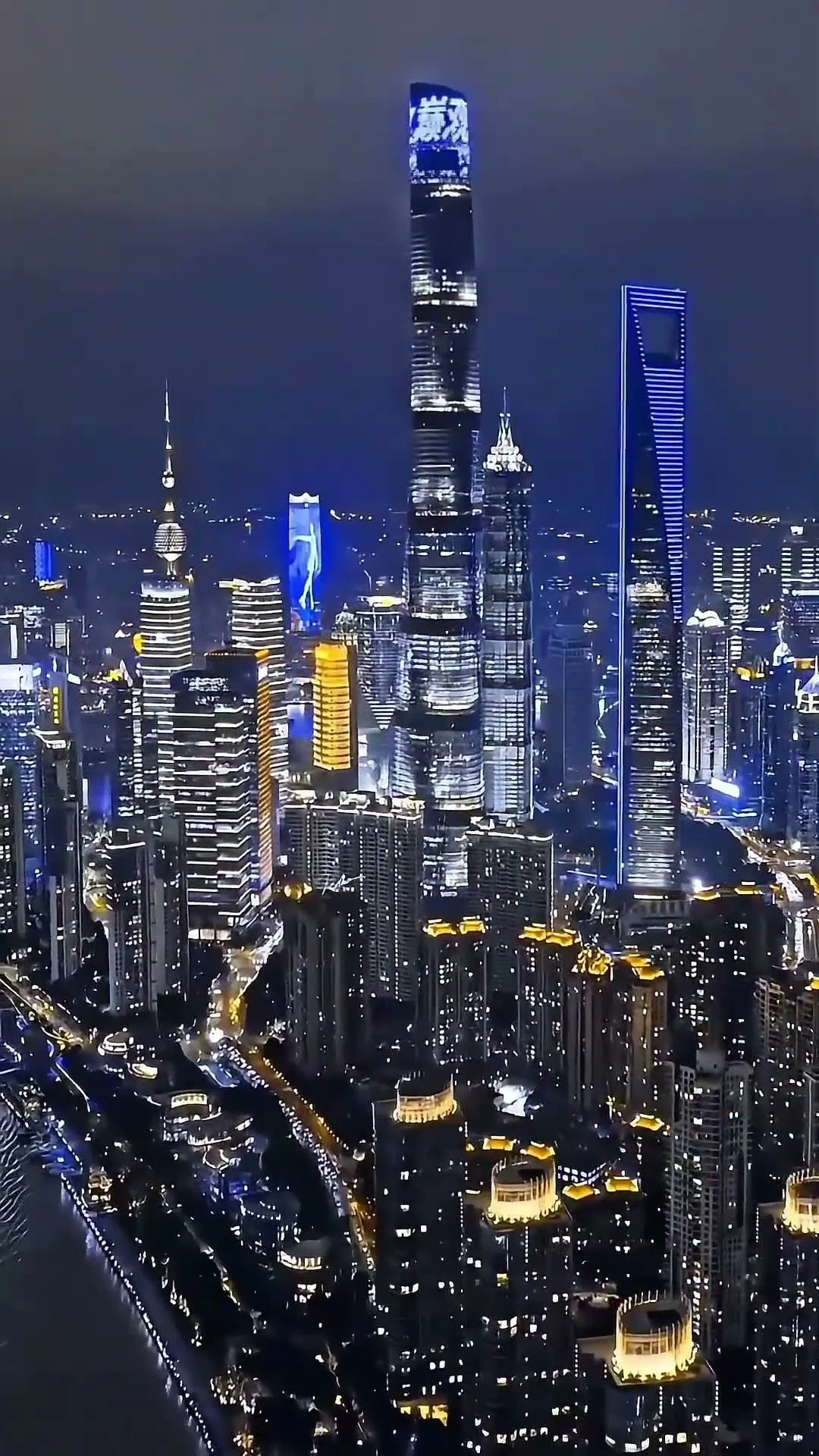
Panoramic view of ancient Gubei Water Town stretching beneath the majestic Simatai Great Wall
Beyond photography, visitors can participate in numerous interactive cultural activities such as crafting traditional paper kites, learning tea-making and Chinese tea art, experiencing traditional woodblock printing at folk print shops, or joining paper lantern workshops. Particularly during festivals, the town frequently organizes water dragon dances, traditional acrobatic circus performances, and brilliant fireworks displays along Mahui Lake, captivating travelers’ souls from afar.
Cuisine at Gubei Water Town is a rich symphony of bold Beijing imperial flavors, borderland rustic dishes, and Chinese street food finesse. Strolling through bustling culinary streets, visitors are instantly enticed by rising wisps of smoke from traditional eateries preserving ancestral recipes passed down through generations.
To ensure a satisfying culinary journey, VDS Travel suggests a list of renowned specialty dishes you must not miss when visiting Gubei Water Town:
Simatai Braised Pork: An illustrious dish featuring pork belly chunks simmered for hours with secret herbal spices, where fat melts instantly in the mouth without feeling greasy. Miyun Sesame Cake: Hand-crafted charcoal-baked flatbreads stuffed with sesame, combining crispy crusts perfectly with minced meat fillings or stir-fries. Mahui Lake Stewed Fish: Fresh fish caught directly from the freshwater lake stewed alongside tender tofu, shiitake mushrooms, and rich broth sweet with natural bone essence. Osmanthus Rice Ball: A delicate dessert featuring soft, chewy rice dumplings immersed in mildly sweet syrup infused with fragrant osmanthus blossoms.
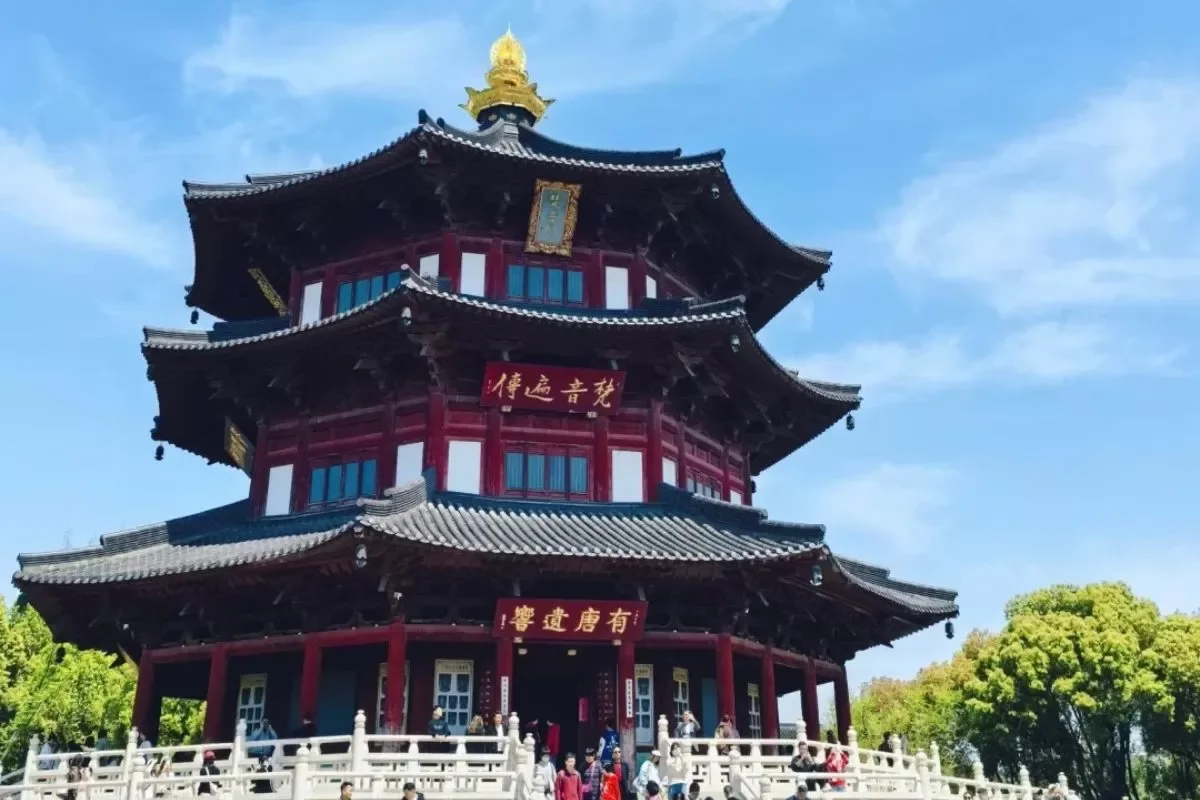
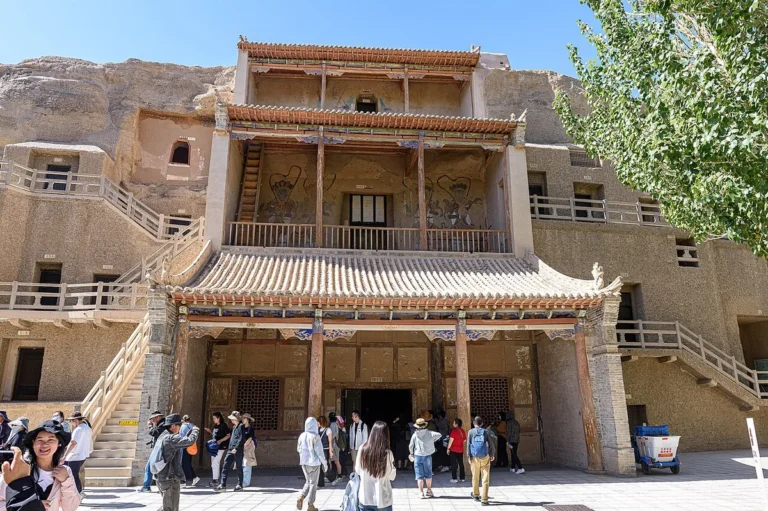
Traditional Chinese ancient tower architecture under blue skies with tourists.
Beyond cuisine, souvenir shopping in Gubei Water Town is equally rich and refined. Wandering artisan markets, visitors easily find products bearing profound traditional cultural marks such as Simatai white liquor housed in exquisite handcrafted pottery jars, premium Miyun teas, art paper-cuttings, traditional woven bamboo toys, and meticulously hand-embroidered fabric lanterns. Each souvenir brought home serves as more than just a travel token; it encapsulates the soul and artistry of local artisans.
To ensure a smooth, perfect, and emotionally fulfilling journey exploring Gubei Water Town, equipping a detailed practical guide is paramount. Below is a compilation of real-world experiences distilled by VDS Travel’s top travel experts specifically for you.
Gubei Water Town is gorgeous year-round, with each season offering its own fairy-tale charm:
Autumn (September to November): Hailed as the absolute “golden peak” time. Weather remains cool and skies bright blue, particularly as tens of thousands of maples and red leaves on the Great Wall slopes turn brilliantly colorful, blanketing the entire valley in breathtaking orange-red hues. Winter (December to February): Ideal for those wanting to witness snowy white landscapes blanketing ancient tile roofs and wall watchtowers. Soaking in outdoor hot springs amidst falling snow is an unmissable privilege. Spring & Summer (March to August): Lush greenery, blooming flowers, and crystal-clear streams create a relaxing resort ambiance away from urban heat.
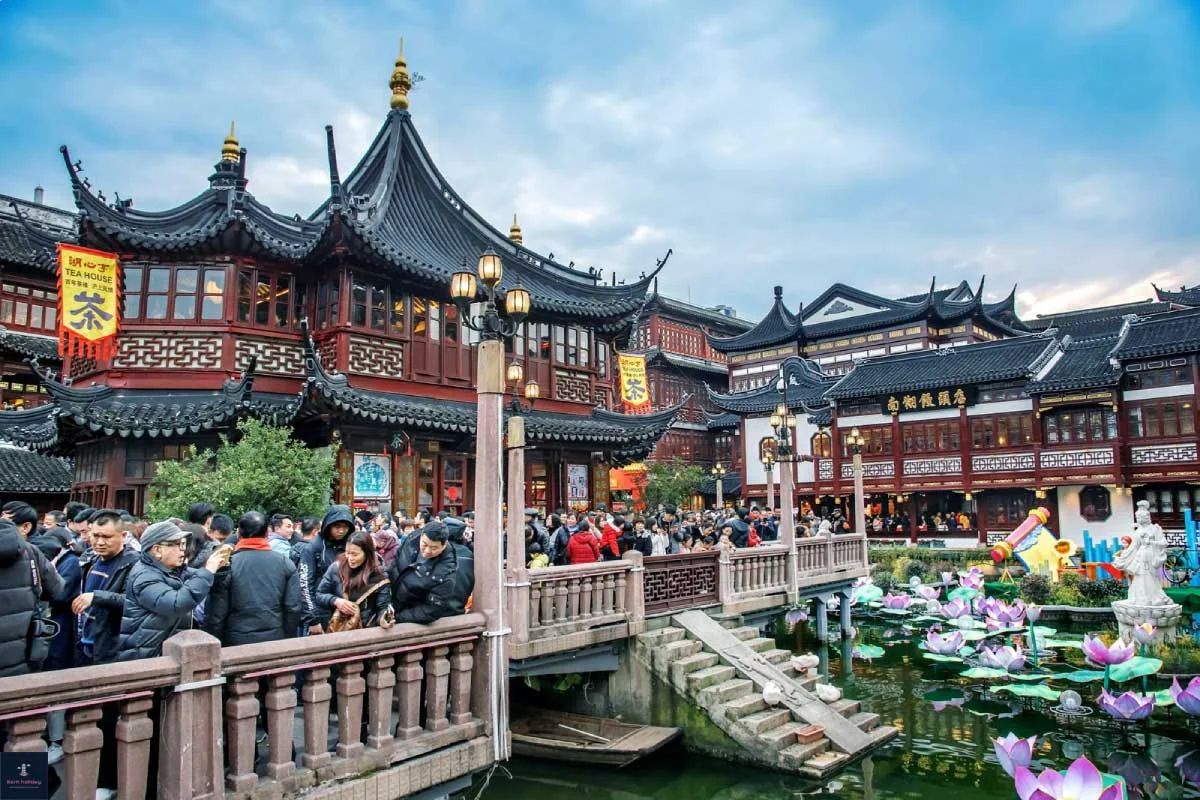
Bustling scene at a traditional Chinese old town street featuring distinctive curved roof architecture and a body of water.
From central Beijing, you can reach Gubei Water Town via the following transport methods:
Direct Shuttle Bus: Departing from Dongzhimen bus station straight to the tourist zone entrance. This is the most economical and popular option for independent travelers. Private Car Rental or Taxi/Didi: Suitable for large groups or families with young children, taking about 1.5 to 2 hours depending on traffic conditions.
Regarding costs, Gubei Water Town admission tickets range around 140 Chinese Yuan (RMB) for adults, while cable cars and Simatai Great Wall tours cost roughly 160 – 200 RMB. If you choose overnight boutique hotel stays inside the town (like the Jiàzhī chain or traditional homestays), room rates range from 800 to 2500 RMB/night depending on tier, inclusive of admission and hot spring discounts.
When visiting Gubei Water Town, travelers should note several important cultural etiquette rules to ensure a smooth trip:
Respect community spaces, maintain general quietness in temples, ancient academies, and traditional performance venues. Strictly adhere to environmental protection and heritage preservation regulations; absolutely do not litter or carve names into the ancient brick walls of the Great Wall. When shopping at traditional craft stalls, bargaining is acceptable but should be conducted politely, gently, and cheerfully. Always carry passports since identification is mandatory for security checks and hotel check-in procedures in China.
The biggest difference lies in spatial backdrop and architectural style. While southern ancient towns like Wuzhen exhibit soft, purely Jiangnan aesthetics, Gubei Water Town sits right at the foot of the rugged Great Wall. It harmoniously combines southern waterway architecture with the grandeur and majesty of northern border military systems, creating a unique landscape found nowhere else.
VDS Travel tourism experts strongly recommend staying at least 1 night. The reason is that Gubei Water Town’s most breathtaking beauty emerges at dusk and evening, when tens of thousands of red lanterns light up brilliantly and Great Wall lighting systems glow atop the mountain. Furthermore, overnight stays allow sufficient time to enjoy natural hot spring services and experience peaceful early-morning life before heavy crowds arrive.
The Simatai Great Wall section at Gubei Water Town retains pristine conditions and steep gradients, meaning walking the entire mountain route requires good physical stamina. However, the tourist area is equipped with modern cable cars safely and smoothly lifting visitors close to the summit. You can freely choose taking cable cars up and walking down depending on personal health.
The Golden Hour from 4:30 PM to 6:30 PM in late afternoon is the absolute best time. Sunlight casts soft slanting rays across mountain gaps, gilding ancient walls and tile roofs. Immediately afterward, from 6:30 PM onward when lanterns illuminate, it opens up a magical artistic space, ideal for landscape and portrait photography.