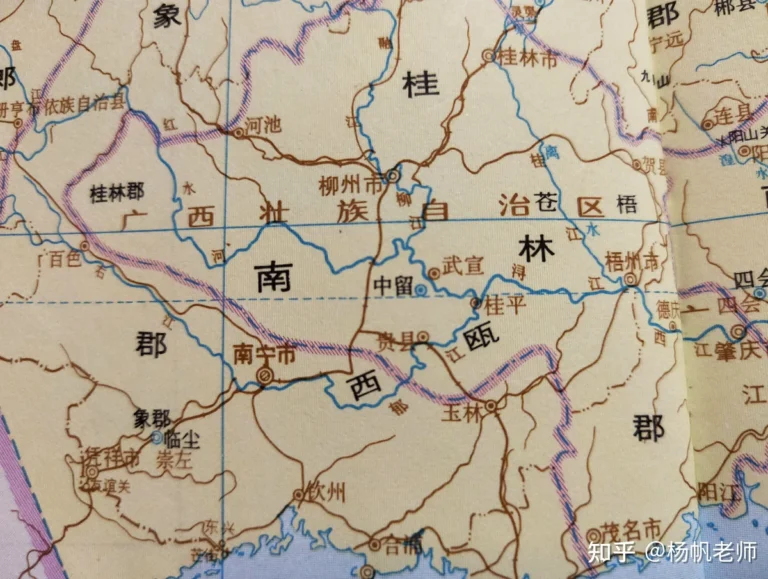
The history of Yangshuo Town began with a remarkable interplay between ancient geopolitics and the singular karst topography lining the banks of the Li River. Tracing back to 214 BCE under Emperor Qin Shi Huang, the excavation of the Lingqu Canal officially linked two vital river systems—the Yangtze and the Pearl River—throwing open a commercial and military corridor deep into the distant Lingnan region. In 111 BCE, during the reign of Emperor Wu of Han, following the pacification of Nanyue, the Western Han court laid the area’s first administrative cornerstone by establishing Yangshuo County (阳朔县). Ancient scholars and officials distilled the name “Yangshuo” from the landscape itself: towering limestone peaks rising jaggedly like teeth along both banks of the Li River forever greet the radiant sunlight, symbolizing abundant Yang vitality and soaring, graceful mountain forms.
The town’s historic urban layout took clear shape alongside the rise of its famed West Street (Xi Jie – 西街) in 590 CE—the tenth year of the Kaihuang era under Emperor Wen of Sui—when the county seat of Yangshuo was relocated to its present site. Originally stretching 1,180 meters in length and roughly 8 meters in width, this bluestone-paved thoroughfare began as a humble trading lane. Here, indigenous Zhuang and Yao villagers gathered to barter farm produce, forest goods, and handwoven indigo cloth with lowland merchants. Over more than a millennium, the flagstones underfoot were polished smooth by packhorse hooves, wooden grain-cart wheels, and the footsteps of generations building lives at the river bend.
Far more than a riverside trading post, Yangshuo became an inexhaustible wellspring of inspiration for poets and scholars from antiquity onward. Xie Lingyun, the founding master of Chinese landscape poetry during the Northern and Southern Dynasties, sailed past the winding bends of the Li River and composed verses celebrating its ethereal, otherworldly beauty. During the Ming Dynasty, the celebrated geographer and explorer Xu Xiake spent months lingering here, meticulously recording subterranean caverns, limestone formations, and dramatic geological folds in his famed travel diaries. Later, amid the tumultuous currents of the twentieth century, revolutionary leader Sun Yat-sen visited this ancient town, delivering stirring speeches to rally the patriotic spirit of Guangxi’s people in the cause of national rejuvenation.
After over fourteen centuries of cultural enrichment, the turning point that propelled Yangshuo from a quiet mountain county seat onto the global stage arrived with China’s economic opening in the late 1970s and early 1980s. As China gradually welcomed visitors from abroad, this small town on the Li River became an irresistible magnet for the first waves of international backpackers seeking the unspoiled beauty of the East. Bilingual signs began appearing above small roadside teahouses, informal English conversation classes sprang up on traditional wooden verandas, and the kilometer-long West Street evolved into one of Asia’s most distinctive “Global Villages.” Here, the quiet dignity of traditional Lingnan gray-tile roofs and whitewashed walls blends effortlessly with global multiculturalism—standing as living proof of a thousand-year-old town’s enduring resilience and welcoming spirit.
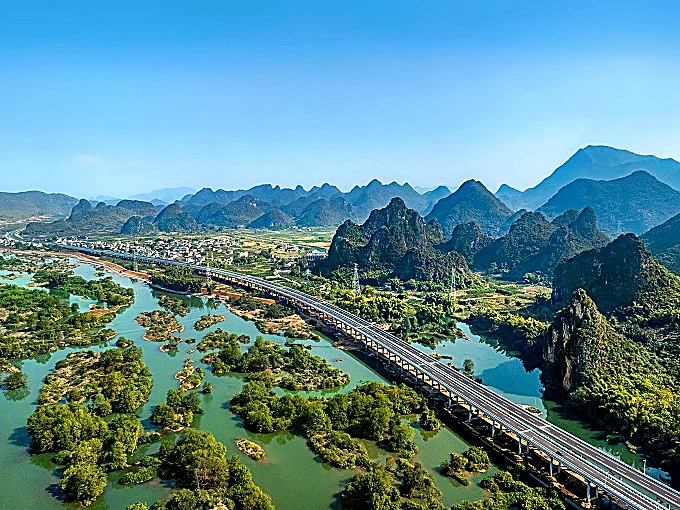
Viewed through the lens of traditional East Asian geomancy (feng shui), Yangshuo Town occupies one of the most auspicious sites in all of Lingnan, uniting the classic formations of “Crouching Tiger, Hidden Dragon” and “mountains embracing water.” The entire settlement is cradled by textbook tropical karst topography sculpted across hundreds of millions of years of weathering and tectonic uplift. Thousands of freestanding limestone pinnacles shoot straight into the sky like towering pillars, interspersed with fertile alluvial valleys and meandering streams. Natural vital energy does not scatter here; instead, it is held intact by protective rings of layered limestone peaks paired with the emerald ribbon of the Li River curving gracefully along the eastern flank, nourishing village life across generations.
The scenic lifeblood of Yangshuo flows along the ink-wash waterway of the Li River, where the stretch between historic Xingping Ancient Town and Nine Horses Fresco Hill (Jiuma Huashan) distills nature’s finest artistry. Rising over 400 meters sheer above the riverbank, this colossal limestone cliff—etched by millions of years of rain and moss—displays natural patterns of black, white, and ash gray resembling nine spirited steeds galloping in dynamic poses. So iconic is this natural wonder that its silhouette graces the reverse side of China’s 20-yuan banknote. Beneath drifting morning mist, the mirror-still surface of the Li River reflects drooping bamboo groves and solitary fishermen’s bamboo rafts, creating an ethereal, transcendent panorama rarely matched on Earth.
Stretching southward from the town center lies the Ten-Mile Gallery (Shili Hualang), a 14.8-kilometer natural corridor likened to an endless painted scroll unrolling between earth and sky. Winding past whimsically shaped karst peaks bearing vivid folk names, the road skirts sweeping paddy fields that shift color with every farming season and fragrant lotus ponds perfuming the country air. Rather than fracturing the landscape, local settlements nestle harmoniously into open valleys, tucking traditional gray-tiled homes between limestone crags and the banks of the Jinbao River. Tranquil rural scenes of twilight hearth smoke curling against jagged rock faces preserve a timeless agrarian rhythm that contrasts poetically with the lively commercial lanes nearby.
If the Li River and Ten-Mile Gallery embody the gentle Yin grace of water nurturing life, Laozhai Mountain and Xianggong Mountain supply the soaring Yang backbone defining the land’s spirit. Rising right beside Xingping Pier, Laozhai Mountain challenges climbers with hundreds of steep, rugged stone steps—rewarding those who reach the summit with sweeping views over the Li River’s most dramatic bend. Meanwhile, Xianggong Mountain (“Duke Mountain”) stands as the premier vantage point for watching sunrise break across a rolling sea of clouds. As dawn light pierces drifting mist, golden rays gild hundreds of karst peaks rising like giant bonsai islands floating in a celestial sea. This seamless weave of towering stone, gentle water, and rustic villages defines a one-of-a-kind landscape that keeps Yangshuo the enduring emblem of East Asian mountain-and-water beauty.
Running along the spine of the old town, West Street stretches exactly 1,180 meters with an average width of around 8 meters, curving organically with the natural terrain beneath towering limestone peaks. Its layout reflects centuries of terrain-sensitive settlement: the entire thoroughfare is paved with dark bluestone slabs worn smooth as jade by hundreds of years of footsteps. Rather than feeling monotonous, its gentle curves continually unveil fresh vistas, guiding travelers layer by layer through a living open-air architectural museum.
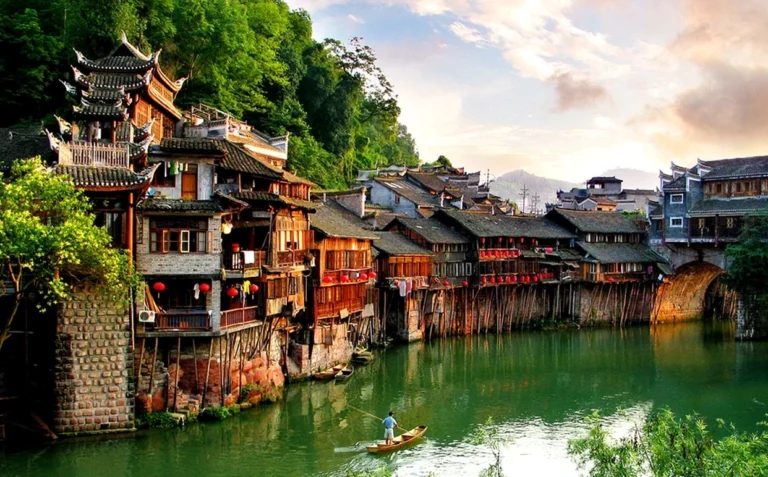
The architectural identity of the town is anchored firmly in traditional Lingnan style, which flourished during the Ming and Qing dynasties to adapt to southern China’s humid subtropical monsoon climate. Tightly aligned rows of buildings feature thick ash-gray fired-brick walls that insulate interiors from sweltering summer heat while resisting dampness during Guilin’s prolonged rainy seasons. Overhead, moss-dappled yin-yang clay roof tiles sit in neat rows punctuated by gracefully curving saddle-back or stepped fire-break gable walls designed to prevent flames from spreading between neighboring homes. Structural beams of ironwood and camphor wood bear intricate carvings of birds, blossoms, the Eight Treasures, and swastika fretwork expressing wishes for longevity and good fortune.
The defining feature of local floor plans is the traditional deep tube-house layout—multi-courtyard residences extending far back from modest street-facing shopfronts through three or four successive chambers. To ensure natural ventilation and daylight across depths spanning dozens of meters, builders incorporated open-air skywells known as tianjing. These open shafts act as microclimatic lungs drawing cool convective breezes and daylight indoors while fulfilling the feng shui ideal of gathering water for prosperity, channeling rainwater from all four roof eaves toward a single central basin. Interiors follow the classical principle of “shop in front, residence behind,” reserving busy street-level bays for commerce and quieter rear and upper rooms for family life.
West Street’s appearance grew even more distinctive in the late nineteenth century, when Western merchants, diplomats, and missionaries arrived in this secluded valley, introducing Anglo-French colonial architectural elements onto a pure East Asian canvas. Rather than displacing local traditions, Western building techniques were grafted organically onto Lingnan timber-and-brick frames. Across weathered gray-brick walls, tall semicircular arched windows outlined in whitewashed trim open wide views onto the bustling street below, while second-floor balconies feature hand-forged wrought-iron railings curving in Art Nouveau floral and geometric motifs. This graceful contrast between ornate Western metalwork and understated clay roof tiles creates a rare eclectic harmony—turning every building in Yangshuo into a tangible record of over a century of East–West cultural dialogue.
As sunset fades behind layered karst ridges, Yangshuo Town sheds its quiet daytime demeanor to don the dazzling allure of its nightlife. The heart of this transformation beats along West Street (阳朔西街)—an ancient thoroughfare boasting over 1,400 years of history, celebrated today as the “Global Village” beside the Li River. Polished bluestone pavers beneath travelers’ feet shimmer with reflections of traditional crimson lanterns mingled with colorful neon signs from modern storefronts. The street becomes a captivating symphony of sights and scents, where rustic European- and American-style cafes and bohemian pubs stand shoulder to shoulder with refined Eight-Treasure herbal teahouses and bustling restaurants fragrant with Guilin’s famous beer fish.
What gives Yangshuo’s nightlife its singular charm is an extraordinary spirit of cultural openness. Bilingual Chinese–English signage has graced nearly every corner of West Street since the earliest days of tourism, making the street a natural meeting ground for locals and travelers from around the world. Boundaries between East Asian heritage and Western lifestyle seem to melt away: visitors might see an elderly Zhuang artisan embroidering traditional brocade right beside an open-air bar alive with acoustic folk music, or sip steaming jasmine tea while listening to lively guitar melodies drifting from a historic alley corner.
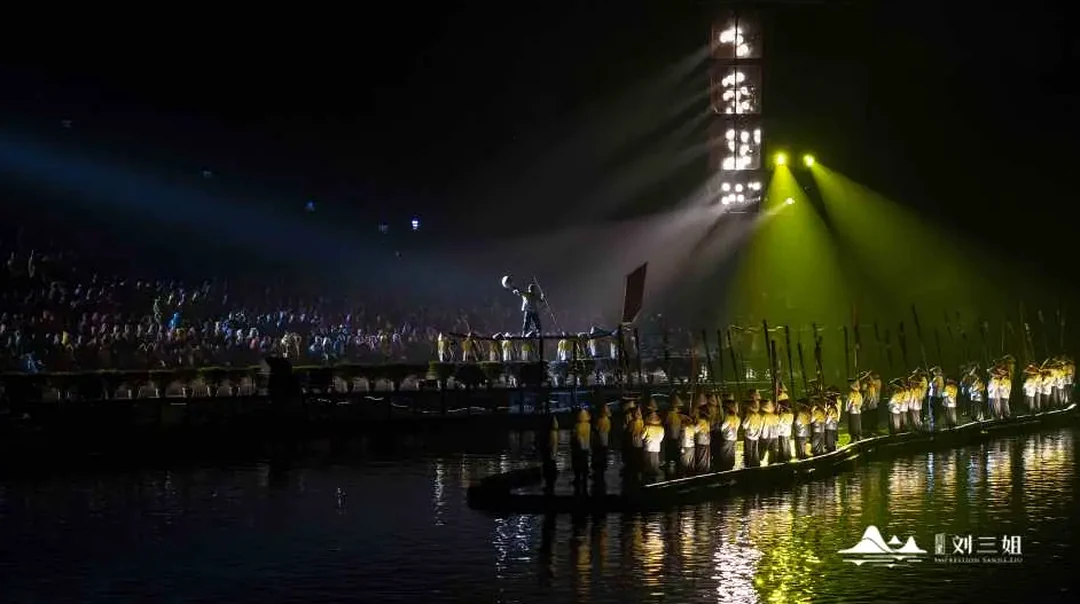
Stepping away from West Street’s lively energy to follow cool river breezes elevates Yangshuo’s nocturnal magic to its zenith with the spectacular open-air live production Impression Sanjie Liu (印象·刘三姐). Directed by acclaimed filmmaker Zhang Yimou alongside Wang Chaoge and Fan Yue, this landmark show ranks among the world’s first large-scale live performances staged entirely within a natural landscape. Spanning a two-kilometer stretch of the Li River, it uses twelve towering karst peaks as an eternal backdrop and glassy river waters as an infinite stage—turning majestic nature itself into a living performer moving in harmony with human artistry.
More than six hundred performers—most of them local fishermen and villagers from riverside communities—bring to life the Zhuang ethnic legend of folk song fairy Sanjie Liu. Under the wizardry of contemporary lighting design, wisps of evening mist rising off the river are bathed in vivid hues from powerful floodlights concealed beneath the water and along mountain slopes. Giant crimson silk ribbons glide across dark waves, hundreds of glowing torches process aboard slender bamboo rafts, and swirling stage fog weaves a breathtaking visual tapestry. Clear antiphonal mountain folk songs, rhythmic riverside laundry beats, and fishermen’s net-hauling chants echo across the karst valley, forging a deep spiritual bond between humanity and landscape.
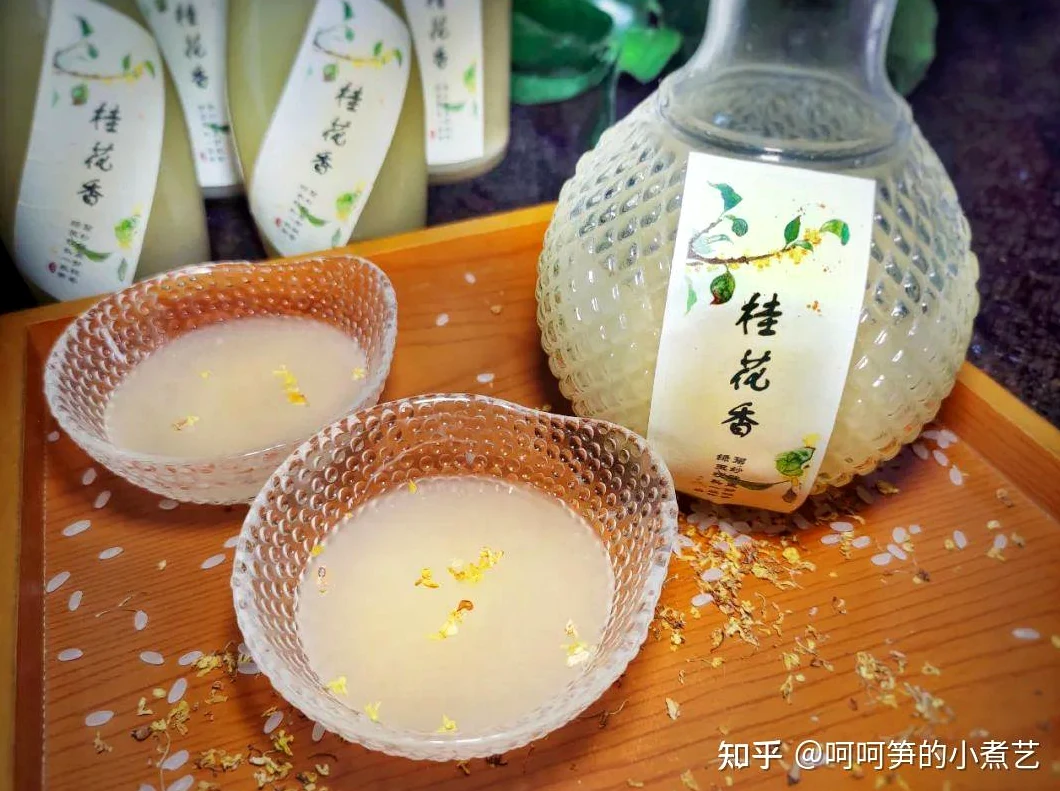
When the performance concludes, returning the Li River to its primeval nocturnal hush, echoes of light and folk melody linger long in memory. Back along the town’s winding lanes, nightlife softens into unhurried conversations over herbal tea or fragrant osmanthus wine. This seamless blend of world-class open-air theater and enduring riverside town life makes evenings in Yangshuo a complete multisensory experience etched forever in the memory of every traveler.
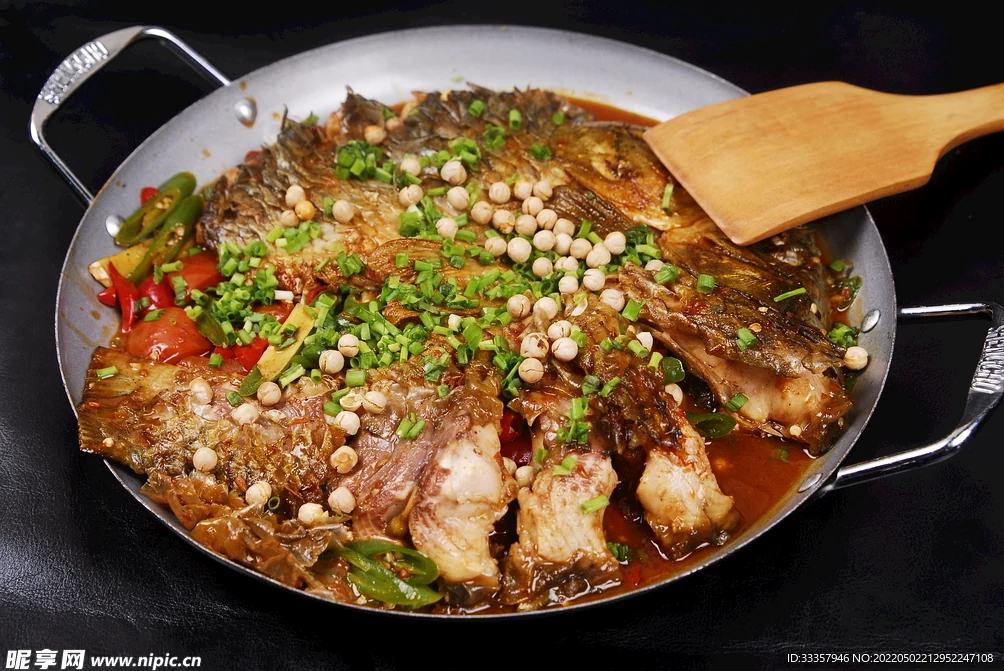
Yangshuo’s cuisine reads like an ink-wash landscape steeped in twilight hearth smoke, distilling the pure essence of the Li River and Lingnan’s endless limestone peaks. Shaped by centuries of culinary exchange among indigenous Zhuang and Yao communities and travelers from afar, local cooking has forged bold, unforgettable flavors at once rustic and deeply aromatic. Reigning supreme at riverside taverns along West Street is Yangshuo Beer Fish (阳朔啤酒鱼). Its secret begins with selecting fresh grass carp or common carp caught straight from the crystal-clear waters of the Li River. Following a time-honored technique requiring exact skill, the fish is prepared without scraping off its scales and flash-fried in smoking-hot camellia oil in a cast-iron wok until every scale curls into a crisp, golden crust. Next, the chef tosses in fiery bird’s-eye chilies, wedged tomatoes, and crushed garlic before pouring in locally brewed beer and premium soy sauce to simmer gently over glowing embers. Steady heat evaporates the alcohol and eliminates any riveriness, infusing sweet, tender white flesh with malty depth while preserving an irresistible contrast between shattering-crisp scales and succulent, rich fish inside.
Pairing harmoniously with beer fish is the hearty, deeply comforting Beer Duck Hotpot (啤酒鸭), an ode to highland terroir. Locals select free-range ducks raised along gravel bars and limestone wetlands beside the Yulong River, where constant swimming and foraging on natural aquatic life produce remarkably lean, firm, and flavorful meat. Cut into bite-sized pieces, the duck is seared over high heat with sliced aged ginger, star anise, black cardamom, and dried chilies to render excess fat before braising slowly in a clay pot with local beer. The resulting glossy mahogany sauce releases warm aromas of malted barley and mountain botanicals—ideal for warming the spirit on cool, mist-draped evenings by the river.
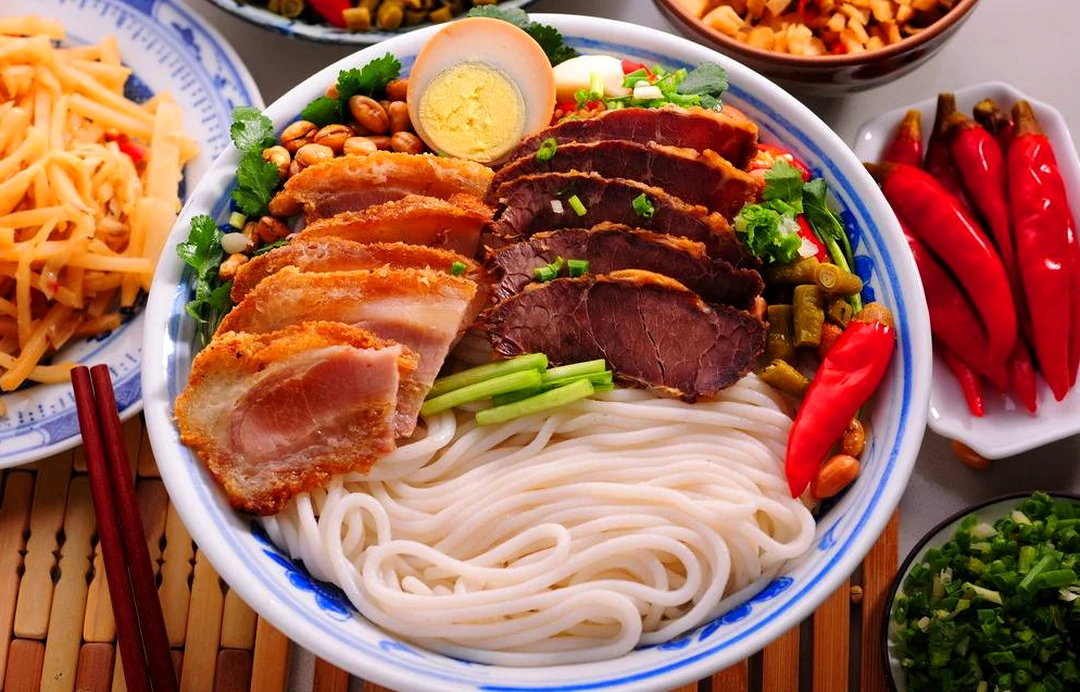
No exploration of Yangshuo’s food culture would be complete without Guilin Rice Noodles (Guilin Mifen), a beloved folk staple with roots stretching back to the Qin Dynasty. Round, springy, snow-white rice noodles are extruded by hand from rice soaked in pure headwater spring water. Yet the true thousand-year secret lies in the master braising stock simmered nonstop for days in heritage noodle shops from pork marrow bones and over twenty traditional Chinese herbs and spices, including amomum fruit, cloves, aged tangerine peel, cassia bark, licorice, and black cardamom. A benchmark bowl arrives generously topped with thin slices of crisp-skinned roast pork, crunchy roasted peanuts, tangy pickled yardlong beans, fiery pickled bamboo shoots, and a spoonful of golden chili oil. Tossed together, glossy noodles absorb every drop of savory stock, igniting the palate with bright acidity, bold spice, and deep umami warmth.
Rounding out the town’s culinary map are the humble, heartwarming sweets of toasted coconut cakes and heirloom ginger peanut brittle. Strolling down West Street’s bluestone lanes, travelers are drawn by the rhythmic thwack of wooden mallets pounding candy from early morning late into the night. Hill-grown peanuts roasted evenly in warm Li River sand are folded into thick cane syrup and spicy aged ginger juice, then swiftly hammered thin across granite slabs. Each piece snaps crisply with a clean, nutty sweetness and a warming ginger finish—paired wonderfully with fragrant sticky-rice cakes studded with rich fresh coconut, preserving the warm, unpretentious hospitality of Yangshuo across generations.
The best time to visit Yangshuo runs from April through October each year, when nature dresses this mountain-and-river paradise in captivating, contrasting moods. May and June bring early summer rains that turn the Li and Yulong rivers into an ethereal dreamscape of mist curling around millennial karst peaks—evoking the exact ink-wash poetry of Tang masters Wang Wei and Cao Tang. Conversely, September and October usher in crisp, dry autumn weather with golden sunlight spilling across ripe paddy valleys framed by bamboo groves, creating ideal conditions for bamboo rafting, rock climbing, and leisurely walks along ancient country lanes.
Modern transport links make reaching Yangshuo from major cities effortless and flexible. Air travelers can fly into Guilin Liangjiang International Airport and take direct intercity coaches straight to town in roughly two hours. China’s high-speed rail network also serves Yangshuo Station in Xingping Town, roughly 30 kilometers from the old town center, connecting smoothly with modern CRH bullet trains from Nanning, Guangzhou, and Shenzhen in just a few hours. For travelers departing from northern Vietnam, crossing overland via Friendship Pass into Pingxiang and boarding a high-speed train from Nanning East Station remains a classic route combining great value with dramatic borderland scenery.
Regarding entry formalities, the Guangxi Zhuang Autonomous Region and Guilin participate in China’s 144-hour visa-free transit policy for eligible nationalities holding onward tickets to a third country, offering an ideal window for short regional getaways. For Vietnamese travelers, securing a standard Category L tourist visa—or applying through a reputable travel agency for an electronic group tourist visa—is essential and should be completed at least two weeks prior to departure to avoid border delays.
Once in town, exploring independently by electric scooter (known locally as dianpingche) is easily the most popular way to get around. Renting for just 40 to 60 RMB for a full day, an e-scooter lets you weave through West Street’s bluestone alleys and cruise along the Yulong River dikes toward six-hundred-year-old Fuli Bridge or Jiuxian Bridge without exhausting your legs. Just be sure to wear a helmet in accordance with local traffic laws, check battery charge before venturing deep into distant valleys, and avoid busy national highways frequented by heavy trucks.
One vital tip for independent travelers is staying vigilant against suspiciously cheap “bargain” tours pitched openly at bus stations or street corners. These itineraries routinely slash actual sightseeing hours to herd guests into jade factories, latex showrooms, silk mills, or traditional medicine halls using high-pressure sales tactics. The smartest way to safeguard an authentic, stress-free journey through Yangshuo’s breathtaking karst landscapes is choosing a transparent, zero-shopping all-inclusive tour package operated by a trusted travel specialist.