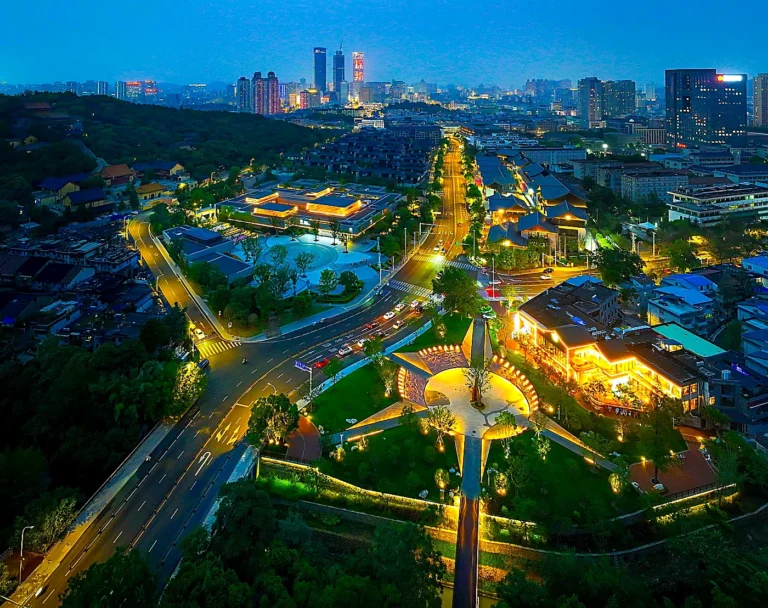
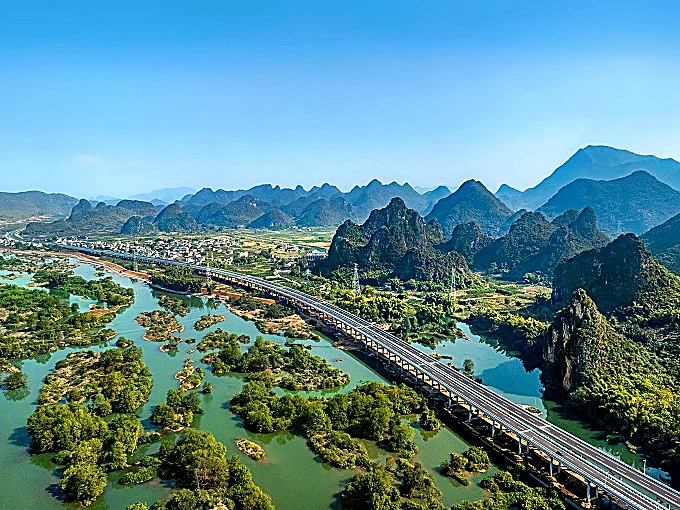
Nestled on the northern bank of the historic Beilun River, where the land of Fangchenggang reaches out to touch Vietnam’s Mong Cai frontier, the city of Dongxing has long established its position as a vital transit hub on the maritime and overland trade routes linking vast South China with Southeast Asian nations. Through the vicissitudes of diplomatic history and bilateral trade agreements, this frontier land has transformed from a traditional trading town into the nucleus of a model cross-border economic cooperation zone. Amidst this dynamic border economic picture, the Dongxing Guomao Wholesale Market emerges as an enduring symbol of the flow of goods and the borderland mercantile mindset, where business pulses never cease from the very first rays of sunlight casting down upon the border river.
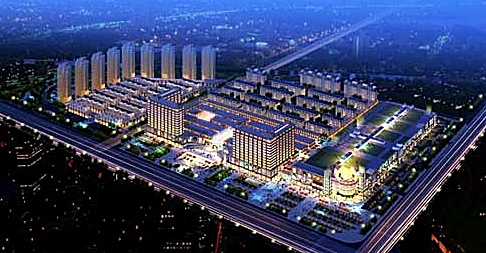
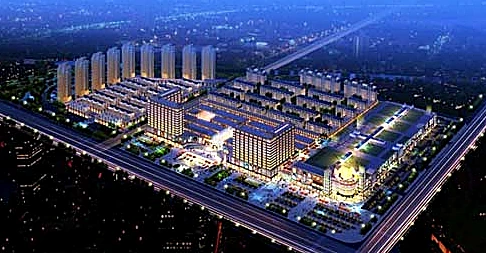
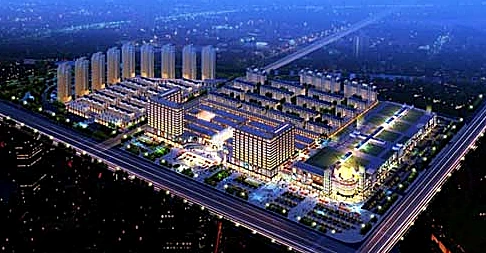
Situated in a prime location directly adjacent to the Dongxing International Border Gate, the Guomao wholesale market complex possesses a massive three-dimensional spatial structure, designed in the style of general commercial centers typical of late-20th-century inland Chinese port cities and further modernized to advanced logistics standards. With a vast floor scale divided into multiple sturdy floors, this commercial building gathers hundreds of wholesale and retail kiosks arranged closely together, interweaving like an endless labyrinth of consumer goods. The solid reinforced concrete structure with wide-span column grids not only optimizes display space but also fully satisfies the daily high-volume goods transfer and loading needs of cross-border merchants.
The formation and development of the Guomao commercial center are intimately linked to the process of border trade liberalization between the two neighboring nations. Immediately after border demarcation markers were completed and the border trade agreement was signed, the volume of goods exchanged across the Beilun River bridge increased exponentially, demanding a centralized infrastructure to replace scattered riverbank yards. Guomao was born as the perfect solution to the large-scale goods distribution puzzle, becoming the convergence point for supply sources from famous manufacturing workshops across Foshan, Yiwu, and Dongguan, alongside deeply processed agricultural products from Guangxi Province. From here, supply chains of materials, textiles, household goods, and packaged foods are carefully packed and swiftly dispatched by road to provinces across Northern Vietnam.
Stepping onto the ground floor of the market, anyone’s senses will be awakened by myriad shades of flavor from the world of cuisine and processed specialties. Soaring shelves piled high with renowned teas such as Tieguanyin, Dianhong black tea, Huangshan chrysanthemum tea, alongside dozens of herbs and characteristic spicy seasonings typical of Guangdong and Sichuan. Adjoining the culinary space is the vibrant world of artisanal confectionery, Chongqing walnuts, candied dried fruits, and especially packaged ready-to-eat snack products that are shaping youth preferences across the region. Each stall features large, open sacks displaying premium dried spices, where aromas of star anise, cinnamon, and cardamom mingle in the air, creating a prosperous commercial atmosphere imbued with pure East Asian identity.
Ascending to the upper floors, the professional wholesale nature of Guomao Market becomes increasingly evident with specialized rows of stalls dedicated to apparel, footwear, fashion accessories, and synthetic leather goods. This is a shopping paradise for small traders and e-commerce business owners, where newly launched fashion designs from Guangzhou appear on display shelves just days after transit. A major difference between Guomao Wholesale Market and purely tourist markets is its tiered pricing system based on quantity; meaning when buying by the bale or lots of dozens or more, prices drop to factory floor levels. The hustle and bustle of carton-sealing machine clatter, tape-ripping sounds, and clicking hand trucks loaded with cargo crates create a non-stop, lively industrial symphony.
A unique trading culture that cannot be overlooked at this market is the application of traditional Chinese mass measurement systems, specifically the market catta (shijin), where one catta equals exactly half a kilogram in the international metric system. This requires first-time visitors to be observant to avoid bewilderment when comparing listed prices on handwritten signs in simplified Chinese characters. Within that space, language barriers appear dissolved by the clever combination of brief Vietnamese greetings from local shop owners, clicking calculator keyboards during bargaining, and the helpful support of smartphone translation apps, highlighting the flexible trading acumen of border residents.
To access this bustling market from Vietnamese territory, clearance procedures at the Mong Cai – Dongxing International Border Gate pair serve as the prerequisite bridge. Thanks to border trade administrative reforms and the deployment of smart electronic clearance lanes, crossing between the two banks of the Beilun River is now extremely smooth and orderly. Travelers and merchants only need to prepare a border laissez-passer issued according to administrative procedures at immigration management authorities along with citizen ID cards and standard white-background portrait photos, or use valid ordinary passports. Many merchant groups and travelers often prioritize choosing professional entry-exit tour services to receive meticulous guidance through every security screening checkpoint and customs declaration step, while optimizing precious daytime schedules.
Regarding currency and payment, the Guomao Market area demonstrates the highly characteristic financial cultural blending of the border economic buffer zone. Although the Chinese Yuan is the official and absolutely predominant payment medium, nearly all large and small stalls here have integrated digital payment QR codes linked seamlessly through native electronic wallets. Visitors preparing to depart often choose to exchange physical foreign currency at the Mong Cai Market No. 2 area—where long-standing currency exchange points concentrate—or exchange directly with the assistance of experienced tour leaders. Preparing both small-denomination cash and online QR scanning methods will make bargaining and purchasing at wholesale-retail stalls swift and secure maximum goodwill from small merchants.
Enveloping the entrances of the Guomao complex is a vibrant street food and logistics service community. After hours of wandering through dozens of kiosk rows, pedestrians can pause at roadside eateries to savor the robust flavors of spicy Liuzhou river snail rice noodles, honey-glazed Beijing roast duck, or renowned roasted milk tea carrying mainland Chinese flavors. Lively chatter and appetizing smoke from skewer grill coals fragrant with cumin and Sichuan peppercorns create a multi-sensory cultural experience, turning a sourcing survey trip into a charming borderland culinary adventure.
Alongside the joy of discovery and gathering goods, understanding border customs regulations regarding hand-carried cargo volumes is a core condition ensuring smooth journeys. When carrying goods through customs inspection checkpoints of both countries on the Beilun River Bridge, shoppers must clearly distinguish between duty-free gift quotas for casual visitors and large-scale commercial shipments requiring official customs declaration procedures. Sensitive items like tobacco, hard liquor, fresh food, or counterfeit trademarked goods undergo strict monitoring by modern security scanning systems. For sample orders or bulky goods exceeding personal baggage allowances, connecting with Dongxing specialized logistics transit warehouses for shipping via sea or official containers is the safest and most methodical solution.
To gain a comprehensive perspective and preserve valuable documentary imagery of local market life, the balconies behind Guomao Market overlooking the Beilun River and friendship bridge serve as superb viewpoints. From above, the contrast between the stillness of the river dividing the border and the hustle of container trucks lining up to await clearance at the smart inspection yard creates a majestic geo-economic scene. The experience of exploring this market becomes complete and profound when neatly integrated within an all-inclusive 1-day Dongxing tour program, helping visitors shop at leisure while feeling secure about time and scientific travel routes.
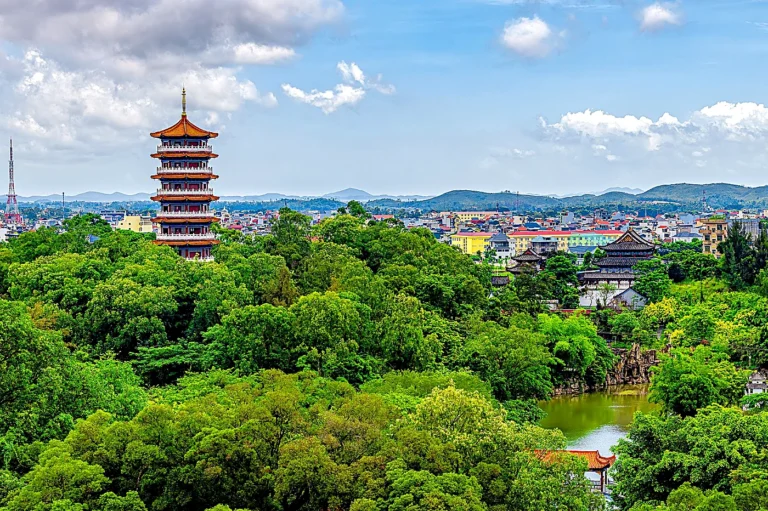
After satisfying shopping passions at Guomao Market, itineraries can expand naturally to neighboring cultural landmarks such as the Sino-Vietnamese Friendship Park, housing the People’s Friendship Monument and ancient Wuxiang Tower reflecting over a tranquil lake, or visiting the sacred Guansheng Temple of the riverine community. The harmony between ancient spiritual works and modern shopping complexes reflects the multi-layered identity of a rapidly rising border city. Dongxing Guomao Wholesale Market is therefore not simply an address for exchanging money or goods, but truly an open chronicle recording the labor spirit, dynamism, and steadfast aspiration for economic and diplomatic connection across generations of residents on both banks of the Beilun.