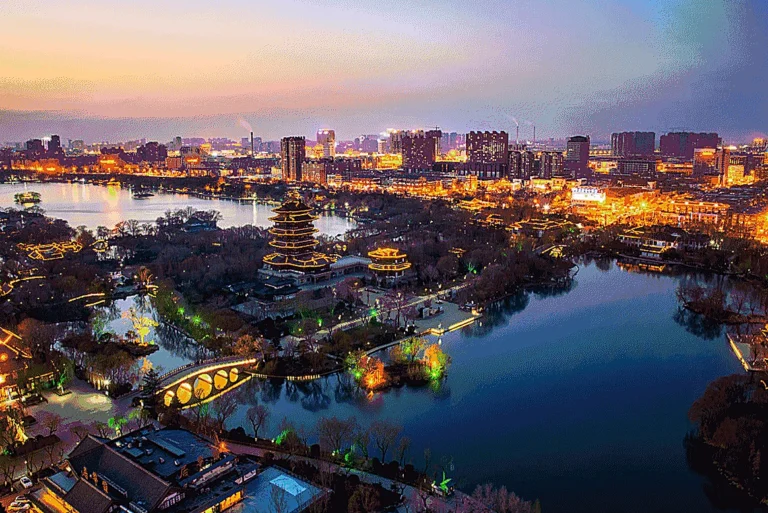
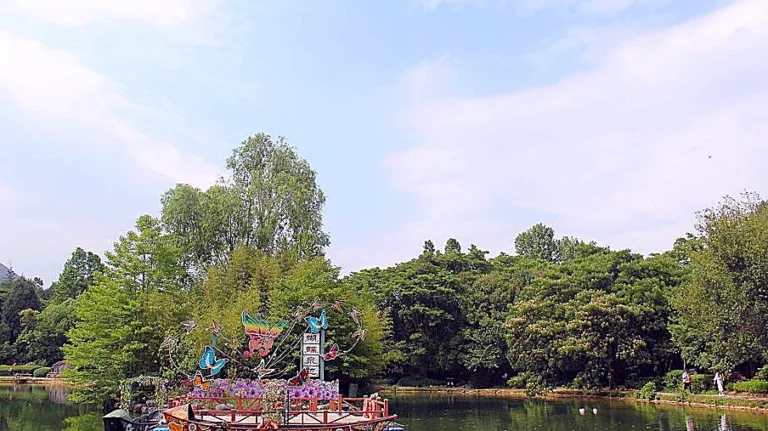
Tucked along the dramatic transition where the southeastern rim of the Qinghai–Tibet Plateau meets the rugged Yunnan–Guizhou basin, Jade Dragon Snow Mountain has stood since antiquity as an eternal monument of ice—shaping both the physical geography and the spiritual world of northwestern Yunnan. In the Tibeto-Burman language of the indigenous Naxi people, this year-round snow-crowned massif did not bear the poetic Chinese name “Jade Dragon,” but was honored by its ancient title “Bashiluo,” carrying the evocative meaning of “silver cliffs of the Baisha white-sand plain.” Between the 7th and 8th centuries—coinciding with rivalry and coexistence between the Tubo and Nanzhao empires during the Tang Dynasty—early Naxi ancestors crossed steep Jinsha River gorges to put down roots at the foot of the snowy range. Across more than a millennium of deep bond, the Naxi regarded the range not only as a geographic shield against external conflict, but also as the living manifestation of Sanduo—their supreme protective war deity riding a white steed and holding a silver spear, standing for justice and inviolable shelter for the entire community.
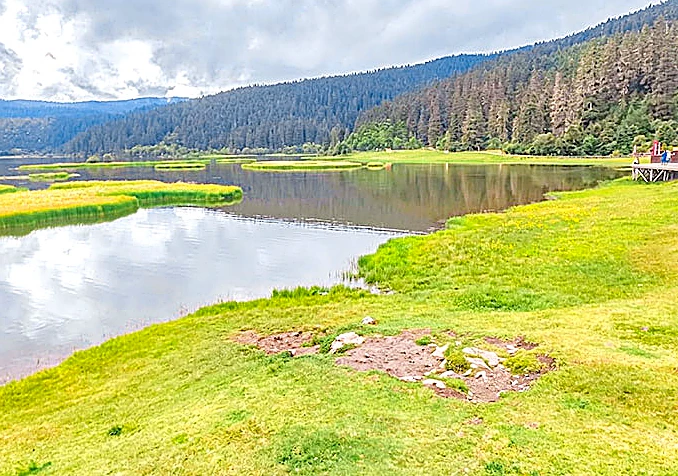
The presence of Jade Dragon Snow Mountain has served as a vital spine shaping Lijiang’s urbanization and political structure across more than eight hundred years of history. During the pivotal transition from late Song to early Yuan—around the second half of the 13th century—amid advancing Mongol cavalry and Kublai Khan’s campaign to pacify the Dali Kingdom, the ancestral chieftain of the Mu clan made a landmark decision: moving the seat of power from early Baisha to a strategic defensive site beneath Lion Hill. From this new core, a thriving town grew along the Jade River (Yuhe), shifting its administrative name across dynasties. It was recorded as “Dayechang” under the Yuan Dynasty as a key trading stop on the Ancient Tea Horse Road, became “Dayan Xiang” in the Ming Dynasty at the height of hereditary Mu tusi rule with the grand Mu Residence, and took the name “Dayan Li” under the Qing before being officially designated Dayan Town in 1929. Throughout those shifting eras, Lijiang’s old town never built enclosed brick city walls—because the towering snow-clad back of Jade Dragon already stood as the grandest natural fortress protecting generations of residents.
Beyond serving as a sacred ritual site and military vantage, Jade Dragon Snow Mountain also holds poignant layers of modern social history. A major turning point arrived in the early Qing Dynasty, when the central court pressed ahead with “gaitu guiliu”—replacing hereditary local tusi chieftains with court-appointed magistrates. This forced administrative reform brought sharp cultural friction, undermining traditional marriage customs rooted in older Naxi social patterns in favor of strict patriarchal norms and arranged unions. Faced with heartbreak and external constraints, the cloud-veiled snowy peaks became a supreme spiritual refuge. Reverence for the “Third Kingdom of Jade Dragon” surged, drawing devoted lovers into dense primeval forests high on the slopes to end their lives together—believing that leaving mortal bodies at the foot of the sacred mountain was not destruction, but a glorious passage into Sanduo’s eternal paradise of blooming flowers, free from sorrow, separation, or family coercion.
This multi-layered interplay of ancient Dongba mythology, shifts across the Yuan, Ming, and Qing dynasties, and deep historical pathos forges Jade Dragon’s unmistakable character. This monumental limestone massif rises above a mere glacial geology of thirteen sharp peaks reaching toward blue sky to become a living chronicle preserving the spirit of a resilient frontier people. Every sharp cliff and every stream of glacial meltwater flowing down toward valleys carries echoes of long-distance caravans, imperial decrees, and immortal songs of devotion etched into eternal snow and mist.
Viewed on an East Asian mountain-geography map, Jade Dragon Snow Mountain stands at the southern tip of the rugged Hengduan range, located within Yulong Naxi Autonomous County in Lijiang City, Yunnan Province. The range spans roughly 75 kilometers in total length, with its most rugged core stretching about 35 kilometers north–south and roughly 13 kilometers east–west. Rising proudly above thirteen snow-draped peaks year-round is the main summit, Shanzidou, reaching an elevation of 5,596 meters above sea level. In global physical geography, Jade Dragon Snow Mountain holds a singular record: it is the lowest-latitude yet highest-elevation perennial snow-clad mountain range in the Northern Hemisphere, and the southernmost major snow mountain in the entire hemisphere.
In landscape geomancy and spatial structure, the entire massif resembles a grand work of nature holding a pivotal position across southwestern China’s mountains and rivers. Viewed from afar, the range is separated from the Zhongdian snow peaks to the northwest by the roaring gorge of the Jinsha River, while its eastern flank runs parallel to the layered Mianmian range. Starting from the Three-River confluence point in the north, the mountain line curves and opens out like a jade screen or a giant folding fan of jade, turning its broad face toward the Lijiang Old Town basin. This mountain-and-water embrace forms a natural shield blocking harsh winds from the Tibetan Plateau while gathering auspicious vitality that has sustained Lijiang’s plain for centuries.
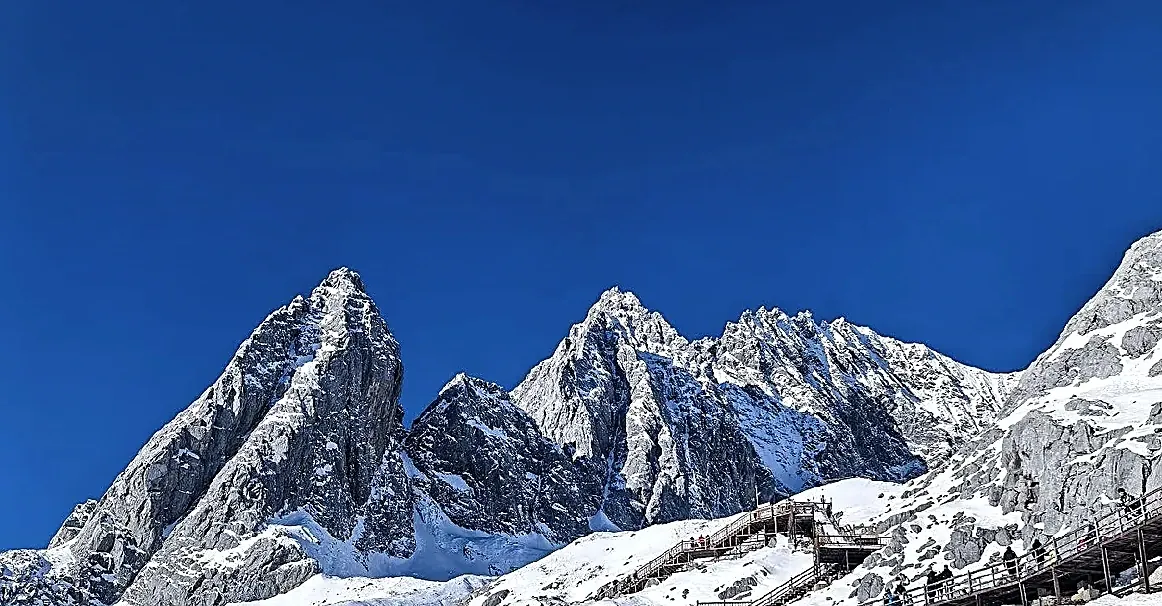
To classical scholars and local Dongba priests, Jade Dragon’s terrain carries the spirit of a “silver dragon soaring in the sky, guarding the Naxi homeland”—like a great silver dragon curving among clouds with claws and fins sheltering generations of Naxi descendants. Geologically, the massif is a living museum of Quaternary tectonics, notable for rare active temperate maritime glaciers interwoven with classic U-shaped glacial valleys. From base to icy summit, scenery unfolds across a dramatic vertical ecological gradient: transitioning smoothly from humid subtropical broadleaf woods through dense spruce and red-pine forests to tranquil high-mountain meadows such as Spruce Meadow (Yunshanping) and Yak Meadow (Maoniuping), before giving way to moss, weathered karst rock, and perpetual snow and ice.
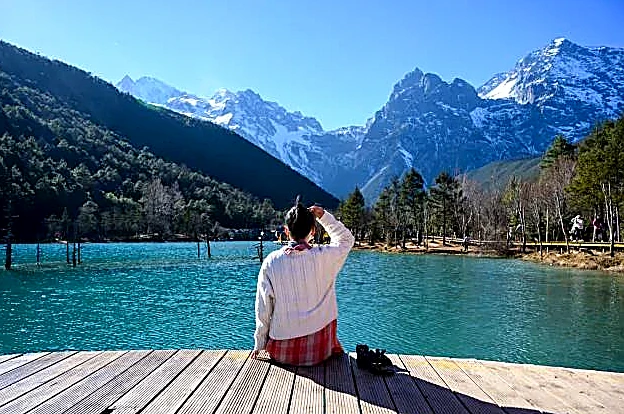
Lijiang’s lifegiving waters also spring from this distinctive geology. Snowmelt from steep cliffs around Shanzidou filters through fissured limestone deep inside the mountain, naturally purified into crisp mineral water that surfaces in turquoise glacial-fed pools such as Blue Moon Valley before joining the rushing Jinsha River. The mountain’s silvery majesty shines not only in sharp icy peaks jutting like dragon teeth into a sapphire sky, but also in the quiet contrast between eternal snow and living woodland—forming a balanced geomantic whole that shelters against wind while supplying endless water below.
From a territorial planning and scenic-area design standpoint, the Jade Dragon Snow Mountain National Scenic Area covers a generous planned area of 415 square kilometers. Unlike purely man-made structures, its spatial design rests on working closely with natural topography to form a vertical ecological and architectural sequence. From flower-dotted lower meadows up to cloud-veiled snowfields, planners wove functional zones into an organic whole—turning sheer limestone cliffs and ancient glacial valleys into a multi-tiered viewing corridor while protecting local ecosystems.
Linking this vertical system is an advanced cable-car network, highlighted by the main Glacier Park cableway. Running across rugged gorges and Quaternary glacial features, this high-altitude cableway carries visitors up to 4,506 meters above sea level. From the upper station, a corrosion-resistant pine boardwalk stretching thousands of meters winds along sharp rocky ridges to reach 4,680 meters. Building thousands of meters of specialized timber decking and storm-resistant alloy railings in thin, freezing air is both an engineering feat and a thoughtful conservation measure that channels foot traffic and keeps visitors from harming sensitive glacial ice.
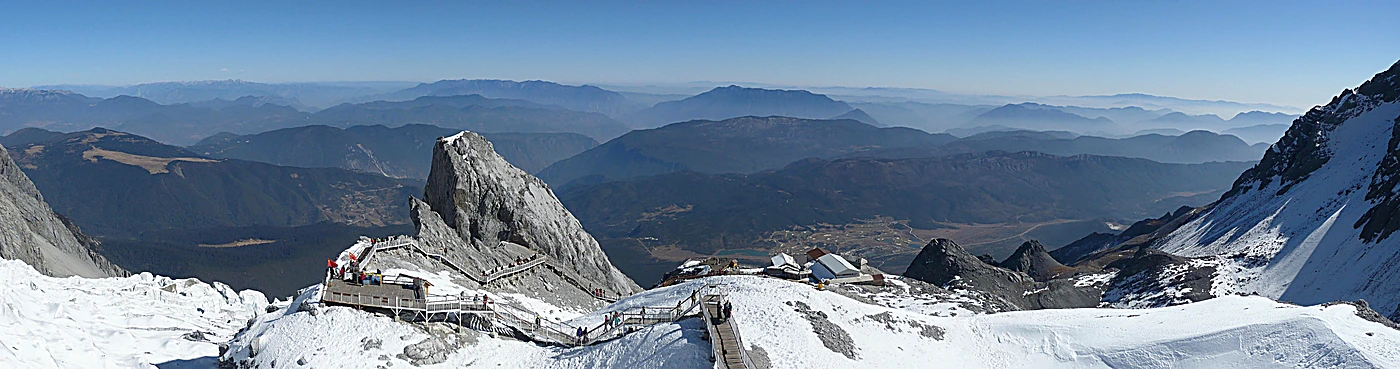
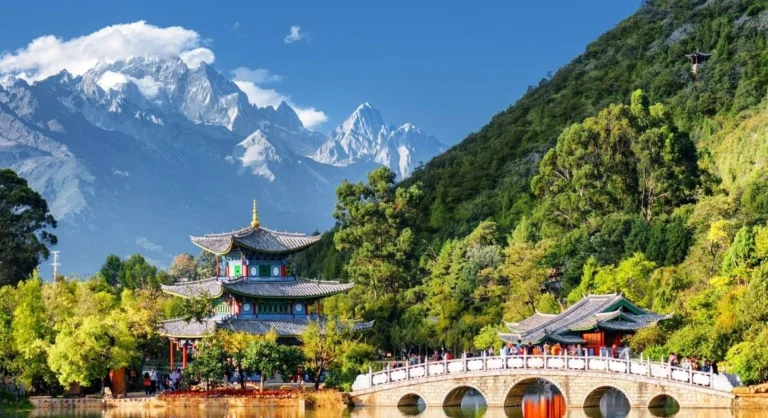
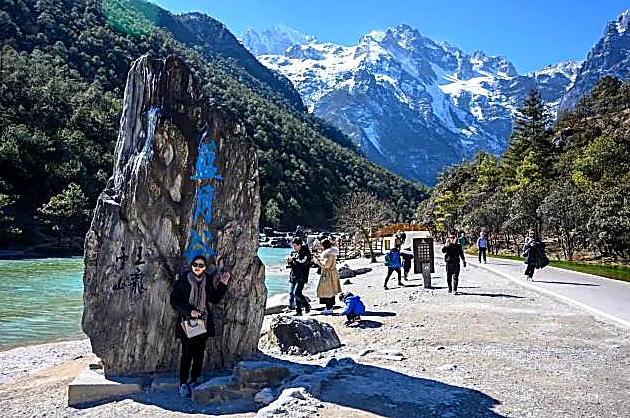
Below the glacial zone, terrain softens into breezy subalpine meadows. Among them is Spruce Meadow, nestled amid dense primeval spruce woods like a quiet clearing ringed by green walls, and Yak Meadow, with broad highland pastures where herders let yaks graze leisurely. Lower in the foothill basin, natural flow along the White Water River (Baishui) is guided gently through semi-natural terraced water retention to create Blue Moon Valley—where tiered turquoise pools shimmer between handcrafted stone weirs and grassy banks reflecting snow-capped peaks.
Alongside high-mountain scenery, the complex’s architectural profile is marked by a major foothill project called Snow Mountain Art Town. Covering roughly 408 mu (over 27 hectares) with around 200,000 square meters of floor area and backed by a 3.5-billion-RMB investment, it reinterprets traditional Naxi architecture—sturdy timber frames, stone-and-timber walls, and layered curved tiled roofs—through a contemporary lens that blends naturally into highland meadows. Paired with zero-emission electric shuttle buses linking transfer hubs, the infrastructure balances modern comfort with careful environmental stewardship.
As highland night fades, Jade Dragon Snow Mountain stages one of nature’s most sacred and awe-inspiring sights: “Golden Mountain in Sunlight” (Rizhao Jinshan). This natural optical phenomenon appears most vividly from late autumn through spring, when Lijiang’s air is crisp and clear and clouds settle lower in the valley. At the threshold of dawn, the first rays of morning sun crest eastern ridges and strike Shanzidou Peak at 5,596 meters. What had been cool, silver-white ice and rock transforms into a blazing expanse of molten gold—shining like a sacred torch against deep blue sky. To local Naxi people, morning sunlight awakening the sacred peak is more than an optical shift; it is Sanduo’s blessing washing over the land and bringing fortune across the Lijiang plain.
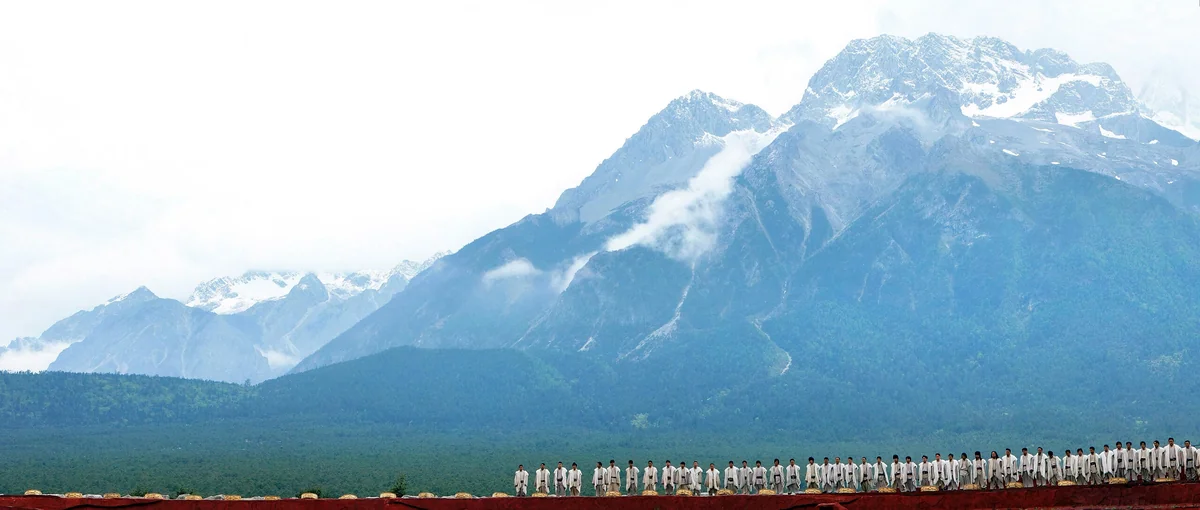
Following dawn’s natural splendor, human light and sound find a fitting stage in Ganhaizi Meadow right below the mountain. Rising above 3,100 meters in elevation, a sunken semicircular open-air theater set against red highland earth hosts the grand outdoor show Impression Lijiang, co-created by director Zhang Yimou and collaborators. Unlike flashy indoor urban stages, this production uses Jade Dragon’s snowy cliffs and steep rock walls as an eternal backdrop—relying on natural highland sunlight to celebrate the pure, untamed spirit of southwestern China.
The show’s emotional power comes not from film effects, but from the raw vitality of more than five hundred performers drawn from local farmers, woodsmen, and horsemen across over ten ethnic groups including Naxi, Yi, Tibetan, and Bai. With sun-tanned faces and rustic traditional clothing, they ride sturdy mountain ponies across the arena and sing raw, resonant highland folk songs. Cowhide drums beat a driving rhythm, thanksgiving dances unfold, and reverent bows toward the sacred peak bring to life the bold spirit of caravans along the thousand-year-old Ancient Tea Horse Road—echoing human voices against vast mountain stone.
Once sunset fades and deep night settles over the valley, the snow mountain enters a quiet, mysterious realm for stargazing. High elevation, thin air, and strict light-pollution control turn the area around Jade Dragon into a natural astronomical sanctuary. Snow-dusted peaks stand in silhouette beneath the luminous Milky Way arching across dark space. Millions of stars sparkle like diamond dust above eternal glaciers—creating a surreal interplay between cosmic vastness and legendary peaks.
Beneath the towering presence of the snow range, Lijiang’s cultural depth shines not only in Dongba lore, but also in traditional Naxi cuisine. Shaped by rugged mountain terrain and cool highland climate above 2,000 meters, local foodways favor warming cooking methods, nourishing ingredients, and wild mountain botanicals gathered from snowy forests. Across centuries of trade along the Tea Horse Road, dishes here offer a grounded flavor profile—rich, warming, and balanced between sweet pasture-raised meats and earthy wild mushrooms.
Heading the culinary repertoire beneath the snow peaks is traditional Highland Yak Beef Hotpot. Yaks raised naturally on subalpine pastures above 3,000 meters provide firm, deep-red, nutrient-rich meat. Slow-simmered over gentle charcoal in a clay pot with highland herbs, the beef turns tender and rich without heaviness, warming diners against crisp mountain chill. The sweet broth shines even brighter with early-foraged wild forest mushrooms and fresh sea-moss greens from pure waters. Equally prized is salt-cured black-goat-rib hotpot with wild mushrooms—where winter-dried black goat ribs simmer into a creamy, milky broth layered with natural sweetness.
Leaving mountain slopes for bluestone lanes in the old town, Lijiang’s food map leads to long-standing eateries that capture local street-food soul. A classic example is Snack Shop No. 88 (Xiaochi Dian), founded in 1984 inside a rustic wooden loft along historic Wuyi Road. It has long stood for authentic Naxi flavors—especially chickpea jelly (Ji Dou Liang Fen). Made from small mountain chickpeas ground and set into jelly, it is served in two contrasting ways: pan-seared crisp outside with a warm, silky center, or sliced cold with tangy vinegar, pickled chili, fresh garlic, and herbs for a bright, refreshing lift.
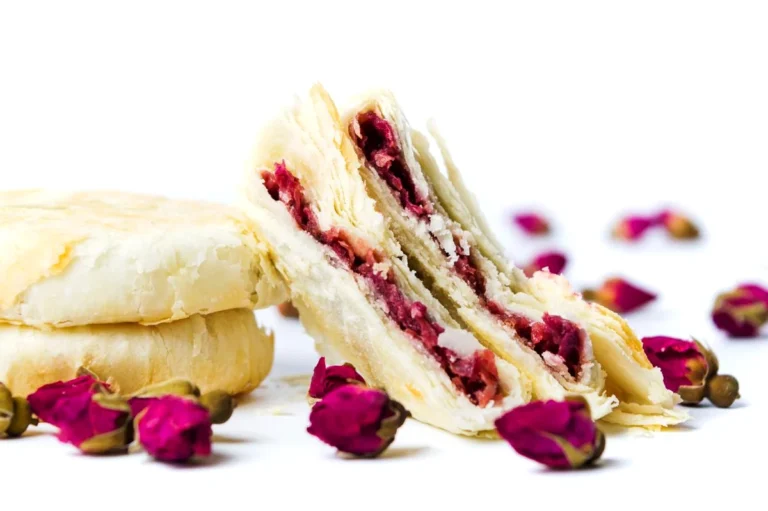
Beside chickpea jelly sits Naxi grilled fish prepared to family recipes—sweet, firm stream fish seasoned with mountain Sichuan pepper, red chili powder, and local spices, grilled crisp over charcoal and topped with scallions and crushed roasted peanuts. To round out a classic meal, few skip traditional Lijiang Baba. Made from highland wheat flour and local lard rolled into thin layers and griddled in cast iron until crisp outside and soft within, it comes in two styles: sweet with golden-brown sugar and rose petals, or savory with diced cured pork, scallions, and mountain salt—reflecting the skill and care of Naxi women.
For those seeking refined quiet at the foot of the snow range, dining at Xuejing Pavilion inside the Kimpton Puji / Jinmao Puxiu resort elevates the experience in a secluded valley facing all thirteen snow peaks. Guests can sample delicate grilled high-altitude matsutake locking in forest aroma or fragrant free-range chicken soup simmered with wild mushrooms—a fitting culinary finish to a journey into Jade Dragon’s natural heritage.
Exploring the Naxi people’s sacred mountain calls for good timing and familiarity with park rules. Jade Dragon Snow Mountain Scenic Area typically welcomes visitors from 8:00 AM to 4:30 PM in summer (with entry gates closing at 4:30 PM), while winter hours run shorter from 8:30 AM to 4:00 PM. Sitting along the weather transition between the Tibetan Plateau and the Yunnan–Guizhou Plateau, conditions can shift rapidly—strong gorge winds or heavy snow often lead to temporary closures of the Glacier Park cableway for safety. Checking morning weather updates before leaving town is an essential first step.
To cut emissions and protect a fragile low-latitude glacier, private cars and commercial taxis are barred from driving directly into the core scenic zone; all visitors stop at the central Visitor Center to transfer onto environmental shuttle buses (around 20 RMB per ride). Typical costs for a full snow-mountain trip include four main components: scenic area entry admission, the Glacier Park main cableway up to 4,506 meters (around 120 RMB), internal shuttle buses, and round-trip dedicated shuttle buses from Lijiang Old Town or Shuhe Ancient Town.
Because daily visitor quotas are strictly capped to limit ecological wear, main cableway tickets are often the tightest bottleneck and require passport-linked real-name advance booking online. As the cable car rises past 4,500 meters and you walk up toward 4,680 meters, acute altitude sickness can set in from lower air pressure and thinner oxygen. A smart field tip is picking up portable pressurized oxygen canisters at reputable pharmacies in Lijiang town for around 15 to 20 RMB each, rather than paying three or four times as much at makeshift stalls along the route.
Staying alert to local service traps is equally important. Near old-town entrances, touts posing as inn hosts sometimes pitch “cheap trail horse rides up the snow mountain” that merely loop around lower buffer meadows like Spruce Meadow or Blue Moon Valley without reaching snowfields, complete with steep on-trail fees and footing risks. To enjoy southwestern China’s scenery smoothly, safely, and without logistics stress, joining an organized itinerary such as our Dali – Lijiang – Shangri-La – Kunming tour package (5D5N & 6D6N) offers a reliable way to experience Jade Dragon Snow Mountain.