Resting quietly at the river confluence where the Nanxi River merges into the silt-laden Red River, Hekou Ancient Railway Station (河口老火车站) stands like a witness of steel and stone bearing over a century of historical tides along Yunnan’s borderland. Far more than a stop for trains crossing mountains and rivers, this terminus served as the pivotal starting link of the famed Yunnan–Vietnam Railway—a century-defining engineering project that profoundly reshaped the geopolitics, economy, and trade of Southwest China and the Indochinese Peninsula alike.
Looking back to the waning years of the Qing dynasty, the historical canvas of this frontier region is closely tied to Western colonial ambitions. In October 1903, during the Guangxu reign, representatives of the French colonial administration and the Qing imperial court signed the “Yunnan–Vietnam Railway Charter” (滇越铁路章程) comprising thirty-four strict articles. This fateful pact launched the monumental railway linking Vietnam’s port city of Hai Phong with Kunming, capital of Yunnan Province. Within that grand blueprint, the section inside China—known as the “Yunnan Segment” (滇段)—stretched 468 kilometers through rugged gorges, deep chasms, and dense highland mist, testing the limits of contemporary engineering as well as the sweat and blood of tens of thousands of local laborers.
By 1910, when the Yunnan–Vietnam Railway opened along its full route, Hekou Station stood as the first meter-gauge (1,000 mm) rail gateway ushering modern industrial commerce into inland China. Steam whistles echoing across limestone valleys heralded not only an age of machinery and mechanization, but also an era of brisk trade carrying minerals, tin, and forest products down to the coast while bringing Western industrial goods back inland.
Beyond commercial calculation, the station grounds at Hekou witnessed political upheaval that shook an entire dynasty. The area saw the 1908 Hekou Uprising led by revolutionaries of Sun Yat-sen’s Tongmenghui, striking a powerful blow against imperial autocracy on the eve of the Xinhai Revolution. Later, during the War of Resistance Against Japan, Hekou Ancient Railway Station served as a vital international supply artery before authorities were compelled to dismantle tracks and strategic bridges to check invading forces advancing from Indochina.
Through decades of conflict and historical change, Hekou Ancient Railway Station evolved after founding into a lively hub for cross-border passenger transport and border trade between neighboring nations. Though moss now coats wooden sleepers and rust tints century-old rails, the old station retains its dignified historic character—preserving memories of an industrial golden age and an enduring frontier story.
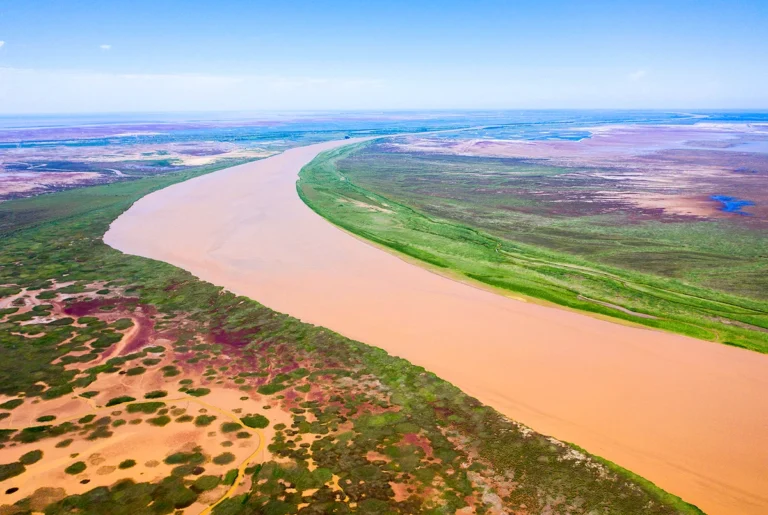
Situated along the southern borderland of Hekou Yao Autonomous County within Honghe Hani and Yi Autonomous Prefecture in Yunnan Province, Hekou Ancient Railway Station occupies a rare geographic setting in a tropical border valley. This transport hub sits right at a strategic river confluence where the silt-red Red River meets the clear, gentle Nanxi River before flowing onward downstream. In both ancient military geography and trade, this spot formed a key pass linking the rugged Yunnan–Guizhou Plateau with the Indochinese Peninsula and Southeast Asia, while the converging rivers define the national border and funnel warm coastal breezes up the valley.
In traditional geomancy and landscape character, the station grounds rest in a classic “backed by mountains, facing water” setting—sheltered behind southern Yunnan’s layered karst mountains while facing the frontier rivers where converging waters symbolize gathering vitality for a bustling border port. Across the water from the platform lies Vietnamese border town Lao Cai, linked organically via cross-border bridges; while steep canyon walls once posed daunting challenges to railway surveyors, surrounding mountain ridges also sheltered the station from fierce storms and harsh highland weather.
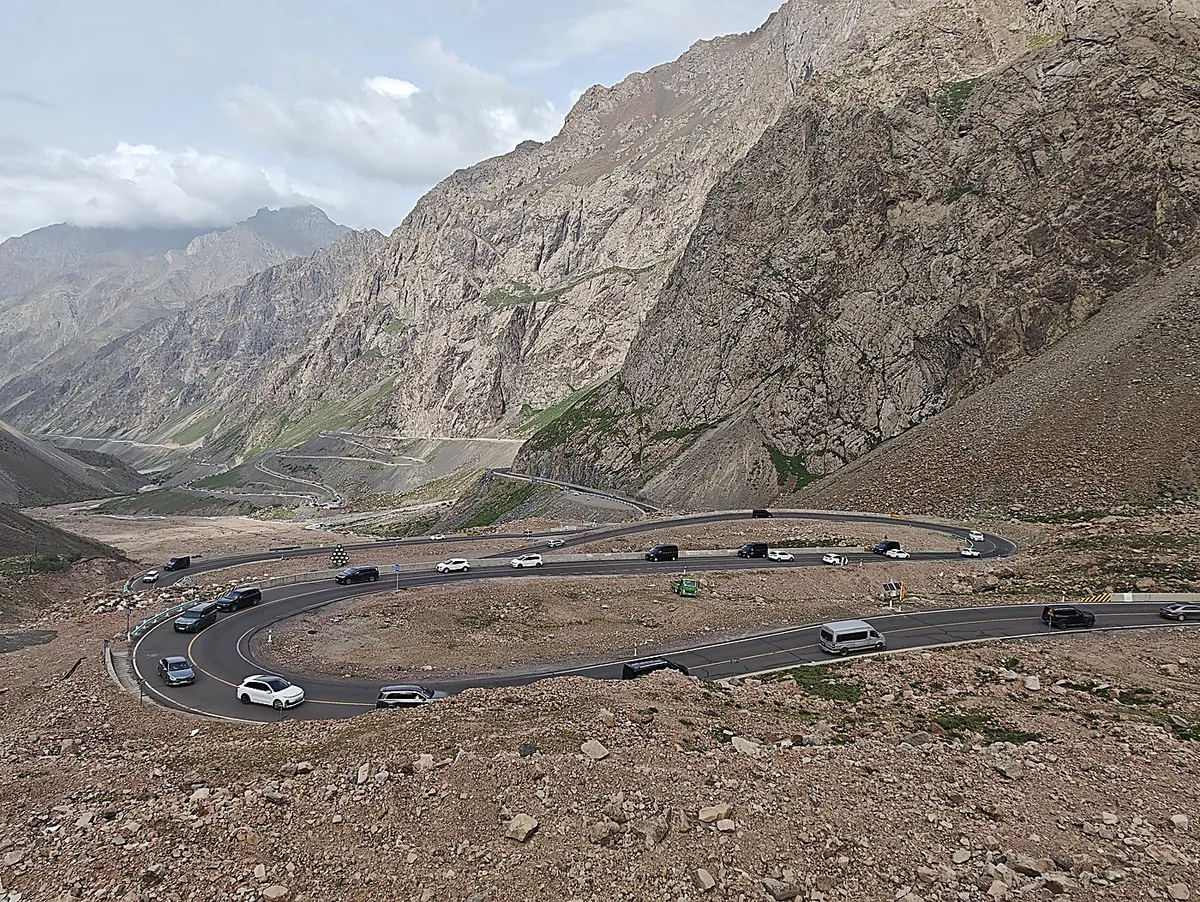
Enveloping the historic station is a lush subtropical valley forest teeming with life. Steep karst limestone cliffs characteristic of Southwest China are draped in dense greenery—cascading vines, mature trees, and ferns overhanging the sparkling waters of the Nanxi River. Deep valley terrain and abundant moisture foster a tropical monsoon microclimate where morning mist drifts gently over the river, wrapping iron rails and ochre walls before dissolving in midday sun—creating a captivating contrast between untamed borderland forest and disciplined Western-inspired railway architecture.
Together, these landforms and waterways compose an iconic panorama celebrated locally as “one bridge linking two lands, two rivers meeting within a single view”—turning Hekou Ancient Railway Station into a scenic and natural heritage lookout right at the frontier gate. Standing on moss-flecked stone steps beside the confluence of the Red and Nanxi rivers, visitors sense nature’s grandeur alongside human engineering in a tranquil border setting.
Admired from across the station grounds, Hekou Ancient Railway Station showcases late-nineteenth-century French colonial eclectic architecture adapted thoughtfully to a humid tropical border valley. Rather than monumental metropolitan scale, it follows a compact provincial railway station plan where understated Neoclassical proportions harmonize with local climate and terrain, reflecting an era when Western mechanical engineering entered Asia’s inland trade routes.
The visual centerpiece is the unmistakable nostalgic main station building finished in warm cream-ochre lime plaster—a signature hue of French colonial civic architecture now weathered with soft moss and age. Crowning the structure is a steeply pitched hip-and-gable roof clad in dark terracotta-ochre tiles designed to shed heavy Red River valley rains swiftly, while tall arched openings and aged wooden louvered shutters encourage natural cross-ventilation and temper subtropical sun beneath wide overhanging veranda eaves.
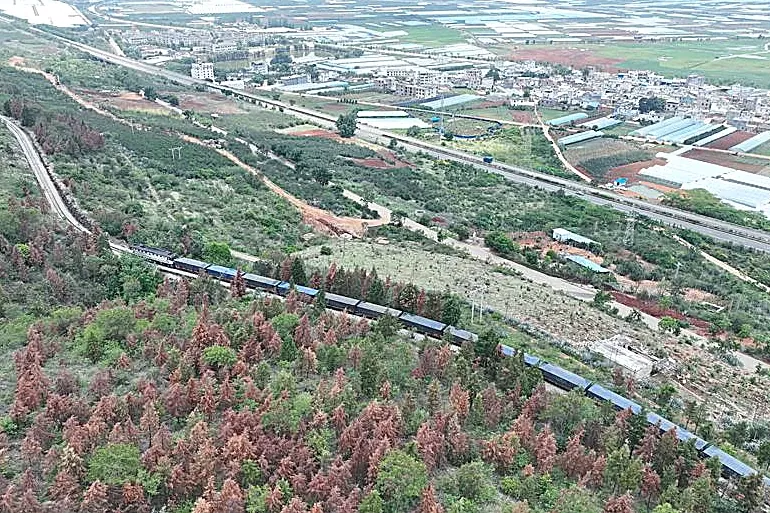
Stepping past the arched veranda opens onto a broad platform preserving nearly intact infrastructure of the historic one-meter meter-gauge railway. Weathered wooden sleepers and iron rails line up neatly alongside early manual mechanical equipment: heavy cast-iron switch levers once operated by hand, moss-rimmed railway mileposts with carved characters, and riveted steel platform canopies enduring across changing eras.
Rather than standing in isolation, the station connects organically with a spur line leading straight toward the Sino–Vietnamese railway bridge spanning the Nanxi River—turning the entire precinct into a living open-air museum of industrial and colonial heritage where every arch, weathered stone wall, and echo of past whistles stirs East–West cultural memory.
As crimson dusk settles over the confluence of the Red and Nanxi rivers, Hekou’s frontier undergoes a magical shift in light and atmosphere. Shedding its quiet daytime look, Hekou Ancient Railway Station transforms after dark into a subtle, enchanting light installation. Warm golden facade spotlights trace French colonial moldings, graceful arched windows, and century-weathered roof tiles—casting a gentle glow against dark valley hills that evokes the early-twentieth-century heyday of the Yunnan–Vietnam Railway linking Yunnan with Hai Phong.
Complementing the station’s glow is public lighting along the Sino–Vietnamese border railway bridge, where sleek LED lines follow steel girders across river currents and shimmer on the water like a luminous ribbon spanning the two shores—turning the historic bridge and century-old station into partners in an ongoing dialogue between past and present.
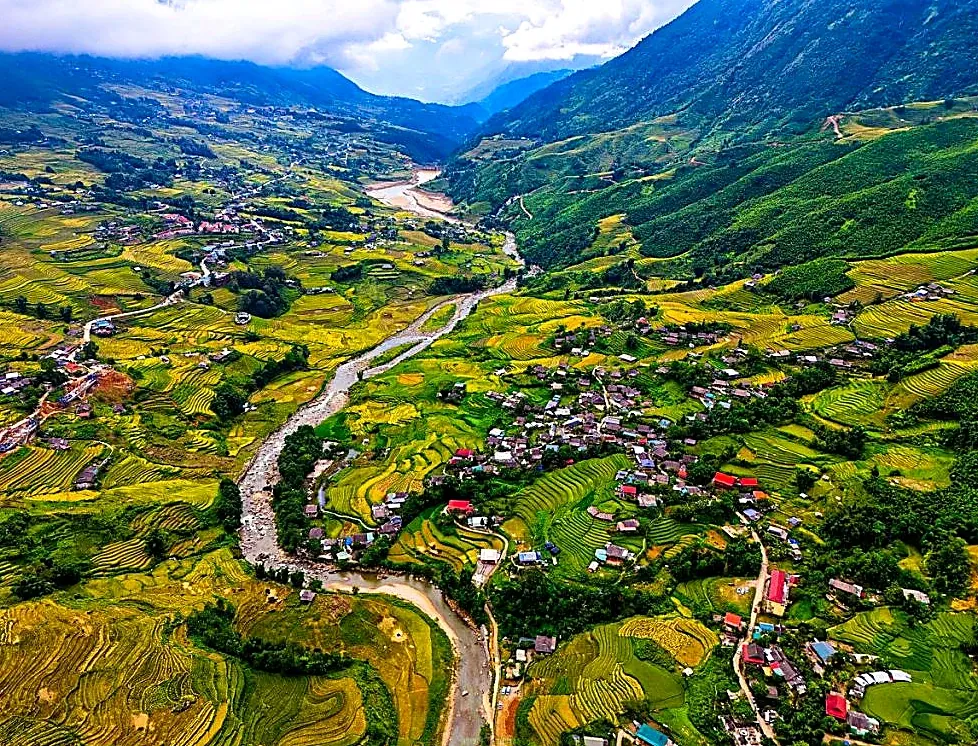
Later in the evening, life around the station forecourt and riverside promenade along the Nanxi River grows lively and bustling. Cool breezes off the water mingle with colorful neon from nearby commercial streets as Mandarin and Vietnamese conversation blends with footsteps on granite paving and street-stall sounds—filled with inviting aromas of Jianshui stinky tofu sizzling over charcoal, spicy Yunnan chili-grilled squid, savory chili-oil rice rolls, and fragrant bamboo-steamed herbal milk tea.
At night around Hekou Ancient Railway Station, quiet meter-gauge rails under warm golden lights harmonize effortlessly with lively border-town streets—offering a poignant contrast between a calm monument of modern history and the vibrant daily rhythm of trade, food, and life beside the border river.
Stepping off the moss-flecked stone platform of Hekou Ancient Railway Station draws visitors into a distinctive frontier culinary map where southern Yunnan flavors blend seamlessly with Red River borderland dishes of northern Vietnam. Over more than a century of steam-rail trade, lanes wrapping around the old station have become a living food archive filled with charcoal smoke, slow-simmered bone-and-herbal broths, and sizzling skewers.
Crowning southern Yunnan specialties around the station is authentic Yunnan Crossing-the-Bridge Rice Noodles (Guoqiao Mixian). Served steaming hot with a glossy golden layer of chicken oil sealing in heat over a rich broth simmered from chicken bones and Xuanwei ham, diners slip raw quail eggs, paper-thin pork slices, stream fish, and wild blossoms into the piping-hot broth before adding silky white rice noodles. Nearby, Jianshui grass-芽 (caoya) rice noodles bring crisp, sweet mountain freshness, while Honghe rice rolls shine beneath fiery chili oil, fruit-fermented vinegar, and savory bean paste.
Equally captivating is the borderless culinary exchange with Vietnamese flavors embraced locally: fresh banh cuon steamed silk-thin over kettles and rolled with minced pork and wood-ear mushrooms served with crisp greens and sweet-tangy dipping sauce; golden charcoal-grilled pork belly dipped in zesty lime-and-chili cham cheo; and crisp charcoal-toasted banh mi layered with rich liver pâté, pickled vegetables, and fresh cilantro.
As night settles over the station’s dark terracotta roof, evening flavors slow down beside classic Vietnamese drip-coffee (ca phe phin) corners—where dark coffee drips slowly through aluminum filters over sweet condensed milk—alongside bowls of chilled tropical fruit dessert brimming with sweet jackfruit, rambutan, ripe mango, and coconut milk that cool the warm Red River valley air.
For a smooth and accurate pilgrimage into Yunnan–Vietnam railway history, travelers must first distinguish clearly between two stations sharing the Hekou name in Hekou Yao Autonomous County. Our historic destination is Hekou Ancient Railway Station—home to the two-century-spanning meter-gauge tracks, now open as a free heritage walk and historical site rather than an active commercial passenger depot. By contrast, Hekou North Station several kilometers north is a modern standard-gauge rail hub operating high-speed bullet trains and mainline services toward Kunming and across China; searching accurately for the historic station beside the Nanxi River prevents map navigation mix-ups.
Reaching the colonial station grounds is effortless right after crossing the border: from Lao Cai International Border Gate, after completing exit formalities on the northern bank of the Red River and entering Hekou, simply stroll a few hundred meters along Renmin Road or the breezy river embankment to spot the station’s nostalgic ochre walls and aged roof tiles. Grounds remain open freely day and night, with golden photography light around early morning mist or late afternoon sunset.
Because Hekou Ancient Railway Station sits along a sensitive frontier zone right beside the Hukou railway bridge linking China and Vietnam, strict security rules apply. Always carry valid identification—either a border travel permit or a passport with a valid visa—for inspection by border or armed police, and strictly observe security regulations: never fly drones, cross boundary warning lines, or aim cameras at military guard posts or patrolling officers.
Geographically, Hekou sits low inside the Red River valley with a warm, humid tropical monsoon climate year-round. On warm days, radiated heat from stone ballast and brick walls can feel sultry, so pack breathable natural-fiber clothing, comfortable flat-soled walking shoes for gravel and wooden sleepers, plus a wide-brimmed hat, sunglasses, sunscreen, and insect repellent for lush riverside greenery along the Nanxi River.
Surrounding the old station is a rich cultural mosaic where visitors can linger beside historic rails, touch weathered hardware, and savor roasted milk tea, silky rice rolls, and southern Yunnan specialties. For a well-paced trip uniting railway heritage, borderland food, and easy entry formalities, consider a curated Hekou discovery tour package designed for a rewarding and memorable borderland experience.