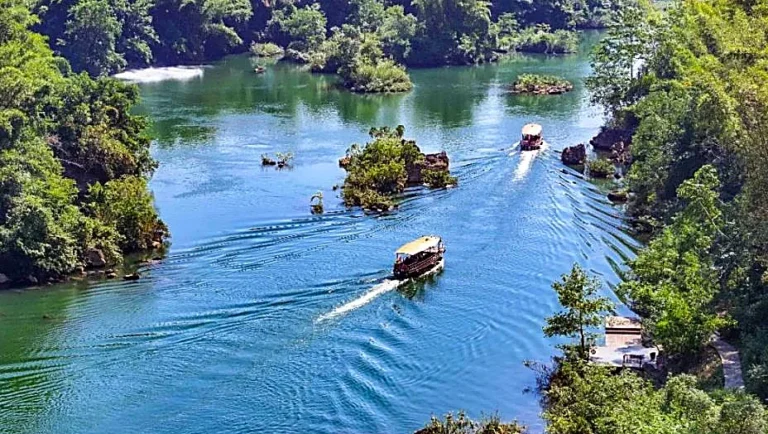
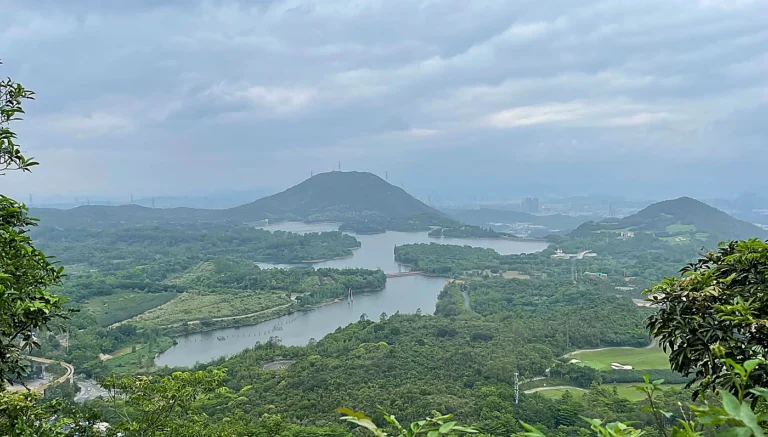
At the northeastern frontier of the Fatherland, the serene Ka Long River branches into the historical Bac Luan stream, embracing the Mong Cai border strip before merging into the vast waves of the Gulf of Tonkin. Spanning the flow of time and historical historical vicissitudes, this river-confluence land has consistently maintained a strategic vanguard position, serving as a sturdy shield protecting mountains and rivers while functioning as a gateway opening to prosperous trade worlds. Amidst the extraordinary development picture of one of the North’s most dynamic border economic cities, the presence of the Bac Luan 2 Border Gate in Mong Cai marks an epoch-making transformation. The project not only thoroughly resolves massive commodity clearance challenges between two neighboring economies but forges a majestic architectural symbol, connecting the two border cities of Mong Cai in Vietnam and Dongxing within the Guangxi Zhuang Autonomous Region, China.
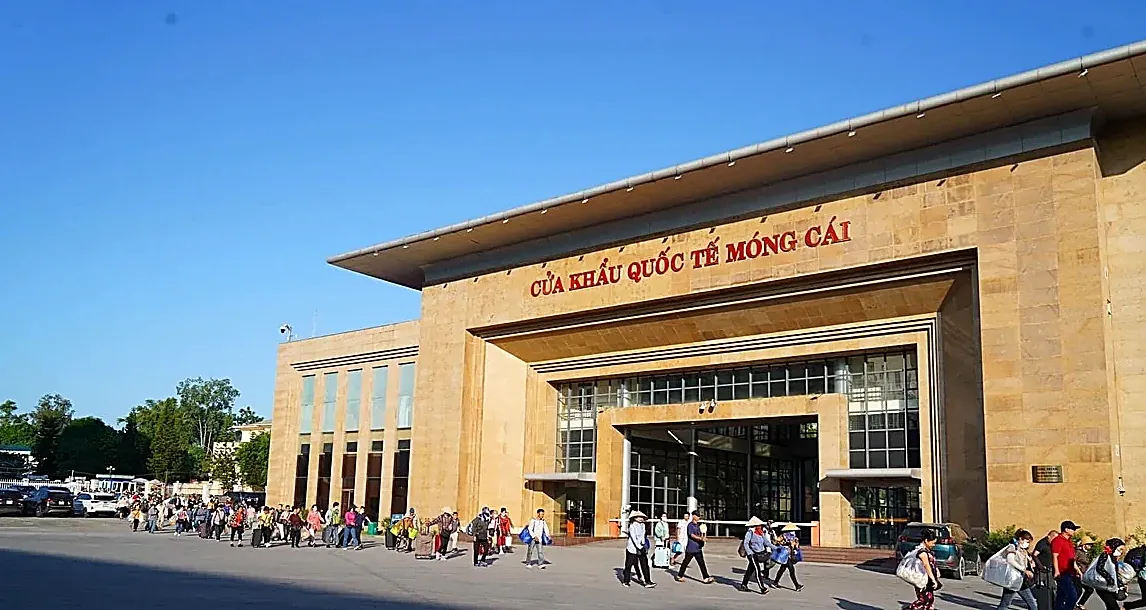
Looking back at the past, the rhythm of the first Bac Luan Bridge alongside its international border gate building—commenced during the early 1990s on grounds spanning over nine thousand four hundred square meters, undergoing comprehensive upgrades in autumn 2007—successfully fulfilled its historical mission as the sole lifeline connecting both border banks for decades. Yet, as bilateral trade turnover grew astronomically and China became one of Vietnam’s leading trade partners, pressures weighing upon old Bac Luan bridge infrastructure escalated daily. Localized congestion among container trucks carrying agricultural produce, fresh seafood, and electronic components necessitated an urgent requirement for a new river-crossing bridge featuring more modern scales, separating commercial vehicle flows from central urban spaces to forge breakthrough leverage for the key economic triangle of the Northeast.
Situated roughly 3.2 km downstream of the Ka Long River from the existing Bac Luan bridge, Bac Luan II Bridge originated from deep strategic visions between both governments. The prestressed reinforced concrete cable-stayed bridge stretches across border waters with a total bridge length reaching 618 meters, expanding bridge decks up to 27.7 meters featuring four modern motor vehicle lanes combined with safe medians and airy pedestrian corridors. The Vietnamese-sovereignty section measures 154.5 meters, while the Chinese-managed section spans 463.5 meters, meeting precisely at a solemn red-painted demarcation line crossing the river’s heart. From its very first day of official commercial operation, customs authorities recorded over one hundred transport vehicles completing smooth import-export clearance procedures, heralding an unprecedented bustling trade era upon this frontier land.
The project’s birth is inseparable from seamless inter-regional transport networks, directly linking into the terminus of the Van Don – Mong Cai arterial expressway axis via connecting roundabouts and provincial road DT.335 featuring flexible cross-section widths ranging from twelve to seventeen meters. This represents the final puzzle piece completing continuous cross-province expressways from Hanoi Capital, Hai Phong, and Ha Long right up to border lines, turning Mong Cai into the shortest overland integration gateway connecting ASEAN nations with China’s expansive Southwest markets. Synchronized planning spaces surrounding border gate areas open vistas for modern logistics service development, bonded warehouse systems, dry ports (ICDs), and joint specialized inspection centers, minimizing storage costs and goods transit times for businesses from both nations.
Amidst explosions in both cargo flows and border tourism demands, scientific traffic channeling strategies between both bridgeheads have been synchronously deployed by authorities from both borders. Accordingly, the Bac Luan I bridge area is exclusively dedicated to serving border residents crossing for family visits, purchasing essential internal consumer goods, alongside traditional pedestrian groups. Conversely, the Bac Luan 2 Border Gate in Mong Cai assumes complete responsibilities clearing oversized/overweight vehicles, industrial cargo container trucks, and key agricultural export goods, guaranteeing heavy load vehicles no longer snake through bustling inner city streets, returning peaceful spaces to daily routines of citizens on both banks.
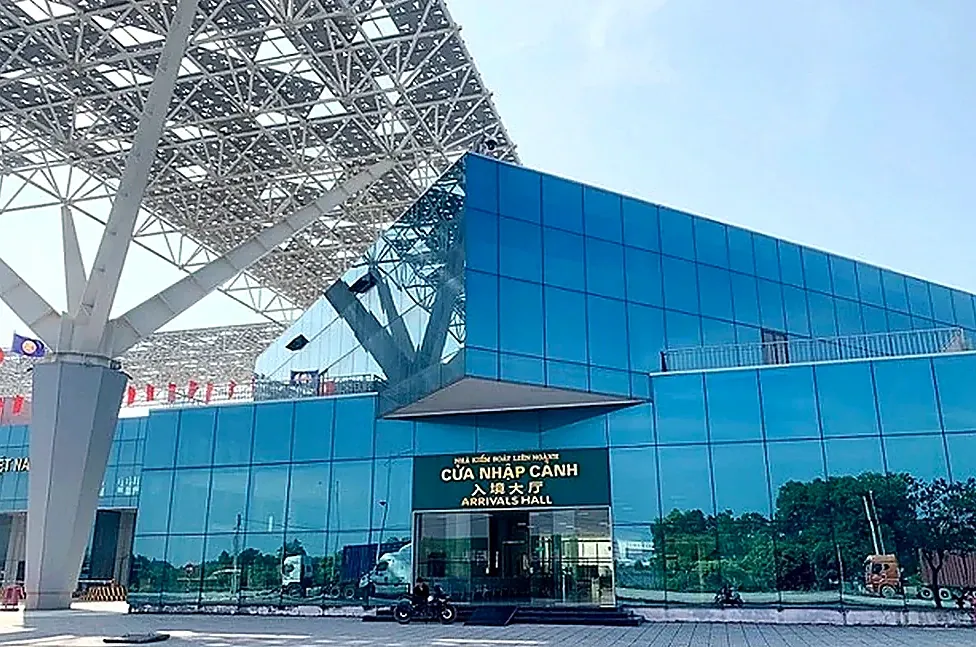
Notably, a historical turning point unfolded when authorities from both nations officially agreed to expand exit-entry functions for passengers across Bac Luan II Bridge. Beginning with pilot traffic channeling for citizens holding ordinary passports and tourist border passes, over four hundred tourist arrivals eagerly completed exit procedures across this new facility during its very first operating morning. Presently, rather than crowding narrow pedestrian walkways at old checkpoints, tourists registering for all-inclusive 1-day Dongxing tour programs experience spacious, imposing check-in facilities at the new joint control building featuring extended clearance hours from 7:00 AM to 8:00 PM Hanoi time daily, corresponding to 8:00 AM to 9:00 PM Beijing time.
Amidst bustling foreign trade rhythms, customs procedures at Bac Luan 2 Border Gate are standardized against strictest international standards. Every cargo truck preparing to roll across border lanes links with rigorous documentation dossiers comprising international commercial contracts, commercial invoices, detailed packing lists, bills of lading, alongside specialized animal and plant quarantine certificates. Thanks to comprehensive operations of VNACCS/VCIS automated clearance systems and national single-window electronic customs mechanisms, independent transport declaration data or transit documents process in mere seconds, helping thousands of tons of durians, dragon fruits, and lobsters from central and southern farmers maintain pristine freshness when distributed directly into massive supermarket chains across Chinese metropolises.
Stopping not merely at traditional mechanical infrastructure achievements, this region is witnessing breakthrough technological revolutions via smart border gate model construction projects for Mong Cai – Dongxing. Based on joint survey minutes between Quang Ninh Province and the People’s Government of the Guangxi Zhuang Autonomous Region, both sides are urgently installing unmanned automated crane systems, AI license plate recognition systems, multi-tiered optical cameras, and AGV automated guided vehicles transporting containers across specialized lanes. Once smart digitization matures, cross-border supply chains will operate continuously twenty-four-seven without depending on human labor bottlenecks, inaugurating new chapters for never-sleeping border gate models at the country’s northernmost pole.
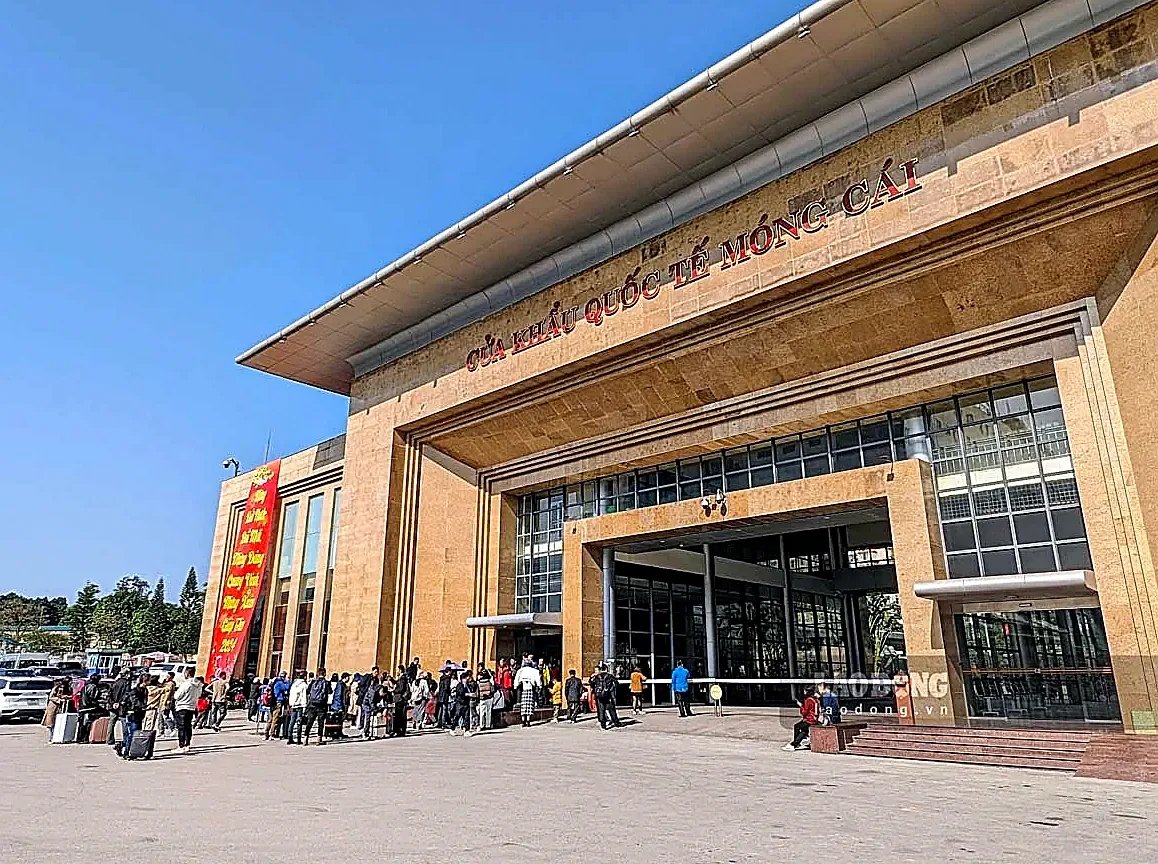
For travel communities and culture exploration enthusiasts, mastering immigration regulations represents key foundations ensuring smooth journeys. Vietnamese citizens selecting professional immigration tour services can flexibly utilize two valid identity documents: passports remaining valid for at least six months accompanied by valid Chinese visas, or 30-day single-entry tourist border passes. Border guard control procedures here strictly uphold principles requiring travelers to exit through the exact border gate used for entry, ensuring transparent legal compliance and supreme border discipline between two neighboring nations sharing friendly borders.
Moments strolling across Bac Luan II Bridge deliver deeply contemplative emotions to anyone setting foot here. Standing amidst red-painted boundary lines on sturdy concrete surfaces, one side represents beloved motherland Vietnam featuring red flags with yellow stars fluttering atop solemn joint control buildings, while the other features modern architectural control stations of Dongxing city, making travelers vividly perceive breaths of peace, friendship, and cooperative development radiating powerfully. Cool sea breezes blowing upstream into Ka Long River carry salty oceanic scents, banishing fatigue from long-distance highway travels.
Frontier exploration journeys via Bac Luan II similarly demand individuals maintain legal awareness and civilized public conduct. Border areas represent military security perimeters strictly controlled by steadfast border guard soldiers; consequently, filming or photography at security guard posts or passport control desks is strictly prohibited. Organizing personal luggage neatly, declaring cash amounts exceeding legal limits honestly, and strictly avoiding items falling under quarantine prohibited lists such as fresh meats, seeds, or exotic agricultural produce ensures smooth X-ray security scanning procedures in mere blinks.
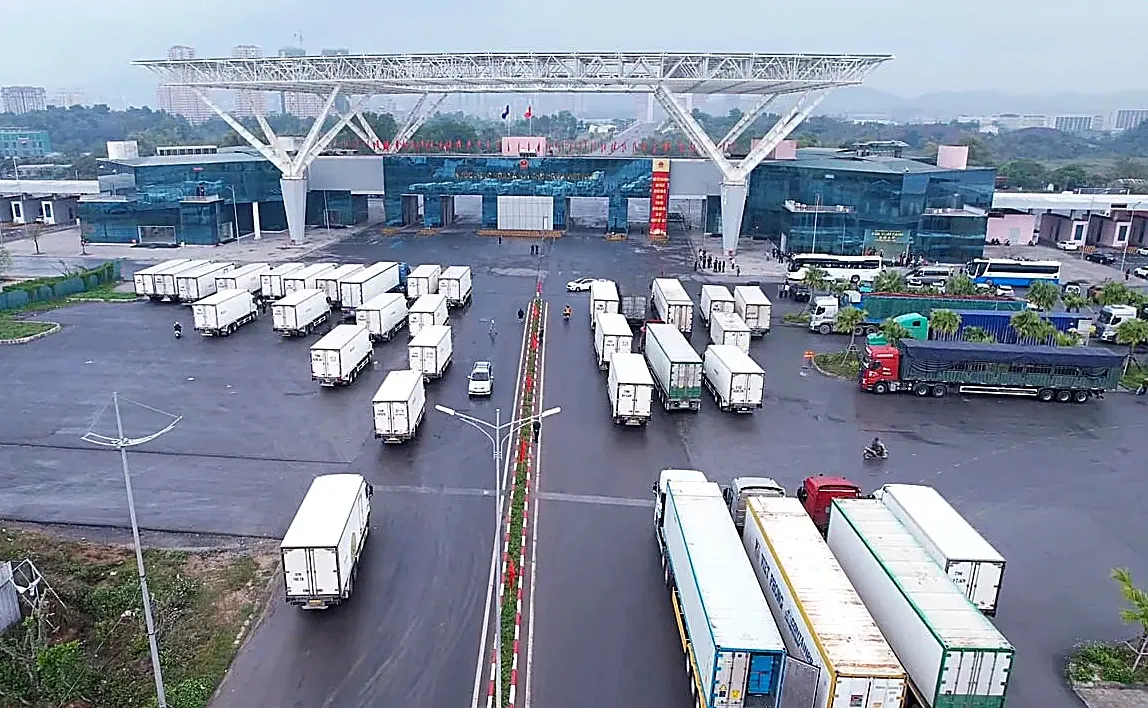
The superior convenience of new border gates likewise enables travelers to easily chain rich sightseeing itineraries combining quintessence from both lands. Prior to completing formalities crossing borders, visitors spend early mornings visiting Sa Vi Cape at wave crests welcoming first sunlight across S-shaped coastal strips, strolling ancient casuarina groves along celebrated Tra Co beach, or admiring contemplative Tra Co communal houses steeped in Later Le Dynasty architecture. When border gates open pathways into neighboring lands, multi-hued cultural experiences across Wenchang Pagoda, China-Vietnam People’s Friendship Park, or Guizhou food streets fragrant with Dongxing signature spices turn trips into unforgettable deep memories.
Through miraculous transformations of urban spatial planning and connecting transport infrastructure, Bac Luan 2 Border Gate in Mong Cai has risen into an inseparable link within marine economic and border trade value chains across the entire Northeast region. Far beyond heavy concrete blocks or daily vehicle traffic statistics, the project constitutes valuable historical monuments for integration aspirations, reflecting wisdom and unity of two nations sharing common peace aspirations. Standing on breezy bridge spans listening to distant ocean-going ship horns echoing from the Gulf of Tonkin, travelers fully perceive abundant vitality of sacred border strips stepping forward toward open seas daily.