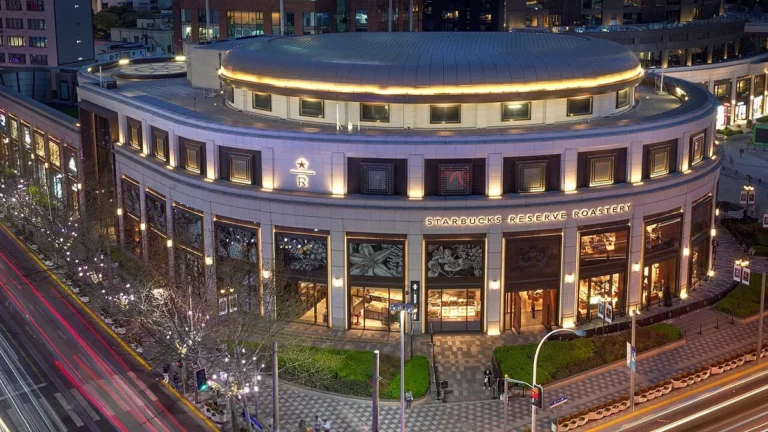
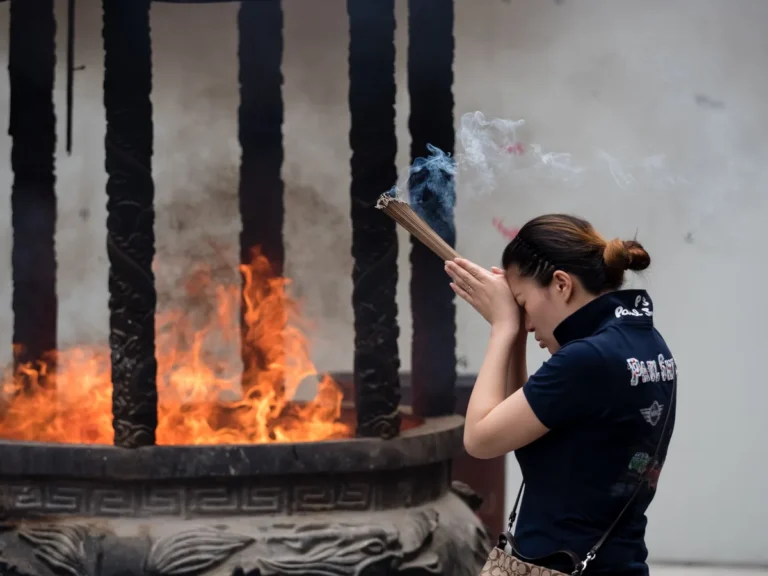
Stepping back in time to the years of reform and breakthroughs for the land along the banks of the Huangpu River, the Jin Mao Tower in Shanghai (上海金茂大厦) emerges not only as a symbol of contemporary prosperity but also as the crystallization of a grand strategic vision deeply imbued with the imprint of the times. Situated precisely at coordinates 121°30′ East and 31°14′ North, the tower stands majestically in the center of the Lujiazui financial and trade zone, within the Pudong New Area of the glamorous city of Shanghai. Few know that the name Lujiazui harbors deep historical roots dating back to the mid-Ming Dynasty, bestowed to commemorate the lineage of the renowned Confucian scholar Lu Shen. Through historical shifts and the turns of time, from a riverside alluvial tract dominated by agriculture and traditional trade, this place has undergone a spectacular metamorphosis to become the new financial heart of China and the wider Asia-Pacific region, where the feudal past and super-technological future harmonize within an unconstrained architectural space.
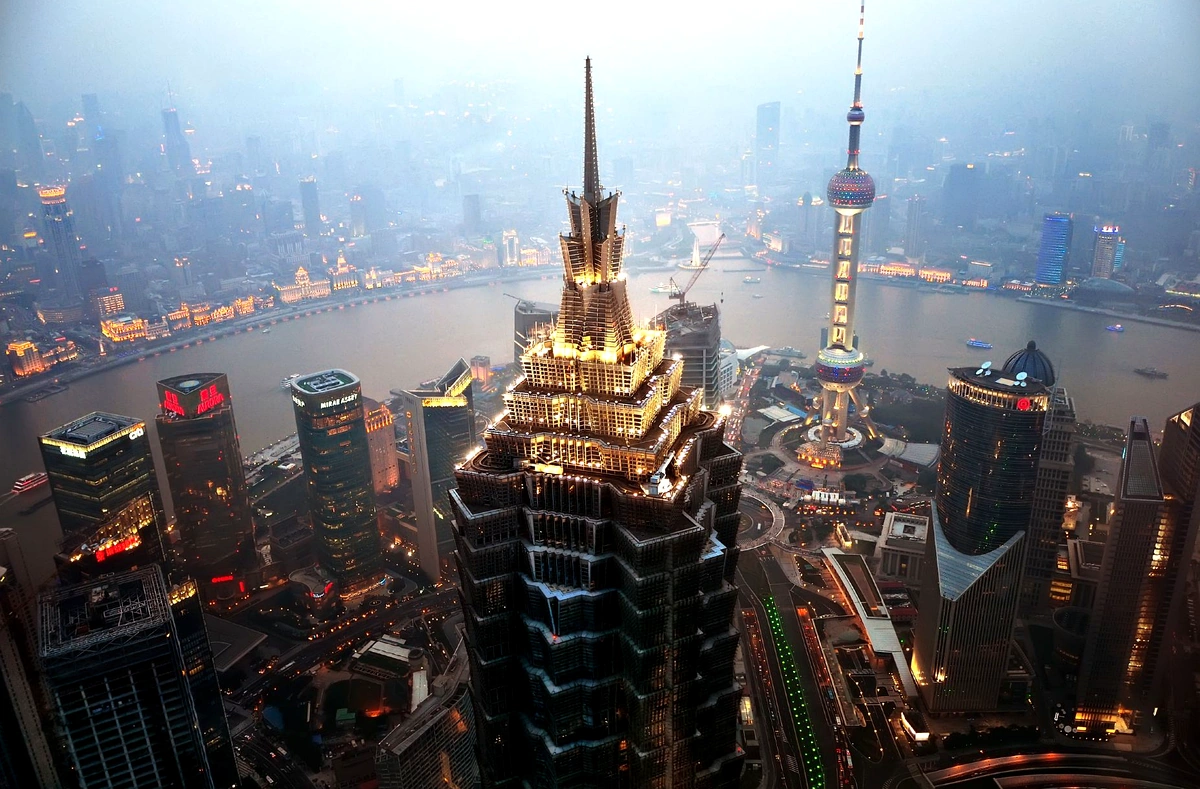
The formation of this skyscraper is intertwined with milestone state decisions made in the late 20th century, notably the far-reaching strategic vision of Comrade Zhu Rongji alongside the concerted efforts of major financial conglomerates of that era. The overarching objective was to transform Pudong into a global financial center capable of competing on equal footing with long-standing economic hubs such as Wall Street and London. Within this ambitious master canvas, the Jin Mao Tower was positioned as a key project shouldering the historic mission of altering Shanghai’s skyline. On May 10, 1994, the first blows of pickaxes officially sounded on the soil of Lujiazui, inaugurating a bustling construction site operating day and night—testament to the willpower and lightning-fast construction capabilities of China’s modern building industry during the reform and opening-up period.
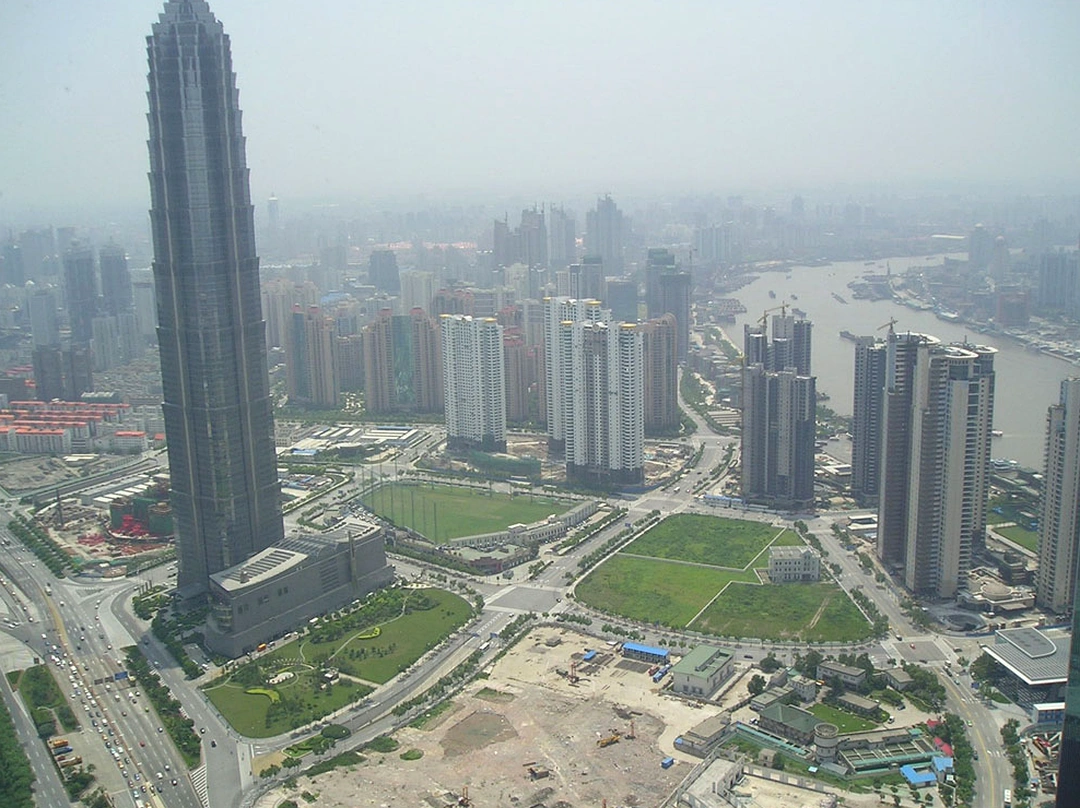
The journey to create this architectural wonder is a sequence of proud chronological milestones for the engineers and workers directly participating in the project. Following nearly three years of continuous construction involving millions of tireless labor hours, on August 28, 1997, the structure was officially topped out, asserting its peak stature across the Pudong skies. Following the intricate interior finishing and technical systems phase, on March 18, 1999, the tower entered its trial operation stage, capturing the keen attention of professional circles and the international public. Just months later, on August 28, 1999, the Jin Mao Tower officially opened amidst the boundless pride of the city’s residents, marking a modern architectural milestone of exceptional historical significance to commemorate the 50th anniversary of the founding of the People’s Republic of China.
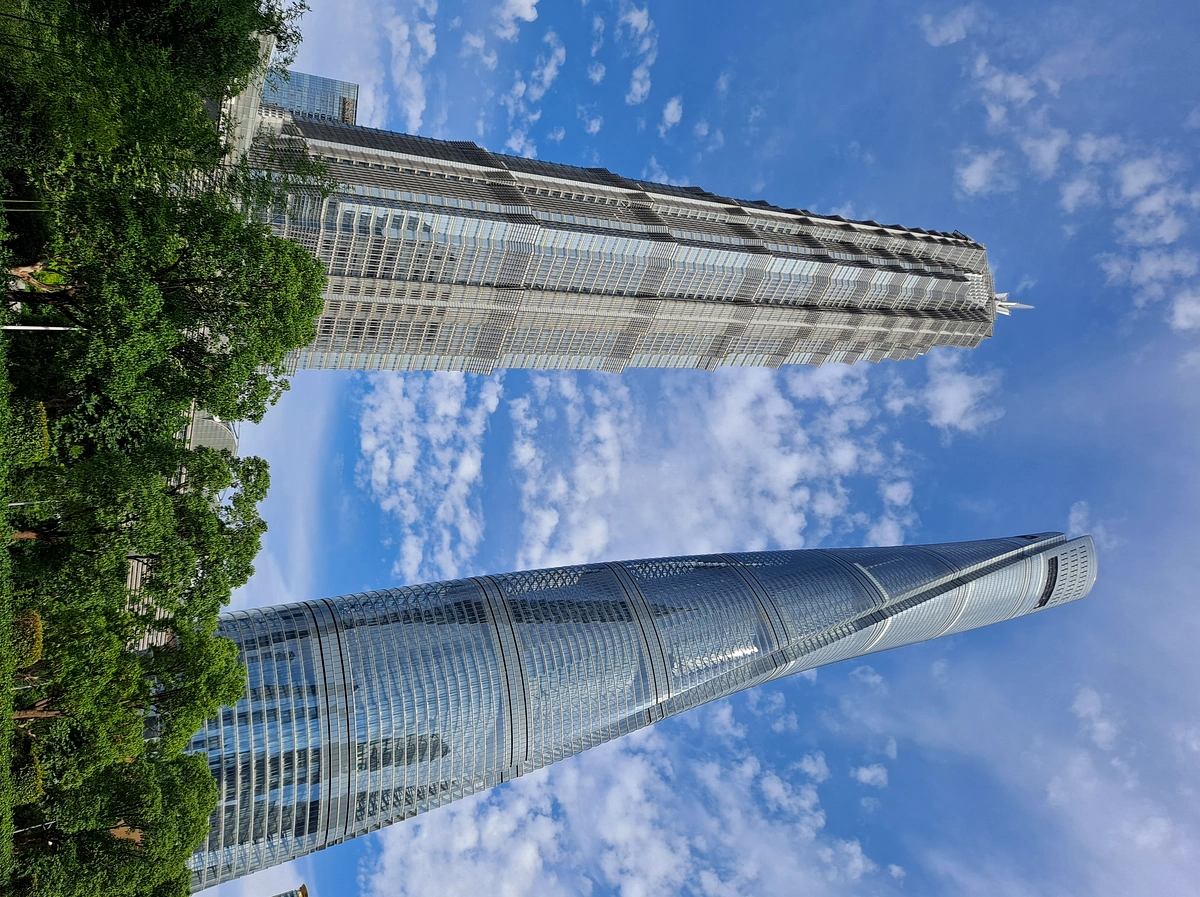
To breathe life into a colossal mass harboring the aspirations of an entire nation, the project organizers placed their absolute trust in talented architect Adrian Smith from the world-renowned architectural firm SOM (Skidmore, Owings & Merrill). Through his exceptional talent and profound comprehension of Eastern culture, he forged a masterpiece perfectly combining traditional Chinese aesthetic principles with the pinnacle of modern super-high-rise technology. Drawing inspiration from the robust growth of bamboo amidst storms and the structure of multi-tiered ancient pagodas, the Jin Mao Tower’s massing tapers toward its summit following sacred proportions, symbolizing longevity, prosperity, and the aspiration to reach the cosmos. Every carved detail—from the shimmering glass and aluminum alloy curtain wall system to the interior decorative motifs—evokes echoes of classical architectural art, transforming the tower into a wondrous bridge between millennial heritage and the global digital era.
Lujiazui, impressively present right upon the fertile Yangtze River Delta alluvial plain, possesses a flat terrain with a dense layer of quaternary sediment, establishing a natural foundation that bears both the imprint of natural alluvial accumulation and uniquely distinct geographical dimensions. Amidst this expansive space, the gentle yet powerful Huangpu River curves into a magnificent Omega-shaped bend, cradling the entire peninsula within its embrace in accordance with the renowned feng shui configuration known as *Yudai huan yao* (Jade belt wrapped around the waist), evaluated by scholars and high-ranking feng shui masters as an exceptionally auspicious geomantic formation for gathering wealth, prosperity, and auspicious energies converging from all four directions. Right upon this sacred soil rich in vitality, the Jin Mao Tower in Shanghai (上海金茂大厦) rises majestically as a symbol of the crystallization between profound Eastern philosophy and cutting-edge modern architectural thinking, reshaping the skyline of China’s preeminent super-metropolis.
From the perspective of spatial planning and traditional Five Elements cosmological philosophies, the 420.5-meter height and 88-story structure of the skyscraper are not merely quantitative engineering figures, but carry deep spiritual imprints as the number 8 has long been associated with concepts of wealth and fortune in Asian culture. Beyond that, the overall floor plan of the structure is designed in an octagonal shape, directly corresponding to the Qian trigram in the Book of Changes (I Ching), signifying resilience, unyielding willpower, and vibrant vitality transcending space and time. The tower’s massing was created following the principle of progressive tapering from bottom to top, perfectly simulating the shapes of traditional Chinese bell towers and Buddhist pagodas (*pagodas*). This structural innovation not only delivers nostalgic, majestic aesthetic value amid ultra-modern spaces, but shoulders the monumental feng shui mission of anchoring riverside energy arteries, balancing vital breaths, and establishing a flawless symmetrical “Double dragons playing with a pearl” formation that engages harmoniously with the historical western riverbank complex steeped in Western architectural imprints.
The engineering procedures required to erect an iconic structure upon the soft alluvial sediments of the delta plain represent a miracle of modern construction engineering, demanding rigorous and sturdy foundation solutions. Due to muddy soil and soft ground characteristics, world-leading engineers and experts had to execute deep foundation piling reaching tens of meters down, drilling deep into solid strata beneath to guarantee absolute load-bearing capacity for the massive structural mass weighing hundreds of thousands of tons. The delicate synthesis between a sturdy central reinforced concrete core and a flexible perimeter steel frame generated a dual load-bearing structural system, helping the tower stand firm against coastal gales while effectively neutralizing oscillations induced by wind resonance or earthquakes. Realizing the Jin Mao Tower is not merely a tale of building materials and super-high-rise technology, but a vivid testament to the art of reconciling Western scientific knowledge with Eastern mystical spatial philosophy—whereby every architectural line and block angle narrates tales of a Shanghai ceaselessly reaching out to the open seas while steadfastly preserving millennial cultural roots.
Stepping into the architectural interior of the Jin Mao Tower in Shanghai (上海金茂大厦), anyone will be awed by a global engineering marvel conceived and realized through the pinnacle collaboration between Skidmore, Owings & Merrill (SOM) and the Shanghai Architectural Design and Research Institute. Soaring majestically with a total height of 420.5 meters and a gross floor area reaching 290,000 square meters, the tower is not merely a colossal commercial skyscraper, but a proud manifesto of humanity’s capacity to conquer physical limits. To support a massive material mass amidst a coastal plain renowned for oceanic gales and typhoons, engineers designed a remarkably sturdy foundation and load-bearing structural system, utilizing 576 steel pipe piles driven nearly 80 meters deep through soft geological strata to anchor firmly into solid bedrock beneath.
Enclosed within its modern glass and metal skin lies a unique structural skeleton, perfectly combining Western super-structural engineering with Eastern balance philosophy via a Concrete Core with Super-columns and Outriggers system. This structure is defined by 8 super-columns made of reinforced concrete with diameters ranging from 3 to 4 meters, featuring inner cores packed with high-strength concrete to maximize vibration dampening under gale-force pressures. Notably, to tightly link the central core with the exterior column system, architects arranged 6 tiers of steel outrigger trusses meticulously across floors 16, 30, 42, 52, 66, and 78. Thanks to this web of load-bearing steel trusses interwoven like leaf veins, the Jin Mao Tower stands resolute against the harshest weather conditions, guaranteeing absolute safety for internal operations.
paralleling structural grandeur is peak aesthetic value distilled from Chinese cultural history. Sculpturally, the Jin Mao Tower eschews the emotionless geometric forms of Western industrial architecture, instead mimicking traditional multi-tiered wooden tower structures of the ancient Yingxian Wooden Pagoda, delicately combined with characteristic motifs of the Han and Tang Dynasties. Viewed from afar, the tower’s silhouette recalls Buddhist pagoda tiers rising into cloud layers, featuring *dougong* bracket systems, stylized cloud motifs, and golden ratios applied precisely across moldings. This synthesis of traditional manual craft manufacturing and contemporary spatial rendering art transforms the tower into a colossal sculpture amidst Pudong, where millennial architectural excellence is reborn within a new-century urban icon.
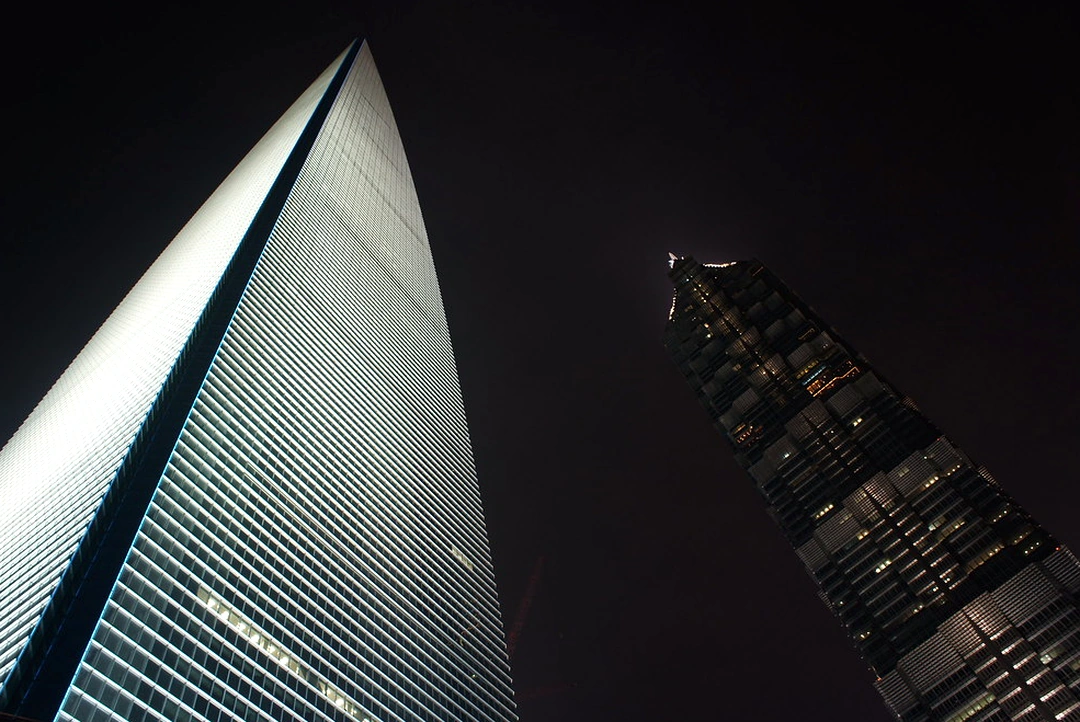
When night falls and urban life in Lujiazui transitions into a new stratum of splendor, the Jin Mao Tower in Shanghai (上海金茂大厦) stands not merely as a colossal structure of steel and glass, but transforms into a living entity of lighting art and contemporary culture. The tower’s nocturnal lighting system is an engineering marvel created by world-leading lighting design practices, sophisticatedly combining advanced LED technology with high-powered metal halide systems. Under the talented hands of designers, luminous beams do not merely perform illumination duties but are meticulously calculated to honor characteristic octagonal architectural lines and tapering tiers, interweaving warm golden tones with pure cool whites. This color harmonization produces a captivating optical illusion whereby the spire rising through Shanghai’s night skies resembles a glowing treasured sword piercing cloud layers, asserting the iconic tower’s authority across hyper-urban spaces.
Crossing the brilliant exterior lighting shell to enter interior spaces, nighttime life at the Jin Mao Tower unveils another awe-inspiring depth where architecture and performing arts intersect at their peak. From the 53rd floor rising up to the 87th floor, the Grand Hyatt Shanghai conceals a true spatial masterpiece: a colossal cylindrical atrium reaching 142 meters high spanning 33 floors. By night, this space transforms into a peerless musical and visual cathedral globally. Beneath the deep, breezy roof dome where guestroom corridors cast shadows like cloud tiers encircling an artistic abyss, elite chamber music performances and digital light shows featuring “time tunnel” effects frequently unfold. The melodious sounds of violins or pianos echoing through the hollow cylindrical structure generate miraculous resonance effects, enveloping visitors in awe, suspended between reality and sci-fi dimensions.
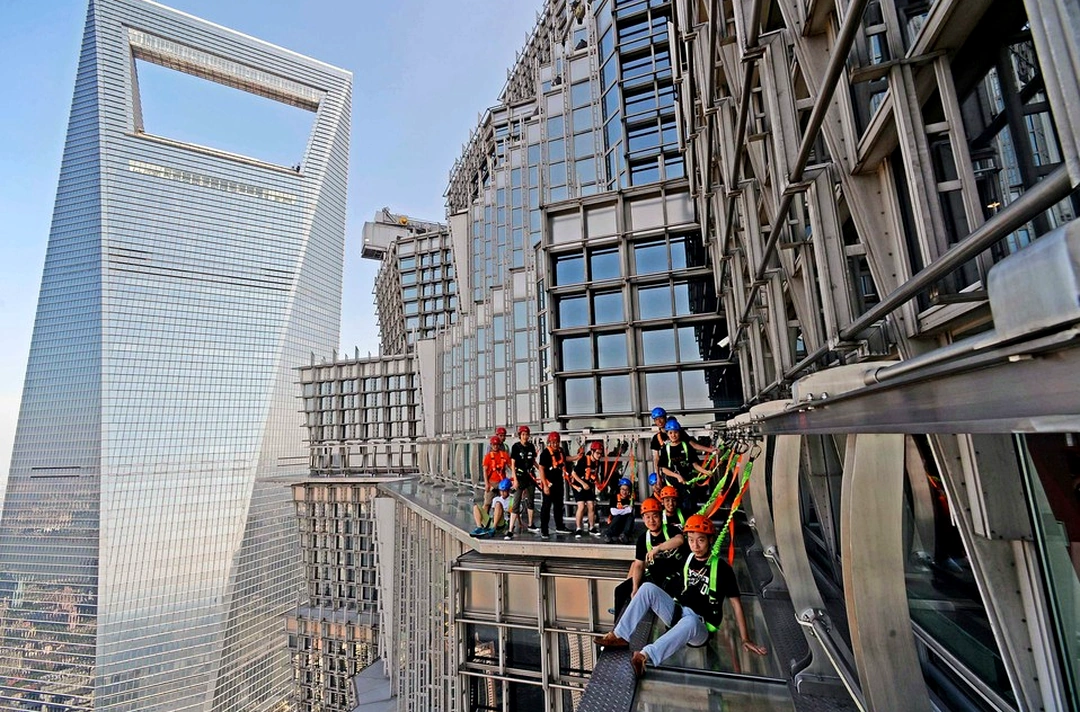
Nightlife and artistic expressions reach their zenith upon stepping onto the 88th floor at the Skywalk observation deck, where panoramic cityscapes blend seamlessly with traditional and contemporary cultural values. Beyond encapsulating glowing vistas of the Bund and Pudong, the 88th floor is planned as a living exhibition space honoring China’s intangible cultural heritage. The venue frequently exhibits sophisticated handicraft artworks, hosts tailoring and Shanghai *qipao* fashion performances carrying historical fusion breaths, alongside philosophical contemporary ink-wash exhibitions. Beneath dim lighting reflecting through transparent tempered glass looking down upon endless traffic flows, visitors standing at Skywalk perceive the intense pulse of a sleepless Shanghai, where millennial pasts and dazzling futures unite within every breath of peak architectural art.
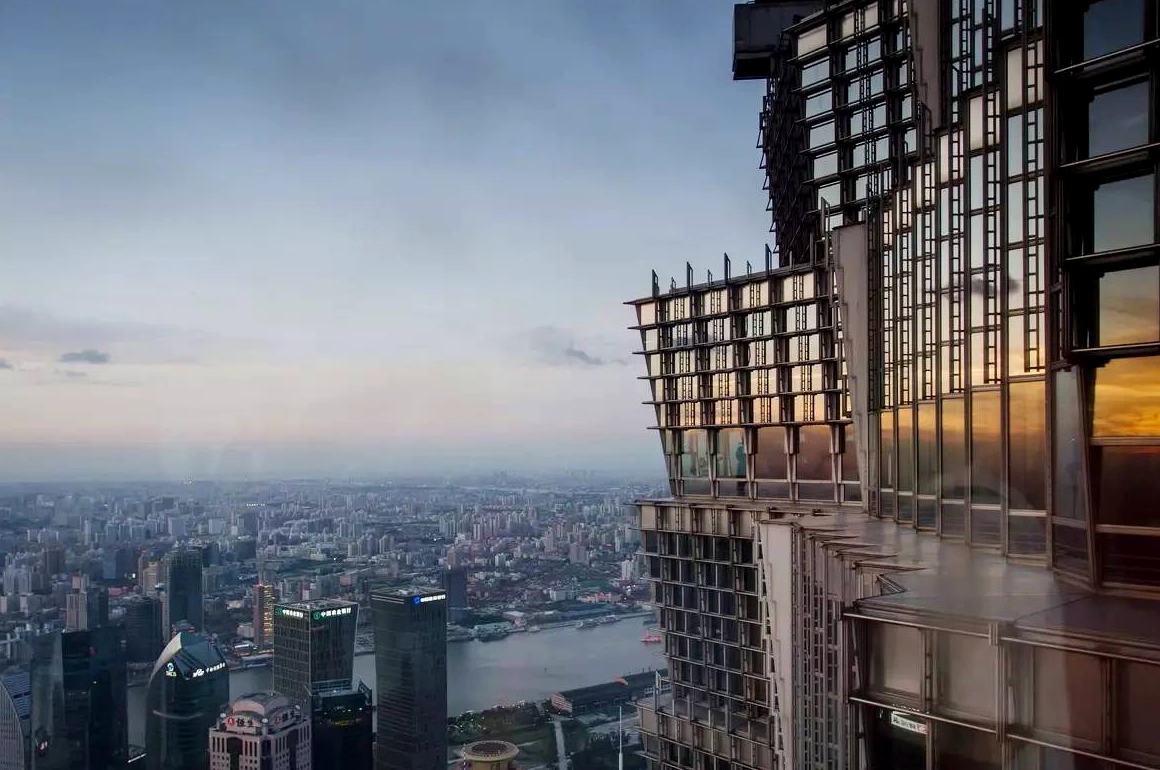
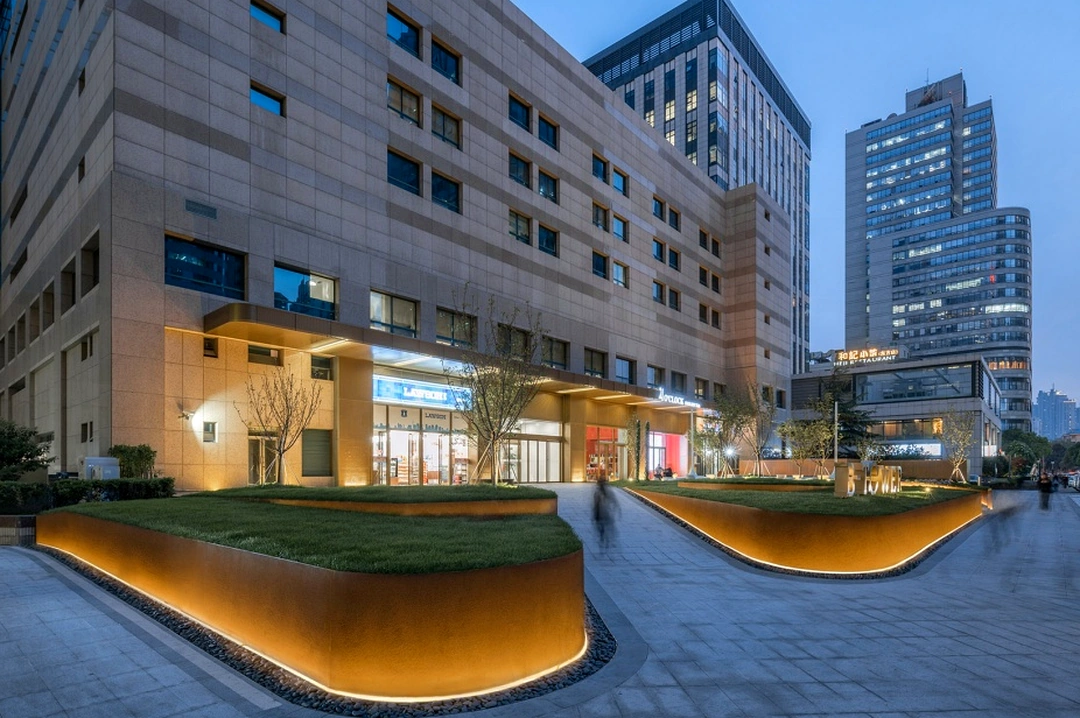
Exploring a monumental architectural icon is never complete without overlooking the cultural depth of taste preserved across generations, where gastronomy transcends biological sustenance to become a refined language expressing Pudong spirits. Culinary systems at the Jin Mao Tower represent the pinnacle of Shanghai gastronomy, highlighted by the renowned Baibang school alongside powerful fusions of contemporary international cuisine. Right on the fifth floor of the podium block, the Jin Mao Club emerges as a living museum of supreme heritage flavors, where time seems suspended across meat cuts and broths simmered with dedication and master craftsmanship by former imperial court chefs. The highlight cementing this restaurant’s renown is Grandma’s braised pork belly, a culinary masterpiece prepared via four strict traditional manual steps including frying, stir-frying, braising, and reduction. What achieves perfection is culinary artisans omitting soy sauce entirely, utilizing raw rock sugar combined with low-heat simmering arts across hours. Through slow-cooking methods, pork belly slices absorb rich seasonings, transforming into eye-catching crimson red, melting instantly on the tongue without greasiness. Concurrently, stepping into this nostalgic space offers opportunities to experience crab-roe fried rice, a flavor fusion created from renowned Taihu hairy crabs combined with premium broths and handmade pork lard, drizzled generously over premium Wuchang rice grains to forge unforgettable aftertastes.
Departing nostalgic podium spaces, gustatory experiences at the Jin Mao Tower ascend to new heights, touching boundaries between ground and sky at Cloud 9 Bar. Nestled tranquilly on the 87th floor at 330 meters above ground, recognized as one of the world’s highest bars, it delivers completely distinct panoramic perspectives over China’s largest metropolis. Suspended amidst cloud layers, gazing through transparent glass panes, magnificent vistas of Shanghai’s horizon featuring the winding Huangpu River and glittering skyscrapers unfold as slow-motion cinematic frames. Savoring elegant afternoon tea or signature hand-crafted cocktails at this altitude transcends high-end beverage tasting into human spiritual elevation amidst boundless nature and artificial architecture. Fusing deep traditions on the fifth floor with modern, liberated cloud-skimming music at the 87th floor forges multi-dimensional culinary canvases, transforming the Jin Mao Tower into a unique coordinate across fertile Jiangnan lands.
Concluding explorations of the Pudong Shanghai architectural icon, this manual’s final section delivers practical, accurate knowledge regarding the Jin Mao Tower. To fully savor the architectural and engineering peak of this skyscraper imbued with traditional feng shui, scheduling transport timetables is paramount. The observation deck rising proudly on the 88th floor opens daily from 8:30 AM to 9:30 PM, though ticket counters cease sales and entry admissions at 9:00 PM to guarantee visitor experience times inside. For photography enthusiasts capturing magnificent city sky frames, the golden hour spans one hour prior to sunset—5:00 PM to 6:00 PM seasonally. This moment yields three visual emotional layers: capturing golden sunsets bathing giant glass windows, witnessing blue-hour magic when city lights ignite, and plunging into shimmering nightscapes of Shanghai.
Modern, synchronized public transport systems in this super-metropolis render tower approaches effortless. Visitors can utilize arterial subway lines such as Metro Line 2 or Line 14, alighting at Lujiazui Station—famed as Asia’s most vibrant financial heart. Upon arrival, follow Exit 6 signs, walking less than five minutes across tree-lined modern Pudong streets for roughly 300 meters to behold the majestic, towering silhouette of the classical pagoda-inspired skyscraper modernized with cutting-edge glass and steel. Whichever transit option is chosen, advance ticket bookings via official real-name channels are mandatory and should be completed at least a day prior to avoid ticket counter queues amidst heavy global tourist inflows.
Upon clearing security checkpoints, peak velocity experiences await via super-high-speed elevators whisking visitors from ground floors to the dizzying heights of the 88th floor in a blistering 45 seconds at 9 meters per second. Gentle pressure shifts accompanied by smooth elevator hums provide thrilling openings for sky-conquering journeys. For thrill-seekers testing personal courage, stepping onto the outdoor glass-floored Skywalk without guardrails on upper levels offers unforgettable memories, requiring strict adherence to safety rules like flat shoes and tidy attire under expert staff guidance. Weather conditions significantly impact tour quality; check meteorological forecasts beforehand, avoiding torrential rainstorms or dense fog common in coastal plains which severely limit panoramic visibility. Finally, matching upscale dining spaces requires polite, refined attire fitting courteous standards, ensuring confident integration into upscale atmospheres, closing journeys from cultural depths to modern amenities; for logistical perfection, travelers can reference all-inclusive tour packages for secure, transcendent trips.