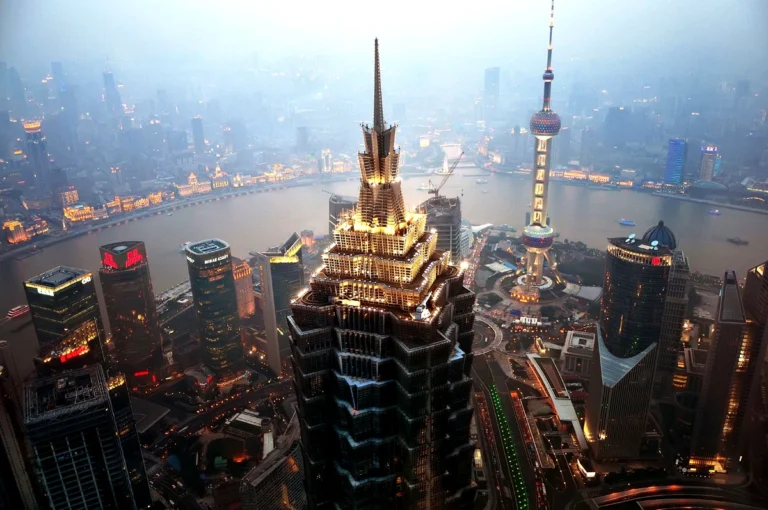
The Jade Buddha Temple, also widely known by its Chinese name Yufo Chansi, is located at the geographical coordinates of 31.24° North latitude and 121.44° East longitude, in Putuo District, Shanghai, China. Topographically, this temple rests on the low alluvial plain of the Yangtze River basin, featuring an average elevation of just 3 to 4 meters above sea level. The temple’s formation is inseparable from the turbulent political and religious context of late-19th-century China, a period when Shanghai was rapidly transitioning from a traditional port town into a highly complex international commercial center. Unlike many ancient temples dating back millennia, the Jade Buddha Temple carries the distinct imprint of the modern era, clearly reflecting the intersection of traditional Buddhist faith with profound societal shifts during the twilight of the Qing Dynasty.
The temple’s origins are closely tied to the journey of Chan Master Huigen of the Linji lineage. In 1882, during the 8th year of the Guangxu reign, the master embarked on a pilgrimage to Myanmar to seek scriptures and pay homage to sacred sites. On his return journey while passing through Shanghai, he decided to leave behind two white jade Buddha statues that he had acquired from this Southeast Asian nation. This served as the direct catalyst for constructing a dedicated temple to enshrine these two precious treasures. Initially, the temple was built in the Jiangwan area, but due to shifting times and the devastation of armed conflicts in the early 20th century, it underwent multiple relocations and reconstructions. By 1918, the complex was moved to its current location on Anyuan Road in Putuo District, featuring architecture modeled after Song Dynasty palace styles, establishing a striking contrast with the modern skyscrapers gradually enveloping the surrounding area.
The two white jade Buddha statues remain the focal point of the temple’s entire spatial structure and cultural value. The seated Shakyamuni Buddha statue, standing 1.9 meters tall, was carved from a single block of white jade, exhibiting the sophisticated sculpting techniques of late-19th-century Burmese artisans. The second statue depicts the reclining Buddha entering Nirvana, smaller in dimensions yet carrying profound symbolic meaning regarding tranquility and liberation. Preserving these artifacts is not merely a religious matter, but also a testament to the cultural and religious exchange networks between China and neighboring nations via the Maritime Silk Road. These jade blocks, with their characteristic purity and color, have become symbols of Buddhism’s endurance within a rapidly industrializing metropolis like Shanghai.
Throughout the 20th century, the Jade Buddha Temple weathered numerous vicissitudes tied to the nation’s destiny. Most notably during the Cultural Revolution, the temple faced the threat of complete destruction. However, thanks to the prompt intervention of political leaders and the silent protection of monks and nuns, the jade statues and many other precious artifacts were kept safe and spared from the waves of iconoclasm. This event transformed the Jade Buddha Temple into a symbol of resilience and heritage preservation amid a tumultuous historical backdrop. After religious policies were liberalized in the late 1970s, the temple underwent extensive restoration, restoring its former majesty and resuming its role as the most vital spiritual hub of Shanghai Buddhism.
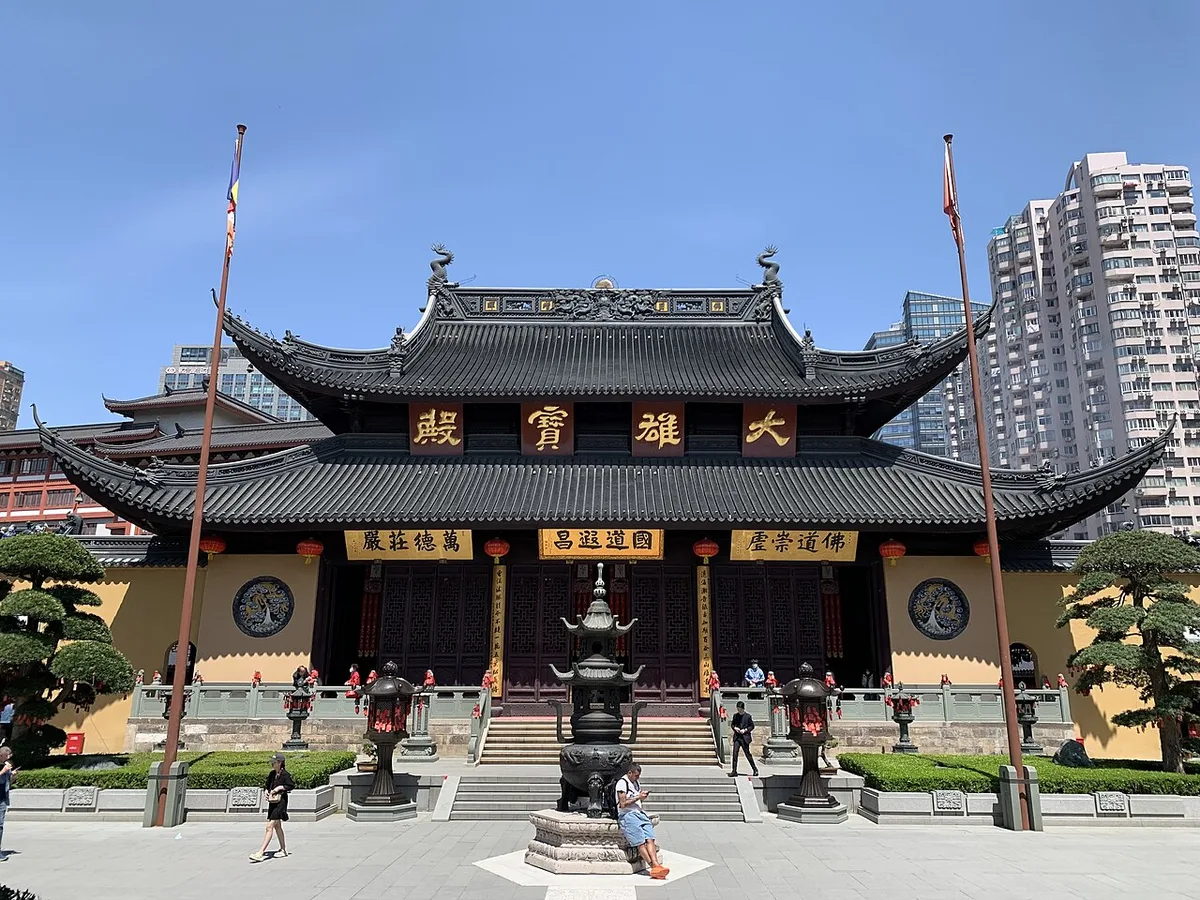
Architecturally, the Jade Buddha Temple is designed following the traditional siheyuan (quadrangle) layout, with its main axis running along a North-South orientation. The primary shrines include the Hall of Heavenly Kings, the Grand Hall of Great Sage, and the Jade Buddha Tower. This arrangement not only strictly adheres to feng shui principles and Buddhist architectural planning, but also creates a tranquil space separated from the urban clamor outside. Soaring curved tile roofs, red-lacquered pillars adorned with gold leaf, and meticulously carved reliefs across crossbeams reflect the pinnacle of handicraft artistry from the late Qing and early Republican eras. Every architectural detail carries a historical narrative, from commemorative plaques bestowed by contemporary luminaries to ancient scripture collections preserved within the temple library.
The cultural influence of the Jade Buddha Temple extends far beyond purely religious boundaries. The temple functions as an art repository housing thousands of rare Buddhist sutras, ancient paintings, and high-value ritual implements. Notably, the Tripitaka canons printed across the Song, Yuan, Ming, and Qing Dynasties preserved here serve as invaluable resources for researchers of Buddhist history and Chinese culture. Studying these texts helps elucidate the dissemination and evolution of Buddhist thought in Chinese society across multiple centuries. Furthermore, periodic Buddhist rituals hosted at the temple, such as prayer ceremonies and meditation retreats, have become an indispensable part of Shanghai residents’ spiritual lives, helping sustain moral values and cultural traditions within a rapidly modernizing society.
Internationally, the Jade Buddha Temple acts as a cultural ambassador bridging individuals interested in Eastern philosophy and Buddhist art. The presence of the jade statues not only attracts visitors but also draws international scholars researching the history of East Asian cultural exchange. The temple has evolved into a symbol of harmony between tradition and modernity, where ancient spiritual values coexist with the fast-paced rhythm of one of the world’s most dynamic cities. Preserving the temple is not simply about safeguarding an architectural work, but about protecting a vital part of Shanghai’s cultural identity against the challenges of globalization.
In recent decades, management and conservation at the Jade Buddha Temple have been upgraded to modern scientific standards. Applying technology to control humidity, temperature, and lighting for preserving the jade statues and antiquities has extended the lifespan of these heritages. Concurrently, public educational programs organized at the temple to disseminate knowledge of Buddhist history and traditional arts have attracted enthusiastic youth participation. This illustrates the temple’s evolution from a closed devotional space into an open cultural center where knowledge and spirituality are widely shared.
Objectively speaking, the standing of the Jade Buddha Temple within Shanghai is irreplaceable. It is not merely a historical landmark, but a living entity reflecting the ups and downs of modern Chinese history. From the early days when Master Huigen brought the jade statues across the sea, down to preservation efforts during the tumultuous 20th century, the temple has consistently anchored the spiritual footing of multiple generations. The existence of the Jade Buddha Temple in the heart of the modern metropolis demonstrates the power of culture in shaping and sustaining community identity. With its distinct historical, architectural, and artistic values, the temple continues to cement its status as one of the most critical cultural heritages, enriching Shanghai’s and China’s diverse cultural tapestry.
Concluding the exploratory journey of the Jade Buddha Temple, one cannot overlook the vision of those who painstakingly built and protected this sanctuary. They bestowed upon posterity not merely massive architectural works or precious jade statues, but an invaluable spiritual heritage. Combining the delicate beauty of jade with the majesty of Buddhist architecture generates a unique cultural space where time appears suspended, allowing humanity to contemplate eternal values. The Jade Buddha Temple, with all its historical marks and symbolic stature, will forever remain an inseparable part of the memories and consciousness of those seeking deep understanding of the history and culture of this mystical, dynamic land of Shanghai.
The Jade Buddha Temple, located in Putuo District, Shanghai, represents one of the most exemplary religious architectural monuments in the Jiangnan region, reflecting the synthesis of traditional Chinese planning philosophy and the practical demands of a rapidly transforming modern metropolis. The current structure is not the original from its 1882 inception under the Qing Dynasty, but the result of large-scale reconstruction taking place from 1918 to 1928, after the original temple suffered severe damage during late-19th-century political upheavals. Early 20th-century spatial re-planning established strict symmetrical structures along the North-South axis, closely complying with feng shui principles and imperial architectural codes, creating a meditative space isolated from surrounding urban clamor. Spanning an approximate total area of 20,000 square meters, the temple is partitioned into distinct functional zones including main shrines, scripture repositories, a library, and monastic quarters, all interconnected by courtyards and covered corridors, producing a smooth and meticulously calculated spatial transition.
From an engineering construction standpoint, the Jade Buddha Temple testifies to the continuation of Song Dynasty architectural styles, notably via upturned eaves, complex dougong bracket systems, and timber usage as primary materials. Artisans during the reconstruction era applied traditional wooden mortise techniques, enabling load-bearing structures to interconnect without iron nails—a method demanding absolute precision during measuring and fabrication. Large ironwood pillars rest upon intricately carved stone plinths, helping distribute weight from heavy roof systems onto ground soils while protecting wood from subterranean dampness. Main hall roofs are covered in yellow glazed tiles, an architectural privilege previously reserved for imperial structures or highly influential temples, reflecting the temple’s political and religious stature within Shanghai’s Buddhist network. Combining yellow tiles, red pillars, and dragon-phoenix motifs across crossbeams generates powerful visual color palettes, affirming the solemnity and authority of sacred spaces.
The layout zoning of the Jade Buddha Temple is organized via a triple-hall interconnected model comprising the Hall of Heavenly Kings, the Grand Hall of Great Sage, and the Jade Buddha Tower. The Hall of Heavenly Kings serves as a welcoming gateway housing the Maitreya Buddha and four Heavenly Kings, acting as a psychological filter for pilgrims to shed mundane distractions prior to entering more sacred spaces. The Grand Hall of Great Sage, boasting exceptional height, anchors ritual activities and houses statues of Shakyamuni alongside bodhisattvas. The spatial planning highlight is the Jade Buddha Tower, a two-story building specifically designed to house two precious white jade Buddha statues brought from Myanmar in the late 19th century. Elevating these statues above other shrines serves preservation purposes—mitigating humidity and dust—while generating a vertical spiritual axis where worshippers elevate their gazes upward, cultivating reverence and distance between the mortal realm and sacred domains.
Specialized construction techniques at the Jade Buddha Temple also encompass natural light and ventilation management. Windows designed as sophisticated wooden lattices permit sunlight penetration to cast mystical light streaks across stone-tiled floors while sustaining continuous air circulation inside enclosed spaces. This is critical for structures experiencing high visitor density, helping regulate indoor temperatures and humidity, safeguarding statues and historical artifacts from environmental degradation. Underground drainage systems beneath courtyards ensure dry, clean campuses during heavy Shanghai rainstorms, maintaining ritual solemnity. Bluestone paving across walkways and gardens offers aesthetic value while moderating surface temperatures, mitigating urban heat island effects common in downtown centers.
Visitor capacity planning at the Jade Buddha Temple relies upon wood structure load-bearing capacities and visitor traffic flows. Although a historical monument, the temple underwent modern modernization overhauls, including reinforced concrete foundations concealed beneath traditional brick layers to guarantee structural safety for multi-story buildings. One-way walking routes prevent congestion, supported by directional signage at critical campus junctions. Though footprint scales remain modest relative to major mainland temples, vertical spatial layouts and courtyard integration empower the temple to absorb thousands of daily visitors during major festivals like Lunar New Year or Vesak without generating stifling environments. Separating tourist sectors from internal monastic quarters via partition walls and side gates preserves privacy for monastic lives.
Building materials at the Jade Buddha Temple reflect stringent selections from natural resources. Ironwood and pine frame load-bearing skeletons, while marble and bluestone form steps and exterior sculptures. The high-purity, large-format white jade Buddha statues necessitate specialized pedestals reinforced with stainless steel internal cores encased in outer timber layers to guarantee long-term stability. Wall coatings feature characteristic turmeric yellow mineral paints resistant to harsh Shanghai coastal climates. Carved details across crossbeams and eaves function as artworks narrating Buddhist anecdotes, executed by master artisans, showcasing handicraft sophistication reaching maturity by the early 20th century.
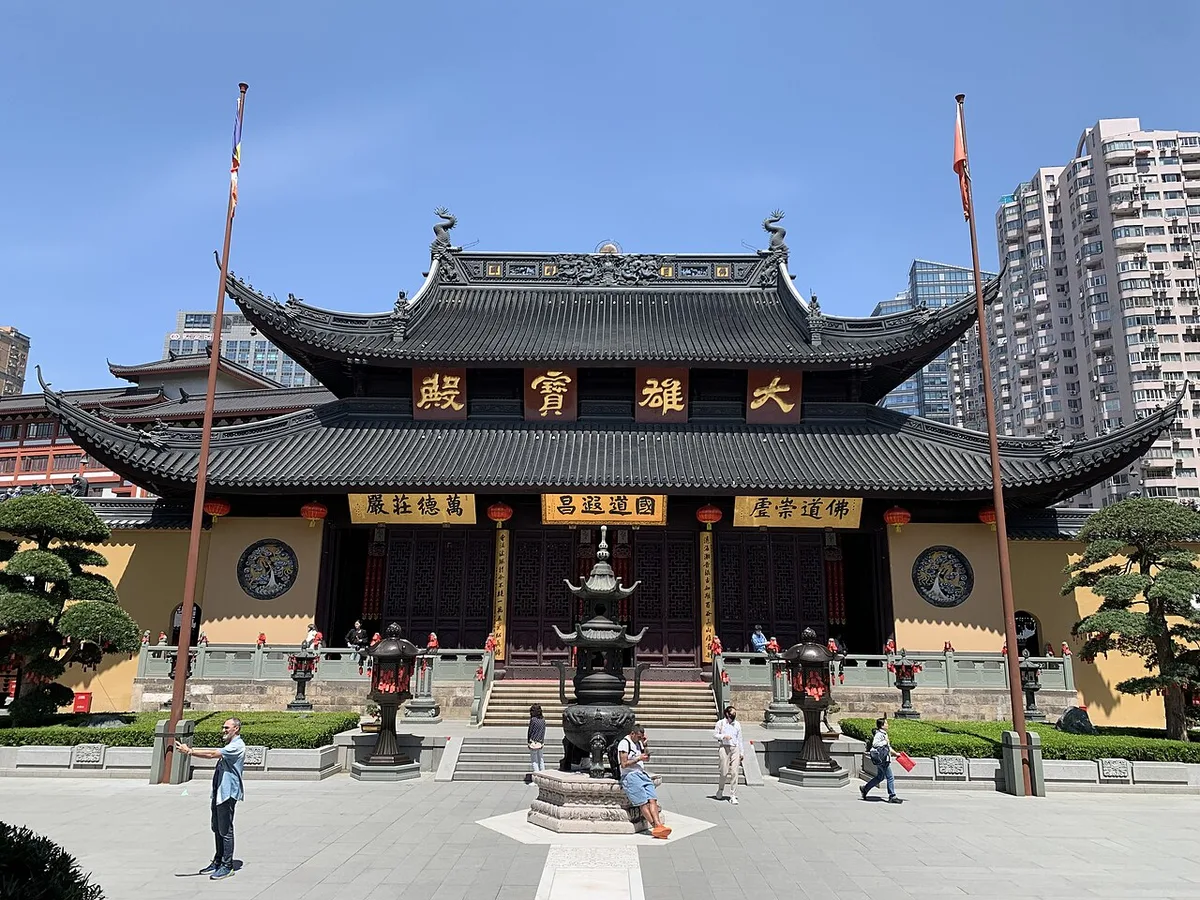
The existence of the Jade Buddha Temple within modern Shanghai exemplifies heritage conservation within highly urbanized environments. Urban planners executed significant adjustments to protect surroundings, preventing high-rise encroachments from disrupting visual corridors and energy balances. Sustaining green buffer zones and garden areas around the temple holds landscape value while subduing noise pollution and fine dust from nearby arterial roads. Every design detail, from roof slopes to pillar spacing, optimizes structural sustainability against time and human impacts. This is not merely a religious site but a knowledge repository regarding architecture, engineering, and spatial planning philosophies among Chinese populations across transitional eras between tradition and modernity.
Analyzing Jade Buddha Tower’s structure reveals finesse merging traditional engineering with modern safety standards. The building features dual load-bearing frames capable of withstanding minor seismic tremors while guaranteeing stability for sacred jade statues. Upper-position windows leverage indirect lighting, highlighting jade beauty without causing excessive light reflection or ultraviolet stone surface degradation. Merging traditional wood materials with modern engineering illustrates progressive preservation philosophies prioritizing historical value while retaining communal utility and safety. Walkways feature rough stone anti-slip paving, while discreet lighting preserves archaic timber aesthetics. Spatial planning respects Buddhist philosophies of balance and harmony. Architectural elements, from shrine symmetries to garden distributions, foster environments favorable to meditation and contemplation. Open stone courtyards serve motion and establish voids where visitors pause, observing light-shadow-architecture interactions. Ancient courtyard trees act as living entities linking past and present while micro-climatizing surroundings. Through developmental phases, the Jade Buddha Temple affirms its standing as a critical architectural heritage where history, engineering, and spatial arts invite study and admiration.
The Jade Buddha Temple in Shanghai, originally named Yufo Chansi, originated from late-19th-century historical shifts in 1882 during the Qing Dynasty. The monument reflects intersections between traditional Chinese aesthetic thinking and preservation needs for Burmese Buddhist heritage. The temple’s presence is tied to Chan Master Huigen’s journey, who brought two white jade Buddha statues from Myanmar to Shanghai, establishing spiritual nuclei for the complex. Spatially, the temple strictly follows classical imperial palace axial symmetry, arranging shrines longitudinally from South to North, creating psychological and visual pilgrimage routes.
Passing main gates, visitors approach the Hall of Heavenly Kings, housing Maitreya at the center and four Heavenly Kings laterally. Qing-style architecture features tiered roofs and upturned eaves carved with sophisticated dragon-phoenix imagery. These decorations symbolize authority and protection over Buddhist realms. Traditional mortise joinery without iron nails permits enduring durability across Yangtze delta humid climates. Red-lacquered ironwood pillars establish somber interiors where intentional lighting accentuates shrines, contrasting mystical shadows with brilliant gold.
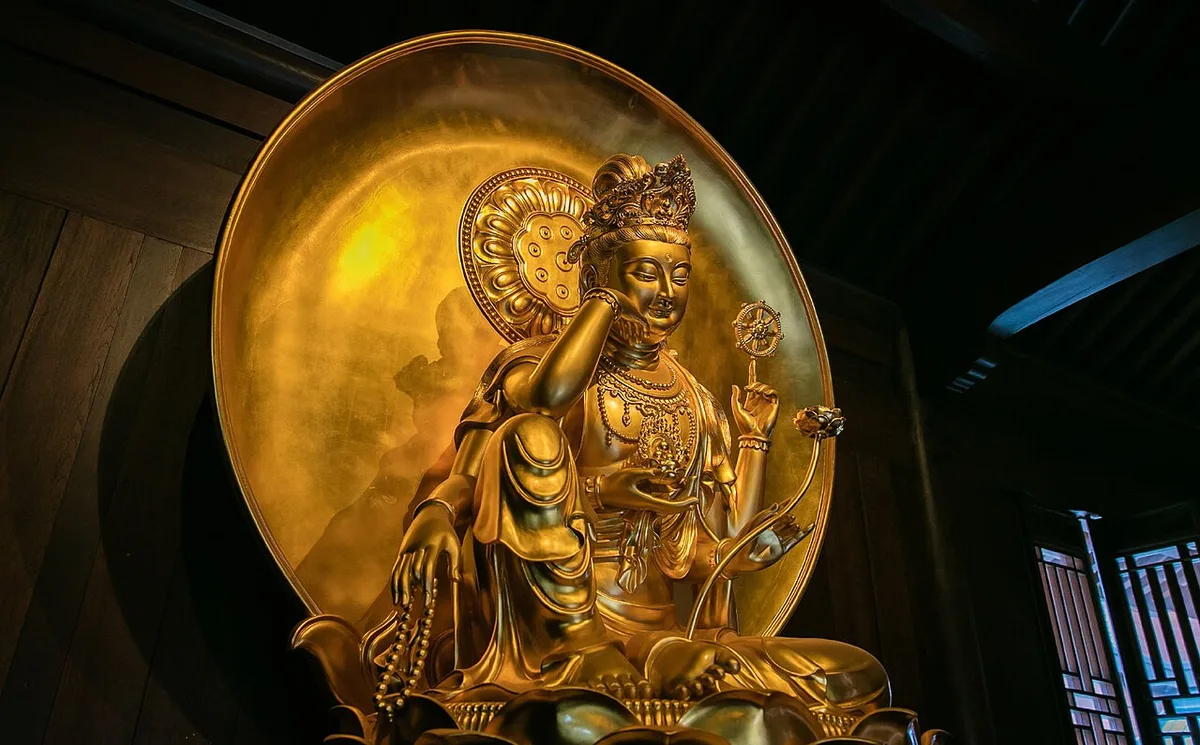
The Grand Hall represents sculptural and pictorial zeniths of Buddhist art. Three massive Buddha statues rest on elevated platforms, representing past, present, and future. Cast in bronze with gold leaf, facial features embody late-Qing molding styles emphasizing tranquility and transcendence. Ceilings feature mineral-pigmented lotus and mandala motifs retaining color across centuries. Vermillion, gold leaf, and green palettes characterize Eastern monastic architecture, symbolizing prosperity, serenity, and wisdom. Commemorative plaques and couplets impart profound humanistic philosophies regarding impermanence and compassion.
The focal cultural heritage point remains the Jade Buddha Hall, preserving two precious white jade statues. The seated Shakyamuni statue, 1.9 meters tall, carved from single white jade blocks, exhibits meditative postures with half-closed eyes and serene smiles. Jade carving demands immense patience and mastery due to high stone hardness and complex mineral veins. Artisans leveraged jade translucency, generating natural illumination on facial features, endowing statues with lifelike qualities under shifting viewing angles and lighting intensities. The reclining Nirvana Buddha, also carved from white jade, expresses soft contours and release from suffering. These statues evidence Sino-Southeast Asian cultural exchanges and symbolize educational purity and eternity.
Auxiliary zones like scripture libraries and meditation chambers emphasize tranquil spaces. Openwork wooden window lattices facilitate air circulation while casting dancing light patterns across blue-stone floors. Wood-carving artistry reaches sophisticated levels via scrolling dragons, floating clouds, and lotus motifs. Wall reliefs narrate Buddha’s life from birth to Nirvana, serving as visual textbooks for illiterate historical societies. Spatial layouts mirror philosophical balances between motion and stillness, physical matter and spiritual intangible realms.
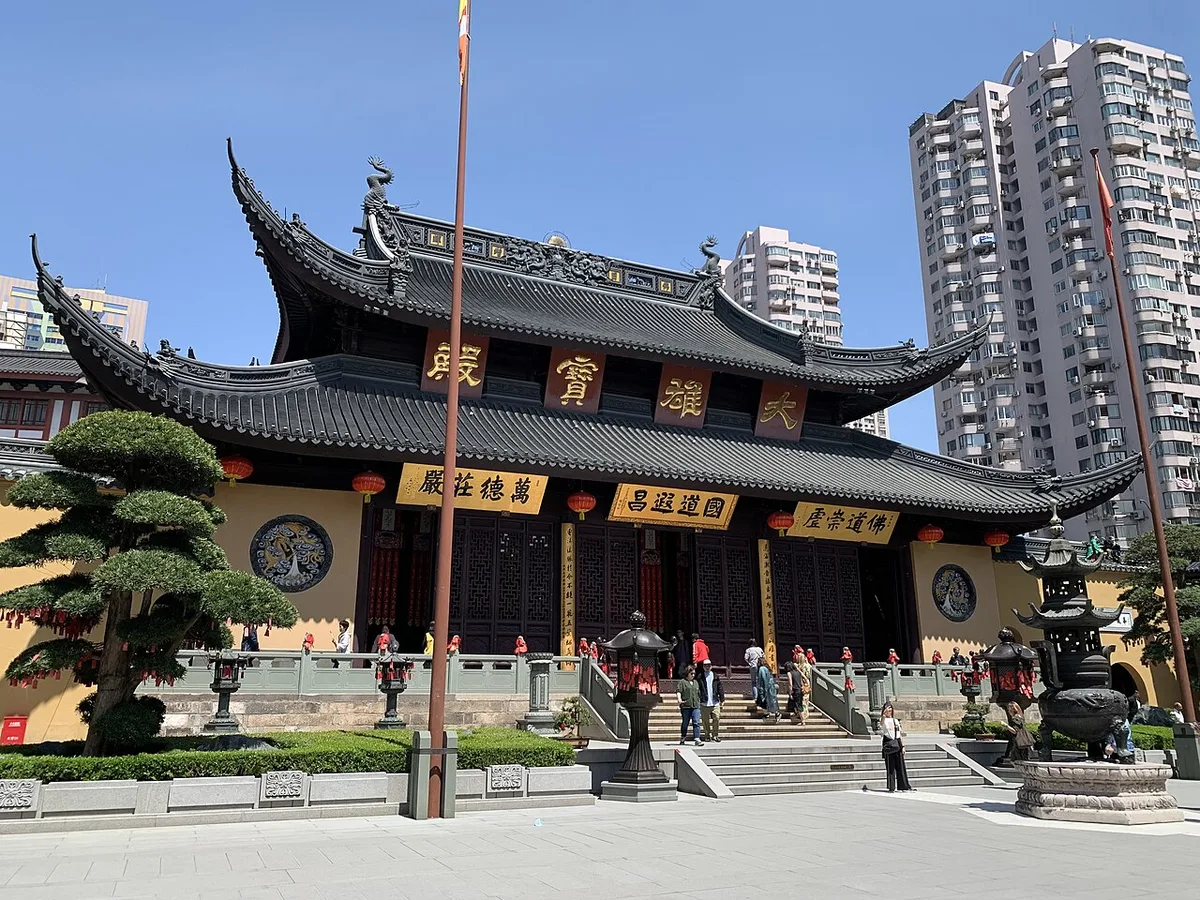
Aesthetically, the Jade Buddha Temple functions as living Buddhist sculpture museums. Preserved artifacts, from palm-leaf manuscripts, thangkas, to bronze and silver ritual instruments, evidence Chinese handicraft development. Sutras hold religious and calligraphic artistic value, preserved inside intricately carved wooden cabinets. Architecture, sculpture, painting, and calligraphy unify uniformly, imbuing every tiny detail with symbolic meaning. Lotus imagery recurs across decorations, symbolizing purity emerging from mud—a metaphor for monastic practice.
Cultural depth manifests through regular rituals. Resonating bell sounds, burning incense, and chanting establish distinct spiritual atmospheres separate from external urban clamor. The temple preserves traditional cultures amidst economically and technologically advancing cities. Preserving structures safeguards community history and spirits. Researchers investigate structures to understand building techniques and aesthetic mentalities during dynastic transitions and modern eras.
Roof decorations featuring auspicious mascots like dragons, phoenixes, Qilins, and tortoises embody feng shui protection and folk legend reverence. Mascot placements optimize structural protection. Tile colors match shrine scales. Stone, wood, and ceramic combinations display ancient architects’ material understanding. Stone-paved paths feature gentle gradients facilitating drainage and slowing visitor movements for contemplation.
Ultimately, the Jade Buddha Temple’s value lies in linking past and present through architectural-cultural heritage. Bricks, statues, carvings narrate faith and perseverance against time’s erosion. For cultural researchers, this site is indispensable; for visitors, it offers dialogues with history, elevating aesthetic experiences where beauty, tranquility, and wisdom unite.
The Jade Buddha Temple in Shanghai, situated in Putuo District, represents Pure Land monastic entities where monastic communities and pilgrim routines adhere to strict Buddhist temporal and ritual rules. As dawn breaks across ancient campus trees, space shifts from absolute stillness to morning awakening. Resonating bells mark spiritual heartbeats coordinating monastic schedules. Morning liturgy unfolds in the Grand Hall from 4:30 AM to 6:00 AM, blending chanting and incense, forging solemn atmospheres insulated from modern urban activity outside yellow walls. Monastic discipline, offering arrangements, and ritual concentrations characterize monastic routines.
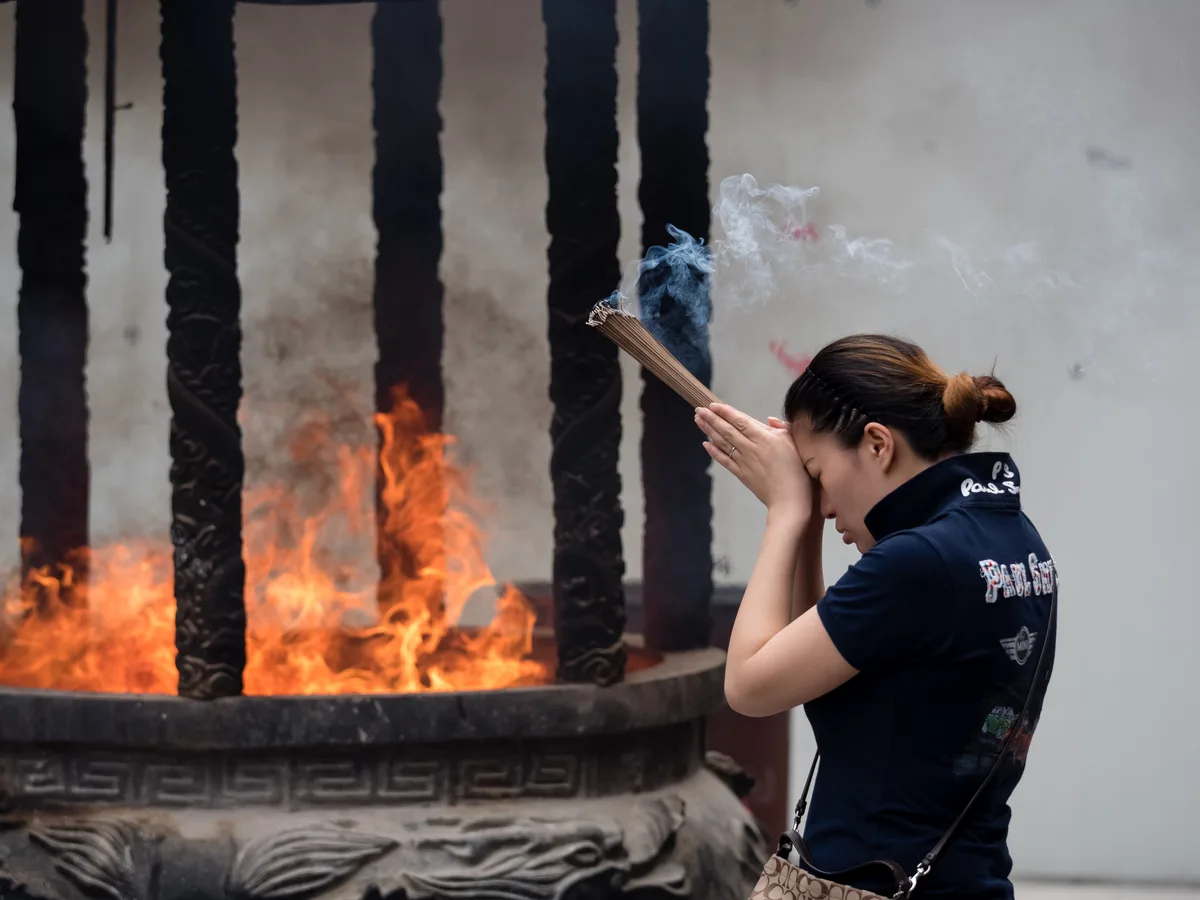
Sunlight ascends, drawing pilgrim streams, transforming tranquil spaces into diverse cultural currents. Visitor rhythms shift toward individual devotional practices. Locals and international tourists immerse in routed shrine itineraries. At Jade Buddha shrines, attention focuses on white jade statues brought from Myanmar, focal devotional points. Locals bearing incense, lotus flowers, and offerings pray for familial peace and career success. Human-architecture interactions extend beyond sightseeing into direct cultural experiences via ritual observation, incense lighting, and bowing, following unspoken traditions.
During lunar festivals, especially full moons or Buddha’s birthday, campus rhythms peak. Red lanterns deck spaces, large lecture halls host Dharma talks, attracting thousands. Buddhist art performances, traditional chanting, or calligraphy exhibitions highlight events. Generations connect as seniors guide youth through rituals, transmitting ethics and life philosophies. Boundaries between pilgrims and tourists blur within shared spaces seeking inner calm amid dynamic cities.
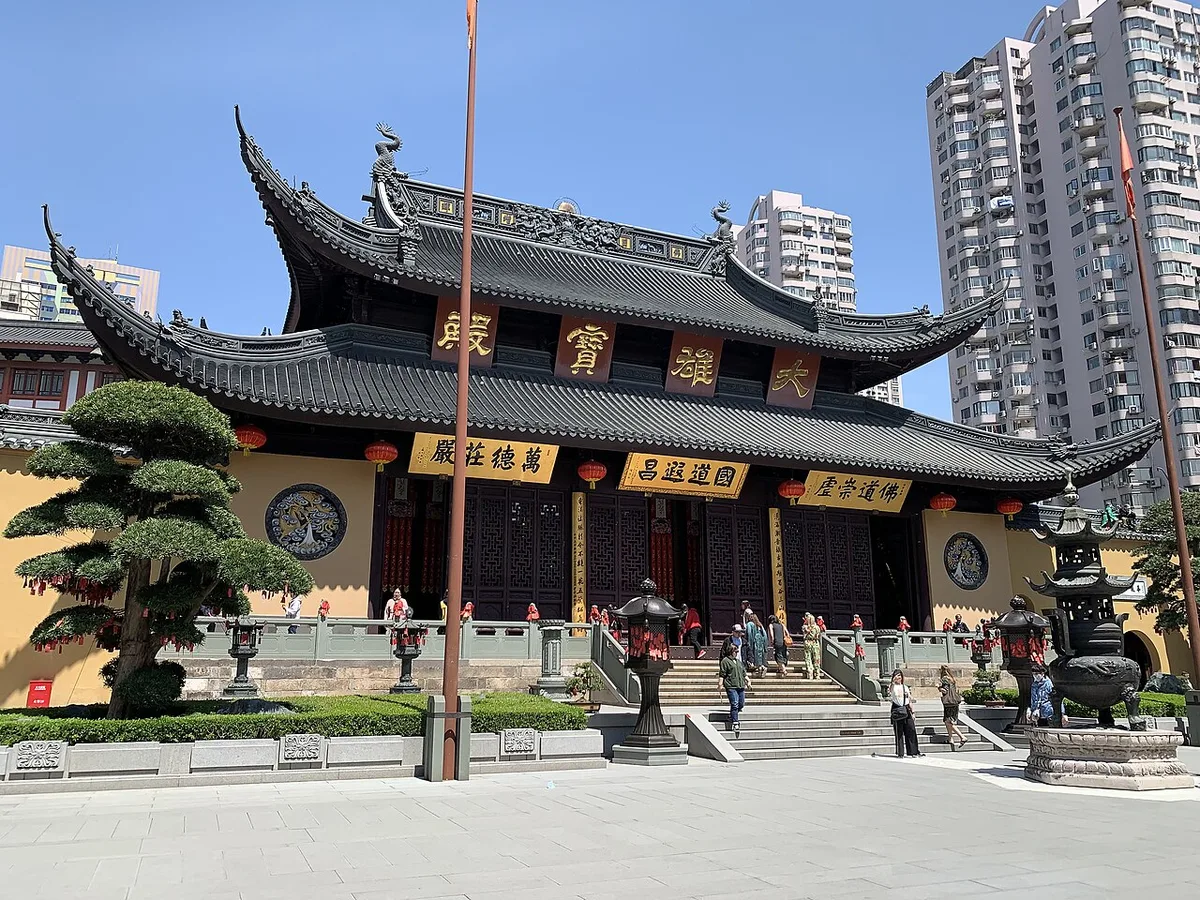
Dusk yields to warm amber lanterns, casting mystical introspective glows. Upper terraces or high corridors offer panoramic vantage points overlooking main courtyards, upturned eaves, yellow walls, and contrasting distant skyscrapers—Shanghai’s quintessential identifier where past and future share frames. Evening bells mark diurnal conclusions, reminding observers of Buddhist impermanence and time’s value.
Night descends, illuminating dazzling yet somber appearances. While main shrines close, interiors sustain internal lives. Lantern illumination highlights carved wood sculptures, revealing hidden daytime details. Culturally, this rewards contemplation of traditional resilience amid modern societies. Seated meditation and scriptural discussions unfold privately, sustaining spiritual anchors for urban pressures. Preserving physical heritage sustains spiritual rhythms.
Exploration involves appreciating architectural details, from pillar reliefs to altar arrangements. Every detail reflects ancient Chinese aesthetic mentalities. Walking corridors, listening to eaves breezes, observing monks tending gardens aids monastic lifestyle comprehension. Natural uncommercialized operations ensure authentic religious appeal.
Operations demonstrate adaptive capacities without losing identities. Charitable, educational, and cultural exchanges expand community footprints. Participants share humanistic values, sharing, and compassion. Sustaining historical architecture, religious rituals, and modern rhythms creates multi-dimensional experiential spaces. Jade Buddha Temple remains vital cultural hubs where local daily rhythms propagate, anchoring human-spiritual connections.
Ultimately, community harmony anchors the Jade Buddha Temple. Festival crowds or quiet afternoons sustain balances. Monastics, pilgrims, and tourists compose vibrant Shanghai religious tableaux. Experiences compound into profound memories, teaching tranquility, traditional respect, and spiritual space preservation.
The vicinity surrounding the Jade Buddha Temple in Putuo District, Shanghai, combines religious spaces with Jiangnan vegetarian culinary philosophies. Formative evolution aligns with late-19th-century temple histories when monastics established dietary standards. Culinary principles enforce raw material “purification,” demanding rigorous ingredient selection guaranteeing purity while reflecting Shanghai aesthetic balances between delicate flavors and nutrition. Vegetarian dishes avoid meat mock-ups, focusing instead on seasonal mushrooms, tofu, local vegetables, and native grains, producing local menus retaining meditative finesses.
Tofu processing anchors neighborhood culinary profiles. In historical Shanghai, tofu supplied vegetable protein while challenging chef skills. Traditional vegetarian restaurants simmer tofu slowly in concentrated vegetable broths alongside wild mushrooms like shiitake, button, or lion’s mane for natural sweetness. Hand-pressing methods utilize limestone-filtered well water, securing smooth textures and elastic structures. Natural fermented soy sauces aged in dark underground clay jars impart deep, rich flavor layers without chemical enhancers.
Beyond vegetarian dishes, neighborhoods feature traditional dim sum, specifically vegetarian steamed buns and vegetable buns. Fermented via traditional sourdough starters, bun skins achieve light porosity and characteristic wheat aromas. Fillings combine bok choy, minced shiitake, and cold-pressed sesame oil, calibrated to highlight vegetable sweetness. Enjoying pastries pairs with tea-drinking cultures, encouraging green or oolong pairings from high mountain regions. Tea clears palates for subsequent flavor tiers. Locals value eating quietly, treating dining as mindfulness practices.
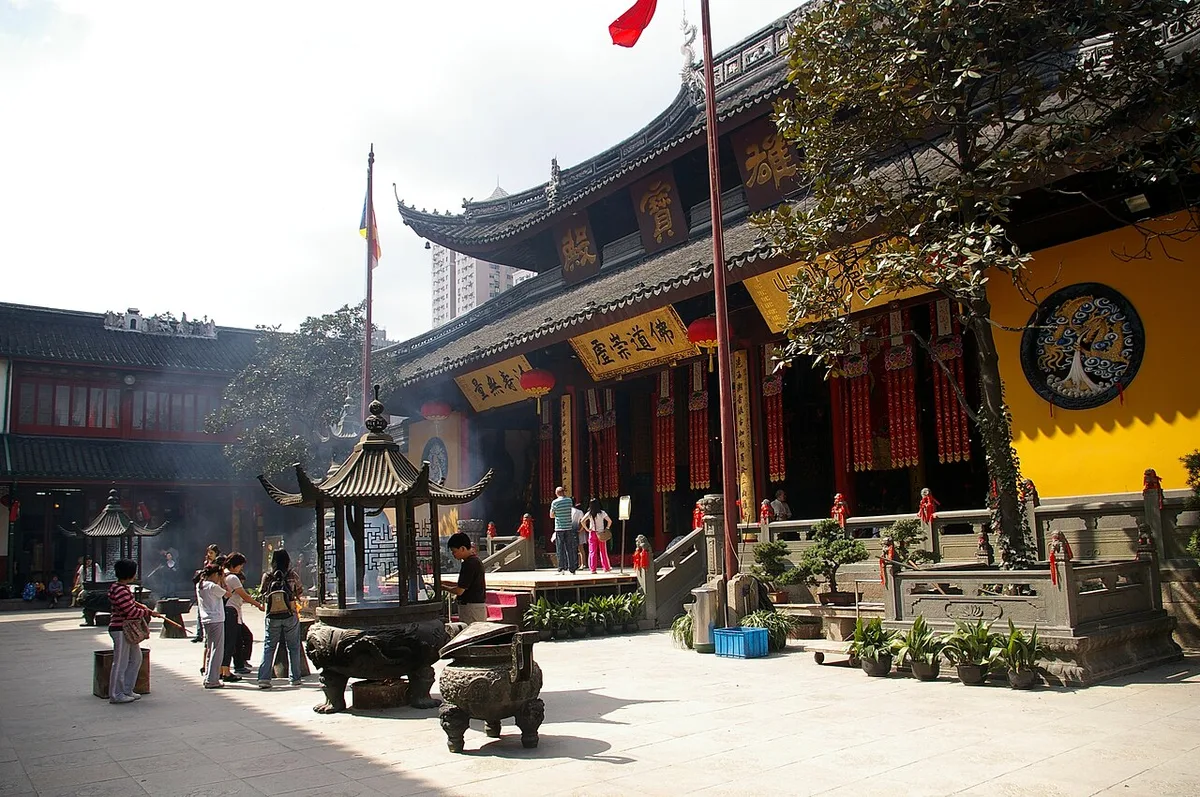
Streets around the Jade Buddha Temple preserve early-20th-century food processing techniques. Iconic items include fresh whole-wheat hand-pulled noodles. Pulling techniques demand multi-year resilience yielding elasticity without additives. Broths simmer carrots, daikon, and cabbage for hours, yielding translucent yet nutritious liquids. Chefs splash homemade chili oils extracted from dried chilies, cinnamon, star anise, and cardamom, creating subtle yet impactful flavor bursts. Vegetable sweetness, chili warmth, and noodle elasticity balance yin-yang philosophies.
Seasonal culinary adaptations follow agricultural calendars. Spring introduces tender bamboo shoots and young greens, purifying bodies after long winters. Autumn features starchy mushrooms and roots, yielding warm stews. Respecting seasonal ingredients anchors living in harmony with nature. Eating “at the right time” secures peak nutrition and flavor values.
Tea culture forms critical neighborhood facets. Teahouses host seniors sipping hot oolong, tieguanyin, or chrysanthemum infusions in Yixing teapots. Kung Fu tea preparation demands meticulous steps. Zisha pots retain flavors across decades. Slow tea consumption fosters mindfulness, transmitting courteous behaviors and interpersonal respect.
Culinary developments survive via community heritage protection. Multi-generational culinary families refuse excessive industrial modernization, retaining stone mills, wood-fired stoves, and clay pots. Preservation rescues authentic flavors vanishing elsewhere in Shanghai. Diners connect with historical memories.
Contextualizing cuisines within Shanghai social structures uncovers diverse stratification. The temple district hosts pilgrims and long-term residents, yielding rich culinary landscapes pairing upscale dining with humble street food. Shared culinary commitments prioritize ingredient and technique respect. Shanghai culinary finesses harmonize sweet-salty profiles within vegetarian menus.
Ultimately, discovering culinary maps requires patience and open mindsets. Unmarked storefronts or early morning queues reveal renowned eateries. Sustainable values slow time down, connecting food, culture, and spirituality. Culinary explorations encapsulate Shanghai’s historical memoirs.
The Jade Buddha Temple, at 170 Anyuan Road, Putuo District, Shanghai, anchors Eastern China Buddhism. Access requires logistical planning and urban navigation. Public transit offers precision via modern subway networks. Line 13 serves as optimal choices, alighting at Jiangning Road Station. Exit 1 leads to a 500-meter walk to Anyuan Road main gates. Private taxis or ride-hailing apps provide viable alternatives. Morning and evening rush hours prompt subway reliance for punctuality.
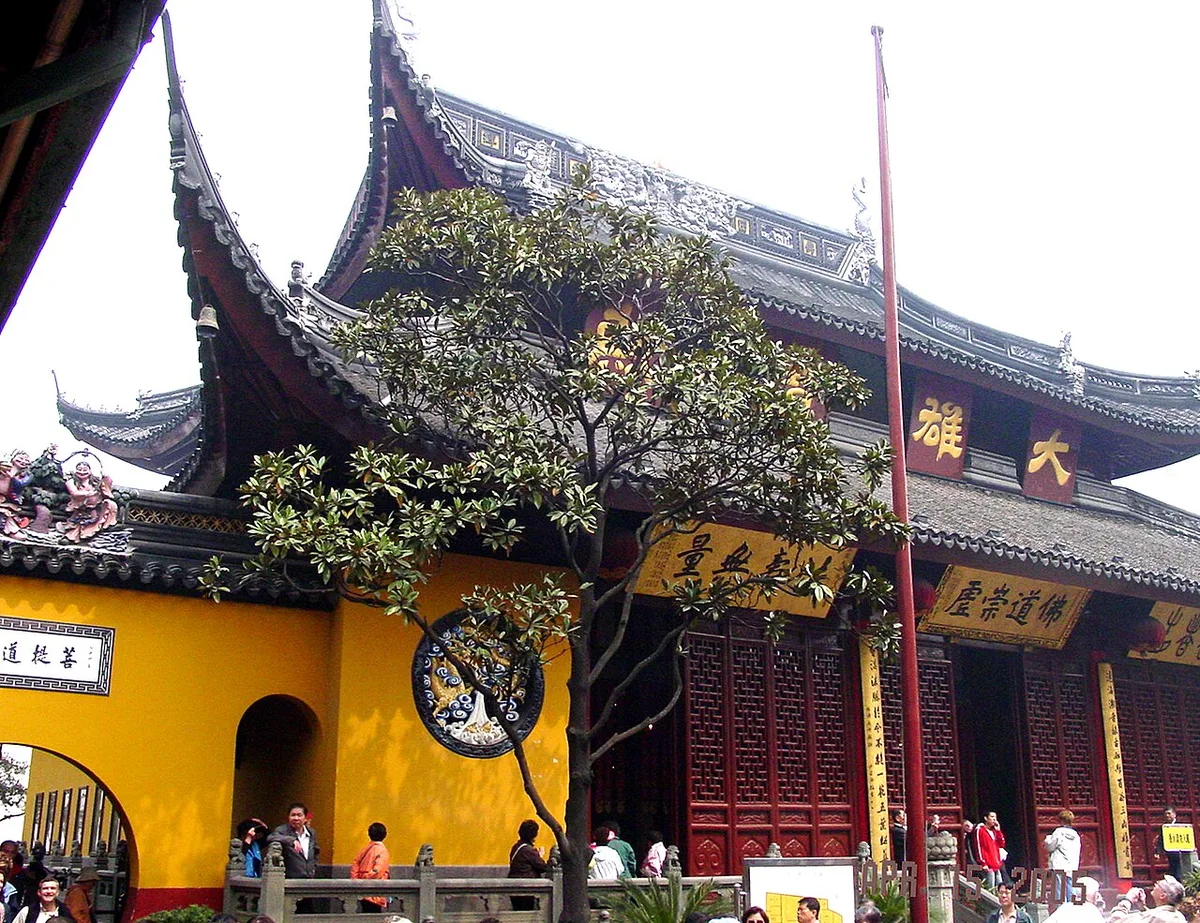
Shanghai’s humid subtropical climate shapes visitation experiences. Spring (March-May) delivers warm weather, aligning architecture with verdant greenery. Summer (June-August) brings intense heat and humidity exceeding 35°C, requiring sun protection. Autumn (September-November) acts as golden periods featuring blue skies and cool air. Winter brings damp cold, urging multi-layered clothing.
Optimal visiting hours target early mornings at 8:00 AM opening times. Early arrivals avoid crowds during weekends or festivals. Peaceful morning atmospheres expose jade Buddha beauty without distractions. Checking monastic chanting schedules assists cultural immersion.
Dress codes mandate modesty and respect. Shorts, miniskirts, tank tops, or shoulder-baring clothing face shrine entry restrictions. Modest coverage respects local faiths while ensuring comfortable explorations. Light shawls offer outfit flexibility.
Taboos require attention. Photography inside main shrines, particularly around jade statues, faces strict prohibitions. Observing warning signage prevents artifact damage. Stepping over wooden door thresholds rather than treading upon them displays Buddhist etiquette. Silence and decorum remain mandatory.
Ticketing has digitalized significantly. Visitors purchase tickets on-site or via online QR platforms. Standard admissions cover basic entries, while special exhibitions incur surcharges. Passports or photo IDs remain mandatory for security checks. Translation apps assist international travelers.
Vegetarian dining inside monastic grounds introduces monastic food philosophies. Lunar full moons surge visitor numbers, necessitating reservations or waiting patience. Outside foods are restricted to preserve cleanliness.
Open mindsets unlock complete experiences. The temple acts as living history and faith. Observing rituals provides profound humanistic insights. Cultural explorations transform into meaningful spiritual journeys.
Signage features bilingual text. Asking security staff or volunteers resolves navigation hurdles. Mobile devices require full battery reserves for mapping and payments.
Departing transit requires planning. Walking to nearby bus stops exposes Putuo District life, while subway networks optimize downtown returns. Checking transit apps avoids navigation errors. Cultural respect guarantees enduring travel memories.
To experience this journey seamlessly with a local guide, you can refer to the Beijing – Suzhou – Hangzhou – Wuzhen – Shanghai Tour with its pre-arranged itinerary.