Beside the churning waters of the Huangpu River that have witnessed countless historical shifts across the Jiangnan region, the name Lujiazui evokes a deep historical narrative rooted in its singular natural geography. Located right along the eastern bank of a sharp U-shaped bend where the river turns before heading toward the sea, this stretch of land was originally a fertile alluvial sandbar projecting out into the vast expanse of water like a proud, sharp beak. In classical Chinese characters, the term Zui (嘴) precisely describes the shape of a land tongue or cape jutting into a body of water, embodying a preordained geomantic formation destined to receive a thriving tide of commercial vitality and accumulate a millennium of urban refinement for Shanghai.
Viewed from a panoramic angle across the harbor, the real-world vista of Lujiazui unfolds like a towering futuristic architectural wonder, where the tranquil waters of the Huangpu River mirror tiered skyscrapers soaring straight into the clouds. The dazzling beauty of high-strength glass curtain walls and advanced metal skeletons of major financial monuments contrasts marvelously with the centuries-old rhythm of the tidal currents below. The fusion of the natural topography of an ancient headland with the most advanced spatial planning in the Eastern Hemisphere radiates commanding authority, asserting the stature of a bustling international commercial hub.
Tracing memories back to the feudal era, the origins of this landmark are inextricably bound to the illustrious family of scholar Lu Shen (陆深, 1477–1544) of the Ming Dynasty. Achieving the highest Jinshi degree and serving as a Reader-in-Waiting at the Hanlin Academy under the Hongzhi and Jiajing reigns, Lu Shen was renowned not only for his lofty character and brilliant calligraphy, but also for his profound contributions to his homeland. Recognizing the auspicious geomantic currents along the eastern bank of the Huangpu, Lu Shen and his clan chose this alluvial sandbar to settle, building ancestral halls and gathering family tombs. The family’s distinguished prestige and prosperous community across generations led locals to affectionately call this beak-like cape “Lujiazui”—meaning the Lu family’s cape—permanently engraving the name into oriental historical gazetteers.
Yet the turning wheel of modern history once plunged this area into a nearly century-long period of bleak silence. While the Bund on the Puxi shore glittered with the brilliant lights of Western concessions and financial syndicates, Lujiazui on the Pudong shore languished in poverty and neglect. Once a fertile strip of land, it deteriorated into a haphazard industrial staging ground featuring rusted shipyards, smoke-choked coal wharves, and endless rows of dilapidated slums housing impoverished dockworkers. Locals at the time often shared a bitter proverb: “Better a bed in Puxi than a whole house in Pudong,” reflecting the seemingly unbridgeable gulf between the two riverbanks.
The historic transformation that shook the global economic landscape erupted when the “Development and Opening of Pudong” policy was proclaimed by the Chinese government in the early 1990s. This monumental decision completely resurrected Lujiazui, designating it China’s first national-level Financial and Trade Zone and paving the way for unprecedented mass construction. Sawmills and weathering wharves rapidly yielded to a complex underground infrastructure network, grand financial boulevards, and soaring skyscrapers welcoming ocean breezes. From the quiet alluvial sandbar of the Lu family of old, Lujiazui shed its impoverished cloak to proudly rise as a preeminent currency capital of the planet, writing an immortal epic of a riverbank land’s indomitable resurgence.
Captured in aerial photography like a soft silk ribbon winding through a sprawling megacity, the Huangpu River takes a dramatic, near-right-angle turn as it flows through Shanghai, cradling the alluvial sandbar known as Lujiazui. In traditional East Asian feng shui, this formation is celebrated as “Jade Belt Encircling the Waist” (Yudai Chanyao), where the river slows down and silt accumulates, creating a terrain that stores wind, gathers energy, and generates immense prosperity in the lower Yangtze Delta. This natural alluvial headland resulted from thousands of years of fine silt deposition from the East China Sea alongside the Yangtze and Wusong river systems, creating an exceptionally flat terrain free of rugged irregularities—laying an ideal geological foundation for engineering some of the world’s most monumental skyscrapers.
Tracing its native roots, the name Lujiazui literally means “the Lu family’s cape.” This evocative geographic title dates back to the Jiajing reign of the Ming Dynasty, when imperial scholar and Hanlin Academy reader Lu Shen—a distinguished scholar who served as Chancellor of the Imperial Academy—decided to return home and chose this fertile riverside spit to settle, building an estate, ancestral hall, and family tombs. At the time, the cape jutted like a plowshare straight into rushing currents, surrounded by vast reed marshes and crisscrossing creeks that sustained traditional fishing communities. Layer upon layer of geological sedimentation across centuries gradually transformed an untouched sandbank battered by tidal surges into a robust delta plain, where underground springs and alluvial silt united to form the formation known as “golden rooster releasing into the river”—a golden fowl striding out toward the open sea.
The dramatic landscape contrast between the two banks of the Huangpu River is a masterpiece combining natural topography with human urban planning. If the western bank represents a quiet, historic Bund with its sturdy granite neoclassical architecture embodying the order of a modern treaty port, the eastern bank—where Lujiazui proudly stands—displays a liberated futuristic style soaring straight upward into the sky. Its prime geographic position directly opposite the Bund creates a perfectly balanced visual axis, where the river does not divide, but instead serves as a giant mirror reflecting two parallel historical eras. The river’s unique U-shaped bend not only shields the peninsula from the direct destructive force of violent storm tides from the sea, but also turns the entire waterfront into a spacious natural grandstand welcoming cool ocean breezes sweeping across the continental shelf.
Alongside its exceptional natural terrain, Lujiazui’s natural scenery was spectacularly reborn through sustainable ecological planning that dispels the oppressive feel of a financial “concrete jungle.” Occupying the core center of the peninsula is Lujiazui Central Park, boasting over ten hectares of manicured lawns and greenery, serving as the “green lung” regulating the area’s microclimate. Between sweeping emerald lawns lies a man-made lake spanning thousands of square meters, artfully shaped to mirror the natural curve of the Huangpu River, forging an intimate connection between artificial landscaping and local hydrology. Transport arteries linking this peninsula to the rest of Shanghai flow smoothly not only via historic cross-river ferries steeped in nostalgic charm, but also through intricate underground tunnels bored beneath the riverbed, ensuring the waters above retain the pristine openness of a natural blue ribbon.
Viewed from the western bank of the Huangpu River, the Lujiazui peninsula emerges as a futuristic architectural museum piercing the Shanghai sky, born from bold spatial planning and massive capital investment spanning decades. Once an isolated reed sandbar tucked inside a river bend during the Ming Dynasty, it underwent a stunning transformation to become Asia’s preeminent financial hub. The architectural space here is far more than a random assembly of concrete and stainless steel; it is a multi-layered composition arranged with absolute precision according to compact urban theory, where every square meter reflects ambitions to conquer height and express the pinnacle of modern industrialization.
Nestled peacefully at the bustling intersection of Century Avenue, the Lujiazui circular pedestrian overpass rises like a futuristic belt suspended five and a half meters above the street. This massive annular structure with open spans not only separates pedestrians smoothly from bustling traffic below, but also creates a breathtaking 360-degree viewing terrace in the heart of the city. Standing along this gently curving pathway, travelers are embraced by towering steel skyscrapers, marveling at dancing light reflections across glass curtain walls while experiencing the magical balance between low-rise urban life and open upper-air vistas.
The pioneering milestone opening Lujiazui’s modern era is the 468-meter-tall Oriental Pearl TV Tower, broken ground in the early 1990s. The tower’s design vocabulary borrows from the immortal verse in Tang poet Bai Juyi’s masterpiece Pipa Xing, comparing gleaming steel spheres to large and small pearls falling onto a jade platter. Eleven spheres of varying sizes are strung along three massive supporting columns nine meters in diameter, creating a structure that is both structurally monumental and deeply imbued with Eastern cultural inspiration. The building not only solved telecommunications broadcasting across the Yangtze Delta plain, but also served as a cultural lighthouse defining Pudong’s era of soaring growth.
Adjacent to the TV tower stands the trio of skyscrapers forming the world-famous global skyline. Opening this triangular cluster is Jin Mao Tower, standing 420.5 meters tall across 88 stories, echoing traditional Chinese pagodas updated with sharp Art Deco setbacks containing geomantic symbolism of prosperity and eternity. Following this order is the Shanghai World Financial Center (SWFC), soaring to 492 meters and popularly nicknamed the “bottle opener.” Its wide trapezoidal opening at the summit is a brilliant aerodynamic solution designed to neutralize high-altitude vortex pressures, turning a natural challenge into an elegant aesthetic accent.
The pinnacle of century-scale engineering art is celebrated at Shanghai Tower, reaching a record-breaking height of 632 meters—the world’s second-tallest building upon completion. Crafted by Gensler engineers, the tower twists 120 degrees as it rises skyward, reducing wind loads on the structure by up to 24%—a milestone innovation for global supertall construction. Operating as a vertical city featuring a dual-layer glass facade serving as a smart thermal buffer, the tower houses nine internal ecological landscape zones. An intricate underground transit network integrating subway lines running deep beneath the street alongside multi-level boulevards makes Lujiazui a flawless model blending architectural creation with futuristic planning.
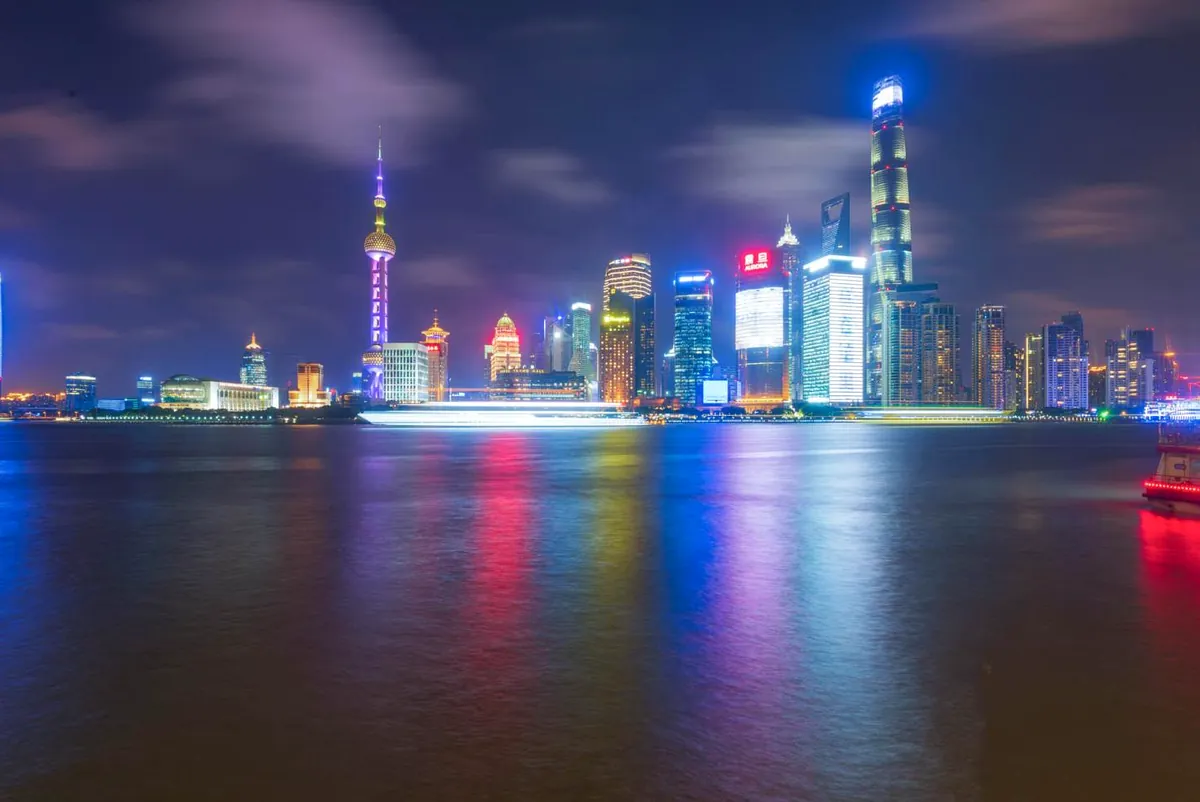
As sunset descends over the Huangpu River, Lujiazui sheds its solemn daytime commercial attire to don the most magnificent light show in the East. From the calm river surface, the skyscraper cluster ignites like giant crystal pillars soaring into the clouds, highlighted by Shanghai Tower’s soft spiral geometry contrasting against the sharp profiles of the SWFC and Jin Mao Tower. Millions of multi-colored LED lights shift rhythmically across glass facades, reflecting across shimmering waters to turn the entire peninsula into a vibrant futuristic canvas where earth and sky seemingly dissolve into dazzling night.
The pinnacle nocturnal experience in Lujiazui begins on the 118th floor observation deck of Shanghai Tower, commanding a record height of 546 meters above ground. Exiting the high-speed elevator—moving at a staggering 18 meters per second—visitors step onto a balcony suspended mid-air. At twilight, the horizon enters a magical phase as turquoise sunset fades into amber beams illuminating the metropolis. From this vantage point, the Huangpu River winds like a luminous silk ribbon, dividing two realities: the western bank features the quiet, historic Neoclassical architecture of the colonial-era Bund, while the eastern bank is a universe of light anchored by towering financial spires.
If high-altitude views offer grand majesty, a journey beneath the river via the Bund Sightseeing Tunnel draws travelers into a unique visual art space. Spanning nearly 650 meters, the underwater tunnel connecting both riverbanks is not merely transit, but a subterranean digital theater. Seated in transparent capsules, visitors pass through digital light shows simulating the earth’s crust formation, fiery magma flows, and mysterious outer space via laser arrays, visual illusions, and surround sound. This brief journey transitions visitors away from daily bustle into a sci-fi world before emerging onto Lujiazui’s brilliant surface.
Landing above ground, nighttime life on the peninsula flows continuously along Binjiang Avenue and the Pearl Ring pedestrian overpass. Unlike quiet global financial districts after office hours, Lujiazui’s riverfront transforms into a vibrant open square. Al-fresco cafes and waterfront dining spots welcome cooling sea breezes as locals and travelers share leisurely strolls. The glass curtain walls of skyscrapers turn into giant canvases for rotating light art installations, creating a sleepless city of light that proves Shanghai’s relentless momentum and brilliance across Asia.
Behind its glass-and-steel exterior reflecting pulsing financial vitality, the Lujiazui Peninsula conceals a multi-layered culinary map where traditional Benbang cuisine blends seamlessly with global fine dining. Huangpu riverfront food culture preserves rich Jiangnan roots, prioritizing pristine freshness through bold flavor balancing, rich crimson soy glazes, and subtle sweet finishes from cane sugar. Amid cloud-piercing towers, culinary discovery moves from century-old street treats to opulent banquets.
Vividly demonstrated on dining tables is the rustic bamboo steamer basket emitting fragrant clouds of steam, cradling Xiaolongbao soup dumplings with gossamer-thin translucent wrappers revealing golden broth inside. Each dumpling resembles a micro-sculpture with delicate spiral pleats, releasing savory meat aromas from pork mince and rich bone marrow broth. Placed alongside are whole steamed hairy crabs glowing in brilliant orange-red, accented by chrysanthemum flowers and finely shredded ginger dipped in Zhenjiang black vinegar, creating the ultimate autumn dining picture amid a bustling metropolis.
Celebrating Shanghai heirloom dishes, authentic Xiaolongbao from Nanxiang Steamed Bun Restaurant—dating back to the Tongzhi and Guangxu reigns of the Qing Dynasty—maintains its classic status. Each dumpling requires precise artisan skill to fold exactly eighteen uniform pleats along the tapered crown. The secret captivating diners is collagen-rich gelatinized broth simmered from pork marrow bones, pig skin, and ginger over hours, melting into piping-hot sweet broth when steamed. Savoring Xiaolongbao follows a refined ritual: lift gently onto a porcelain spoon, bite a small corner to let steam escape, sip the sweet broth, and dip the dumpling in tangy vinegar and ginger.
When crisp autumn breezes sweep across the Bund, gourmets seek out prime Yangcheng Lake Hairy Crabs during their peak season. Celebrated for rich, orange-red roe in females in the ninth lunar month and creamy white roe in males in the tenth, chefs simply steam them with perilla leaves to preserve natural sweetness, serving them with specialized tools to crack open crisp legs. Rich crab roe melts on the tongue, balanced perfectly by warm Shaoxing rice wine, creating a regal dining experience.
Crafted inside the IFC Mall and five-star riverside hotels, Michelin-recognized and Black Pearl-rated restaurants elevate local cuisine to new heights. Master chefs reinvent classics like red-braised pork belly (Hong Shao Rou) and sweet-and-sour mandarin fish into contemporary art pieces served inside glass dining rooms overlooking the illuminated Bund.
Accessing Lujiazui today is smoother than ever thanks to China’s 144-hour visa-free transit policy. International travelers transiting through major hubs like Pudong or Hongqiao International Airports en route to a third country or region can utilize this window for a seamless sightseeing trip without traditional visa paperwork. Present a valid passport with over three months’ validity, confirmed onward international transport with specific seats within 144 hours, and complete a transit arrival card at checkpoint counters. This convenient legal gateway places travelers right inside a towering skyscraper district that was once tidal mudflats during the Ming Dynasty before transforming into a global financial anchor.
Public transit connecting to the financial peninsula is organized with high precision and massive capacity. Metro Line 2 and Line 14 serve as primary arteries carrying pedestrians deep underground directly to Lujiazui Station. Line 2 runs along an east–west axis linking both international airports directly to exits situated right beneath Jin Mao Tower and the Oriental Pearl Tower, while fully automated Line 14 offers flexible connections to surrounding modern centers. Still, to appreciate historical roots and witness the dramatic architectural contrast between western classical heritage and eastern high-rises, the most poetic and symbolic transit remains the Huangpu River ferry. Costing just 2 RMB, public ferries running from East Jinling Road or Shiliupu Piers to Dongchang Road Pier recall historic waterfront commerce while opening panoramic views toward the towering wall of skyscrapers.
At iconic observation decks, knowing operating hours and planning ahead ensures an optimized journey. Shanghai Tower with its Top of Shanghai Observatory on the 118th floor at 546 meters, Jin Mao Tower with its 88th floor and outdoor glass skywalk, or the Oriental Pearl Tower with its transparent glass corridor at 259 meters generally welcome visitors daily from 8:30 AM to 10:00 PM. Book timed-entry tickets online in advance to avoid long queues during peak hours. Golden hour—between 5:00 PM and 7:00 PM—stands out as the ideal time to ascend, catching sunset over the Bund before nighttime illumination lights up both riverbanks.
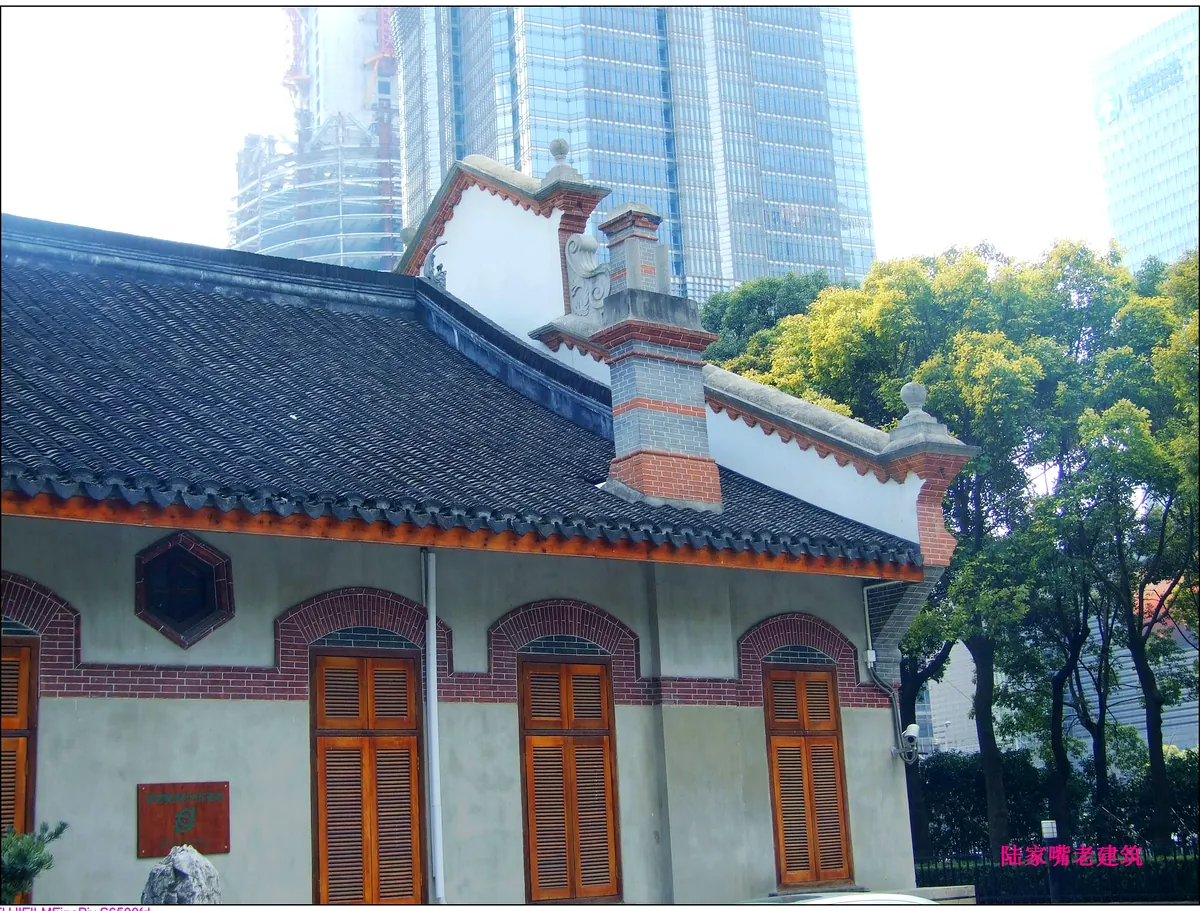
To avoid commercial tourist traps—from forced shopping detours to unverified tea ceremonies—plan independent itineraries focused on premium experiences. Such immersive routes favor in-depth walking tours combining architecture and local history. Begin with a leisurely stroll across the circular pedestrian overpass, observing bustling traffic beneath skyscrapers, followed by a walk along breezy Binjiang Avenue. This riverside corridor preserves historic Pudong grain warehouse relics while serving as the perfect spot to enjoy coffee by the water or visit the Lu Shen Memorial Museum, which preserves the historic namesake roots of the financial district.
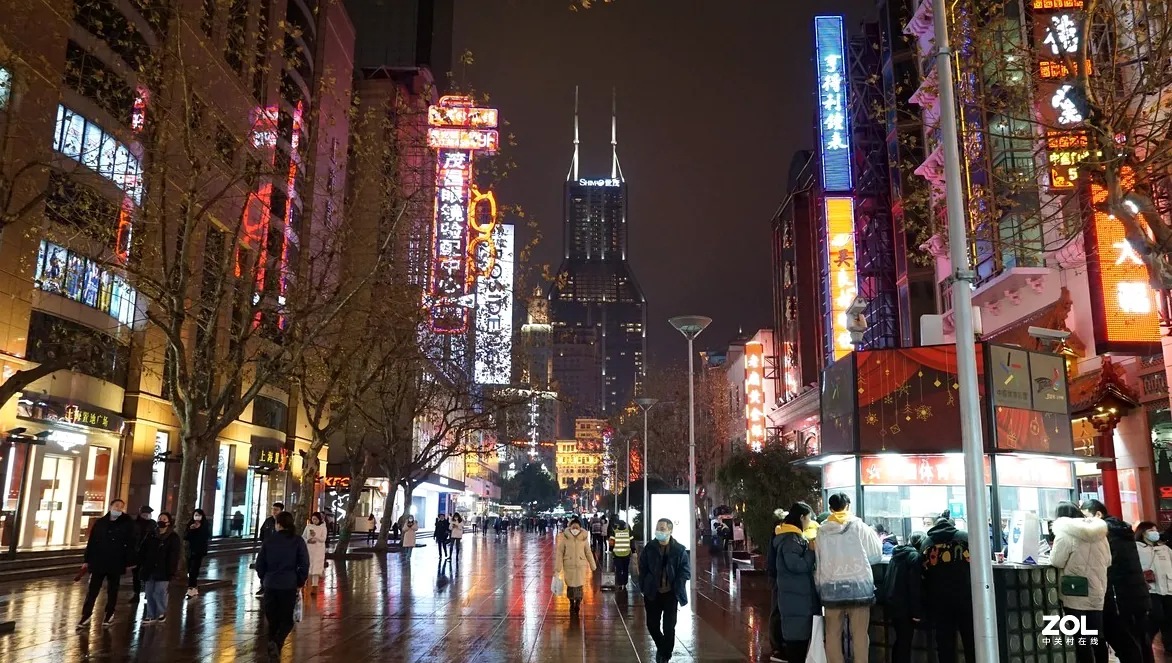
Completing a journey to the economic heart of the eastern metropolis is most rewarding when each experience is built upon deep cultural, geographical, and operational insight. Choosing to join an expertly crafted all-inclusive China tour package offers the ideal solution for enjoying refined services and turning every moment in Lujiazui into an unforgettable chapter of travel.