Winding through the heart of Shanghai like a chronicle written in water, the Huangpu River carries in every wave lapping against its stone banks the echoes of centuries of historical change. Long before becoming one of the world’s busiest seaports, this waterway quietly nourished the fertile alluvial plain of the Jiangnan region. Under the Ming dynasty—especially from the Jiajing era onward—the Huangpu River cemented its role as a vital trade artery, welcoming thousands of sails transporting abundant rice harvests alongside fine homespun and cotton cloth bound for inland waterways across China. Throughout the Ming and Qing eras, the humble riverside wharf served mainly as a mooring for rustic fishing boats and working timber rafts, yet the bustling commerce of local merchants planted the earliest seeds of trade, preparing the ground for an unprecedented transformation in modern history.
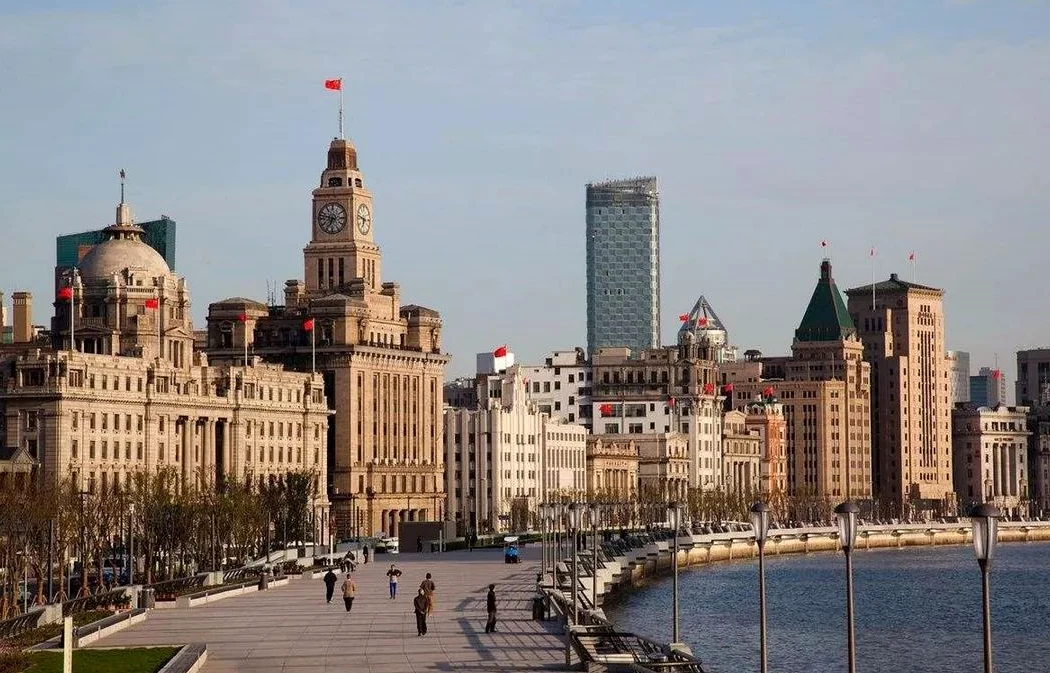
The fateful turning point that reshaped the river’s destiny arrived in 1842, when the Qing court was defeated in the First Opium War and forced to sign the Treaty of Nanjing, opening Shanghai as one of five treaty ports for foreign trade. The concession era spanning nearly a century, from 1845 to 1943, turned the desolate mudflats along the west bank of the Huangpu into the glittering Bund. Administered first as the British and French concessions before merging into the International Settlement, the district saw financial institutions, multinational banks, embassies, and renowned hotels rise side by side. The west bank donned an ornate Western architectural wardrobe blending imposing Neoclassicism, quiet Gothic, and lavish Baroque, creating a grand open-air “museum of world architecture.” Shanghai quickly broke away from the mold of a traditional East Asian city to emerge as a dazzling, cosmopolitan “Paris of the East,” where the river mirrored noble carriages and international tycoons day and night.
After the historic milestone of 1949, the face of the Huangpu River shifted once again to keep pace with the reconstruction of a young nation. Its glamorous past gave way to the pragmatic mission of industrialization: the water teemed with coal barges, cargo vessels heavy with raw materials, and hardworking public ferries carrying tens of thousands of workers back and forth between the two banks every day. For decades, the balance between the shores tilted heavily toward the historic west, while Pudong across the river remained largely marshland dotted with aging shipyards and sprawling vegetable fields. That divide gave rise to a familiar local saying: better a bed in Puxi than a house in Pudong.
Centuries-old assumptions were shattered on April 18, 1990, when the Chinese government officially announced the historic strategy to develop and open Pudong. That epoch-making policy injected powerful momentum into the east bank, transforming it into the Lujiazui financial hub with a forest of skyscrapers piercing the clouds and sketching a surreal new-century skyline. Suddenly, the Huangpu River became a magical boundary in time: on the right bank lay nineteenth-century colonial memory carved in granite, and on the left bank rose the futuristic promise of twenty-first-century technology, steel, and glass. Recognizing the unmatched scenic value of this contrast, a large-scale commercial landscape lighting project was inaugurated in 1999. As warm golden light embraced the Bund and blended with dazzling LED choreography from Pudong, the Huangpu River night cruise industry was born, opening a living chapter of heritage appreciation on the water.
From a hydrological and feng shui perspective, the Huangpu River draws its waters from the Taihu Lake lagoon network, winding for more than 110 kilometers before joining the surging Yangtze River and emptying into the East China Sea at Wusongkou. The vital stretch flowing through central Shanghai features a distinctive landform praised in traditional geomancy as a “Golden Dragon Bend” or “Jade Belt Around the Waist.” Its gentle U-shaped curve hugs the Lujiazui alluvial peninsula, creating a rare natural convergence of water and vitality. Four hundred to six hundred meters wide and deeply channeled, the river acts as a guiding landmark—both a natural divide and a steady economic lifeline sustaining a fertile plain across centuries of shifting tides.
Spatial planning along both banks is a masterclass in urban juxtaposition between the modern and contemporary eras. On the west bank in Puxi, the Bund’s sturdy granite embankment stretches 1,500 meters, reinforced on timber pilings dating back to the late nineteenth century. Fifty-two architectural landmarks in Neoclassical, Baroque, Renaissance, and Art Deco styles stand like an open-air museum, reflecting the era of a vibrant international port. Across the calm water, Pudong rises dramatically on younger alluvial sediment. Master planning in Lujiazui clusters cutting-edge twenty-first-century supertalls into a commanding triad: the 420-meter-plus Jin Mao Tower, the towering 492-meter Shanghai World Financial Center, and the spiraling 632-meter Shanghai Tower, forming a proud vertical skyline.
To make nighttime sightseeing on the water both safe and enchanting, vessel operations here follow strict inland maritime standards. Departing mainly from the famed Shiliupu Pier—a bustling commercial port with roots in the Ming dynasty—multi-deck cruise ships weighing from several hundred to over a thousand tons operate at a tightly controlled speed of seven to nine knots. That speed is carefully calibrated to minimize wake impact against the Bund’s century-old stone revetment while giving passengers a remarkably smooth ride. Electronic channel buoys and Automatic Identification Systems (AIS) separate passenger cruise vessels from industrial cargo barges, keeping navigation clear across daily tidal swings of two to three meters.
At night, the Huangpu becomes a showcase blending architectural lighting design with wide-area digital control. The entire west bank is bathed in warm amber light between 2,700 and 3,000 Kelvin, bringing out the relief carvings and cornices of historic granite facades. By contrast, the east bank glows with smart LED matrices synchronized via underground fiber-optic cables across the district, shifting through vivid color spectrums and projecting intricate animations across tempered glass towers. As the cruise vessel cuts through the confluence where quiet Suzhou Creek meets the Huangpu beneath the massive steel arch of the century-old Waibaidu Bridge, visitors feel the rare harmony between steeped history and the nonstop pulse of a global megacity.
Sailing through the night along the Huangpu opens a rare spatial dialogue where churning waters mirror the dramatic contrast between two eras. On the west bank, the Bund stands like an open-air architectural museum preserving the golden age of a Far Eastern port city from the last century. The ensemble brings together 52 heritage buildings in classic Western styles—from the regal restraint of Gothic and ornate curves of Baroque to the balanced symmetry of Neoclassicism and bold geometry of Art Deco. Standing out along this historic facade is the former HSBC Building, a splendid Neoclassical landmark crowned by a stately bronze dome and an entrance hall featuring mosaic dome work among the finest in Asia, once famed as the second most opulent building in the world after the Palace of Versailles. Nearby, the Peace Hotel (formerly Sassoon House) rises proudly with its signature green copper pyramid spire, an ultimate symbol of Art Deco that once hosted lavish galas and gatherings of global elites.
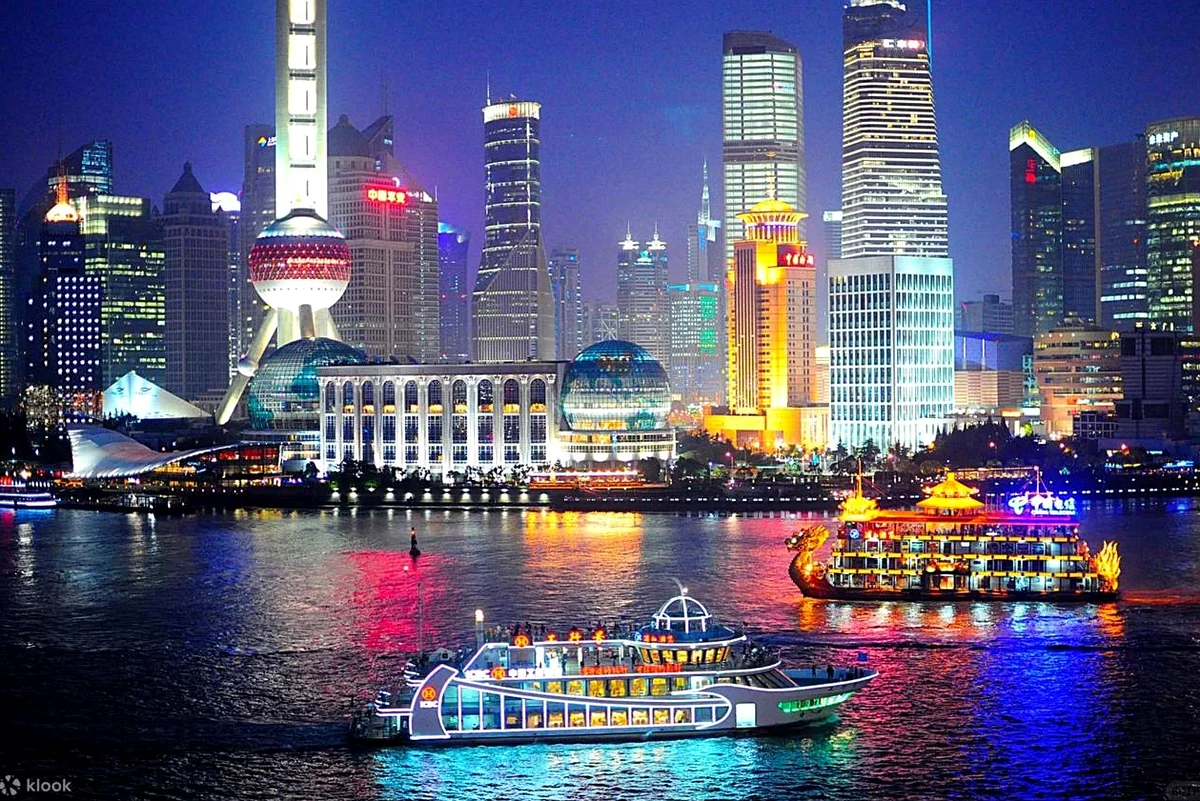
In stark contrast to the quiet antiquity of the west bank, the east bank on the Lujiazui peninsula showcases a futuristic blend of steel, glass, and advanced lighting technology embodying modern urban ambition. Lujiazui’s skyline is defined by world-record supertalls. Anchoring the waterfront is the Oriental Pearl TV Tower, completed in 1994 with a form inspired by Tang poet Bai Juyi’s famous line from “The Song of the Pipa Player”: “Large pearls and small pearls dropping onto a jade plate.” Its structure features 11 steel-and-glass spheres glowing in ruby tones, linked by three massive columns rooted deep in alluvial soil to create a silhouette at once surreal and steeped in classical Eastern culture.
Deeper in the heart of Lujiazui, three skyscrapers form an awe-inspiring architectural tripod for anyone standing on deck. The Jin Mao Tower, completed in 1999, echoes Eastern philosophy by evoking tiered traditional octagonal pagodas fused with postmodern design. Right beside it is the Shanghai World Financial Center, completed in 2008—a sleek prism with a distinctive trapezoidal aperture near the top that helps relieve wind loads. Crowning this spatial achievement is the Shanghai Tower, China’s tallest building at 632 meters, completed in 2015. Its 120-degree twist evokes a dragon ascending toward the clouds, carrying auspicious feng shui meaning while its rotating double-skin glass facade cuts wind loads by up to 24 percent, making it one of the world’s notable sustainable engineering landmarks.
The spatial link across the river is sealed by major crossings like the Nanpu Bridge and Yangpu Bridge. With sweeping cable spans and soaring H-shaped towers, these two monumental structures resemble ribbons of light—like “twin dragons playing with a pearl” cradling Lujiazui. Seen from the calm water of a night cruise, the pairing of solid Western sandstone along the Bund with futuristic reflective alloys in Lujiazui creates a sweeping visual panorama expressing Shanghai’s cross-century fusion and enduring vitality.
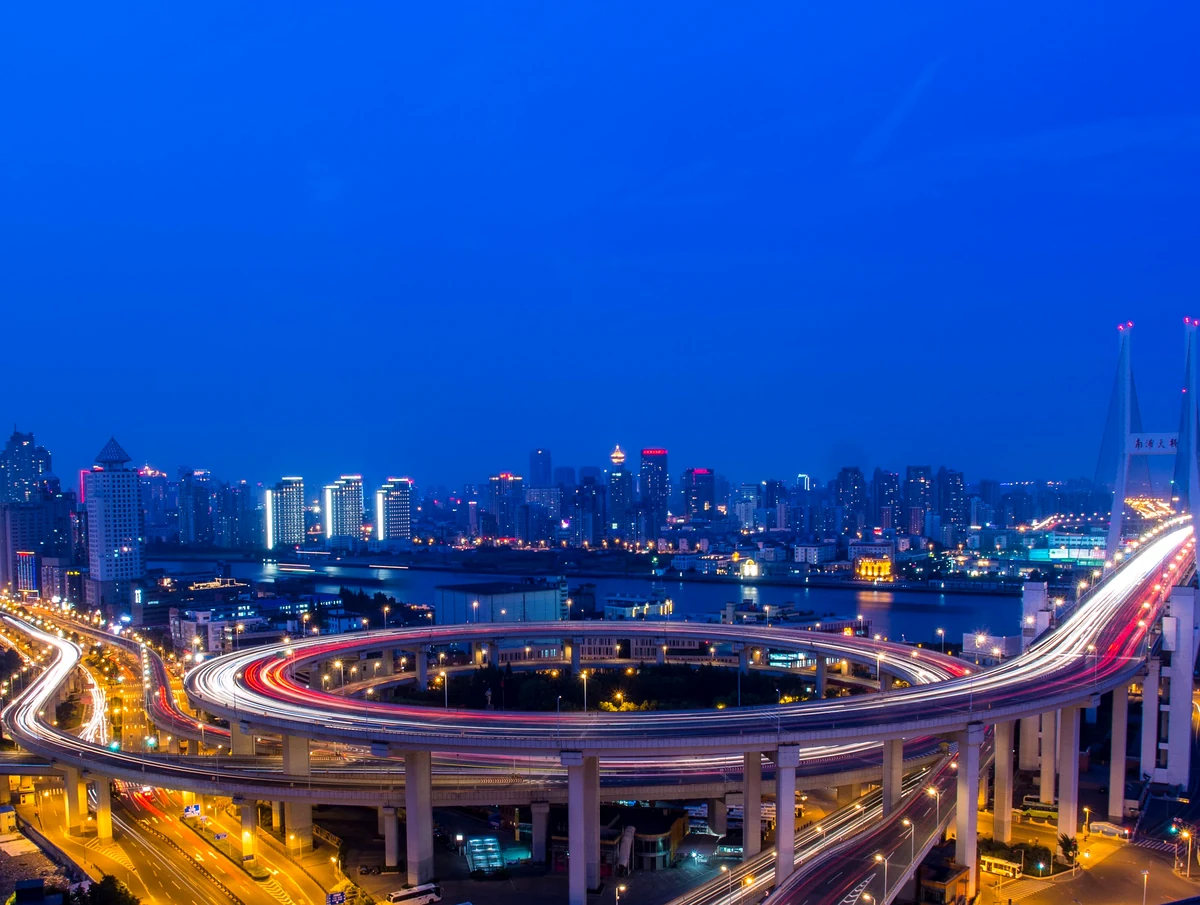
As dusk draws a slate-blue curtain across the water, the Huangpu River sheds its daytime stillness to transform into one of the most vibrant, dazzling open-air urban stages in the East. Since the large-scale commercial lighting rollout in 1999, illumination along both banks has grown from simple streetlamps into a complex visual art form, where digital controls synchronize millions of light-emitting diodes (LEDs) to turn concrete, stone, and glass into giant canvases. The calm river acts as a grand mirror, reflecting the interplay of light and showcasing the endless pulse of a city that never sleeps.
Cruising along the water draws visitors into a dramatic contrast between two sides of a historical current. On the west bank, the Bund wears a regal cloak of warm amber light, highlighting the moldings, Ionic columns, and Roman arches of Neoclassical buildings from the concession era. That rich, golden tone recalls the glamour of the Far East in the early twentieth century. Looking across to the east bank, Lujiazui rises like a futuristic forest of towers with cool, crisp, ever-shifting light displays. The Oriental Pearl TV Tower alongside the Jin Mao Tower, Shanghai World Financial Center, and Shanghai Tower radiate vivid color bands and project laser beams into the clouds, creating a silent dialogue between a storied colonial past and a striking digital future.
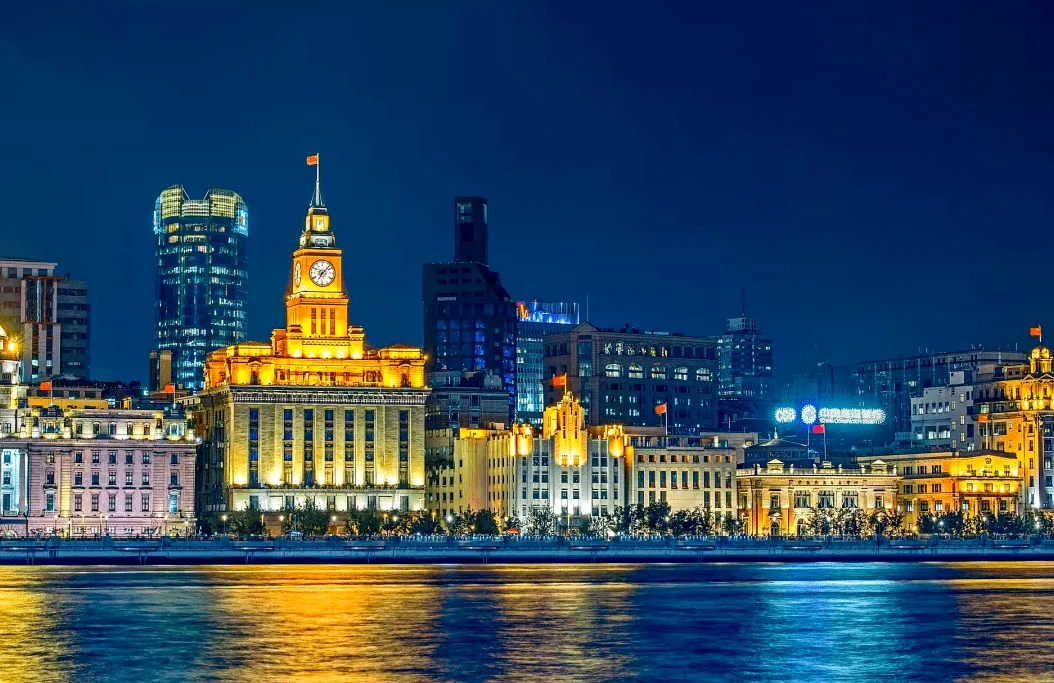
Nighttime rhythm on the water is defined by two standard routes: a classic 60-minute cruise and an extended 90-minute route that travels farther toward the cable-stayed Nanpu and Yangpu bridges. Passing beneath a bridge, illuminated stay cables glow like giant harp strings stretched across the sky, humming a modern note in the quiet night air. From 7:00 PM to 8:30 PM is widely considered peak golden hour, when light intensity reaches full brilliance, river breezes sweep across the upper deck, and soft saxophone notes mingle with clinking glasses from upper dining lounges. The full light show holds its brilliance until buildings dim their lights at 11:00 PM, returning the river to its quiet stillness.
A modern shift on the Huangpu also appears in how visitors experience the river, with pure-electric and hybrid green vessels entering service. Eliminating loud engine rumble and diesel exhaust lets passengers immerse themselves in a cleaner acoustic setting, where gentle water lapping against the hull and distant city sounds take center stage. Meanwhile, augmented reality apps paired with smart eyewear are gradually rolling out, allowing passengers looking over the rail to see Qing-era dragon boats or early modern steamships appear vividly against Lujiazui’s glowing skyline for a unique multi-layered visual experience.
Beneath the lights illuminating both banks of the Huangpu, Shanghai’s soul lives not only in colonial facades and skyscrapers, but also in Benbang cuisine—the renowned local culinary tradition born in the fertile river delta. A night cruise on the water feels most complete when sight and touch are guided by traditional flavors, where skilled chefs uphold time-honored techniques refined over centuries.
When speaking of Shanghai delicacies near the Huangpu waterfront, no connoisseur overlooks Xiaolongbao (soup dumplings), a specialty originating in Nanxiang town during the Tongzhi reign of the Qing dynasty. Not far from the piers, right beside the Zigzag Bridge in historic Yu Garden, the original Nanxiang dumpling house still steams fresh baskets daily. The secret of this famous dim sum lies in rolling dough as thin as a cicada’s wing yet resilient enough to hold, pleated neatly into sixteen to eighteen uniform folds. Inside wraps finely minced fresh pork combined with rich aspic made by simmering pork bones and skin for hours. Steamed over bamboo, the aspic melts into naturally sweet, savory broth. Seasoned Shanghai diners follow a time-tested ritual: lift the dumpling gently, place it on a spoon, nibble a small opening to let steam escape, sip the rich broth slowly, and then dip the dumpling into Zhenjiang black vinegar topped with fine julienned ginger.
If a river cruise falls between the autumn equinox and the start of winter, a riverside meal becomes a regal affair with Yangcheng Lake hairy crab. Celebrated as a delicacy of Jiangnan, hairy crabs thrive on clear, sandy, weed-lined freshwater lakebeds and have sharp claws covered in fine brown hair. An old saying—”nine moons round belly, ten moons sharp tip”—notes that ninth-lunar-month females offer rich, creamy golden roe, while tenth-lunar-month males yield sweet, pearly meat. The purest way to honor Yangcheng Lake hairy crab is steaming it with perilla leaves to preserve its delicate flavor. Because crab is considered cooling in traditional food wisdom, it is traditionally paired with warm Shaoxing yellow rice wine heated in a ceramic pot, balancing cool late-night river breezes with the gentle warmth of aged glutinous rice wine.
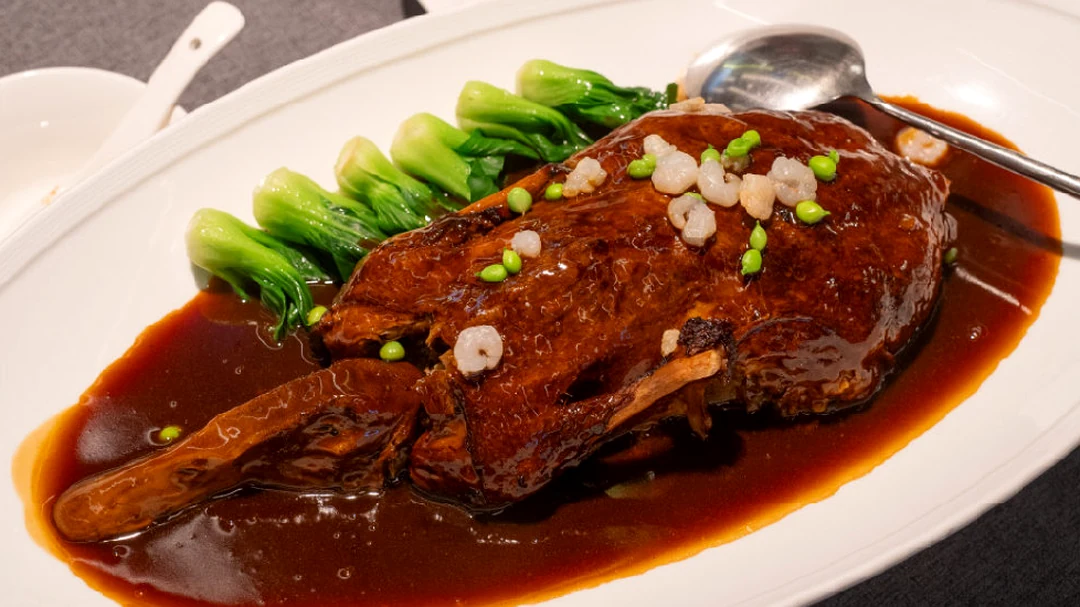
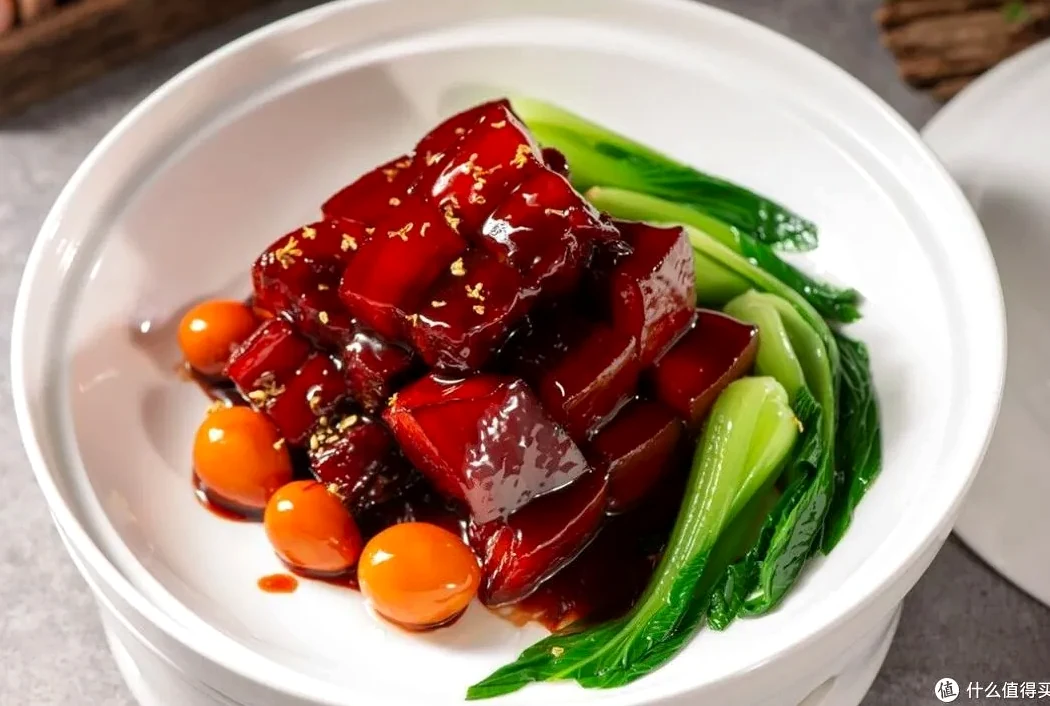
Alongside delicate dim sum and seafood, Shanghai cuisine leaves a lasting mark with Hongshao Rou (red-braised pork belly), a vivid expression of the cooking style known as “rich oil and red sauce”—favoring savory richness and a glossy reddish glaze. Fresh five-layer pork belly, evenly striped with lean meat and fat, is cut into thumb-sized cubes and blanched with ginger. Traditional cooks use an earthenware pot to braise the pork with quality soy sauce, rock sugar, and just enough Shaoxing rice wine—without adding a single drop of plain water. Simmered slowly for hours, the rock sugar caramelizes with rendered fat to coat each cube in an amber-red sheen. The meat turns so tender it parts at the touch of chopsticks and melts on the tongue, leaving a balanced sweet-savory finish that feels rich without being heavy.
Exploring local food culture would miss an earthy note without Congyou Bing (scallion oil pancake), tucked away in traditional lanes behind the bustling waterfront. Made from well-rested wheat dough layered with fragrant lard, finely chopped green scallions, and a hint of numbing Sichuan pepper, the round flatbread is pan-fried in plenty of oil until golden on both sides, then pressed briefly against the hot wall of a charcoal stove. That dry heat draws out excess oil, creating a crisp, flaky crust like overlapping petals while keeping the inside soft and aromatic with scallions—a staple of everyday city life.
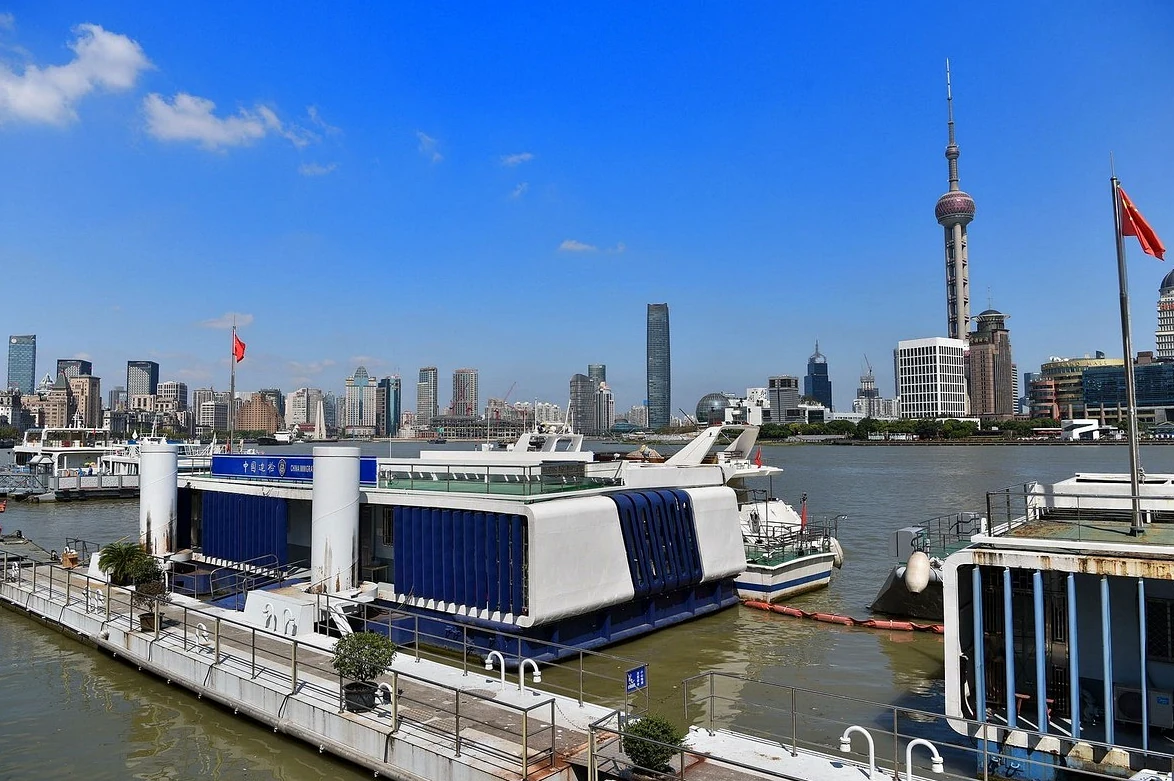
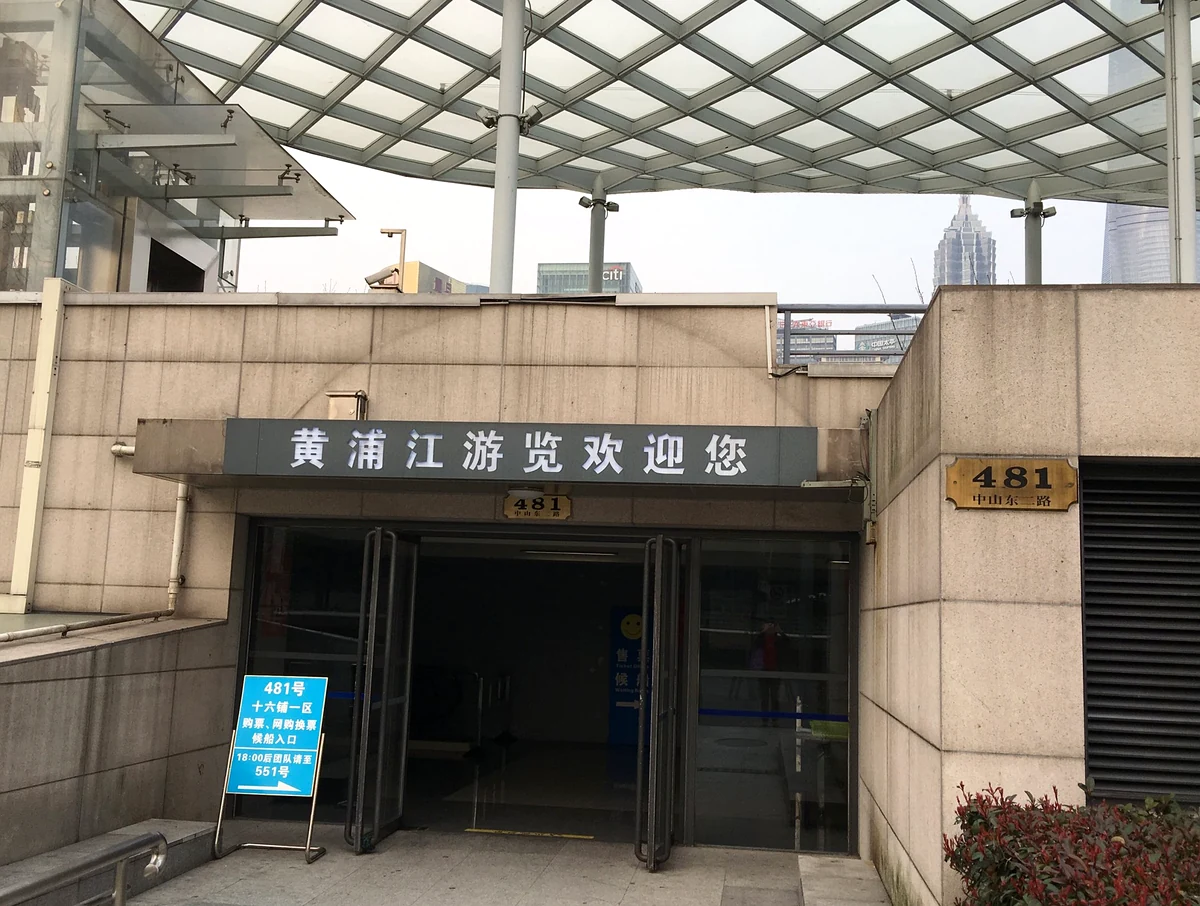
To start taking in the illuminated scenery along both banks of the Huangpu, knowing Shanghai’s modern urban transit network is key to an unhurried trip. The Shanghai Metro links smoothly to central piers, with the famed Shiliupu Pier cluster (十六铺码头) serving as the main departure point for most upscale cruises. Visitors can take Line 2 or Line 10 to Nanjing East Road station and stroll at ease through the lively pedestrian street before reaching the water. Line 14 paired with Line 10 via Yuyuan Garden station also offers a charming approach, letting travelers admire old-town architecture before stepping into the bright waterfront.
For international travelers, China’s 144-hour transit visa-free policy makes a short getaway to Shanghai remarkably convenient without heavy paperwork. Local payments are also widely accessible to international visitors, as linking cards like Visa and Mastercard to platforms such as WeChat Pay or Alipay works quickly for transit fares, dining, and souvenirs with a simple scan. Whether buying cruise tickets at the counter or picking up e-tickets, travelers should carry a valid original passport to complete identity registration per port security rules.
The ideal window to step aboard falls between 7:00 PM and 8:30 PM each evening. During this golden stretch, public lighting runs at full power, turning the river into a giant mirror reflecting two contrasting worlds: warm golden light lending a classic regal hue to colonial buildings on the Bund to the west, and LED ribbons with laser displays pulsing with futuristic energy across Lujiazui skyscrapers to the east. A standard 60- to 90-minute cruise traces a sweeping arc past Nanpu Bridge, Yangpu Bridge, and the Oriental Pearl TV Tower—giving visitors time to take in the rhythm of passing eras.
While Shanghai’s night tourism market is rich with options, unusually cheap packages—often called “zero-yuan tours”—carry pitfalls. Such cut-rate itineraries often shorten actual sightseeing time on the river and pressure guests into mandatory shopping stops like silk workshops or pearl centers. To protect the quality of the trip, savvy travelers favor shopping-free itineraries, verified standard tickets, or upgrades to fine-dining VIP cabins. Aboard upscale dining cruises, guests can sip sparkling wine and enjoy refined East China dishes in a quieter setting rather than crowding on a busy general deck.
When packing, remember a light jacket or silk shawl, as breezes blowing off the estuary into the Huangpu at night can feel briskly chilly regardless of daytime warmth. Charging camera batteries and claiming an open view on the upper deck will help capture lasting images of the vibrant city. To enjoy every refined moment without worrying about itinerary coordination or language barriers, travelers can explore a carefully planned all-inclusive tour package tailored for a smooth journey.