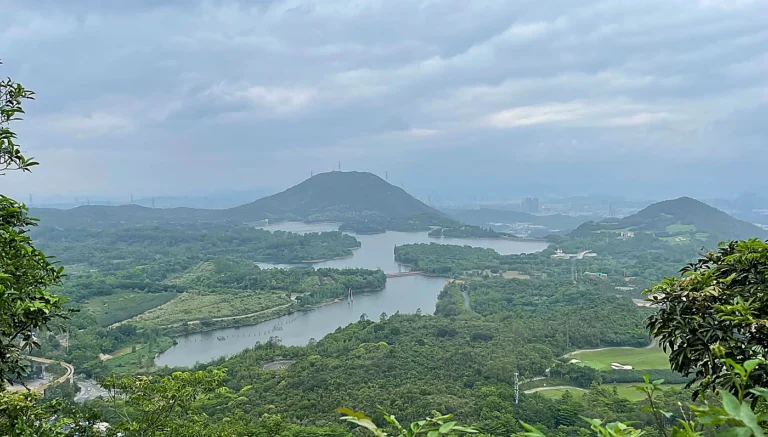
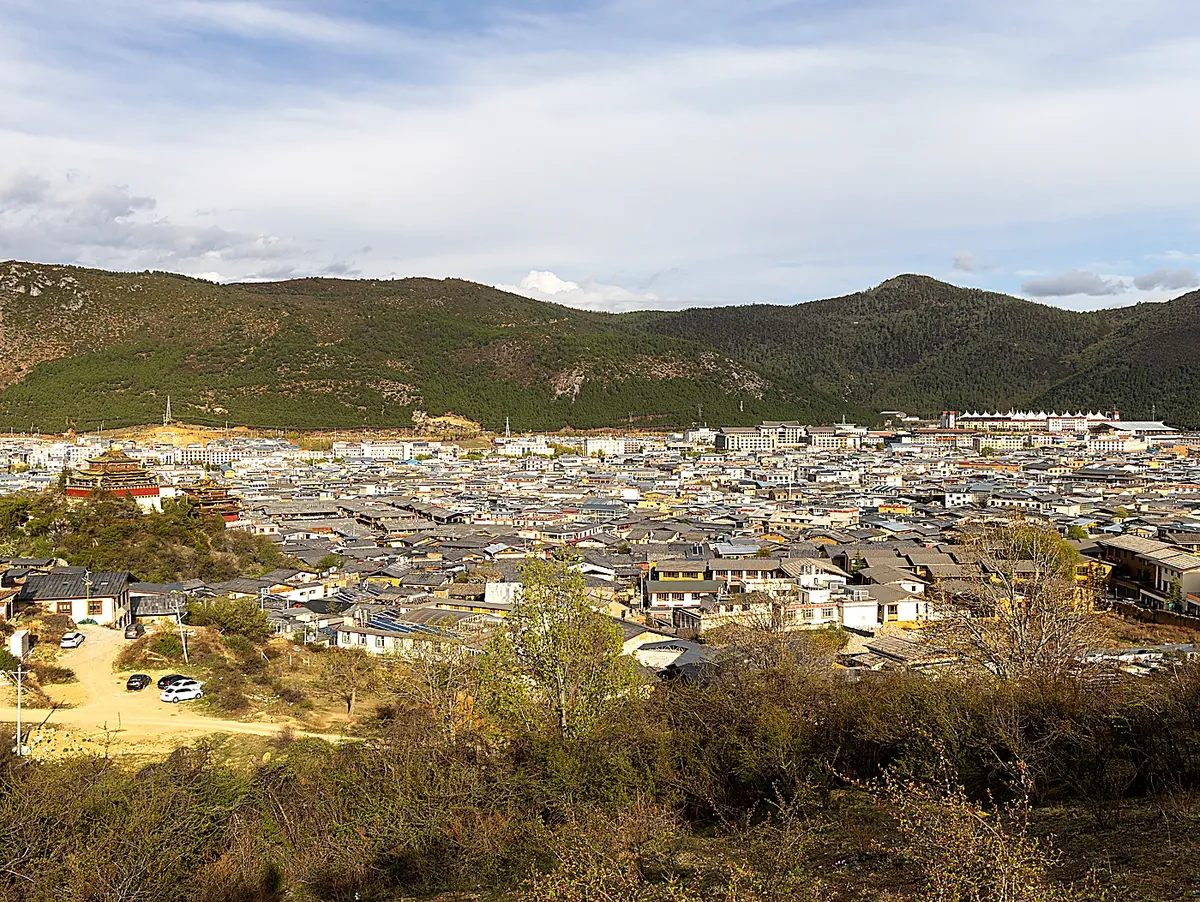
Nestled inside the Jiantang Basin at more than 3,200 meters above sea level within Diqing Tibetan Autonomous Prefecture, Dukezong Ancient Town rises like a living epic preserving over 1,300 years of history across China’s southwestern frontier. Founded in the seventh century during the height of the Tubo Empire—parallel to the Tang Dynasty’s golden age—this historic town has stood as a steadfast witness to cultural, military, and economic exchange spanning more than a millennium. In the indigenous Tibetan language, “Dukezong” carries two profound symbolic meanings: first, “Fortress Built on White Stone,” derived from natural white limestone encircling the base of Guishan Hill; and second, “City of Moonlight,” forming a harmonious counterpart to the former Niwangzong fortress (“City of Sunlight”) atop the opposite hill—together creating an impregnable twin-fortress defense across the snow-dusted plateau.
Dukezong’s geopolitical position took shape early on, when Tubo forces recognized how this strategic terrain commanded the gateway linking Tibet, Sichuan, and Yunnan. Through the Nanzhao and Dali periods and into the Yuan, Ming, and Qing dynasties as central court authority shifted from loose to tighter control, Dukezong transformed from an isolated military outpost into a vital relay station along the Ancient Tea Horse Road (Yunnan–Tibet Tea Horse Road). Beneath the shadow of towering snow peaks, resilient horse caravans braved thousands of miles of high passes and deep gorges, carrying Pu’er tea cakes from southern Yunnan, mineral salt, rock sugar, and Han silks to trade for spirited warhorses, furs, matsutake mushrooms, and precious medicinal treasures such as cordyceps and snow lotus from the snowy highlands.
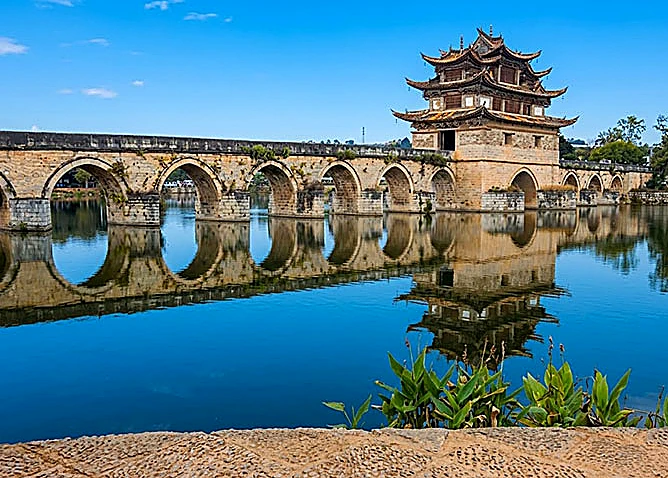
The town’s prosperity across dynasties was also closely tied to the indigenous Tusi chieftain system. During the Ming and early Qing eras, as the Mu Clan Tusi in Lijiang and Tibetan chieftains alternated in exerting influence, Dukezong became a distinctive multi-ethnic melting pot uniting Tibetan, Han, Naxi, and Bai communities. Open frontier trade networks softened dividing lines, turning rough-stoned courtyards and bustling shopfronts into harmonious shared spaces. Deeply worn hoofprints etched into blue-gray flagstones stretching from the central square to the base of stupas remain visible today—silent testimony to millions of travelers, monks, and caravan merchants who braved the elements to build a thriving frontier hub.
Despite enduring countless historical shifts—from feudal military clashes to extreme sub-zero highland weather—Dukezong has preserved its soul as an enduring cultural, spiritual, and trading center. Over 1,300 years of history in the “City of Moonlight” are carved not only into thick rammed-earth walls and weathered mountain-pine timber frames, but woven deeply into local daily rhythms across generations. The survival of this white-stone town is a stirring chronicle of resilience, openness, and lasting coexistence among peoples along an ancient trans-Himalayan route.
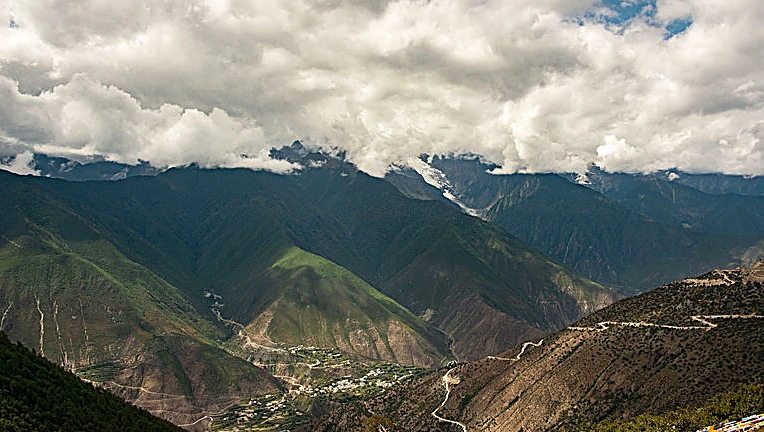
Positioned across the sweeping terrain of northwestern Yunnan Province, Dukezong Ancient Town sits right at the heart of the Diqing plateau, like a pristine sanctuary cupped within the Tibetan landscape. Geodetically, this sacred space spans from 99°20′ to 100°19′ East longitude and 26°52′ to 28°52′ North latitude, climbing to an elevation of 3,300 meters above sea level. At this rare altitude, it proudly holds the distinction of being the highest ancient town in all of Yunnan, a landmark resting along the southern extension of the Qinghai–Tibet Plateau. Even more notably, its setting is rooted in the iconic core of the Three Parallel Rivers World Heritage site—where massive faults of the Hengduan Mountains carve deep valleys alongside jagged peaks piercing the clouds.
Viewed through geomancy and highland architectural philosophy, Dukezong’s site embodies a seamless union of working with nature and ancient defensive planning. The town anchors itself against Guishan Hill—a gently sloping hill shaped like a sacred turtle, an enduring symbol of stability, protection, and longevity in both Han–Tibetan geomancy and Vajrayana lore. With its back resting against Guishan and its front opening onto a broad valley basin, builders turned natural slopes into a firm shield—blocking biting winter winds funneling from deep gorges while capturing warm plateau sunlight reflected off limestone slopes.
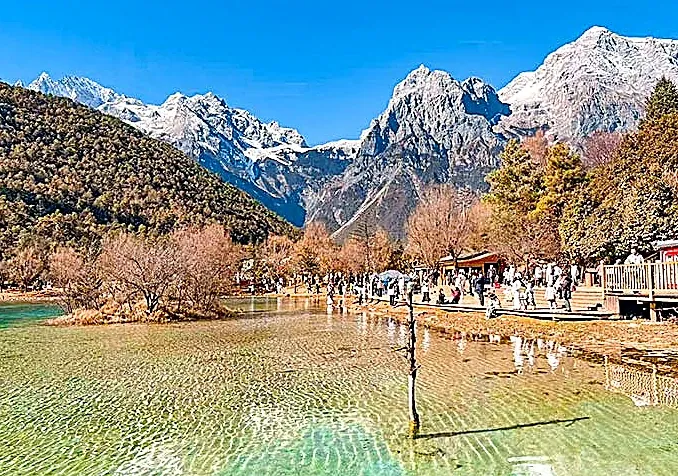
The natural scenery encircling Dukezong reads like an extraordinary blend of reality and dream, where the boundary between mortal earth and mythical Shangri-La seems to dissolve. Ringed on all sides by ranges of perpetual snow peaks appearing and vanishing behind drifting mist, the mountains stay wrapped year-round in white clouds like Khata silk scarves offered to the Buddhas. Gentle contours transition smoothly from granite slopes of Guishan down into expansive alpine meadows, forming a rich high-altitude grassland ecosystem. As seasons shift, vegetation becomes a vivid tapestry—bright with summer wildflowers, turning to quiet russet grass in autumn, and falling completely silent beneath crisp winter snow.
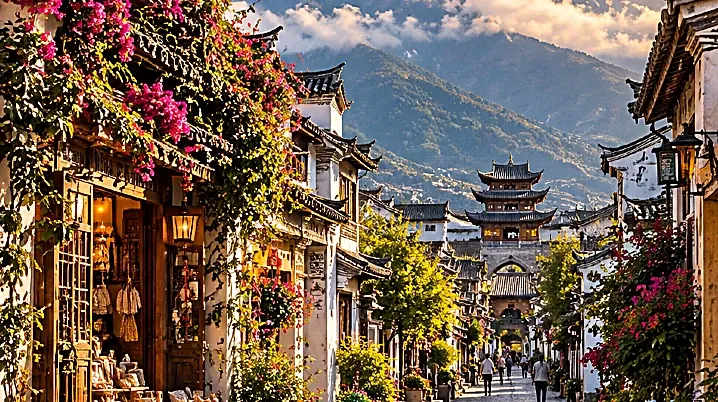
Beyond strategic terrain and dramatic scenery, Dukezong’s urban layout reveals masterly ecological adaptation by local builders to a demanding environment. Its network of flagstone streets and alleys avoids rigid lowland grid lines; instead, lanes curve naturally with hillside contours, converging centripetally toward Moonlight Square at Guishan’s foot. Arranging traditional rammed-earth houses with thick stepped gable walls aids snowmelt drainage while creating microclimatic air buffers that retain indoor warmth. This harmony between human craft and Hengduan mountain dynamics turns the town into a living organism coexisting with wind and snow across millennia.
Spanning roughly 1.5 square kilometers of planned area, Dukezong Ancient Town unfolds like a blooming lotus inside a snow-framed plateau valley. Its overall spatial layout did not arise by chance from haphazard merchant expansion, but was deliberately designed and built around a Mandala model—the sacred cosmological diagram representing the mythical Shambhala pure land in Tibetan Buddhism. Taking Guishan Hilltop as its radiating center, streets and historic quarters branch out like eight lotus petals, guiding pilgrims and travelers through a labyrinth of natural flagstone alleys that blend defensive structure with a philosophy uniting human life and contemplative stillness.
Woven throughout this spatial fabric is one of China’s largest and best-preserved clusters of traditional Tibetan dwellings. Each home showcases skilled timber joinery and resourceful use of local materials. Residents built sturdy frames combining wood, stone, and rammed earth, with thick outer walls of rough stone and packed earth to ward off piercing mountain winds. Roofs use a distinctive “shingle-slate” method—layering thin split wood planks weighted down with heavy stones to withstand strong gusts. Most notably, exterior walls are coated in white clay native to the Diqing plateau, making the entire settlement gleam pure white in bright sun and glow softly on full-moon nights—honoring its name as the tranquil “City of Moonlight.”
Dukezong’s historical pulse crystallizes across landmark structures positioned at key intersections. To the north stands a solemn town gate once trodden by packhorses traveling back and forth along the ancient Tea Horse Road. Along historic Cangfang Street, a pure white stupa rises amidst drifting cypress incense and clear bronze bells, acting as a spiritual beacon for local neighborhoods. Nearby stands a traditional administrative hall featuring intricate wood carvings—once a Tusi tribal council seat and civic hub recording pivotal historical moments in cultural exchange among Tibetan, Han, and Naxi communities across eras.
The pinnacle of architectural planning—and the visual soul of the entire valley—gathers in Guishan Hill Park, where the turtle-shaped hill supports the solemn Dafo Temple. High atop the breezy summit rises a world-renowned masterpiece: a colossal gilded prayer wheel towering skyward and weighing dozens of tons, its surface embossed with Buddhas, Bodhisattvas, and the six-syllable mantra “Om Mani Padme Hum.” Housing millions of sacred scriptures and mantras inside, this giant dharma wheel requires a dozen people pushing together clockwise. Each slow turn gleaming golden beneath open skies showcases supreme bronze-gilding craftsmanship while generating a serene, auspicious energy that blesses the world.
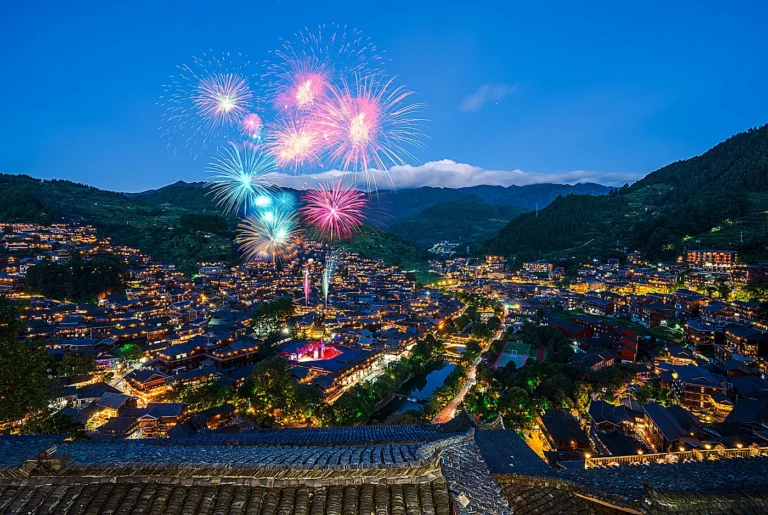
As sunset fades behind the snow-clad peaks of the Diqing plateau above 3,160 meters, Dukezong sheds its quiet daytime demeanor to don the mystical mantle of the “City of Moonlight” in ancient Tibetan. Lighting design in this thousand-year-old town avoids flashy multicolored LEDs, choosing instead to honor original architecture with warm golden illumination radiating from Guishan Hilltop. Standing prominently on the turtle-shell ridge, Dafo Temple and its giant prayer wheel—standing over 21 meters tall and weighing up to 60 tons—glow with regal amber light. From miles away across the Shangri-La valley, the gilded structure shines like a lotus blooming in deep night, casting sacred radiance across sloped roofs and characteristic grayish-white rammed-earth walls of the Khampa people.
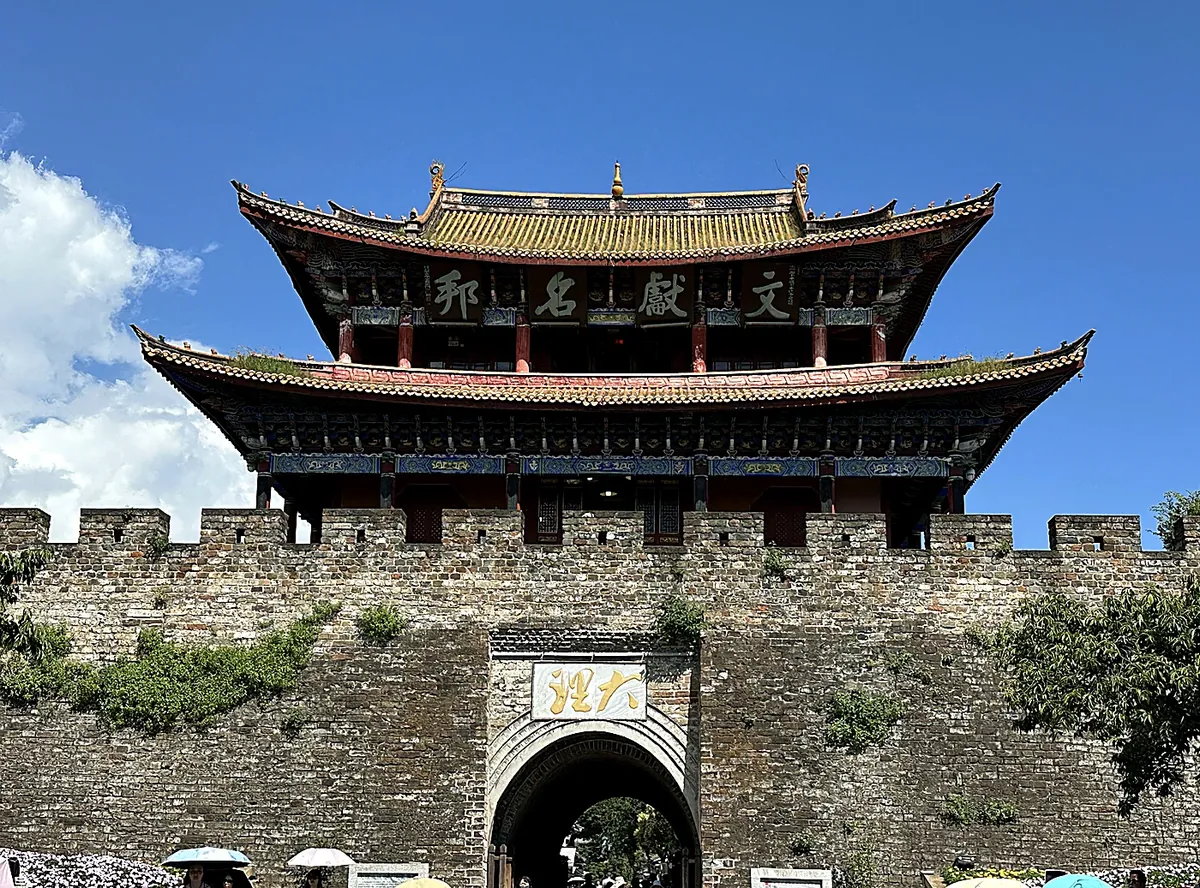
The focal point of Dukezong’s nightlife gathers at Moonlight Square right below Guishan Hill. Without elaborate stage sets or fixed scripts, the square becomes the plateau’s purest, liveliest open-air theater. Whenever evening chill settles and a bonfire blazes in the center of the square, traditional Guozhuang circle dancing begins. Local women in five-color embroidered attire—with gleaming silver belts, red coral, and turquoise swaying with each step—join hands in wide concentric circles, stepping in rhythm to Tibetan lute melodies and songs praising vast grasslands. Visitors from around the world, whether seasoned or first-timers, are welcomed with open smiles as they step into the circle, sharing warm energy that chases away high-altitude cold.
Stepping away from the lively dance circle, winding flagstone alleys shaped around the turtle hill draw travelers into a quieter labyrinth. In soft evening shadows, flagstones worn smooth by hooves of old Tea Horse Road caravans glint beneath paper lanterns and flickering yak-butter lamps before timber eaves. Aromas of burning cypress incense blend with rich butter tea from traditional teahouses, creating an atmospheric frontier mood. Behind carved wooden doors bearing Eight Auspicious Symbols lie rustic Tibetan bars where highland barley liquor shimmers in wooden bowls alongside heartfelt grassland ballads sung by Khampa young men playing Tibetan lutes. In Dukezong, night is not the tired end of a journey, but a moment when time stills and the spirit touches the purest calm of the snow highlands.
Nestled peacefully at a vital junction of the millennium-old Tea Horse Road, Dukezong’s culinary culture is far more than a way to withstand the Diqing plateau’s bitter cold; it is a living heritage blending indigenous Tibetan wisdom, Naxi refinement, and Lisu rustic warmth. Inside weathered sloped-roof timber homes, family life and hospitality revolve around the crackling hearth fire. Shaped by nomadic traditions and merchants crossing snowy passes, the town preserves family recipes that prize pure energy, natural grassland sweetness, and balance between medicinal mountain herbs and grass-fed meats.
Crowning local culinary experiences is a traditional Tibetan Tusi hearth gathering centered on yak beef hotpot simmered in a classic copper pot. Steaming over glowing firewood embers beneath, the gleaming copper pot bubbles with broth slow-cooked for hours from marrow bones and snow-mountain herbs such as angelica root, astragalus, and goji berries. Thinly sliced, firm yak beef is dipped into the fragrant broth, staying tender and juicy with none of the strong gaminess sometimes associated with cold-climate livestock. This richness takes a refreshing twist in grilled yak brisket with fresh mint leaves—pairing savory, crispy fat and sinew with the cool, lightly peppery aroma of cliff-foraged wild herbs to revive palates after long mountain climbs.
Along flagstone lanes around Moonlight Square, evening mist often mingles with mouthwatering scents of freshly grilled yak beef skewers. Skewers seasoned with spicy Sichuan chili powder, pungent wild mountain pepper, and natural rock salt sizzle over bright charcoal, yielding a crisp crust over sweet lean meat. To balance rich protein, locals prepare golden highland barley flatbreads puffed on flat cast-iron griddles. Breaking off nutty, subtly sweet barley bread and dipping it into frothy butter tea churned in a traditional pine cylinder is a sacred ritual that quickly eases altitude discomfort and piercing highland chill.
Beyond meat and grains, Dukezong’s kitchen draws pure flavors from primeval forests ringing the Shangri-La valley through wild highland mushroom hotpot. A clear, naturally sweet broth is carefully simmered to showcase prized fungi such as matsutake, morels, and golden boletes gathered in morning dew. Crisp, sweet mushroom slices infused with damp earth and fallen leaves bring deep calm to the traveler’s spirit. Finishing the mountain feast with a sip of velvety yak milk tea—where rich dairy blends with dark horse-road tea—reveals how townsfolk turn harsh nature into lasting warmth across every flavor.
Unlike many heavily commercialized old towns in Southwest China, Dukezong Ancient Town welcomes visitors free of admission fees with no set opening or closing hours. Travelers can stroll across hoof-worn bluestone slabs from early morning mist until late at night, listening to wind chimes beneath cypress-scented timber eaves. To visit Dafo Temple atop Guishan Hill Park, the ideal times are at sunset—when golden light gilds the plateau sky—or right when evening lights come on across the town. Joining locals to push the giant 21-meter gilded prayer wheel is a deeply meaningful spiritual ritual: in Tibetan Buddhist teachings, the wheel should always be pushed clockwise for three full rounds to send prayers for peace, ward off misfortune, and accumulate merit.
Set at roughly 3,300 meters above sea level on the Qinghai–Tibet Plateau, Dukezong calls for mindful preparation against acute altitude sickness. During your first one to two days, the most important wellness rule is avoiding strenuous activity such as running, carrying heavy bags, or rushing up steep slopes. Give your body time to adjust to lower air pressure and thinner oxygen. Sipping small amounts of warm water throughout the day alongside traditional salted Tibetan butter tea helps keep the body warm, supports circulation, and eases lightheadedness. Avoid alcohol completely, and skip overly hot baths or long soaks on your first night, as heat dilates peripheral blood vessels, increases oxygen consumption, and can trigger severe headaches.
Plateau continental monsoon weather gives Dukezong dramatic day–night temperature swings—feeling warm and sunny at midday before dropping near freezing after dark. Thin mountain air also lets intense ultraviolet rays pass through, making high-SPF broad-spectrum sunscreen, UV sunglasses, a wide-brimmed hat, and lip balm essential daily companions. Moreover, lanes inside the old town consist almost entirely of uneven natural flagstones winding up gentle slopes—so sturdy, slip-resistant walking shoes with good cushioning will protect your feet through hours of quiet exploration.
For accommodations, restored pine-timber homes built in traditional Khampa style offer distinctive character. Alongside auspicious murals and cypress-scented hearths, heating and air quality matter greatly in cold highland weather. Upscale guesthouses and inns in the old town often feature underfloor heating, high-capacity humidifiers, and bedside oxygen supply. Gentle warmth rising from the floor paired with balanced humidity protects airways from dry mountain cold, supporting restful sleep and full physical recovery.
Today, transit links to Shangri-La have improved dramatically with high-speed rail cutting through snow-mountain valleys, making it easy to combine broader cultural heritage across the Southwest. To enjoy sweeping scenery from fertile valleys to mysterious high peaks without worrying about pressure shifts or complex schedules, consider a well-paced Dali–Lijiang–Shangri-La–Kunming tour that opens the door to tranquil grassland dreams in a fabled land.