Reclining along the shores of the Gulf of Tonkin, once among the earliest departure seaports of the ancient Maritime Silk Road, Beihai Old Street resembles a stone chronicle fully preserving the ups and downs of this southern coastal strip. Since medieval times, these waters served as a vital transit hub connecting continental China with Southeast Asian and Western Asian kingdoms. Beihai is deeply saturated with the salty taste of the sea and the aroma of millennial spices, while also bearing the footprints of literati and officials cast out of court. During years of demotion and exile to this distant Lingnan frontier, the great Northern Song literary master Su Shi passed through this place, leaving behind contemplative poetic reflections before the vast sea and sky—casting a profound cultural patina over the port town long before the waves of modernization arrived.
The true origin of the commercial urban space that posterity today calls Beihai Old Street was penned in the first half of the nineteenth century. In the first year of Daoguang (1821) under the Qing Dynasty, this area was initially just a natural shoreline stretch featuring simple thatched houses and temporary wooden walls belonging to fishermen and small bay-side merchants. Spontaneous clustering along the tidal flow and coastal merchant shipping lanes gradually shaped an embryonic trading axis named Sagai Street. This was the precursor to a bustling seaport gathering goods from the inland Liangguang region out to sea while welcoming foreign cargoes upstream into the deep interior.

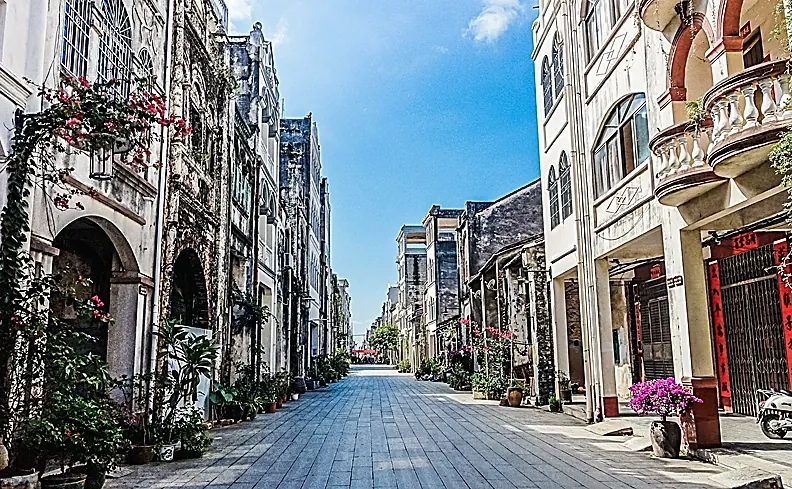
The historical turning point that permanently transformed the area’s landscape unfolded following the opening of treaty ports in the latter half of the nineteenth century. After modern treaties were signed, Beihai officially became an international trade gateway, triggering a landing wave of Western consulates, foreign customs offices, churches, and bustling merchant guilds. Facing surging metropolitan development needs, in the ninth year of Guangxu (1883), local authorities and gentry undertook large-scale planning, replacing crude structures with sturdy streets imbued with contemporary character. Through numerous restoration and expansion phases—particularly the synchronized beautification phase around 1927 under the Republic—the new old street structure finally reached full maturity, stretching over a kilometer with sturdy bluestone-paved roadways and continuous arcade merchant houses stretching out to shelter against sun and rain.
Beneath the shade of Western Renaissance-inspired arcade arches harmonizing with traditional East Asian decorative carvings, Beihai Old Street has weathered over half a century of turbulence amid changing historical tides. It witnessed the golden age of merchant proprietors from Guangdong, Teochew, and Fujian, alongside ocean-going vessels docking to unload silk, ceramics, pearls, and medicines. The living historical value of the street lies not only in moss-grown antique lime-and-brick structures, but is also wonderfully preserved through 126 ancient shop signboards—century-old businesses, pharmacies, and family-run craft workshops still standing completely intact today. The persistent continuation of civic life across generations has lifted this avenue beyond ordinary relics, earning it an honored place among the first batch of national historic and cultural streets, cementing its status as an unwavering stone witness to the flowing history of a renowned port city.
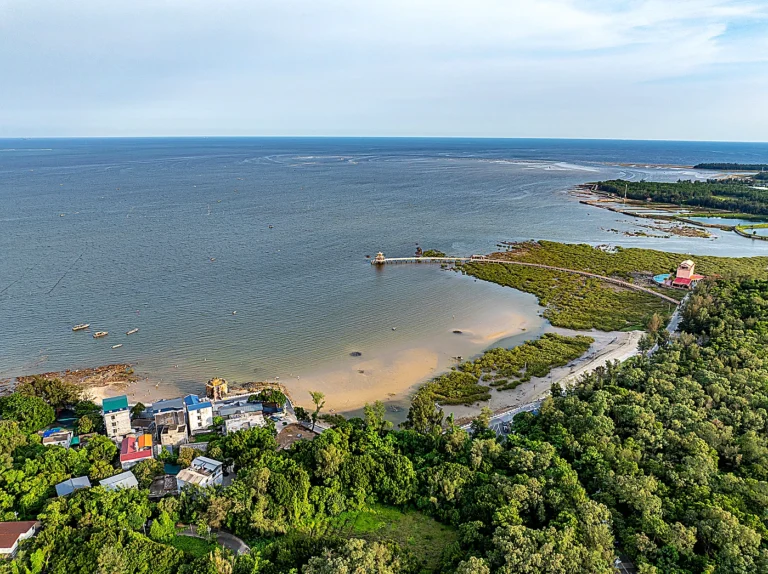
Situated in the northern sector of Beihai city, nestled beside the azure waves of the Gulf of Tonkin and adjoining North Sichuan Road, Beihai Old Street rises like a living geographical testament to the genesis of a prosperous maritime seaport. The entire core tourism conservation zone spans roughly 0.4 square kilometers, forming a tranquil, contemplative spatial ribbon detached from external industrial hustle. Geomorphically and geomantically, this land rests upon a characteristic Lingnan coastal terrace, where gentle earth hills slope toward the water’s edge, intersecting with tidal systems and natural bay channels. That landscape structure is not merely nature’s random arrangement, but crystallizes the wisdom of generations of ancestors who cleverly selected a sheltered alluvial strip, gathering heavenly and earthly vital energy, turning a once-pioneer beach into the cradle and enduring structural framework of Beihai city.
In coastal geomancy, the ancient street layout fully embodies the philosophy of “facing the sea and building upon terrain”—meaning leaning harmoniously against sloping ground facing the bay to forge a living space. Most prominent is the “front shop, back port” floor plan, where the front opens onto the street as a bustling retail shop while the rear connects directly to docks crowded with anchored junks. Merchant vessels braving oceans to enter the Gulf of Tonkin could swiftly unload cargo holds into rear warehouses, while the street frontage instantly transformed into busy pricing and trading counters. The inseparable organic bond between maritime economic currents and indigenous terrestrial terrain shaped a unique “port-city integration.” This planning approach ensured defense and shelter against offshore rough seas while optimizing vital wealth-gathering financial currents according to ancestral principles.
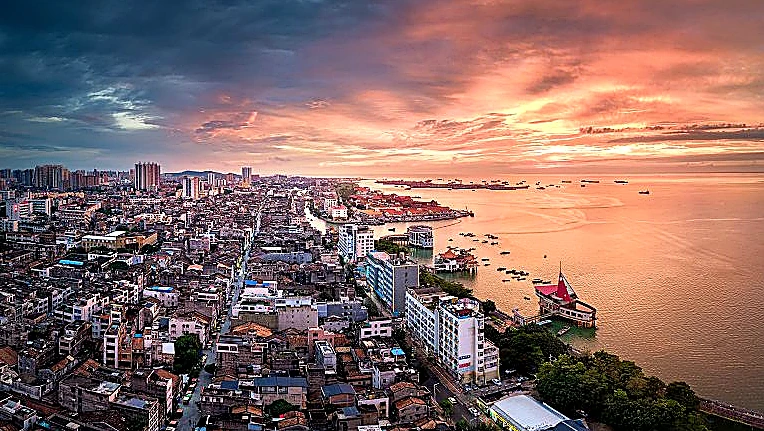
The sturdy backbone supporting this entire spatial network is the interweaving of three arterial axes running parallel to the coastline: Zhuhai Road, Sati Street, and Zhongshan Road. Among them, Sati Street is the most pristine route, originating from a natural elevated sand spit rising between marshes, acting like a dragon’s spine supporting early settlers against tidal floods. Through development, Zhuhai Road pushed closer to the water’s edge to assume ocean-going trade duties, while Zhongshan Road expanded inland to serve as a sturdy rear support. Interlaced between the three avenues is a network of 25 ancient, rustic alleys intersecting like intricate fishbones. This alley network not only connects cargo flows from the sea deep into residential quarters, but acts as an ingenious microclimate regulator: pulling fresh sea breezes deep into buildings while fracturing and weakening destructive tropical storms sweeping across the coast.
The synthesis of coastal strata and peninsular natural landscapes has transformed Beihai Old Street into a living entity within the jade bay. Bounded by the sea on three sides, it is generously endowed with rich aquatic resources nourishing civic life, while gentle slopes and calm bay waters serve as a sheltered haven protecting boats from storms across centuries. The salty breath of the ocean seeps through mortar and smooth bluestone pavers beneath pedestrian footsteps, forging a unique humanitarian ecosystem. Under the shade of arcade arches, ocean landscapes and urban street life merge as one, preserving the serene, majestic, and enduring character of an ancient seaport through all historical vicissitudes.
Spanning the backbone named Zhuhai Road, Beihai Old Street emerges as a peerless planning marvel of ancient Lingnan. With a total length of 1.44 kilometers—including a pedestrian core spanning 1.27 kilometers and a roadway width maintained at 9 meters—it holds records as the longest straight-line modern arcade street across southern China. This space is not merely an ordinary trading route, but a monumental work meticulously crafted from the late nineteenth through the early twentieth centuries, reflecting the golden age when Beihai port opened to international trade. The urban cross-section features dense construction density, forming an expansive, straight visual corridor harboring magical shifts of light and shadow across pillar spans.
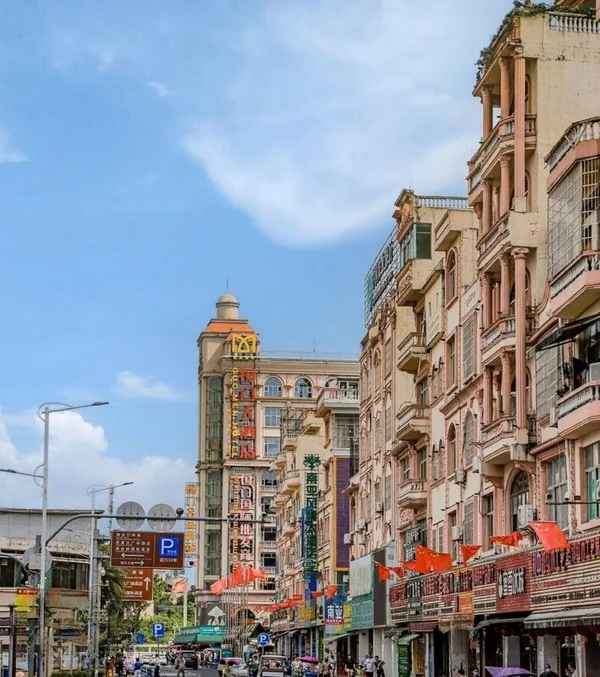
The architectural vocabulary of the old street complex is an exemplary eclectic synthesis of novel Western flair and native East Asian character. Influenced by consular offices and trading firms of Western powers such as Britain, France, and Germany, commercial building facades don Baroque architectural styles full of expression. The most valuable visual focal points rest atop buildings adorned with intricately curved decorative moldings, graceful arched windows, and projecting columns featuring relief carvings interweaving geometric motifs and stylized flora reflecting European Renaissance resonance. Every molding, balcony console, and facade niche was crafted with high geometric precision, bearing witness to the talented hands of colonial-era masons.

Yet Beihai’s architectural grandeur lies in its refusal to slavishly copy Western prototypes, fully absorbing traditional Lingnan construction philosophy instead. Local material foundations are spectacularly showcased through sanhe tu masonry techniques using custom-fired blue bricks combined with sturdy sandstone column bases, resisting marine salt mist and tropical typhoons across centuries. Behind European arches lies a wooden screen system featuring thick ironwood sliding doors carved with seal script motifs or auspicious Eight Treasures. Roof crests feature balustrade-style ventilation openings, creating graceful borders separating sky from earth while shielding against sudden maritime gales blowing in from the Gulf of Tonkin.
Functionally, commercial buildings along Zhuhai Road follow a combined commercial-residential housing model standing two to three stories high. Ground floors step backward, ceding space to pillars supporting upper floors projecting 1 to 2 meters over public spaces, forging a continuous covered arcade corridor running the length of the street. This climate-adaptive architectural solution shelters pedestrians from harsh coastal sunlight and sudden rainstorms while expanding merchandise display areas, turning sidewalks into bustling commercial hubs day and night. The harmonious fusion of climate utility, classical Western aesthetics, and Chinese craftsmanship earns Beihai Old Street its title as a living modern-era architectural chronicle written in brick and stone by the bay.
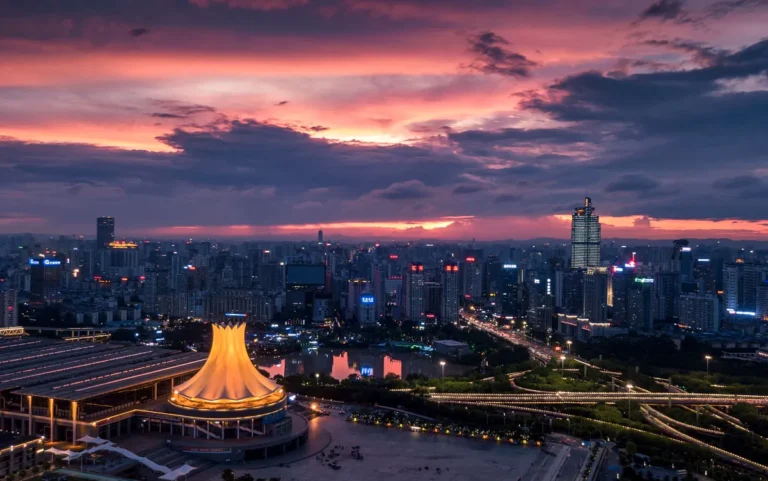
As sunset sinks into the deep waters of the Gulf of Tonkin, Beihai Old Street sheds its mossy daytime contemplation to enter a brilliant dance of contemporary lighting art. Honored as a representative National Nighttime Culture and Tourism Consumption Concentration Zone in the Guangxi Zhuang Autonomous Region, this century-old street transforms into a vibrant live stage where modern prosperity harmonizes with colonial port history. Warm-toned artistic lighting fixtures are arranged along the street, casting shadows and accentuating intricate Baroque moldings, curved parapets, and relief carvings of flora and fauna upon proud gables that have weathered centuries of storms.
Beneath the vaulted arcades sheltering pedestrians, hundreds of traditional red lanterns light up in unison, emitting warm crimson hues that contrast and complement soft yellow light washing Mediterranean-style rounded arches. Bluestone paving stones—having endured countless footsteps across eras—are polished by salty sea breezes into mirror-dark surfaces reflecting multicolored light ribbons. Walking upon this cool stone reveals a magical spatial transformation where each semicircular arcade arch becomes a suspended frame of time, evoking memories of a lavish Maritime Silk Road era.
Beyond visual enchantment through lighting, nighttime street ambiance is woven from coastal auditory notes. Amid sea breezes carrying bay moisture, acoustic guitar strums from buskers blend with unhurried footsteps and murmuring conversations. Along roadways, night market stalls unveil artisan craftsmanship: mother-of-pearl inlay carving, traditional bamboo weaving, and South Sea pearl jewelry crafting. Nostalgic art cafes tucked beneath mossy eaves invite visitors in for warm tea while watching street performance art cast reflections upon weathered walls bearing traces of time.
Encompassing all visual and auditory beauty is the rich heartbeat of human warmth from local night cuisine. Wisping smoke rises from glowing charcoal braisers, carrying rich aromas of fresh grilled garlic oysters straight from the sea, the crispy sizzle of golden shrimp cakes, and the clean sweetness of heirloom herbal turtle jelly. Night light illuminates locals’ generous smiles, blending with distant harbor waves to turn Beihai Old Street at night into a deep multi-sensory experience where past and present share a passionate, captivating heartbeat.
Subduing beneath moss-colored colonial arcade arches, Beihai Old Street’s daily rhythm is warmed by wispy kitchen smoke and the hospitable culinary flavors of a century-old port. Situated at the coastal bend of the Gulf of Tonkin, the old street’s food map is a wondrous unique chord: fresh seafood preparation techniques inherited from ancient fishing villages blending seamlessly with deep Cantonese wellness philosophies and borderland flavors shared across the China-Vietnam frontier. Strolling along smooth bluestone blocks, traveler senses awaken instantly to sizzling woks and clean, sweet herbal broths simmered overnight alongside salty sea breezes carrying ocean souls.
The most renowned street food symbol that every visitor must taste is Old Street Shrimp Cakes (laojie xia bing). Unlike industrial fried flour cakes, this heirloom treat uses freshly caught sea prawns jumping lively on boats. Chefs spread glutinous rice batter mixed with turmeric over round iron ladles, top them with sweet whole prawns, and submerge them directly into boiling oil. Among crowded stalls, renowned family shops like Lü Xinghao and Auntie Li’s shrimp cake shop bustle with patient diners waiting in line. Freshly fried shrimp cakes emerge oil-free, golden and crispy, shattering in the mouth to reveal natural sweet, rich flavors of fresh sea prawns. Paired with handmade fried squid balls pounded meticulously from thick-fleshed squid, they retain springy textures and pure sweet unadulterated flavors.
If shrimp cakes represent crispy midday snacks, heirloom herbal pig’s trotters noodle soup (yaoshan zhujiao fen) embodies warming, nourishing soul food. Selected pig trotters are singed golden with straw, cleaned, and simmered with dozens of precious herbal medicines including angelica, goji berries, rehmannia, astragalus, and cardamom under strict heirloom ratios. Long-simmered broths grow rich, gleaming in seductive amber tones, fragrant with herbs and bone marrow sweetness without feeling greasy. Ladled over pristine white noodles, meltingly tender trotters melt on the tongue while springy tendons mingle with warm soup to awaken every sense. Borderland cultural exchange appears clearly through Vietnamese-inspired dishes like thin cashew rice rolls rolled with wood ear mushrooms and minced pork, delicate crab paste rice noodles (guazi fen), and seafood noodles overflowing with sweet prawns and clams.
When dusk yields to brilliant lanterns, the old street transforms into a bustling night food paradise reflecting the distinctive night-market culture of Liangguang. Across street corners, noisy stir-frying on high heat merges with pungent spicy aromas of pickled bamboo shoot stir-fried snails. Tangy, spicy fermented bamboo shoots cling to plump sea snails, shiso leaves, and bird’s-eye chilies to forge a renowned drinking accompaniment that captivates diners. To conclude the gastronomic journey, locals visit traditional dessert stalls for refreshing mango shaved ice churned from fresh fruit or cooling herbal jelly soups easing coastal summer heat. Traditional Chinese dessert soups cooked from green beans, lotus seeds, and mild herbal jellies serve as simple desserts and peaceful, rustic tasting cultures preserved across centuries by Beihai residents.
The heritage space of Beihai Old Street along Zhongshan Road opens freely 24 hours daily, granting travelers the privilege of viewing colonial Dai Shen Lou architecture under all lighting conditions. Nonetheless, bustling commercial rhythms truly awaken from around 9:00 AM until 10:30 PM, when red lanterns illuminate Western arcade arches simultaneously. Travelers favoring mossy tranquility should visit at dawn as morning sunlight slants across intricately carved wooden shutters; conversely, those eager to immerse in the bustling night market sounds of the Gulf of Tonkin with spicy aromas from grilled oyster stalls will find post-6:00 PM hours irreplaceable.
Urban transit infrastructure in Beihai city allows travelers to easily access millennial heritage. From central areas or Silver Beach Peninsula, dozens of public bus routes feature stops right at the entrance intersecting the old street. For those captivated by coastal breezes, shared electric bicycles or daily rental scooters serve as optimal transit methods. However, local urban order enforcement is extremely strict; drivers must park precisely within yellow-painted lines designated at alley entrances to avoid automated smart cameras recording and issuing administrative fines. Additionally, main roadway surfaces are constructed entirely from ancient bluestone blocks polished smooth by centuries of friction and salty maritime moisture. Comfortable, flat walking shoes with high traction provide ideal protection for hours of uninterrupted strolling, especially following tropical rain showers making stone paths slippery.
Since Han times, Beihai has been celebrated for Hepu Nanzhou pearls, saltwater pearls once honored as imperial tribute treasures for their perfect roundness and iridescent nacre. Yet amid bustling old street commerce, travelers must exercise high caution against hawking peddlers or touts lurking along corridors. To acquire genuine marine pearls complete with national gemstone grading certificates, the sole safe stop rests with renowned legacy brands featuring permanent shops and storefronts. Bargaining at floating souvenir stalls risks acquiring chemical-treated freshwater pearls or pressed imitation shell powder while diminishing the elegant cultural experience of this ancient seaport.
Seafood dining at roadside eateries also requires understanding local commercial customs to avoid misunderstandings over costs. Seafood pricing standards across mainland China generally and Beihai seafood restaurants specifically utilize the market catty (jin), equivalent to 500 grams, rather than standard kilograms. Before agreeing to send live mantis shrimp, squids, or flounders to kitchens for Sichuan spicy stir-fries or Cantonese light steaming, travelers should thoroughly verify listed pricing by actual weight alongside processing surcharges, clarifying whether pricing applies per large/small plate or total live weight. Clear communication ensures seaside seafood feasts remain fully satisfying and flavorful.
Exploring Guangxi’s coastal strip typically begins by crossing the Vietnam-China border via border crossing travel permits or expedited border trade tourist visas. Departing from Mong Cai international border gate toward the northeastern Gulf of Tonkin, travelers can easily extend tours from bustling border towns to neighboring coastal cities rich in history. To optimize customs clearance, coordinate seamless transit, and guarantee dining and accommodation rights along the route, travelers can consider accompanying the All-Inclusive Dongxing China Tour Package, opening a smooth voyage from clearance logistics to comprehensive transit arrangements.