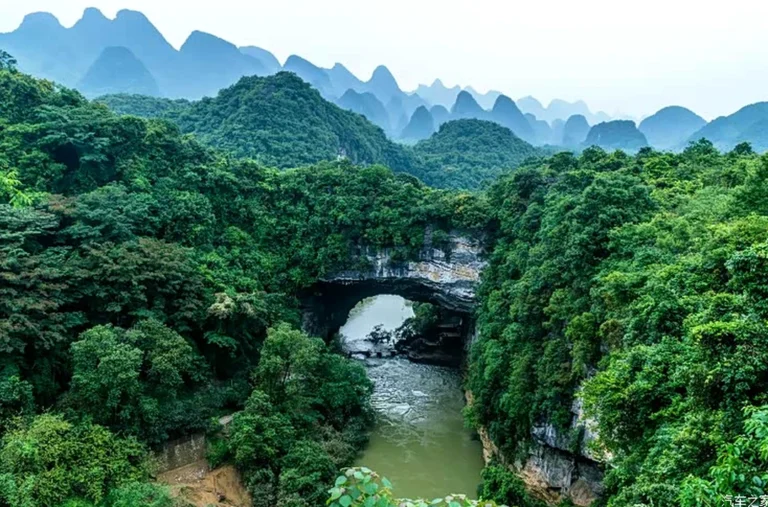
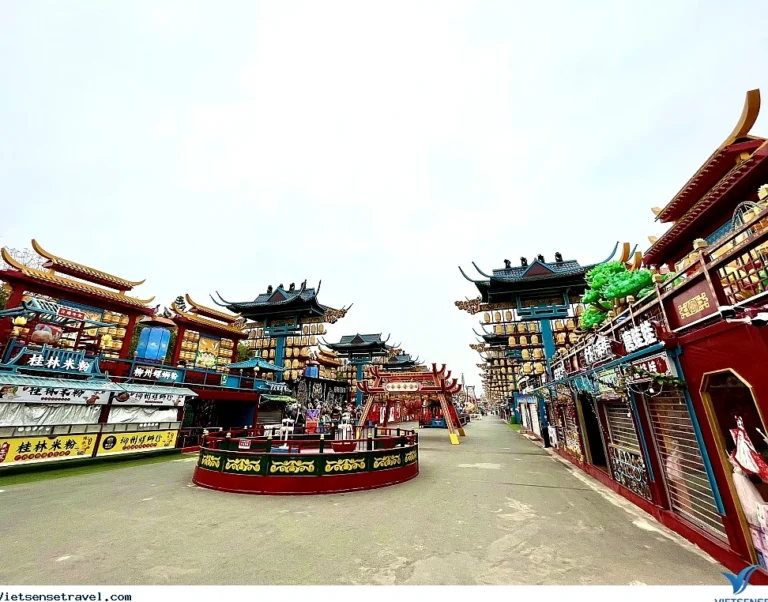
Guide to Admiring Guilin’s Sun and Moon Twin Pagodas: A Luminous Light Wonder Beside Shanhu Lake Amidst the breathtaking, picturesque natural scenery of Guilin, where undulating mountains reflect upon azure waters, stand a pair of majestic twin pagodas rising in the heart of Shanhu Lake like the twin souls of the Sun and Moon, recounting tales of eternal beauty. Those are the Sun and Moon Twin Pagodas, also known as Riyue Shuangta, an indispensable icon when mentioning Guilin tourism, a sparkling highlight in the journey to discover this land of “mountains and rivers of picturesque charm.” With the experience of someone who has stepped foot in Guilin multiple times, VDS Travel believes that the Sun and Moon Twin Pagodas are far more than mere architectural structures; they are living works of art blending culture, history, and Eastern philosophy. This destination offers visitors unforgettable visual and emotional experiences, especially when night falls, transforming the entire Shanhu Lake area into a mystical stage of light.
Join VDS Travel to explore this wonder of light more deeply, from exquisite architectural details to profound geomantic meanings, and pocket precious tips for the most fulfilling trip to Guilin’s Sun and Moon Twin Pagodas.
1. Geographical Location and Historical Context of the Sun and Moon Twin Pagodas
The Sun and Moon Twin Pagodas stand majestically in the heart of Shanhu Lake (Shanhu), one of the four major lakes forming Guilin’s famous “Two Rivers and Four Lakes” (Liangjiang Sihu) scenic area. This system comprises the Li River, the Peach Blossom River, and the four lakes of Shan, Rong, Gui, and Mulong, forming a stunning natural and artificial river-lake network surrounding and traversing the city center. Shanhu Lake, with its prime location, has long been the heart of Guilin, converging natural beauty and architectural works imbued with historical marks. Guilin, with a history exceeding 2,000 years, is one of China’s most ancient and beautiful cities. The name “Guilin” means “osmanthus forest,” reflecting the abundance of this tree species in the region, especially in autumn when the sweet fragrance of osmanthus spreads everywhere. The city is famous for its unique karst topography, strangely shaped limestone peaks, the poetic Li River, and mystical caves. Against this backdrop, the Sun and Moon Twin Pagodas are not merely modern structures but represent the continuation of an ancient cultural essence, blending into natural beauty praised across generations. Built in 2001, the Sun and Moon Twin Pagodas formed part of the renovation and development project for the “Two Rivers and Four Lakes” area aimed at transforming Guilin into a world-class tourist destination. Although relatively new, they were designed based on classical Chinese architectural principles combined with modern technology to create a symbol carrying both traditional character and contemporary breath. The birth of Riyue Shuangta rapidly turned this place into a top tourist attraction, helping shape Guilin’s image in the eyes of international friends.
2. Unique Architecture and Profound Geomantic Significance
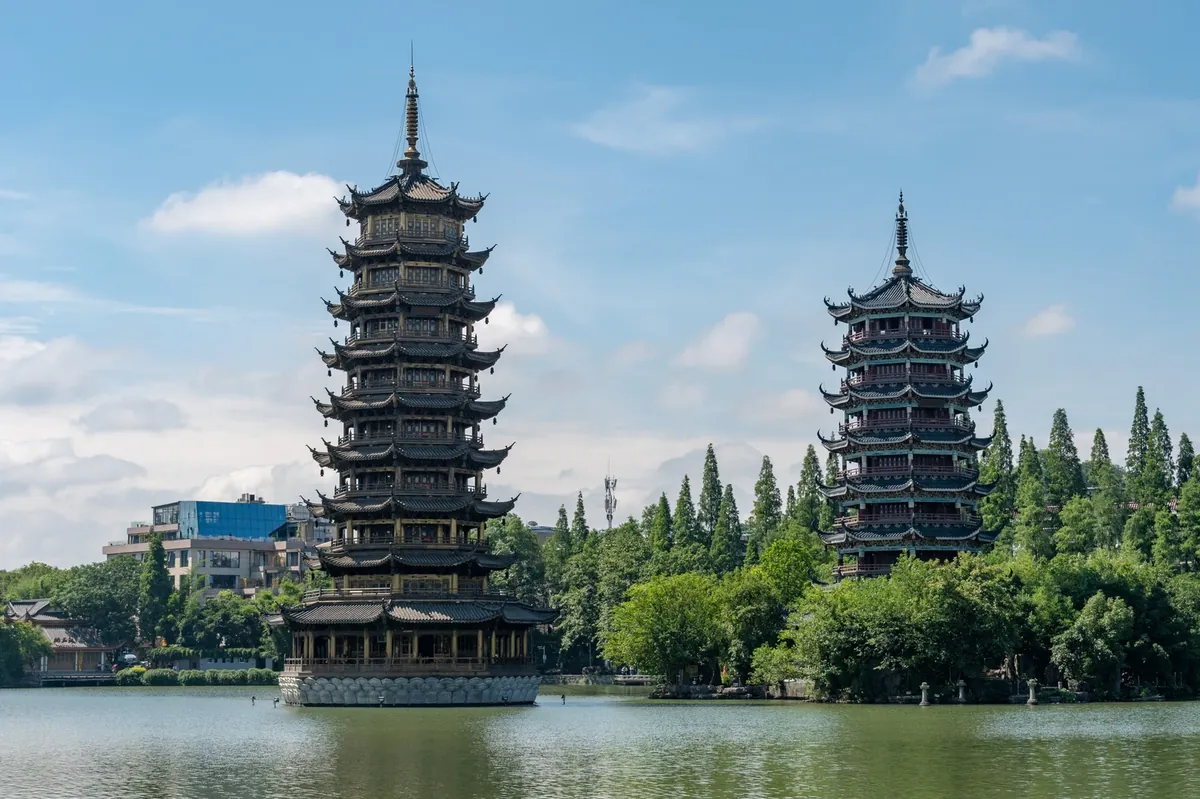
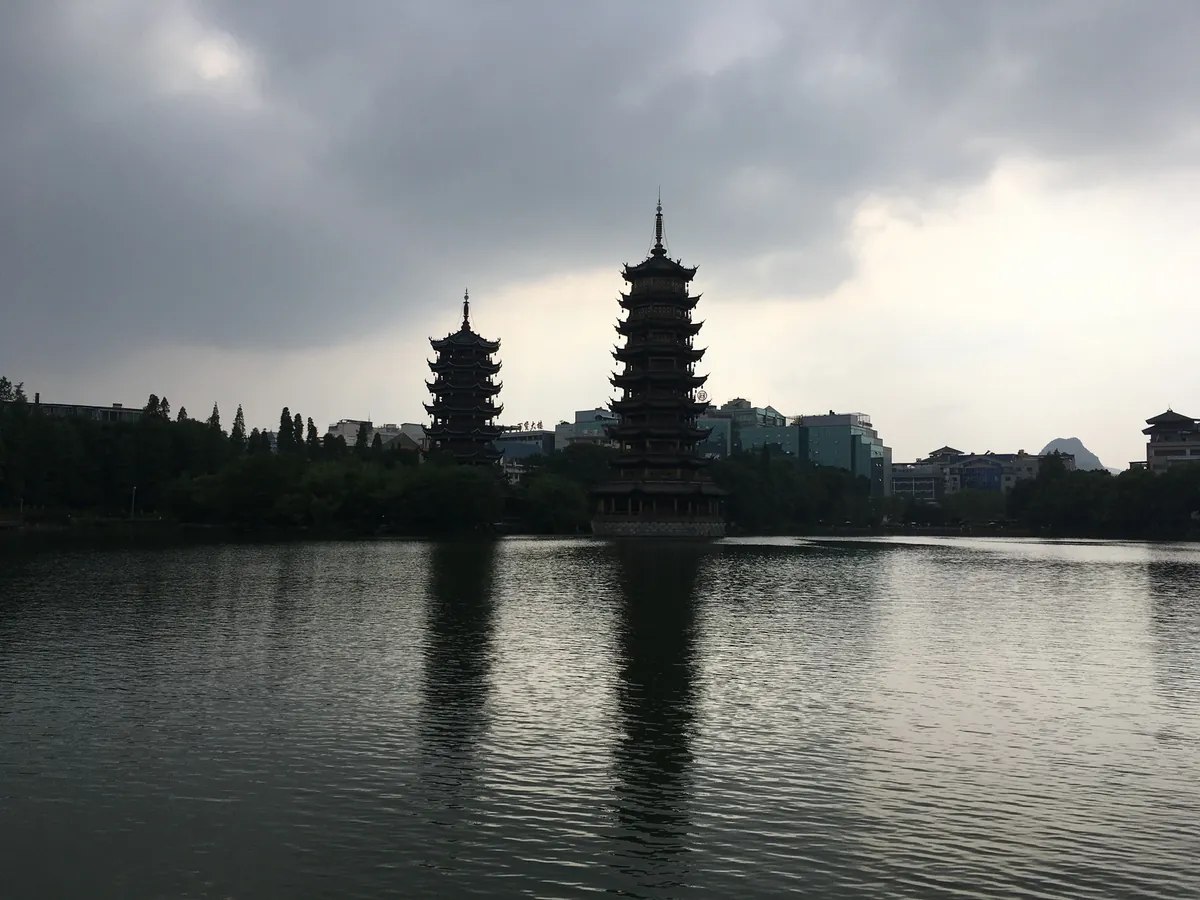
The Sun and Moon Twin Pagodas impress not only through splendid beauty but also through unique architecture and profound geomantic significance. The two towers—one tall, one short, one brilliantly golden, one purely white—stand side by side like a perfect couple, symbolizing the harmony of yin and yang, heaven and earth, light and darkness.
• Sun Pagoda – Symbol of Brilliant Sunlight
The Sun Pagoda, also known as the Ri Pagoda, is the taller tower, rising proudly at a height of 41 meters across 9 stories. The most special feature of the Sun Pagoda is its building material: it is crafted entirely from solid bronze, making it the highest bronze pagoda in the world. The shimmering golden hue of the bronze, especially when illuminated at night, creates a brilliant, dazzling beauty like sunlight, true to its name. The architecture of the Sun Pagoda bears strong traditional Chinese style, with graceful curved eaves, exquisite carving details, and decorative motifs carrying auspicious meanings. The number 9, the number of stories in the Sun Pagoda, holds special significance in Eastern culture. The number 9 (jiu) is a homophone for “eternity,” symbolizing everlasting permanence and supreme power. In geomancy, the number 9 also represents perfection and prosperity. At night, the Sun Pagoda is illuminated by a modern LED lighting system, transforming it into a brilliant golden mass reflecting shimmering light upon the lake surface, creating a breathtaking spectacle that captures every gaze.
• Moon Pagoda – The Gentle Touch of Mystical Moonlight
Standing beside the Sun Pagoda is the Moon Pagoda, or Yue Pagoda, standing 35 meters tall across 7 stories. Unlike the brilliant Sun Pagoda, the Moon Pagoda carries a gentler, more ethereal beauty, crafted from pristine white glazed tiles. The white color of the glazed tiles evokes the image of silver moonlight, soft and mystical, forming a perfect contrast with the Sun Pagoda’s golden hue. The number 7, the pagoda’s story count, also holds numerous meanings in East Asian culture, commonly associated with luck, perfection, and spiritual connection. The Moon Pagoda’s architecture also follows classical style, featuring soft, fluid lines that evoke peace and tranquility. When illuminated at night, the Moon Pagoda emits a silvery white glow, shimmering like full moonlight, blending with the Sun Pagoda’s gold to weave an enchanting tapestry of light.
• The Underwater Glass Tunnel: Bridge Between Sun and Moon
One of the most unique and interesting highlights of the Sun and Moon Twin Pagodas is the 18-meter-long underwater glass tunnel crossing the lake, connecting the two pagodas beneath Shanhu Lake. This is an impressive engineering feat allowing visitors to walk from one tower to the other without surfacing. Experiencing a stroll beneath the lake bed while watching schools of fish swim past through transparent glass is an unmissable activity. This tunnel is not merely a passageway but carries profound symbolic meaning. It symbolizes connection and the intermingling between the two polarities of Sun and Moon, between yin and yang. It embodies the philosophy of universal harmony and balance, where everything is intimately interconnected. Walking through this tunnel can also be viewed as a journey of discovery, from the brilliant light of the sun to the mystical beauty of the moon, and vice versa.
• Geomancy and the Philosophy of Yin-Yang and the Five Elements
The placement of the Sun and Moon Twin Pagodas is neither accidental nor random, strictly adhering to Eastern geomantic principles and the philosophy of yin-yang and the five elements. The Sun Pagoda (Yang) and Moon Pagoda (Yin) stand side by side upon water (Water), creating perfect balance.
• Yin-Yang Harmony: The Sun Pagoda represents Yang energy—strength, brilliance, dynamism, associated with the sun and fire. The Moon Pagoda represents Yin energy—gentleness, stillness, mystery, associated with the moon and water. The combination of these two towers upon the lake creates an ideal yin-yang balance, bringing harmony and prosperity to the area.
• Five Elements Inter-generation:
• Metal: The Sun Pagoda is made of bronze (Metal).
• Water: Shanhu Lake surrounds them (Water).
• Wood: Lush greenery lines the lakeside (Wood).
• Fire: The brilliant nighttime illumination of the Sun Pagoda (Fire).
• Earth: The solid foundation earth where the pagodas stand (Earth). The presence of these elements within the overall landscape creates an inter-generating cycle, carrying auspicious meanings and indicating sustainable development and prosperity.
• Prime Location: Placing the pagodas in the middle of Shanhu Lake, part of the “Two Rivers and Four Lakes” system, not only creates stunning scenery but is also considered a “water-gathering” location where favorable energy accumulates, bringing fortune and luck. Guilin’s Sun and Moon Twin Pagodas are not merely beautiful architectural works but represent a living symbol of Eastern philosophy, where humans find harmony between nature and culture, between the material and the spiritual.
3. The Sun and Moon Twin Pagodas Within the “Two Rivers and Four Lakes” System: Guilin’s Heart
To truly perceive the beauty and significance of the Sun and Moon Twin Pagodas, we must place them within the broader context of the “Two Rivers and Four Lakes” (Liangjiang Sihu) scenic area—a unique hydrological and landscaping system likened to Guilin’s green heart. This system comprises two main rivers, the Li River and the Peach Blossom River, alongside four major lakes: Shanhu Lake, Ronghu Lake, Guihu Lake, and Mulonghu Lake. The Li River, with its majestic limestone peaks and crystal-clear waters, has become Guilin’s symbol. The Peach Blossom River, a tributary of the Li, carries poetic beauty winding through villages and fields. The four lakes of Shan, Rong, Gui, and Mulong are connected to one another and to the two rivers, forming a stunning waterway transport and landscape network right in the city center. Shanhu Lake and Ronghu Lake lie in the city center, separated by a road yet joined by an ancient bridge. Guihu Lake and Mulonghu Lake lie to the north, carrying a more peaceful, quieter beauty. The entire system is surrounded by verdant parks, ancient stone bridges, traditional pavilions, and shady ancient trees. The Sun and Moon Twin Pagodas are situated at Shanhu Lake, right in the center of the “Two Rivers and Four Lakes” system, serving as its most important architectural highlight. This location not only provides stunning views from every angle but transforms the twin pagodas into a sparkling “lighthouse” guiding visitors to explore the entire area. When cruising along the “Two Rivers and Four Lakes” system, visitors admire the Sun and Moon Twin Pagodas from various angles, feeling the shifts in light and color as boats glide gently over the water. From Shanhu Lake, you easily access other attractions such as Ronghu Park, home to ancient bridges and exquisite sculptures. The “Two Rivers and Four Lakes” system is not merely a scenic spot but testament to harmony between humanity and nature, where modern and ancient architecture coexist within a green, peaceful space. The Sun and Moon Twin Pagodas, with splendid beauty, have become iconic heritage radiating across the “Two Rivers and Four Lakes” necklace, turning it into an unmissable destination on any all-inclusive Guilin – Yangshuo tour.
4. Experiences of Admiring the Sun and Moon Twin Pagodas: Day and Night
The beauty of the Sun and Moon Twin Pagodas is not limited to architecture or geomantic meaning, but also lies in the experience of admiring them at different times of day. Every moment, from dawn to dusk, from peaceful daylight to mystical night, brings distinct emotions and perspectives of this wonder.
• Daytime Beauty: Peaceful and Ancient
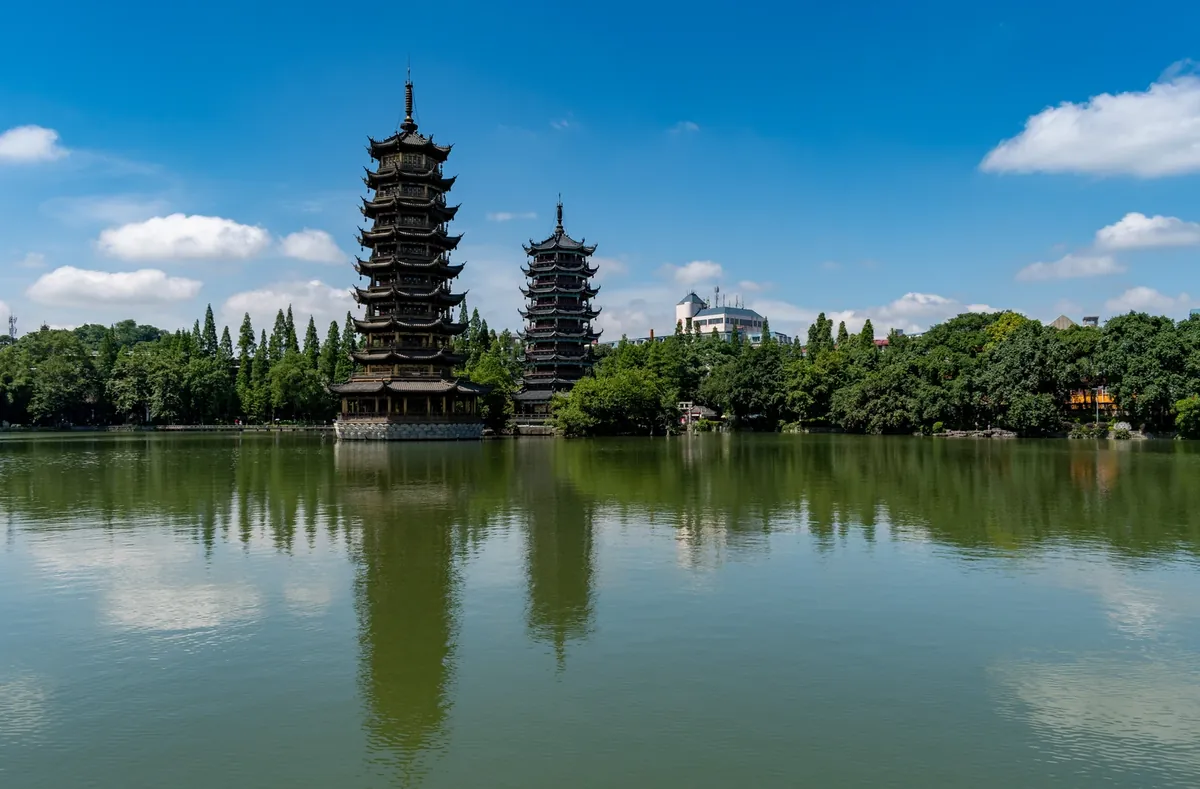
When morning sunlight spreads across Shanhu Lake, the Sun and Moon Twin Pagodas emerge with peaceful and ancient beauty. The bronze Sun Pagoda gleams brightly under the sun, while the white glazed tile Moon Pagoda stands pristine amidst azure waters. This scene evokes traditional picturesque landscapes where mountains, rivers, and architecture blend perfectly. By day, visitors leisurely stroll along the lakeside, feeling the cool breeze and admiring lush green tree lines. This is the ideal time to capture panoramic photos recording the majesty of the two pagodas against beautiful natural scenery. You can rent a small boat to paddle on the lake, or simply sit on a stone bench, enjoying peace and quiet while observing daily life in Guilin. Natural lighting highlights every carving detail on the pagodas, allowing you to admire exquisite architectural artistry.
• Nighttime Splendor: The Dance of Light
However, if forced to choose a single time to admire the Sun and Moon Twin Pagodas, VDS Travel unhesitatingly advises visiting at night. When the sun sets and night falls, the Sun and Moon Twin Pagodas undergo total transformation, turning into a shimmering, mystical wonder of light. A sophisticated modern LED system illuminates the two pagodas with vibrant, constantly changing colors. The Sun Pagoda glows with golden radiance, occasionally shifting to fiery red like flames, symbolizing the sun’s vitality and energy. The Moon Pagoda emits silvery white, blue, or soft purple light, evoking the moon’s gentle, mysterious beauty. These lights not only illuminate the towers but also reflect upon calm Shanhu Lake, creating a magnificent light dance shimmering like a giant glass painting. To fully experience the nighttime beauty of the Sun and Moon Twin Pagodas, you can:
• Cruise on the lake: This is the finest way to view the twin pagodas from various angles. Tour boats glide gently across the lake, passing through the underwater glass tunnel and brightly illuminated bridges. Gliding over water amidst mystical light and shadow creates unforgettable memories.
• Stroll around the lake: Walking paths along the lake immerse you in Guilin’s bustling yet romantic nightlife. Numerous scenic spots invite photography, alongside charming tea houses and cafes to enjoy beverages while sightseeing.
• Exploring Inside the Pagodas and the Glass Tunnel
Beyond exterior views, visitors can explore inside the Sun and Moon Twin Pagodas.
• Ascend the pagoda: Visitors take elevators or climb stairs to upper floors of the Sun Pagoda for panoramic views of Shanhu Lake and part of Guilin city from above. This offers an entirely different perspective on Guilin’s beauty, especially at night when city lights sparkle.
• Experience the glass tunnel: This marks a unique highlight. Walking through the underwater tunnel feels like entering an aquatic world, with swimming fish and shimmering light filtering through glass. This experience is both interesting and symbolically meaningful, connecting the two towers, yin and yang. Whether by day or night, Guilin’s Sun and Moon Twin Pagodas offer unique, unforgettable experiences. VDS Travel believes you will find magical moments and profound emotions when admiring this wonder of light.
5. Guilin Travel Guide and Sun and Moon Twin Pagodas From VDS Travel
To ensure your trip to the Sun and Moon Twin Pagodas and Guilin is flawless, VDS Travel shares practical experiences and useful advice.
• Ideal Time to Visit
Guilin features a humid subtropical climate with four distinct seasons.
• Spring (March – May): Warm weather, budding vegetation, fresh scenery. However, drizzle and fog may occur, occasionally reducing visibility.
• Summer (June – August): Hot and humid, yet peak tourism season. Verdant scenery, suitable for outdoor activities like Li River cruises.
• Autumn (September – November): Considered the finest time to visit Guilin. Cool, pleasant weather, clear blue skies, minimal rain. Notably, sweet osmanthus fragrance permeates the city, creating a romantic atmosphere. This is also ideal for admiring the Sun and Moon Twin Pagodas under clearest lighting.
• Winter (December – February): Cold with potential dense fog. Some outdoor activities may be restricted. Yet for travelers seeking peace without fearing cold weather, this offers a distinct experience. VDS Travel recommends visiting Guilin in autumn for the finest experience.
• Transportation to the Twin Pagodas
The Sun and Moon Twin Pagodas lie right in central Guilin, easily accessible.
• From Guilin Liangjiang International Airport (KWL): Take airport buses to downtown (about 1 hour), then taxis or local buses to Shanhu Lake.
• From railway stations/bus terminals: Take taxis or public buses. Most central bus routes stop near Shanhu Lake.
• Walking: If your hotel is central, walking to the Sun and Moon Twin Pagodas is effortless. This is wonderful for exploring surrounding scenery around Shanhu and Ronghu lakes.
• Other Nearby Activities
Upon reaching the Sun and Moon Twin Pagodas, explore other attractive destinations nearby:
• Stroll around Shanhu and Ronghu lakes: These lakes are connected and surrounded by green parks. Walk, sightsee, and photograph ancient bridges like Twin Dragon Ancient Bridge and Fuxing Ancient Bridge.
• Ronghu Lake Park: Features sculptures, bonsai gardens, and peaceful relaxation spaces.
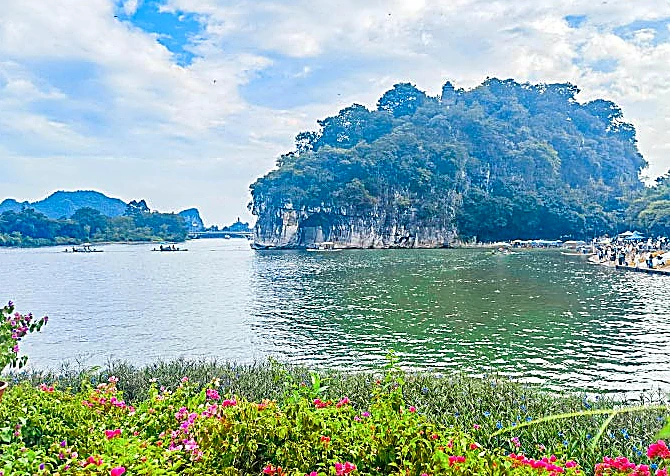
• Elephant Trunk Hill: Guilin’s symbol, located not far from Shanhu Lake. Walk or take a taxi to admire this uniquely shaped mountain.
• Yangshuo West Street: Though outside Guilin proper, Yangshuo is unmissable. West Street is famous for vibrant atmosphere, souvenir shops, bars, and restaurants. Easily reach Yangshuo from Guilin via bus or taxi.
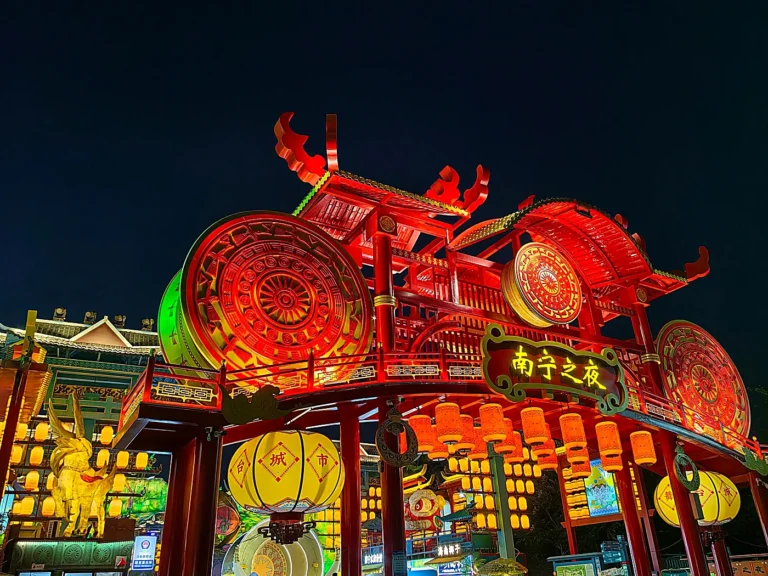
• Nanning Night: If time permits, consider visiting Nanning, Guangxi’s capital, featuring the vibrant Nanning Night pedestrian street with street food and nightlife.
• Unmissable Guilin Cuisine
Trips remain incomplete without local culinary flavors.
• Guilin Rice Noodles (Guilin Mifen): The city’s signature dish featuring chewy rice noodles, rich broth, and abundant toppings like roasted pork, beef, peanuts, and pickled bamboo shoots.
• Beer Fish (Pijiu Yu): Yangshuo’s specialty; Li River fish simmered with beer, chilies, and spices, delivering irresistible flavor.
• Guilin Rice Cake: Sweet dessert made from glutinous rice, sugar, and seeds.
• Taro dishes: Taro is popular in Guilin, prepared in savory and sweet varieties. Visit night markets or local restaurants to taste these dishes.
• Accommodation in Guilin
Guilin offers diverse lodging options, from luxury hotels to budget guesthouses.
• Central area (near Shanhu and Ronghu lakes): Convenient for transit, close to attractions and dining.
• Near railway stations/bus terminals: Suitable for frequent train or bus travelers. VDS Travel advises booking rooms in advance, especially during peak seasons.
• Useful Tips for the Trip
• Clothing: Pack comfortable clothes and sturdy walking shoes as extensive walking is required. For winter trips, prepare warm jackets.
• Currency and payment: Chinese Yuan (CNY). Major stores accept card or mobile app payments (WeChat Pay, Alipay). Keep some cash for small shops or markets.
• Language: Mandarin is the primary language. Tourism service personnel may speak basic English, yet learning simple Chinese phrases proves highly useful.
• Internet: Purchase tourist SIM cards or rent Wi-Fi routers for stable internet connectivity.
• Souvenir shopping: Guilin is famous for landscape paintings, handicrafts, tea, and osmanthus products. Guilin’s Sun and Moon Twin Pagodas are not merely a destination but a profound cultural experience, a journey exploring harmonious beauty between nature and humanity. VDS Travel hopes this guide serves as a trusted companion for a memorable trip to Shanhu Lake’s luminous light wonder. If you seek a complete exploratory journey, consult VDS Travel’s all-inclusive Guilin – Yangshuo tour to turn the dream of witnessing this picturesque landscape into reality.