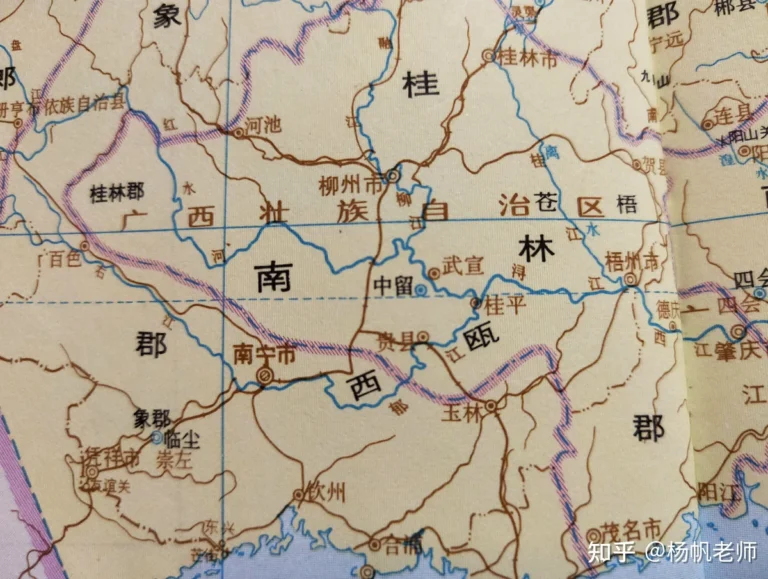
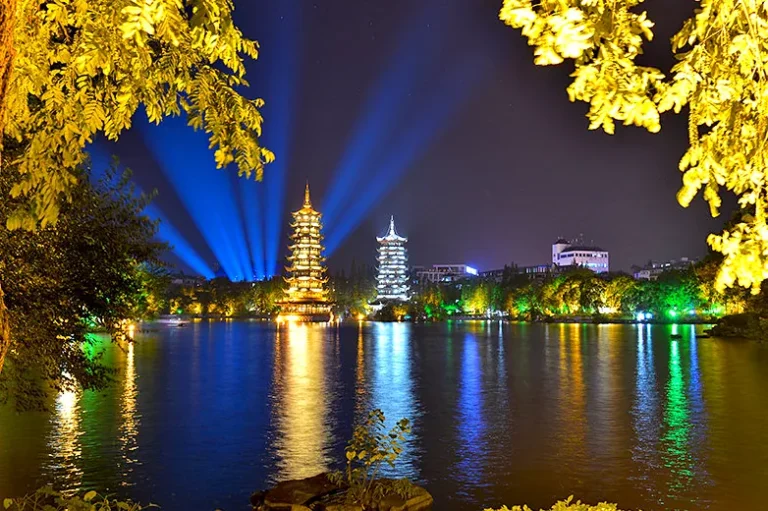
The origin of the name Beihai (Bắc Hải) dates back to a serene strip of land nestled by the waves of the Gulf of Tonkin named Beihai Village, an ancient fishing village in the town of Dijiao, facing north toward the sea and looking across the Leizhou Peninsula. In the first year of the Kangxi Emperor’s reign under the Qing Dynasty (1662), the Manchu court officially ordered the establishment of the Beihai Zhenxiao military garrison, marking the moment this name transitioned from folk life into official military and administrative documents. However, delving into even deeper historical strata, this land was already inscribed on the empire’s map as early as 214 BC during the Qin Dynasty, when the armies of the renowned general Tu Sui pacified the Lingnan region, bringing this territory under the jurisdiction of Nanhai and Xiang prefectures.
The most brilliant historical turning point unfolded in the sixth year of the Yuanding era of the Western Han Dynasty (111 BC), when Emperor Wu of Han divided the land and officially established Hepu Prefecture to govern the coastal counties of Suwen, Hepu, and Linndao. Its strategic geopolitical location made Hepu one of the earliest departure points of the Maritime Silk Road (Hải thượng Ty trù Chi lộ), where fleets of merchant ships braved the ocean waves to connect the East with India and the Mediterranean. A powerful testimony to this golden era is the Hepu Han Tombs Group, with a massive scale of over one hundred thousand ancient tombs scattered across the sand ridges, where tens of thousands of priceless intercontinental trade artifacts have been excavated, such as multi-colored Roman glass beads, carved Indian agate, and exquisite ash-glazed ceramic jars.
This land also preserves legends tied to the rise and fall of public sentiment and virtuous governance. During the Eastern Han Dynasty, around 140 AD, the upright Inspector Meng Chang took office and decisively cracked down on the extortion and corruption of local officials, restoring freedom to the pearl divers. As a result, the precious pearls that had once vanished mysteriously reappeared in abundance, crystallizing into the immortal idiom “Hepu Pearls Return” (Hợp Phố Châu Hoàn), symbolizing the rebirth of pure values. By the Tang Dynasty, this coastal port market town was so prosperous that it was bestowed the graceful moniker of Bailong Pearl City. Entering the third year of the Yuanfu era of the Northern Tongan Dynasty (1100), the great literary master Su Shi, on his return journey from exile in Danzhou, chose Hepu as a place to rest and recuperate for two full months, personally establishing the Qingsi Hall to compose poetry and discuss literature.
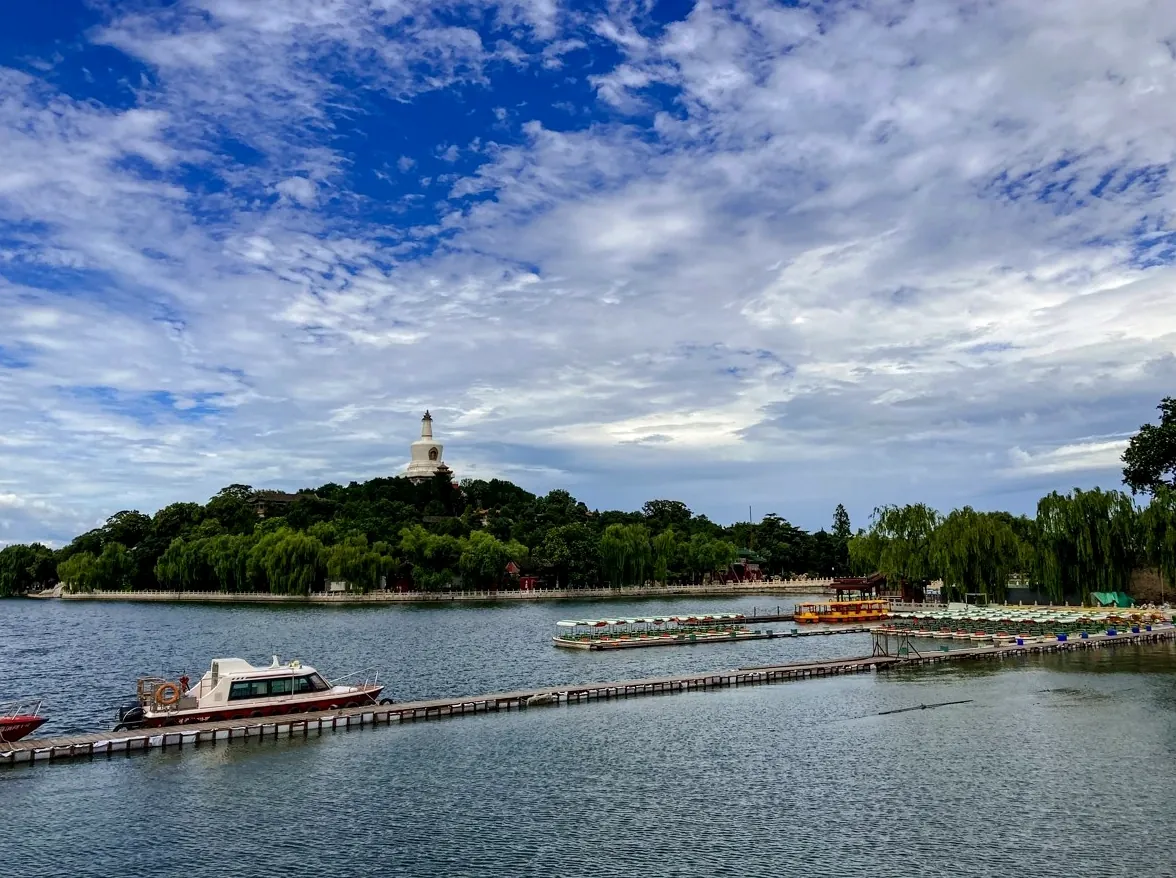
The watery landscape of Beihai today still retains a tranquil nostalgic charm, intertwining an ancient stillness with the leisurely pace of coastal life. Gazing across the flat surface of the large lake, a majestic white pagoda rises proudly atop an islet hill lush with the greenery of ancient trees, casting its elegant reflection upon a sky filled with drifting white clouds mixed with turquoise hues. Along the shore, rustic wooden piers stretch out to welcome the breeze, where small traditional covered sampans are moored closely alongside a large, brightly painted red-and-white motorboat, ready to take travelers cutting through the waves to discover ancient historical traces.
Modern upheavals continued to unfold on September 13, 1876, the second year of the Guangxu era, when the Manchu court was forced to sign the Convention of Chefoo with Western imperial powers. This event transformed Beihai into one of the earliest open trading ports in the southwestern coastal region, attracting eight contemporary powers—Britain, Germany, France, Austria-Hungary, Italy, Portugal, the United States, and Belgium—to raise their flags, establish consulates, and build churches, hospitals, and foreign trade houses featuring unique semi-arched colonial architecture.
Not only is this land a crossroads of commercial ocean currents, but the Hepu-Beihai region is also the cradle that nurtured outstanding heroes of the modern era. This is the hometown of the renowned general Chen Mingshu, who once held the position of commander-in-chief during the resistance war against foreign invaders and exerted a profound influence on twentieth-century politics. It is also the motherland that gave birth to Professor Sheng Qixiang, a pioneer who laid the theoretical foundation for modern Chinese linguistics. After decades of fluctuating administrative boundaries between Guangdong and Guangxi, the State Council decided in June 1965 to permanently incorporate the city into the Guangxi Zhuang Autonomous Region. Later, in April 1984, Beihai was honorably selected among the first fourteen coastal open cities, officially stepping into an era of rapid marine economic development.
Anchored at a pivotal coordinate in the southernmost part of the Southwest and the western shore of the Leizhou Peninsula, Beihai boasts a prime feng shui terrain of “relying on mountains and facing the sea,” fully embracing the open Gulf of Tonkin. This topography, together with Qinzhou and Fangchenggang, weaves the sturdy “Qin-Fang-Bei” tripod formation, which not only serves as a natural defense shield along the ocean coast but also acts as a strategic waterway gateway opening directly into the Southeast Asian sea. The blend of coastal alluvial strips and gently sloping continental shelves has gifted this region with a fertile peninsula structure, where ocean currents carry abundant vitality to nourish the entire coastal ecosystem.
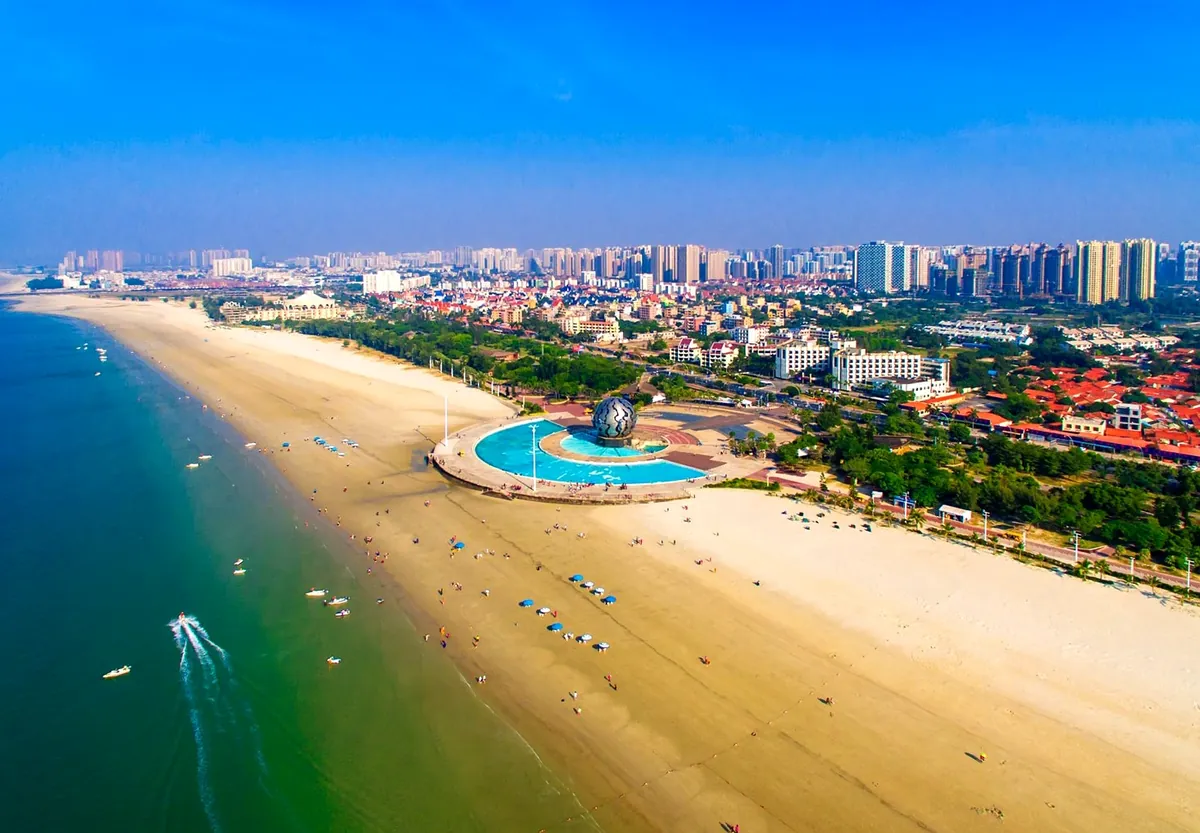
The crowning highlight of the coastal terrain is Silver Beach (Bãi biển Ngân Than), also celebrated as Silver Beach, stretching endlessly for over 24 km with an extraordinary gentle slope of only about 1%. Unlike ordinary gold-sand coastlines, the sand here is composed almost purely of natural quartz mineral with a purity reaching up to 98%. Under the tropical sunlight, each grain of fine sand refracts light, reflecting a shimmering silver hue like a giant silk ribbon bordering the edge of crystal-clear water, featuring calm waves and absolute safety for travelers from afar.
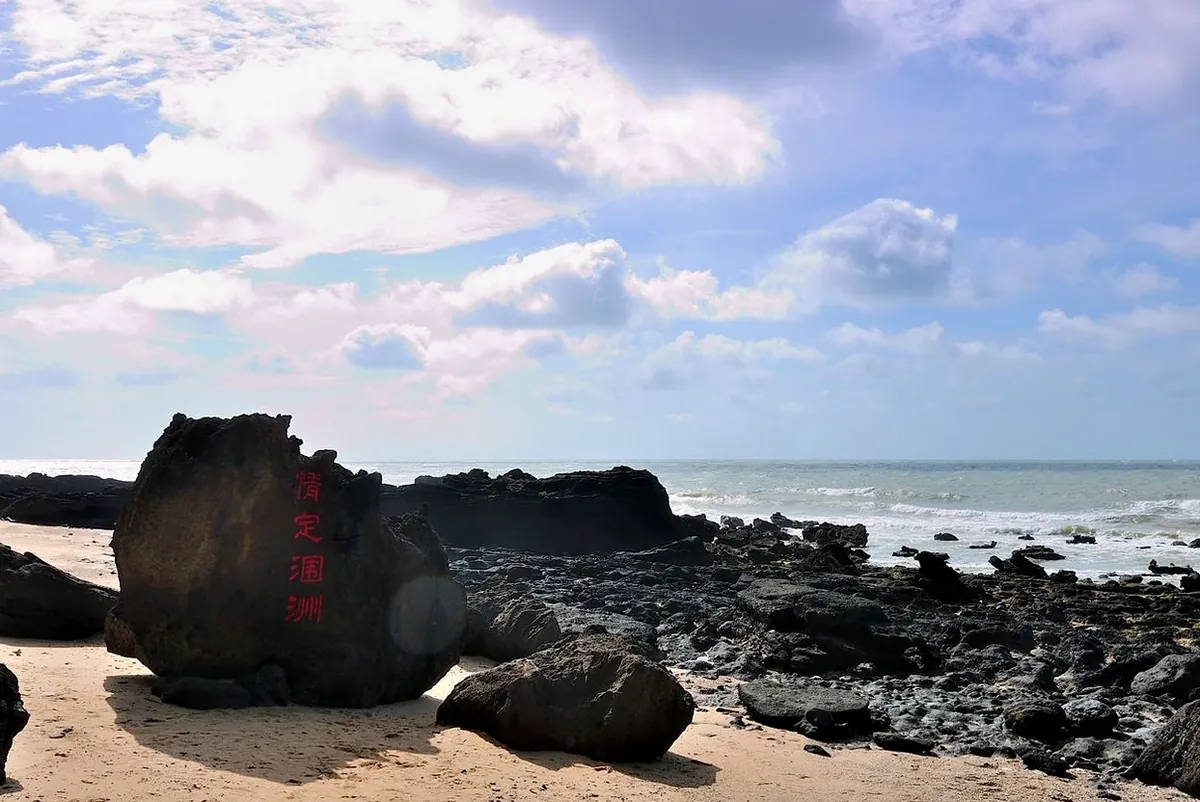
Leaving the flat sandy shores to head out into the open sea, Beihai’s geomorphological structure abruptly transforms at Weizhou Island. This is China’s youngest and largest natural volcanic island, shaped by intense Cenozoic basalt eruptions deep within the sea. The central highlight lies in the Weizhou Island Volcano National Geopark with the scenic Crocodile Mountain (E’yu Shan), where layers of lava stack up like magnificent geological pages beside a sea volcanic crater collapse. Not far away, Dishui Muran (Wucai Beach) unveils a wave-eroded rock platform of endless shapes, bursting with magical vibrant hues under the morning sunrise piercing through the early mist.
Alongside the pristine volcanic rock, the sprawling 3,000-mu Jinhaizwan Mangrove Ecosystem creates a lush “forest on the sea,” serving as a biological lung purifying the entire coastline. This rich mangrove vegetation is a sanctuary for unique marine species such as ancient horseshoe crabs and mudskippers scuttling across the tidal flats, while also becoming an essential stopover for migratory birds along the East Asian-Australasian flyway.
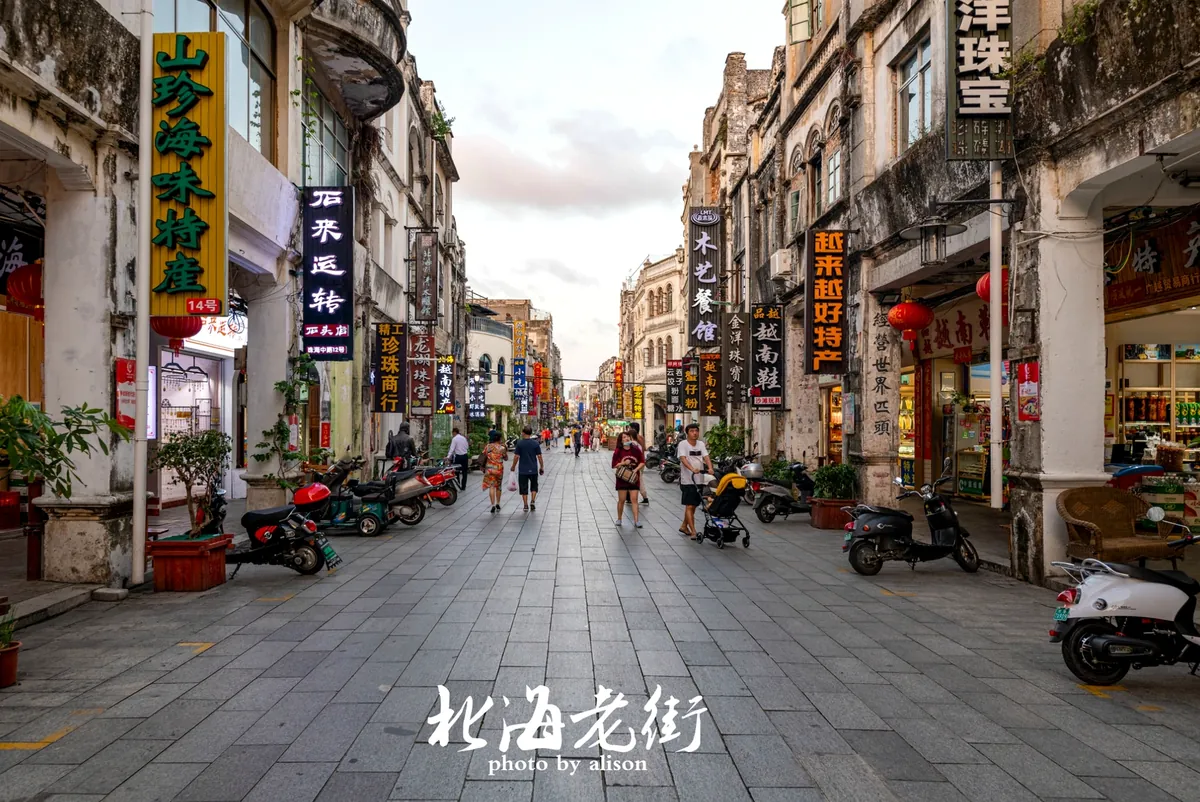
Harmonizing with the expansive river and sea terrain, Beihai’s urban planning softly connects into ancient streets rich in traditional trading port flavors. The old street emerges vividly with rows of antique architecture standing closely side by side, their facades densely hung with brightly colored Chinese character signs. Beneath the silvery overcast sky of the coastal climate, people leisurely stroll on flat-paved sidewalks, alongside neat rows of motorbikes parked along the curb, reflecting a peaceful rhythm of life blending ancient residential spaces with the surrounding oceanic breath.
The seamless intertwining of auspicious geomantic terrain converging vital energy, pristine white quartz sand platforms, ancient lava sediments, and mangrove vegetation has sculpted a rare geographical landscape for Beihai. This place is not only the magnificent fusion of nature’s craftsmanship but also a green bulwark preserving priceless marine resources, laying a solid foundation for the prosperity of a seaport city throughout the history of the southern regions.
Viewed through the lens of urban morphology, Beihai presents itself as an open-air architectural museum perfectly preserving the unique East-West cultural intersection of China’s southernmost coastline. Most representative of the port townscape is the Beihai Old Street (北海老街) axis, formerly known as Zhouhai Street. Established in 1821 during the Qing Dynasty and entering a massive scale expansion phase in 1883 following the opening of the international trade port, this 1.44-kilometer-long axis with a consistent width of 9 meters reflects meticulously methodical modern commercial planning. The core of the old street space lies in the Qilou (骑楼) architectural typology, a unique row-house structure meticulously adjusted to perfectly adapt to the coastal monsoon tropical climate. On the ground floor, buildings uniformly recede inward to create a continuous vaulted arcade corridor – locally known as the “walking path” – which serves both as a shaded pedestrian route shielding from the harsh sea rain and sun, and as a bustling trading space. Above the arches, upper stories stretch out to the property line, showcasing a spectacular combination of Western Renaissance artistic language, solemn Neoclassical styles, and dramatic curved Baroque lines, blending harmoniously with traditional Lingnan relief motifs such as pure lotus flowers, graceful dragon and phoenix dances, and ancient seal script patterns.
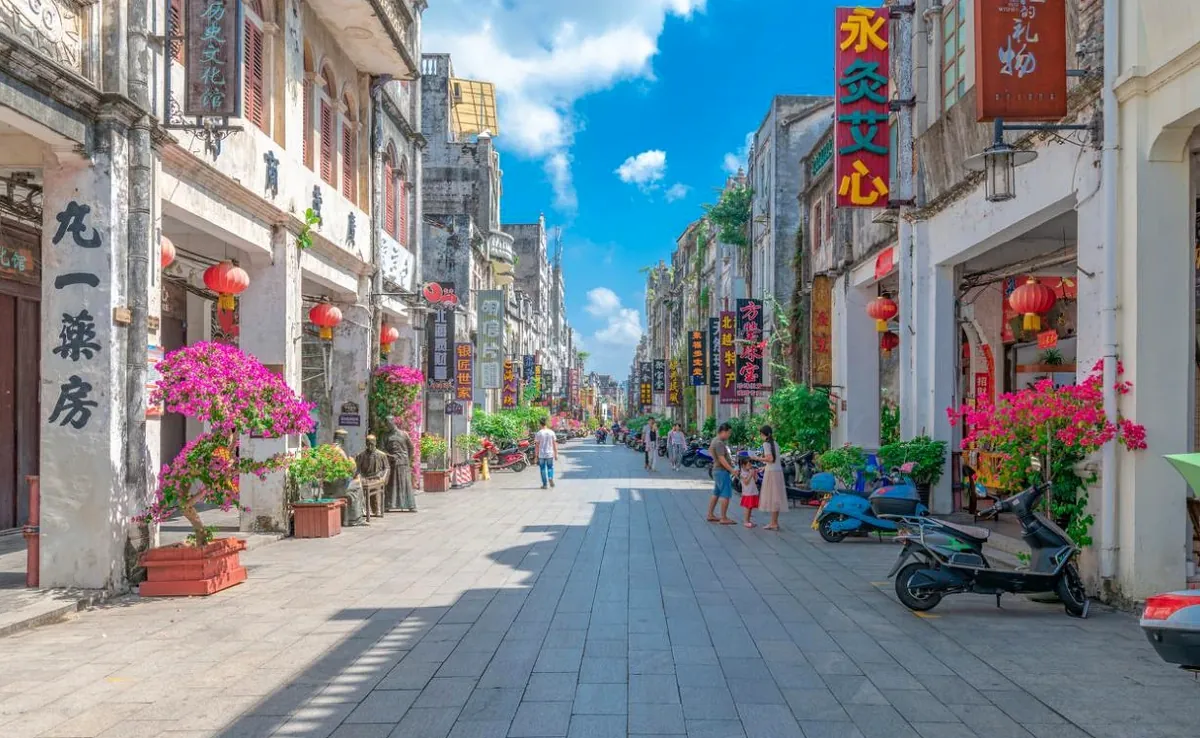
Alongside the urban hustle and bustle of Qilou, Beihai’s historical landscape is also profoundly shaped by its collection of modern colonial diplomatic and civil buildings, continuously developed between 1877 and 1900. This was a period when Western powers successively established key headquarters along the southern coast of Guangxi, including the Old Beihai Customs House, the British Consulate, the French Consulate, the German Consulate, and the Puren Hospital. Unlike the heavy, massive construction standards of their home countries, these structures were developed in the Tropical Colonial Bungalow style with sophisticated climate-adapted functional solutions. All buildings feature solid double-brick walls with a sturdy thickness of 40 to 50 centimeters, creating a resilient load-bearing structure capable of withstanding the destructive gale-force winds of annual tropical sea typhoons. Surrounding the perimeter of each building is an expansive veranda system with an impressive depth, acting as a natural thermal buffer that prevents harsh heat from penetrating the main rooms. This is complemented by smart wooden louvered shutters, allowing air circulation and welcoming refreshing sea breezes while maintaining the solemnity and privacy of official duties, as well as optimizing natural lighting and ventilation.
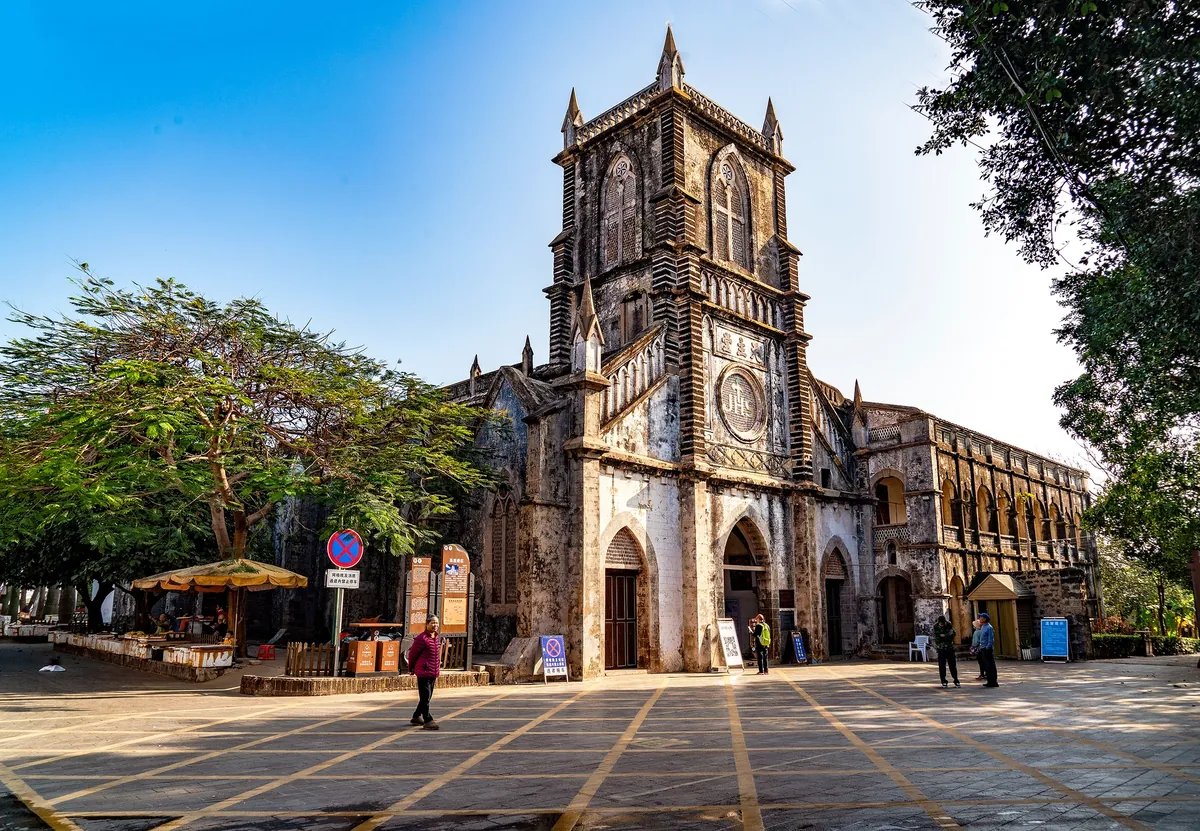
Extending beyond the mainland urban space, the pinnacle of spatial craftsmanship and indigenous material engineering in Beihai resides on Weizhou Island with its masterpiece, the Weizhou Catholic Church (湎洲天主教堂). Impressively present amidst the serene rural landscape of the ancient Shentang Village, the cathedral was begun by French Jesuit missionaries in 1869 and took a full decade to complete in 1879. What makes the priceless architectural value of this Neo-Gothic structure so unique is the absolute harmony between European church design and the most meticulous local materials. Instead of using cut stone or fired bricks transported from the mainland, local craftsmen directly harvested porous yet durable volcanic coral stones from the seabed to construct the entire structural framework and the proud 21-meter-high bell tower. The binding agent for these coral slabs was not cement mortar, but a traditional mixture of hand-slaked lime from crushed seashells mixed with thick sugarcane molasses, following ancient folk wisdom. Having weathered more than a century of storms and elements, the surface of the coral stone walls has faded to an antique ash-gray, creating an exquisite visual symphony as the solemn, serene Gothic church nestles peacefully among the lush tropical banana groves of this pristine volcanic island.
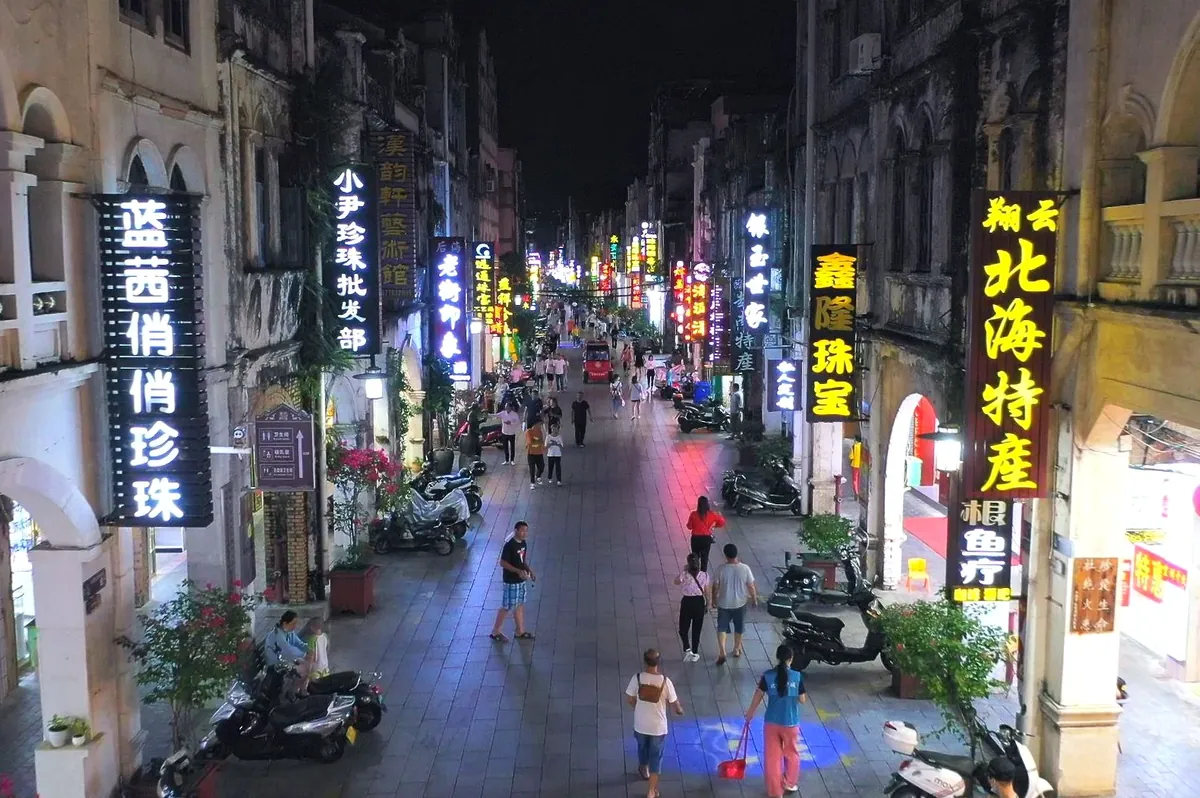
As the twilight gradually descends over the Gulf of Tonkin, casting an amber hue across the coastal coconut groves, Beihai sheds its daytime tranquility to embark on the enchanting transformation of a vibrant night-economy city. On Old Street (Laojie), the boundaries of time seem completely dissolved under the art of sophisticated lighting design. Traditional red lanterns intertwined with warm-toned recessed light strips are precisely calculated according to every visual angle, fully honoring the proud Roman arched curves of the century-old Qilou buildings. Each embossed relief, the shuttered windows carrying a Western colonial breath, and the layer of moss on the gray brick walls emerge with deep nostalgia, creating a shimmering open architectural exhibition space where travelers’ footsteps blend with the melodious sounds of the zither echoing from vintage tea houses and hereditary pearl-crafting workshops.
Leaving behind the antique, quiet notes of Old Street, the city’s nightlife shifts dramatically as it moves southward to the realm of Qiaoqiao Custom Street. Originally formed from fishing villages settled by returning overseas Chinese communities following the political upheavals of the late 1970s, Qiaoqiao has today transformed into the most vibrant symbol of the coastal night economy. Multi-colored neon signs line both sides of the street, sketching a bustling culinary and commercial space imbued with the distinct culture of Guangdong and Guangxi (Lingnan). Hundreds of stalls billow with charcoal smoke, exuding the enticing aromas of fresh seafood just unloaded from docked fishing boats: salt-and-pepper mantis shrimp, grilled scallops with scallion oil, and rich spicy rock crabs. A unique highlight here is also the subtle culinary cultural crossover between Vietnamese and Chinese traditions, clearly expressed through steaming hot, silky hand-coated rice rolls served with crispy fried spring rolls, or the renowned tropical sweet soups combining taro taro balls, herbal jelly, rich coconut milk, and sweet longan that wash away the salty tang of the sea breeze.
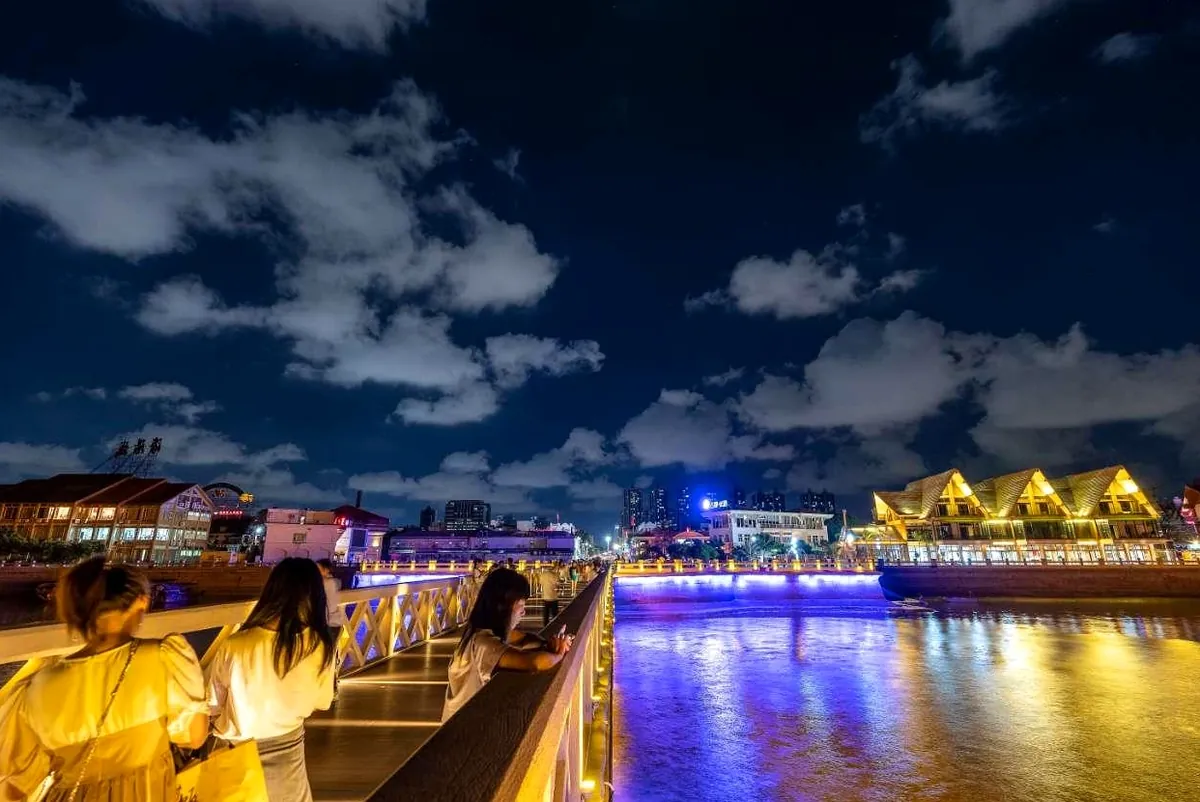
At the focal point of the southern coastline, Silver Beach transforms at night into a grand stage for light shows and water music performances. Across the endless, fine quartz-white sand, the artistic musical fountain complex operates a high-pressure nozzle system combined with multi-dimensional laser technology, creating soaring jets of water that sway gracefully to the rhythm of ocean symphonies. Artificial lights reflecting on the nocturnal sea surface create a magical visual effect resembling millions of Milky Ways rolling over the silvery sand. Along the breezy embankment, a chain of beach entertainment clubs, open-air bars, and rustic acoustic performance spaces attract elite travelers, creating a vibrant, modern symphony amidst the vast expanse of the Southern China Sea.
Beyond the highlights on land, Beihai’s nightlife is further elevated by high-end sea-surface dining experiences tied to the development orientation of cross-Gulf of Tonkin cruise itineraries. Ocean-going voyages connecting Hai Phong and Ha Long Bay with Beihai and reaching as far as Sanya open up an entirely new luxurious way of sightseeing. From the decks of five-star cruises gliding smoothly over deep turquoise waters, travelers can gaze at the brightly lit city skyline, savor a fine-dining dinner featuring premium local seafood, and listen to the millennium-old legends of the pearl-diving local residents. Contemporary lighting art combined with the age-old livelihood of fishermen turns Beihai’s night into a multi-layered, profound cultural canvas brimming with the vitality of our times.
The culinary current of Beihai is a magical blend of the abundant fishery resources of the Gulf of Tonkin and the profound, subtle health-preservation philosophy of Lingnan. Unlike the spicy and pungent flavors typical of inland Guangxi, the gourmet flavors of this coastal town strictly revere the original freshness of its produce, where kitchen flames serve only to honor the quintessence bestowed by nature with every receding tide.
Wandering through the mossy arches of Old Street, a traveler’s sense of smell will instantly be awakened by the characteristic rich aroma of the old quarter’s fried shrimp cakes, also known as Hazi Bing (北海虾饼). This is not merely a street snack but has become an iconic culinary heritage of the port city’s residents. Fresh sea shrimp, still twitching and just brought in by fishing boats early in the morning, are kept by the chef with their paper-thin, plump shells intact, and thoroughly mixed into a bowl of rice flour blended with a touch of warm cardamom powder. Generous ladles of shrimp-laden batter are dropped decisively into a deep cast-iron wok filled with sizzling peanut oil. Precise heat quickly shapes the cake into a small, golden-brown crescent moon, crispy on the outside while keeping the shrimp’s pure, succulent, and boldly coastal sweetness perfectly intact on the inside.
If the shrimp cake is a lively prelude, the Hepu sandworm (合浦沙虫) represents the pinnacle of tribute delicacies once recorded in southern ancient texts. Harvested from the pure, clean sand-mud tidal flats of the Hepu coastal region, the sandworms here boast thick bodies, firm textures, and an abundant natural amino acid content, delivering a profound sweetness matched by few other aquatic species. Under the skillful hands of local culinary artisans, fresh sandworms are best when quick-stir-fried over high heat with crisp celery and crushed fresh garlic, retaining their juicy crunch; or simmered in a steaming bowl of seafood porridge so that the umami sweetness spreads in rich, distinct layers. When the sea turns rough, sun-dried sandworms gently grilled over charcoal become an elegant finale, exhaling an intoxicating aroma that captivates gourmet connoisseurs.
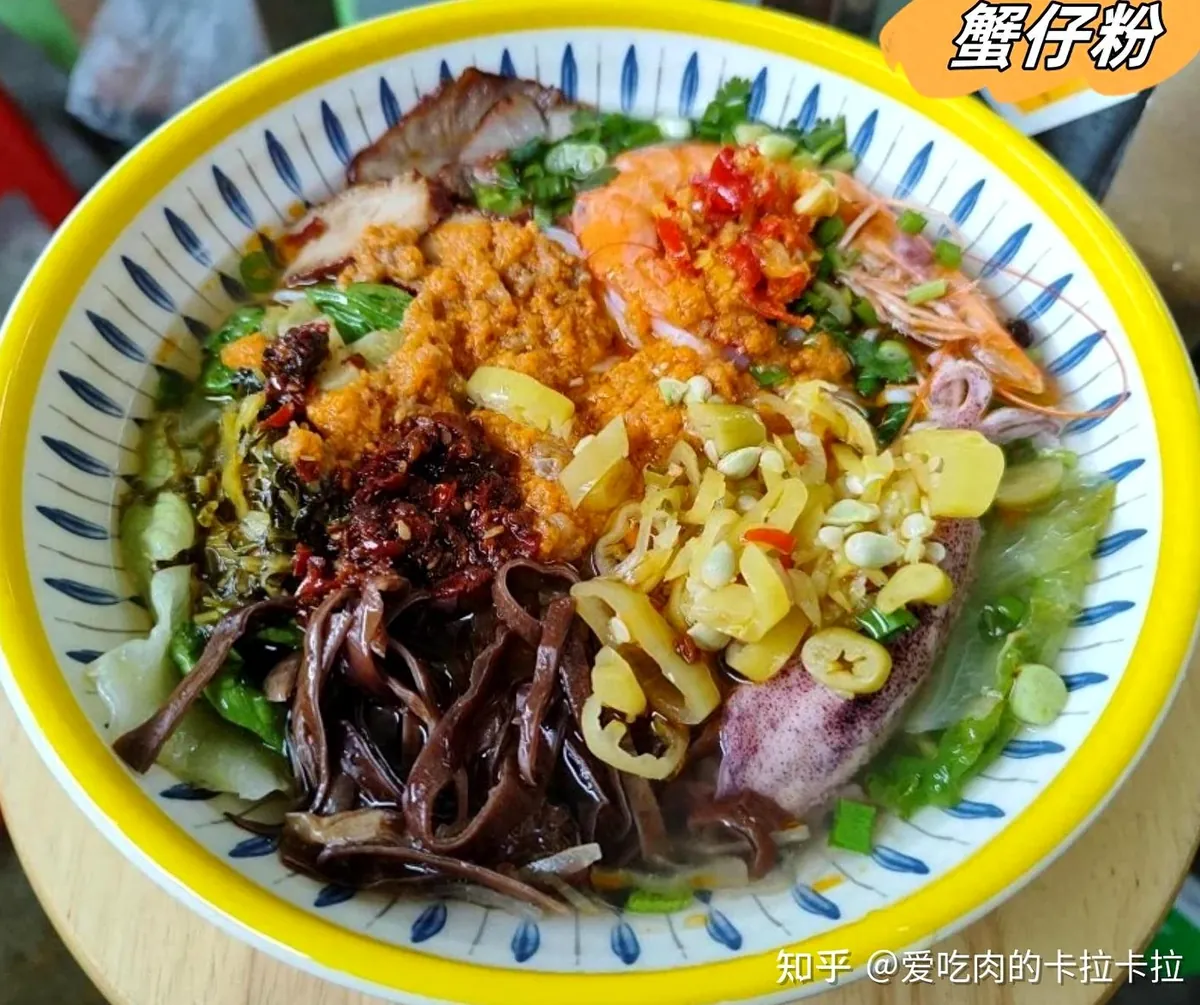
The dim sum and daily dining culture of Beihai people is also closely tied to bowls of delicate crab rice vermicelli (北海蟹仔粉) and rustic sea snail rice vermicelli. Stepping away from the fiery pungency and strong fermented bamboo shoot aroma of Liuzhou snail rice vermicelli, Beihai’s snail noodle captivates with its crystal-clear broth, simmered entirely from live sea snails combined with sweet pork bone marrow, dotted only with a few slices of crushed fresh ginger to neutralize its cooling nature. Accompanying this is the famous Gulf of Tonkin flower crab with its brightly patterned shell and firm, tightly-knit meat intertwined with rich golden crab roe, usually shelled and cooked with plump, fluffy round glutinous rice to create a smooth, sweet crab porridge down to the very last drop.
Venturing out across the waves to Weizhou Island, the culinary flavors take on the carefree spirit of volcanic mountains and seas. Diners can enjoy spiny sea urchins freshly harvested from underwater reefs, grilled with fragrant scallion oil or beaten and steamed double-boiler style with free-range chicken eggs from the island’s residents, delivering a buttery, melt-in-your-mouth richness. Firm sea eels seasoned with rustic spices and grilled sizzling directly on volcanic basalt slabs that retain heat, as well as fragrant volcanic cooking bananas rich in soil minerals, are also unique terroir marks found exclusively on this island.
Beihai’s culinary map would not be complete without refreshing, health-boosting treats born to soothe the humid heat of the Lingnan coastal climate. A glossy, jet-black bowl of tortoise herbal jelly (龟苓膏), hinting at the subtle, gentle bitterness of medicinal herbs blended with cool wild honey, effectively clears heat and dispels dampness after heavy seafood feasts. Stopping at Qiaogang town at dusk, sipping a crispy grilled taro pastry (芋头酥) fragrant with glutinous rice flour, and finishing a bowl of sweet, creamy coconut milk with palmyra palm seeds, travelers can fully comprehend the salty, carefree yet utterly sweet flavor profile of this southern coastal strip.
The Beihai coastal strip boasts one of the most modern transportation networks in the Liangguang region, where vital infrastructure seamlessly connects the Vietnam-China borderlands with bustling urban centers. From northern provinces of Vietnam, the route through the Mong Cai International Border Gate to Dongxing is seamlessly connected by a high-speed railway linking Fangchenggang and Dongxing, leading straight to Beihai Station in just over an hour. Departing from the capital city of Nanning, the Yong-Bei intercity railway connects Nanning East Station and Beihai Station with high-frequency departures running day and night, cutting travel time through rolling karst valleys down to about 58 to 75 minutes. Continuing out to the volcanic Weizhou Island, the Beihai International Passenger Transport Port operates wide-body high-speed ferries of the “Beidu” series, cutting through the waves of the Pacific Ocean in about 70 to 90 minutes to dock at the harbor of this millennial volcanic island.
Regarding immigration and customs procedures, Vietnamese travelers joining tour groups today enjoy major advantages from flexible border clearance mechanisms. Instead of complex individual visa application processes, you can enter quickly using a border tourism pass or a separate group tourist visa at the Huu Nghi Quan or Dongxing land border gates. Procedures are processed rapidly with optimized costs, though personal dossiers must be accurately pre-registered through authorized international travel operators who provide sponsorship. The moment you step across the border demarcation milestone, China’s expansive seaside lifestyle and comprehensive digital infrastructure open up an extremely convenient travel experience, while also demanding thorough preparation regarding electronic payments and passports valid for over six months.
Beihai’s weather features distinct seasons with the ideal beach tourism period lasting from April to November, when the Gulf of Tonkin’s waters are as clear as jade and brilliant golden sunlight bathes the fine white sand beaches of Silver Beach and the basalt rock formations. However, from July to September, this maritime zone frequently receives sudden tropical storms. When offshore wind speeds exceed level 7, maritime management authorities immediately issue a maritime ban lasting 2 to 3 days, blockading all ferry routes to Weizhou Island. Furthermore, to strictly preserve the pristine volcanic geological ecosystem, the Weizhou Island management board has established a control ceiling capping daily arrivals at a maximum of 11,000 visitors. Travelers must plan and book round-trip ferry tickets and the Crocodile Mountain scenic spot composite ticket priced at 98 RMB in advance to avoid the risk of unexpected schedule disruptions.
Amidst the vibrant tourism picture of an ancient trading port, the savvy traveler also needs to stay alert against pre-set commercial traps. The biggest warnings always target unusually cheap tours under the guise of promotions, which are actually “zero-dollar tour” models designed to lure visitors into a labyrinth of forced consumer spending. At disguised stops, sophisticated acts such as dramatic pearl-harvesting performances with shocking prices, latex mattress factories with exaggerated medical claims, or exorbitant traditional Chinese medicine consultations are frequently staged elaborately to prey on gullibility. To protect pure sightseeing experiences and legitimate rights in accordance with Article 35 of the Tourism Law of the People’s Republic of China, travelers should prioritize itineraries committed to standard, pure sightseeing without designated shopping stops.
Planning a serene, meticulous voyage—from managing Weizhou Island ferry tickets and choosing the ideal time for bay sunset views to experiencing authentic local babylon snail and rock crab delicacies—becomes even more fulfilling when you travel alongside a comprehensive tour package rich in cultural depth and professional in every detail of organization.