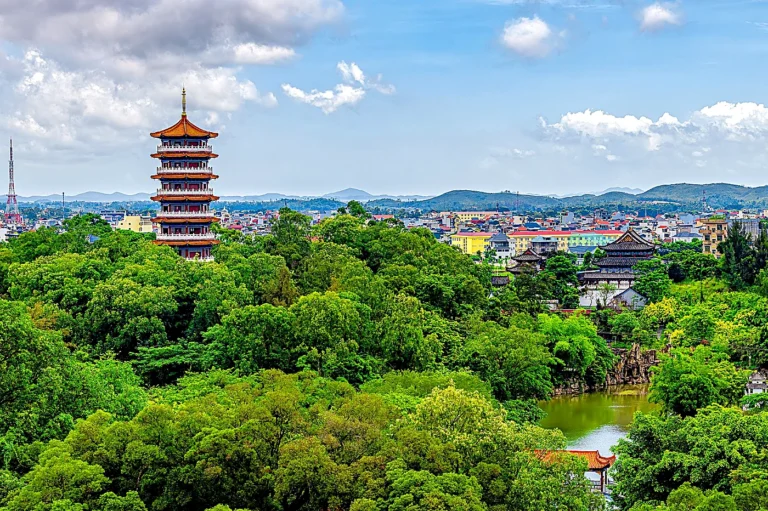
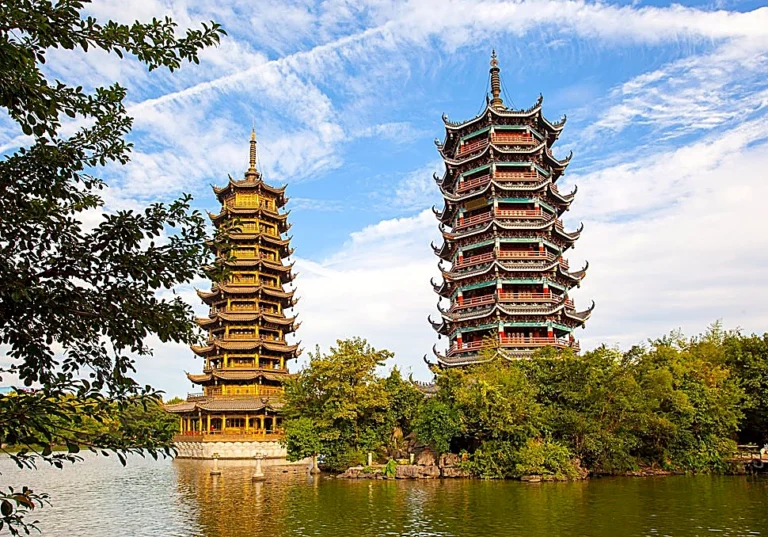
As soft mist settles over the Beilun River—the natural border separating Mong Cai from Dongxing in Fangchenggang Prefecture, Guangxi Province—the borderland food scene takes on a distinctly inviting character. In contrast to the fiery, tongue-numbing heat of Sichuan hot pot or the chili-oil richness of southwestern China, Dongxing milk hot pot wins travelers over with a calm, gentle, and refined balance. Far more than a passing street-food trend, it distills Cantonese and Guangxi culinary philosophy—turning everyday nourishment into a subtle tasting experience from the very first spoonful of broth.
The roots of this jade-white broth run deep into traditional East Asian food-as-medicine principles, which view daily meals as a gentle way to restore balance and vitality. Across centuries of bustling border trade along the Gulf of Tonkin, local cooks developed a signature blend pairing protein-rich pasteurized milk with classic Chinese herbs such as Ningxia goji berries, Xinjiang red dates, *dangshen* (codonopsis), astragalus, and fresh lotus seeds—softening animal richness while creating a warming broth suited to damp, cool coastal evenings in the northeast.
Whenever Dongxing’s borderland food map is discussed, *Ma Dajia* (“Ma Family”) is widely remembered as a longtime favorite. Starting as a family eatery focused on traditional nourishing dishes, the Ma family refined its signature milk-hot-pot recipe—making bustling kitchens near the Ka Long River a well-known stop for travelers crossing the international border gate. Care in selecting ingredients and patient slow-simmering have helped make the dish a signature taste of Guangxi’s southern frontier.
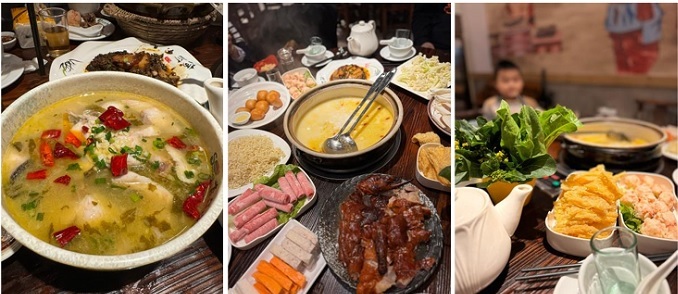
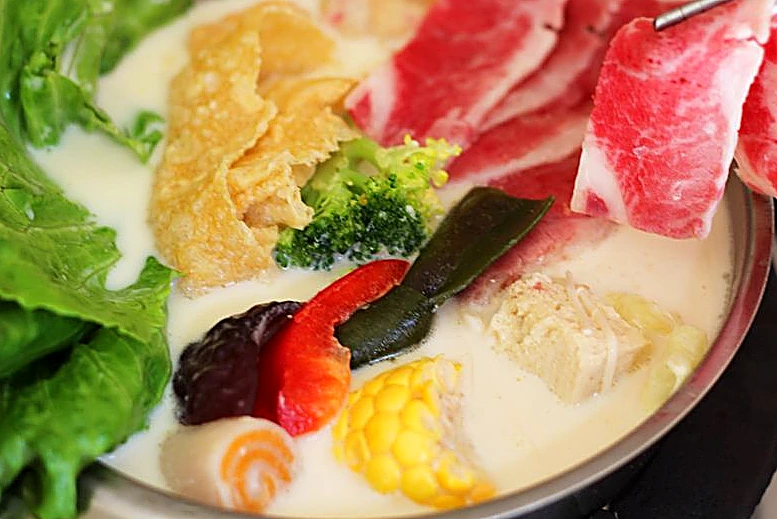
The secret behind the broth’s appeal lies in hours of patient bone simmering lasting eight to twelve hours. Cooks pair fresh pork marrow bones with older hens for natural sweetness, skimming carefully for clarity while steady heat emulsifies marrow richness into a silky base. Fresh milk is added in careful proportion alongside prepared herbs, resulting in a calm, fragrant surface that tastes clean, milky, and gently sweet without feeling heavy or cloying.
Alongside the broth comes a generous platter of hot-pot ingredients reflecting southern abundance. Neat rolls of thinly sliced beef sit beside firm Sichuan-pepper highland chicken, crisp cartilage ribs, cleanly prepared pork tripe with pleasant chew, and fresh abalone from Fangchenggang’s coastal waters—balanced by mushrooms including shiitake, seafood mushrooms, and prized morels, along with soft tofu skin, sweet corn, and chewy local rice noodles.
Enjoying milk hot pot calls for the unhurried pace of Guangdong and Guangxi dining rather than plunging everything into the pot at once. Tradition begins with ladling a first bowl of broth as it reaches a gentle boil—sipping slowly to enjoy the clean sweetness of bone broth, soft milkiness, and herbal aroma—before adding chicken and tripe to build flavor, followed by seafood, rolled beef, and vegetables so the broth stays balanced throughout the meal.
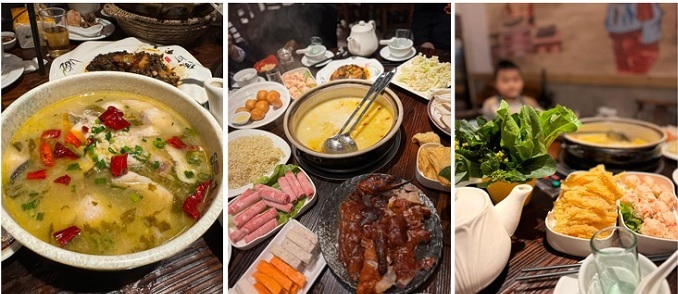
A custom dipping sauce station adds another layer of Chinese culinary craft. From rows of condiments, diners mix their own blend—such as rich sesame paste (*majiang*), a touch of oyster sauce, minced garlic, chopped Chaozhou chili in vinegar, fresh cilantro, and a few drops of sesame oil—creating a lively contrast when tender beef or crisp cartilage comes out of the warm milk broth.
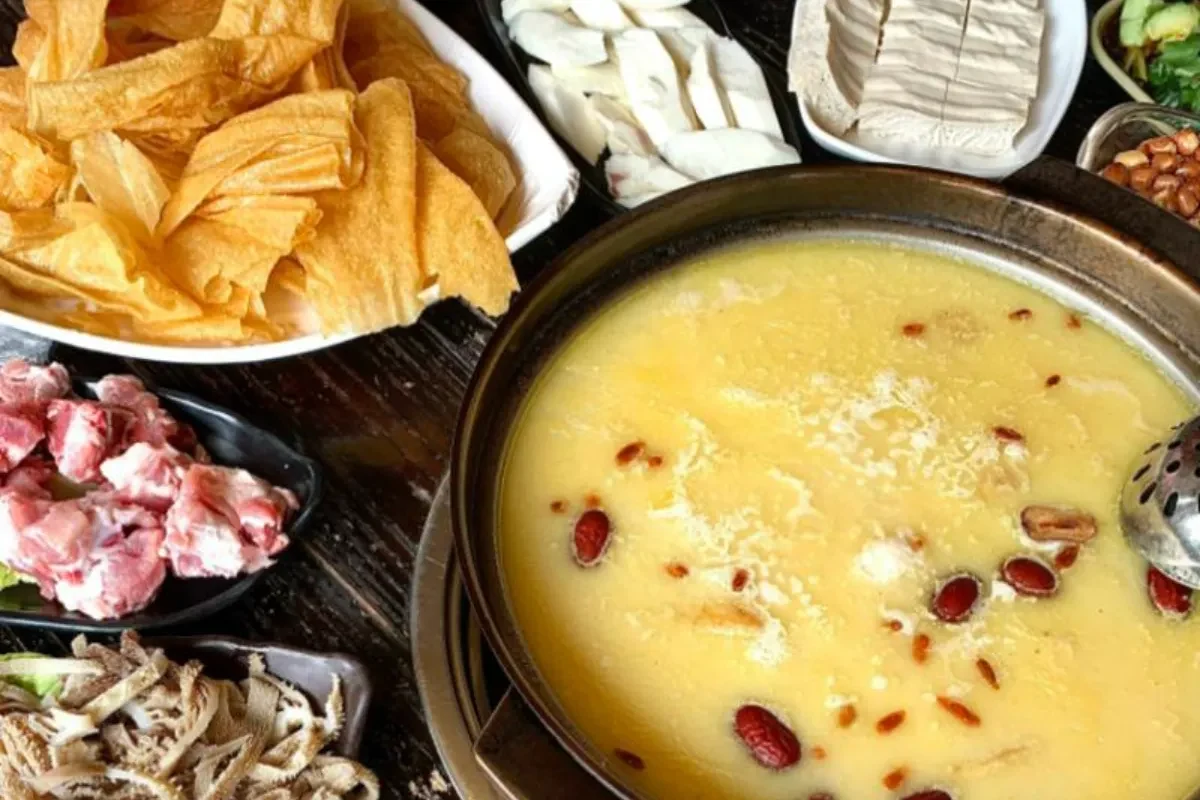
As dusk settles along lively avenues like Dongming Avenue or neon-lit King Street, the evening setting makes milk hot pot especially inviting. Long tables along open shopfronts and cozy wood-accented dining rooms fill with chatter from locals and border visitors alike. Booking a one-day all-inclusive Dongxing tour gives travelers relaxed time to enjoy the evening street scene and a warm hot-pot meal without worrying about local transport or picking a reliable spot on their own.
Reaching Dongxing’s milk hot pot is straightforward thanks to the town’s location right across from Mong Cai in Quang Ninh Province. Visitors prepare a valid citizen ID and standard photo to obtain a border pass (*Sổ thông hành biên giới*) through immigration authorities; after clearing Mong Cai International Border Gate and walking across the historic Beilun River bridge, Chinese streets and eateries are just steps away.
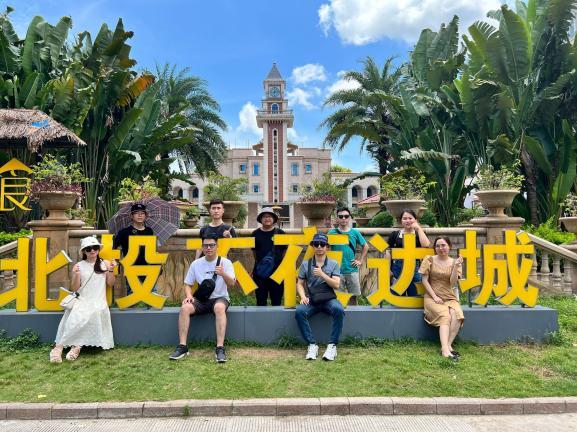
For a well-rounded day, pair a milk hot pot meal with nearby sights such as Wanxiang Pagoda, tree-shaded China–Vietnam Friendship Park, or busy Wanzhong Market along the river—then stroll side lanes afterward for roasted milk tea, spicy boneless chicken feet, or boxes of Dongxing mung-bean pastry to bring home. Joining a guided cross-border tour service adds peace of mind with border formalities, dining language help, and smooth timing across stops.
A few practical tips make dining even smoother: while many larger restaurants display bilingual menus with Chinese and Vietnamese labels, keeping a little Chinese Yuan (CNY) cash or an international mobile payment wallet handy speeds up checkout. Because Dongxing milk hot pot sets come generously portioned with meats, vegetables, and mushrooms, check with staff before ordering extra items so you avoid over-ordering and keep the meal light and enjoyable.
Wrapping up around a simmering hot pot as the evening breeze stirs along the border, Dongxing milk hot pot becomes more than a hearty meal—it leaves a lasting memory of gentle herbal warmth, fresh coastal ingredients, and unhurried border-town hospitality that invites you back to the banks of the Ka Long River.