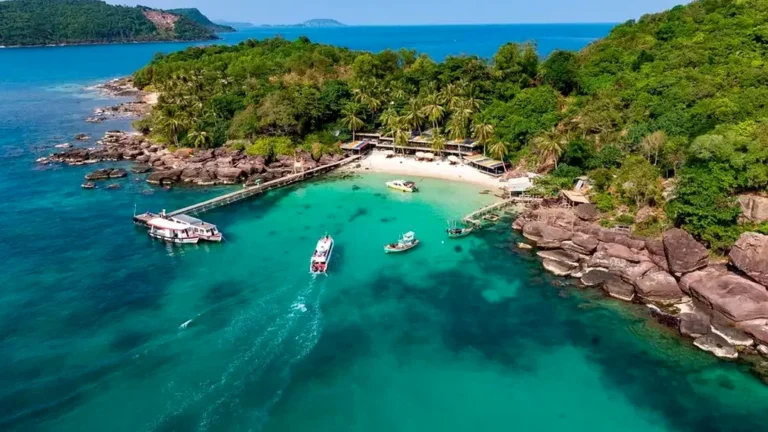
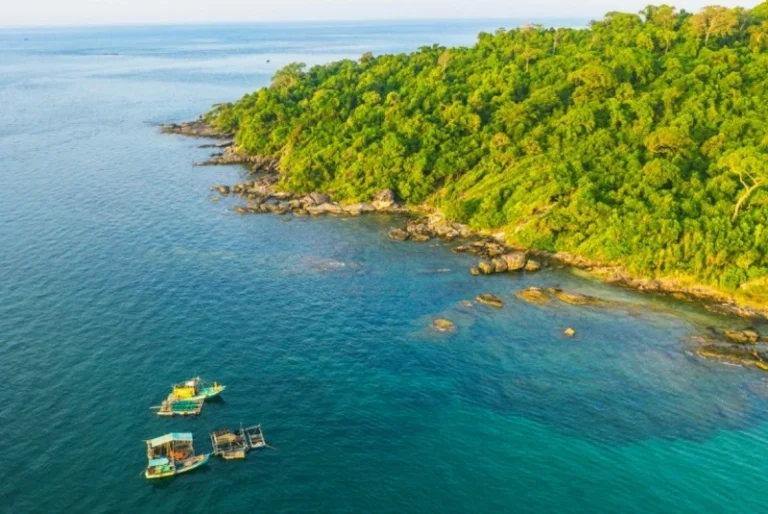
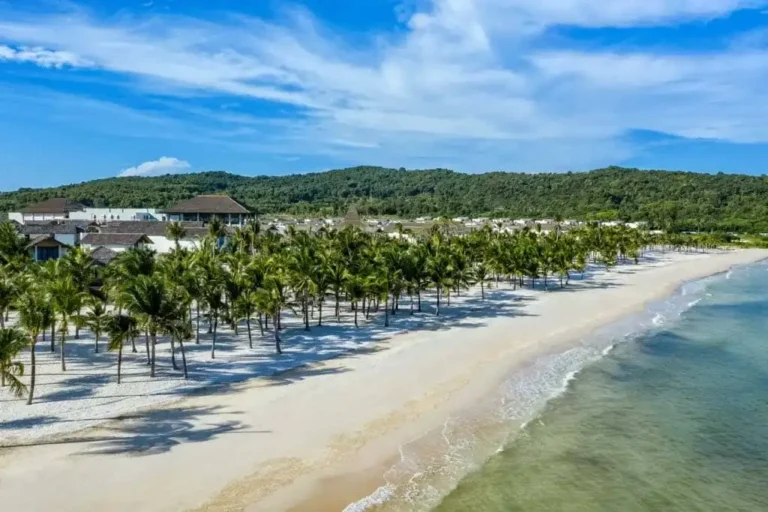
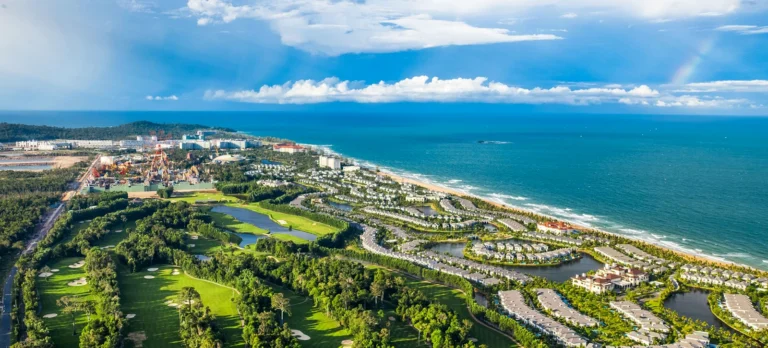
Tucked away at the northernmost tip of Phu Quoc’s Pearl Island in Ganh Dau Commune, Kien Giang Province, Rach Vem Fishing Village stands as a one-of-a-kind sanctuary where time seems to stand still amid the fast pace of modern life. Far removed from the glitz and bustle of commercial coastal resorts, Rach Vem carries a layered chronicle intertwined with generations of pioneers who settled and safeguarded Vietnam’s southern maritime frontier. Nestled within a sheltered bay protected by low hills and deep primeval forests, the village boasts an auspicious geomantic setting: backed by forested mountains and facing the open tide, creating a natural windbreak fed by sweet freshwater streams flowing from the island’s interior, embracing stretches of powdery white sand and crystal-clear waters visible all the way to the seabed.
Tracing back through historical records, Rach Vem was never a modern accidental settlement, but rather a strategic outpost from antiquity. Beneath its ancient mangrove canopies, archaeological remains quietly tell the story of late Oc Eo culture inhabitants and indigenous communities living here millennia ago. By the 18th and 19th centuries, under the Nguyen Dynasty’s frontier reclamation policies and resolute assertion of maritime sovereignty, this territory was formally inscribed onto the national administrative map. Chronicles such as the Dai Nam Thuc Luc (Veritable Records of Dai Nam) and Dai Nam Nhat Thong Chi (Unified Gazetteer of Dai Nam) documented patrols by imperial naval squadrons, recognizing northern bays like Rach Vem as vital strategic anchorages and essential freshwater resupply stations where merchant vessels and naval fleets sheltered from fierce southern monsoon winds and awaited favorable northeast trade winds.
The very name “Rach Vem” is itself a priceless linguistic and ecological archive. According to ancient Nguyen Dynasty land registries, the toponym combines two simple yet precise local terms: “rach” (a tidal creek bridging inland waters and the open sea) and “vem,” an endemic mangrove species of the Rhizophoraceae family that once densely carpeted the creek mouth. This enduring bond between people and nature was further shaped by the historic influence of the Mac clan—governors of Ha Tien—as they extended governance across the Phu Quoc archipelago in the early 18th century, transforming Rach Vem into a lively trading gateway connecting Vietnamese, Khmer, and neighboring seafaring merchants.
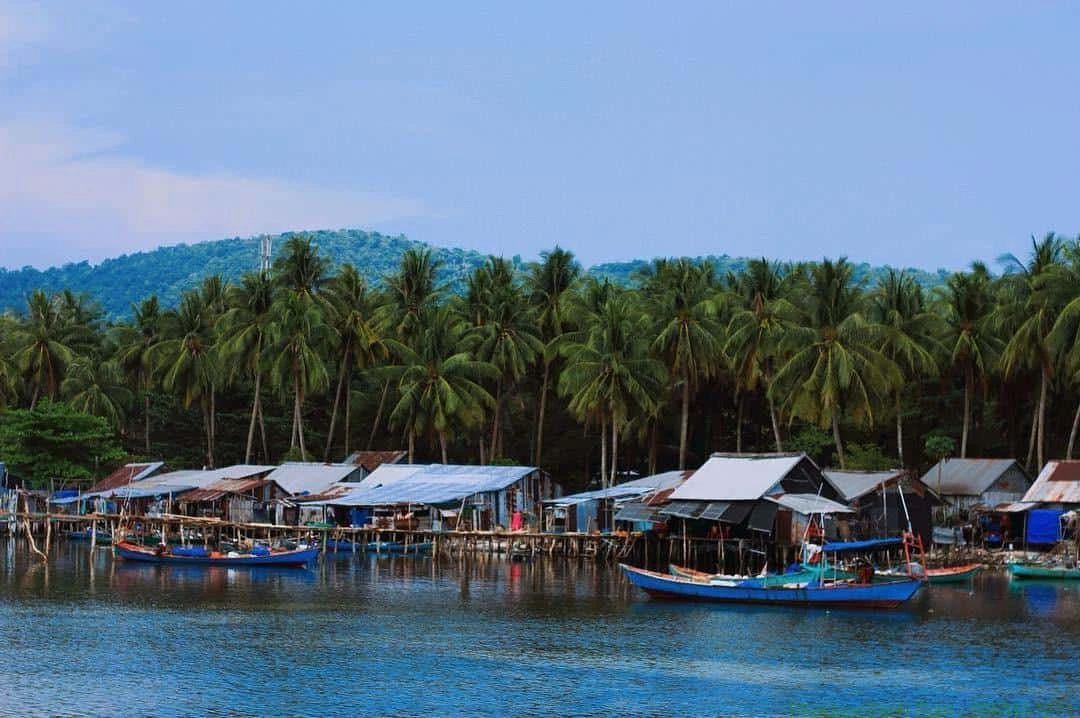
Following the tides of history, in the late 19th century, pioneering settlers bearing the Nguyen, Le, and Tran surnames journeyed from the distant Ngu Quang region and Ha Tinh Province to build new lives along these windswept shores. They raised humble shelters, established hamlets, opened rich fishing grounds, and passed down a tightly knit coastal heritage from one generation to the next. Today, in the eyes of heritage conservationists and travel journalists alike, Rach Vem is celebrated not only as a rare, unspoiled ecotourism haven, but also as a living cultural landscape where geological value, mangrove biodiversity, and ancestral memory converge to form a tranquil and proud “Starfish Kingdom” at the southwestern edge of Vietnam.
Hidden along the northern coast of Phu Quoc Island, Rach Vem Fishing Village unfolds like a vast ink-wash landscape painting, blessed by nature with a breathtakingly pristine ecosystem. Its geography is uniquely sheltered within a calm bay, cradled by verdant low hills and expansive old-growth forests. Seen from above, ribbons of fine white sand curve gracefully around glassy, emerald-jade waters so clear you can spot vibrant red starfish scattered across the white sandy bottom below. The atmosphere breathes the raw, unpretentious spirit of the open sea, completely insulated from the noise and rush of modern urban life.
Architecture in Rach Vem reflects classic coastal traditions elevated into a striking visual spectacle by its network of floating raft houses extending out over the water. Built upon sturdy timber pilings driven deep into the seabed and linked together by long wooden boardwalks, these structures form an intricate floating community upon the bay. Simple corrugated-roof homes nestle beneath vibrant bougainvillea trellises and fishing nets drying in the sea breeze, exuding an unassuming authenticity brimming with life. Over generations, the organic layout crafted by local fishing families has turned Rach Vem into a living model of harmony between human habitation and the open ocean.
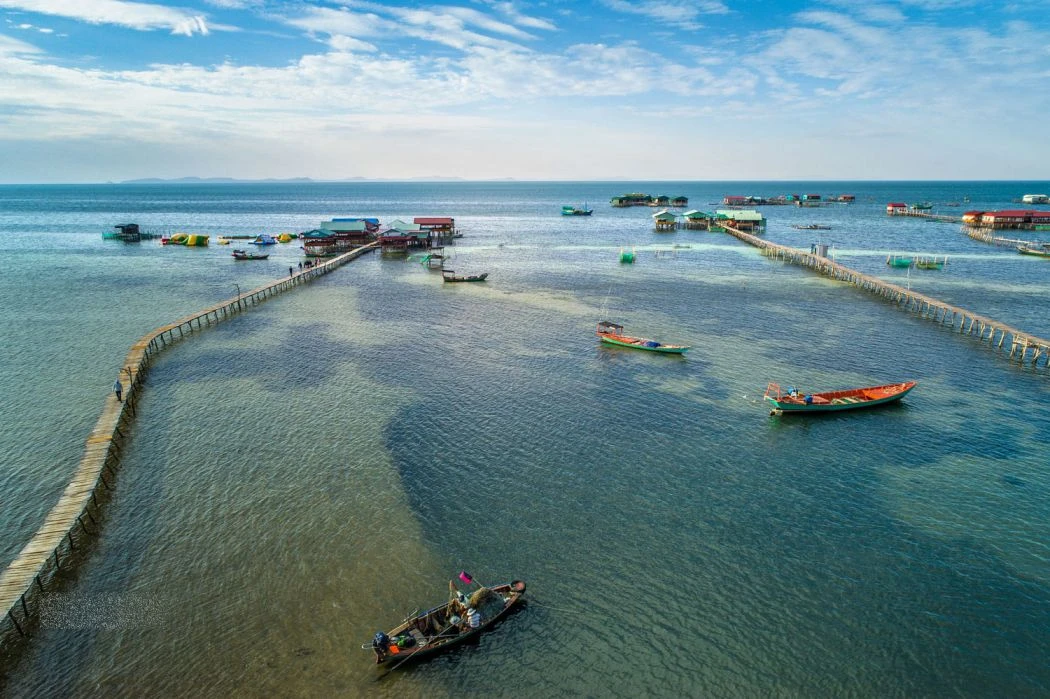
To capture the most unforgettable frames in this coastal haven, photographers and travel journalists consistently point to two unmissable, show-stopping vantage points. The first is the network of wooden bridges leading out to the offshore floating houses, where you stand surrounded by boundless sky and water with hundreds of starfish gliding gently beneath shallow, crystal-clear waves. The second lies along elevated lookout huts or the northern shoreline of Rach Vem, offering a sweeping panorama of the peaceful fishing village and traditional basket boats bobbing lazily on the tide.
The most magical lighting for capturing timeless photographs at Rach Vem arrives at sunrise (between 5:30 AM and 6:30 AM) or during sunset (from 5:00 PM to 6:00 PM). As dawn paints the eastern horizon in soft rose hues, the mirror-still sea reflects the sky and shoreline in a dreamy, poetic tableau. By late afternoon, warm golden-orange twilight drapes across the floating houses and shimmering bay, transforming Rach Vem into a captivating visual masterpiece.
Stepping into Rach Vem Fishing Village, travelers are immediately drawn into a serene world far removed from city commotion. The moment a small wooden boat parts the crystal-clear water to enter the bay, a quiet sense of awe washes over you as an expansive natural panorama unfolds: deep green hills embracing soft white beaches beside calm, jade-tinted waters. The air carries the crisp salinity of the sea blended with the earthy scent of untouched mangrove foliage, awakening every sense and instilling a profound calm.
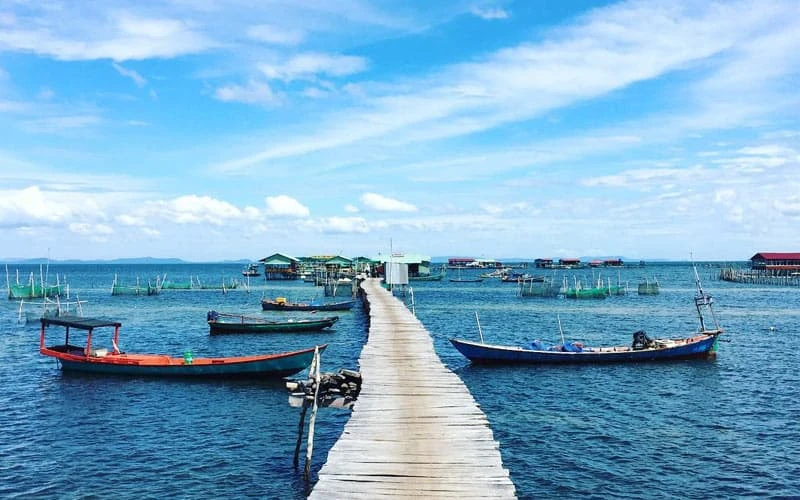
Exploring Rach Vem would feel incomplete without immersing yourself in its hands-on, memorable experiences. Adventurous visitors can hike shaded trails beneath the primeval forest canopy, ascending higher vantage points to take in sweeping views across Phu Quoc’s northern bay. From above, the village appears compact and picturesque, with clustered rooftops, long wooden walkways stretching into the sea, and hundreds of fishing boats anchored peacefully offshore. Above all, gliding by traditional rowboat over shallow coral gardens or visiting the famed “Starfish Kingdom”—where bright red starfish rest visibly beneath crystalline waters—leaves a vivid, lasting impression on every traveler.
Beyond its natural beauty, Rach Vem touches the heart through its contemplative spiritual spaces and deeply rooted local traditions. Ancient shrines tucked beneath towering old trees serve as sacred sanctuaries where generations of fishermen have offered prayers for safe voyages and calm seas. Pausing to pay respects at these hallowed sites and listening to village elders recount stories of the early pioneers allows visitors to feel a quiet reverence for their forebears and the enduring bond linking people, land, and sea at Vietnam’s southwestern frontier.
Capping off a visit to Rach Vem Fishing Village are its rustic yet refined culinary flavors, rich with the generosity of island life. Seated inside breezy wooden pavilions over the water, savoring freshly caught seafood pulled straight from the bay—such as Phu Quoc herring salad (goi ca trich), grilled sea urchin with scallion oil, or sweet steamed flower crabs—lets travelers truly taste the bounty of these waters. Sipping cold drinks while watching the sunset set the horizon ablaze leaves every visitor with a lingering nostalgia and a quiet promise to return.
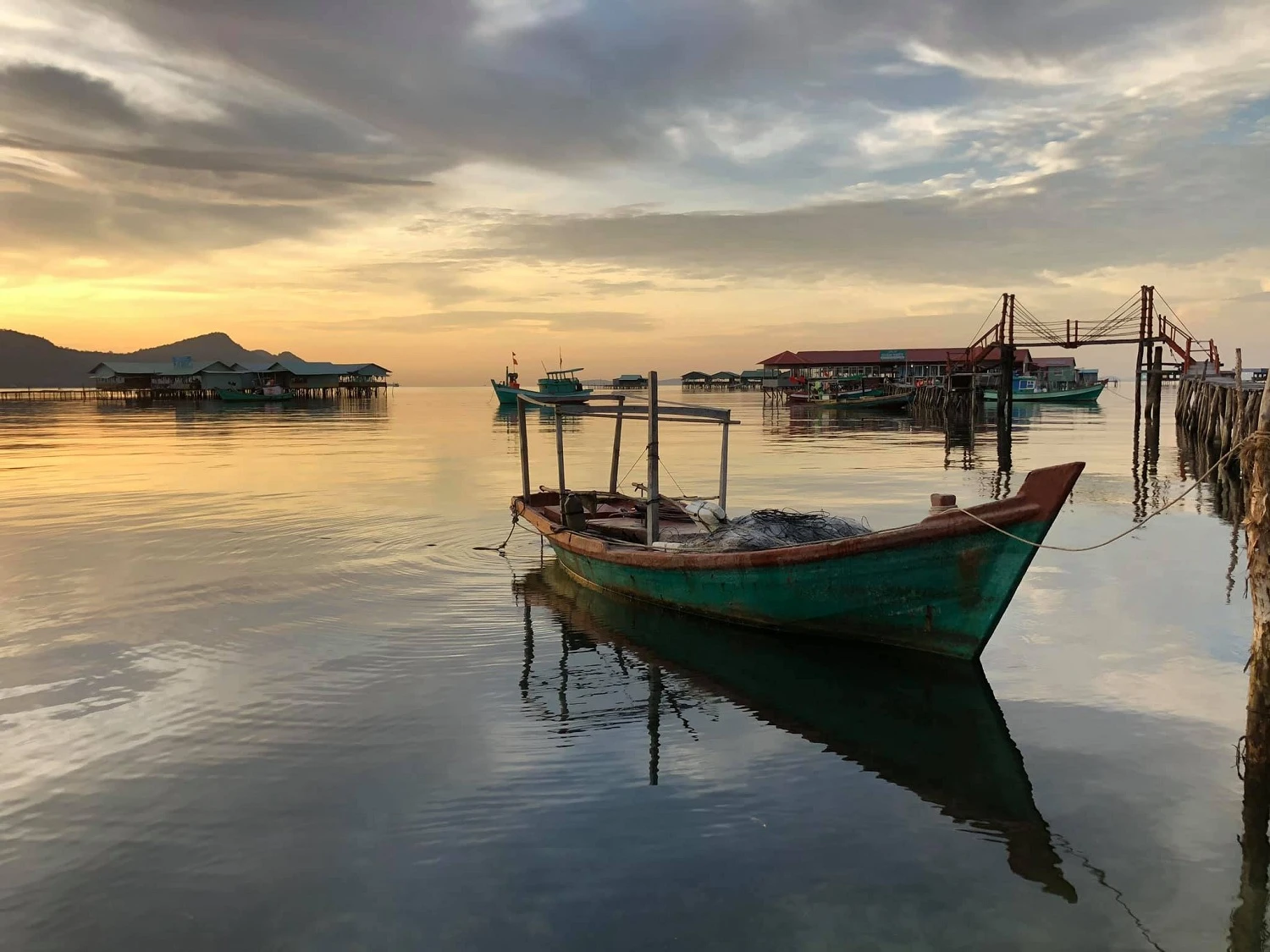
Known affectionately as the “Starfish Kingdom” of the Pearl Island, Rach Vem Fishing Village is an ideal getaway for travelers seeking tranquility and authentic coastal heritage. Keep the following practical tips in mind to ensure a smooth and rewarding visit.
Regarding visiting hours, Rach Vem is an active residential fishing community rather than a gated commercial attraction, so it welcomes visitors every day of the week with no entrance or sightseeing fees. For the best experience, plan your visit during the dry season, when the sea is calm, the water is at its clearest, and starfish gather in greatest numbers along the white sandbars. Avoid visiting during stormy weather or rough seas to ensure safe boat transfers and water activities.
Getting to Rach Vem from central Phu Quoc (typically departing from Duong Dong) requires a bit of preparation. The best route heads north along Nguyen Trung Truc Street; after passing the Cua Can area, the road winds through primeval forest terrain. While the surrounding woodland scenery is magnificent, the final stretch of red-dirt track leading into the village is bumpy with several sharp curves, making a motorbike the most agile choice for confident riders. If you are traveling with family or a larger group, hiring a private car with an experienced local driver is the safest and most comfortable option.
When choosing what to wear, keep in mind the village’s coastal layout and long wooden boardwalks leading to the floating restaurants. Opt for lightweight, breathable, moisture-wicking clothing paired with strapped sandals or athletic shoes with solid grip to prevent slipping on damp planks. Because Rach Vem is also home to shrines honoring the Whale God (Nam Hai) and founding village ancestors, visitors should dress modestly and respectfully when entering sacred grounds, honoring the local maritime beliefs and heritage of the fishing community.
An essential rule for protecting this natural treasure is never to lift starfish out of the water for photos. Removing them from the sea quickly suffocates them and threatens their survival. Practice responsible travel by admiring and photographing them respectfully from above the water. Additionally, because Rach Vem remains a working traditional fishing village, please help protect the marine environment by packing out all trash and supporting local livelihoods—such as dining on fresh seafood at the family-run floating restaurants—which directly sustains the community that has called these shores home for generations.
To enjoy a seamless getaway and experience the full beauty of Rach Vem Fishing Village without worrying about arranging transportation, admission logistics, or itineraries, travelers can choose VDS Travel’s premium all-inclusive Kien Giang tour packages. Each itinerary is thoughtfully timed to put you at top photo spots when the scenery is at its most radiant, accompanied by knowledgeable local guides well-versed in regional heritage alongside top-tier hotel accommodations and dining standards.