Perched proudly on the Moc Chau Plateau at an elevation of 1,050 meters above sea level, Ban Ang is far more than a scenic stopover; it is a living heritage entity where Devonian-era geology intertwines with centuries of Thai ethnic cultural sediment. Located in Dong Sang Commune, Moc Chau District, Son La Province, Ban Ang commands an auspicious geographical setting likened by traditional feng shui scholars to a rare “sacred land” shaped by the classic “mountain-backed, water-facing” formation. Behind the village, undulating limestone mountain ranges serve as a sturdy protective backdrop shielding it from harsh winds, while in front, a crystal-clear natural lake acts as a bright courtyard basin—channeling harmonious energy and bringing prosperity and peace to the local community.
From a historical perspective, this land was recorded in official chronicles such as Dai Nam Nhat Thong Chi under the name Muong Sang—a strategic trade gateway and vital transit hub linking the rugged Northwest region with the bustling imperial capital of Thang Long. Human presence here stretches back well beyond medieval annals into prehistoric times. Artifacts such as stone axes and coarse pottery shards excavated at Chi Day Cave—an archaeological site in the vicinity—attest to the ancient settlement of early Vietnamese inhabitants. Its distinctive karst geology, honeycombed with majestic cave systems, formed a natural fortress that preserved invaluable intangible cultural heritage, including epic Khap folk chants, traditional Xoe circle dances, and the ancient Thai script (Lai Tay)—living traditions cherished as family heirlooms by the Thai community in Ban Ang.
Ban Ang’s beauty is further enriched by the harmony between untamed nature and thoughtful human stewardship. Though systematically planned and cultivated since the 1950s, the Ban Ang Pine Forest has become an iconic visual landmark, fostering a cool, temperate microclimate year-round. The quiet rustling of towering pines over the glassy lake surface creates a meditative sanctuary where time seems to stand still. Above all, the soul of this land is elevated by the legend of “Nang Ban”—an enduring symbol of faithful love and noble self-sacrifice. Her story is more than folklore; it is the unifying thread shaping the cultural identity and spiritual consciousness of the local people. Every branch and blade of grass in Ban Ang breathes history, standing testament to a land blessed not only with dramatic scenery but also with profound spiritual depth—an ethnic cultural heritage worthy of preservation and reverence in Vietnam’s journey toward sustainable development.
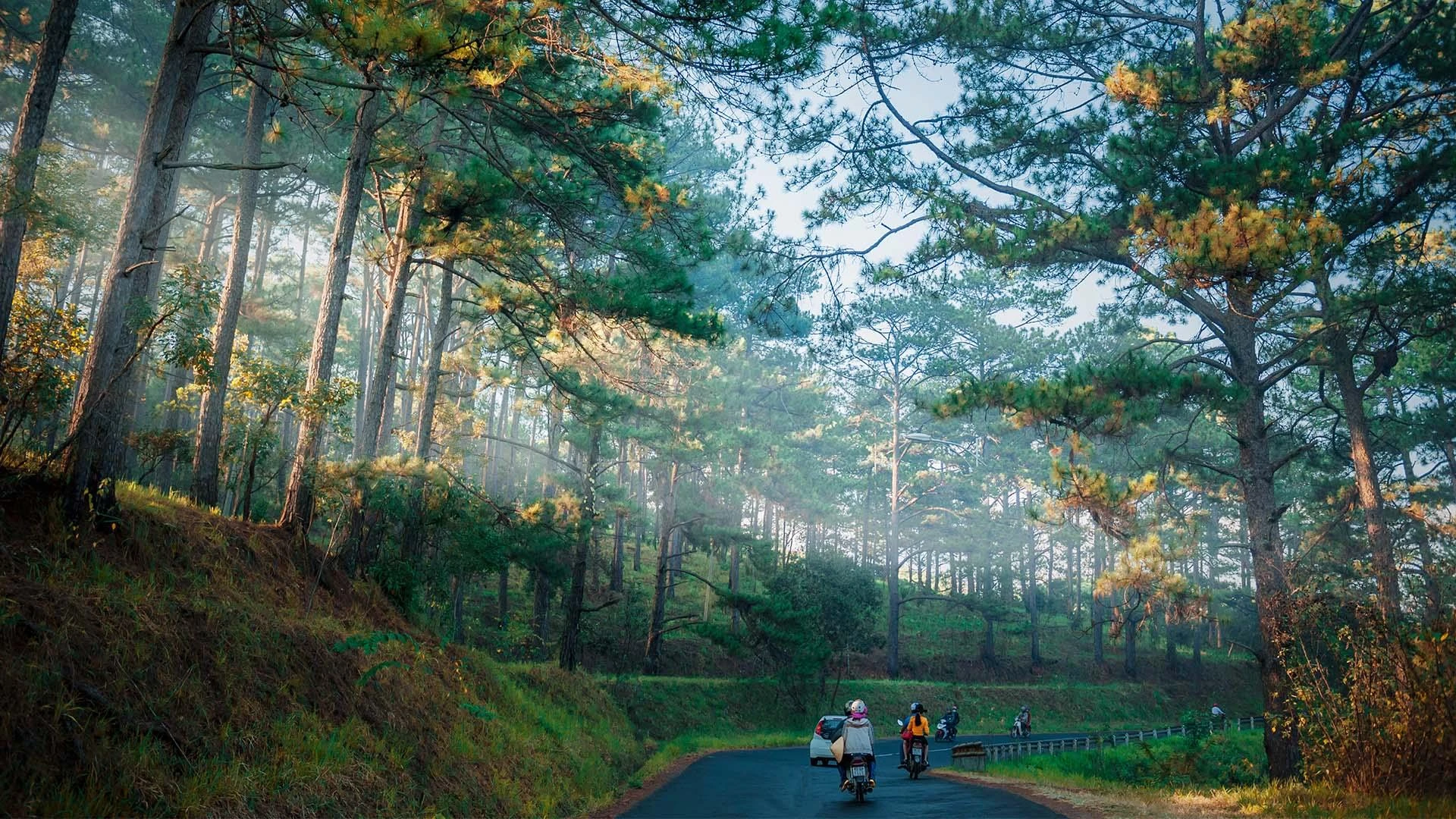
Ban Ang Pine Forest is not merely an ecological buffer zone, but a natural architectural masterpiece arranged by creation in effortless equilibrium. Upon stepping inside, visitors are immediately captivated by thousands of needle-leaved pines soaring straight toward the sky like sturdy natural pillars. Its magic lies in how the interlocking canopies filter sunlight into shimmering golden ribbons, casting dappled patterns across a thick carpet of fallen pine needles and creating an atmosphere that is tranquil, contemplative, yet brimming with life. The limestone plateau terrain forms gentle slopes laced with winding trails that lead travelers deep into the heart of the woods, where the air stays ideally humid and fragrant with pure, resinous pine scent.
A signature architectural highlight of Ban Ang is the seamless blend of natural scenery and traditional Thai stilt houses. Built of timber with warm brown tiled roofs and distinctive khau cut gable ornaments rising amid the forest, these homes never disrupt the woodland serenity—instead, they become an organic part of the landscape. Intricate carvings adorning the beams and pillars reflect the refined aesthetic sensibility of local artisans, with every motif telling a story of nature and spiritual belief. Situated right at the forest’s edge, Ban Ang Lake acts like a colossal mirror reflecting the grandeur of the limestone peaks and towering pines, completing a textbook “mountain-backed, water-facing” feng shui tableau that instills deep inner calm in everyone who visits.
To capture “million-dollar view” photographs in Ban Ang, professional photographers favor two standout vantage points. The first is the wooden bridge along the lakeshore at dawn. As the first rays of morning sun pierce through delicate mist hovering over the water, the light creates an ethereal Tyndall effect, illuminating the silhouettes of pine trees mirrored in the glassy surface—the golden hour for capturing Ban Ang’s pristine purity. The second spot lies deep within the core of the pine forest along its gently sloping trails. At sunset, as sunlight shifts to warm amber-gold tones, slanting beams cut through the foliage in brilliant shafts, highlighting the rugged bark textures and needle-strewn ground underfoot. This angle rewards patience as light “dances” between the trunks, yielding photographs rich in depth and emotion.
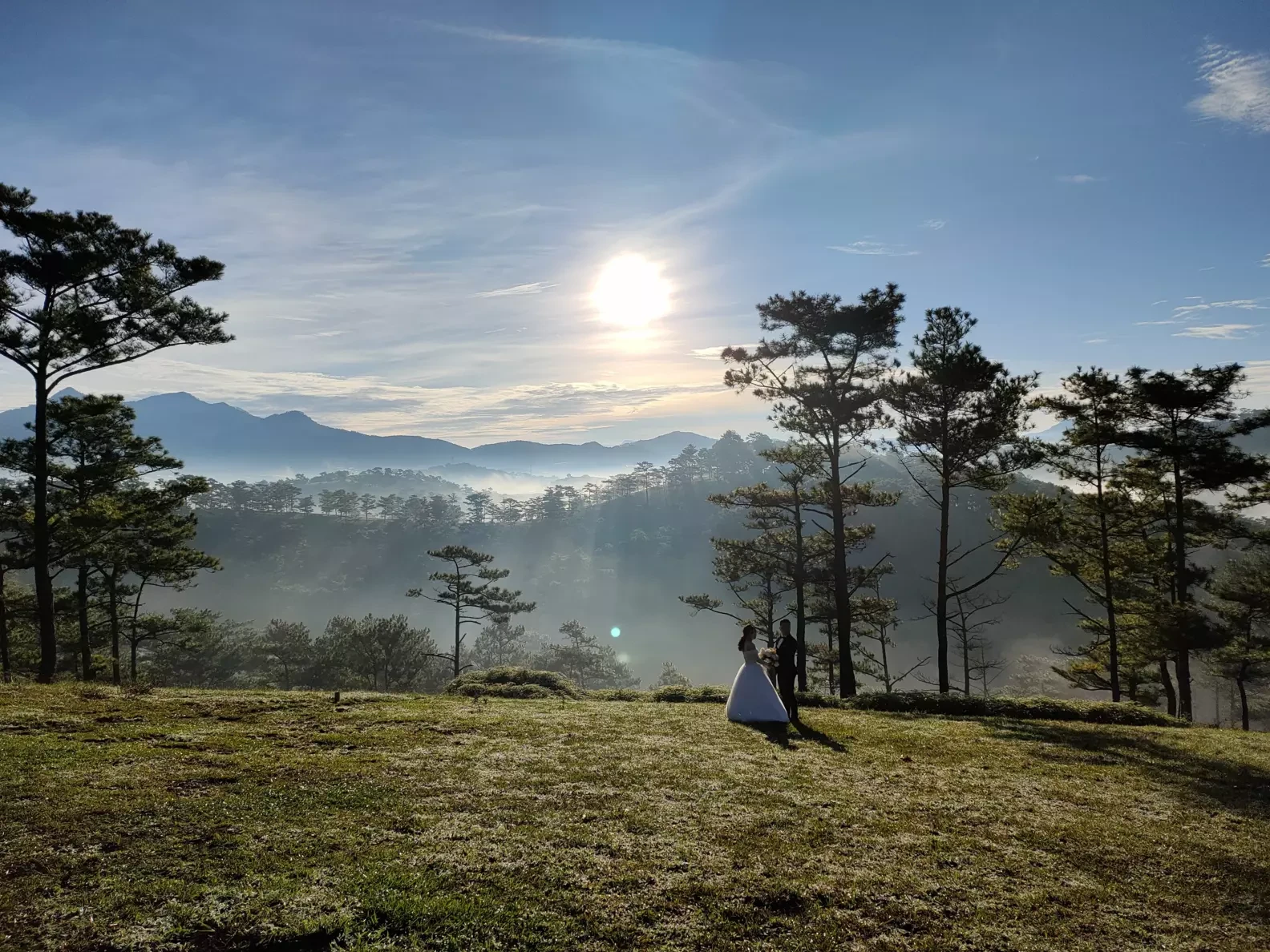
The union of indigenous stilt-house architecture, majestic pine forest, and mirror-calm lake turns Ban Ang into a natural film set without a single bad angle. Whether you are a photography lover seeking stillness or a traveler yearning to reconnect with nature, Ban Ang delivers beauty that is at once grand and intimate. Every corner—from rustic wooden fences to pine-needle-carpeted pathways—testifies to a harmonious partnership between human care and nature’s generosity, creating a scenic heritage worthy of its title as the “Da Lat of the Northwest.”
Stepping into Ban Ang, visitors do not simply enter a tourist attraction—they touch a living culture breathing amid the highlands. The first and most unforgettable impression is the sheer sense of awe standing beneath endless stands of pine. Straight trunks rise proudly like pillars connecting earth and sky, forming a verdant wall that shuts out the noisy outside world and encloses the plateau’s pure serenity. In the early morning, while wisps of mist still cling to the pine needles, you can stroll leisurely along woodland paths, listening to the wind sighing through the boughs like an epic mountain ballad, before Ban Ang Lake suddenly opens before your eyes—a giant mirror reflecting clouds and sky, so still you can almost hear your own heartbeat.
Boating on the lake is an unmissable experience to fully appreciate the auspicious minh duong water-basin setting chosen by forebears generations ago. As your paddle gently ripples the surface, you feel as though you are drifting inside a traditional ink-wash painting where the boundary between reality and dream grows thin. Gazing up from the middle of the lake toward the rolling limestone peaks, it becomes immediately clear why this valley is revered as a place of converging vital energy where humanity and nature become one. For active explorers, trekking to nearby caves—especially around the Chi Day Cave archaeological site—delivers an exhilarating sense of discovery. Moss-covered stone steps and sheer cliff faces bearing traces of ancient Vietnamese settlers weave a journey across time, leading travelers back to distant cultural roots.
Spiritual stillness also blossoms during quiet moments of cultural immersion within the local community. Here, visitors can learn about Thai ancestor worship traditions, listen to resonant Khap melodies, and admire vibrant handwoven brocade attire. Culture here does not live on book pages—it thrives inside every wooden stilt home and in the warm welcome of villagers offering aromatic ruou can (traditional jar rice wine). The genuine hospitality and gentle smiles of the Thai people act like an invisible thread drawing travelers close, making you feel not like a stranger, but like a returning family member welcomed home.
Your Ban Ang experience would be incomplete without savoring its celebrated regional cuisine. After a full day of exploration, gathering around a glowing hearth to enjoy fragrant bamboo-tube sticky rice (com lam), savory grilled stream fish infused with mountain herbs, and smoky dried buffalo meat spiced with fiery mac khen forest pepper is pure bliss. Every dish embodies the Thai philosophy of life—a distillation of earth, water, and dedicated craftsmanship. In that cozy setting, as traditional Xoe music begins to play, your spirit feels light, everyday worries melt away, and all that remains is a deep bond with Mother Earth in Moc Chau. With its unspoiled beauty and cultural depth, Ban Ang is truly a treasured destination where everyone can find a quiet pause to cherish Vietnam’s living heritage.
To make your exploration of Ban Ang seamless and rewarding, keep a few practical details in mind to get the most out of your highland visit. The Ban Ang Pine Forest Tourist Area is open seven days a week—including weekends and public holidays—from early morning until late evening. These flexible operating hours allow visitors to plan freely, whether arriving at daybreak to watch mist drift across the lake or lingering until sunset paints the old-growth pines crimson.

Regarding admission, Ban Ang Pine Forest posts official ticket prices at the entrance gate to fund landscape upkeep and environmental conservation. Rates are divided into adult and child categories and remain very reasonable given the rich experience offered. For add-on activities such as renting bicycles to ride around the lake, overnight camping, or renting traditional Thai ethnic attire for photography, simply check in at the service counters inside the grounds. Purchasing an entrance ticket is not only standard protocol, but also a meaningful contribution toward preserving the natural and cultural heritage of the local Thai community.
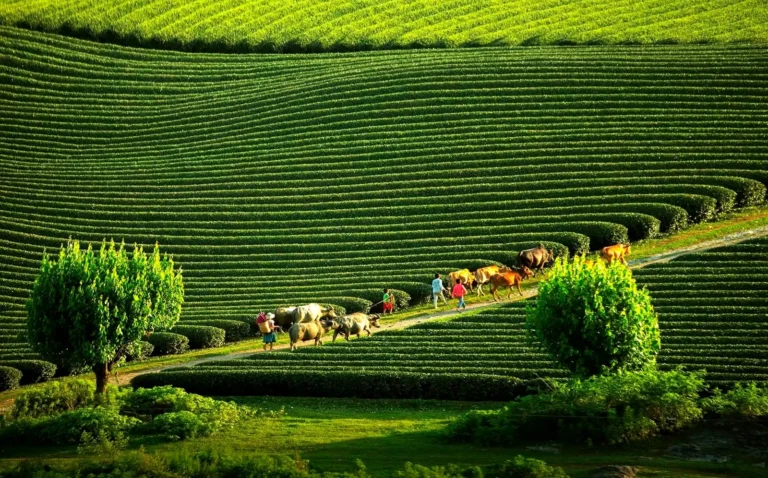
Getting to Ban Ang from central Moc Chau Town is effortless by motorbike or private car. The well-paved road winds through lush green tea hills and takes only about 10 to 15 minutes. If you do not have your own vehicle, local taxis and motorbike taxis (xe om) in town are readily available at stable fares. For travelers who enjoy active sightseeing, renting a bicycle in town and pedaling leisurely along the country lane into the village is a poetic way to soak up the crisp plateau air.
When visiting Ban Ang—especially sacred cultural areas and traditional villages—be mindful of your attire. While there is no strict dress code, wearing neat, modest clothing shows respect for local customs and Thai spiritual traditions. Furthermore, because the limestone plateau terrain includes sloped paths and uneven ground, opt for athletic sneakers or flat shoes with reliable traction to stay safe and comfortable while walking.
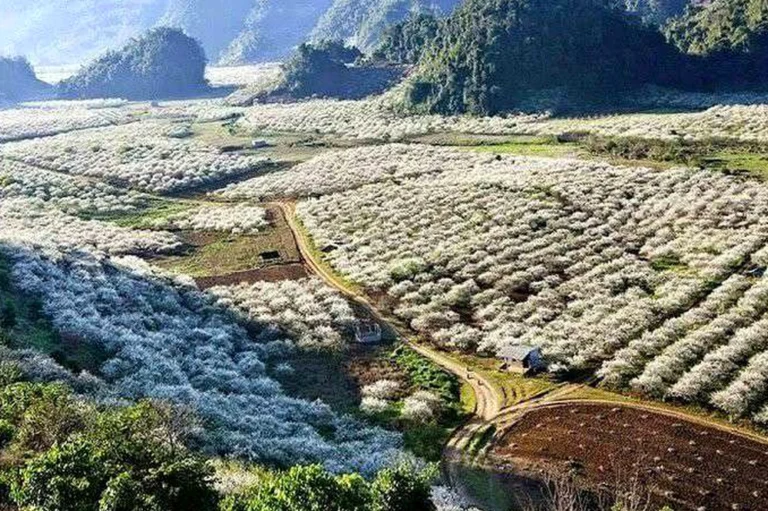
The best time to visit Ban Ang is during the dry season months, when crisp, cool weather and clear blue skies accentuate the beauty of the pine forest and tranquil lake. That said, every season in Moc Chau brings its own distinct charm—from pure white plum blossoms and violet ban flowers in spring to cool summer escapes from lowland heat. Whenever you choose to visit, please practice responsible tourism by keeping the environment clean, never littering, and respecting residents’ daily living spaces. Thoughtful care from every traveler is the key to ensuring Ban Ang’s pristine beauty and cultural legacy endure for generations to come.
To enjoy a worry-free holiday and take in the full splendor of Ban Ang Pine Forest without the hassle of arranging transportation, admission tickets, or daily itineraries, travelers can choose VDS Travel’s premium all-inclusive Son La tour packages. Every itinerary is thoughtfully timed so you arrive at each scenic spot when the landscape is at its most radiant, accompanied by knowledgeable local guides and top-tier hotel and dining standards.