Located roughly twenty kilometers southwest of central Paris, the Palace of Versailles stands like an immortal epic carved in stone, vividly reflecting the historical highs and lows and the zenith of power of the illustrious House of Bourbon. Before becoming the ultimate emblem of opulence for Western absolute monarchy, this land was originally little more than a desolate, marshy valley blanketed by dense forests teeming with wild game. In 1623, King Louis XIII, driven by a passion for extended hunting expeditions, commissioned architect Philibert Le Roy to build a modest hunting lodge (known in French as a pavillon de chasse). At that time, this rudimentary residence possessed a rustic charm, constructed primarily from plain red brick, white limestone, and thin black slate (ardoise) roof tiles—a humble structure that harbored no ambitions of ever becoming the epicenter of European politics.
The monumental turning point that forever altered the destiny of Versailles stemmed from the deep-seated obsession with absolute control harbored by the young King Louis XIV. The childhood of the “Sun King” was haunted by the terrifying specter of the Fronde—a series of civil wars led by rebellious nobles and the Parisian parliament, who had once stormed the royal palace and threatened his very life. Memories of treachery in the glamorous capital compelled the young monarch to seek an entirely new headquarters, far removed from the reach of rebellious aristocrats and street uprisings. In 1661, immediately following the death of his powerful Chief Minister Cardinal Mazarin and Louis XIV’s declaration of personal rule, the king resolved to transform his father’s unassuming hunting lodge into an unassailable fortress of absolute authority, inaugurating an architectural megaproject unprecedented in Western history.
Under the masterly direction of First Architect Louis Le Vau, a revolutionary expansion project dubbed “The Envelope” (L’Enveloppe) was launched, artfully encasing Louis XIII’s original château within magnificent new stone wings built in the Italian classical style. The palace entered its most dazzling period of architectural expansion between 1678 and 1715, when the master architect Jules Hardouin-Mansart and his brilliant collaborator Robert de Cotte assumed command. Colossal wings for ministers and courtiers, the Great and Small Stables (Grandes et Petites Écuries), and the masterpiece of the Royal Chapel (Chapelle Royale) took shape one after another. Above all, the crowning glory of this era was the creation of the resplendent Hall of Mirrors, where natural sunlight was multiplied across hundreds of reflective panes, forging a luminous universe dedicated to glorifying the sovereign’s supreme status.
By 1682, the French royal court and the entire seat of central government had officially relocated to Versailles. The estate swiftly became a grand theater for displays of supreme power, epitomized by the legendary multi-day festival “The Pleasures of the Enchanted Island” (Plaisirs de l’Île enchantée), featuring plays by Molière and music by Lully. Louis XIV transformed court life into an intricate web of rigid etiquette, ensnaring the nobility in a vortex of extravagance to neutralize any seeds of rebellion. Yet the relentless tide of history did not stop at the golden age of Bourbon royalty. When the storm of the French Revolution erupted in 1789, the royal court collapsed, leaving the magnificent palace abandoned and teetering on the brink of ruin.
Versailles was truly reborn in a new role in 1837, when the progressive King Louis-Philippe I decided to convert the former feudal stronghold into the Museum of the History of France, honoring all of the nation’s glorious victories regardless of dynasty. Within these very halls steeped in centuries of triumph and upheaval, numerous world-altering chapters of history were written—most notably the signing of the historic Treaty of Versailles in 1919 inside the Hall of Mirrors, which formally ended World War I and redrew the global geopolitical map.
The genesis of the Versailles complex rested upon a daunting geographical paradox: a low-lying, marshy plateau (marécageux), barren and lacking natural groundwater sources, situated twenty kilometers southwest of central Paris. What had once been King Louis XIII’s modest brick-and-stone hunting retreat was chosen by his successor, the Sun King Louis XIV, to serve as a tangible manifesto of supreme absolutist authority. In the eyes of seventeenth-century royal planners, the treacherous, muddy terrain was not an obstacle, but a golden opportunity to demonstrate the power to reshape the realm, subduing the chaos of nature through classical, rational order.
At the heart of Versailles’ master plan lies an immutable East–West optical axis, deeply reflecting the cosmology and spatial philosophy of the Western Baroque era. This grand axis draws an unbroken straight line across the landscape: originating from three avenues converging from the direction of Paris, slicing through the gleaming gilded gates of the Courtyard of Honor (Cour d’Honneur), passing directly through the center of the King’s Bedchamber on the palace’s first floor, and stretching endlessly toward the horizon along the Grand Canal. This alignment orchestrated a flawless visual ritual: the radiant morning sun rising in the east awakened the monarch’s chamber of power, while at dusk, the setting sun sank slowly along the waters of the Grand Canal, blending the golden twilight with the aura of the sovereign.
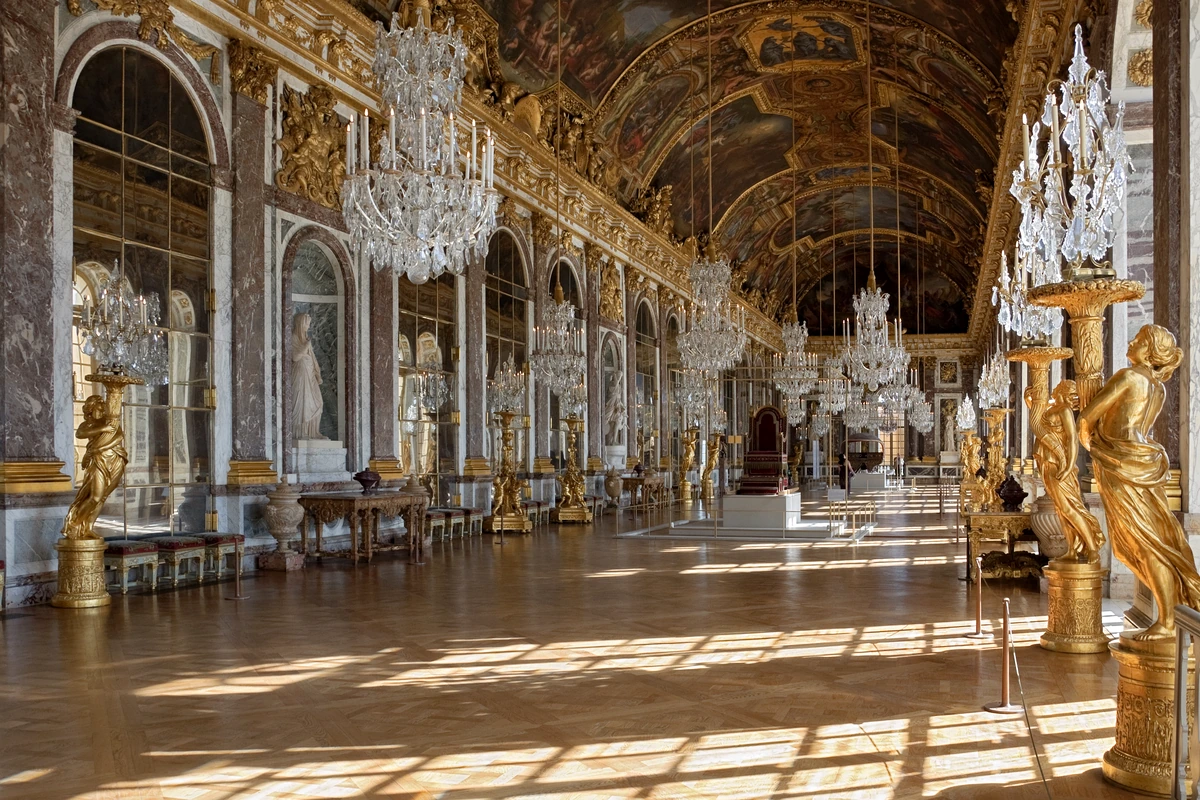
Beginning in 1662, the genius landscape architect André Le Nôtre devoted several decades to redefining the standards of royal gardens, elevating the art of the French formal garden (jardin à la française) to the pinnacle of human achievement. Applying precise principles of mathematics, optics, and analytic geometry, Le Nôtre transformed a vast open expanse into a mesmerizing flat sculpture. Intricately trimmed parterre lawns resembled fine embroidery crafted by royal tailors, arranged in absolute symmetry across vibrant floral beds. To break the monotony of such colossal scale, Le Nôtre deftly employed optical illusions and forced perspective; distances spanning several kilometers appeared compressed from a panoramic vantage point, yet unfolded with endless surprises as visitors drew closer. Hidden behind neatly sheared hornbeam hedges (charmilles) lay a network of bosquets—secret open-air green rooms housing outdoor theaters, intricate labyrinths, and babbling fountains designed for the private revelries and ceremonies of the Versailles aristocracy.
The crowning focal point at the far end of the landscape axis is the cruciform Grand Canal, whose main branch stretches 1,500 meters like a giant mirror swallowing the skies of Île-de-France. Yet the greatest engineering challenge for a marvel perched atop a dry plateau was securing enough water to operate hundreds of fountains simultaneously. To fulfill the Sun King’s ambition of conquering nature, the French crown mobilized the era’s foremost engineers to execute an unprecedented technological feat: constructing the Machine of Marly (Machine de Marly), completed in 1684 along the banks of the River Seine. Powered by fourteen colossal waterwheels and a complex network of pistons, this mechanical behemoth pumped thousands of cubic meters of river water uphill over a hundred meters in elevation, channeling it across multi-tiered stone aqueducts into Versailles’ underground reservoirs. Tamed water was far more than a decorative landscape feature; it stood as irrefutable proof of human supremacy over the laws of natural topography.
Viewed from a geometric and spatial perspective, the architectural ensemble of Versailles represents the ultimate synthesis of the disciplined rationalism of French Classicism and the dramatic grandeur of the European Baroque movement. The palace’s entire facade exudes strict order with imposing Corinthian colonnades, crisp horizontal divisions, and absolute symmetry radiating infinitely along the east-west axis. To erect this stone marvel across the plains of Île-de-France, tens of thousands of masons and artisans quarried millions of blocks of fine Lutetian limestone from the underground mines of Saint-Leu and dense Liais stone from Conflans. Stepping through the doors into the interior, exterior rationalism gives way to a sumptuous symphony of luxury materials, where walls are clad in rare polychrome marbles transported from the farthest reaches of the kingdom: white-veined red Rance marble from Flanders, green Campan marble from the Pyrenees, prized yellow-and-purple-veined Sarrancolin marble, and mysterious black marble quarried from the newly annexed region of Franche-Comté.
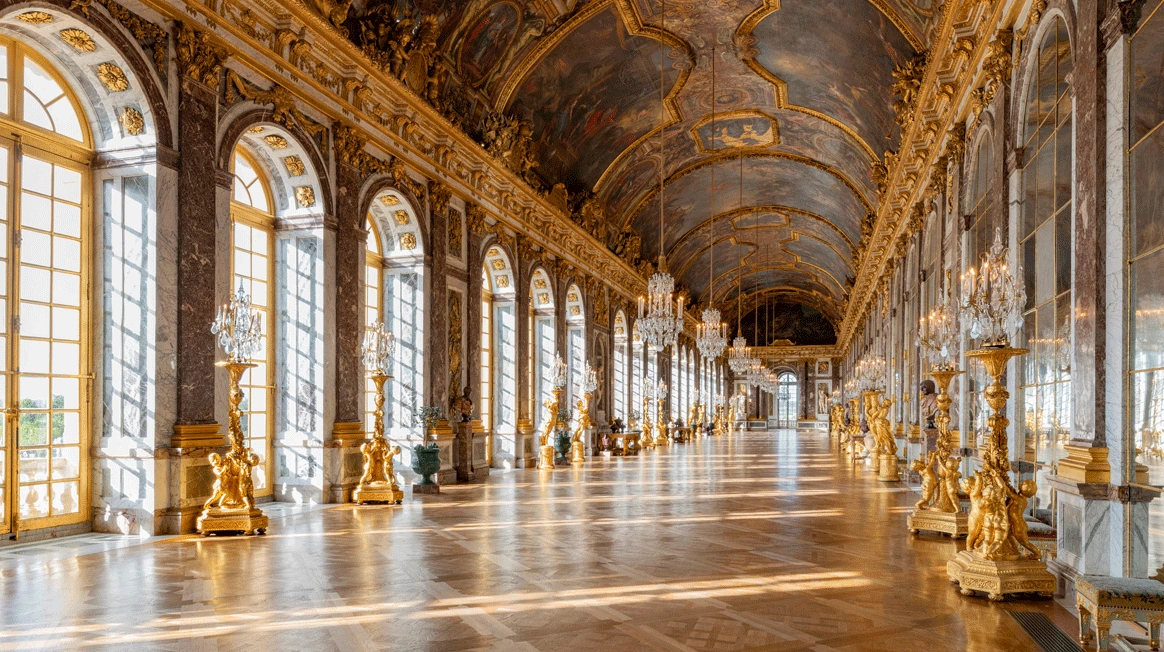
The dazzling centerpiece of the palace’s entire spatial layout is the Hall of Mirrors (Galerie des Glaces), the enduring masterpiece begun in 1678 and completed in 1684 by First Royal Architect Jules Hardouin-Mansart. Occupying the entire second floor of the central wing facing the western gardens, this monumental ceremonial gallery boasts astonishing dimensions—measuring 73 meters in length, 10.5 meters in width, and rising 12.3 meters to its vaulted ceiling—serving as a vital artery linking the War Salon (Salon de la Guerre) to the north with the Peace Salon (Salon de la Paix) to the south. Hardouin-Mansart’s design was intended not merely as a passageway between the King’s and Queen’s apartments, but as an unparalleled political stage where foreign ambassadors and aristocrats alike would be awestruck by the supreme majesty of the Bourbon throne.
The pinnacle of optical craftsmanship in the Hall of Mirrors is showcased in its flawless symmetrical arrangement of 17 grand arched windows overlooking the royal gardens, positioned directly opposite 17 matching arches inlaid with 357 massive crystal mirrors. In the seventeenth century, mercury-backed glass mirrors were the most expensive luxury commodity in Europe, tightly monopolized by the Republic of Venice under draconian technological secrecy laws. Determined to assert France’s economic self-sufficiency and industrial prowess, Superintendent of the King’s Buildings Jean-Baptiste Colbert orchestrated a daring industrial espionage operation, luring master glassmakers from the island of Murano to Paris to establish the Royal Manufactory of Mirror Glass (Manufacture royale de glaces de miroirs, the predecessor of the renowned Saint-Gobain industrial group). Assembled seamlessly from flat, metal-backed glass panes, these 357 mirrors captured the natural sunlight streaming in from the gardens, doubling the visual depth of the hall and creating a radiant spectacle akin to a galaxy of shimmering light set against gleaming gold leaf.
Beyond its mechanical and optical wonders, the barrel-vaulted ceiling of the Hall of Mirrors stands as an unrivaled monument of painting, designed and executed under the direction of Charles Le Brun, First Painter to the King. Spanning more than 1,000 square meters are 30 monumental compositions seamlessly blending traditional fresco techniques with oil painting on mounted canvas. Departing from conventional medieval religious iconography, Le Brun boldly chronicled the glorious first 17 years of Louis XIV’s reign across the vault through a dense tapestry of Greco-Roman mythological allegory. The Sun King himself is personified as Apollo, god of light, Mars, god of war, or an invincible monarch personally commanding military campaigns across the Rhine, signing the Treaties of Nijmegen, and reforming the kingdom’s administration and commerce. The masterly interplay between these dramatic ceiling paintings, gilded stucco reliefs sculpted by Coysevox and Tuby, and the sparkling glow of Bohemian crystal chandeliers transformed the Hall of Mirrors into the ultimate archetype of Baroque art serving absolute royal power.
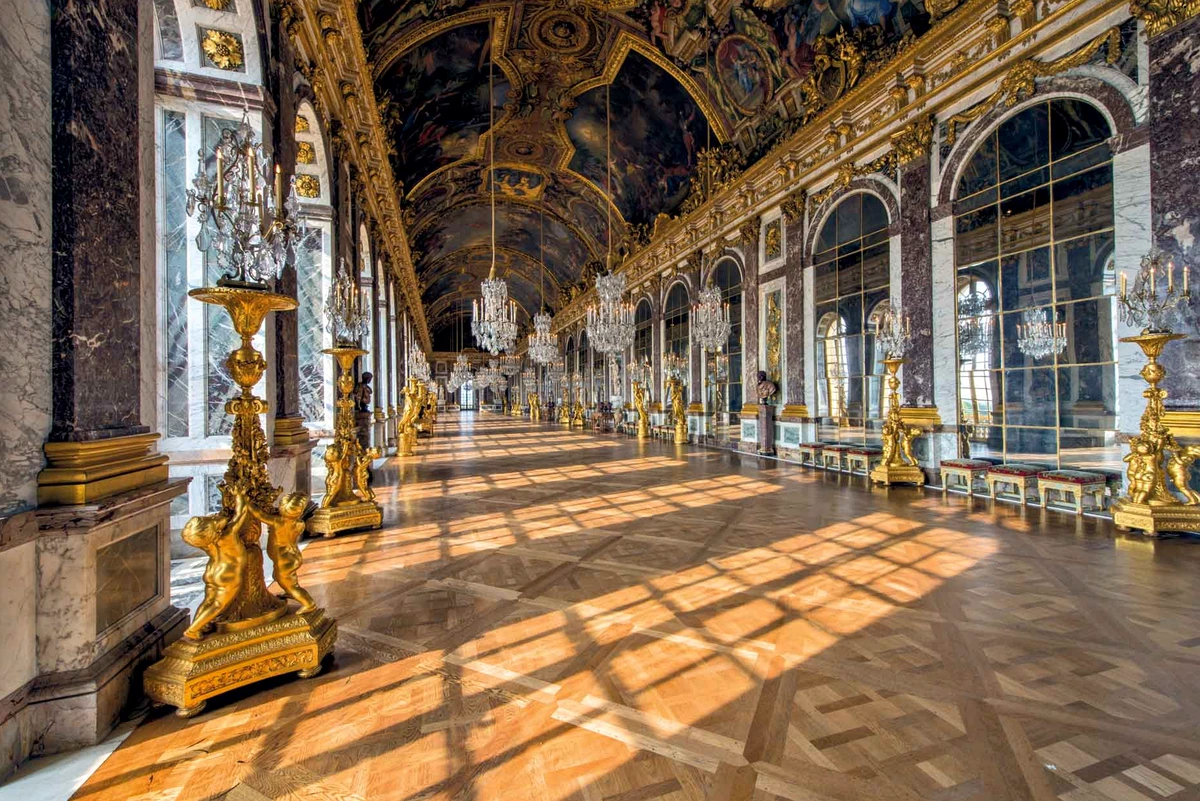
When twilight descends over the Île-de-France region, the Palace of Versailles does not drift into slumber; instead, it enters another enchanting chapter of royal pageantry and Baroque aesthetics. Through the eyes of Louis XIV, darkness was never the end of the day, but a mysterious velvet backdrop against which the Sun King could showcase the absolute dominion of light. The royal estate was transformed into a visual theater of unprecedented grandeur. Thousands of premier white beeswax candles were lit simultaneously atop intricately chased solid silver candelabra, reflecting off famed Bohemian crystal chandeliers and converging inside the Galerie des Glaces. Within this resplendent Hall of Mirrors, the 357 glass panes caught every flickering flame, multiplying them into an infinite field of radiance that blurred the boundary between reality and dream, turning the hall into a symbol of eternal brilliance that never fades.
Outside the palace walls, the tranquil waters of the Grand Canal became an immense mirror reflecting aquatic galas and royal firework displays that captivated the realm. Beneath the nocturnal skies of Versailles, the stirring, triumphant melodies of court composer Jean-Baptiste Lully alongside the ethereal harmonies of Michel-Richard de Lalande echoed through every corner of the royal gardens. Bursts of vibrant fireworks blossomed overhead, showering glittering sparks onto the illuminated water below in perfect harmony with horns, oboes, and violins played aboard gliding royal barges. This grand symphony of sound and pyrotechnics was no mere aristocratic indulgence, but a profound mythological metaphor: the eternal, triumphant victory of Apollo—personification of Light and the Sun King—over the chaos of darkness.
This magnificent legacy of visual artistry continues to live on and flourish intact through the Night Fountains Show (Grandes Eaux Nocturnes) held on balmy summer evenings. André Le Nôtre’s entire landscape masterpiece is awakened by contemporary lighting projections and crisp laser technology paired with flickering fire installations along manicured lawns and clipped yew alleys. Historic hydraulic marvels such as the Apollo Fountain and Latona Fountain spring to life in unison, sending shimmering, multicolored columns of water dancing gracefully to the cadence of classic Baroque overtures. The evening culminates in a breathtaking fireworks finale illuminating the horizon at the far end of the Grand Canal, granting modern visitors the very same sense of awe that foreign envoys once felt as they bowed in reverence centuries ago.
Alongside the outdoor water spectacle, the Royal Serenade (Sérénades Royales de la Galerie des Glaces) invites guests into the hushed, enchanting sanctum of the palace just before evening falls. Visitors are guided through sumptuous state apartments where dancers and performers dressed in seventeenth-century silk and velvet bring to life stately menuet dances, noble fencing displays, and the crystalline notes of the harpsichord. Warm candlelight from crystal chandeliers casts dancing shadows across Charles Le Brun’s magnificent ceiling frescoes, making the Olympian gods appear to stir with every rustle of brocade and silk. Nighttime at Versailles is therefore not a suspension of time, but a multisensory masterwork where supreme royal authority and the soul of French artistry shine eternal.
Under the Ancien Régime, dining at the Palace of Versailles was far more than mere sustenance; it was elevated into a highly theatrical political ritual known as the Grand Couvert. Within a candlelit hall brimming with splendor, the supper of Sun King Louis XIV and the royal family was conducted with solemn precision before hundreds of assembled courtiers and the highest-ranking nobles. Every gesture—from wine tasting and raising a goblet to carving meats and serving dishes according to the strict hierarchy of service à la française—was choreographed to project absolute royal authority. Departing from the medieval penchant for heavy, pungent spices used to mask ingredients, Versailles cuisine under Louis XIV sparked a pivotal turning point for French haute cuisine, breaking away from rustic ostentation to celebrate the pure, natural freshness of local produce through refined, nuanced layers of flavor.
The lifeblood nourishing those illustrious royal banquets sprang from the Potager du Roi—the King’s Kitchen Garden—an agronomic masterpiece created between 1678 and 1683 by Royal Garden Director Jean-Baptiste La Quintinie. On painstakingly reclaimed marshland, La Quintinie invented a system of sun-absorbing limestone heating walls paired with subterranean fermenting manure hotbeds, engineering an artificial microclimate to defy harsh seasonal weather. Thanks to this agricultural marvel that astonished Europe at the time, even in the dead of winter when snow blanketed Île-de-France, the king’s Grand Couvert table overflowed with tender asparagus spears, juicy strawberries, sweet ripe figs, and fragrant cantaloupes harvested months ahead of nature’s calendar—affirming the supreme sovereignty of a monarch who commanded even the seasons.
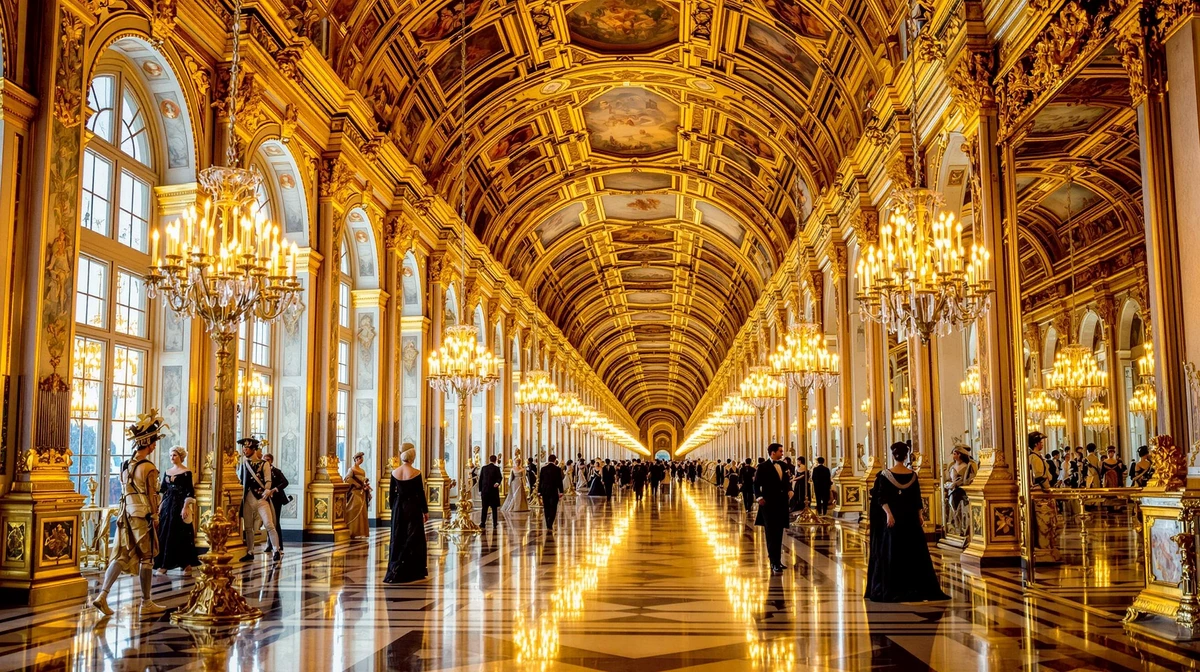
The culinary philosophy of the Versailles court was brought to life through the refined techniques of elite royal chefs, who skillfully extracted pure essence from crystal-clear slow-simmered meat broths, delicate wild mushroom reductions, and especially the famed river crayfish coulis. Crayfish coulis was a sublime marriage of sweet freshwater crustaceans harvested from abundant streams and rich Normandy butter, yielding a velvety sauce that cloaked poached fish and braised meats without ever overpowering their natural flavors. Each dish was ceremoniously presented on solid silver platters engraved with intricate royal coats of arms, before gradually transitioning into the golden age of Sèvres porcelain—adorned in royal cobalt blue and burnished 24-karat gold—turning every daily meal into an unmatched feast for both eye and palate.
Alongside savory dishes celebrating the finest regional terroir, Versailles court culture also witnessed the rise of rare, exotic beverages that sparked fashionable trends across Europe. Ever since Queen Marie-Thérèse of Austria introduced hot chocolate from the Spanish court to Versailles, the rich elixir made from ground cacao beans simmered with milk, cinnamon, and vanilla swiftly became a royal obsession, soon followed by the craze for aromatic black coffee. The culinary legacy of Louis XIV’s court continues to flow quietly through the heart of France today, alive in heirloom pastries, artisanal thick hot chocolate, and classic mother sauces reverently preserved by generations of chefs as an enduring testament to the pinnacle of Versailles gastronomy.
Embarking on a journey to explore the glorious domain of Sun King Louis XIV calls for thoughtful planning in both itinerary and pacing, as the Palace of Versailles is not merely a static museum, but a vast royal city situated roughly twenty kilometers southwest of central Paris. To reach this heritage complex, public transportation offers the most seamless and convenient option for international travelers. Visitors can board the suburban RER C train directly to the Versailles Château Rive Gauche station, which lies less than a leisurely ten-minute walk from the famed Courtyard of Honor gates. Additionally, regional Île-de-France rail lines provide scenic alternatives, including the Transilien L line departing from Paris Saint-Lazare to Versailles Rive Droite, or the Transilien N line running from historic Paris Montparnasse directly to Versailles Chantiers. Every route unveils sweeping views of the lush green belt surrounding the estate that witnessed centuries of French royal power.
Before setting out, booking tickets in advance is an essential requirement for anyone wishing to step past the gilded gates of the Bourbon dynasty. Estate management enforces strict timed-entry reservations via its official portal, chateauversailles.fr, to regulate visitor flow and protect the fragile historic interiors. Among the available ticket tiers, the all-inclusive Passport ticket stands out as the ultimate key, granting complete access to every facet of the domain. This pass unlocks entry to the grand Palace and its dazzling Hall of Mirrors, the refined Trianon estate—comprising the pink-marble Grand Trianon and the intimate Petit Trianon—as well as the Estate of Marie-Antoinette (Domaine de Marie-Antoinette), where the ill-fated queen built an idyllic rustic hamlet to escape suffocating court etiquette prior to the upheaval of 1789.
Regarding operating hours, the main Palace of Versailles welcomes visitors from Tuesday through Sunday, opening at 9:00 AM and closing at 6:30 PM during the peak tourist season. The entire palace interior closes every Monday for conservation, cleaning, and scholarly restoration work. Conversely, the sprawling 800-hectare royal gardens designed by André Le Nôtre remain open daily throughout the week, from 8:00 AM until 8:30 PM during sun-drenched summer months. To fully appreciate the majesty of the royal state apartments and stroll serenely past the mythological fountains, travelers should allocate at least four to five hours—or ideally dedicate an entire day—to immerse themselves in the regal atmosphere of the Baroque era.
Heritage conservation and security at Versailles are enforced at the highest level under the French Republic’s national Vigipirate security protocol. Visitors undergo thorough security screening at the Courtyard of Honor (Cour d’Honneur) before entering the main gates. Estate regulations strictly prohibit bulky luggage, large suitcases, oversized strollers, and professional camera tripods inside the main exhibition galleries. Most importantly, flash photography is strictly forbidden throughout all interior spaces; this inviolable rule protects Charles Le Brun’s priceless ceiling frescoes from light-induced degradation and prevents the delicate 24-karat gold leaf lining the plasterwork moldings from wearing away. Visitors are also strongly advised to wear comfortable walking shoes to navigate uneven cobblestone courtyards and expansive tree-lined avenues with ease.
Mastering every practical detail beforehand turns a visit to France’s most celebrated palace into an unrivaled cultural odyssey, where every architectural flourish and historical milestone comes vividly alive in the traveler’s imagination. To prepare seamlessly for exploring this monumental treasure trove without worrying about complex logistics, travelers can explore all-inclusive European tour packages thoughtfully curated to let you savor every glorious moment across the Old Continent in effortless comfort.