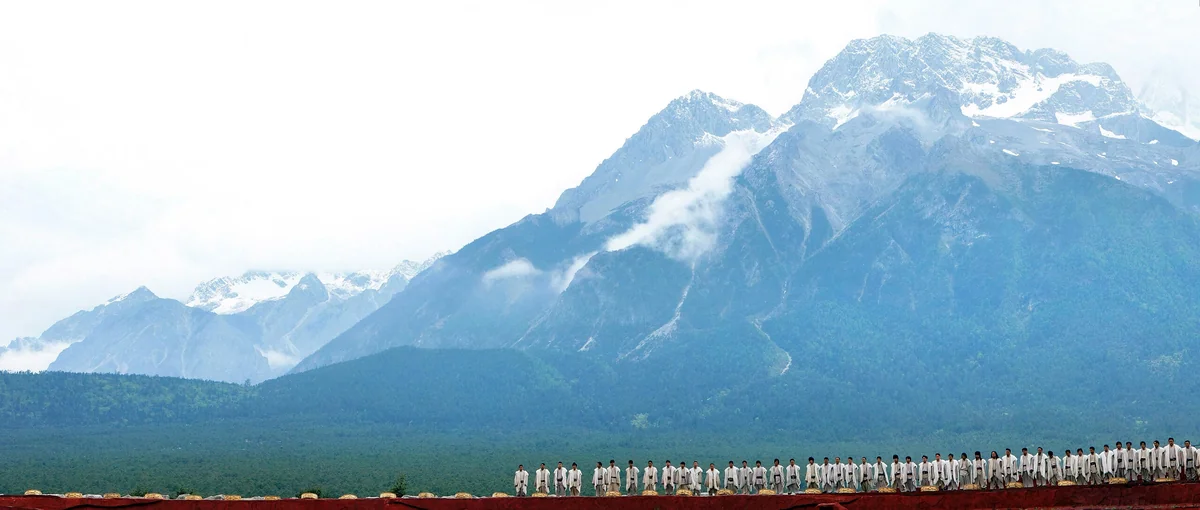
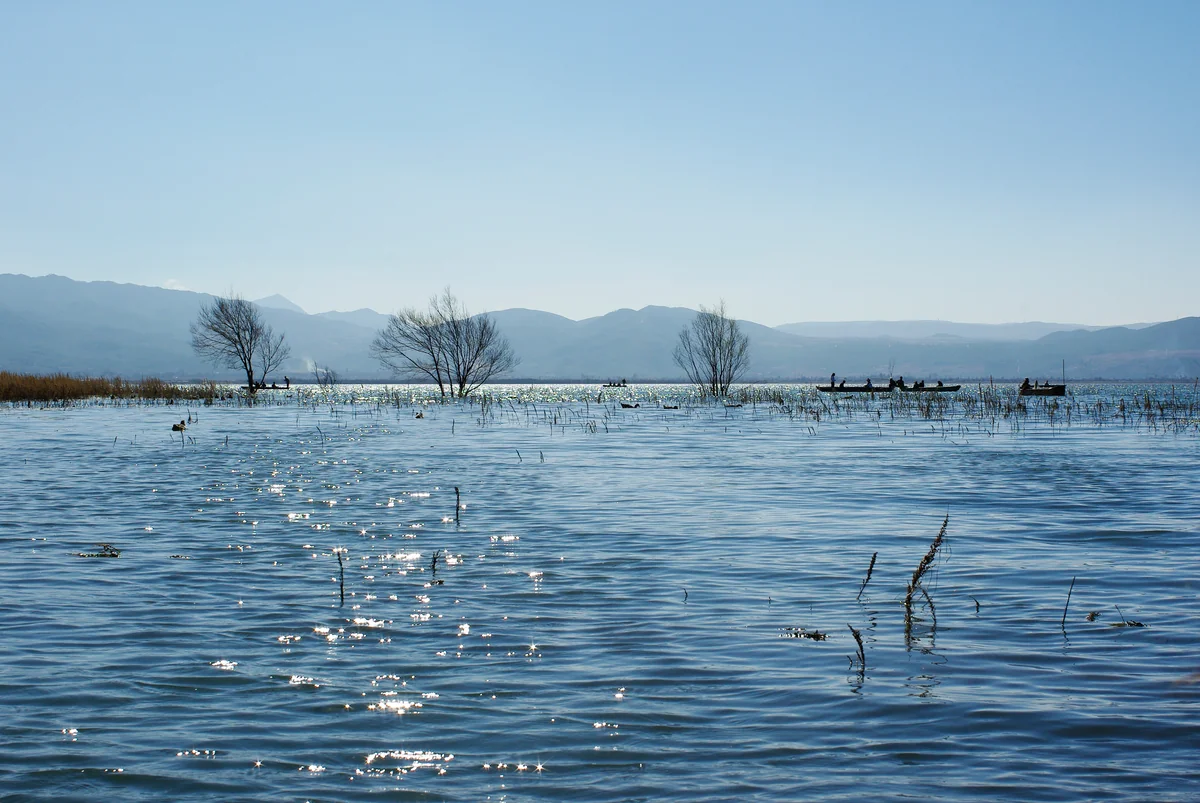
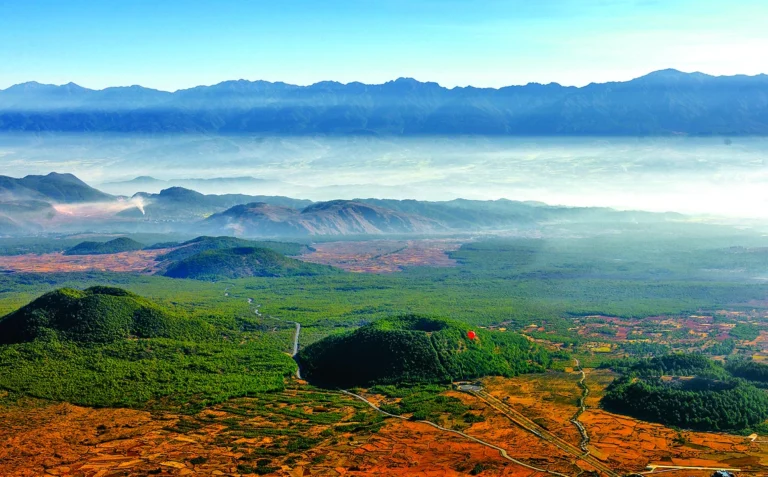
Erhai Lake occupies a pivotal and singular position on the Yunnan Plateau in China, stretching along a north–south axis across the counties and cities of the Dali Bai Autonomous Prefecture. With a natural water surface area of approximately two hundred and fifty square kilometers, it is the second-largest freshwater lake in Yunnan Province and serves as the ecological heart of an intricate mountain-and-river system. Sitting at an average elevation of roughly 1,970 meters above sea level, the lake fosters a distinctive highland temperate climate characterized by wide diurnal temperature swings and abundant solar radiation. Its basin was sculpted by tectonic fault movements during the Quaternary period, when massive geological shifts carved a deep graben trough between the towering Cangshan Mountains to the west and the Baina Plateau to the east. Viewed from above, the lake’s shoreline curves gracefully in the shape of a giant human ear—explaining the name “Erhai” (Ear Sea) bestowed upon this natural wonder by ancestors thousands of years ago. The pairing of the limestone Cangshan massif—with nineteen peaks exceeding four thousand meters and crowned in snow—with the vast basin of Erhai Lake has forged a complete geomorphological landscape where water and stone harmonize, laying the foundation for ancient civilizations across southwestern China.
From historical and archaeological perspectives, the Erhai Lake basin stands as one of the foremost cradles of human civilization on China’s southwestern frontier. Archaeological excavations around the lake have confirmed human habitation dating back to the Neolithic era, revealing early cultural strata alongside ancestral settlements of the Bai people and other indigenous ethnic groups. Across the Han and Tang dynasties, the region increasingly drew attention from the Central Plains owing to its strategic commercial and military position along overland trade routes linking Sichuan and Yunnan through Tibet to India. The most defining historical chapter tied to Erhai Lake was the rise and flourishing of the Nanzhao Kingdom in the eighth century, followed by the Kingdom of Dali from the tenth through the thirteenth centuries. For nearly five centuries, the Dali rulers transformed the lakeshore into one of mainland Southeast Asia’s most prosperous political, economic, and religious centers. Their capital stood directly at the southern end of the lake—modern-day Dali Ancient City—bearing witness to rigorous urban planning that harmonized defensive military architecture with Esoteric Buddhist aesthetics.
The shifting tides of imperial Chinese history across the Yuan, Ming, and Qing dynasties brought profound social and cultural transformations to the Erhai basin. When Mongol forces led by Kublai Khan conquered the Kingdom of Dali in 1253, centralized imperial authority was gradually instituted through the tusi (native chieftain) system. Even so, northern dynasties granted indigenous ethnic communities a degree of local autonomy to maintain frontier stability. Throughout these centuries, Erhai Lake served not only as a rich fishery sustaining local livelihoods, but also as a vital waterway transporting grain, building materials, and trade goods between lakeside towns and counties. Merchants converged from far and wide to trade tea, horses, silk, and fine handicrafts, turning the lakeshore corridor into a bustling waystation along the legendary Ancient Tea Horse Road. Although wars, dynastic transitions, and peasant uprisings repeatedly reshaped the lakeside urban fabric over the centuries, the traditional spatial bond uniting Buddhist temple sanctuaries with the daily rhythm of fishing communities endured resiliently.
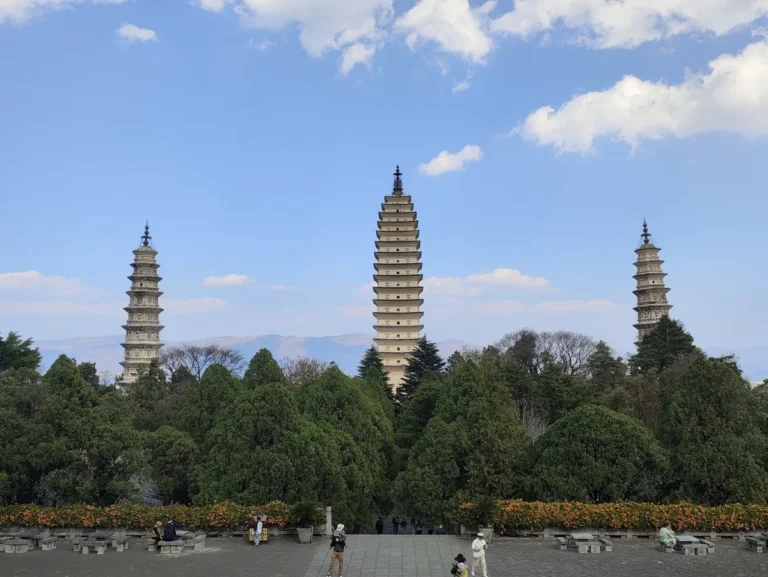
The national symbolic stature and cultural reach of Erhai Lake extend far beyond a regional scenic spot to stand as a classic aesthetic emblem in Chinese cultural heritage. In the minds of poets, painters, and philosophers from the Tang Dynasty to the present day, Dali—with Erhai Lake at its heart—embodies the ideal of a serene sanctuary where humanity achieves complete harmony with nature. Classical literature celebrated the region’s beauty through four iconic natural phenomena: the Wind of Xiaguan, the Flowers of Shangguan, the Snow of Cangshan, and the Moon of Erhai—forming a canonical quartet of cultural symbols. Moonlight shimmering across Erhai Lake on crisp autumn nights has inspired thousands of poems and ink-wash paintings reflecting deep human contemplation before the cosmos. Moreover, monumental religious complexes such as Chongsheng Temple—with its three ancient pagodas standing proudly beside the shore—cemented the region’s sacred stature as a major Buddhist center whose influence radiated across Southeast Asia.
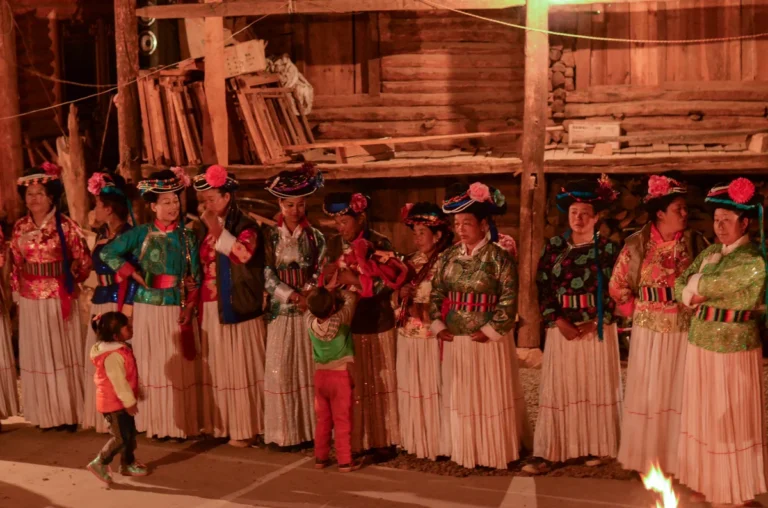
In the contemporary era, Erhai Lake retains vital strategic importance in ecology, socio-economic life, and cultural diplomacy. Recognizing the urgency of heritage conservation, national and local authorities designated the basin a national ecological protection zone to safeguard its freshwater ecosystem against rapid urbanization and mass tourism during the late twentieth century. Water-quality restoration campaigns, the relocation of shoreline commercial structures encroaching on ecological buffer zones, and the rehabilitation of aquatic flora reflect a steadfast commitment to preserving this historic natural treasure for future generations. Anthropologically, the living traditions of the Bai people around the lake—from seasonal rituals and traditional cormorant fishing to artisanal tie-dye weaving and pottery—remain an invaluable subject of international scholarship. Far more than a geographical feature, Erhai Lake is a living cultural landscape preserving centuries of interaction between Chinese and Southeast Asian civilizations.
Erhai Lake in Yunnan was formed by deep tectonic faulting during the Cenozoic era, marking a period of intense crustal movement that carved out the depressions of the Yunnan-Guizhou Plateau. Over millions of years of sedimentation and geological evolution, this enclosed basin collected an intricate hydrological system framed by the majestic Cangshan Mountains on the west and the Dali highlands on its remaining sides. Morphologically, the lake stretches roughly forty-two kilometers along a north–south axis, averages six to nine kilometers in width, and covers approximately two hundred and fifty square kilometers—making it Yunnan’s second-largest freshwater lake. Sitting at an average water surface elevation of 1,970 meters above sea level, its immense water volume—averaging five meters deep and exceeding ten meters at its deepest points—moderates day-to-night temperature swings to create a mild highland microclimate. This distinctive geology not only shaped breathtaking scenery, but also provided the material foundation for the settlements, urban layouts, and vernacular architecture of the Bai communities who have called its shores home for millennia.
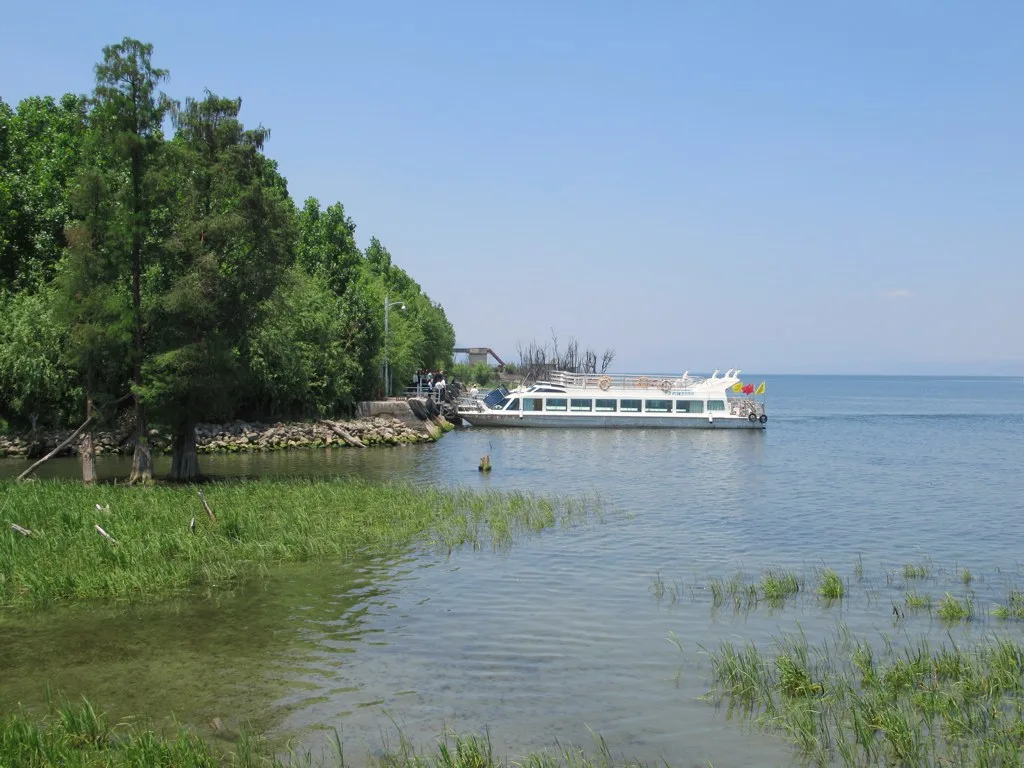
Urban and village planning around Erhai Lake adheres closely to traditional Bai spatial philosophy, harmonizing empirical feng shui principles with the ecological realities of a highland basin. Historic settlements such as Dali Ancient City, Xizhou, and Shuanglang are arranged along linear corridors following the eastern and western shores, with primary architectural axes oriented to welcome morning sunlight and frame sweeping views of the Cangshan peaks. Residential layouts reflect multi-generational social structures, where grand compounds belonging to noble lineages or prosperous merchant families follow the traditional courtyard plan—four building wings enclosing a central skywell courtyard designed for daylighting, cross-ventilation, and ancestral ceremonies. Building heights across the lakeside settlements have long been restrained by both customary norms and modern zoning laws, rarely exceeding three stories (roughly ten to twelve meters) so that human structures remain proportional to the vast expanse of lake water and soaring mountains without visually overwhelming the natural landscape.
Vernacular building materials across the Erhai basin bear a strong local imprint, drawn directly from the abundant mineral and timber resources of the Cangshan Mountains and lakebed deposits. White marble—renowned across China as “Dali stone” for its natural ink-wash veining—is widely used for column bases, thresholds, door frames, and load-bearing walls, imparting timeless durability to both public landmarks and private residences. Hand-molded clay roof tiles fired in local kilns to a signature ash-gray hue are laid thickly over aged pine or oak roof trusses, shielding interiors against intense highland solar radiation and seasonal monsoon downpours. Traditional carpentry eschews iron nails entirely in favor of intricate mortise-and-tenon joinery, giving timber frames crucial flexibility during the minor seismic tremors common along regional fault lines. Exterior walls frequently combine rammed earth mixed with straw or fieldstone set in traditional lime mortar, delivering natural thermal insulation that keeps interiors warm in winter and pleasantly cool through summer.
Architectural ornamentation around Erhai Lake blends refined woodcarving, stone relief sculpting, and traditional mural painting rooted in the feudal eras of the Nanzhao and Dali kingdoms. The upturned roof eaves characteristic of traditional Chinese architecture take on a gentler, more fluid curve here, lifting softly toward the highland sky as an expression of spiritual aspiration and reverence for nature. Wooden lattice doors, inscribed plaques, parallel couplets, and interior screen partitions are intricately carved with lotus blossoms, rolling waves, birds, and historical motifs reflecting a worldview deeply attuned to water ecosystems. Exterior color palettes honor the honest tones of natural materials—white marble, slate-gray tile, and warm weathered timber—accented on grander residences with whitewashed plaster murals painted in mineral blues and deep reds, creating an aesthetic that is at once dignified, timeless, and intimately connected to the lakeside landscape.
In the contemporary era, spatial planning around Erhai Lake has undergone transformative reforms aimed at balancing mass tourism with the conservation of natural and cultural heritage. Modern environmental regulations have established strict ecological protection corridors along the shoreline, requiring the relocation of commercial accommodations and businesses that encroached upon wetland buffer zones so natural marshlands and reed beds could recover. Surrounding transport infrastructure has been reorganized into a continuous lakeside ecological corridor featuring dedicated cycling paths, pedestrian boardwalks, and minimalist public rest pavilions built from thermally treated timber and local stone. With annual visitor numbers reaching tens of millions, managing wastewater treatment, solid waste, and visitor capacity inside historic villages remains a critical priority.
To meet these challenges, architects and urban planners have embraced sustainable design principles, integrating solar energy systems, biological recirculating water filtration, and passive thermal insulation into boutique lakeside hotels and cultural venues. New construction must comply strictly with height, material color, and density guidelines so as not to disrupt the historic spatial harmony cultivated over centuries. This thoughtful dialogue between understated contemporary architecture and ancient Nanzhao-era monuments creates a rich cultural tapestry, demonstrating the enduring vitality of a living landscape built upon respect for nature and human history.
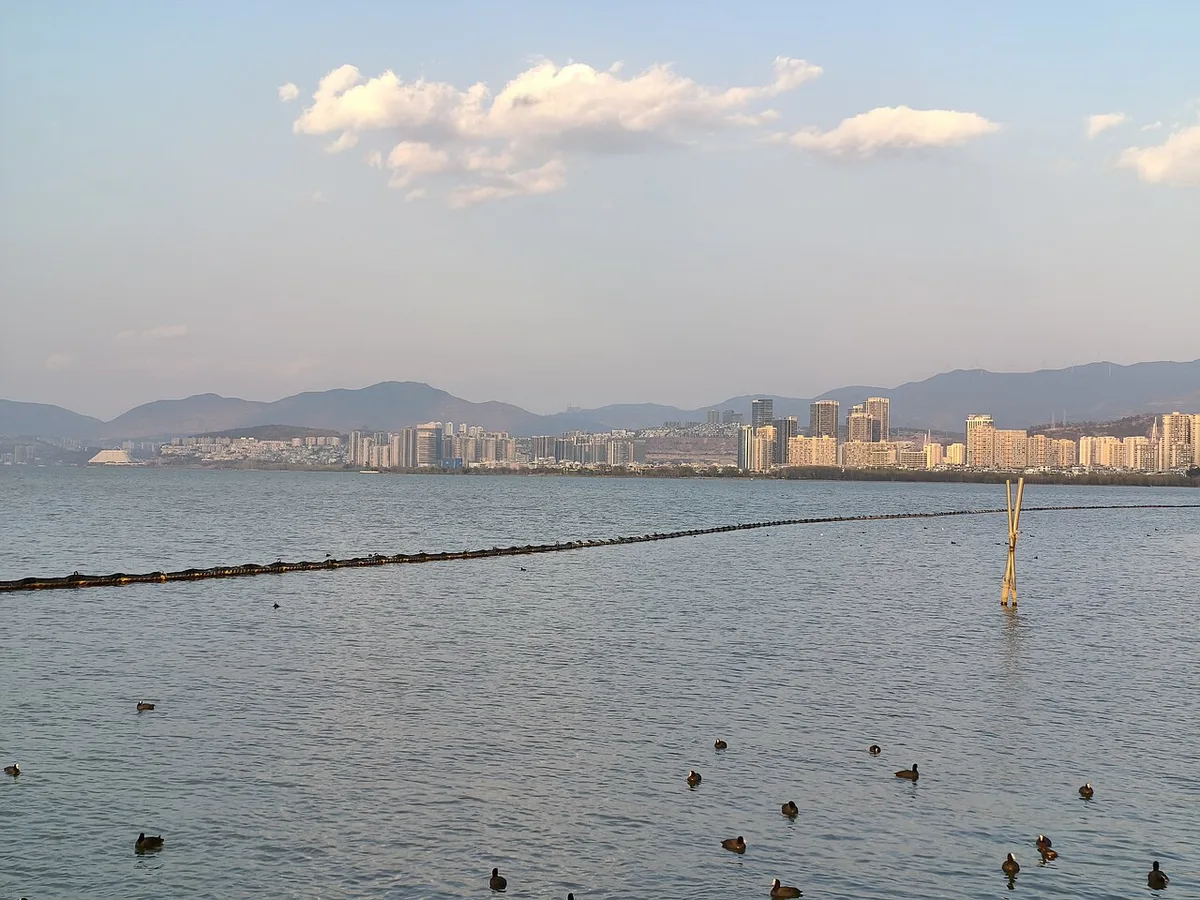
Stretching across the Yunnan-Guizhou Plateau at an elevation of roughly 1,970 meters above sea level, Erhai Lake forms a singular geographical entity carved by tectonic faulting millions of years ago. Far more than a vital hydrological system for China’s Yunnan Province, this basin served as the cradle of the ancient Nanzhao and Dali kingdoms. The interplay between the vast expanse of this ear-shaped lake and the towering Cangshan range rising to its west established a classic natural feng shui setting that shaped settlement patterns, urban planning, and aesthetic sensibilities across centuries. Within this cultural landscape, religious architecture and material heritage around Erhai Lake reflect a rich synthesis in which Esoteric Buddhism, Daoism, and indigenous Bai animist beliefs merged into an unmistakable regional identity.
Surveying sacred architecture along the lakeshore reveals ancient monasteries and Buddhist pagodas standing as monuments to spiritual devotion and master craftsmanship. Foremost among the landmarks of the Dali Kingdom’s golden age are the Three Pagodas of Chongsheng Temple, rising just off the western shore of Erhai Lake. Built during the Tang and Song dynasties, the ensemble comprises the towering central Qianxun Pagoda flanked symmetrically by two smaller pagodas. Qianxun Pagoda exemplifies multi-tiered hollow-brick architecture, rising from a sturdy base in a graceful, tapering profile. Period masons bound bricks using slaked lime mortar mixed with cane sugar and plant mucilage—an ingenious traditional composite that enabled the pagodas to withstand major earthquakes along the highland seismic belt. Exterior wall niches carved into pointed arches enshrine Buddhist reliefs illustrating the fusion of Indian Buddhist aesthetics—transmitted via Tibet and Southeast Asia—with Central Plains masonry traditions.
Examining interior ornamentation and sacred artifacts preserved around Erhai Lake uncovers an iconographic vocabulary distinct from pure lowland Chinese art. Stone steps, balustrades, and column plinths in historic halls are frequently carved with stylized camellias and rhododendrons—signature flora of the Cangshan Mountains—paired with scrolling clouds and lake waves symbolizing Erhai itself. Bronze casting and Buddhist sculpture in Dali reached extraordinary refinement, exemplified by the Chongsheng bronze bell and historic statues of Guanyin (Avalokitesvara) from the Nanzhao era. Unlike the gentler feminine depictions familiar in later Han Chinese Buddhism, Dali-style Guanyin figures often feature strong, square-jawed masculine features, clad in armor or royal robes and crowned with an effigy of Amitabha Buddha—reflecting the local belief in the Bodhisattva as supreme protector of the realm and sovereign authority.
Vernacular residential architecture built by the Bai people around Erhai Lake contributes an equally celebrated chapter to Asian architectural history. Historic towns such as Xizhou and Shuanglang showcase classic compound layouts known as “Three Courtyards and One Screen Wall” (sanfang yizhaobi) and “Four Courtyards and Five Skywells” (sihe wutianjing). In the former layout, three main timber wings enclose a stone-paved central courtyard facing a whitewashed spirit screen wall designed to reflect soft sunlight into the main hall and moderate indoor temperatures. Exterior walls are often adorned with vibrant mineral-pigment murals depicting auspicious themes such as pine, bamboo, plum blossom, and chrysanthemum, or carp leaping over the Dragon Gate. Built with interlocking mortise-and-tenon joinery free of iron nails, these timber homes have endured highland weather for centuries.
The spatial worldview of Erhai’s inhabitants shines through how every landmark is positioned in harmony with surrounding nature. In Bai cosmology, the lake embodies nurturing yin energy while the Cangshan Mountains represent protective yang energy; where mountain meets water, vital energy converges. Temples, local shrines, antique stone bridges, and lakeside viewing pavilions were therefore oriented with care to capture warm morning sunlight reflecting off the water in winter and cool mountain breezes descending from valleys in summer—expressing an art of gentle adaptation rather than domination over nature.
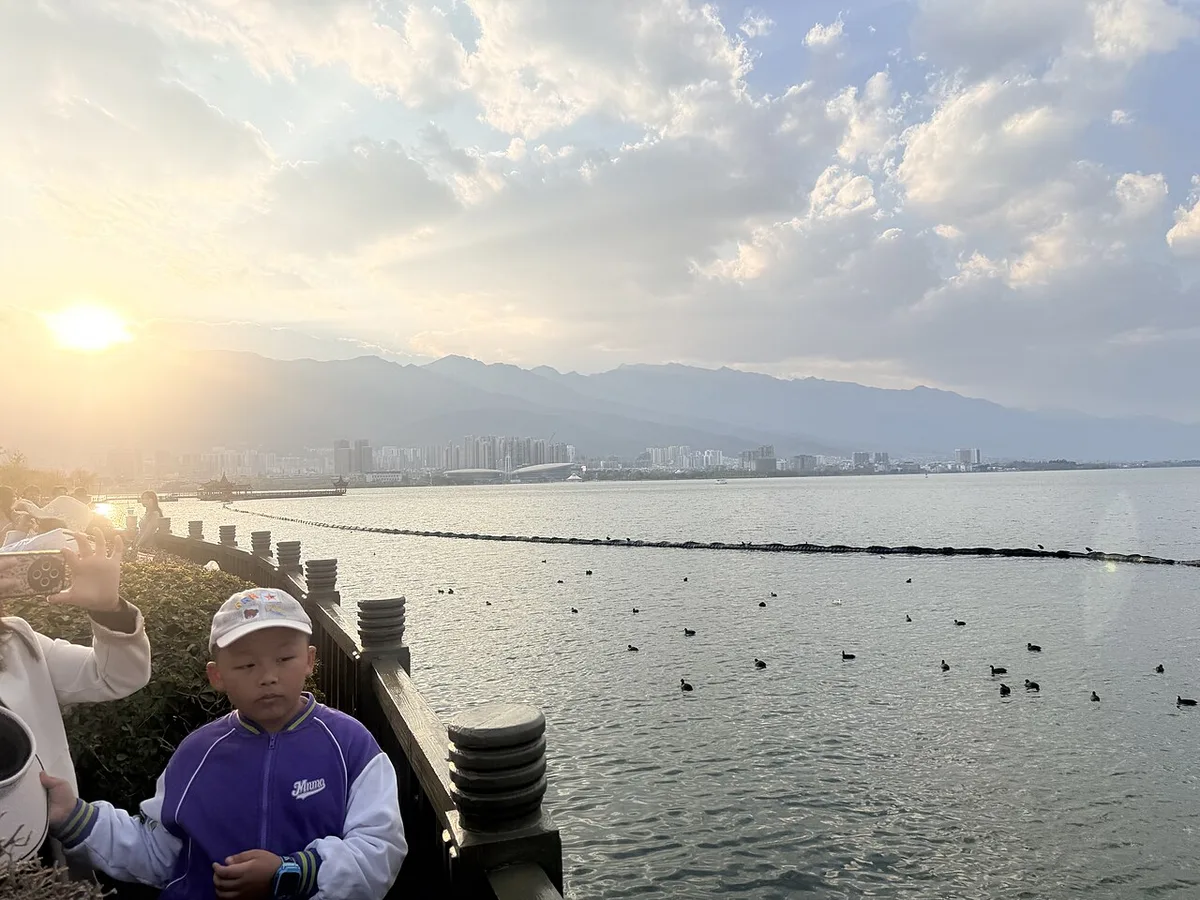
National treasures and cliff inscriptions along the lake provide invaluable historical records of intellectual life along the Ancient Tea Horse Road. Stone steles inscribed in classical Chinese alongside Square Dali script—a historic local writing system—preserve royal edicts and poetic exchanges composed by exiled scholars and pilgrims passing through the region. Together with high-fired stoneware from local kilns and intricate geometric tie-dye textiles crafted by Bai artisans, these tangible and intangible treasures transform Erhai Lake into a living encyclopedia of cultural exchange between China, Tibet, and mainland Southeast Asia from the Middle Ages to the present day.
Over centuries, the ecological belt ringing Erhai Lake in Yunnan has nurtured a distinctive daily rhythm deeply rooted in the traditions of the Bai ethnic community. Life here moves in harmony with natural cycles, where the expansive lake serves not merely as a geographical backdrop, but as the lifeblood sustaining both material livelihoods and spiritual traditions. From stone-and-timber heritage villages to time-honored fishing practices, every hour of the day at Erhai Lake unfolds like a living chronicle of human harmony with a highland aquatic ecosystem.
Dawn on Erhai Lake opens the day with a dramatic transformation of light across the water. As the first rays of sunlight crest the towering Cangshan range to the west and wash over the 250-square-kilometer basin, the lake shifts from silvery mist to deep jade green, gleaming like a colossal mirror reflecting the crisp highland sky. In lakeside fishing villages such as Xiaozhai and Shuanglang, early morning stirs with the soft chug of traditional wooden boats setting out from stone piers. Local fishermen wearing wide-brimmed bamboo hats and coarse cloth jackets cast their nets or practice traditional cormorant fishing passed down through generations—trained cormorants perched along gunwales dive into clear waters to catch native carp and crucian. The rhythmic splash of oars, greetings called out in local dialect, and thin wisps of mist drifting across the surface compose an authentic, vibrant portrait of lakeside life.
As the sun climbs toward midday, life in the shoreline towns transitions into lively artisanal craft and market activity. Sunny courtyards and village lanes fill with racks of hand-dyed indigo batik fabrics fluttering in the breeze—an enduring hallmark of Bai textile artistry. Senior artisans sit in shaded verandas embroidering intricate camellia, bird, and cloud motifs onto traditional garments. Along the lakeside road, periodic country markets display regional specialties including Three-Course Tea leaves, fan-shaped goat’s milk cheese, and medicinal herbs gathered from mountain slopes. Visitors can watch local cooks grill goat’s milk cheese over glowing charcoal or experience the ceremonial Three-Course Tea, whose bitter, sweet, and complex aftertastes symbolize the three stages of human life.
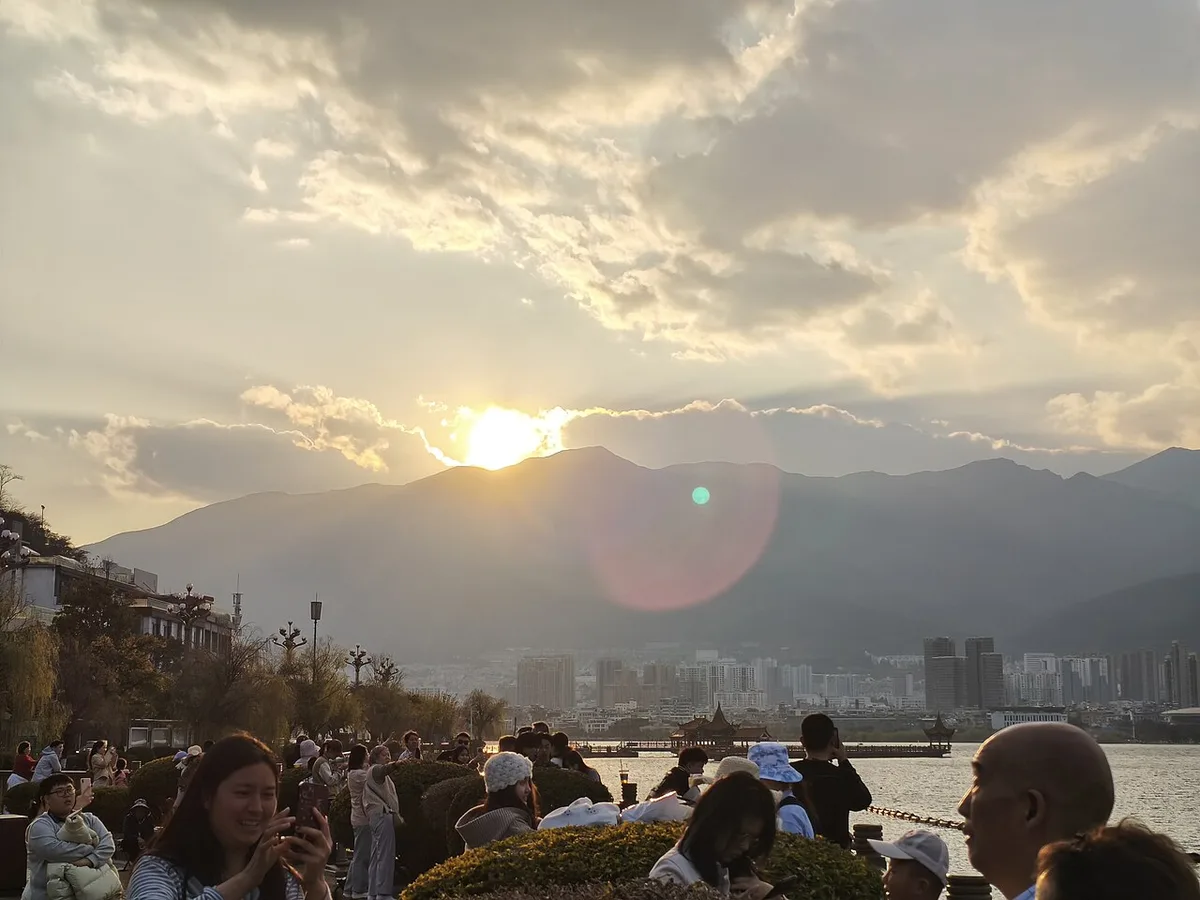
Sunset over Erhai Lake delivers one of the most breathtaking visual spectacles on the Yunnan Plateau, as the boundary between sky and water dissolves into a gradient of fiery amber, rose, and deep twilight violet. At this golden hour, the most prized vantage points include the elevated terraces of Chongsheng Temple overlooking the lake and the gentle hills above Xizhou village. From here, the entire lake spreads out like a vast painted scroll framed by the nineteen snow-dusted peaks of Cangshan. Slanting afternoon sunlight illuminates the white walls and gray tiled roofs of Bai courtyards, creating serene contrast against glassy waters as traditional sailboats glide homeward across golden ripples.
When night falls, the lakeside towns glow warmly beneath red paper lanterns hung along historic eaves and cobblestone lanes. Evening cultural life centers on folk performances where local artists present traditional Bai dances—such as the Butterfly Dance and Flower-Stick Dance—accompanied by the melodies of the hammered dulcimer, bamboo flute, and resonant drums mingling with waves lapping against stone embankments. During major annual celebrations such as the Torch Festival held in the sixth lunar month, tens of thousands of residents and visitors gather around the lake to light towering torches, praying for bountiful harvests, favorable weather, and community prosperity beneath a canopy of firelight and festive music.
Exploring the ecological and cultural breadth of Erhai Lake rewards unhurried travel suited to its expansive scale. The best ways to immerse yourself in local life include cycling or riding eco-friendly electric vehicles along the 100-kilometer lakeside ecological corridor. Separated from heavy urban traffic, this scenic loop lets travelers pause spontaneously at quiet coves, watch elders mending nets beside stone piers, or stroll through rural lanes—turning simple sightseeing into an intimate dialogue with centuries-old lakeside heritage.
From misty dawn departures to lantern-lit evening festivities, the living rhythm of Erhai Lake captures a rare balance between preserving ancestral identity and embracing sustainable eco-tourism—cementing Dali’s place as one of southwestern China’s most captivating cultural landscapes.
Nestled within the Dali Bai Autonomous Prefecture in Yunnan Province, the Erhai Lake basin forms a distinct ecological niche that has nurtured the rich culinary heritage of the Bai people. Sheltered between the towering Cangshan range and the vast freshwater lake, the fertile alluvial plain enjoys a mild highland climate irrigated by pure mountain streams. The abundance of freshwater fish and aquatic plants paired with upland agricultural produce gave rise to a flavorful regional cuisine rooted in seasonal freshness, natural balance, and time-honored preservation techniques rather than ornate imperial formality.
Local ingredients shine brightest in endemic freshwater fish—most notably Erhai carp and native kanglang fish—alongside aquatic delicacies such as water chestnuts, lotus seeds, and edible lake greens. Among Dali’s signature dishes, Dali Hot-and-Sour Fish exemplifies Bai culinary artistry. Freshly caught fish is cleaned and simmered gently with ginger, garlic, local dried chilies, and pickled plums or naturally fermented bamboo shoots. Slow cooking allows the bright, fruity tartness of preserved plum to infuse the tender white flesh, balancing gentle chili heat and warming the body against brisk winds sweeping down from Cangshan.
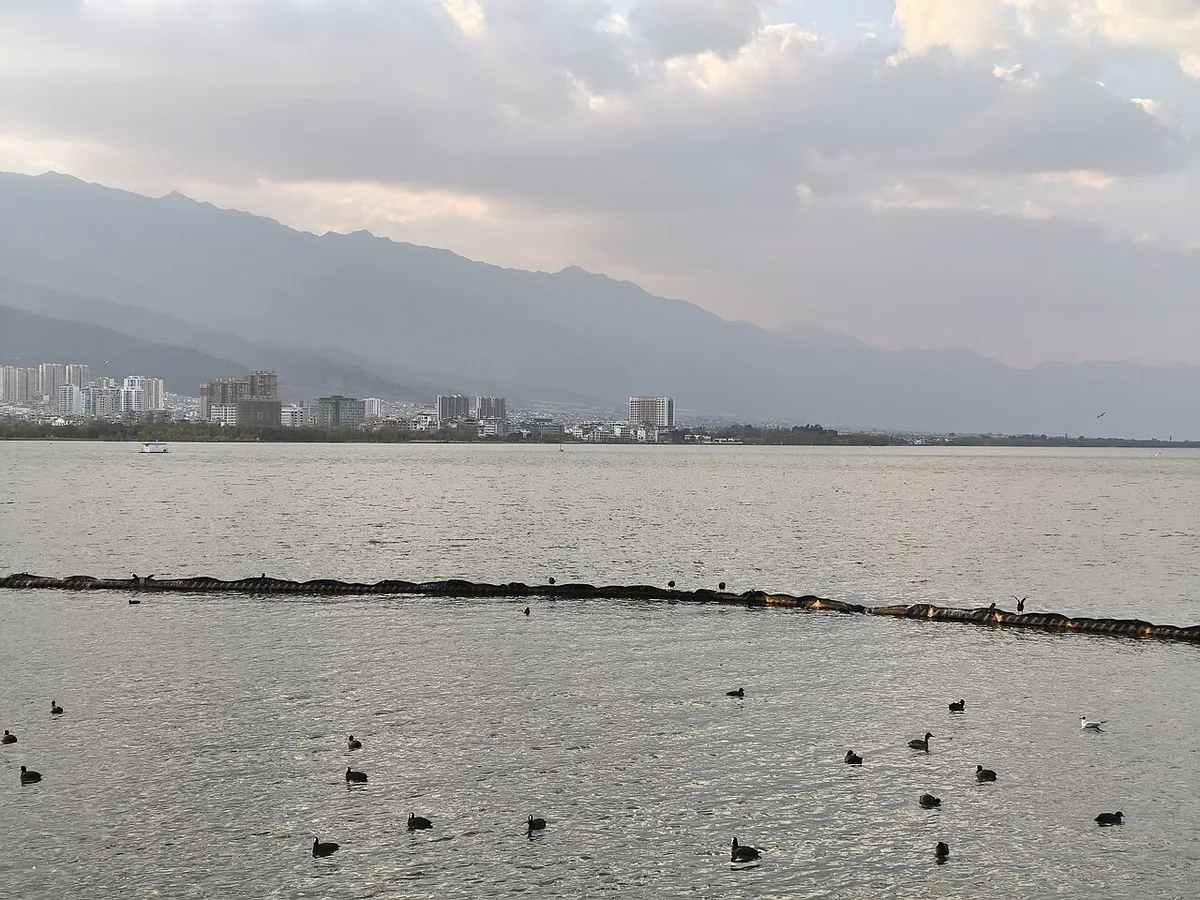
Alongside freshwater fish, dairy delicacies occupy a prized place in highland Bai gastronomy—foremost among them rushan (“milk fan”), a traditional stretched goat’s milk cheese. Crafted by curdling fresh goat’s milk with acidic fruit vinegar or natural whey, stretching the curds into thin ribbon sheets, and air-drying them under the highland sun, rushan is typically pan-fried until crisp and golden or toasted over glowing charcoal. Served brushed with fragrant rose-petal jam or sprinkled with salt and pepper, it offers an irresistible contrast of crisp texture, savory milky richness, and floral sweetness.
Smoked cured pork and artisanal local sausages also reflect centuries-old Bai preservation traditions developed for winter months and major festivals. Free-range pigs raised on corn and wild herbs along the Cangshan foothills yield firm, flavorful meat cured with local grain liquor, Sichuan pepper, star anise, and sea salt before hanging above hearth fires for months. Slow wood-smoking imparts a deep, savory aroma that shines when thinly sliced and stir-fried with fresh garlic greens or steamed over rice.
No culinary exploration of the Erhai basin is complete without experiencing the ceremonial Bai Three-Course Tea (Sandaocha), an intangible cultural heritage embodying Bai philosophy on life. Served to honored guests and during weddings or spring festivals, the ritual unfolds across three distinct cups: the first cup is brisk and bitter, brewed from roasted tea leaves over a clay brazier to symbolize the trials of youth; the second cup is sweet, blending green tea with rock sugar, chopped walnuts, and rushan cheese to represent the rewards of maturity; and the third cup mingles spicy ginger, subtle tea astringency, and aromatic Sichuan pepper to evoke thoughtful reflection on life’s rich journey.
Historic quarters such as Dali Ancient City and lakeside towns like Xizhou preserve lively culinary streets where family recipes have been passed down for generations. Strolling along Renmin Road or the main lanes of the ancient town at dusk immerses visitors in drifting charcoal smoke from rushan stalls, toasted spices, and sizzling woks. Street vendors offer grilled cornmeal cakes, flaky rose pastries filled with edible petals harvested from nearby valleys, and crisp green plums tossed with chili salt—while veteran bakers in Xizhou turn out golden Xizhou baba flatbreads stuffed with savory minced pork and scallions or sweet brown sugar and rose paste.
In recent decades, growing international tourism has woven specialty coffee roasters, artisanal teahouses, and contemporary fusion bistros into the historic fabric along Erhai’s western shore. Yet even amid modern touches, the soul of Dali cuisine remains anchored in respect for local ingredients, seasonal rhythms, and warm hospitality shared around every family table.
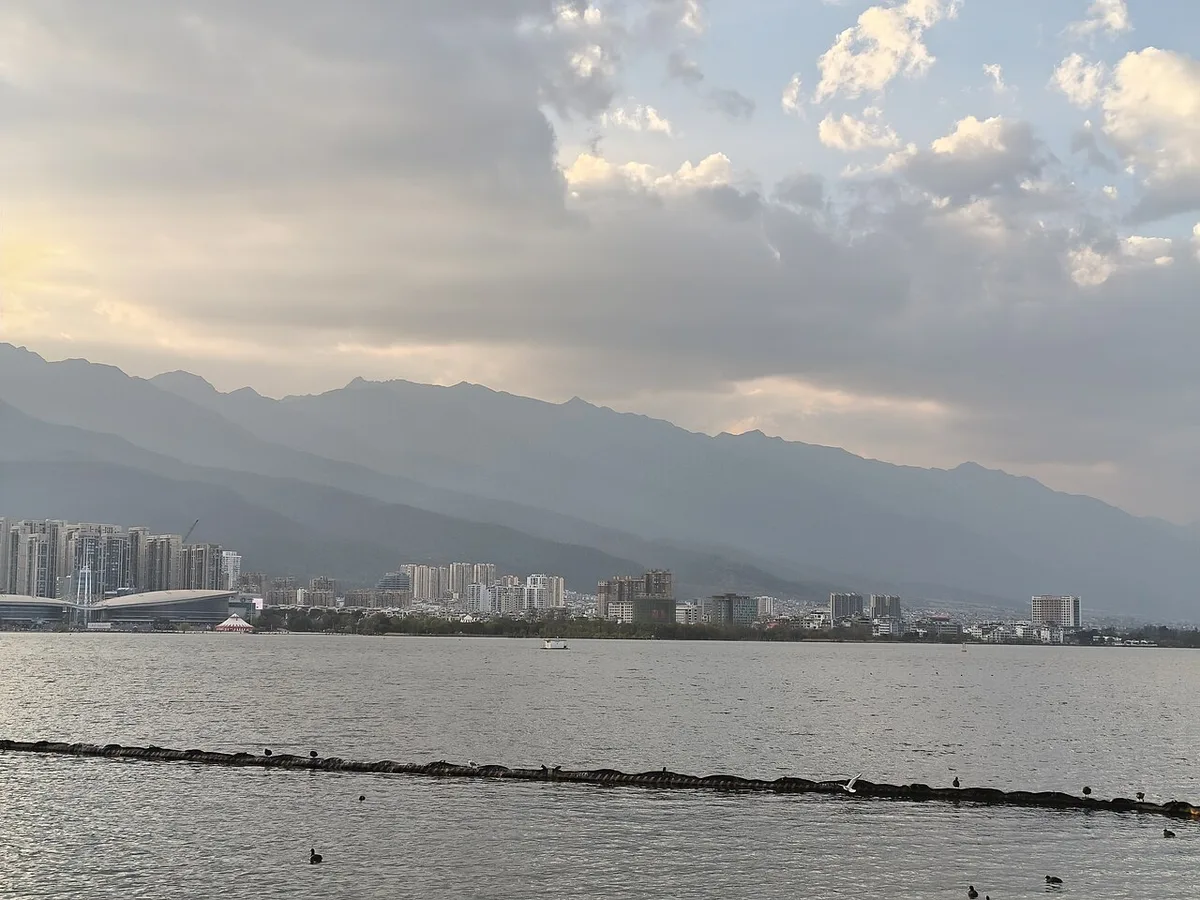
Exploring Erhai Lake—one of the largest tectonic basins on the Yunnan-Guizhou Plateau—rewards thoughtful preparation around seasonal weather and sustainable transport options. Spring (March through May) brings blooming landscapes—highlighted by golden rapeseed fields along the shore—and crisp highland air, though brisk afternoon winds call for a reliable windbreaker. Summer (June through August) features refreshing afternoon or evening showers paired with bright blue daytime skies and blooming lotus blossoms around Xisha Bay in June. Autumn (September through November) is widely considered the finest season to visit, offering dry weather, crystal-clear skies, and comfortable temperatures between 15°C and 25°C. Winter (December through February) brings chilly nights but abundant daytime sunshine, drawing tens of thousands of migratory black-headed gulls from Siberia to winter across Erhai’s waters.
Reaching Erhai Lake is convenient via Yunnan’s modern rail network, with high-speed trains from Kunming arriving directly at Dali Railway Station in Xiaguan. From the station, public bus routes 4 and 8 connect affordably to Dali Ancient City and major lakeside stops, while licensed taxis and ride-hailing apps offer fast, transparent point-to-point transfers. Once along the shoreline, renting a bicycle or eco-friendly electric scooter to explore the lakeside ecological corridor is the most rewarding way to travel—as conventional fuel vehicles are restricted along sensitive waterfront segments to protect air and water quality.
Time of day shapes every visual impression along the lake. Early morning between 6:00 AM and 8:00 AM offers serene stillness as mist drifts over calm waters and morning sunbeams filter through lakeside willows. Late afternoon from 4:00 PM to 7:00 PM brings dramatic sunsets behind the Cangshan peaks, bathing the water in crimson and gold as local fishermen haul in their nets. Because lakeside villages such as Xizhou, Shuanglang, and Nanzhao Folk Island span considerable distances around the 100-kilometer perimeter, planning your daily route by shore side ensures an unhurried, rewarding pace.
Dressing for Erhai Lake requires preparation for high-altitude UV radiation and wide day-to-night temperature swings. At nearly 2,000 meters above sea level, strong daytime sun calls for high-SPF sunscreen, polarized sunglasses to cut glare off the water, and a wide-brimmed sun hat. Layering breathable cotton or linen shirts beneath a windproof jacket or warm fleece allows effortless adjustment between sunny midday hours and cool evening breezes, while supportive walking shoes with good grip handle uneven village cobblestones and lakeside paths comfortably.
Respecting the traditions and environmental values of the local Bai community ensures a meaningful, responsible visit. Because the Bai revere Erhai Lake as a sacred source of life, littering or disturbing lakeside wetlands is strictly prohibited and subject to heavy environmental fines. When visiting historic villages and temples, ask permission before taking close-up portraits of elderly residents in traditional attire, maintain quiet respect inside shrines, and confirm prices clearly when shopping for handcrafted tie-dye textiles or local specialties.
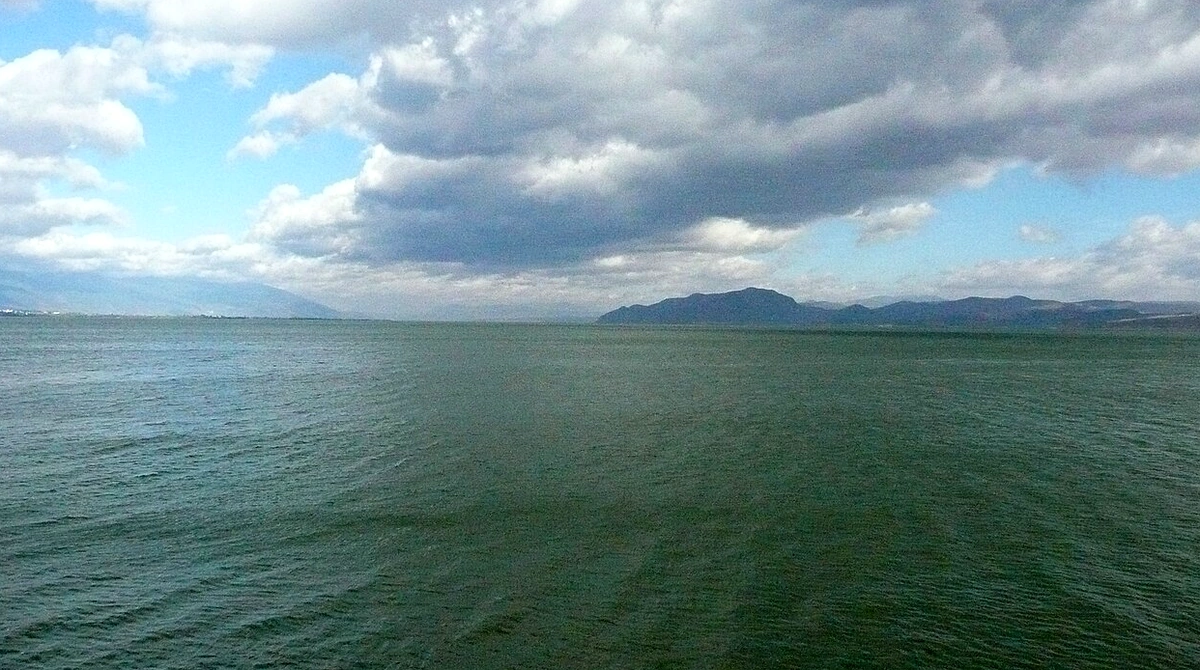
While strolling along the public lakeside ecological path is free of charge, major attractions around the shore—including Nanzhao Folk Island, Chongsheng Temple, and historic estates in Xizhou—require individual admission tickets booked online or via QR code at entrance gates, often with daily capacity limits to safeguard heritage sites. Reserving tickets ahead of time and planning entry windows carefully will ensure a smooth, unforgettable journey through one of southwestern China’s greatest natural and cultural treasures.
To experience this journey seamlessly with a knowledgeable local guide, explore our 6D5N Dali – Lijiang – Shangri-La – Kunming Tour with a thoughtfully curated itinerary.