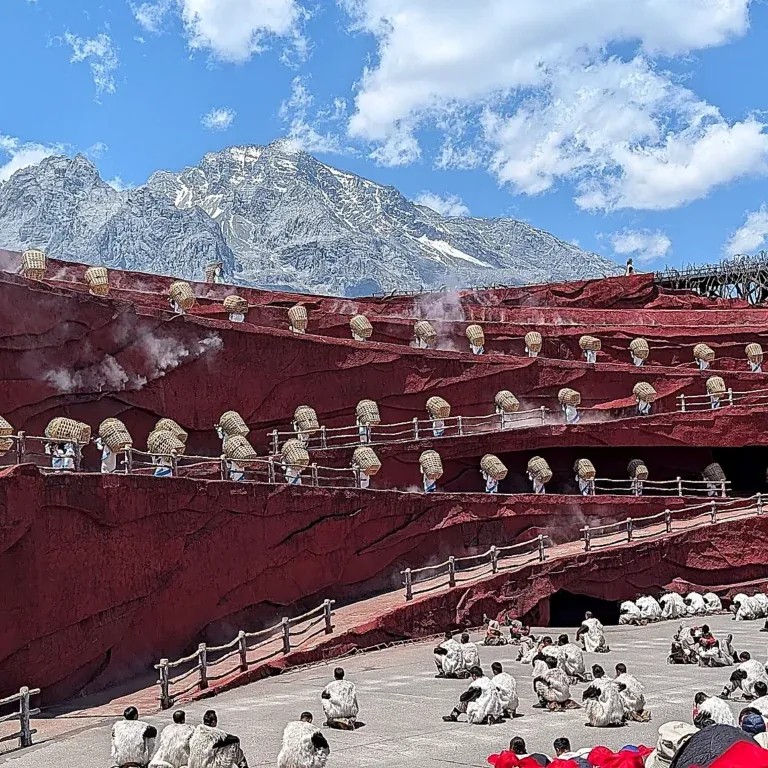
Reclining quietly halfway up the Cangshan range—shrouded in mist year-round—and the jade-blue mirror surface of Erhai Lake, Dali Ancient Town holds a monumental epic of the southwestern frontier of Yunnan. From primeval times, this land was called by antique names such as Yeyu, Yeyu City, or Zitheng—a name evoking the proud purple hue of ancient indigenous imperial palaces. The origin of the capital is tied to power shifts during the Tang Dynasty, precisely in the Tianbao era, when Nanchao King Geluofeng, recognizing the strategic military and geopolitical ruggedness of the basin, ordered the construction of Yangfumizi City to serve as a new capital for the powerful Nanchao Kingdom. By 779, the Nanchao imperial family officially relocated their capital here, laying architectural and planning foundations for a prosperous capital along the legendary Tea Horse Road.
Through bloody battles spanning the Five Dynasties and Ten Kingdoms period until the Song Dynasty consolidated Central Plains order, this land entered its most brilliant era when the Bai people established the Dali Kingdom, lasting over three centuries from 937 to 1253. Under the rule of the Duan imperial family, Dali was not only a supreme center of flourishing Esoteric Buddhism but also an exemplary unique administrative synthesis. During initial phases, the Dali court preserved administrative machinery inherited from Nanchao: dividing territories into Tham, Jiedushi, and Dudufu levels. Ten fertile agricultural regions, notably Xitan and Dengtan, became bustling agricultural and handicraft strongholds nurturing the imperial city. Later, as feudal institutions progressed toward centralized monarchy, these local tribal units transformed into orderly prefecture and county systems, affirming national governance maturity.
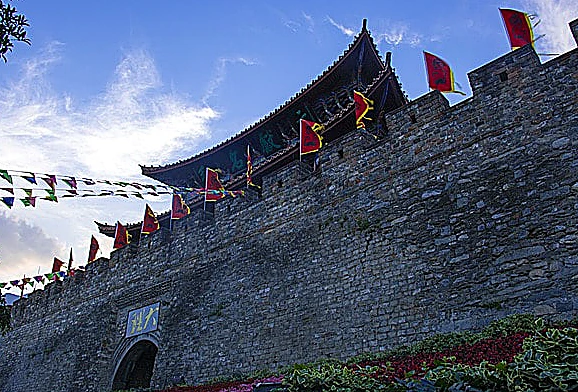
Though suffering heavy destruction under Mongol cavalry iron hooves in 1253 ending the independent dynasty, the capital’s soul quietly regenerated across subsequent eras. The appearance, scale, and enclosed form admired by visitors today were actually shaped most profoundly during the Ming Dynasty. In the fifteenth year of Hongwu (1382), Ming Taizu Zhu Yuanzhang ordered a comprehensive reconstruction of ancient city walls, shifting from traditional rammed-earth techniques to sturdy green stones combined with dense fired bricks. Defensive moats, gate fortresses, and square checkerboard layouts established during this era erected a sturdy framework, adapting to harsh weather fluctuations from Cangshan wind gaps while meeting strategic defense demands.
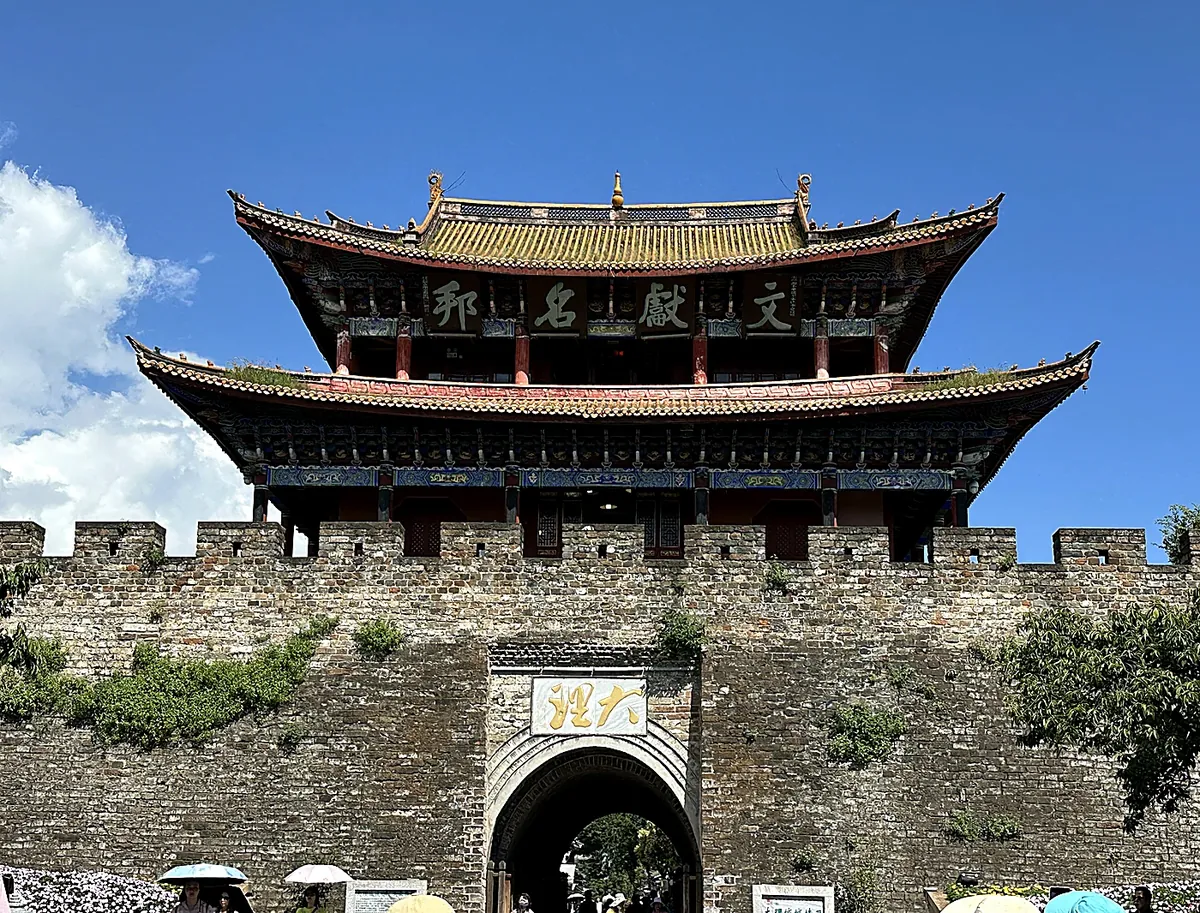
Witnessing centuries of feudal dynastic shifts up to modern times, the ancient town’s cultural and archaeological values gained deserved prominence on heritage maps. Modern conservation turning points unfolded in 1982 when the State Council placed Dali among the first batch of national historical and cultural cities. Continuing heritage revitalization efforts, in 1984, the iconic South Gate was magnificently restored matching traditional architectural proportions and specifications. Today, holding status as a national 4A tourist scenic spot, every paving stone and mossy rampart section of ancient Zitheng still stands tall like a living museum, resounding with immortal epics of a prosperous capital in Yunnan’s highlands.
Situated in the majestic Yunnan-Guizhou Plateau in western Yunnan, roughly two hundred and fifty kilometers west of Kunming, Dali Ancient Town occupies an exceptionally rare geographical coordinate, where fault tectonic terrain between the Hengduan Mountains and freshwater lake basins generated a fertile microclimate. In ancient Chinese geomantic concepts and native Bai survival philosophies, the ancient town’s layout achieved exemplary “backing mountains and facing waters,” specifically “leaning against Cangshan to the west, facing Erhai to the east.” The city’s western flank leans securely against the Cangshan range, verdant year-round, while its eastern facade opens wide before vast waters, flat as a mirror of Erhai Lake. This grand geomorphological structure not only creates an isolated natural fortress but shapes a flawless geographical checkerboard matching “waters encircling Cangshan, Cangshan embracing the ancient town”—a jade ribbon winding around sacred mountains, with sacred mountains opening arms to shelter the millennial ancient town.
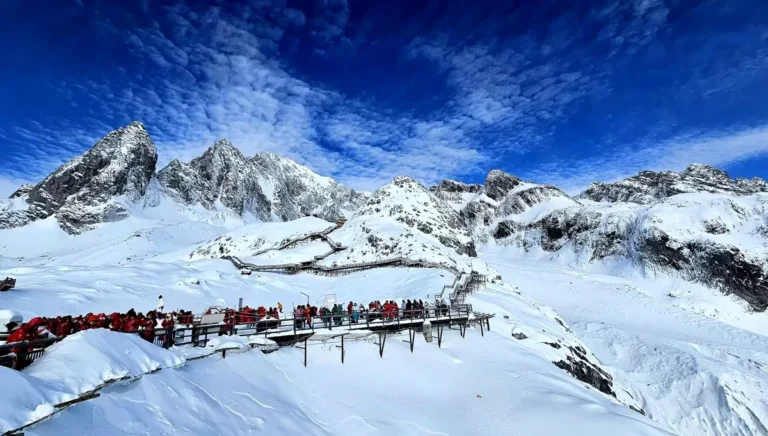
The natural screen west of the ancient town is the majestic Cangshan range, a rugged branch of the Yunling mountains featuring nineteen towering peaks piercing cloud layers, stretching continuously from north to south across nearly fifty kilometers. The highest peak is Malong Peak soaring over four thousand one hundred meters above sea level, where snow accumulates permanently even as valley feet brim with spring. Between those nineteen peaks wind eighteen streams murmuring across four seasons, originating from melting glacial ice and carrying rich minerals down eastern slopes. This natural granite wall not only shields the entire Dali valley from freezing Tibetan plateau gales, but acts as a colossal ecological air conditioner, gathering clouds, condensing moisture, and supplying pure fresh water sustaining residents across millennia.
Symmetric to Cangshan’s majestic contemplation in the east lies Erhai Lake—the jade gem of the Yunnan-Guizhou plateau with expansive waters and soft curving shapes resembling human ears. Stretching over forty kilometers, the lake absorbs all flows from Cangshan’s eighteen streams before discharging into the Lancang River. Combining mountains exceeding four thousand meters with large freshwater lakes near two thousand meters elevation forges a unique closed atmospheric circulation system. Cooling lake vapors meeting Cangshan walls condense into floating white clouds draping mountain slopes, dispelling plateau dryness and regulating year-round mild, cool climates avoiding extremes. This interaction between mountains and waters birthed the renowned “Wind, Flower, Snow, Moon” poetry: Xiaguan’s cool breeze, Shangguan’s myriad flowers, Cangshan’s snow-capped peaks, and autumn moon reflections shimmering across Erhai waters.
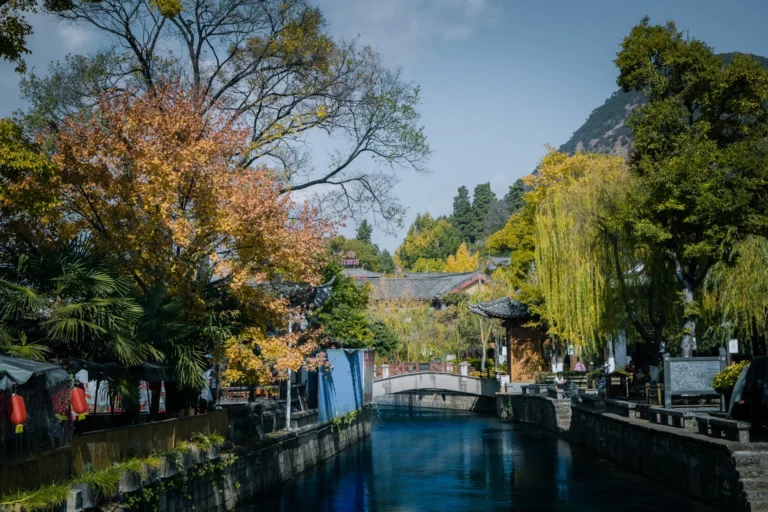
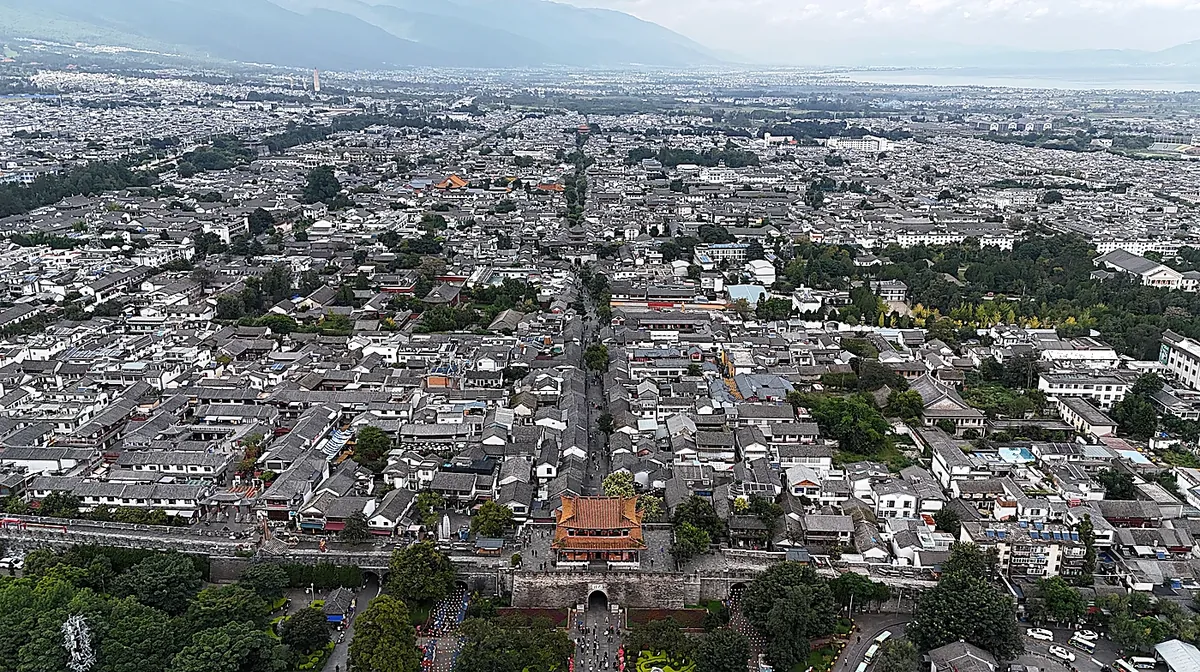
Benefiting from natural gentle slopes descending from Cangshan feet toward Erhai shores, ancestors planning Dali Ancient Town cleverly converted natural terrain into sophisticated hydraulic and drainage systems. Pure water from stream gorges like Zhongxi or Daoxi is channeled through blue-stone paved alleys, weaving through courtyards of traditional Bai siheyuan homes featuring “three wings and one screen wall” styles, before discharging into the grand lake. This nature-conforming planning births unique imagery: “every home hears murmuring streams, every doorway brims with vibrant flowers,” helping the ancient town maintain freshness, purity, and ventilation across rainy and sunny seasons, representing symbioses between natural ecosystems and sustainable human settlement wisdom.
Situated beside majestic Cangshan and facing Erhai’s blue waves, Dali Ancient Town spans roughly 3 square kilometers. Within master plans to create towns of distinctive identity, core conservation zones combined with traditional craft village development strips span 3.16 square kilometers. The ancient town’s spatial structure strictly obeys classical Eastern urban planning rules with square checkerboard transport networks. Polished blue-stone grand avenues connect East, West, South, and North gates, opening interlaced alleys where Cangshan spring waters are channeled skillfully along roadside stone trenches to cool native living spaces across centuries of shifts.
Punctuating picturesque geomantic landscapes is Bai traditional construction craftsmanship, celebrated across the southwest for exquisite wood-stone joinery and unique aesthetic thinking. Two representative layout models preserved intact here are “three wings and one screen wall” and “four wings and five skywells.” In “three wings and one screen wall,” three residential wings face inward forming U-shapes, closed by large screen walls facing natural light sources. Screen walls block malevolent qi while accumulating blessings per geomantic beliefs, while pristine white stucco reflects sunset light illuminating courtyards while serving as canvases for boughs, reliefs, and refined calligraphy. Supreme styles feature “four wings and five skywells” reserved for noble clans, with four enclosed wings forming central courtyards plus four corner skywells, forging outstanding microclimatic convection systems, welcoming summer breezes, blocking winter cold, and preserving family privacy.
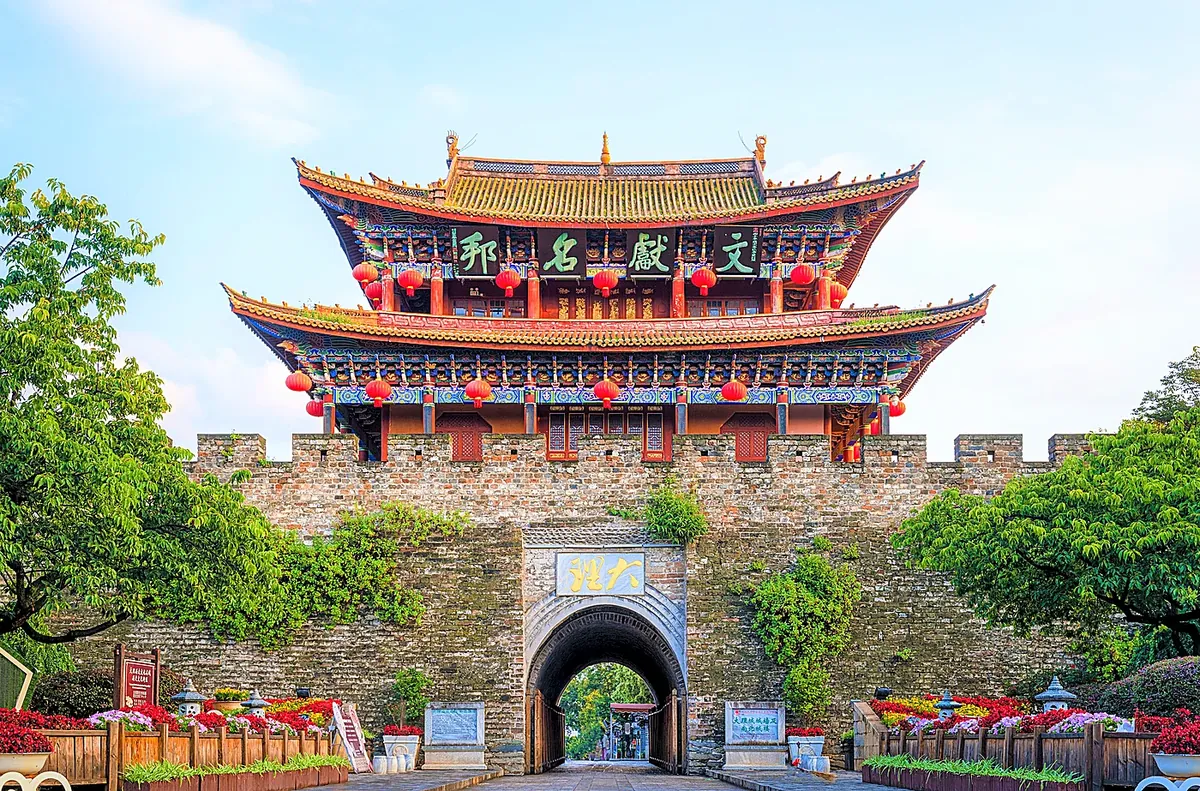
Mentioning architectural masterpieces defining the ancient town’s soul, Wenxian Tower cannot be omitted—a proud city gate tower standing impressively in the south, hailed as the region’s premier cultural symbol. Initiated during the Kangxi reign of the Qing Dynasty, this two-story gate tower features solemn Xieshan hip-and-gable roof styles, harmonizing timber frames, rammed-earth walls, and sturdy stone foundations. The most solemn centerpiece is the grand horizontal plaque on the upper floor bearing four gilded characters “Wenxian Danh Bang,” personally inscribed by Yunnan Admiral Tian Tu in the 40th Kangxi year (1701). This plaque testifies to prosperous diplomatic relations under the Qing while affirming Dali’s status as a celebrated scholarly cradle in remote southern borders.
To harmonize millennial heritage conservation with contemporary living, Dali Ancient Town’s preservation and upgrading project deployed rigorous resources and caution. The project completed risk assessments, structural reinforcements, and meticulous restoration for 1,458 commercial storefronts along bustling ancient streets, alongside 5 traditional residential courtyard complexes of special historical value. Restoration followed “repairing old like old” philosophies. Every gray trough tile, rustic white lime wall, carved wooden lattice window, and mossy rampart trace was hand-restored by senior artisans. Thanks to strict conservation standards, Ming-Qing antique aesthetics of blue tiles and white walls beneath Cangshan endure intact, challenging time’s mists.
As red sunsets dip behind Cangshan snow peaks, Dali Ancient Town dons magnificent golden robes woven from contemporary lighting art. Sophisticated landscape lighting illuminates mossy Ming-era city walls. The southern ancient gate and Wenxian Tower rise proudly across nocturnal mists with curved roofs glistening in warm golden tones, recreating Nanchao-Dali imperial grandeur. Lighting honors green stone textures and pearwood wood-carved motifs on ancient gate towers while contrasting ancient heritage solemnity against vibrant urban life awakening beneath walls.
Dali’s nightlife rhythm pulses along two arterial routes: Fuxing Road and Renmin Road. Blue-stone streets polished by travelers reflect thousands of red lanterns hanging beneath yin-yang tile eaves. Native Bai lifestyles interweave with free-spirited traveler souls. Rustic folk teahouses nestle inside traditional siheyuan compounds featuring “three wings and one screen wall” layouts, where mystical string instruments accompany gravelly nomadic vocals. Narrow alleys unveil craft night markets with intricate blue-white batik fabrics, handmade silver jewelry, and fragrant rose pastries or grilled Nhieu Phien cheese spreading aromas.
Leaving bustling streets for gentle waters, evening cruises departing Dali Port float across Erhai Lake. Beneath boundless skies and millennial moonlight reflecting upon mirror-flat waters, Bai ethnic real-scene artistic spaces unfold enchantingly. Travelers witness renowned “Three Courses of Tea” ceremonies—deep human philosophies crystallized across three tea rounds: first round bitter symbolizing youthful hardships, second round sweet with walnuts and rock sugar symbolizing adult success, and final round spicy with ginger and cinnamon symbolizing life’s contemplative maturity. Served tea cups mingle with graceful dances, red-embroidered white headwear, and touching traditional Bajiao folk melodies.
Cultural bonding peaks at night via reenactments of “Bai ethnic bride kidnapping” customs. Amidst clashing gongs and rapid drums, actors and travelers dissolve stage boundaries to join challenges of groom courage and cleverness before bride families per traditional southern customs. Transitions from solemn rituals to interactive street spaces preserve native souls while turning nighttime economies into cultural pillars captivating travelers.
Dali Ancient Town’s culinary spaces resemble living chronicles reflecting geomantic terrain: backing majestic Cangshan accumulating millennial herbal quintessence, facing Erhai Lake containing aquatic treasures. This is the cradle of native Bai culinary traditions blending with renowned Dian-Western cuisine, delivering rustic yet refined flavors. Citizens preserve nature-conforming cooking habits, turning daily meals and refined banquets into rituals honoring earth, sky, and ancestral roots.
Strolling blue stones still dewy with morning mist, Dali culinary arts awaken senses via smoky chimneys of ancient street corners. Renowned proverbs “Yunnan eighteen oddities, baba calls nhieu phien” define premier street snacks: baba pastries. Rice-flour pastries bake over glowing charcoal until outer crusts puff golden and crispy, while inner cores remain fluffy and soft, brushed with fragrant rose jam or savory pickled mustard greens. Paired with celebrated nhieu phien cheese—milk or goat cheeses dried on bamboo racks, grilled creamy-soft on charcoal—they pair with sugar or flower water. Morning meals gain completeness via thousand-layer pastry and savory pea flour porridge with chili oil and Sichuan peppercorns.
Entering traditional Bai banquets, diners reach deep heirloom culinary arts via elaborate techniques. Leading banquets is “shengbi”—pork tenderloin and skin scorched golden with rice straw, sliced thin and served raw-tender with dipping sauces of fermented Sichuan peppercorn vinegar, garlic, ginger, and chili. Alongside lies sour-spicy Bai fish stew, where fresh Erhai fish are simmered with wild sour plums, zanthoxylum, and young tofu, forging clean sour notes banishing mountain chills. Concluding feasts is Dali Three Courses of Tea—millennial tea rituals expressing philosophies through three rounds: “first bitter, second sweet, third lingering aftertaste.”
Culinary maps finish via heirloom dining spaces nestled inside serene courtyards like “Tin Thien Bach Nien Co Vien” preserving centennial siheyuan structures, or “Mu Fu Si Chu” serving upscale native banquets. At night, dining courtyards like “Huo Tang An Tuong” glow with charcoal embers, welcoming diners around celebrated wild mushroom hot pots. Pristine sweetness from noble matsutake and savory boletes simmered in traditional stone pots warms travelers with eternal warmth beside Erhai Lake.
Dali’s ethereal purity peaks not at night, but at dawn before Cangshan mountain mists clear and travelers crowd streets. The ancient town opens 24/7 without admission fees, allowing peaceful strolls along polished blue stones on Renmin Road, admiring Wenxian Tower and listening to spring streams. Ideal sightseeing routes start at the South Gate, crossing ancient streets to Chongsheng Temple Three Pagodas one kilometer north. Spend two hours exploring royal Buddhist heritage before visiting the Demi-Gods and Semi-Devils film studio beneath Cangshan.
Peripheral exploration includes Xizhou Ancient Town to view native Bai “three wings and one screen wall” siheyuan siheyuan, or visiting Haishie Ecological Park and the S-curve at Banke Village reflecting in blue waters. Sailing Erhai Lake via Erhai No. 1 or No. 2 cruises departing Dali Port opens panoramic mountain-water views. Conquering Cangshan involves cable cars (120 RMB ticket, 50 RMB conservation fee, 20 RMB eco-shuttle) gliding across mists to alpine ecosystems.
Connecting transport to Dali relies on high-speed rail from Kunming taking roughly two hours. Electric bicycles or eco-shuttles offer ideal intra-town transit, avoiding peak parking hassles. International border procedures require valid passports (>6 months) and valid visas or transit exemptions, alongside offline maps and e-wallets.
Practical tips include packing windbreakers, sun protection, and sunglasses due to plateau UV and temperature swings. Exercise caution against cheap unlicensed tour offers. Enjoy raw pork skins safely at reputable legacy eateries. For seamless travel combining mountain majesty and millennial heritage, explore the Dali – Kunming 4D4N Tour.