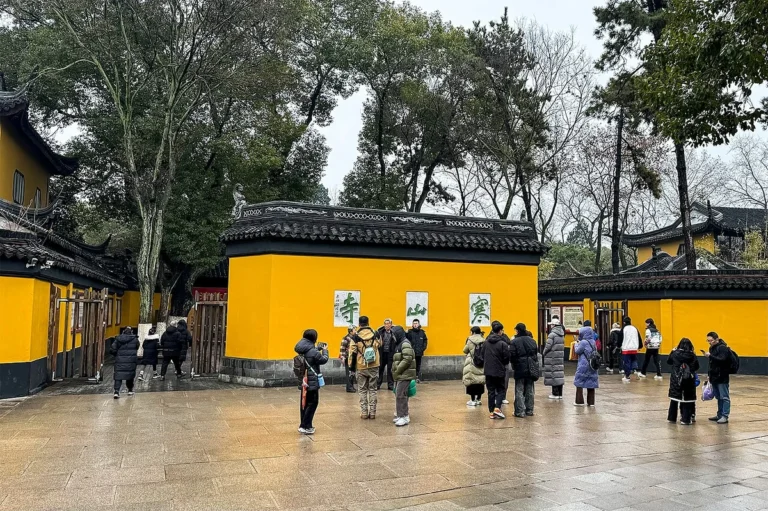
Lion Grove Garden (Shizilin), one of the four great classical gardens of Suzhou City in Jiangsu Province, China, is located at No. 23 Yuanli Lane within the historic inner urban district, at approximately 31 degrees north latitude and 120 degrees east longitude. The garden is situated on the low-lying terrain of the Yangtze River Delta basin, characterized by an intricate network of rivers typical of the Jiangnan hydrological landscape. The overall topography of the garden is laid out on a rectangular plane, covering a modest area of about 1.1 hectares yet containing an extremely dense spatial and architectural structure. The average elevation of this area above sea level fluctuates merely between 3 and 5 meters, reflecting the ancient alluvial plain terrain featuring an artificial hydraulic network directly linked to the Grand Canal system and the nearby Taihu Lake. The local climate is monsoon subtropical, with abundant rainfall and high year-round humidity, establishing an ideal microclimatic condition for nurturing lush vegetation and long-weathered ornamental rock formations.
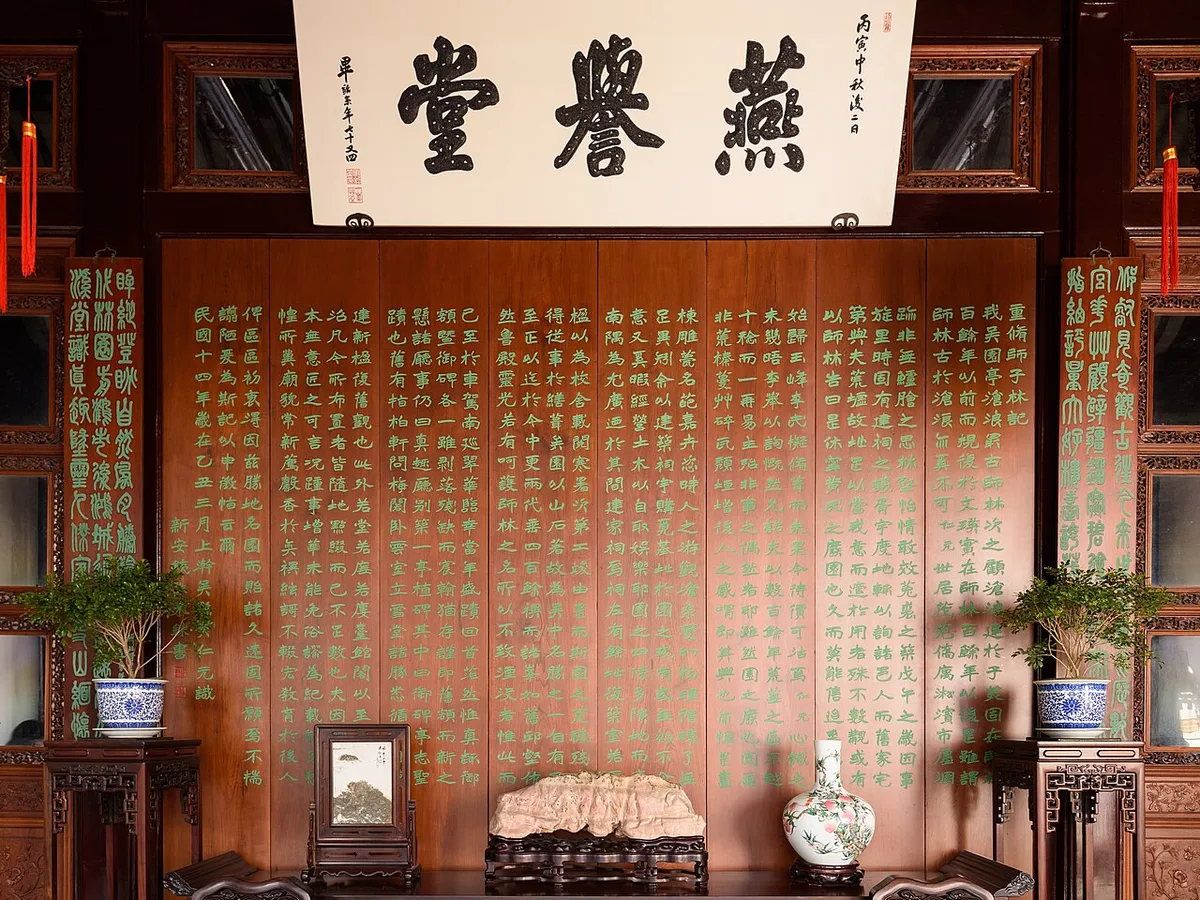
The formation history of Lion Grove Garden dates back to the Yuan Dynasty in 1342, during the second year of the Zhizheng era. Chan Master Tianru, a renowned eminent monk of the Linji school of Chan Buddhism, initiated the construction of this compound to commemorate and honor his master, the eminent monk Zhongfeng Bashi. Originally named Puti Zhenzong Monastery, it was soon renamed Lion Grove Garden because the primary landscape of the garden was dominated by a system of Taihu limestone rocks bearing bizarre shapes that strongly evoked the majestic appearance of roaring lions stretching forth. In its primitive early phase, Lion Grove Garden served simultaneously as a tranquil monastic sanctuary for ascetic practices and an outdoor philosophical meditation space where literati and clerics gathered to discourse on Buddhist dharma, poetry, and painting. The integration of Chan philosophy and Chinese garden architectural art established a solid foundation for the design style imbued with profound philosophical symbolism from its inception.
Throughout the Ming and Qing Dynasties, Lion Grove Garden witnessed numerous historical vicissitudes tied to shifts in power and the turbulence of aristocratic clans. In the 16th century, the garden was reconstructed under the Ming Dynasty and gradually transferred from religious institutions to private ownership, becoming the residence of wealthy officials and major artists. A landmark event occurred in 1589 when the painter and art collector Zhang Xingzu purchased and comprehensively restored the property, transforming it into a cultural and artistic hub for the Jiangnan intelligentsia. By the Qing Dynasty, particularly in the 18th century, the garden changed hands once more, coming under the ownership of the Huang clan, among the wealthiest salt merchants in the Huaiyang region. Huang Xingzu and his descendants executed major overhauls, clearly separating the residential quarters in the south from the landscaped garden in the north while renovating the wooden structures and rockeries. The reputation of Lion Grove Garden reached its peak when Emperor Qianlong visited the site six times during his southern tours, bestowing imperial inscriptions and ordering the landscape to be replicated for construction at the Summer Palace in Beijing and Chengde.
The decline of Chinese feudalism in the late 19th and early 20th centuries dealt heavy blows to the physical structure of Lion Grove Garden. Warfare, civil unrest, foreign invasion, and neglect in maintenance left the garden in a desolate state, with many wooden architectural structures rotting, rockeries overrun by weeds, and ponds severely silted. It was not until the period following the founding of the People’s Republic of China that the central state and local governments recognized the immense historical and cultural significance of this heritage. A series of large-scale survey, planning, and restoration campaigns were launched starting in the 1950s, particularly under the guidance of leading experts in ancient architecture and garden art. Traditional craftsmen had to apply ancient techniques to reinforce foundations, restore winding corridors, replace damaged wooden components, and dredge water channels to return Lion Grove Garden to a state closely approximating its golden age.
The national symbolic status and cultural influence of Lion Grove Garden extend far beyond Suzhou’s borders to reach international acclaim, standing as one of the pinnacles of artificial landscape architectural art in human history. The unique value of the work lies in its Taihu limestone rockery system, celebrated as the most complex stone maze in the world, where grottoes, ravines, stone bridges, and tunnels intertwine in a calculated non-logical artistic order. Ancient artisans skillfully exploited the natural weathering properties of the stone to create a multi-tiered three-dimensional space, compelling visitors to constantly shift their perspectives, stimulating curiosity and meditation on the philosophical impermanence of all things. The intersection between the tranquil space of the monastery and the bustling dynamism of rock sculpture art has rendered this venue an endless source of inspiration for generations of poets, painters, and architects.
The historical, aesthetic, and scientific values converging at Lion Grove Garden have earned this heritage recognition at the highest legal levels. In 2000, Lion Grove Garden was officially inscribed by UNESCO on the World Heritage list as an extension of the Classical Gardens of Suzhou ensemble, affirming its exceptional importance in humanity’s cultural heritage treasury. Previously, starting in 1988, the structure was ranked by the Chinese government as a Major Historical and Cultural Site Protected at the National Level. The preservation and study of Lion Grove Garden today do not merely sustain an ordinary tourist attraction but safeguard a living document of spatial philosophy, traditional garden construction techniques, and the intellectual essence of medieval Chinese civilization. International scientific seminars are regularly organized around the architectural structure of this garden, analyzing how ancients managed the relationship between nature and humanity through the language of stone, water, flora, and architectural forms.
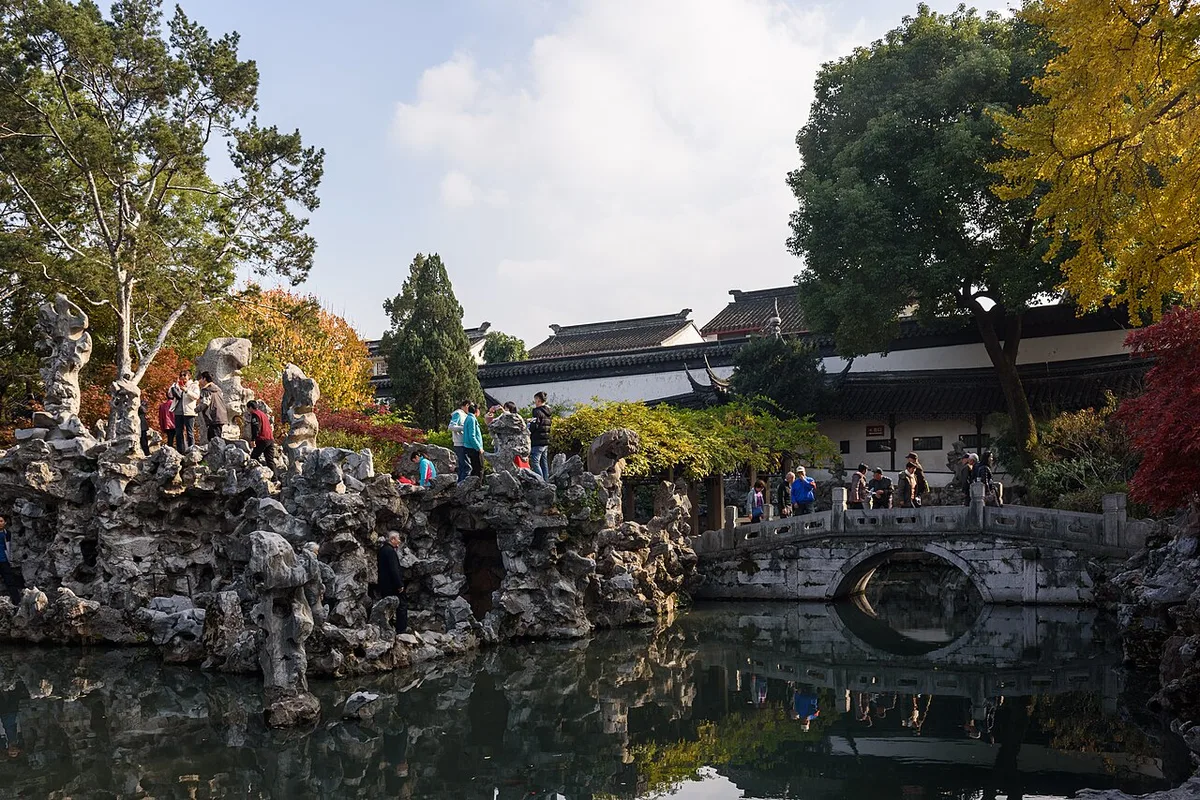
The imprints of time deeply engraved on every rugged rock block and mossy wall section at Lion Grove Garden bear witness to a turbulent yet resilient historical journey spanning nearly seven centuries. Through all shifts of circumstance, from solemn meditation ceremonies under the Yuan Dynasty to the lavish imperial tours of Qing emperors, and surviving the devastation of modern warfare, the garden stands firmly as an immortal monument of spatial arrangement art. The symbolic value of Lion Grove Garden has thus transcended the framework of a local historic site to become a representative exemplar of traditional Jiangnan cultural essence, a testament to the exquisite harmonization between human craftsmanship and natural creation, continuing to illuminate profound lessons on life philosophy and aesthetic thought for future generations worldwide.
Lion Grove Garden in Suzhou, initiated in the second year of the Zhizheng era during the Yuan Dynasty in 1342 by Chan Master Tianru and his disciples to honor his master, the mountain-dwelling Chan monk Zhongfeng, represents one of the pinnacles of landscape architectural art and classical spatial planning in China. Located in the Yuanli Lane district of Suzhou City, Jiangsu Province, this heritage site spans a total area of approximately 1.1 hectares, with built structures accounting for about thirty percent and water spaces alongside artificial hills occupying the remaining majority. Through various historical upheavals, across the Ming and Qing Dynasties and major modern restorations, Lion Grove Garden maintains the core structure of a garden deeply imbued with Chan Buddhist philosophy combined with traditional landscape painting art, becoming an invaluable cultural asset recognized by UNESCO as a World Heritage site in 2000 as an extension of the Suzhou Classical Gardens ensemble.
Regarding overall planning, Lion Grove Garden is divided into two distinct yet closely interconnected functional zones linked through roofed corridors, patterned boundary walls, and graceful moon gates. The eastern half of the garden concentrates residential architecture, halls, studies, and traditional courtyards bearing Jiangnan folk architectural styles, manifested through white walls, gray bricks, and dark yin-yang tiled roofs. The western and northern halves constitute the primary domain of the Taihu rock system and the central water body, where spatial creation artistry achieves master craftsmanship with the most complex limestone cave system among all ancient gardens in China. This division creates a distinct psychological transition for visitors, shifting from secular, solemn, and orderly living spaces to the marvelous, infinitely variable natural world of gigantic cat-ear rock formations.
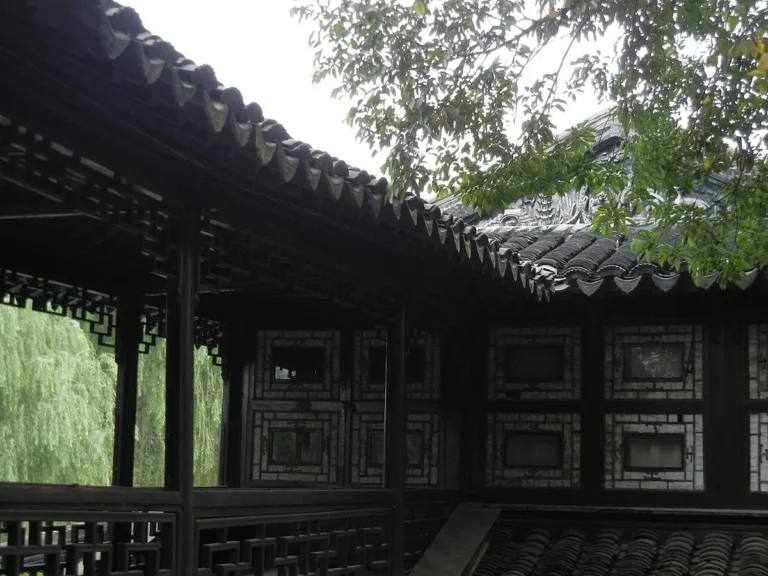
The architectural structures within Lion Grove Garden strictly adhere to axial symmetry combined with the free fluidity of the scholar-garden style. Representative works such as Zhibai Pavilion, Zhentu Pavilion, Wenmei Tower, and Shiling Hall are erected using traditional materials characteristic of the lower Yangtze River basin, including Phoebe zhennan timber, well-fired terracotta bricks, granite, and mortar made from slaked lime mixed with glutinous rice water for high adhesive strength. The height of these architectural works is generally constrained to one or two stories to ensure proportional harmony with the rockery masses and surrounding vegetation, avoiding any sense of overpowering nature. Upturned eaves styled in traditional fashion with curving ridge ends not only offer high aesthetic value but effectively drain rainwater in the humid monsoon climate of Jiangnan.
The peerless technical highlight earning Lion Grove Garden global renown is its monumental Taihu rock system, transported from the Taihu Lake region in Jiangsu Province starting in the 14th century. These limestone blocks underwent millions of years of natural weathering under water currents and wind action, generating bizarre shapes featuring the classic characteristics of Chinese ornamental rock aesthetics: lean, translucent, pitted, and perforated. Artisans of the Yuan and Ming Dynasties skillfully arranged thousands of tons of these stones to form the most complex rockery maze in the history of landscape architecture. This system comprises nine main trails leading through twenty-one large and small cave entrances, connecting three distinct vertical spatial tiers, generating a delightful visual and tactile game for visitors navigating narrow, dark, and winding paths.
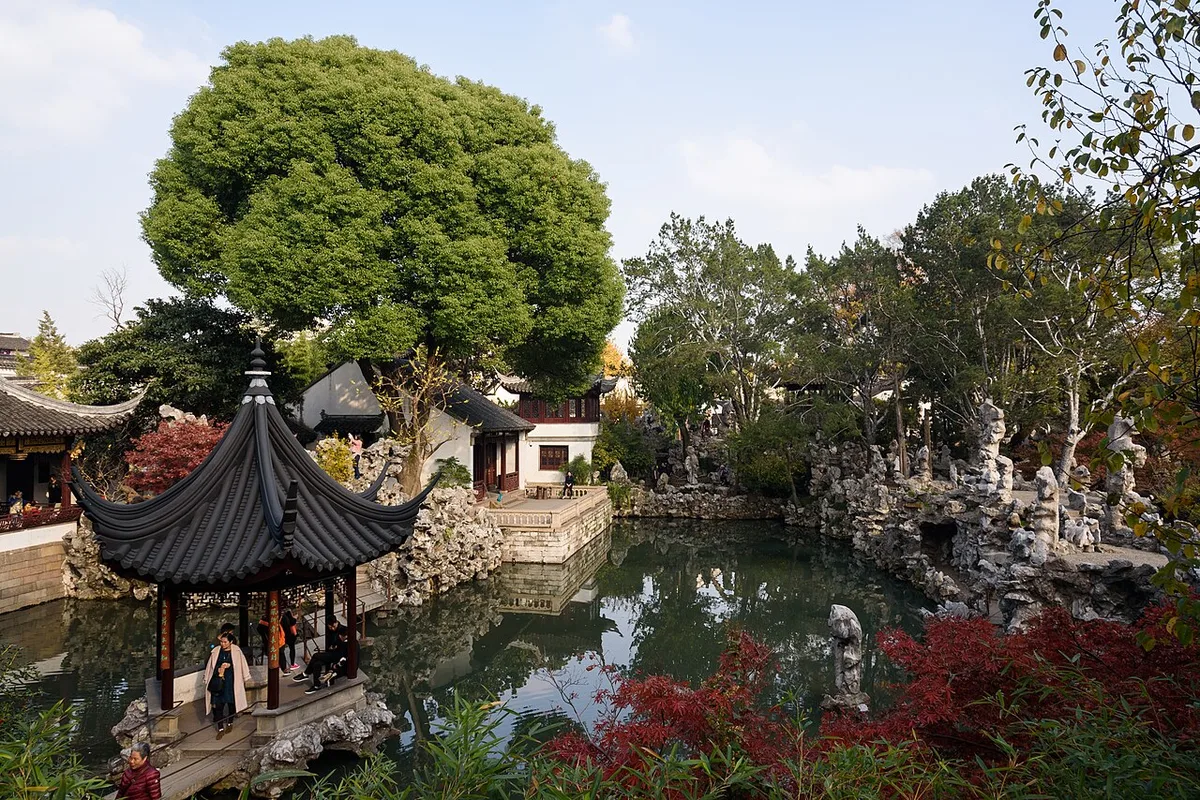
The construction technique of the rockery caves at Lion Grove Garden demands a profound understanding of mechanical structure and gravity ratios, as thousands of ton-heavy rock blocks are stacked atop one another without utilizing any modern cement or adhesives aside from traditional mortar and sophisticated timber-wedging and stone-pinning techniques. Ancient engineers and craftsmen accurately calculated natural lighting directions, wind currents, and viewing angles from surrounding pavilions so that with every shift of sunlight during the day, the garden assumes entirely different shadow effects and expressive nuances. The name Lion Grove Garden originates from the resemblance of many limestone blocks here to lions stretching, roaring, or resting, directly reflecting Buddhist thought on the “Lion’s Roar,” symbol of majesty and enlightening wisdom.
Alongside the rockery system, water spatial planning at Lion Grove Garden acts as the unifying element connecting all architectural structures and botanical landscapes. The central lake is moderately sized, with banks edged by skillfully carved fieldstones to establish natural winding contours instead of rigid straight revetments. Water in the lake is channeled from surrounding Suzhou city canals via subterranean conduits engineered since ancient times, ensuring continuous circulation and preventing stagnation. Small arched stone bridges like the Zhizhi Bridge or wooden spans across narrow water channels permit visitors to observe the garden panorama from diverse angles, reflecting images of storied pavilions and ancient stone towers upon the calm water surface like a dynamic ink-wash painting.
Flora within Lion Grove Garden is selected and arranged according to Feng Shui principles and traditional cultural symbolic significance, including ancient pines and cypresses, bamboos, peonies, magnolias, and lotus flowers planted around ponds. Centuries-old pine trees with gnarled forms and rugged bark placed beside Taihu rocks generate visual harmony, emphasizing the resilient, longevity-oriented, and tranquil spirit of Eastern philosophy. Courtyards are skillfully arranged to capture natural sunlight for reception rooms while creating spatial buffer zones that help regulate temperature and humidity for the entire architectural ensemble during sweltering Jiangnan summer months.
Regarding contemporary visitor capacity and heritage conservation, Lion Grove Garden management enforces rigorous visitor control standards to protect the fragile structure of ancient wooden buildings and centuries-old rockeries. Annually, the heritage site welcomes millions of tourists and architectural researchers worldwide for surveys and study. Tour routes are planned as one-way paths through narrow stone caves to prevent congestion and minimize weight load on subterranean structures below. Periodic maintenance and conservation activities exclusively employ traditional materials and manual methods executed by skilled master craftsmen, ensuring Lion Grove Garden in Suzhou remains an pristine masterpiece of human urban spatial artistry and traditional landscape planning.
Lion Grove Garden, one of the four great classical gardens of Suzhou City in Jiangsu Province, China, was initiated in the second year of the Zhizheng era under the Yuan Dynasty (1342) by Chan Master Tianru Weize and his disciples to commemorate his master, Chan Master Zhongfeng Bashi. Traversing historical vicissitudes with numerous changes of ownership, from a Buddhist monastery imbued with Chan philosophy, this space gradually transformed into a private literati garden in the Ming and Qing styles, fusing Feng Shui architectural essence with supreme landscaping artistry of Jiangnan culture. The entire heritage site is a physical manifestation of Buddhist philosophical thought combined with traditional painting aesthetics, where spatial structures avoid the rigid symmetry of Beijing’s palatial architecture and instead pursue the freedom, winding curves, and subtlety of Chinese Chan philosophy.
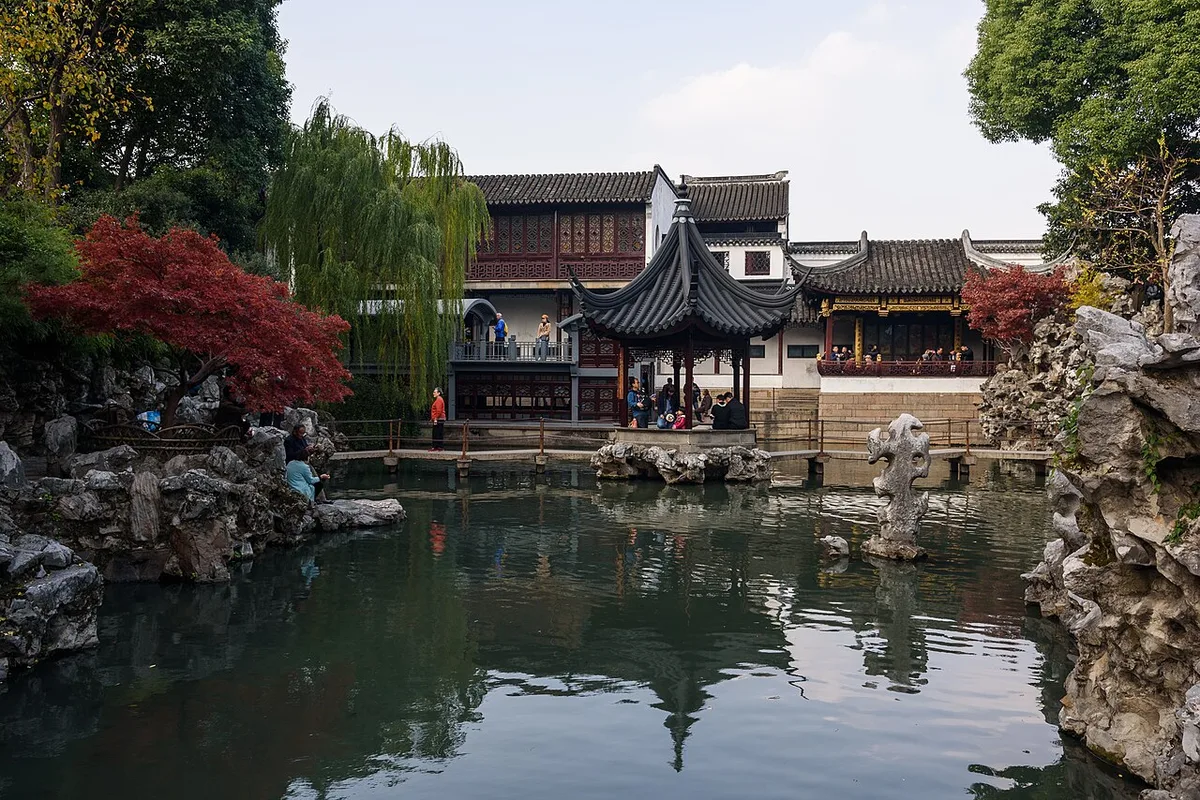
The architectural system of Lion Grove Garden is organized along a non-linear spatial axis, divided into functional sub-zones closely interwoven among buildings, winding corridors, pavilions, ponds, and most importantly, the Taihu stone maze. Crossing the main gate, visitors approach the main reception hall named Yanwu Hall, which once hosted receptions, literary discourses, and art appreciation gatherings of ancient literati. The architecture of Yanwu Hall clearly manifests characteristics of traditional Jiangnan dwellings featuring load-bearing timber frames, moss-covered yin-yang tiled roofs, and large Phoebe zhennan columns supporting intricately carved tie-beams without ostentation. Circular or vase-shaped window frames fashioned from carved terracotta open up intentional vistas, transforming each window into a tranquil landscape painting shifting with the sun’s angle during the day.
Venturing deeper into the interior, spatial structures transition to contemplative zones such as Zhibai Pavilion and Wenmei Hall. Zhibai Pavilion, whose name implies firmness and tranquility of mind amidst the temporal flux of time, is an open architectural space facing directly toward the rock garden. Builders skillfully employed borrowed scenery techniques to connect confined interior spaces with boundless external nature, generating continuous visual fields. Fronting these buildings are roofed long corridors carved with geometric patterns and auspicious symbols, winding tightly along lake shores and rockery bases, enabling visitors to traverse unhindered by weather while producing a slow movement rhythm well-suited to the meditative posture of ancient monks and scholars.
The central focal point and greatest artistic masterpiece of Lion Grove Garden is the artificial Taihu rockery complex, famed for hundreds of bizarrely shaped stones evoking lions playing in various postures. These limestone blocks were quarried from nearby Taihu Lake, undergoing natural water erosion over centuries before Yuan artisans arranged, chiseled, and assembled them according to a complex geometric scheme. This rock system is not merely garden ornamentation but forms a three-tiered subterranean cave system featuring dozens of narrow paths, dead ends, stone staircases, and apertures catching natural light. Navigating this stone maze demands subtle observation and evokes the arduous ascetic journey of practitioners seeking enlightenment in Chan philosophy, where every step may yield surprise or insight into truth.
Beyond landscape architecture, Lion Grove Garden preserves a vast corpus of artifacts, treasures, and inscribed stone calligraphy of priceless historical value. Scattered along corridor walls and inside shrines are numerous stone stelae recording calligraphy by Qing emperors Kangxi and Qianlong, who undertook southern tours and expressed deep admiration for the garden. Notably, calligraphy works by renowned Ming master Wen Zhengming carved exquisitely on stone retain fluid, vigorous strokes reflecting humanistic philosophy bonded with nature. Decorative motifs on wooden screens, stone railings, and column bases strictly adhere to traditional symbolic systems, from treasures and lotus flowers symbolizing purity to swirling cloud and wave lines representing cosmic eternity.
The artistic value of Lion Grove Garden is further expressed through garden layout following “concealing scenery” (canglu) and “transitioning scenery” (zhuanjing) principles, meaning concealing views so viewers must discover them and constantly shift perspectives while moving. Every courtyard corner, window frame, bamboo clump, or peony cluster is meticulously calculated by ancient landscape architects to recreate micro-cosms of pristine nature right within the urban center. The central lake with small arched stone bridges reflecting ancient pavilions and rugged Taihu stone towers creates a shimmering two-dimensional illusion, blurring boundaries between reality and dreams. The flawless fusion of rustic building materials, natural sculptured stone forms, and profound human philosophy transforms Lion Grove Garden into an immortal symbol of classical Chinese garden architecture, leaving deep cultural assets for humanity to study and admire across centuries.
Lion Grove Garden in Suzhou, originating in the Yuan Dynasty in 1342 under the craftsmanship of monk Tianru and disciples to honor master Zhongfeng, is not merely a static monument but a living cultural ecosystem evolving ceaselessly with natural time rhythms and human life. The architectural space here is structured as a real-life stone maze where Taihu rock-arrangement art achieves the apex of Chan and Daoist philosophy, combining emptiness and reality, the tranquility of inanimate stone and the ceaseless transformation of humanity through daily moments. To fully comprehend this scenic spot’s essence, cultural researchers must immerse themselves in indigenous daily rhythms from the first sunray piercing Jiangnan mist until night shrouds majestic stone walls, where each moment unfolds entirely distinct aesthetic dimensions.
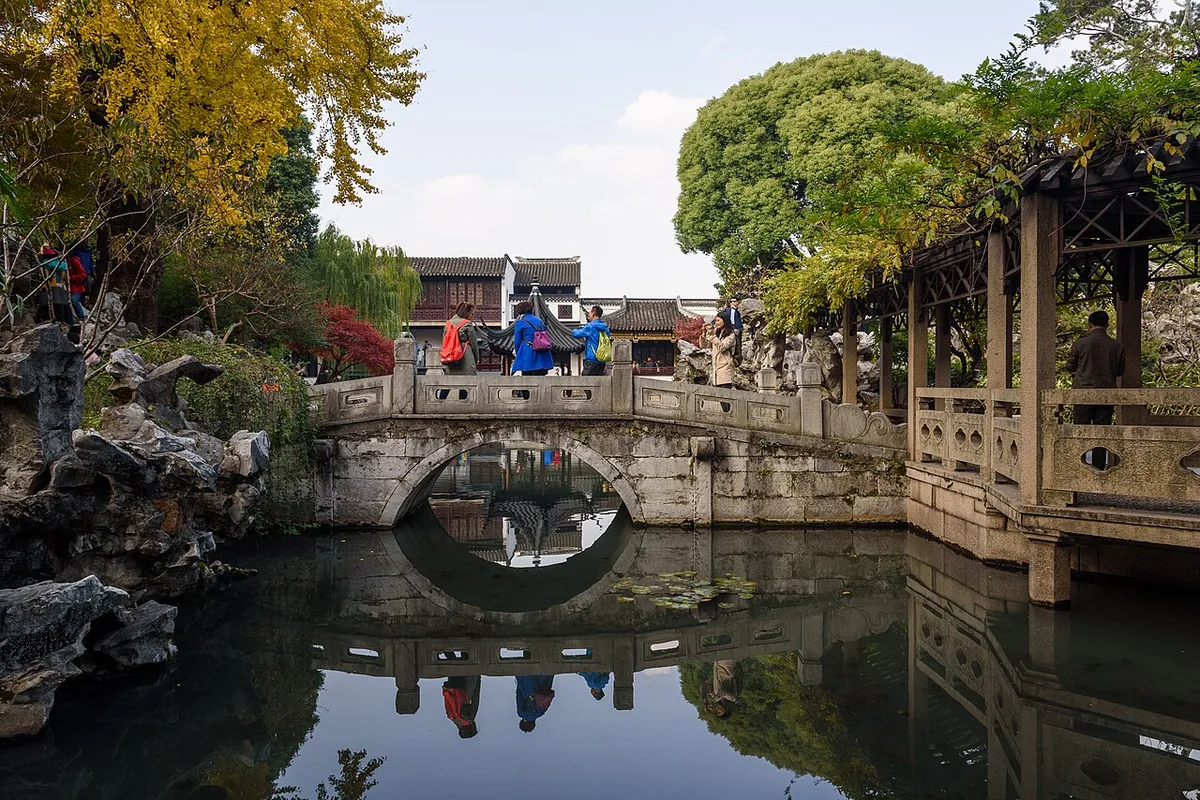
When dawn casts delicate sunbeams upon the garden’s gray tile roofs, Lion Grove Garden transitions from a dreamlike realm to waking reality through the earliest footsteps of locals and scholars seeking tranquility. At this hour, the air retains moisture exhaled by surrounding ponds, shrouding the bizarre limestone formations in ethereal mist, making lion-stone shapes spring to life as if awakening from millennial slumbers. Elderly urban residents frequently select this moment to enter the garden, practicing health regimens, tai chi, or traditional vocal exercises beside ancient hall eaves. Quiet footsteps on gravel pathways, wind rustling through aged pine canopies, and trickling water from artificial underground springs blend into a pure natural acoustic, awakening the expansive yet secluded spatial structure of the garden.
Gradually, as the sun rises, direct sunlight illuminates the clear green waters of the central lake, piercing through interwoven rock crevices to generate striking light-and-shadow contrasts, turning Lion Grove Garden into a giant canvas of illumination and shade. At this point, activity rhythms shift to the vibrant exploration of international travelers and landscape architecture researchers. Crowds wind through serpentine stone caves where headroom constricts before suddenly opening into expansive vistas featuring overlapping pavilions and storied towers. Local artisans select secluded corners along long corridors to perform Suzhou pingtan storytelling or play the guqin, whose ethereal melodies resonate through intricately carved window frames, recreating elite literati cultural atmospheres of antiquity within the heritage.
Midday and early afternoon represent times when spaces achieve peak contrast between visitor bustle and the subdued tranquility of traditional architectural details. Inside the main Hanxun Tower and auxiliary buildings, scholarly discourses unfold where researchers debate Yuan and Qing garden-making arts, analyzing how ancients borrowed scenery to express emotions, transforming modest areas into miniature universes complete with mountains, ravines, and abysses. Traditional handicraft workshops such as Suzhou embroidery or wood carving are occasionally recreated through thematic sessions, enabling participants to touch living heritage and experience the meticulous patience passed down through generations of Jiangnan artisans.
As dusk falls, amber-orange sunset rays strike white walls and yin-yang tiled roofs, casting ancient subdued tones over the entirety of Lion Grove Garden. Shadows of Taihu limestone blocks stretch bizarrely across lake surfaces, stimulating rich imaginations in observers. This represents the most precious hour daily for capturing iconic panoramic photography. From the eastern rockery summit topped by a soaring stone pavilion, observers encompass the garden layout, noting complex intersections among winding paths, arched stone bridges spanning water channels, and intentional yet natural arrangements of hundreds of lion-shaped stones in playful postures, evoking simultaneous chaos and order.
Nightfall activates artistic lighting systems, transforming Lion Grove Garden into a mythical, magical space. Warm lighting from beneath trees and stone walls highlights rugged, uneven limestone contours, generating deep multi-layered spaces without terminal horizons. During traditional festivals like the Mid-Autumn Festival or Suzhou nocturnal cultural events, the garden frequently hosts lighting art programs paired with traditional music, recreating moonlight tea parties of ancient literati. Bamboo flute melodies rising in tranquil nights, mingling with sweet osmanthus and lotus fragrances from surrounding ponds, transport humanity across temporal boundaries to touch eternal aesthetic spirits of ancient Chinese culture.
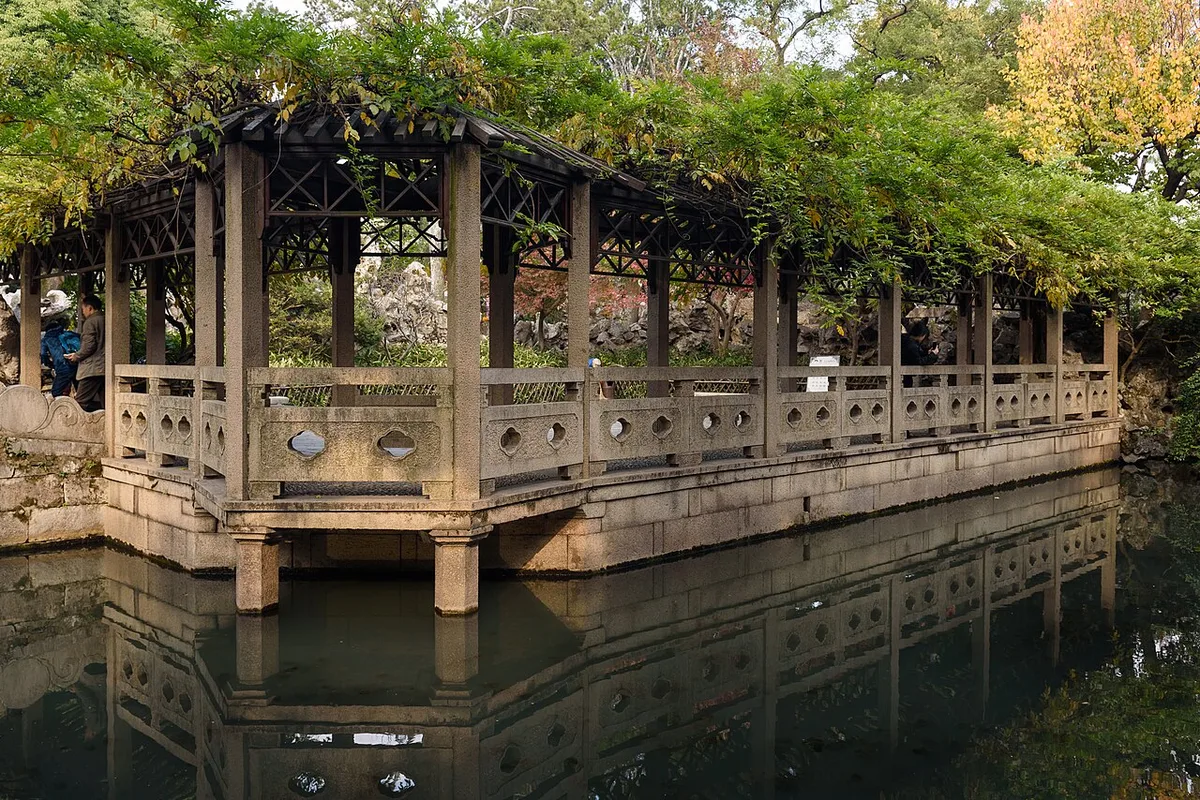
The vibrant exploratory experience at Lion Grove Garden transcends surface landscape observation, serving as immersion into historical pulses and contemporary breaths fusing within every nook of the heritage site. Every vista from Wenmei Pavilion, Zhentu Pavilion, or small stone bridges imparts lessons on spatial geometry and life philosophy, where humanity learns humility before miniature nature to discover inner greatness. Flawless integration between slow indigenous local lifestyles, delicate art performances, and monumental architecture of Taihu Lake stones establishes immortal Lion Grove Garden, where every fleeting moment constitutes living history written by time and humanity.
Suzhou has long established its status as one of Jiangnan’s most vibrant culinary cradles, where the convergence of abundant natural resources from Yangtze River Delta wetland river networks and refined aesthetic philosophies of feudal literati generated a unique culinary system. Surrounding the artistic Taihu rock architecture of Lion Grove Garden, a late-Yuan landscape heritage, indigenous gastronomic networks transcend biological subsistence to become living art forms, reflecting human-nature harmony and reverence for seasonal produce. Suzhou cuisine, categorized under Su style, particularly emphasizes perfect balances among natural flavors, original colors, tenderness without mushiness, and delicate natural sweetness characteristic of southern Yangtze regions, where spices do not mask ingredients but act as delicate catalysts awakening innate flavors.
Reviewing traditional dishes linked with Lion Grove Garden and Suzhou ancient town, braised pork belly in Suzhou style, known as Dongpo pork with localized refinements, demands absolute patience through multi-hour low-heat simmering with superior soy sauce, rock sugar, Shaoxing wine, and traditional spices, melting animal fats while keeping rinds chewy and lean meat melting in the mouth without greasiness. Furthermore, Taihu freshwater seafood dishes occupy supreme positions in traditional menus of historic restaurants nearby, exemplified by squirrel-shaped sweet-and-sour fish, a masterpiece of knife-work and frying temperature control. Chefs fillet crucian or silver carp, score intricate diamond patterns down to bones without severing skin, batter and deep-fry in hot oil until flesh blossoms like golden chrysanthemums, and drizzle Zhenjiang vinegar tomato reduction and roasted pine nuts, creating symphonies of crispness, tartness, and rich sweetness.
Suzhou culinary richness is further demonstrated through breakfast dim sum and noodle arts, street food and traditional restaurant traditions enduring centuries. Suzhou noodles, epitomized by fine yet chewy wheat-and-egg noodles simmered in clear broths boiled from young hens, pork marrow bones, and dried seafood for hours, achieve amber clarity alongside rich natural umami. Diners customize seasonal toppings ranging from thick-cut char siu, garlic-fried eels, to freshly peeled river shrimp quick-fried on high heat with local yellow wine. Highlight dim sum features traditional pastries with glutinous rice flour and red bean, jujube, or osmanthus fillings, such as Su-style multi-layered pork-minced flaky pastries or black sesame sweet soups, all formulated upon seasonal dietary principles utilizing traditional medicinal herbs across annual solar terms.
Tea appreciation and tea ceremony customs in Suzhou possess astonishing depth, tied to ancient tea cultures of Tianmu and Taihu mountains. Biluochun green tea, among China’s ten famous teas characterized by snail-shell curls, white downy fuzz, and fruity aromas, is indispensable during literary discourses among ancient scholars visiting landscaped gardens like Lion Grove Garden. Brewing rituals demand deep understanding of water quality, traditionally requiring pure underground spring water or melted mountain snow to preserve natural sweetness of young leaf tips harvested pre-Qingming. Suzhou people appreciate tea unhurriedly through steps of observing liquor color, inhaling aromas from white porcelain cups, and sipping to transform slight astringency into lingering sweetness, paired with light traditional pastries.
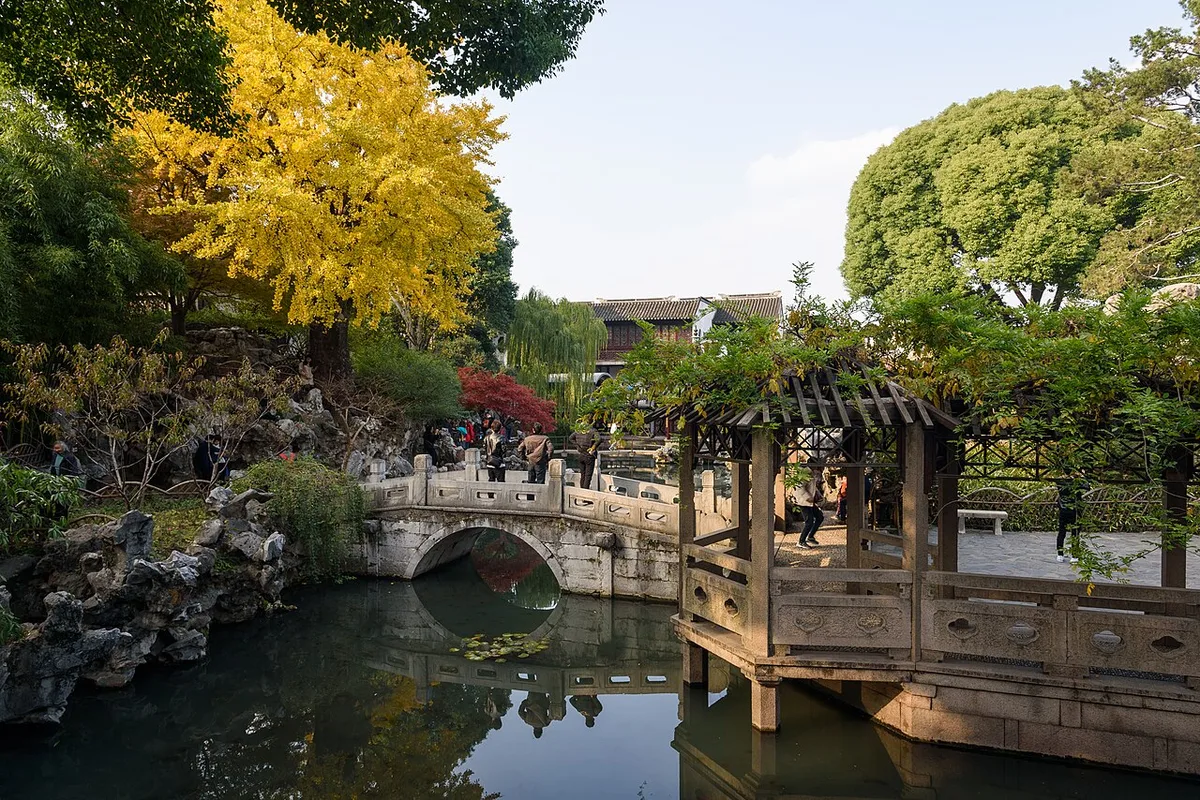
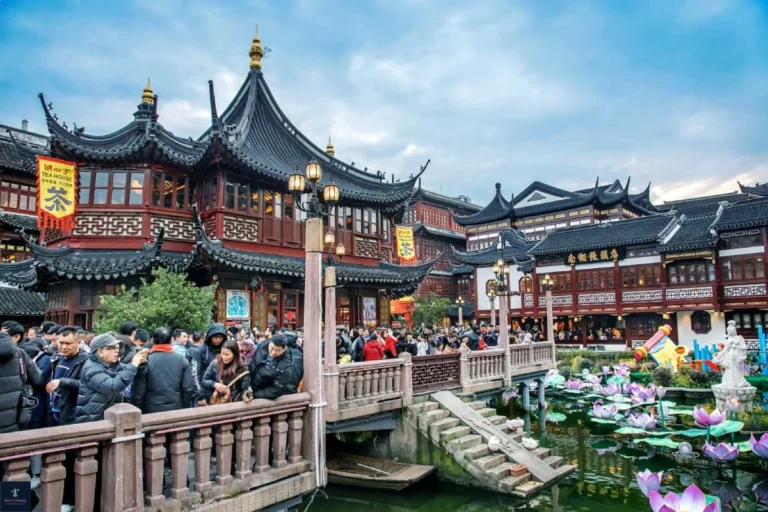
Exploring culinary streets encircling Lion Grove Garden remains incomplete without surveying historic food alleys and traditional markets preserving feudal era rhythms. Guanqian Street and areas near Mansheng Temple, a short walk across stone bridges spanning clear canals, concentrate historic culinary emporiums, handicraft sweet shops, and family-run eateries. Here, diners directly observe pulled peanut brittle, maltose spinning, or coal-fired baked meat pastries with golden flaky layers. Winding bluestone alleys guide visitors among seasonal produce stalls, from spring bamboo shoots, summer lotus seeds, autumn water chestnuts, to winter dried fish and cured meats. Seamless integration of sophisticated cooking techniques, refined appreciation customs, and historic architectural spaces turns the area surrounding Lion Grove Garden into an irreplaceable coordinate within humanity’s culinary heritage map.
Lion Grove Garden in Suzhou, a masterpiece of Buddhist landscape architecture and Taihu stone art from the Yuan Dynasty, demands meticulous spatial and temporal planning to fully comprehend historical and cultural values. To approach this heritage from neighboring metropolises like Shanghai or Nanjing, China’s modern public transit network provides optimal intercity connections with high punctuality. International travelers arriving at Suzhou high-speed rail stations utilize urban metro systems to reach historic centers, where Metro Line 4 serves as the main artery traversing ancient districts. From central stations, reaching Lion Grove Garden at No. 23 Yuanli Lane is accomplished via municipal bus networks featuring themed routes passing key heritage sites, or using widely available taxis and ride-hailing apps at reasonable fares. However, traffic planning around Lion Grove Garden and other Suzhou classical gardens restricts private vehicles during peak hours to preserve traditional tranquil spaces, meaning combining metro and walking through historic stone-paved streets alongside ancient canals always delivers the most rewarding exploratory experience.
Choosing annual travel seasons correlates with distinct shifts in Jiangnan’s monsoon temperate climate, where each season endows the garden with unique aesthetic appearances reflecting traditional philosophy and humanism. Spring (March to May) delivers fresh atmospheres and mild weather, with magnolias, camellias, and cherry blossoms blooming around lakes and covered corridors, establishing vivid contrasts between vibrant flora and subdued gray limestone. Summer (June to August) witnesses lotus flowers covering ponds, pairing with breezy pavilions to form peaceful refuges from Yangtze basin heatwaves, though heavy rainfall and high humidity prevail. Autumn (September to November) is rated by scholars and discerning travelers as the ideal annual window due to dry weather, clear blue skies, and spectacular foliage color shifts of ancient maples turning golden-orange, accentuating complex cave structures. Winter (December to February) brings absolute tranquility, occasionally featuring light snow blanketing yin-yang tiles and bizarre rock formations, perfectly recreating classical Chinese ink-wash paintings.
Daily timeframes dictate artistic experiential quality at Lion Grove Garden, especially given high domestic and international visitor volumes year-round. The golden hour to reach heritage gates is right at morning opening between 7:30 AM and 8:00 AM, when early light filtering through Taihu stone crevices creates magical optical effects and spaces retain original meditative quietude. Avoiding 10:00 AM to 3:00 PM is crucial to bypass mass tour groups generating noise and disrupting focus within complex stone mazes designed by Linji Chan monks. Late afternoons past 4:00 PM offer another compelling choice as sunset casts golden rays through carved wooden windows, mirroring tranquil central pond waters and evoking deep nostalgia for detailed architectural research.
Clothing and personal equipment preparation requires practical consideration of rugged terrain and national cultural heritage preservation rules at Lion Grove Garden. Because interior pathways primarily comprise narrow trails, steep rugged pebble steps, and dark artificial caves stacked from sharp Taihu stones, high-traction, anti-slip athletic shoes are mandatory for safety and injury prevention. Attire should be neat, flexible, breathable in summer, and layered for warmth in winter following layering principles, avoiding long floor-sweeping dresses or overly baggy clothes prone to snagging on sharp rock corners. Additionally, wide-brimmed hats, sunglasses, sunblock in summer, and personal umbrellas or waterproof jackets for Jiangnan drizzle are essential. Visitors should carry moderate personal water hydration in compact backpacks, as indoor beverage sales are strictly restricted to protect pristine historical spatial cleanliness.
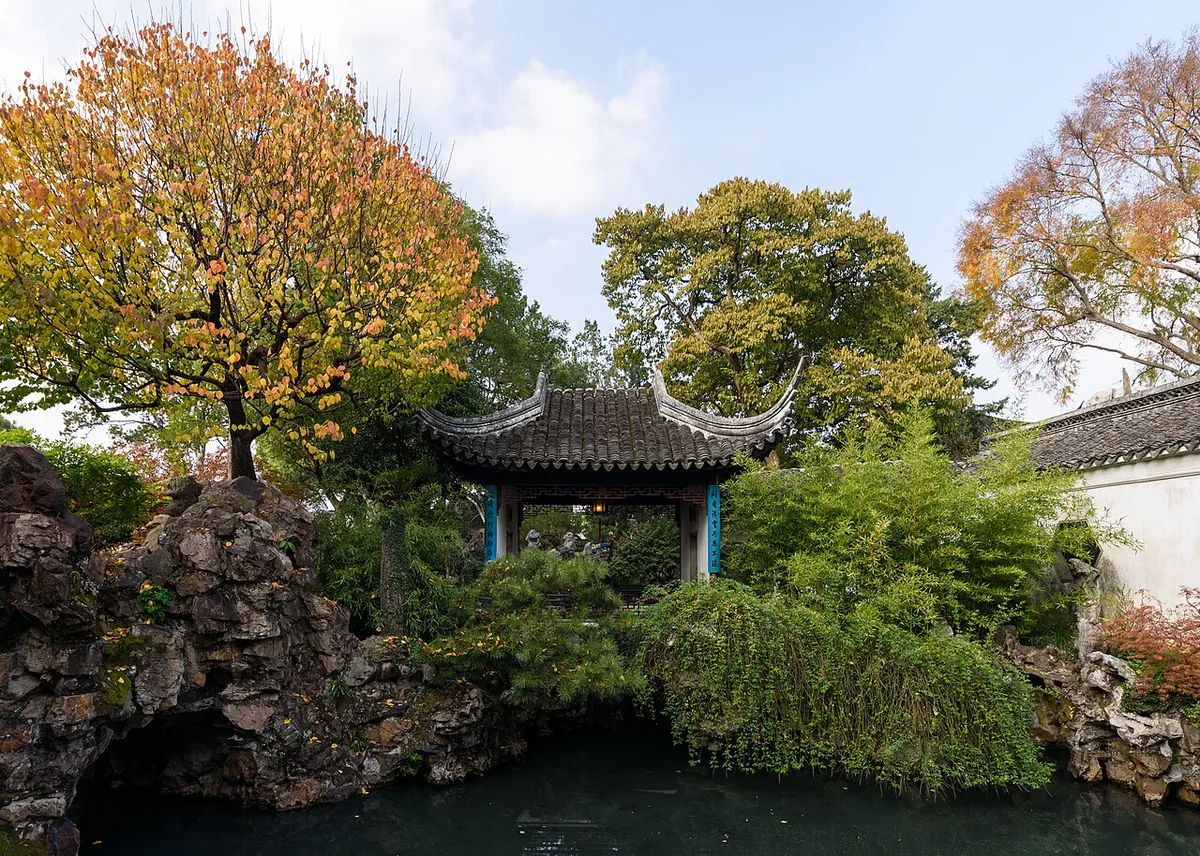
Ticketing management and adherence to cultural codes of conduct at Lion Grove Garden require mastering current regulations enforced by Suzhou’s municipal heritage bureau. Admission tickets utilize digital management via official online booking platforms requiring valid foreign passports, or purchasing directly at automated ticket kiosks with staff guidance, featuring seasonal pricing adjustments. Concessions or discounted tickets for children or seniors require presenting valid ID bearing birth dates. Entering sacred and historic spaces mandates strict compliance with traditional codes of conduct, including maintaining general quiet, avoiding loud laughter, and refraining from touching ancient stone surfaces centuries old to prevent body oils from damaging natural weathering structures. Smoking, littering, stepping on lawns, or picking flowers is strictly prohibited. Commercial photography or large professional filming equipment like drones requires special permits from local cultural authorities to prevent disruption to fellow visitors and national historic monument solemnity.
To experience this journey seamlessly with a local guide, you may reference the Beijing – Suzhou – Hangzhou – Wuzhen – Shanghai Tour featuring a pre-arranged itinerary.