Welcome travelers to the journey of discovering human cultural heritage with VDS Travel. Nestled within the legendary tourist route exploring prosperous Jiangnan, China (Beijing – Shanghai – Hangzhou – Suzhou – Wuzhen), Suzhou always emerges as a vivid, exquisite natural landscape interwoven with canals, ancient stone bridges, and notably the illustrious reputation of the “Silk Capital of the World.” Among the countless renowned destinations of this land, the Suzhou Silk Museum—located at No. 200 Xibei Street, Gusu District, Suzhou City, Jiangsu Province, China—stands tall as a sanctuary preserving the soul of the legendary Silk Road.
To fully grasp the value of the Suzhou Silk Museum, we must travel back over 4,000 years to the era when sericulture and silk weaving began taking root in the Yangtze River basin. According to legend, the Yellow Emperor (Xuanyuan Huangdi) and his primary consort Leizu were the first to discover the process of reeling silk from cocoons. From a strictly guarded imperial secret, Suzhou silk gradually became a symbol of luxury, power, and refinement across the Han, Tang, Song, Yuan, Ming, and Qing dynasties. Suzhou was not merely a vital transit station on the ancient Silk Road connecting East and West, but also the manufacturing and supplying center for the finest silks to the imperial court and global nobility.
The Suzhou Silk Museum officially opened its doors to visitors in 1991 and underwent comprehensive expansion and upgrading in 2018 to become a leading national-level specialized museum in China. The museum’s exclusive symbolic significance lies in its mission to preserve, research, and honor humanity’s intangible cultural heritage. It not only preserves tens of thousands of precious archaeological artifacts such as silk fabric fragments from the Warring States period and Ming-Qing imperial garments, but also vividly recreates traditional handicraft processes through master artisans. Visiting the museum, VDS Travel guests will have the opportunity to touch history, feel the breath of a millennial civilization, and understand why Suzhou silk once captivated generations of merchants worldwide.
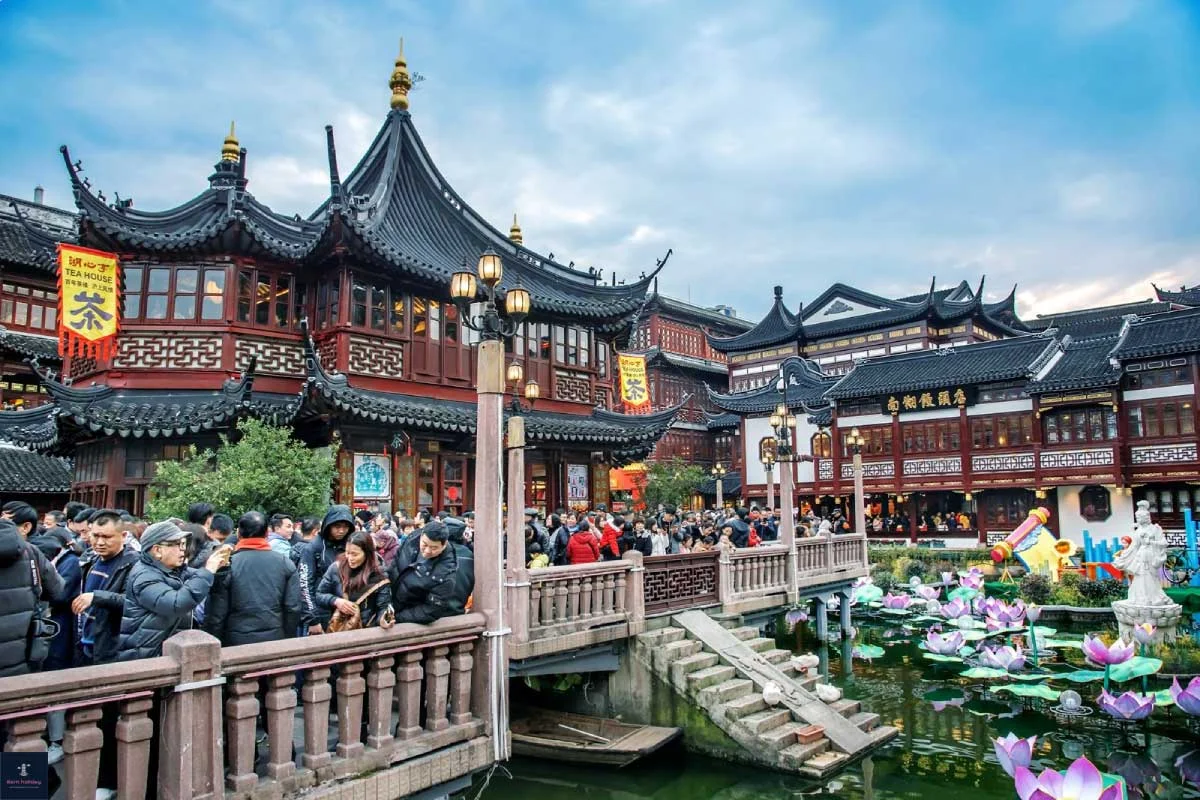
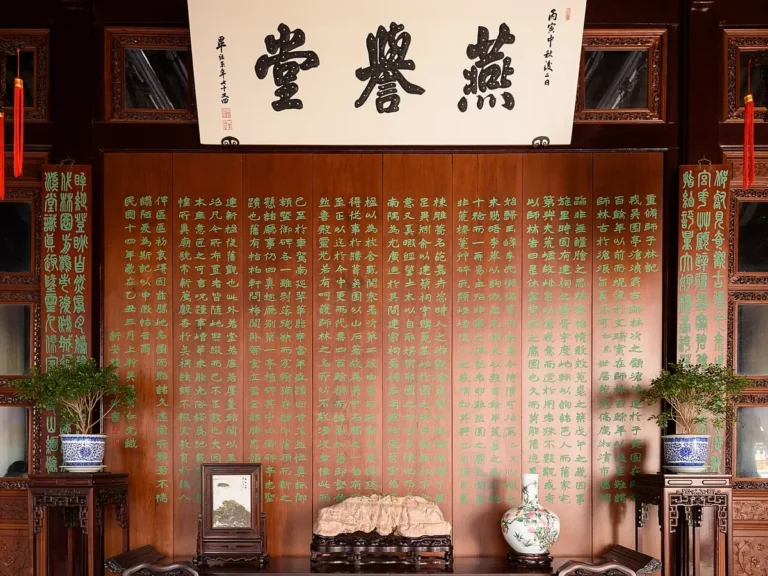
Exhibition space dedicated to the millennial history of silk reeling and weaving at the Suzhou Silk Museum
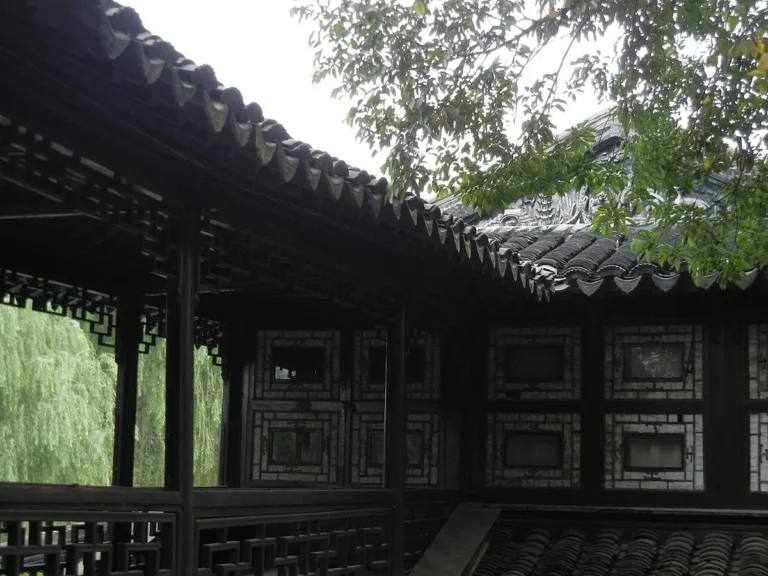
Designed by top Chinese architects, the overall architecture of the Suzhou Silk Museum is a seamless blend of traditional Eastern aesthetic philosophy and modern, minimalist architectural style. Spanning tens of thousands of square meters, the museum leaves a strong visual impression on visitors from first glance thanks to its sophisticated facade system utilizing geometric lines that mimic the graceful movement of soft silk ribbons in the wind. The exterior space skillfully integrates characteristic elements of Suzhou garden art, including tranquil ponds, elaborate rockeries, winding zigzag corridors, and traditional white walls with dark grey tiles.
Inside the museum, the space is scientifically divided into multiple grand-scale thematic exhibition areas catering to the research and sightseeing needs of international visitors:
Chinese Silk History Exhibition Area: Showcasing priceless archaeological artifacts, including silk fragments excavated from ancient tombs dating back thousands of years, testifying to sophisticated weaving techniques from prehistoric times. Silk Road Exhibition Area: Recreating the ancient international trade network where Suzhou silk was transported across harsh deserts to reach Central Asia, Europe, and the modern world. Traditional Weaving Craft Exhibition Area: Displaying historical wooden loom systems, ranging from simple handlooms to highly complex pattern looms requiring the coordinated efforts of multiple weavers. Modern Silk and Contemporary Art Exhibition Area: Honoring breakthrough creations in the 21st-century silk industry, combining high technology with world-class haute couture fashion design.
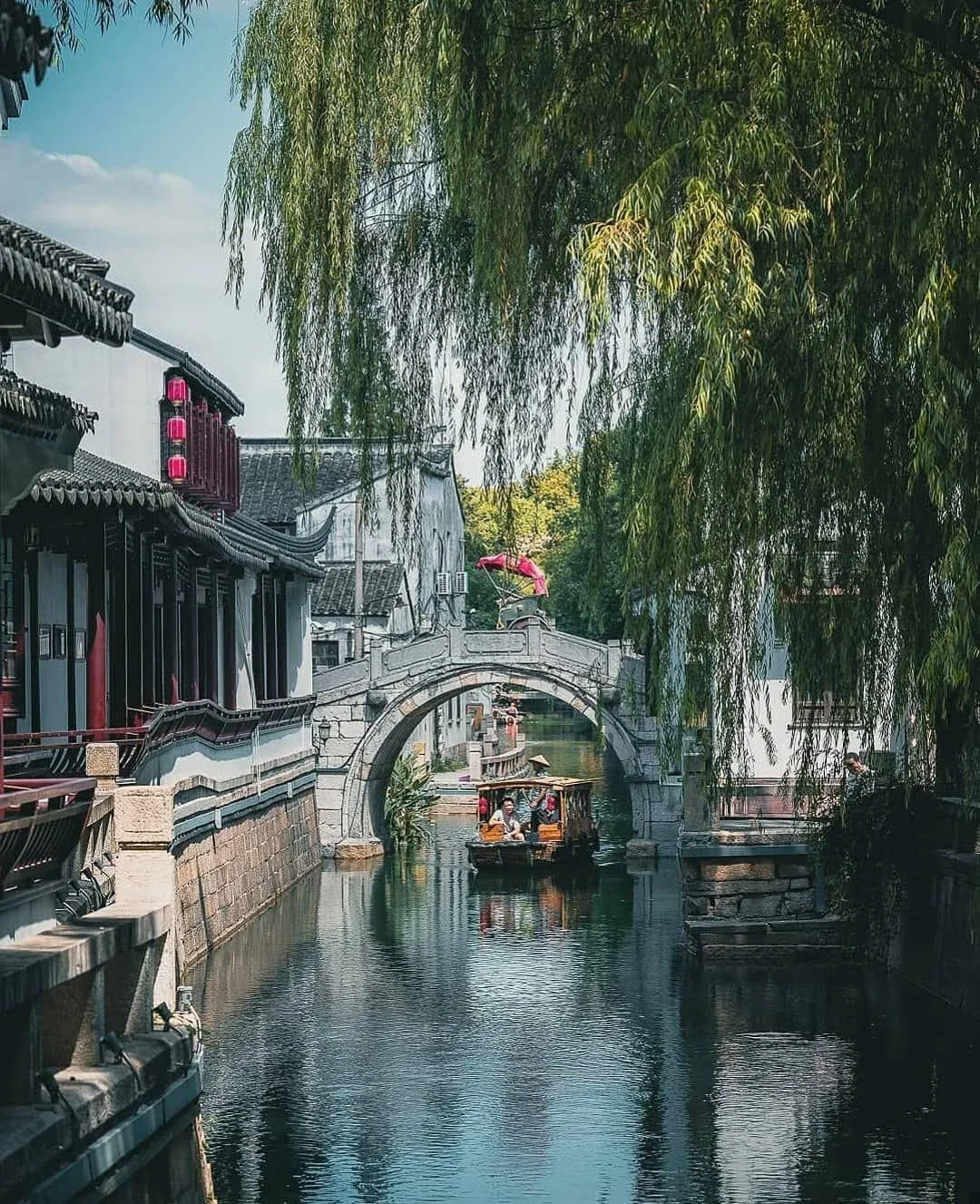
Canal scenery in Wuzhen ancient town featuring wooden boats and a stone bridge
Each area is equipped with state-of-the-art artistic lighting systems that accentuate every stitch, the natural shimmering colors of silk, and intricate embroidery patterns. These spectacular visual highlights offer visitors peak aesthetic experiences, turning every step inside the museum into an emotional visual journey.
Visiting the Suzhou Silk Museum with VDS Travel, guests do not merely observe static artifacts but also participate in an intensely vivid interactive experiential journey. One of the most popular activities for visitors is the area recreating the real-life silkworm rearing and silk harvesting process. Here, you will witness silkworms eating mulberry leaves, spinning cocoons, the artisan boiling water to untangle delicate silk filaments, and reeling them into sturdy thread spools.
Notably, the operating manual weaving workshop is an unmissable highlight. You will admire senior artisans with skillful hands operating massive wooden looms, weaving magnificent patterned brocade fabrics before astonished onlookers. If desired, visitors can also register for short-term classes to try thread twisting, natural herbal dyeing, or hand-embroidering lotus and peacock motifs characteristic of Suzhou Embroidery.
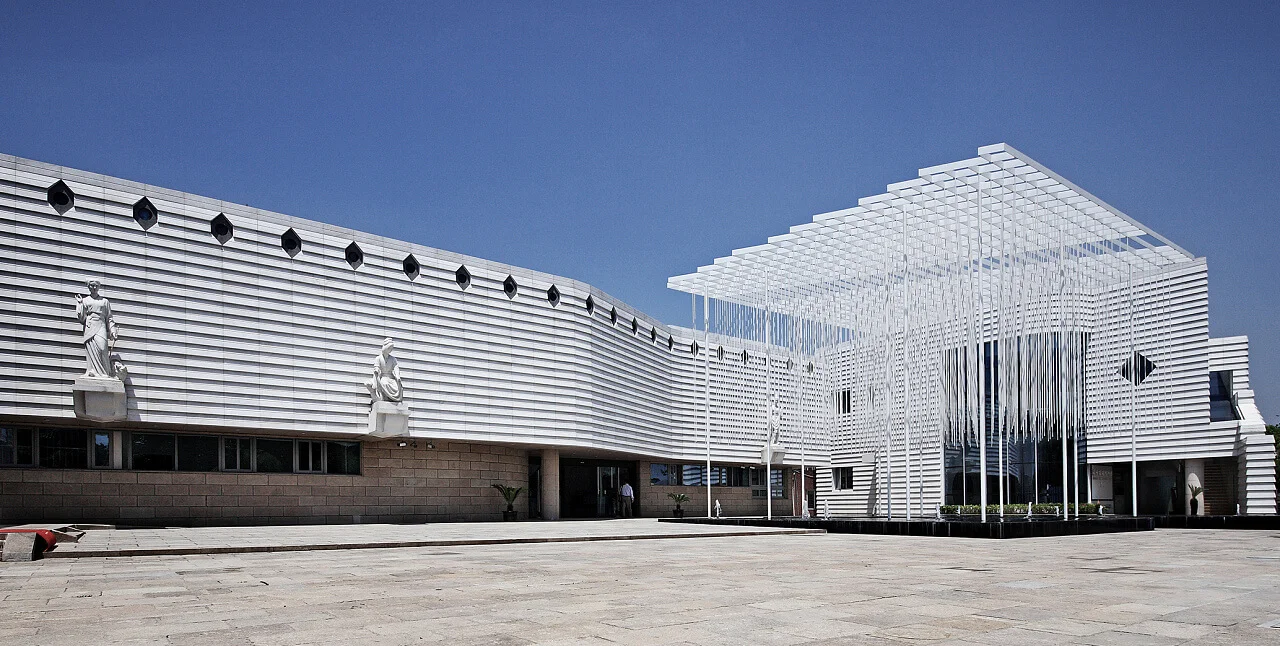
Modern facade architecture combining white steel frame roofing at the Suzhou Silk Museum.
With its unique architectural space, the museum boasts countless artistic check-in spots blending Asian essence with modernity:
Floating Silk Corridor: A glass corridor with natural light shining through multicolored silk art installations, creating a magical visual effect akin to stepping into a wonderland. Traditional Inner Courtyard Garden: A courtyard styled after Suzhou classical gardens featuring Koi ponds, winding stone bridges, and weeping willows, serving as the perfect backdrop for traditional attire like Hanfu or Qipao. Artistic Spiral Staircase: Modern stair architecture with soft curved lines mimicking spider silk, creating an extremely impressive spatial depth for minimalist artistic photos. Silk History Wall: An exhibition wall displaying exquisitely carved ancient silk pattern samples, offering a nostalgic, elegant, and scholarly aesthetic.
After exploring silk culture, your Suzhou journey will not be complete without experiencing the rich cuisine of the Jiangnan region. Located near the ancient central district, visitors can easily find traditional restaurants to enjoy renowned specialty dishes:
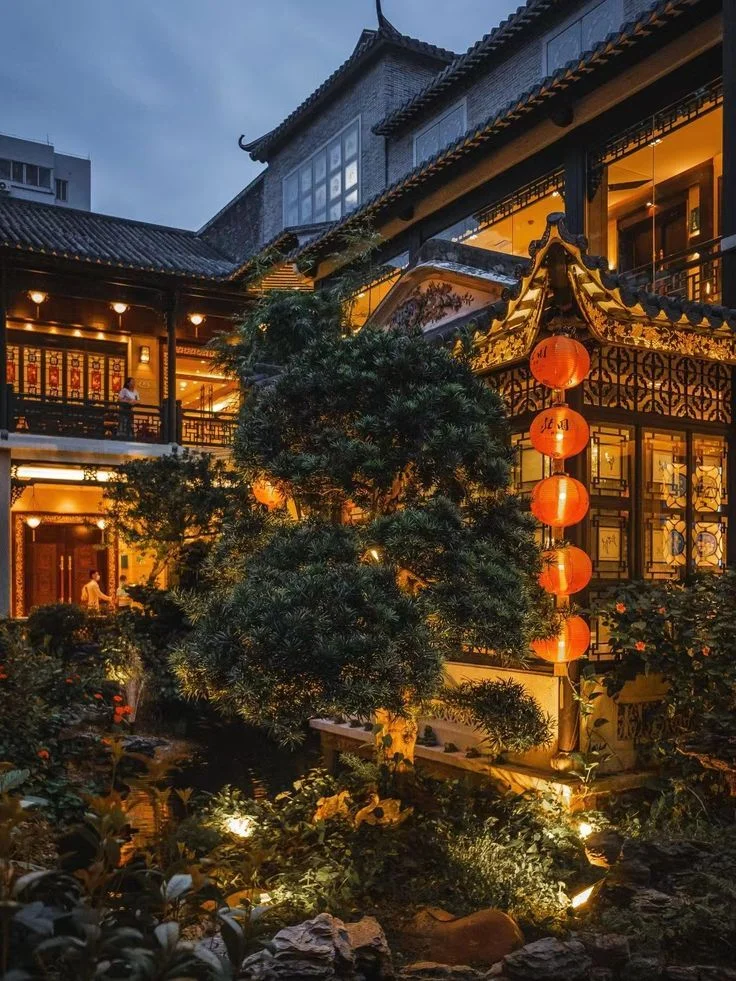
Traditional Chinese architectural courtyard glowing with lights at night amidst greenery and red lanterns.
Suzhou Braised Pork Belly (Dongpo Pork): Square-cut pork belly chunks simmered for hours with soy sauce, rock sugar, and Shaoxing wine, melting instantly in the mouth with a harmonious sweet and savory flavor. Squirrel-shaped Mandarin Fish: A dish demanding peak carving technique where freshwater fish is scored into squirrel scales, deep-fried until crispy, and drizzled with a bright red sweet and sour sauce, making it both appetizing and visually stunning. Suzhou Noodles: A traditional breakfast dish featuring exceptionally chewy, delicious noodles served with bone and seafood broth simmered carefully for hours, topped with roast duck, stir-fried eel, or sweet fresh shrimp. Rose Pastry: A famous dessert pastry featuring a crispy flaky crust with fillings made from dried fresh rose petals mixed with fragrant honey syrup.
The Suzhou Silk Museum houses a large-scale souvenir shop offering genuine silk products meeting the highest quality standards. When shopping here, you can feel completely secure regarding product origin and craftsmanship:
Premium Silk Scarves: Luxurious, lightweight gifts naturally dyed with delicate hand-embroidered patterns, suitable for both men and women. Custom-Designed Qipao Attire: Hand-tailored qipao dresses hugging body curves, highlighting the stately and graceful beauty of Asian women. Suzhou Hand-Embroidered Artwork: World-renowned double-sided embroidery pieces depicting natural scenery, flora, or birds with lifelike vibrancy. Pure Mulberry Silk Pillowcases and Bedding: Providing a smooth, breathable sleep experience extremely beneficial for skin and health.
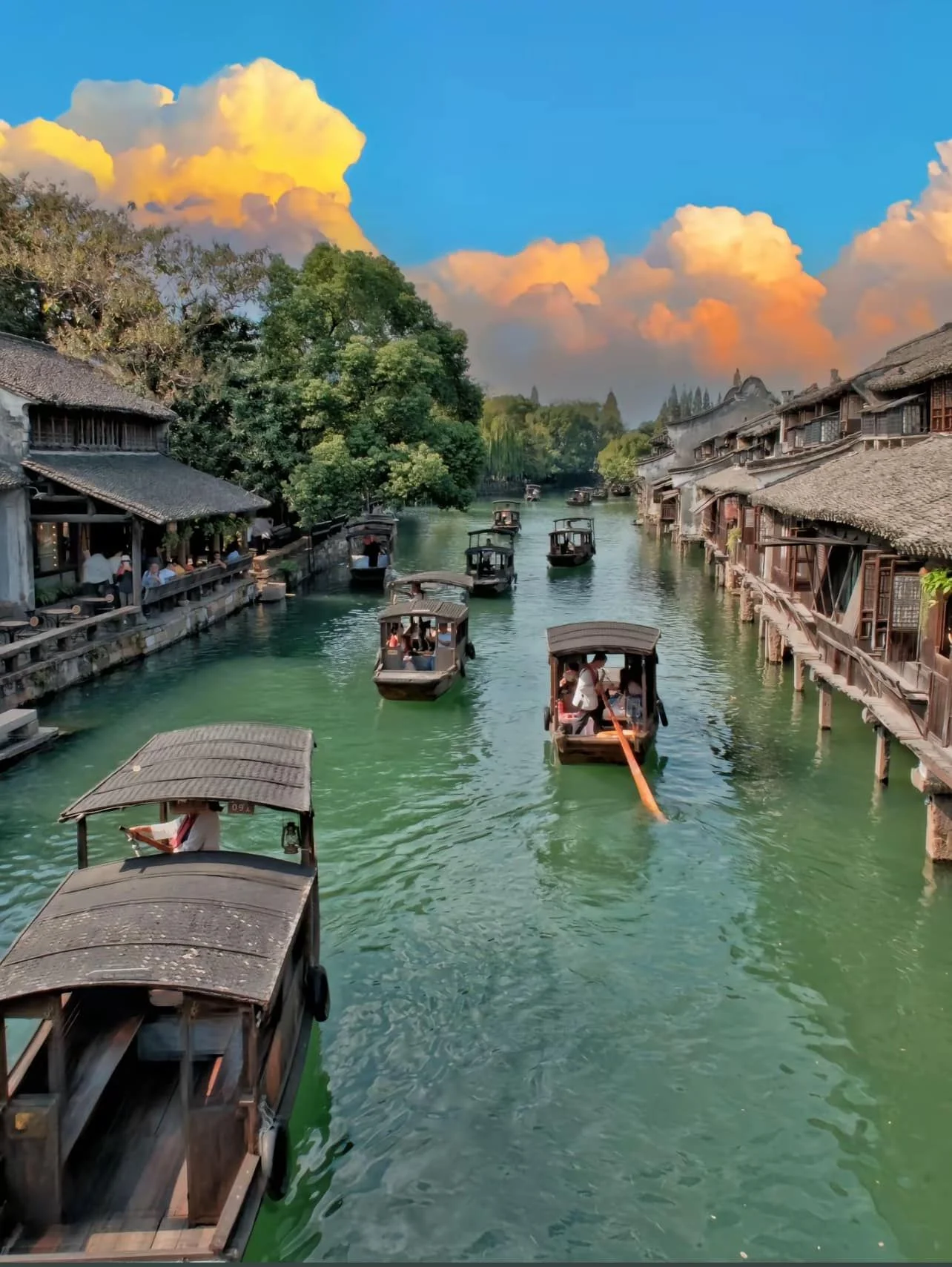
Wuzhen waterway scenery featuring wooden tourist boats.
Suzhou enjoys a humid subtropical climate with four distinct seasons. However, according to VDS Travel tourism experts’ experience, the ideal times to visit the city and the Suzhou Silk Museum are spring (March to May) and autumn (September to November).
LISTED TICKET PRICE & SERVICE TABLE
Situated on the Beijing – Shanghai – Hangzhou – Suzhou – Wuzhen tour route, traveling to Suzhou is extremely convenient:
Bullet Train: The most optimal transportation method. Traveling from Shanghai to Suzhou takes only about 25 – 30 minutes. Traveling from Hangzhou to Suzhou takes about 1.5 hours. China’s bullet train system is extremely modern, punctual, and safe.