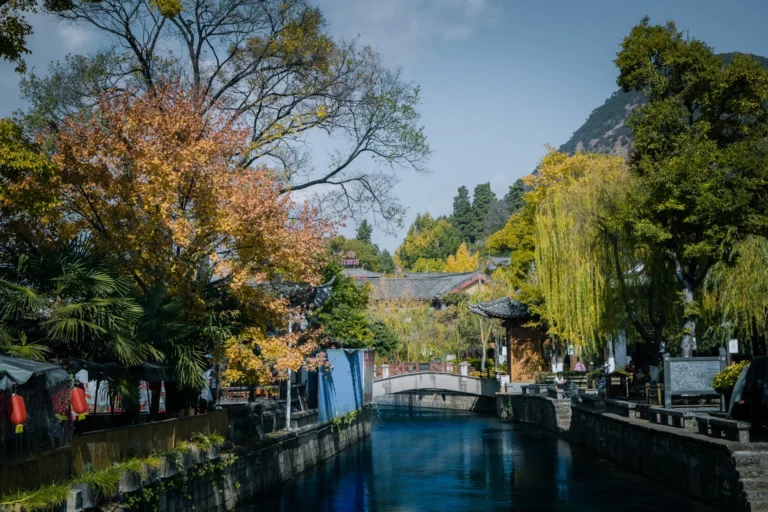
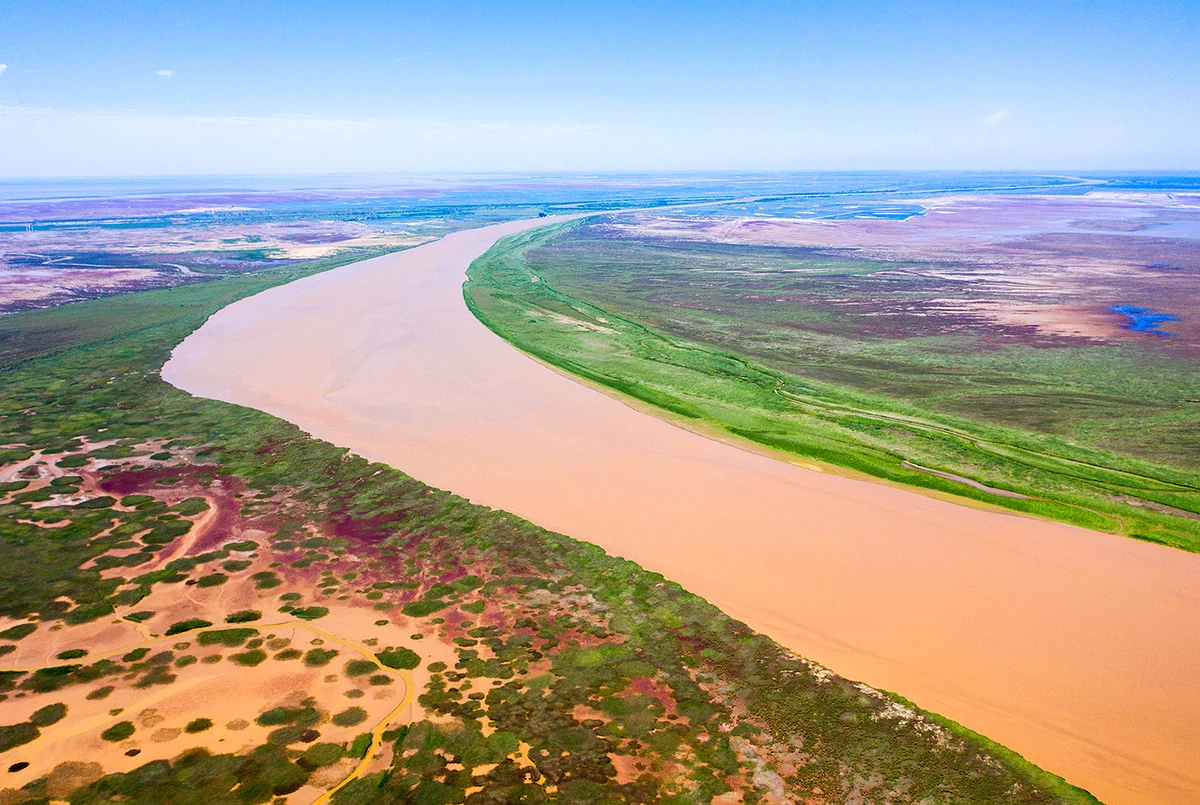
Tracing the silt-heavy, brick-red banks of the Red River, the trade corridor stretching through Hekou and Mengzi before climbing onto the Kunming Plateau is far more than a modern transport artery—it is the grand continuation of deeply layered history. Reaching back into feudal antiquity, this vital route once served as a key branch of the Southern Silk Road, where mule caravans laden with Pu-erh tea, Sichuan silk, and prized medicinal herbs wound through perilous frontier gorges toward the Red River Delta and out to the open sea. Across centuries of shifting borders and the rise and fall of northern dynasties, every inch of this land absorbed the footsteps of merchants, imperial envoys, and garrison armies guarding Yunnan’s borderlands.
The turning point that crystallized the region’s modern character arrived in the waning years of the Qing Dynasty. Following complex geopolitical upheavals and the signing of the Sino-French Convention of 1897, Mengzi was officially opened to foreign trade, becoming the very first inland international treaty port in all of Yunnan Province. From a quiet plain town nestled amidst ochre hills, Mengzi rapidly transformed into a bustling hub of customs, diplomacy, and commerce—complete with foreign consulates, Western trading houses, and cross-border silver flows—laying the groundwork for mechanized transport at the dawn of the twentieth century.
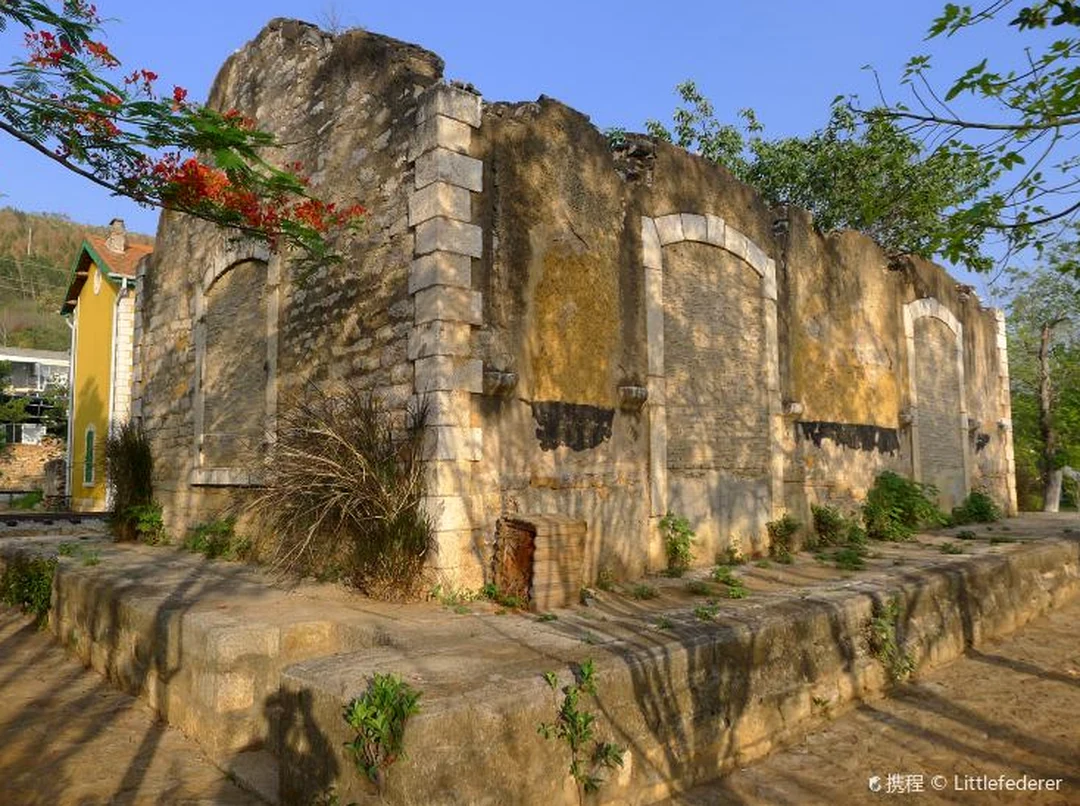
In 1910, the era of mechanization burst onto this landscape with the completion of the meter-gauge Yunnan–Vietnam Railway, standing as one of the world’s most audacious and arduous engineering feats of its day under the joint involvement of French colonial authorities and the Manchu court. The epic, poignant saga of driving tracks across endless rugged mountains was intertwined with intricate border-trade negotiations and prominent officials of the era, notably Tang Shaoyi. Roaring steam locomotives pierced the mists of the Nanxi River valley and crossed the cliff-clinging Faux-Namti Bridge, turning this colonial line into a lifeline linking the seaport of Hai Phong with the Yunnan–Guizhou Plateau and shaping the socioeconomic fabric of southwestern China for decades.
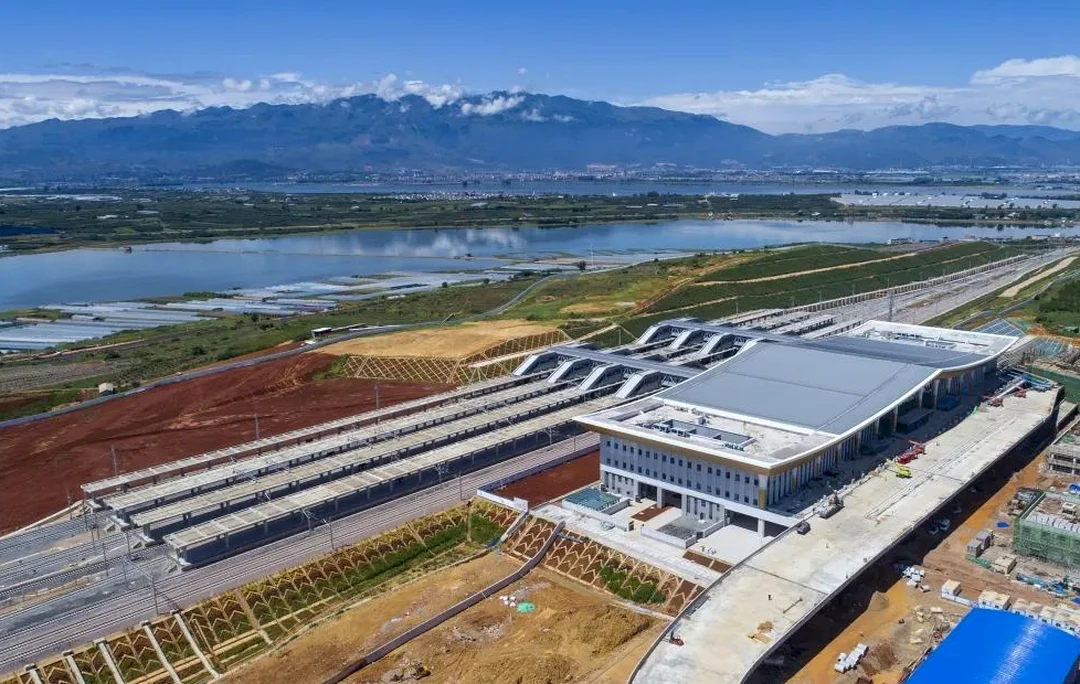
Through a modern lens, that historic mission was completely reborn when transport infrastructure entered the high-speed age. The comprehensive upgrade of the railway linking Kunming, Mengzi, and Hekou materialized rapidly, marked by the opening of the Kunming–Mengzi section in December 2016, kicking off a new era of shrinking vast geographic distances. On April 1, 2020, the official commissioning of Hekou North Railway Station put the final piece in place, completing a dramatic metamorphosis: from an arduous, narrow-gauge colonial relic into a sleek, smooth, and vibrant “cross-border high-speed tourism expressway.”
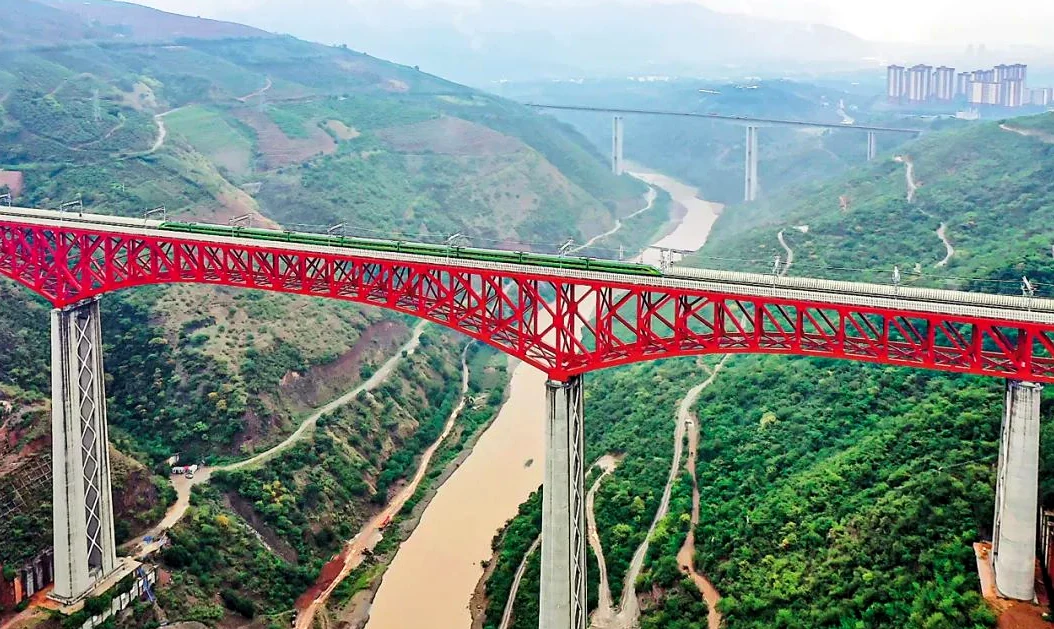
Today, the Hekou – Mengzi – Kunming high-speed rail line serves as a pivotal cultural and economic backbone of the Kunming – Lao Cai – Hanoi – Hai Phong economic corridor. Gliding along standard-gauge steel rails through dozens of mountain tunnels and sweeping viaducts, travelers experience not only the triumph of contemporary engineering, but also turn the golden pages of a legendary Silk Road—where centuries of diplomacy and an unceasing desire for connection between two neighboring cultures converge.
Viewed through the lens of traditional geomancy and the grand topography of southwestern China, the corridor climbing from Hekou up to the provincial capital of Kunming resembles a silver ribbon winding along the mighty dragon veins of the extended Ailao Mountains and the southeastern edge of the Yunnan–Guizhou Plateau. At the confluence where the Nanxi River meets the silt-red waters of the Red River, the terrain opens into an auspicious “mountains embrace, waters return” formation, with sheer cliffs cradling the Honghe Hani and Yi Autonomous Prefecture. A thousand years ago, this frontier was the treacherous, rugged Ancient Tea Horse Road, where elevation changes sharply—vaulting abruptly from barely over one hundred meters above sea level in the border valley of Hekou straight up to two thousand meters deep within the Kunming Plateau. To carve a passage through fractured karst geology and deep tectonic fault lines along the Red River gorge, modern civil engineers achieved an extraordinary feat, turning natural obstacles into one of southern China’s most breathtaking high-speed rail routes.
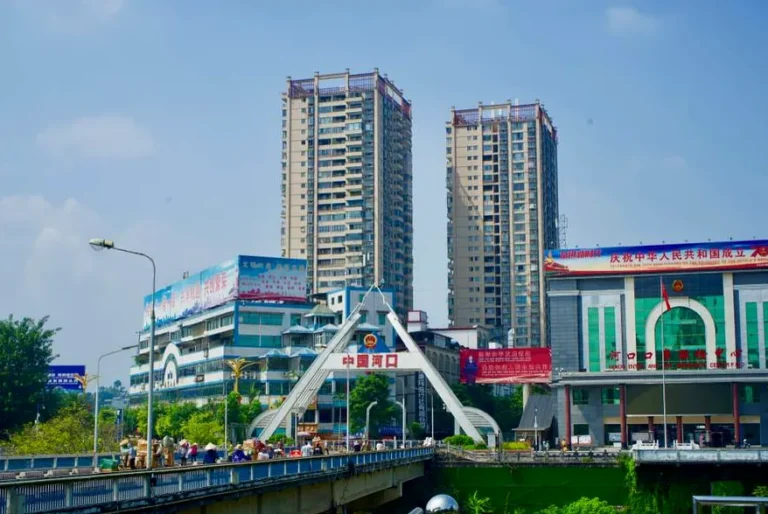
The underground pulse of this trade artery begins the moment travelers step across the border line at the Lao Cai – Hekou International Border Gate and cross the imposing Hoko II Bridge spanning the frontier to reach the sprawling Hekou North Station complex. From this strategic node, D-series electric multiple-unit (EMU) trains cruising steadily at 200 to 250 km/h have permanently ended the centuries-old isolation of this borderland. Engineering standards here demanded deep mountain-boring tunnels and ultra-heavy-load viaduct piers built to withstand seismic activity across the limestone plateau. Sleek white trains dart into dark mountain interiors only to burst out into open sky mid-cliffside, running parallel to the dark asphalt ribbon of the G80 National Expressway linking Guangzhou and Kunming, whose Hekou–Mengzi spur is built to sturdy four-lane plateau expressway standards clinging tightly to steep mountain flanks.
This high-speed journey is not merely a marvel of structural engineering; it unfolds an ever-shifting visual ballet outside the carriage window. Within just forty to forty-five minutes of whisper-quiet travel, the train lifts passengers out of Hekou’s humid, lush subtropical climate and onto the fertile Mengzi Basin. Ancient Mengzi emerges serenely with heavy-laden pomegranate orchards and the mist-veiled waters of Nanhu Lake—the birthplace of the celebrated Crossing-the-Bridge Rice Noodles, steeped in spousal devotion since the days when Yunnan scholars studied tirelessly for imperial exams. After a brief pause in this poetic town, the train slices once more through mountain winds, gliding past endless karst valleys and breezy pine slopes for another two hours before pulling smoothly into Kunming. The seamless transition from the deep tropical greens of the Red River to the year-round floral brilliance of the “City of Eternal Spring” delivers an unforgettable visual feast, showcasing modern infrastructure planning harmoniously woven into ancient terrain.
Gliding across the southern reaches of the Yunnan Plateau by modern rail, travelers witness a captivating symphony between futuristic transport infrastructure and centuries-old architectural heritage. As the train sweeps past red-earth plains and undulating karst peaks, the visual landscape shifts dramatically from long-span prestressed reinforced-concrete high-speed station complexes to exquisite Ming- and Qing-era timber masterpieces and ancient city walls. This is more than a high-capacity transit line; it is a living architectural gallery displaying the singular indigenous building arts of southern China.
The pinnacle of traditional residential architecture along this corridor converges at the Zhu Family Garden (Zhujia Huayuan), situated in the heart of Jianshui County. Dubbed the “Grand View Garden of the Frontier” in tribute to the literary masterpiece Dream of the Red Chamber, this sprawling clan mansion and landscaped garden complex was built by the Zhu family over three decades spanning the Tongzhi and Guangxu reigns of the Qing Dynasty. Covering more than twenty thousand square meters with over two hundred rooms and forty-two airy skywells, its layout rigorously follows the “three longitudinal axes and nine horizontal rows” formula, deftly blending northern courtyard-house symmetry with the “three rooms and one screen wall” and “four-sided courtyard with five skywells” traditions characteristic of southern Yunnan. Every partition crafted from camphor wood and rosewood serves as an intricate museum of woodcarving, employing three-dimensional openwork techniques to depict classical motifs such as the Seven Sages of the Bamboo Grove alongside lively birds, flowers, and the Four Gentlemen—pine, chrysanthemum, plum blossom, and orchid. Beneath winding covered corridors run white marble balustrades carved in auspicious cloud patterns, connecting gracefully to an aquatic opera pavilion poised over a lotus pond where resonant Dian opera melodies once drifted through the dusk.
Stepping out from the refined gardens of late-Qing magnates, the atmosphere shifts to the solemn, commanding grandeur of Chaoyang Tower, also known as the East Gate Tower of Jianshui Ancient City. Begun in the 22nd year of the Hongwu reign under Ming Emperor Taizu (Zhu Yuanzhang), this fortress gate has stood sentinel over the eastern entrance for more than six centuries—predating Beijing’s Tiananmen Gate by nearly three decades. Resting atop a massive bluestone rampart base, the gate tower soars nearly thirty meters high in three tiers crowned by triple-eaved glazed-tile roofs sweeping upward in classic hip-and-gable style. Forty-eight colossal timber columns—each wide enough to require an adult’s full arm span—support a complex bracket system (dougong) interlocked without a single iron nail, standing unshaken through centuries of frontier warfare and plateau earthquakes. Hanging beneath the third-story eaves, a grand calligraphy plaque inscribed with “Majestic Bastion of the Southeast” stands as a historic milestone proclaiming the strategic importance of ancient Lin’an.
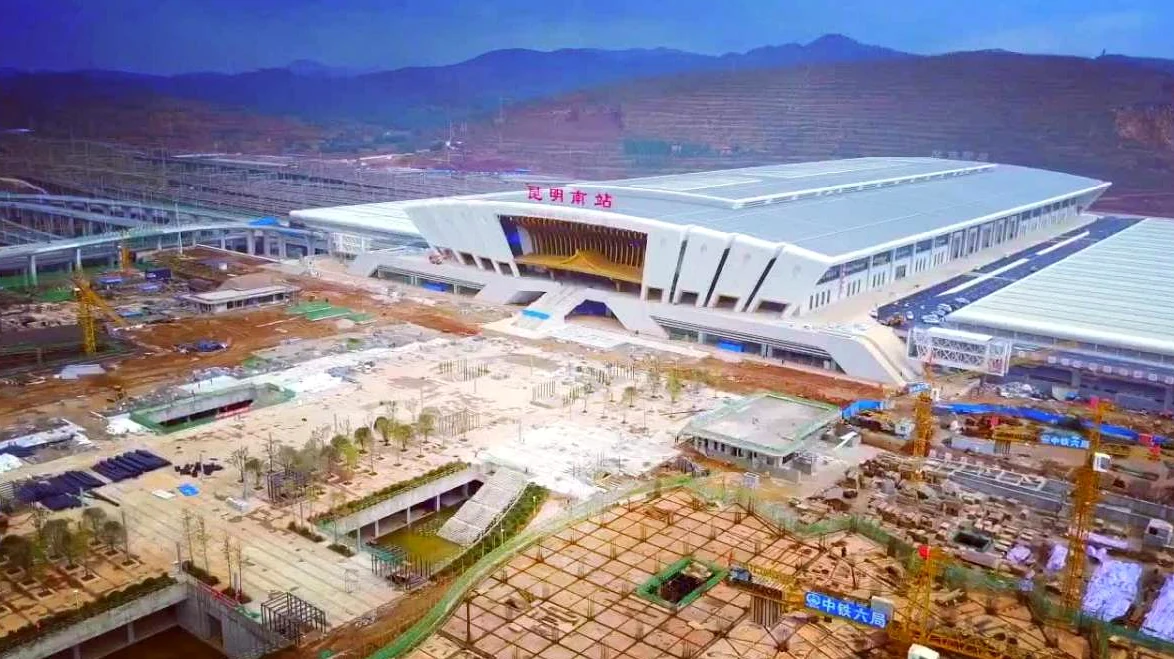
Providing a striking counterpoint to these moss-covered relics is the network of large-scale transit hubs built for next-generation distributed-power trains. Anchoring the entire line is Kunming South Railway Station—one of southwestern China’s largest rail hubs, boasting hundreds of thousands of square meters of floor space across sixteen platforms and thirty tracks. Its grand concourse draws architectural inspiration from a peacock spreading its plumage and blooming azalea petals, employing a super-long-span steel space-frame structure paired with intelligent heat-reflective glazing to flood the interior with natural daylight. From frontier outposts like Hekou North right beside the border, through industrially modern Mengzi Station, to Kunming South, every design detail serves the precision of China’s national high-speed rail network while seamlessly weaving cutting-edge functionality into the millennia-old cultural fabric of the Yunnan corridor.
As dusk settles over the Red River valley, life along the Hekou – Mengzi – Kunming rail corridor refuses to slow down, instead blossoming into a dazzling tapestry of light and shadow where the boundary between ancient history and modern vitality dissolves. At the border gateway of Hekou, night falls beside the swirling Nanxi River as Beishan Light Park illuminates the hillside like a miniature palace glowing amidst forest greenery. Thousands of LED strips trace gentle slopes, reflecting off tranquil ponds and arched bridges modeled after Jiangnan classical gardens. Strollers soak in the cool frontier breeze and follow irresistible aromas wafting from street-food stalls, where the pungent sizzle of charcoal-grilled Yiliang stinky tofu, flat-pressed grilled squid, and cups of herbal milk tea chase away the damp evening mist.
Venturing deeper into Honghe Prefecture, the stops at Mengzi and Jianshui Ancient City reveal a nocturnal atmosphere that is both contemplative and proud. In Jianshui, nighttime visual artistry centers on Chaoyang Tower, the eastern city gate erected in 1389 during the 22nd year of the Ming Hongwu era—predating Beijing’s Tiananmen by nearly thirty years. When architectural floodlights switch on in unison, the three-tiered structure with upturned tiled eaves rises against the night sky like a beacon of memory, illuminating the proud plaque reading “Majestic Bastion of the Southeast.” Not far away, Purple Pottery Street (Zitao Street) along the Lujiang River hums with the chatter of visitors. Beneath crimson lanterns strung along gray-stone eaves, Jianshui’s celebrated smoke-fired pottery masters work deftly at their wheels, demonstrating intricate intaglio carving and hand-polishing vessels with smooth river pebbles until a mysterious purplish-metallic sheen glows under flickering candlelight and kiln fires late into the night.
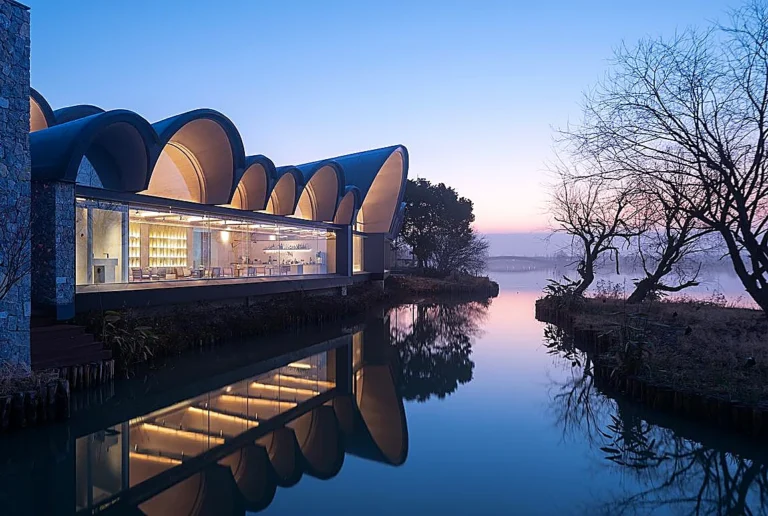
Following the tracks northward, the town of Mile greets travelers with a surreal symphony of light at the Dongfengyun Art Complex. Designed by visionary artist Luo Xu, mortar-free red-brick structures—including the Kaleidoscope Art Museum and giant windmill towers—don an otherworldly cloak through sophisticated 3D projection mapping. Warm golden light spills through parabolic arched windows into the darkness of surrounding vineyards, creating the sensation of wandering through a dreamlike wonderland. Nighttime in Mile reaches its crescendo when travelers wash away travel fatigue in the natural mineral hot springs of Huquan, where mineral-rich waters kept at a soothing forty-five degrees Celsius steam beneath ancient pines—inviting guests to stargaze while sipping a glass of acclaimed local red wine.
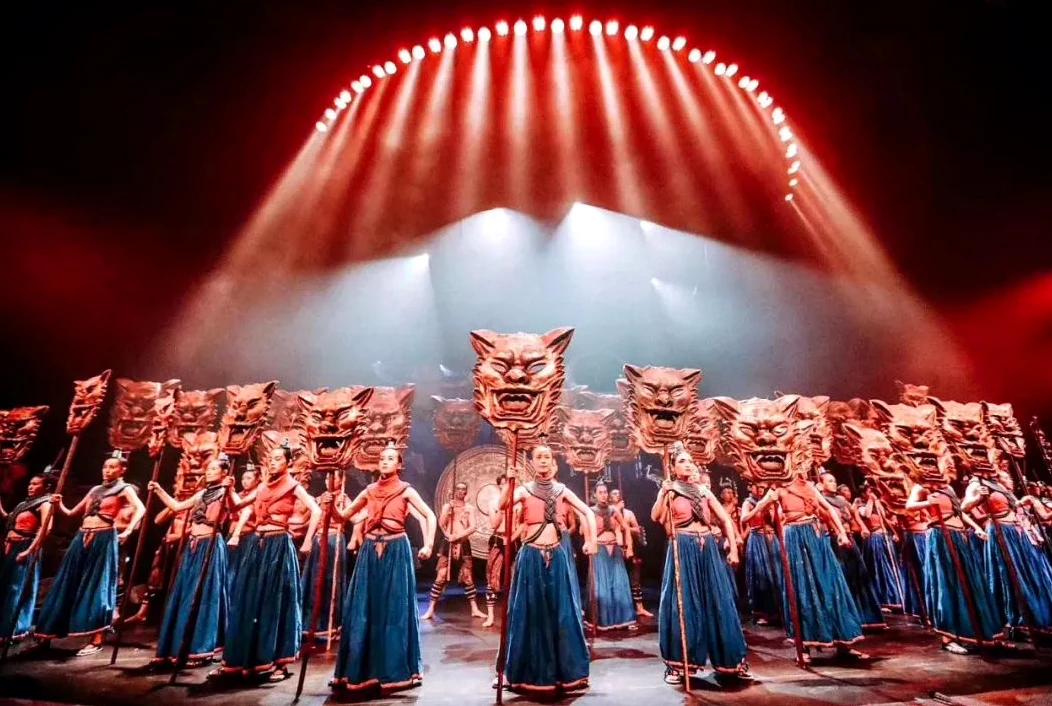
The nocturnal journey culminates in Kunming, where the City of Eternal Spring dazzles with live theatrical artistry and vibrant urban energy. An unmissable highlight is the acclaimed large-scale stage production Dynamic Yunnan, choreographed by legendary dance master Yang Liping. On a monumental stage enhanced by state-of-the-art surround sound and lighting, a cast composed of more than seventy percent indigenous performers from the Yi, Tibetan, Dai, and Miao ethnic groups unleashes thunderous Baolan drum ensembles, exorcistic mask dances, and the ethereal Peacock Dance. Leaving the theater, crowds spill toward Jinma Biji Square, home to the ornate Ming-dynasty Golden Horse and Jade Rooster memorial archways. On rare mid-autumn full-moon nights—when an extraordinary astronomical alignment causes the shadow of the Golden Horse Archway cast by the setting sun to intersect on the ground with the shadow of the Jade Rooster Archway cast by the rising moon—this historic square becomes a timeless witness linking historical memory with the boundless energy of a metropolis that never sleeps.
Sweeping across southern Yunnan along a railway linking historic stops does more than unveil dramatic geological shifts—it awakens every sense through a culinary heritage both deeply rooted in antiquity and vibrant with mountain flavors. The moment the train pulls into Mengzi, Yunnan’s gastronomic soul comes alive in Crossing-the-Bridge Rice Noodles (过桥米线 – Guòqiáo Mǐxiàn), an iconic dish elevated to intangible cultural heritage and born from a touching Qing-dynasty legend at Nanhu Lake. As the story goes, a devoted wife carried daily meals to her husband as he studied for imperial exams on a small island in the middle of the lake; to keep the soup piping hot against the brisk breeze, she simmered old hen and marrow bones into a rich broth and topped it with a golden layer of chicken fat that acted as a natural thermal seal.
Savoring an authentic bowl of Crossing-the-Bridge Rice Noodles in Mengzi feels like taking part in a cherished, ceremonial ritual. A large ceramic bowl of scalding broth arrives at the table, its surface deceptively still and steamless beneath the insulating layer of golden oil, yet hot enough inside to poach raw ingredients in seconds. Diners first slip paper-thin slices of pork tenderloin, chicken breast, pork liver, fresh shrimp, and a raw quail egg into the broth, watching the intense heat cook them instantly. Fresh mushrooms, chive blossoms, scallions, and silky bean-curd skin follow, before the bowl of soft, round rice noodles is tipped in to meld everything together. Each spoonful of naturally sweet bone broth, balanced richness, and crisp herbs delivers an unforgettable sensory delight embodying the local culinary philosophy of yin-yang harmony.
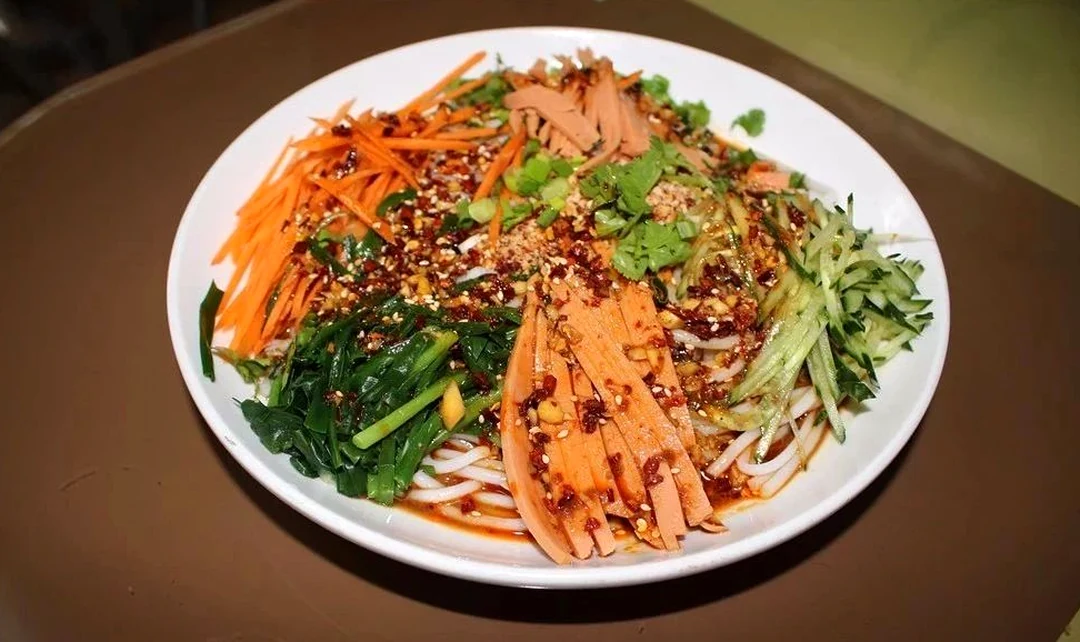
Alongside that steaming winter favorite stands Mengzi Cold Rice Noodles (凉米线 – Liáng Mǐxiàn), an emblem of refreshing summertime simplicity. Fresh rice noodles are blanched in cool spring water, nestled into a deep bowl, and dressed with a time-honored house sauce balancing the bright tang of Yunnan rice vinegar and the gentle sweetness of artisanal cane sugar, accented with crimson chili oil, coarsely crushed roasted peanuts, crisp blanched bean sprouts, and fresh herbs. Tossed together, every strand absorbs a burst of five-flavor harmony that revives the palate and melts away the weariness of long-distance travel.
Leaving Mengzi and heading down to Jianshui Ancient City, the culinary scene shifts to rustic flavors steeped in thousand-year-old well water with Jianshui Grilled Tofu (建水豆腐). This beloved street staple owes its character to mineral-rich groundwater drawn from Ming-dynasty wells such as Daban Well outside the ancient city’s West Gate. Carefully selected soybeans are finely ground and pressed into bite-sized squares roughly two finger-joints wide, then naturally fermented in Jianshui’s distinct microclimate until their skins firm up and develop a subtle, enticing tang.
Gathering around a glowing charcoal brazier on a misty Jianshui evening is an indelible cultural memory. Local vendors deftly flip dozens of tiny tofu squares over iron grates; over live embers, the ivory cubes turn golden brown and puff up like miniature pillows, revealing a molten, creamy interior reminiscent of melted cheese. Plucked straight off the coals, each piece is split open and dipped into a dry spice blend of fiery chili powder and numbing green Sichuan peppercorn for an electrifying burst of flavor. Even more charming is the traditional custom of placing dried corn kernels beside each diner’s seat to tally how many pieces have been eaten—an honest, time-honored counting system preserved across generations.
No culinary tour of southern Yunnan would be complete without Jianshui Steam-Pot or Clay-Pot Rice, the ultimate marriage of fertile valley harvests and Jianshui’s famous purple pottery craft. Fragrant local rice grown in rich alluvial valleys is slow-cooked inside unglazed clay pots, locking in the pure aroma of newly harvested grain alongside savory slices of smoked sausage and wild forest mushrooms. Every glossy grain absorbs the earthy warmth of fired clay and hints of pinewood smoke, bringing the gastronomic journey along the railway to a deeply resonant close lingering with old-world frontier charm.
Embarking on a cross-mountain high-speed rail journey from Hekou through Mengzi to Kunming requires travelers to prepare properly for border regulations and documentation tailored to each stage of the route. When crossing from Lao Cai International Border Gate into Hekou, visitors only need a Border Exit-Entry Pass if their itinerary stays strictly within the Honghe Hani and Yi Autonomous Prefecture—which covers destinations such as Mengzi, Jianshui, and Mile. However, once you decide to extend your trip deeper into Yunnan Province via the high-speed railway to experience the timeless allure of Kunming, a valid Chinese visa (typically an L tourist visa) affixed inside a passport with at least six months’ remaining validity is mandatory. At Hekou North Railway Station (河口北站), international passengers are processed through dedicated manual inspection lanes, where physical passports are carefully verified against electronic ticket records before granting access to the spacious departure concourse.
For ticket booking and smooth rail navigation, the official China Railway 12306 app (铁路12306) is indispensable for any adventure along the Kunming–Hekou corridor. International travelers should complete passport identity verification ahead of departure so they can easily reserve Second-Class or First-Class seats on D-series (EMU) or C-series (Intercity) trains. Keep in mind that high-speed stations along the route—from Mengzi Station (蒙自站) to Kunming Station (昆明站) and Kunming South Station (昆明南站)—are vast complexes operating airport-style security screenings. Arriving at least 45 to 60 minutes before departure is essential to clear baggage X-rays and ID checks without stress. Likewise, when navigating sprawling transit hubs or catching the Kunming Metro, the domestic mapping app Amap / Gaode Map (高德地图) offers pinpoint accuracy, eliminating the GPS drift and outdated data that often affect Western map apps on the mainland.
Yunnan’s payment and telecommunications ecosystem has shifted almost entirely to a cashless model. Everything from train tickets and taxi fares to bowls of Crossing-the-Bridge Rice Noodles in Mengzi and admission tickets for landmarks like Daguan Pavilion or the Western Hills Dragon Gate is settled via QR code on WeChat Pay (微信支付) or Alipay (支付宝). International visitors should set up their accounts and link an international credit or debit card before departing Vietnam, carrying only a modest amount of physical Renminbi as backup for remote family-run eateries or network hiccups. On the connectivity front, maintaining uninterrupted signal through long tunnels piercing the Ailao Mountains calls for international roaming from a Vietnamese carrier or a travel eSIM for China equipped with built-in international routing—ensuring seamless access to global social media platforms and email services without disruption from China’s Great Firewall.
When packing luggage, travelers must observe strict railway security rules prohibiting aerosol sprays exceeding 150 ml, sharp metal objects, and uncertified power banks or those exceeding a rated capacity of 100 Wh (roughly 27,000 mAh). Beyond logistical readiness, the landscapes and cultural heritage of southwestern China are best appreciated by steering clear of disguised commercial traps. Cut-rate group tours frequently funnel travelers into mandatory shopping stops lasting hours—pressuring guests to buy western Yunnan jade, Mengzi silver, or caterpillar fungus—which erodes the authentic spirit of travel. Modern, mindful travelers increasingly favor unhurried pacing, freedom of exploration, and complete transparency. To savor every moment gliding across steel rails and experience Yunnan’s cultural treasures at their finest, travelers can opt for a pure, zero-shopping high-speed rail itinerary through a professionally curated all-inclusive tour package designed by dedicated travel specialists.