In the heart of glamorous Paris, amidst the eternal flow of time and historical tales, stands a majestic symbol that transcends all definitions of architecture, becoming the immortal soul of France: the Eiffel Tower. As a Leading International Travel Columnist and Cultural History Expert, it is my pleasure to take you on a deep dive into the journey of this legendary tower, beginning from its earliest days when the bold idea of an “Iron Lady” was just brewing in the minds of extraordinary visionaries.
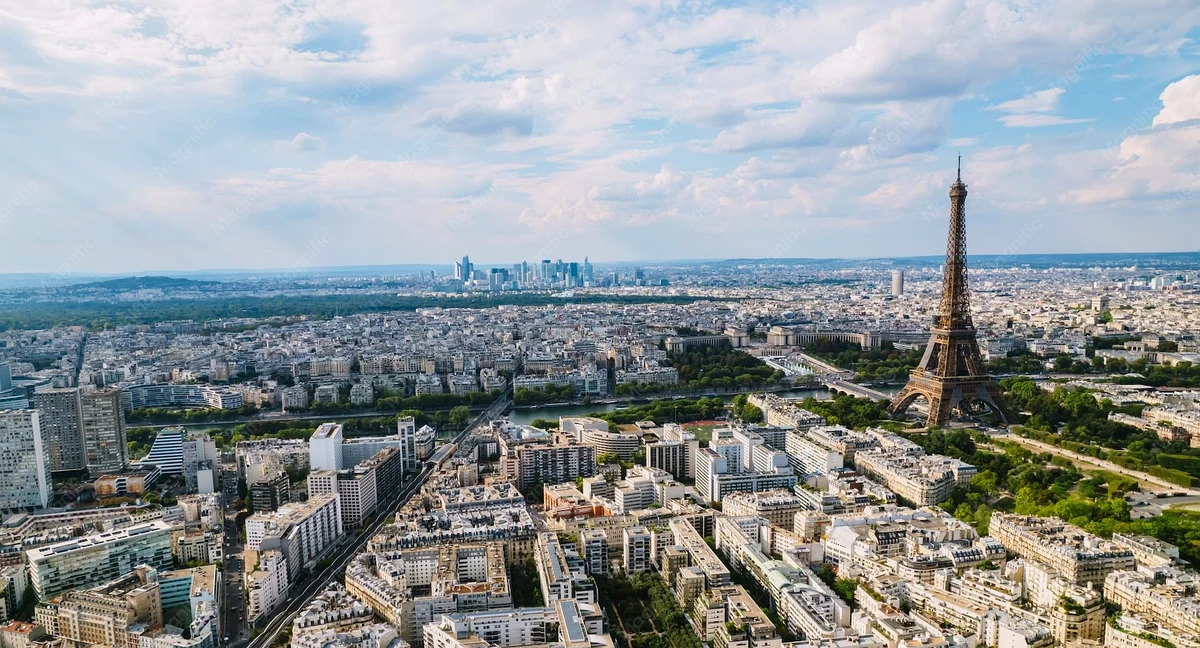
The historical context of the Eiffel Tower is not merely a dry page of dates, but a vivid picture of aspiration, innovation, and fierce controversy of an era. In the late 19th century, Europe was seething with the Industrial Revolution, and France—especially Paris—wanted to assert its pioneering position. To commemorate the centenary of the great French Revolution and to showcase humanity’s pinnacle scientific and technical achievements, the 1889 Exposition Universelle (World’s Fair) was planned in the City of Light. And from here, the idea of an unprecedented, world’s tallest architectural structure was born as a resounding declaration.
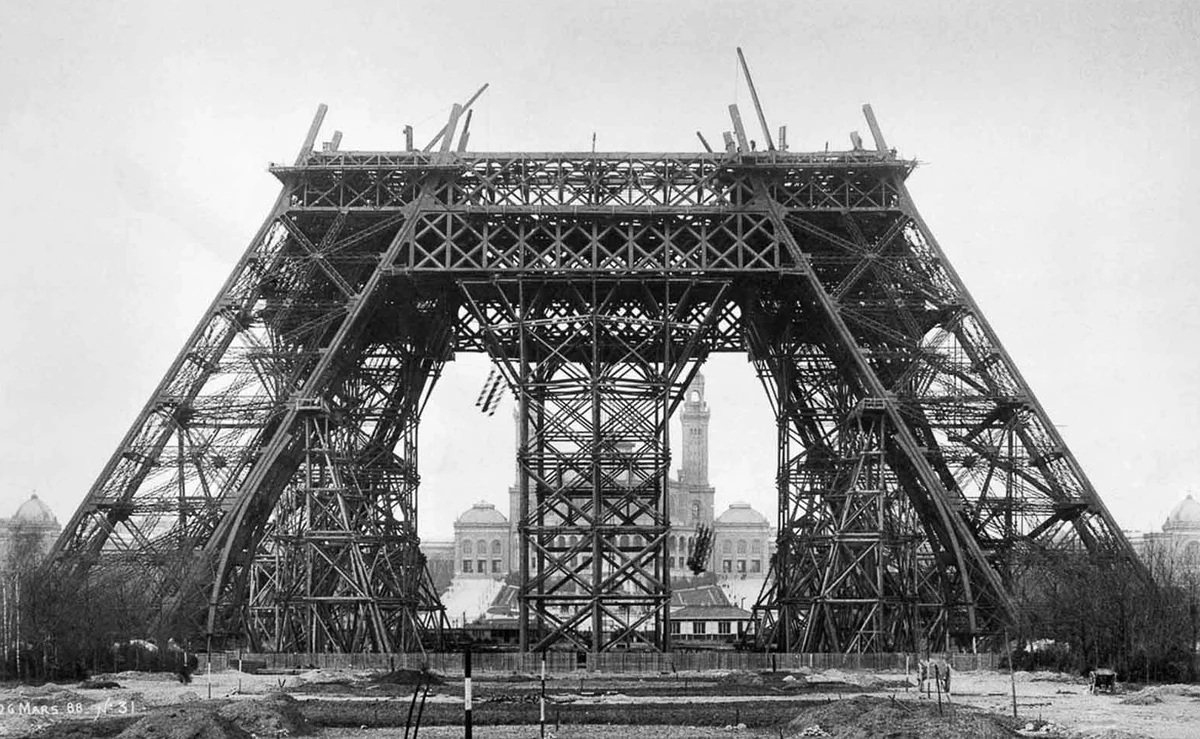
The father of this bold idea was none other than Alexandre Gustave Eiffel, a talented chief engineer and renowned construction contractor known for timeless iron and steel structures. However, the first sketches of the “Iron Lady” actually belonged to two talented engineers in his company: Maurice Koechlin and Émile Nouguier. They envisioned a giant iron lattice structure soaring proudly into the Parisian sky. To refine its aesthetic beauty and turn it into a true work of art, architect Stephen Sauvestre was invited to join, adding graceful decorative arches at the base of the tower and luxurious glass halls to soften the rigidity of the metal.
The project commenced on January 28, 1887, but right from its earliest blueprints, it faced a fierce wave of opposition that went down in history as the “Artists’ Protest.” A group of famous French intellectuals and artists, including novelist Guy de Maupassant, composer Charles Gounod, and writer Alexandre Dumas the Younger, submitted a petition titled “Protest by the Artists” to the Minister of Commerce. They vehemently opposed the construction of this “hateful column of bolted sheet iron,” arguing that it would ruin the classic, romantic beauty of Paris and serve as a blot on French art. However, despite all criticism and pressure, the project was defended and continued to move forward at an astonishing pace.
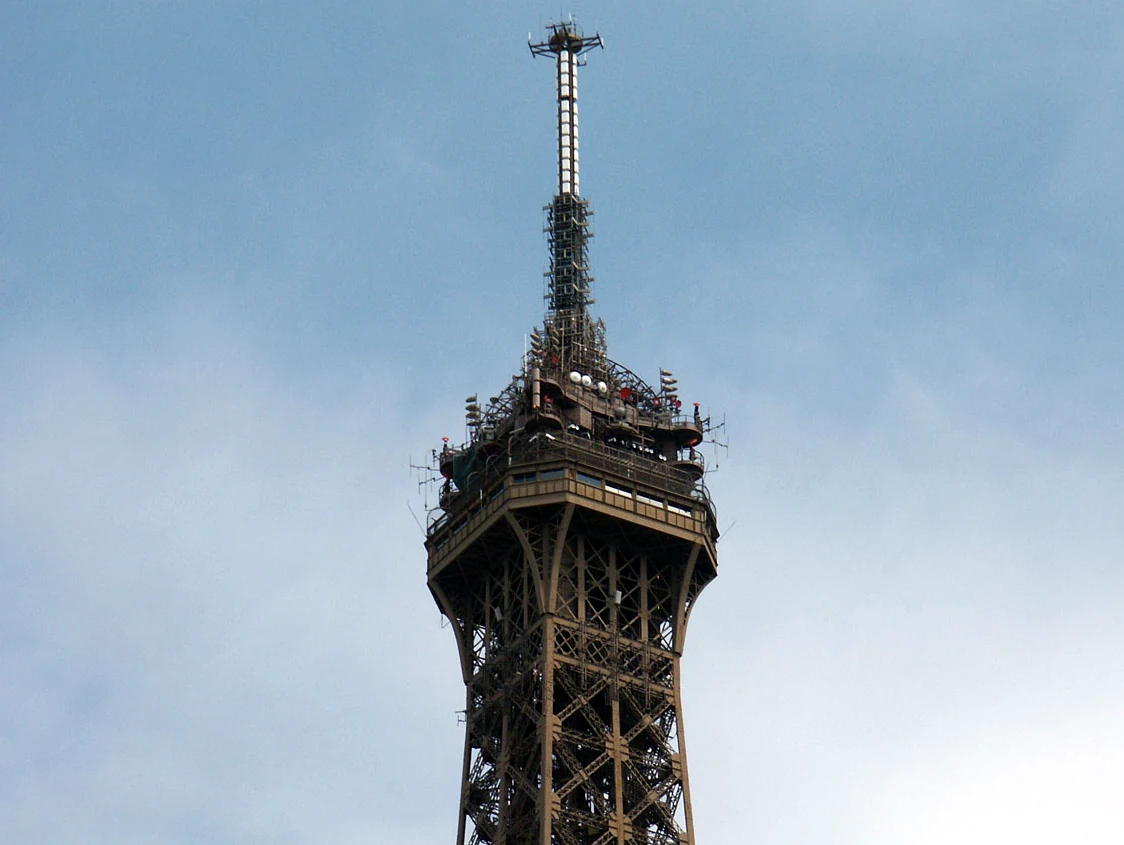
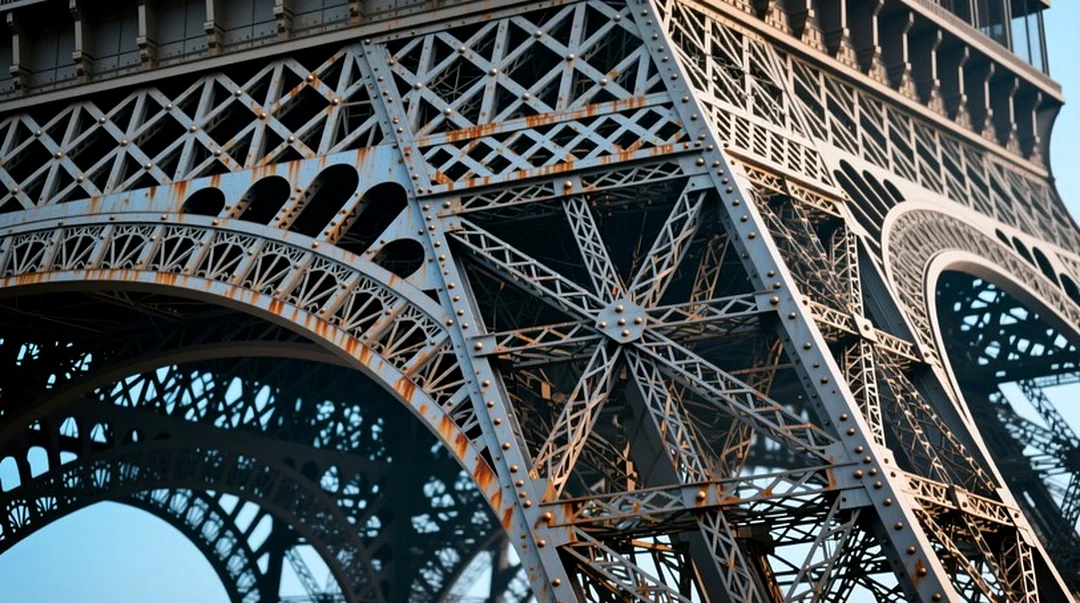
Gustave Eiffel and his team used puddled iron as the primary material—a highly refined wrought iron that was much more ductile and durable than cast iron, supplied directly from the Eiffel family’s metallurgical factories in Pompey. In total, 18,038 iron components were precast at the factory and transported to the construction site, then meticulously joined together by 2.5 million rivets. This was an unprecedented engineering feat requiring absolute precision and extraordinary project management skills. The tower was designed based on advanced aerodynamic principles, with four legs splaying outward in four directions and curving inward, gradually merging into a slender column reaching into the sky to withstand the massive wind resistance in Paris.
In just 2 years, 2 months, and 5 days, a magnificent structure was completed. On March 31, 1889, the Eiffel Tower was officially inaugurated and opened to visitors at the World’s Fair, with an impressive original height of 312 meters. It instantly became the focal point of global attention, an undeniable symbol of France’s technological progress and innovative spirit. With a total weight of about 10,100 tons, of which the metal structure accounts for approximately 7,300 tons, and a base footprint forming a square with 125-meter sides, the Eiffel Tower is not merely an architectural work, but a living testament to human capability pushing beyond limits.
However, few know that according to the original contract, this tower was only permitted to stand for 20 years, meaning it was scheduled to be demolished by 1909. Its very existence from the start was a continuous struggle, a testament to Gustave Eiffel’s far-sighted vision when he timely installed a radio transmitter station on top of the tower, transforming it into an indispensable strategic asset for military and transatlantic communication. This very act saved the Eiffel Tower from the fate of demolition, allowing it to continue standing firmly, witnessing the ups and downs of history, and becoming the eternal symbol of Paris, an unmissable destination on every European discovery journey with Travel.
If the first part of our chronicle took us back in time to witness the controversial birth and fateful historical events of the Eiffel Tower, let us now delve deeper into the core essence that transformed that “hideous iron column” into an unparalleled architectural masterpiece, a pinnacle of human artistic expression. For, rising above all initial prejudices, the Eiffel Tower is not merely an engineering feat, but a bold artistic manifesto—a fusion of iron and space where scientific precision meets the soaring vision of a genius.
From its very first sketches, the Eiffel Tower was a revolution. It did not follow any classical architectural patterns but stood proudly in the 19th-century Industrial Architecture style, a pioneering movement of Iron Construction Engineering. This was an era when metal began to assert its dominance, ushering in an age of soaring structures that challenged both gravity and imagination. Gustave Eiffel, with his visionary foresight, did not hesitate to use puddled iron—a high-purity wrought iron that is far more ductile and durable than cast iron—as the primary material. Each of the 18,038 iron pieces, pre-cast at the Eiffel family’s metallurgical plants in Pompey, Lorraine, was a perfect puzzle piece, transported to Paris and meticulously assembled with 2.5 million rivets. That dry statistic, when one considers the scale and absolute precision, suddenly comes to life, telling the story of the thousands of skilled hands that crafted a wonder.
What makes the Eiffel Tower an artistic masterpiece lies not only in its materials or scale but in its distinctive technical structure, where science and art intersect miraculously. Look at the four wide-spreading legs, as sturdy as the roots of ancient trees anchored deep into the Parisian soil. They are not merely supports, but graceful curves that taper inward, merging into a slender column that reaches straight toward the sky. This is a testament to the aerodynamic principles Gustave Eiffel masterfully applied, allowing the structure to withstand the immense wind resistance of Paris. This meticulous calculation not only ensures safety but also creates a surprisingly elegant and graceful silhouette for such a heavy metal structure.
With an original height of 312 meters in 1889, and currently 330 meters following the installation of the latest radio antenna in 2022, the Eiffel Tower is a massive structure with a total weight of approximately 10,100 tons (of which the metal structure accounts for about 7,300 tons). Yet, when standing at the base and looking up at the sky, one feels an incredible sense of lightness and airiness. This is thanks to the intricate iron lattice structure, creating voids and interlacing lines that allow light to pass through, producing a play of shadows and light that changes continuously throughout the day. This is the beauty of transparency and spatial expansion, transforming a massive metal block into a giant, living sculpture.
Another miracle, little known to many, is the Eiffel Tower’s ability to “breathe.” Because it is made of metal, the tower’s height can contract or expand by up to 15 cm depending on extreme temperature fluctuations between winter and summer. This is not merely an interesting physical phenomenon but a testament to the vitality and adaptability of a structure designed with a profound understanding of materials and the environment. It is like a giant living organism, breathing with the pulse of Paris, silently transforming with each season and each day.
From an “iron monster” vehemently opposed by artists and intellectuals, the Eiffel Tower has overcome all prejudice to become a symbol of innovation, industrial beauty, and the glorious Parisian spirit. It is not just an architectural structure, but a painting, a symphony, and a poem written in iron and steel, standing proudly in the heart of the City of Light, forever an endless source of inspiration for those fortunate enough to behold it.
When the first rays of dawn gently touch the ancient gray stone rooftops, or when twilight descends to paint the Parisian sky in shades of purple, the Eiffel Tower is not merely a great architectural icon but a gateway to countless “invaluable” experiences—unforgettable moments that we are always dedicated to creating for every journey. Beyond being a mere destination, this towering iron spire is a blend of history, art, and soaring emotions, inviting travelers to explore every magical level from the 57-meter height to the dizzying 276-meter summit.
The journey to conquer the “Iron Lady” begins at Level 1, at a height of 57 meters, where a dramatic experience awaits: the glass floor. Standing on the tempered glass, looking through to the vast space beneath your feet, a surge of thrill and excitement rises, as if you are floating in mid-air, watching the bustling crowds and tiny cars below. This is not just a test of courage but a unique vantage point to admire the tower’s magnificent structure from an entirely new angle. This level also preserves the tower’s history through miniature museums and rotating art exhibitions, alongside the Madame Brasserie restaurant, where you can enjoy French cuisine in a modern and inspiring setting.
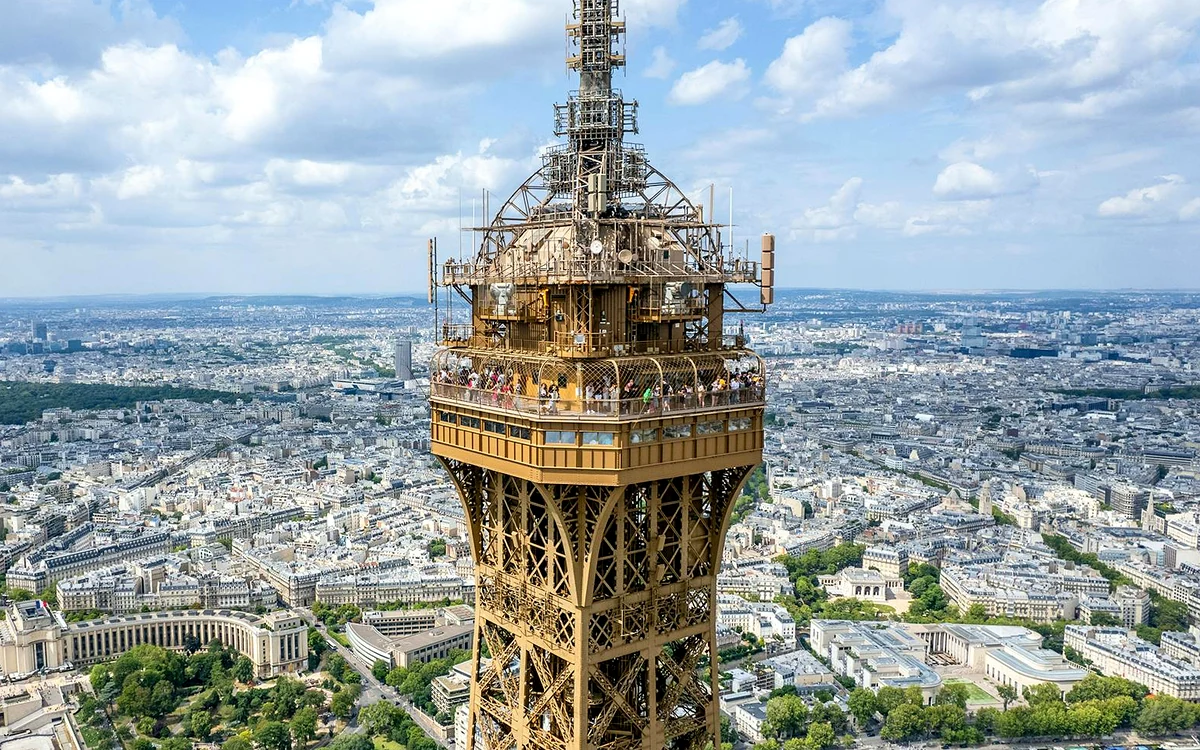
Continuing the journey up to the 2nd Floor, at a height of 115 meters, the panoramic view of Paris unfolds with breathtaking clarity. From here, every icon of the City of Light is neatly captured in your sight: the majestic Notre-Dame Cathedral, the magnificent Louvre Museum, the towering Arc de Triomphe, and the Seine River winding softly. This is dubbed the ideal viewing spot, where every architectural detail of Paris is clearly exposed under the sunlight or shimmering in the night lights. And to elevate the experience to another level, one cannot fail to mention Le Jules Verne – the renowned Michelin-starred restaurant. Here, modern French cuisine crafted by world-class chefs, paired with fine wines, delivers a flawless sensory feast where taste and sight blend together in one of the most romantic settings in the world.
The pinnacle of all experiences is the Top Floor, also known as The Summit, located at an altitude of 276 meters. This is the highest public observation deck in the European Union, where you can perceive Paris like a giant, endlessly sprawling map. The air at the top of the tower feels fresher and purer, carrying a hint of history. Visitors can admire the reconstructed office of chief engineer Alexandre Gustave Eiffel himself, where he once lived and worked, along with 1:1 scale models of key historical figures from the tower’s inauguration period. And to conclude the journey in the most complete way, a glass of sparkling champagne at the Champagne Bar at the top of the tower will be the perfect highlight, marking an unforgettable moment amidst the Parisian sky.
When night falls, the Eiffel Tower dons another magical beauty, transforming into a sparkling Milky Way in the heart of Paris. Every night, at the top of every hour, from sunset until 23:00 or 01:00 in the summer, the entire tower lights up with a system of 20,000 flashing bulbs continuously for 5 minutes. This is the Illumination & Sparkle Show, a magical performance that makes every heart flutter, turning the iron tower into a giant brilliant diamond, sparkling like millions of stars falling to earth. This moment is not merely a visual experience but also an intense emotion, an indelible mark in the memory of anyone who has ever gazed upon it.
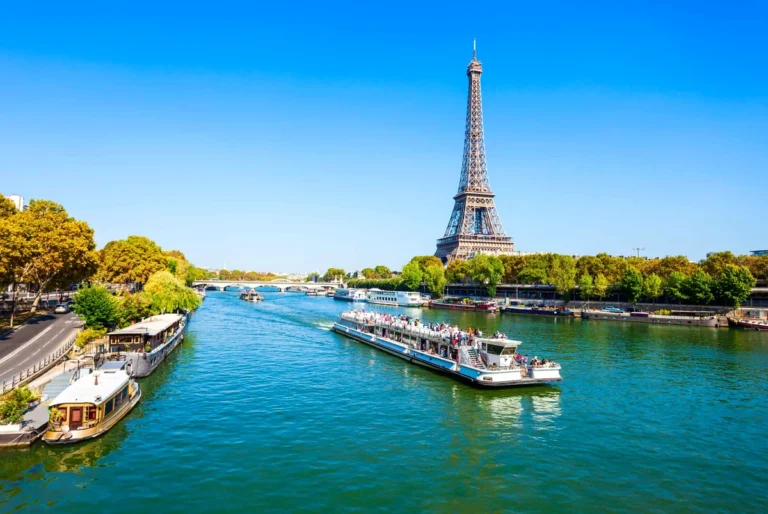
To capture the most “valuable” moments with the Eiffel Tower, the outdoor check-in spots around the grounds play an equally important role. Trocadéro (Place du Trocadéro) is the top choice, offering a direct, perfectly symmetrical view from across the Seine River, where you can capture the full majestic beauty of the tower. If you are looking for a more romantic and unique frame, the quiet little street Rue de L’Université will create a picturesque masterpiece, with the Eiffel Tower rising proudly between two rows of typical Parisian classic buildings. And to experience ultimate romance, a Seine River cruise (Bateaux Parisiens) at sunset will offer a completely different perspective, as the tower slowly emerges under the night lights, shimmering and reflecting on the water surface, creating a magical and poetic scene. Every angle and every moment is a “valuable” experience that always wants to be fully enjoyed by travelers, turning the trip not just into sightseeing but a journey to discover the beauty and cultural depth of the City of Light.
After indulging your eyes in the magnificent architectural beauty and the turbulent historical stories of the Eiffel Tower, our journey exploring Paris would not be complete without missing another quintessential aspect: the local food map and culinary culture around the famous steel tower. Because cuisine is not just food, but also the soul and heartbeat of the “Art de Vivre” (French Art of Living) that always wants our guests to deeply feel.
Leaving the foot of the Eiffel Tower, our footsteps seem to wander into a maze of flavors, where the 7th Arrondissement and surrounding areas open up a paradise of exquisite French cuisine. First must be mentioned the traditional bistros along Avenue de la Bourdonnais, where guests can find dishes imbued with the breath of the French countryside, elevated into art. Try the Beef Bourguignon – Burgundy red wine-braised beef, a symbol of patience and refinement. Each tender muscle of beef melts in your mouth, infused with the rich flavors of wine, carrots, onions, and fresh herb bouquets. Or Coq au Vin – chicken braised in wine with mushrooms and bacon, also an equally appealing choice. These dishes are not merely meals, but a cultural experience where you can feel the warmth and sincerity in each carefully selected ingredient and traditional handcrafted preparation method. Sitting in the cozy space of a small bistro, sipping a glass of swirling red wine and enjoying the rich stew, you will find yourself blending into the slow, very romantic Parisian pace of life.
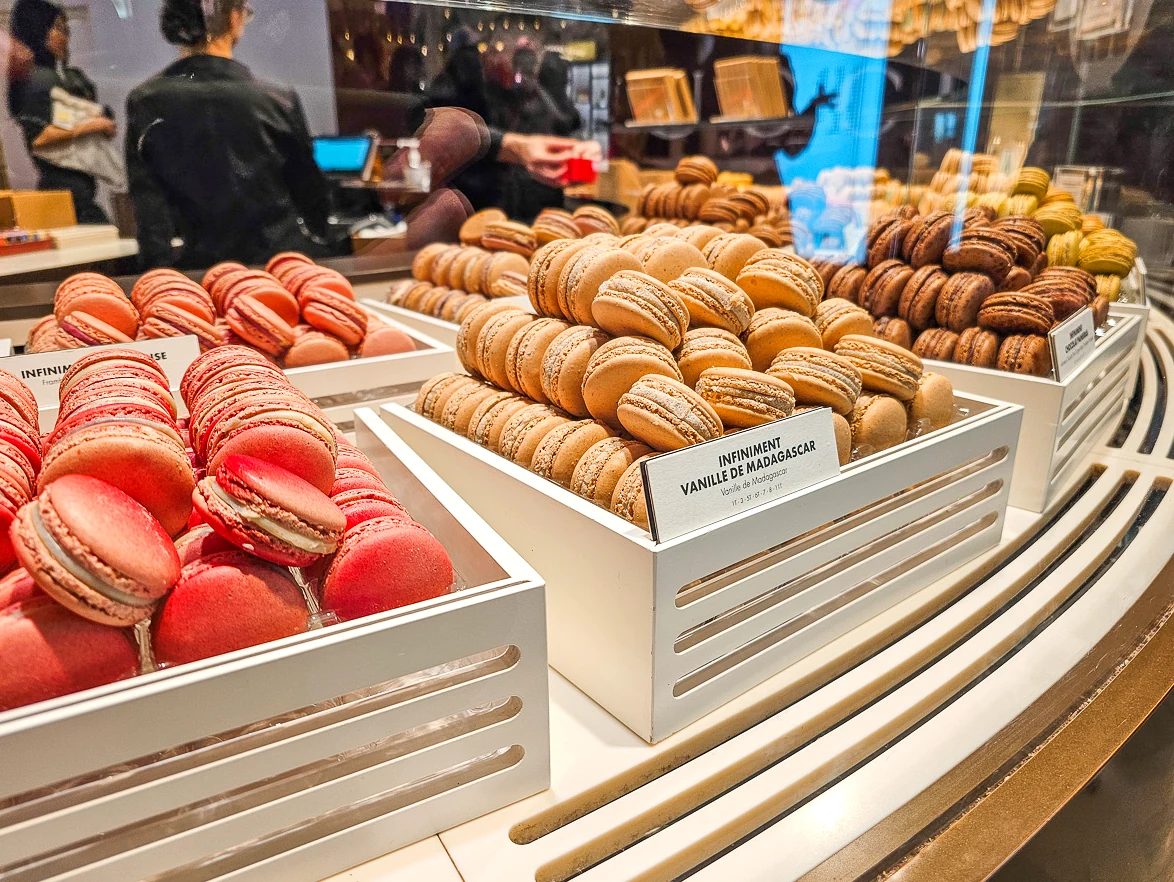
If you have enjoyed the hearty savory dishes, let your taste buds be awakened by the world of artisanal pastries, where each cake is a work of art. Paris is the capital of pastry, and around the Eiffel Tower, you will have no trouble finding renowned bakeries. Most prominent are premium Macarons and Éclairs. Macarons, with their lightly crispy shells and smooth cream fillings that melt right on the tip of the tongue, along with countless colors and flavors from raspberry, passion fruit to chocolate, are a harmony of texture and taste. Meanwhile, the Éclair, a long cream puff with a crispy shell, rich cream filling, and glossy chocolate glaze, carries an irresistible elegant and alluring beauty. To find these perfect pastries, you can visit Café Pouchkine or Ladurée, brands that have become symbols of excellence in French pastry arts, although they might be located a bit far from the tower base, closer to the Champs-Élysées avenue in the 8th Arrondissement, but entirely worth a romantic walk.
And the pinnacle of the culinary experience around the Eiffel Tower is high-altitude Fine Dining, a feast for the senses that is highly recommended. Located on the 2nd Floor of the Eiffel Tower, the Le Jules Verne restaurant is not merely a dining venue, but a legend. Under the talented hands of world-class chefs, modern French cuisine is elevated to new heights, combining creativity with the freshest ingredients. Imagine sipping a glass of premium champagne, nibbling on exquisite appetizers, and then having the main course presented like a work of art—all while the shimmering night lights of Paris stretch out endlessly beneath your feet. From a height of 115 meters, landmarks like Notre-Dame Cathedral, the Louvre Museum, and the Arc de Triomphe stand out clearly, creating a breathtaking backdrop for the most romantic and memorable dinner of a lifetime. This is not just a meal, but a moment etched into memory, where flavors, sights, and emotions blend to create a unique experience that only Paris and the Eiffel Tower can offer.
Truly, exploring the culinary scene around the Eiffel Tower is an endless journey, ranging from rustic dishes steeped in local soul to high-altitude haute cuisine masterpieces. Every dish, every glass of wine, every pastry tells a story of culture, history, and the people of Paris, contributing to the completion of the picture of the “Art of French Living” that VDS Travel always aspires to bring to you.
After exploring the depth of history, architectural sophistication, and invaluable experiences that the Eiffel Tower has to offer, now, as the Leading International Travel Journalist and Cultural History Expert of VDS Travel, I would like to send dear readers an essential pocket guide to make your journey to conquer the “Iron Lady” as complete and safe as possible. After all, a perfect trip comes not only from the beauty of the destination, but also from thorough preparation and practical notes.
The ideal time to admire the beauty of the Eiffel Tower, according to VDS Travel’s expertise, is in the spring (from April to June) and autumn (from September to November). Spring in Paris bursts into romantic floral colors with cool, pleasant weather, perfect for strolls along the banks of the Seine or picnics at the foot of the tower. Tourist crowds during this time are also moderate, allowing visitors to enjoy the space in a more relaxed manner. When autumn arrives, Paris puts on a brilliant yellow cloak of leaves, creating a poetic and cinematic setting, especially ideal for photography enthusiasts wanting to capture the moment the Eiffel Tower rises amidst a magnificent natural backdrop. Conversely, summer (July-August) is usually very crowded with harsh glaring sunlight, while winter (December-March) is quite cold, which may affect visitors’ outdoor experiences.
To ensure your journey to conquer the symbol of Paris is not interrupted by endless queues, booking sightseeing tickets online before the trip is a wise, even mandatory decision. The Eiffel Tower typically opens from 09:00 AM to 11:45 PM, and during the peak summer season, hours may extend to 00:45 AM. However, the last elevator to the summit usually operates about 45 minutes to 1 hour before closing time. Booking tickets online not only helps you save 2 to 4 hours of waiting in line under any weather conditions, but also ensures you secure your desired time slot to admire the sunset or the sparkling light show. Visitors can choose between walking up hundreds of steps to feel every historical iron beam, or leisurely gliding up via the modern elevator, taking in panoramic views across different altitude levels—from the 1st Floor with its transparent glass floor, the 2nd Floor with sharp panoramic views, to the soaring Summit.
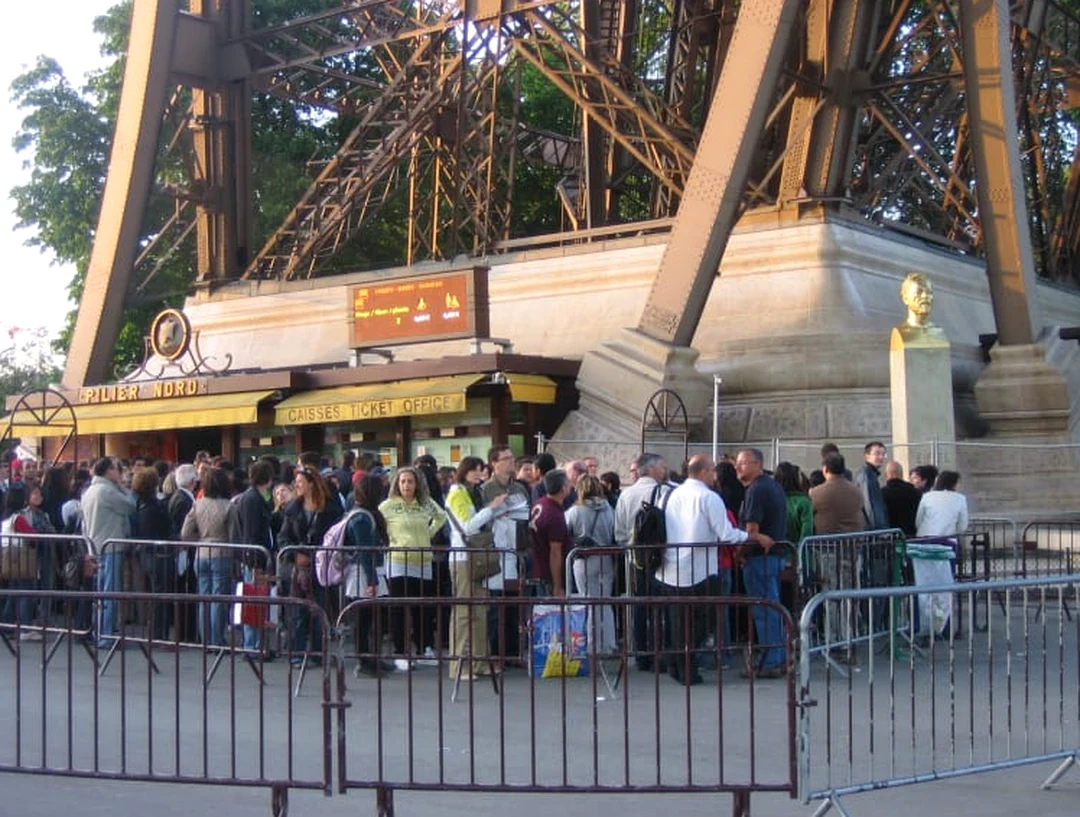
One of the top important notes that VDS Travel always emphasizes to travelers is the issue of safety and pickpocket prevention. The Eiffel Tower foot area and Trocadéro square, no matter how beautiful, are hotspots for pickpocketing and sophisticated scams. Bad actors often take advantage of crowds and tourists’ lowered guard to carry out their acts. They may approach you with tricks like “signing petition papers”, “lucky draw games”, or “giving away fake friendship bracelets”. The golden rule of VDS Travel is: Absolutely do not stop to sign any papers, do not accept any items from approaching strangers, and always wear your backpack in front of your chest or hold your handbag tightly. Always carefully look after your personal belongings, identity papers, and money—especially in crowded places—to avoid unwanted risks disrupting your dream trip.
Regarding dress codes, the Eiffel Tower is free-spirited, yet VDS Travel still recommends prioritizing comfort and politeness. A pair of comfortable sneakers is the perfect choice, as you will be walking quite a lot, potentially climbing stairs and standing in queues. When visiting high-end restaurants inside the tower such as Le Jules Verne or Madame Brasserie, choosing polite, elegant attire shows respect for the space and French culinary culture. Avoid wearing overly short clothes, tank tops, or flip-flops when dining at these luxury locations. Additionally, because temperatures high above can be significantly lower than at ground level—especially in the evening or on windy days—bringing a light jacket or shawl will help keep you warm and comfortable while taking in the panoramic views of Paris from the tower’s peak.
}
With these practical pocket guides, we believe that you will have a trip to the Eiffel Tower that is not only visually stunning but also safe, convenient, and memorable. Thorough preparation is the key to unlocking a high-class travel experience, where every moment is fully enjoyed, transforming your visit to the Eiffel Tower from a mere destination into an unforgettable part of your journey exploring the sophisticated “Art of French Living”.
After a journey exploring historical depths, admiring architectural wonders, and immersing ourselves in priceless experiences at the Eiffel Tower, we have touched the soul of Paris together—a symbol not only of engineering greatness but also of the essence of the “Art of French Living” (Art de Vivre). The Eiffel Tower, with its majestic beauty and tumultuous history spanning over a century, is not simply a destination, but an invitation to discover the cultural, artistic, and culinary values that have shaped one of the most charming cities on the planet.
At VDS Travel, we do not just bring you to Paris to gaze at the Eiffel Tower, but we craft a journey where you truly “live” alongside Paris, feeling every heartbeat of the City of Light. VDS Travel understands that the beauty of the Eiffel Tower lies not only in its 330-meter height or the 18,038 intricately joined iron details, but also in the moments you stand on the transparent glass floor on the 1st level, feeling a thrilling sense of suspension; or when you savor exquisite cuisine at the renowned Le Jules Verne restaurant at a height of 115 meters, with a panoramic view of the shimmering, magical Paris. These are experiences that cannot be measured by money, but rather priceless memories woven from meticulousness and a deep understanding of local culture.
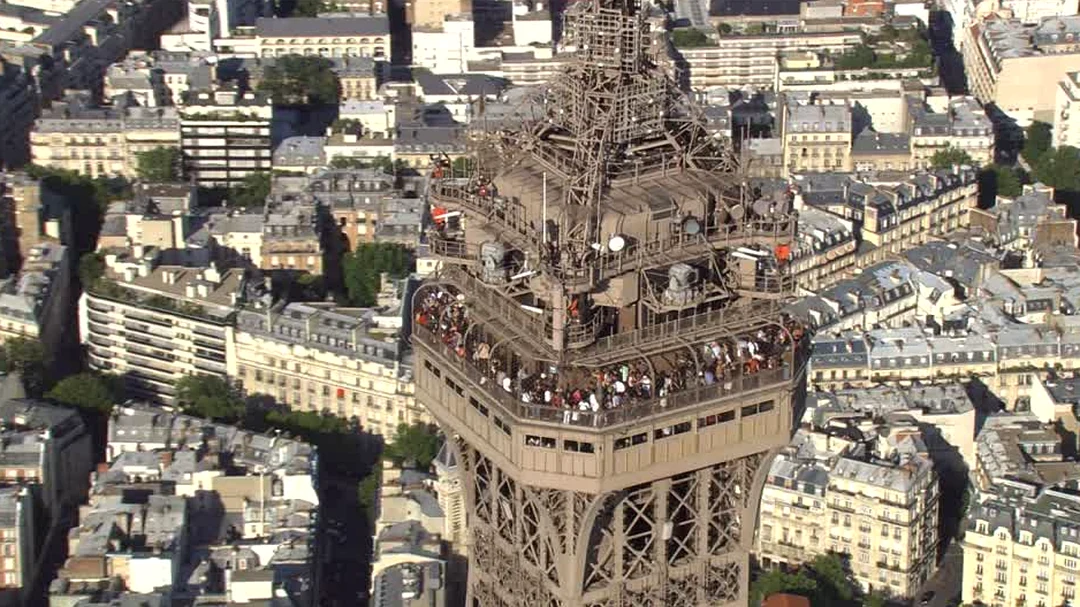
To ensure that every moment of yours at the Eiffel Tower is an indelible mark, VDS Travel has designed superior customer service privileges. VDS Travel understands that time is money, especially when you are in one of the world’s busiest tourist cities. Therefore, with Skip-the-line Access, VDS Travel’s guests will completely bypass the 2 to 4-hour waiting queues under the harsh summer sun or the biting winter cold. Instead of tiredly elbowing through crowds, you will gracefully walk through the entrance, dedicating all your energy and spirit to enjoying the architectural beauty, the historical stories told through every corner of the tower, and taking in the panoramic view of glamorous Paris from various heights.
The journey to explore the Eiffel Tower with VDS Travel does not stop at admiring it from above. VDS Travel elevates your experience by perfectly combining a tour of the Parisian symbol with a private sunset Seine river cruise with Champagne. Just imagine, as the last rays of daylight gradually fade, gilding the romantic Seine River, you leisurely sip a glass of fine champagne, watching the Eiffel Tower burst into brilliant illumination with a sparkling light show like thousands of diamonds. It is not merely a visual feast but a blend of emotions, where the romance of Paris merges with absolute luxury and privacy, delivering a consummate upscale experience for Vietnamese travelers reaching out to the world.
VDS Travel believes that every trip is a story, and the story of the Eiffel Tower on your journey will be penned with the most delicate strokes. From choosing the ideal time to visit (cool spring or romantic autumn), to suggesting the most “valuable” check-in angles like Trocadéro or Rue de L’Université, and even essential security warnings regarding pickpocketing at hotspots to guarantee absolute safety for travelers—everything is thoroughly prepared, based on high-end international tour operation experience and a deep understanding of the destination.
To materialize this romantic French dream, to touch the eternal symbol of Paris yourself and discover the elite cultural and culinary values of Europe, VDS Travel cordially invites you to join our unique journey. Let VDS Travel accompany you on the path of discovering wonders, where every destination is not simply a place name but a living experience, a story to be told. Don’t miss the chance to turn your European travel dream into reality with All-Inclusive Tour , where glamorous Paris and the magnificent Eiffel Tower await you.
Contact VDS Travel today to book your spot and begin the journey of creating unforgettable memories. VDS Travel is committed to providing you with a trip that is not only upscale but also overflowing with emotion, true to the spirit of the “Art of French Living” that the Eiffel Tower has always represented.