Rising to an elevation of 130 meters above sea level, Montmartre Hill dominates the northern topography of the French capital Paris, forming the most prominent natural high point across the otherwise flat urban landscape of the Seine River basin. Geologically, this hill is composed of sedimentary layers of gypsum and limestone formed during the Cenozoic era; across millions of years of erosion and deposition, these strata sculpted a distinctive terrain of steep slopes and small summit plateaus. According to ancient records, the name Montmartre originates from the Latin Mons Martyrum (“Mount of Martyrs”), marking the site where Saint Denis, the first bishop of Paris, suffered martyrdom around the third century AD under Roman rule. Once a rural expanse devoted to agriculture, viticulture, and gypsum quarrying to supply the growing city below, Montmartre gradually evolved into a historic urban enclave shaped by centuries of upheaval. Its strategic elevation repeatedly turned the hill into a battleground during military conflicts—most notably the Battle of Montmartre in 1814, when Allied coalition forces fighting Napoleon Bonaparte sought to seize this summit to bombard central Paris. Long isolated from the administrative core below, Montmartre preserved a rustic, independent character until municipal authorities annexed the village into the expanded boundaries of Paris in 1860. The rapid urbanization that followed transformed much of the district, yet retained its winding lanes, steep stone staircases, and nostalgic open squares—yielding a spatial fabric wholly distinct from the straight, geometric boulevards of Baron Haussmann’s renovation.
The origins and construction of the Sacré-Cœur Basilica crowning Montmartre Hill are deeply intertwined with a turbulent chapter in France’s socio-political history, emerging directly in the wake of the Franco-Prussian War of 1870 and the Paris Commune uprising the following year. Amid profound national crisis, shattered morale, and deep ideological division, a religious and patriotic movement arose proposing a monumental church dedicated to the Sacred Heart of Jesus—both to pray for France’s spiritual renewal and to atone for the bloodshed of civil strife. Legislation passed in 1873 officially declared the project a matter of public utility, paving the way for a national architectural competition that drew leading architects of the era. Architect Paul Abadie triumphed over dozens of rival entries with a bold design inspired by Romano-Byzantine architecture, offering a striking visual counterpoint to France’s traditional Gothic cathedrals.
The topographic summit of Montmartre in Paris’s 18th Arrondissement rests upon a complex geological foundation dating back to the Tertiary period, composed of alternating strata of gypsum, limestone, and sandstone accumulated over millions of years of crustal movement. This geological structure produced a prominent natural hill rising roughly 130 meters above sea level, making it the second-highest natural point in Paris after Belleville Hill. Over centuries of quarrying building materials to fuel the capital’s growth, the ground beneath Montmartre became honeycombed with subterranean gypsum mines that once supplied the raw material for world-renowned plaster of Paris. The presence of these underground galleries also posed formidable engineering challenges for subsequent urban development, forcing architects and engineers to execute painstaking and costly foundation stabilization campaigns before erecting major religious or residential landmarks.
The urban spatial layout of Montmartre clearly reflects its medieval origins, featuring a labyrinthine network of narrow winding streets, granite staircases, and intimate courtyards cascading down the hillside. In sharp contrast to the wide, rectilinear boulevards and uniform facades introduced by Baron Haussmann across central Paris in the nineteenth century, Montmartre tenaciously preserves the organic charm of a historic hilltop village. Residential buildings here largely blend eighteenth- and nineteenth-century neoclassical styling with low-rise artisan dwellings built of red brick, timber framing, and white lime plaster. The steep elevation change between the foot and summit of the hill also inspired innovative urban transit solutions—most famously the Funicular of Montmartre (Funiculaire de Montmartre), which carries passengers effortlessly up the incline without climbing hundreds of stone steps.
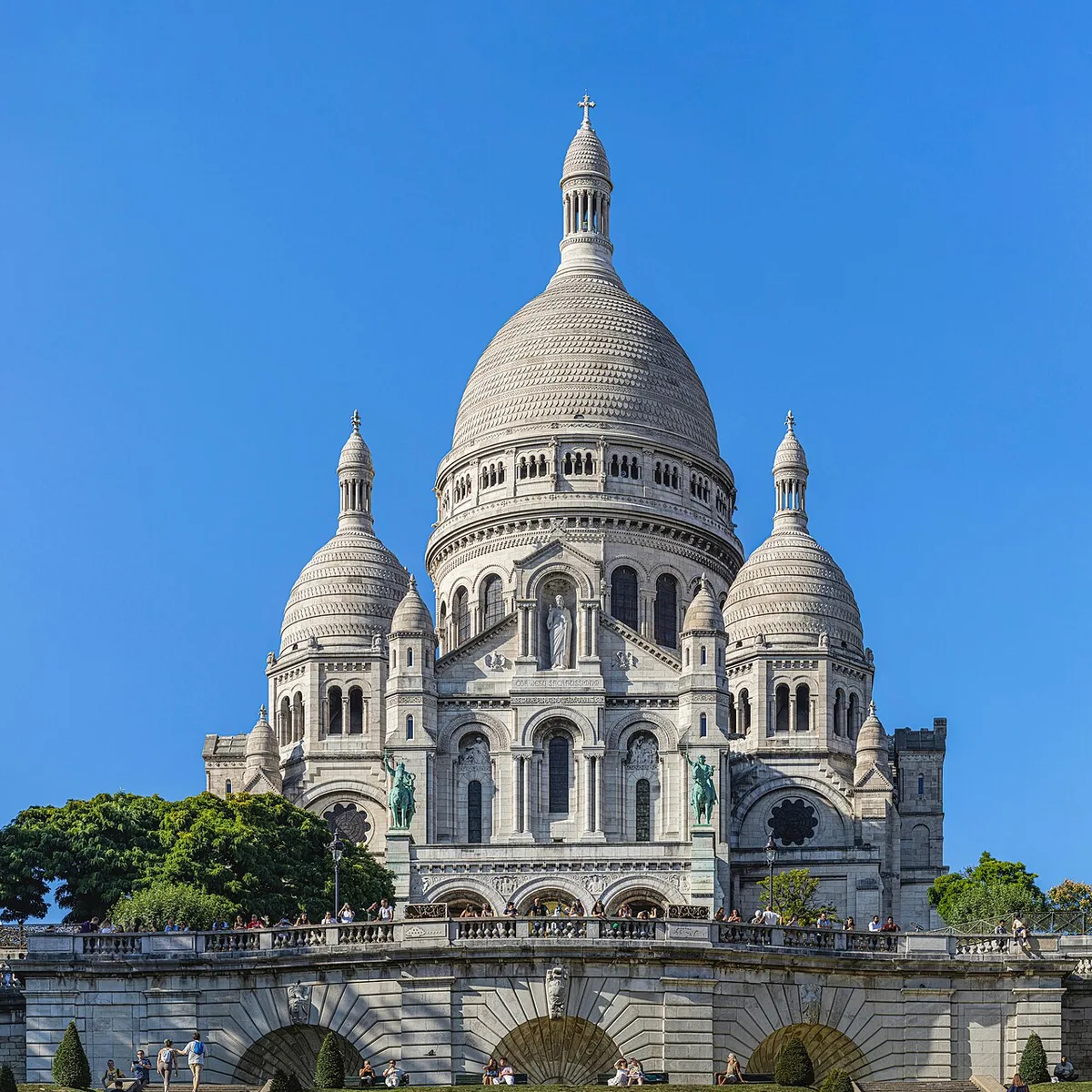
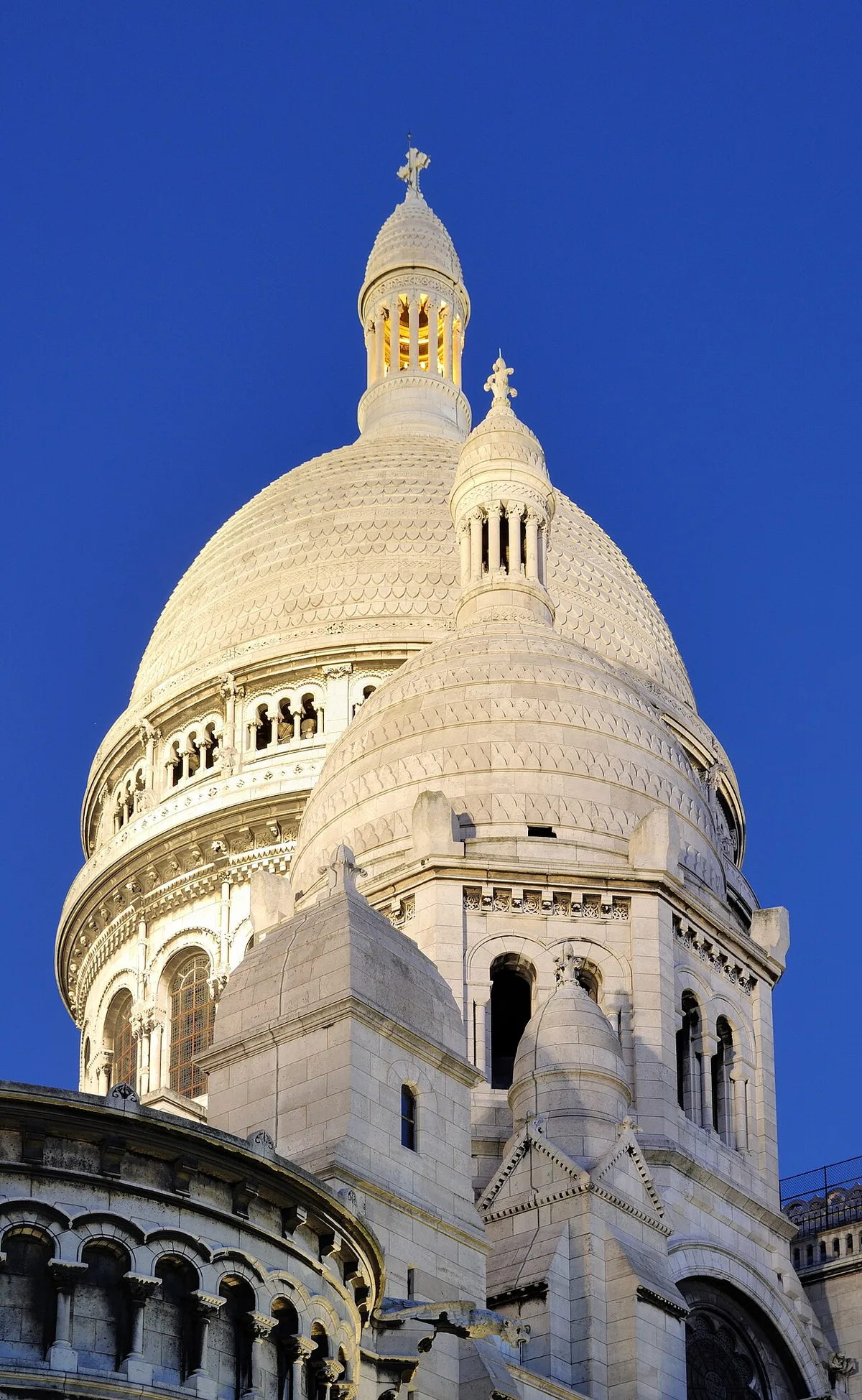
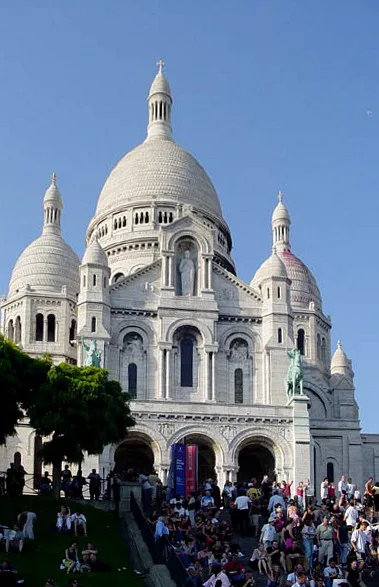
Commanding the highest point of the hill, the Sacré-Cœur Basilica rises as a bold architectural statement uniting Romanesque and Byzantine traditions, originally conceived by chief architect Paul Abadie after winning the national design competition in 1874. Planned on a monumental footprint spanning thousands of square meters, the basilica forms an imposing stone mass measuring roughly 85 meters in length and 50 meters in width. Its defining vertical landmark is its central dome soaring 83 meters above the foundation, accompanied by a colossal north bell tower housing La Savoyarde—a sacred bell weighing nearly 19 tons and ranking among the largest and heaviest bells in the world, cast by the Paccard foundry in Annecy.
The primary stone selected for the exterior facade of the Sacré-Cœur Basilica is a distinctive travertine limestone quarried at Château-Landon in the Seine-et-Marne region of France. The remarkable physicochemical property of this stone lies in how it reacts to rainwater and sunlight: moisture triggers a natural chemical process that secretes calcite, causing the stone surface to bleach whiter and brighter over time while resisting urban soot and industrial pollution. Thanks to this natural self-cleaning quality, the basilica retains a luminous, snow-white brilliance that gleams vividly even beneath the overcast skies of northern France, creating dramatic visual contrast against the warmer gray tones of surrounding Parisian stonework.
Engineering the foundations of the Sacré-Cœur Basilica required one of the most daring feats in nineteenth-century construction history, as the site sat directly above abandoned, unstable gypsum quarries prone to subsidence. Builders excavated dozens of meters down through fragile upper strata to sink eighty-three massive masonry and reinforced-concrete piers deep into solid bedrock below. Acting like colossal subterranean pillars, these shafts support the entire multi-thousand-ton weight of the basilica above, preventing structural settling or shifting across more than a century of continuous operation.
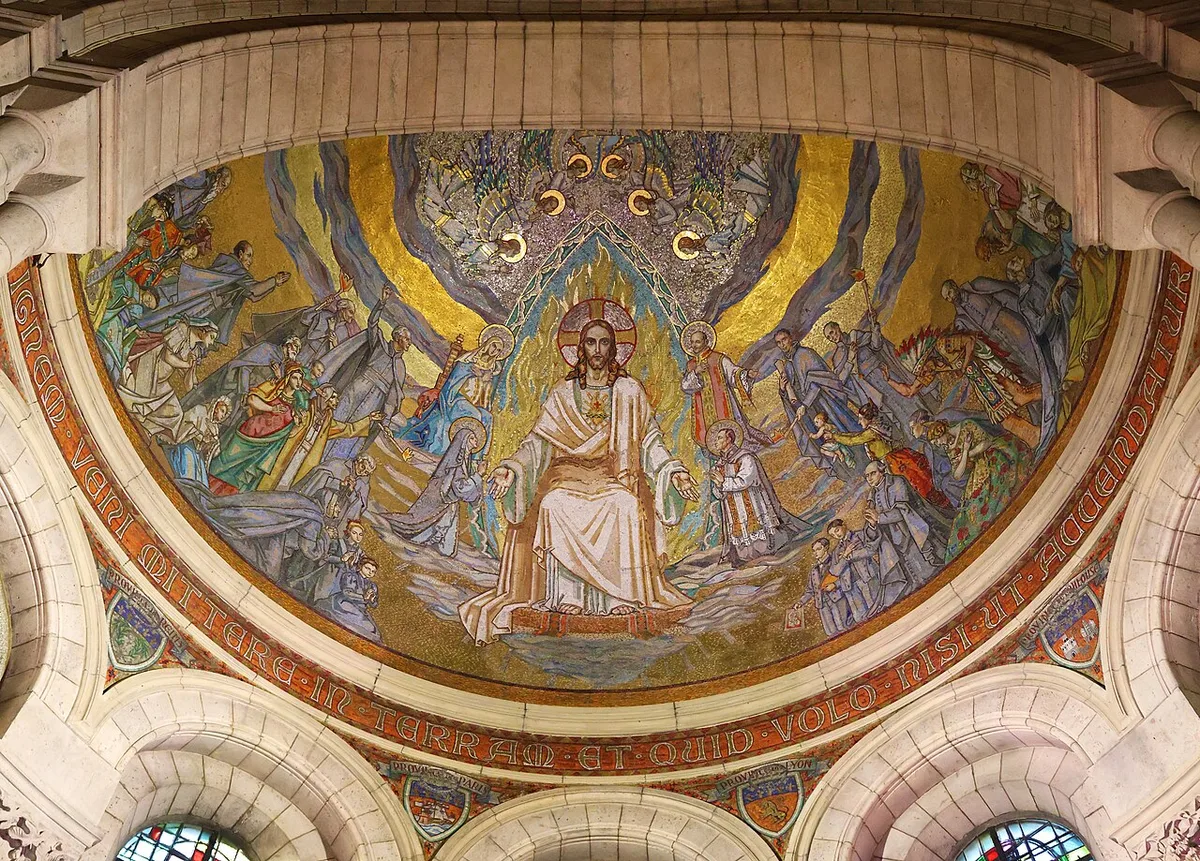
The basilica’s overall floor plan follows a strictly symmetrical Greek cross layout crowned by four smaller domes surrounding the central cupola, evoking classic Byzantine sacred architecture reminiscent of Istanbul’s Hagia Sophia. Inside, natural light filters softly through tall arched stained-glass windows to illuminate intricate mosaic decoration—most notably Christ in Majesty, an awe-inspiring apse mosaic spanning nearly 475 square meters created by master painter Luc-Olivier Merson.
Surrounding the basilica, a sweeping cascade of stone terraces and staircases descends toward Louise-Michel Square at the base of the hill, forming a grand public gathering space where travelers and Parisians assemble to take in panoramic views across the capital. Welcoming more than ten million visitors and pilgrims annually, the Montmartre and Sacré-Cœur complex ranks among Europe’s most visited cultural landmarks. Its enduring appeal stems not only from its spiritual atmosphere, but also from the breathtaking vista stretching from the basilica forecourt across the entire urban tapestry of Paris—from the Eiffel Tower to Notre-Dame Cathedral.
Rising 130 meters above sea level at the northern edge of Paris, the Montmartre limestone hill has long stood as a singular geological and cultural witness to French history. Rooted in ancient Gallo-Roman sanctuaries once dedicated to Mars and Mercury before becoming hallowed ground tied to the martyrdom of Saint Denis, Montmartre weaves layers of history and art into every stone. When the French Third Republic authorized construction of the Sacré-Cœur Basilica in the late nineteenth century, the monument served both as a spiritual sanctuary healing the trauma of the Franco-Prussian War and the Paris Commune and as a bold architectural statement. Architect Paul Abadie’s winning design broke away from prevailing Gothic Revival conventions by embracing Romano-Byzantine forms inspired by great Eastern Mediterranean basilicas.
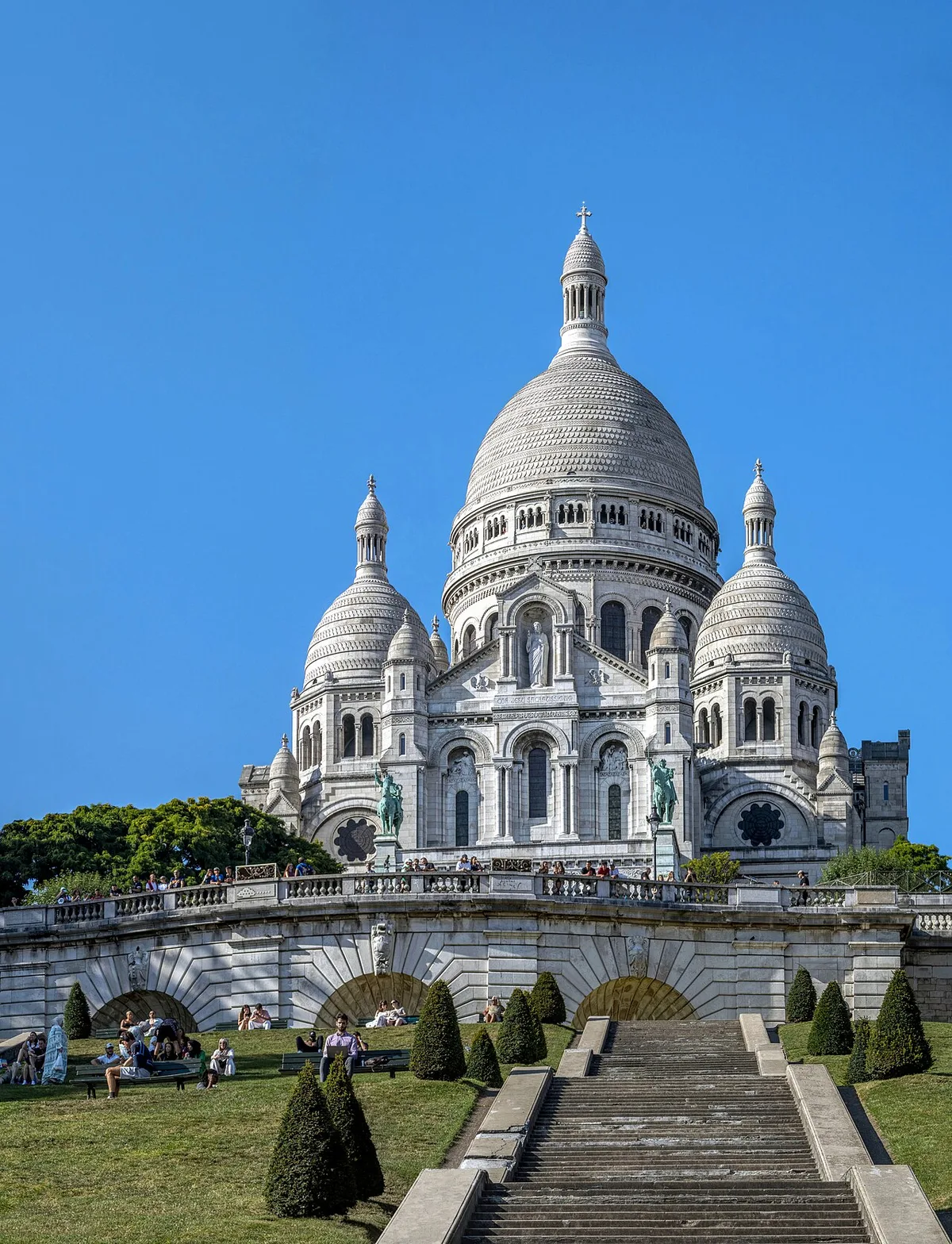
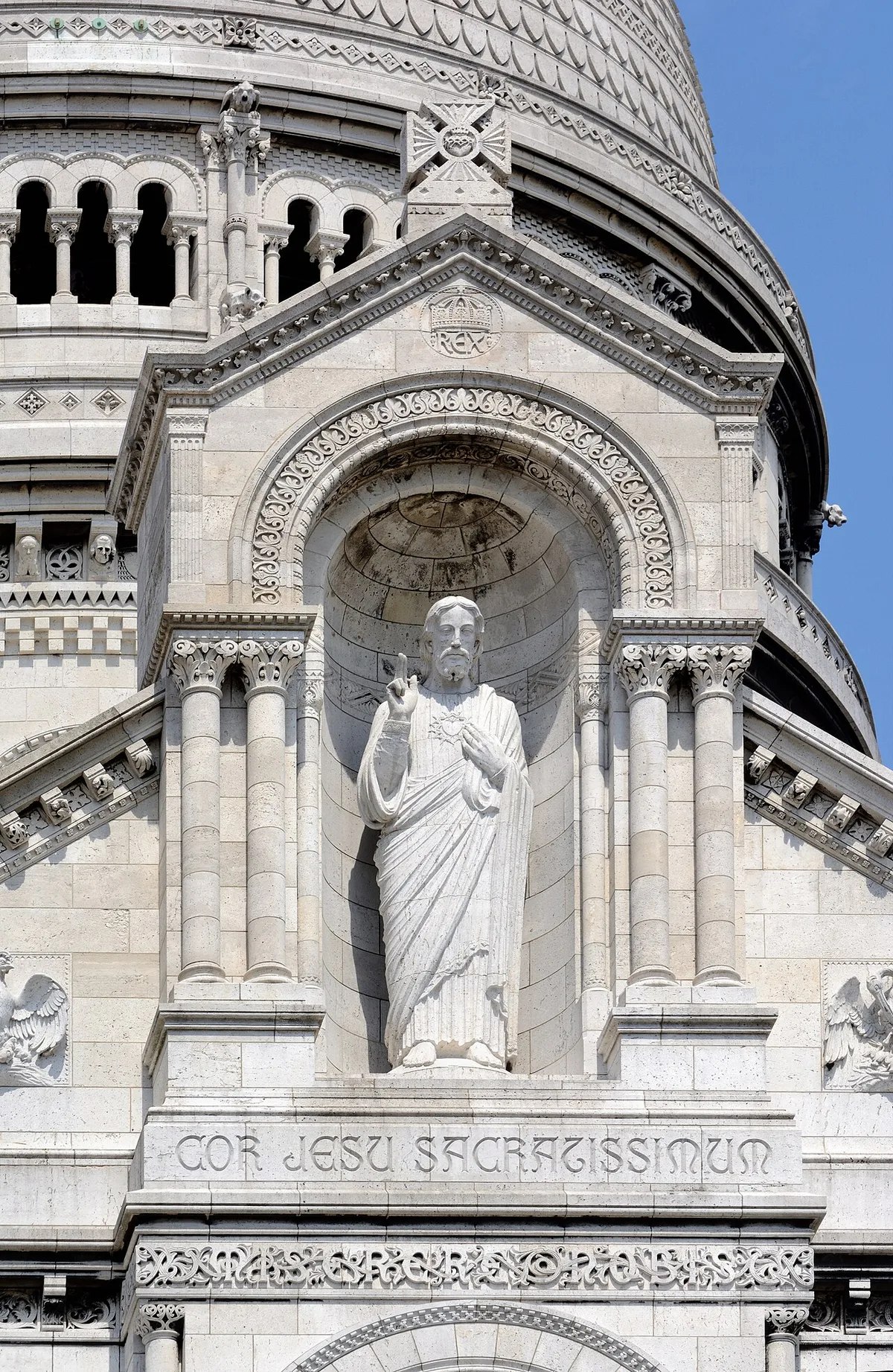
The basilica’s exterior owes its unmistakable brilliance to Château-Landon stone from Seine-et-Marne, whose natural calcite secretion continually whitens the facade when exposed to rain and sun. Arranged on a Greek cross floor plan, the building is crowned by an 83-meter central dome flanked by four subsidiary domes—an engineering triumph symbolizing the upward ascent of the human spirit. Along the main portico, rhythmic arches frame monumental equestrian bronze statues of two towering figures in French history: Joan of Arc and King Saint Louis, each rendered with solemn resolve.
Passing through the heavy bronze doors sculpted with biblical reliefs, visitors step into a hushed interior illuminated by jewel-toned stained glass. Commanding the apse vault above the sanctuary is Luc-Olivier Merson’s monumental mosaic, Christ in Majesty, crafted from millions of colorful glass tesserae and genuine gold leaf depicting Christ dressed in white with arms outstretched in blessing. Beneath this radiant canopy stands the white marble high altar carved with wheat and grapevine motifs symbolizing the Eucharist, surrounded by symmetrical side chapels housing fine woodcarvings, nineteenth-century academic paintings, and liturgical metalwork crafted by master French silversmiths.
Within the basilica’s northern campanile hangs another national treasure: La Savoyarde. Cast in Annecy in 1895, this colossal bronze bell weighs nearly 19 tons and measures three meters across at its rim, ranking among the heaviest bells ever cast. On major feast days, its deep, resonant toll carries across the Paris skyline for miles. Hauling the massive bell up Montmartre’s steep cobblestone slopes at the end of the nineteenth century was an extraordinary feat of industrial-age logistics requiring teams of twenty-eight horses and custom pulley systems.
Stepping back outside into the surrounding quarter, Montmartre reveals another equally celebrated identity as the cradle of modern European art in the late nineteenth and early twentieth centuries. Winding cobblestone lanes such as Rue Norvins and Place du Tertre still echo with the footsteps of artistic pioneers including Vincent van Gogh, Pablo Picasso, Henri Matisse, and Amedeo Modigliani, who lived and painted in modest studio buildings along the hill. Steep stone staircases wind past historic artist ateliers and even a surviving medieval-style vineyard, creating an intimate village atmosphere set high above the modern metropolis.
From a cultural perspective, the juxtaposition of the stately Sacré-Cœur Basilica—embodying sacred tradition and architectural order—with Montmartre’s free-spirited bohemian neighborhood creates a compelling creative tension. Together, they turn the hill into a living open-air museum where every limestone step, ivy-draped wall, and sunlit square narrates the artistic and spiritual evolution of Paris across generations.
Perched 130 meters above sea level in Paris’s 18th Arrondissement, Montmartre maintains a distinctive daily cadence set apart from the brisk commercial pulse of central Paris. Across the arc of a single day, the neighborhood shifts gracefully through distinct moods—from quiet morning mist to lively afternoon artistry and romantic twilight gatherings.
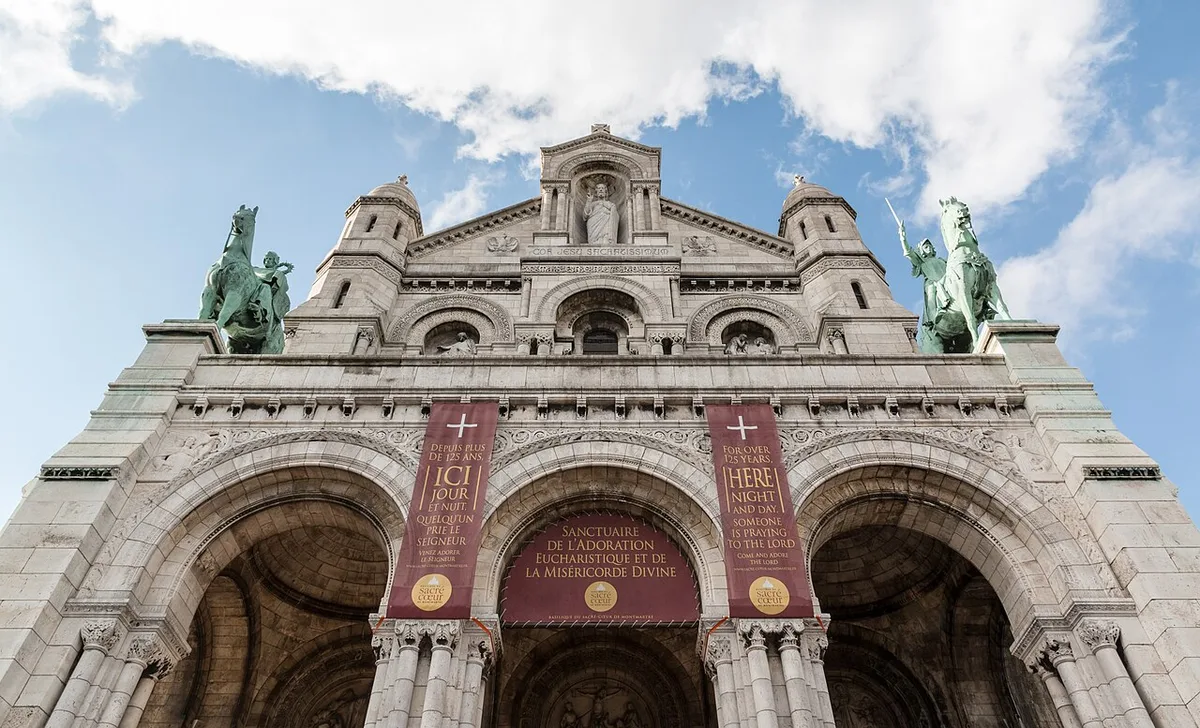
Dawn in Montmartre begins as the first rays of sunlight pierce morning mist drifting over the stone steps leading up to the Sacré-Cœur Basilica. At this early hour, the hill belongs to longtime residents and neighborhood shopkeepers. Artisanal bakeries along Rue des Abbesses fill the crisp air with the warm aroma of butter and freshly baked bread as early regulars stand at café counters sipping espresso alongside flaky croissants. In Place du Tertre—soon to buzz with easels and chatter—complete stillness reigns, broken only by pigeons fluttering across dew-dampened cobblestones under the fading glow of vintage streetlamps as early-rising painters set up their canvases.
By mid-morning, Montmartre transforms into a bustling open-air studio. Place du Tertre fills with portrait painters, caricaturists, and art admirers from around the globe. The whisper of brushes against canvas mingles with lively conversation in dozens of languages, carrying forward a living artistic lineage stretching back to Picasso, Matisse, and Van Gogh. Just steps away along Rue Norvins and Rue Lepic, traditional fromageries, independent bookshops, and artisan workshops open their doors as locals stroll by with market baskets, preserving a genuine neighborhood spirit amid international visitors.
Sunset over Montmartre offers one of Europe’s most memorable visual spectacles. As twilight bathes the ivory-white domes of the Sacré-Cœur Basilica in warm amber and rose hues, hundreds of people gather along the grand front steps. From this elevated perch, Paris unfolds like a sweeping architectural panorama: the Seine curves like a silver ribbon through the city while the Eiffel Tower begins sparkling on the horizon. Accordionists and acoustic guitarists frequently play classic French melodies at dusk, blending with the deep chime of basilica bells to create an unforgettable atmosphere.
After nightfall, Montmartre embraces its classic bohemian evening charm. Historic bistros and cafés such as Le Consulat glow warmly behind multipaned windows, serving hearty French comfort dishes like gratinée onion soup and beef bourguignon alongside fine wines from Bordeaux and the Loire Valley. Live music drifts from intimate cabarets and jazz bars tucked into quiet lanes, while strolling along lamplit cobblestone streets feels like stepping straight back into nineteenth-century Paris.
Observing Montmartre across the day reveals a living neighborhood where past and present continually intersect. Beyond the famous basilica steps, quieter corners like the Clos Montmartre vineyard on the northern slope keep centuries-old local traditions alive, cementing Montmartre’s enduring place on the world’s cultural map.
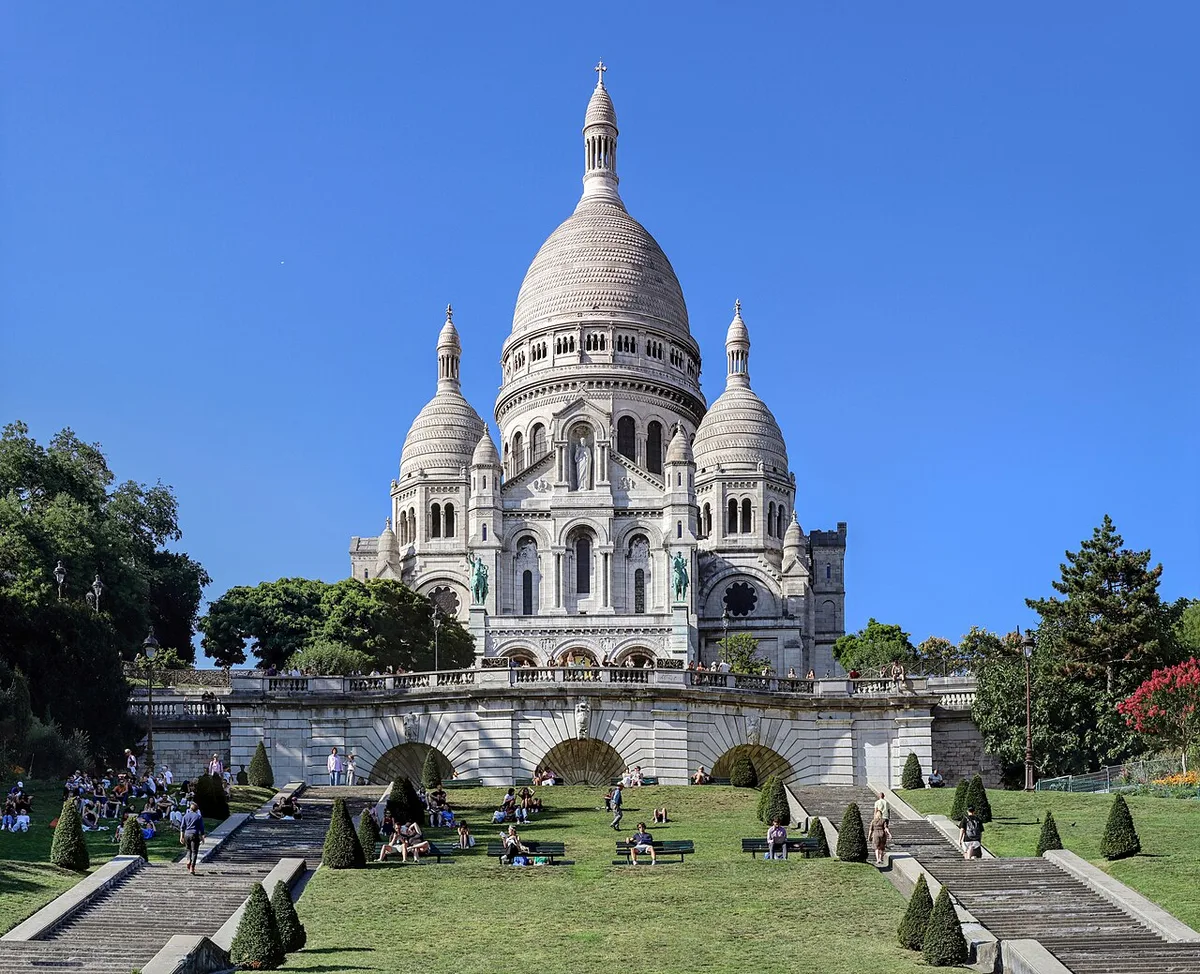
Rising 130 meters above sea level in Paris’s 18th Arrondissement, Montmartre is not only a religious and artistic icon, but also a rich chapter in French culinary heritage. Its gastronomic identity reflects its evolution from an agricultural hill of vineyards and windmills into a vibrant enclave of artists, writers, and working-class Parisians. Along winding cobblestone streets and mossy staircases, the enticing aromas of traditional bistros, artisanal bakeries, and historic sidewalk cafés tell a flavorful story spanning generations.
Montmartre’s culinary character was shaped in large part by nineteenth-century neighborhood taverns where Impressionist painters gathered over affordable, hearty meals. Classic comfort dishes remain staples on local menus—most notably French onion soup gratinée crowned with melted Comté or Emmental cheese over slowly caramelized onions and rich beef broth, alongside slow-simmered Burgundy beef bourguignon and herb-braised lamb. Prepared patiently in heavy cast-iron cocottes with red wine, thyme, bay leaves, and garlic, these dishes embody rustic French culinary craft.
Culinary arteries such as Rue des Abbesses and Rue Lepic showcase everyday Parisian food culture at its finest. Walking down Rue Lepic reveals traditional boulangeries turning out crisp baguettes and flaky, butter-rich croissants each morning alongside specialty cheese shops displaying raw-milk Brie de Meaux, aged Comté, and regional goat cheeses—traditionally savored with crusty bread, dried fruit, and a glass of well-matched wine.
Café culture around the Sacré-Cœur Basilica moves at a wonderfully unhurried pace. Sidewalk terraces lined with woven bistro chairs have served as informal salons since the Belle Époque, where Parisians linger over dark espresso or fragrant Earl Grey tea paired with macarons or warm apple tarts while watching street life unfold below.
Montmartre also preserves a rare agricultural treasure within Paris city limits: the Clos Montmartre vineyard on its northern slope. A living reminder of the vineyards that once blanketed the hill prior to nineteenth-century urbanization, Clos Montmartre celebrates an annual autumn grape harvest festival complete with parades and regional food markets. Though produced in small collectible batches, its wine captures the unique limestone terroir of the hill and remains a cherished symbol of local heritage.
Historic restaurants tucked into the lanes around Place du Tertre continue to honor classic French techniques—serving artisanal charcuterie platters with country pâté and cornichons, airy cheese soufflés, and traditional sauces like Hollandaise and demi-glace simmered from scratch using regional farm produce. Together, the solemn beauty of the basilica, nostalgic hillside lanes, and time-honored gastronomy make Montmartre a feast for every sense.
Planning a visit to Montmartre Hill and the Sacré-Cœur Basilica benefits from understanding Paris’s four seasons, public transit connections, and local etiquette. Spring (March through May) brings mild temperatures between 12°C and 19°C and fresh greenery cascading along stone staircases—ideal for unhurried walking tours. Summer (June through August) brings daytime highs that can exceed 30°C and lively crowds filling Place du Tertre, with long daylight lasting past 9:00 PM calling for comfortable pacing and hydration on steep climbs.
Autumn (September through November) bathes Rue Lepic and the hillside in golden-orange foliage with crisp temperatures between 10°C and 15°C and misty mornings reminiscent of classic Impressionist paintings. Winter (December through February) brings chilly temperatures of 2°C to 6°C and occasional snow blanketing the white domes of Sacré-Cœur—offering quieter streets but requiring warm, wind-resistant layers atop the breezy summit.
Reaching Montmartre is effortless via the Paris Métro. Line 12 stops at Abbesses and Lamarck-Caulaincourt—with Abbesses famous for its deep spiral staircase adorned with murals (and elevator access)—while Line 2 stops at Anvers and Pigalle at the foot of the hill. From Anvers, a short walk up Rue de Steinkerque leads to Place Saint-Pierre, where the Montmartre Funicular carries passengers straight to the basilica terrace in under two minutes using a standard Métro ticket. Local buses such as routes 40 and 67 also wind directly through the hilltop streets.
Driving private cars or taking taxis into Montmartre’s narrow cobblestone core is discouraged due to steep gradients and pedestrian-only zones; taxis should drop passengers near Boulevard de Clichy or Place de Clichy at the base of the hill. Early morning between 7:00 AM and 9:00 AM is the best window for peaceful photography and quiet contemplation before tour groups arrive.
Sunset and evening hours draw large crowds to admire city lights shimmering along the Seine River and the Eiffel Tower, though visitors should stay alert against pickpockets in crowded areas. Supportive, non-slip walking shoes or sneakers are essential for navigating steep slopes and worn granite steps safely, paired with layered clothing suited to brisk hilltop breezes.
Because the Sacré-Cœur Basilica is an active Roman Catholic sanctuary, modest dress covering shoulders and knees is required upon entry, and visitors must maintain quiet decorum during prayer and Mass. Flash photography and tripods are prohibited inside to protect the stained glass and apse mosaic. Entry to the main basilica is free, while climbing the 300 spiral steps to the outer dome gallery for 360-degree views of Paris requires a separate admission ticket.
A few street-smart precautions will keep your visit smooth: politely decline individuals near the lower steps offering to tie colored string bracelets onto your wrist or draw unsolicited portraits, keep bags secured in front of you in crowds, respect residents’ privacy along quiet residential lanes, and dispose of litter properly.
For travelers eager to delve deeper into Montmartre’s artistic legacy, the nearby Musée de Montmartre—housed in a seventeenth-century building where Auguste Renoir once maintained a studio—offers rich exhibitions on the hill’s Belle Époque bohemian golden age. Combining thoughtful preparation with unhurried curiosity ensures an unforgettable journey through one of Paris’s most evocative historic quarters.
To experience this journey seamlessly with an expert local guide, explore our curated 9-Day Germany – Austria – Hungary – Czech Republic Tour with a thoughtfully arranged itinerary.