Stepping back through the stream of time to the early years of the 17th century, when the maritime republic of Venice stood at its golden zenith yet was rife with underlying currents of power and law, the Bridge of Sighs (Ponte dei Sospiri) was officially commenced in 1600 during the reign of Doge Marino Grimani. This supreme leader of Venice officially sanctioned the construction of a stone bridge connecting core power centers directly, in order to tighten the state’s entire judicial control system. After three meticulous years of construction featuring exquisite white limestone blocks hand-carved by master stonecutters of the republic, this magnificent structure was officially completed and put into operation in 1603, leaving an indelible mark on the urban architecture of the canal city.
Behind the masterpiece design of this structure stood the genius architect Antonio Contin, a renowned name imbued with artistic blood as the nephew of Antonio da Ponte—the man who designed the legendary Rialto Bridge spanning the Grand Canal. With a block massing mindset deeply influenced by late Renaissance echoes mingled with the solemnity of Baroque architecture, Antonio Contin skillfully molded a discreet enclosed arched bridge structure where sunlight was almost completely blocked out by intricate stone-carved grilles shielding both sides of the window. In the oldest archival records of the Venetian republic, this bridge did not bear its current melancholic name at all, but was recorded coldly and practically as Il Ponte dei Prigioni, meaning the Bridge of Prisons, accurately reflecting its original function as a closed transport artery between the interrogation rooms of the Doge’s Palace (Palazzo Ducale) and the new prison (Prigioni Nuove) located across the Rio di Palazzo canal.
Yet the destiny of an architectural work sometimes lies not merely in its dry functional utility but is shaped by humanity’s cultural currents and mindset through changing eras. It was not until the early years of the 19th century that the original administrative name gradually faded into the past, giving way to a romantic yet deeply sorrowful moniker bestowed by the great English poet Lord Byron. In his globally famous epic Childe Harold’s Pilgrimage, this great romantic poet poeticized the cold stone bridge into the Bridge of Sighs. From a technical passageway meant for criminals extradited from court to the dungeon, the bridge suddenly transformed into an immortal symbol of regret where prisoners stood by narrow windows, casting their gaze through iron bars to catch a final glimpse of Venice’s free sky and emitting mournful sighs before the prison doors closed forever.
Recalling the turbulent history and historical vicissitudes associated with this bridge, Venetian historiography cannot omit one of the most legendary figures of the 18th century: Giacomo Casanova, the notorious Italian adventurer, writer, and high-society gambler. In 1755, at the peak of his adventurous career and scandalous love affairs, Casanova was arrested by the secret police apparatus of the Venetian Council of Ten under accusations related to heresy, freedom of thought, and damaging public morals. He was sentenced without a public trial and thrown into the notorious Piombi prison, also known as the lead-roof cells, located right across the Bridge of Sighs. Casanova’s resilience, sharp intellect, and boldness made him the only prisoner in history to successfully escape this heavily fortified prison in 1756. The entire tragic journey from the moment of extradition across the Bridge of Sighs to the spectacular escape across the roof of the Doge’s Palace was recorded vividly, meticulously, and proudly by Casanova himself in his classic memoirs Histoire de ma vie, transforming this stone bridge into a historical witness to humanity’s ultimate yearning for freedom before the tyrannical shackles of the era.
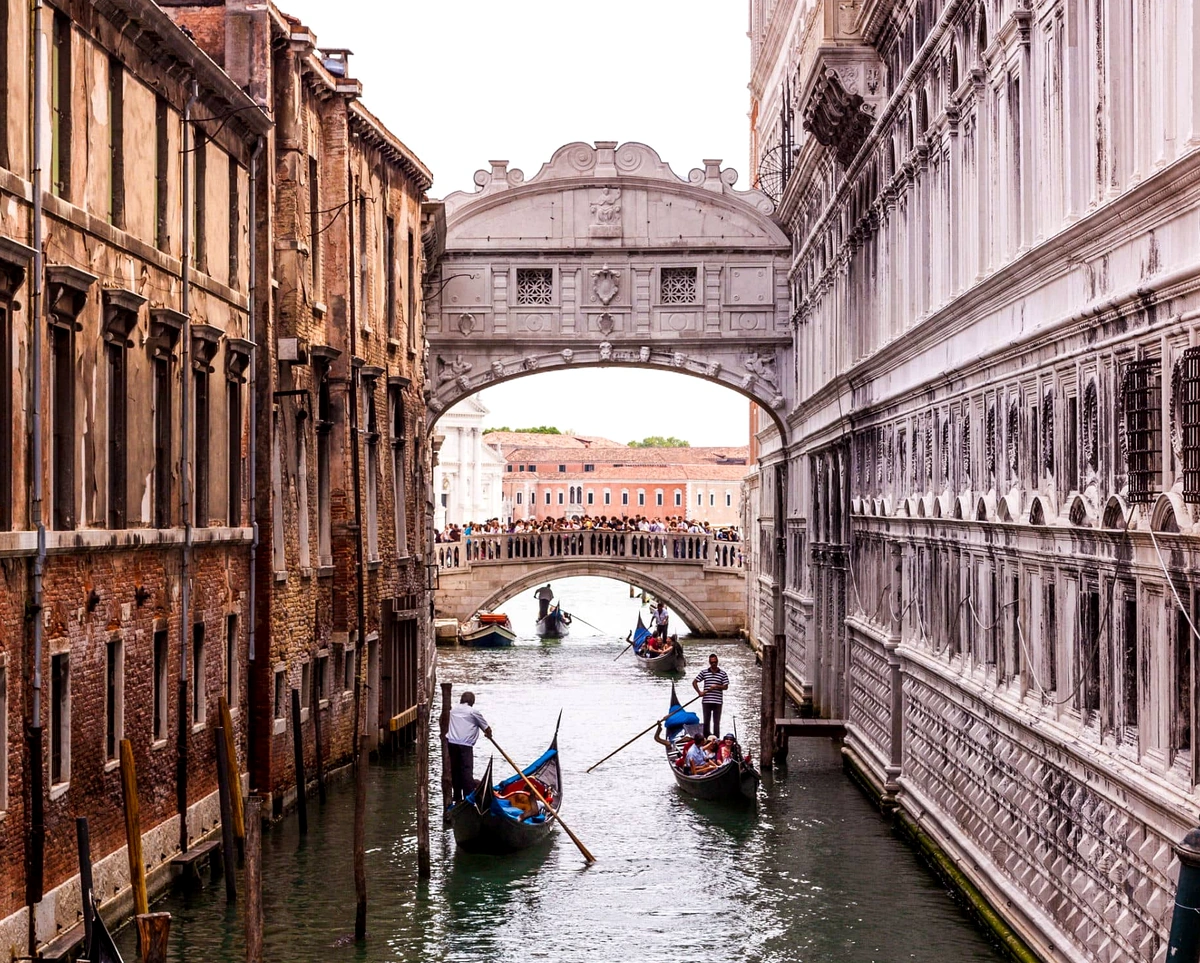
Flipping through the pages of geomantic chronicles and architectural geography of the water-bound urban landscape of Venice, one cannot help but marvel at how Serenissima—the once-illustrious maritime republic—created a unique topographical wonder across a strip of brackish marsh lagoons. The Bridge of Sighs is not merely a piece of white Istrian limestone sculpture spanning running water, but also a crucial link in the spatial planning, defense, and judicial systems of the entire empire. Situated at one of the city’s most vital water transportation nodes, this bridge crosses the Rio di Palazzo—a narrow, deep inner artificial canal roughly eight meters wide, creating a suction-like crevice of light between heavy stone architectural blocks.
Viewed from the perspective of urban planning and defensive aesthetics, the location of the Bridge of Sighs bears the distinct imprint of the pragmatic and rigorous political mindset of Renaissance Venetian nobility. The entire city of Venice was built upon a complex archipelago of lagoons where water surfaces served simultaneously as natural moats and primary transportation routes. In the central power area surrounding St. Mark’s Square, the republic cleverly arranged key institutions including the Doge’s Palace and the notorious dungeon system. What is special about this planning layout is the state’s decision to locate the judicial body and detention prison completely separate from the main part of the Doge’s Palace, connecting them via a completely enclosed stone bridge corridor. This arrangement clearly demonstrates a strict legal political mindset and a tightened defensive psychology aimed at optimizing prisoner control, completely eliminating any scenarios of prison raids, riots, or daring escapes from external hostile forces or internal rebellious elements within republican society.
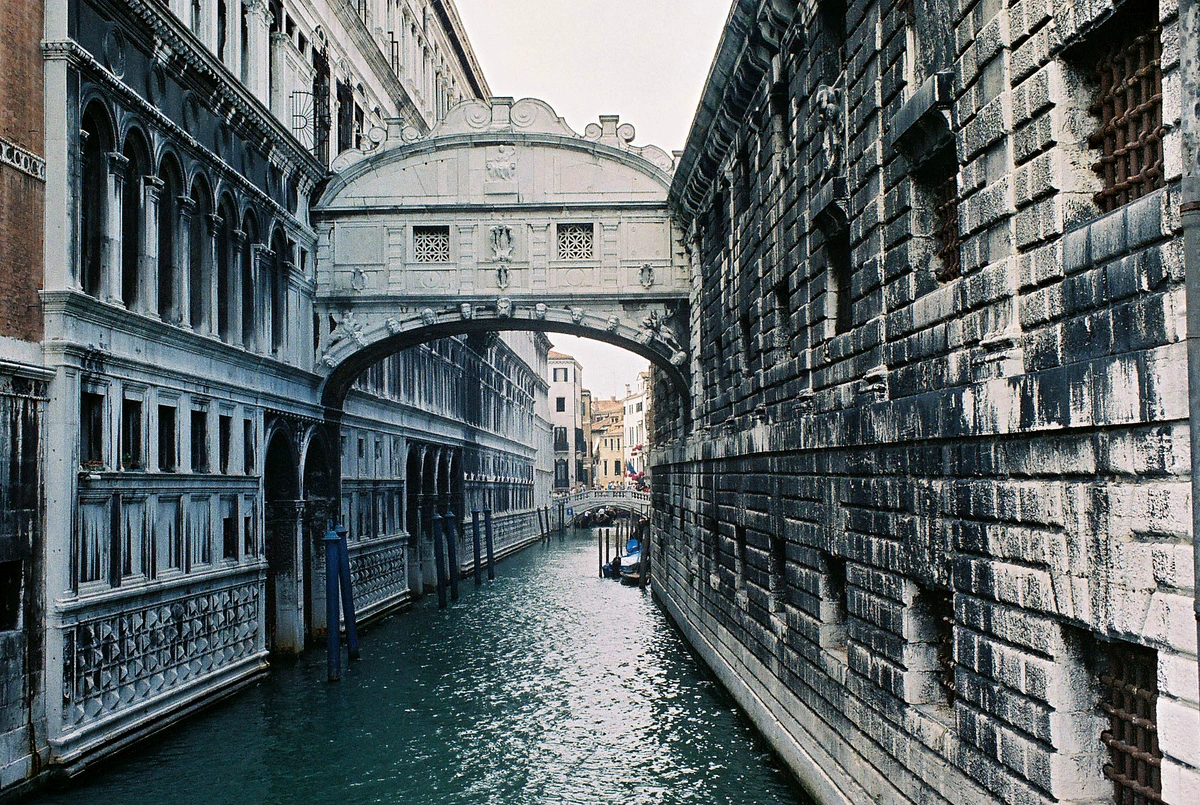
From the perspective of construction engineering and landscape architecture, the Bridge of Sighs is an outstanding testament to the art of spatial psychological manipulation through the contrast of light. The bridge structure is designed as a double corridor interlinked, screened completely by intricately carved patterned stone walls and covered by a sturdy arched roof above, making it completely impossible for outsiders to see inside, and conversely, those stepping through can only gaze at the free world through densely crossed Istrian stone windows. The movement process of a prisoner across this bridge is calculated as a sharp psychological warfare blow. Beginning from the magnificent Grand Hall of Justice overflowing with natural daylight inside the Doge’s Palace, the convicted person must cross the narrow span of the Bridge of Sighs to proceed directly into the gloomy, damp, and cold new prison (Prigioni Nuove) across the Rio di Palazzo canal. This spatial transition from light to dark, from supreme radiant power to a hopeless, gloomy prison realm creates a violent psychological shock, causing any condemned soul walking this corridor to burst into mournful sighs and resign themselves to fate before the door of eternal isolation.
Stepping back through the stream of time to the turbulent architectural transition period in the illustrious maritime republic, the Venice Bridge of Sighs emerges not merely as a simple limestone transportation artery, but as a pivotal masterpiece marking a turning point of early Baroque style. From the perspective of cultural history and construction art research, this work demonstrates the peak genius of Antonio Contino—nephew and outstanding heir of the renowned architect Antonio da Ponte, creator of the legendary Rialto Bridge. Upon stepping into the Rio di Palazzo canal area, anyone with sharp aesthetic vision is hypnotized by the enclosed, majestic massing and subdued melancholic sadness enveloping the entire spatial structure of this stone bridge.
Surveying closely regarding spatial structure and actual scale, the Bridge of Sighs possesses a uniquely distinct design featuring a double-corridor system running parallel inside. To absolutely prevent collusion, information exchange, or communication among death-row inmates, designers of that era cleverly divided the interior space into two completely independent pathways, clearly demarcating prisoner transfer routes from cells to the Inquisition Court and vice versa. Viewed from the exterior, the bridge has an estimated span length of roughly eleven meters, rising about eight meters high and suspended at an elevation of about three and a half meters above the bright blue waters of the canal. This massing ratio creates a flawless balance, snugly fitting between two massive high-rise blocks of the Doge’s Palace and the historic Prigioni Nuove prison, turning a prison passageway into an inseparable artistic piece of the Venetian urban painting.
Regarding material crafting art, the entire bridge body is extracted and constructed from famous limestone named Istrian stone (Pietra d’Istria), a natural product quarried directly from the eastern coast of the Adriatic peninsula. Choosing this material brings not only aesthetic intent regarding elegant, luxurious color shades but also a technical solution resolving the harsh climate conditions of the marshland. Istrian stone possesses extremely high mechanical durability along with superior salt-mist resistance and moisture endurance, allowing the work to endure centuries of weathering and immersion in the salty moisture of the Adriatic sea while preserving the sharpness of every carved detail. The bridge’s exterior surface is covered with an intricately carved relief system down to the smallest detail, demonstrating the master craftsmanship of stone masons from past centuries, where Renaissance sculpture blends harmoniously with dramatic Baroque spirit.
The most prized highlight on the external facade is the central area of the bridge arch, home to a deeply symbolic stone sculpture referred to by researchers as the Mask of the Judge. The bridge window frame area is also a testament to rigorous defensive thinking and functional architecture art. Rather than expanding glass panes or open clearances like other ordinary bridges, architects used thick stone blocks to manually carve them into an extremely sturdy crossed stone grille system. These grilled windows play a dual perilous role: just enough to let in a bit of dim light and subtle airflow aiding ventilation, yet completely eliminating any opportunities for prisoners to escape or throw appeal notes and letters out to the free world. Through those heavy stone grilles, the final gaze cast by unfortunate lives toward the Venetian lagoon has become an endless source of inspiration for poetry, painting, and human philosophy across generations.
When night falls over St. Mark’s Square, nightlife in one of the world’s oldest cities seems to slow down, giving way to an art and lighting space fine-tuned to absolute perfection. To preserve heritage values intact, city authorities apply extremely strict lighting standards, transforming the entire vicinity of the historic architectural work into a silent, deeply emotional live-action stage. Low-intensity spotlight LED systems with warm color temperatures around 2700K are cleverly arranged to shine precisely onto the microcrystalline surface of Istrian stone. This gentle golden light does not blind the eyes, but instead thoroughly honors delicate stone veins and the deep recesses of carved reliefs from past centuries, creating a visual effect that is both magnificent and melancholic, matching the spirit of a monument burdened by human sorrow.
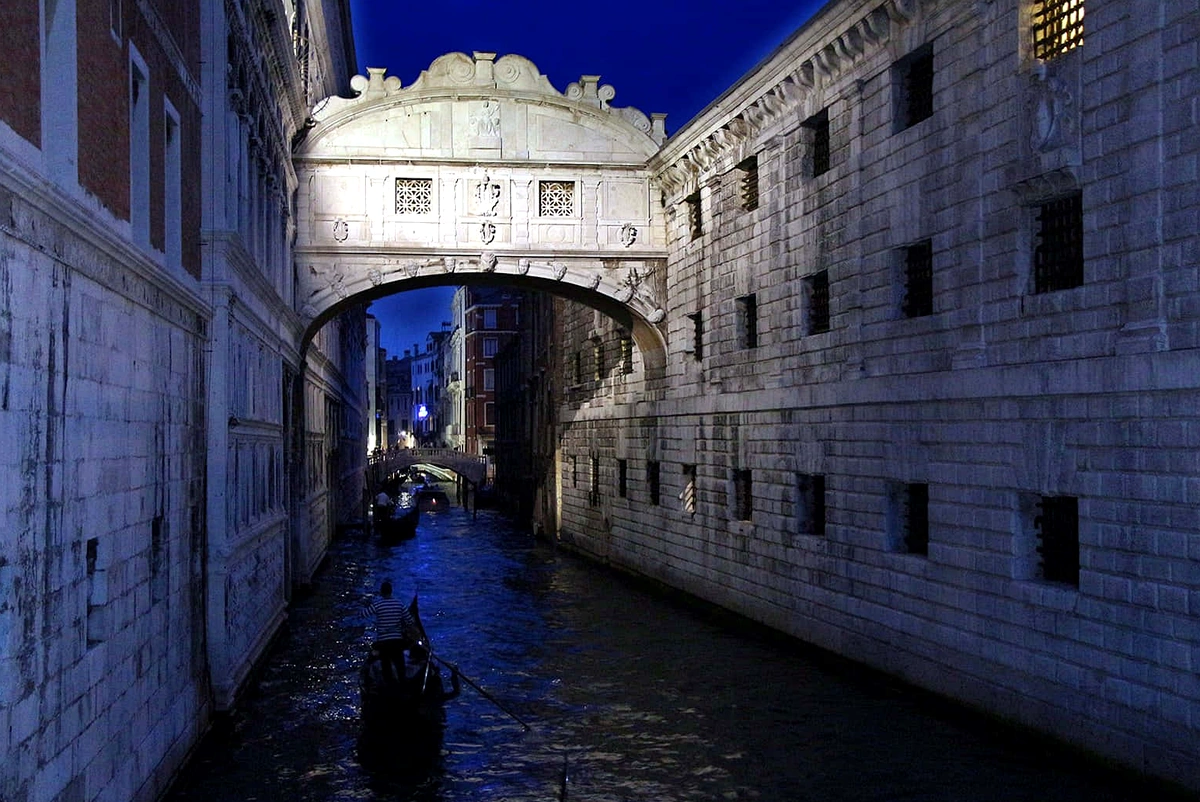
Beneath the bridge arch, the Cannaregio Canal and narrow waterways suddenly transform into a giant mirror reflecting the night sky of Italy. Affected by gentle ripples caused by passing boats, golden light from granite stone windows stretches into shimmering silk ribbons, gilding the pitch-black water surface and evoking the mysterious atmosphere of 19th-century romanticism. During these hours, the surrounding space echoes with the rhythmic striking of oars combined with the resonant sounds of accordions. On traditional gondola boats moving at night, people often encounter opera voices lifting barcarolles—traditional rowing songs of lagoon dwellers. Resonant deep-toned singing echoes through narrow stone walls, rebounding off calm water surfaces and awakening distant memories of fates that passed through this tragic corridor.
The artistic and cultural vitality of this space reaches its peak every February, when the Venice Carnival takes place vividly across every waterway path. At this time, the area surrounding the work suddenly transforms into a lively live-action stage with no gap between past and present. Performing artists in elaborate 18th-century court attire, draped in dark black velvet cloaks and wearing traditional Bauta or Columbina masks, suddenly appear in flash mob performances right on ancient stone bridges. They reenact ancient tales, portraying secret encounters in the dark or melancholic sighs of former nobility, causing any stray traveler passing by to feel as though they are wandering into a timeless historical film reel where the boundary between reality and dream is completely erased.
Stepping away from the gloomy shade of Istrian limestone where the Bridge of Sighs spans the narrow canal, the Venetian lagoon heritage space immediately opens up a completely contrasting yet deeply profound sensory dimension. Amidst a labyrinth of winding alleyways, local life anchors not only in authoritative Gothic or Byzantine palaces, but also flows powerfully through heirloom culinary culture deeply rooted in the lagoon’s specific ecosystem. Unlike upscale restaurants catering to mass tourists, the true culinary soul near the Bridge of Sighs lies within traditional wine bars known locally as bacaro, where time seems frozen from past centuries beside glasses of ombra white wine and display counters brimming with historic maritime tapas.
Stepping into these seasoned bacaro spots, travelers are invited to join an ancient social ritual of locals where cicheti culture—small, refined bite-sized portions—is elevated to an art of living. The perfect starting point for a gustatory voyage is Baccalà Mantecato, a culinary masterpiece crafted from softened dried salted cod, whipped into a creamy texture with extra virgin olive oil, garlic, and milk, then scooped and spread over crispy grilled polenta corn slices. The combination of cod’s smooth richness and the smoky polenta crust creates a delicate textural symphony, reflecting Venetian ingenuity in preserving and exalting imported ingredients from distant voyages during the prosperous maritime republic era.
Besides, the flavor landscape around this historic monument is adorned by Sarde in Saor, a sweet-and-sour marinated sardine dish containing an epic tale of medieval food preservation art. Stemming from sailors’ food-storing traditions during the Crusades, Sarde in Saor is a bold fusion of golden-fried crispy sardines and a mixture of caramelized sautéed onions soaked in white wine vinegar, seasoned with sweet raisins and the distinct nutty flavor of pine nuts. Passed down through generations of family chefs for centuries, this dish retains a magical balance of mild acidity, sweet notes, and oceanic saltiness, testifying to the timeless vision of Venetian cuisine in harmonizing East-West cultural currents through spices.
Delving deeper into the main banquet experience, diners are guided toward terroir-driven icons of the lagoon, notably Risotto al Nero di Seppia or squid ink risotto. This dish uses exclusive ingredients from the surrounding brackish waters: fresh cuttlefish caught straight from the lagoon, with black ink sacs skillfully filtered to create a glossy sauce rich in deep-sea saltiness and minerals. Arborio or Carnaroli rice is simmered thoroughly in fish broth, infused with squid ink flavor and cooked traditionally with a slightly firm core, delivering an ethereal visual experience and an unforgettable lingering aftertaste for anyone tasting it.
Beyond that, indigenous culinary blending is prolonged by Fegato alla Veneziana, a delicacy bearing the folk-aristocratic cooking style of the canal city. This dish is the sublimation of thinly sliced calf’s liver, quickly sautéed over high heat with plenty of shredded onions cooked until soft and turned into a natural sweet caramel-brown hue, then lightly deglazed with white wine vinegar or white wine to balance richness. The combination of liver’s rich savory depth and the deep sweetness of onions not only mesmerized generations of poets and artists stopping in Venice, but also acts as a living cultural bridge bringing travelers to the truest core of a world heritage site beating day by day through flavor and heirloom kitchen love.
Concluding the exploration of cultural, architectural, and historical depths of the silent stone symbol in the heart of the canal city, this encyclopedia guide synthesizes practical, detailed, and accurate experiences to explore the Bridge of Sighs (威尼斯叹息桥) fully and safely. To admire this Baroque architectural masterpiece without any bewilderment amidst the Venetian waterway labyrinth, mastering coordinates of free public viewing points is top priority for anyone loving photography and urban landscapes.
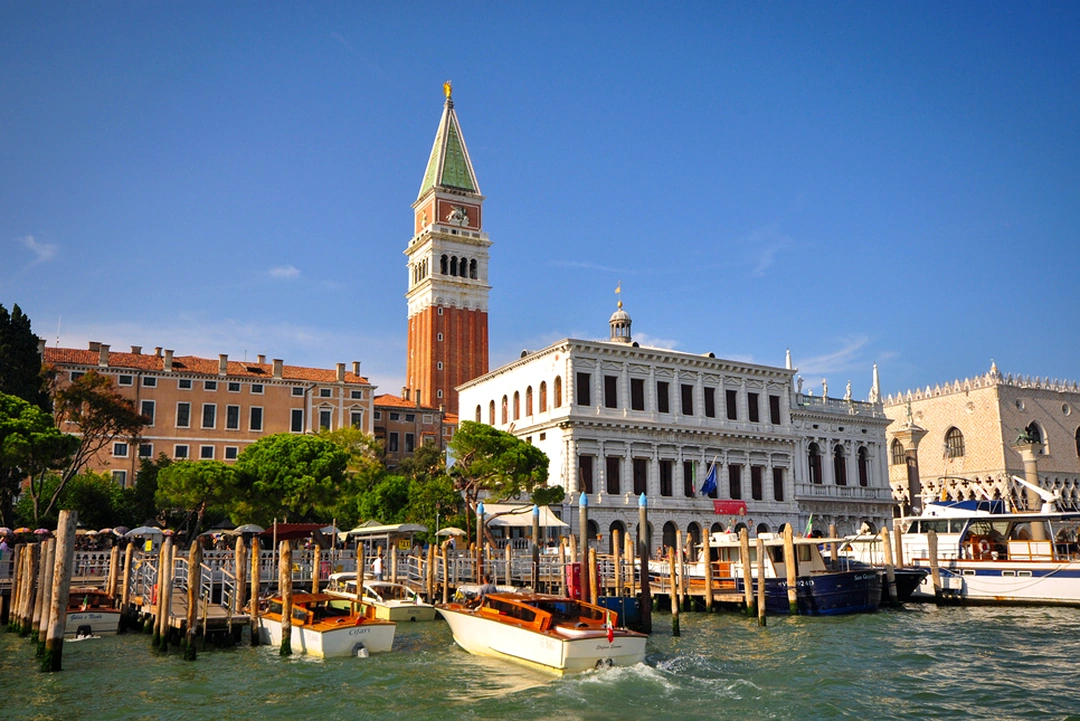
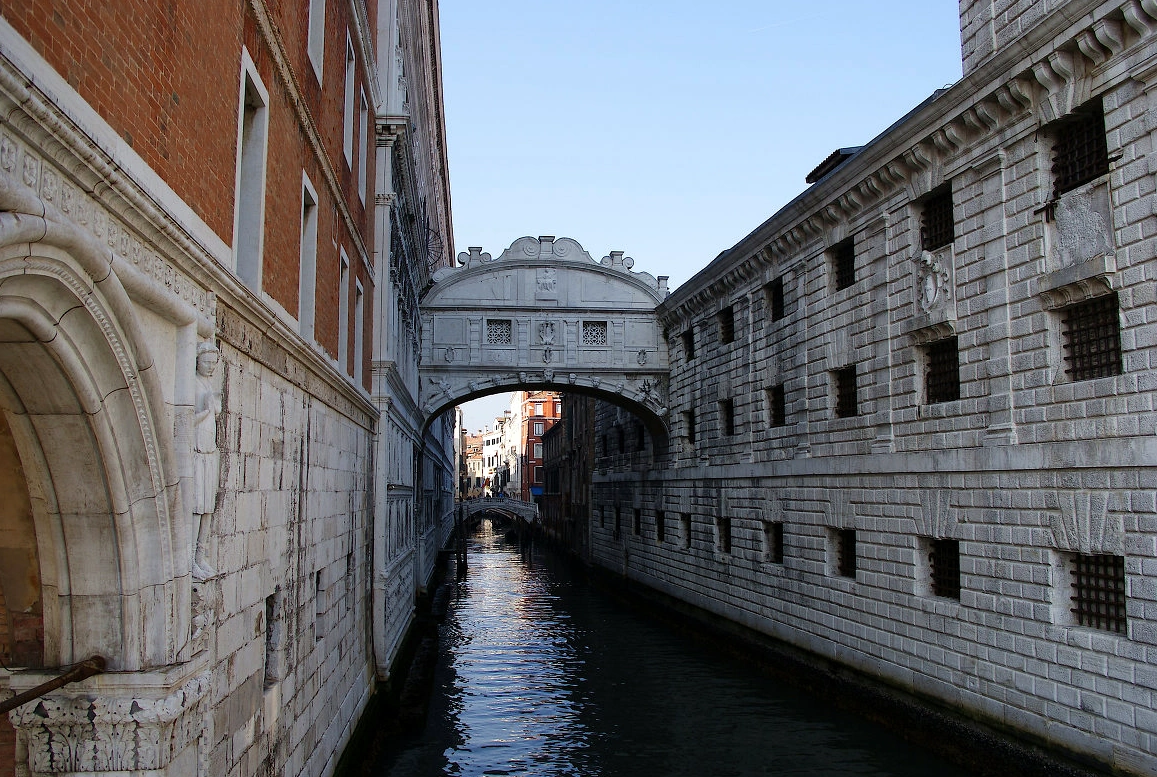
According to practical field guides, travelers can fully admire the bridge’s exterior from two prime free viewing spots. First is the Ponte della Paglia bridge (Straw Bridge), offering an open panoramic angle encompassing the magnificent facade of the bridge crossing the Palace Canal (Rio di Palazzo). Second, if wishing to get closer for a detailed look at the sub-facade and exquisite carvings on stone windows shaped like grilles (stone grilles)—where prisoners’ final glances toward the free sky were trapped—visitors should move to the Ponte dei Canonica bridge (Canons’ Bridge). These viewpoints open up precious visual spaces recreating the melancholic beauty of heritage across centuries.
Alongside external viewing, stepping inside the Bridge of Sighs to witness firsthand the discreet passageway connecting Doge’s Palace courtrooms with the fortified Prigioni Nuove prison requires visitors to prepare tickets carefully. Specifically, exploring inside the bridge requires purchasing a general admission ticket to the Doge’s Palace, and heritage management advises booking online in advance for opportunities to access secret corridors, damp dungeons, and the unique split structure of this historic bridge.
Regarding transit methods in a city completely devoid of cars and motor vehicles, public water transportation (vaporetto) serves as the lifeblood bringing you close to the heritage site. Travelers can easily catch water bus line 1 or 2 and disembark at San Zaccaria pier or San Marco-Vallaresso pier. From these piers, it takes only about 3 to 5 minutes of leisurely walking through small alleys and characteristic arched bridges to step foot into the historic square adjacent to the monument. However, a crucially important note for travelers moving around Venice is that the entire city is strictly pedestrian-only, and all bridges feature steep stone step structures. Therefore, local regulations strictly prohibit pulling large plastic-wheeled suitcases on streets to protect ancient architectural works; instead, utilize luggage storage services or carry lightweight backpacks.
To fully enjoy a quiet atmosphere away from bustling tourist crowds during peak seasons, the golden hour to appear at the Bridge of Sighs area is early morning around 8:30 AM. The moment morning sunlight shines through silent stone blocks will grant you the most tranquil and profound visual experiences. Moreover, upon entering sacred spaces and historical heritage sites like the Doge’s Palace, dress codes require visitors to dress politely and modestly, strictly obeying the rule of covering shoulders and knees to show respect for local culture.
Besides exploring heritage sites, practical travel guides also offer readers small yet useful tips to avoid unnecessary expenses during the trip. If planning to experience traditional Gondola boat rides, note the standard listed price: roughly 90 Euro for a 30-daytime journey, rising to 110 Euro at night. Always confirm pricing clearly with the boatman before boarding to prevent price gouging or overcharging tourists. Additionally, to protect your travel budget, avoid stopping for meals at open-air cafes situated right in the middle of St. Mark’s Square unless you wish to pay extremely expensive hidden service fees.
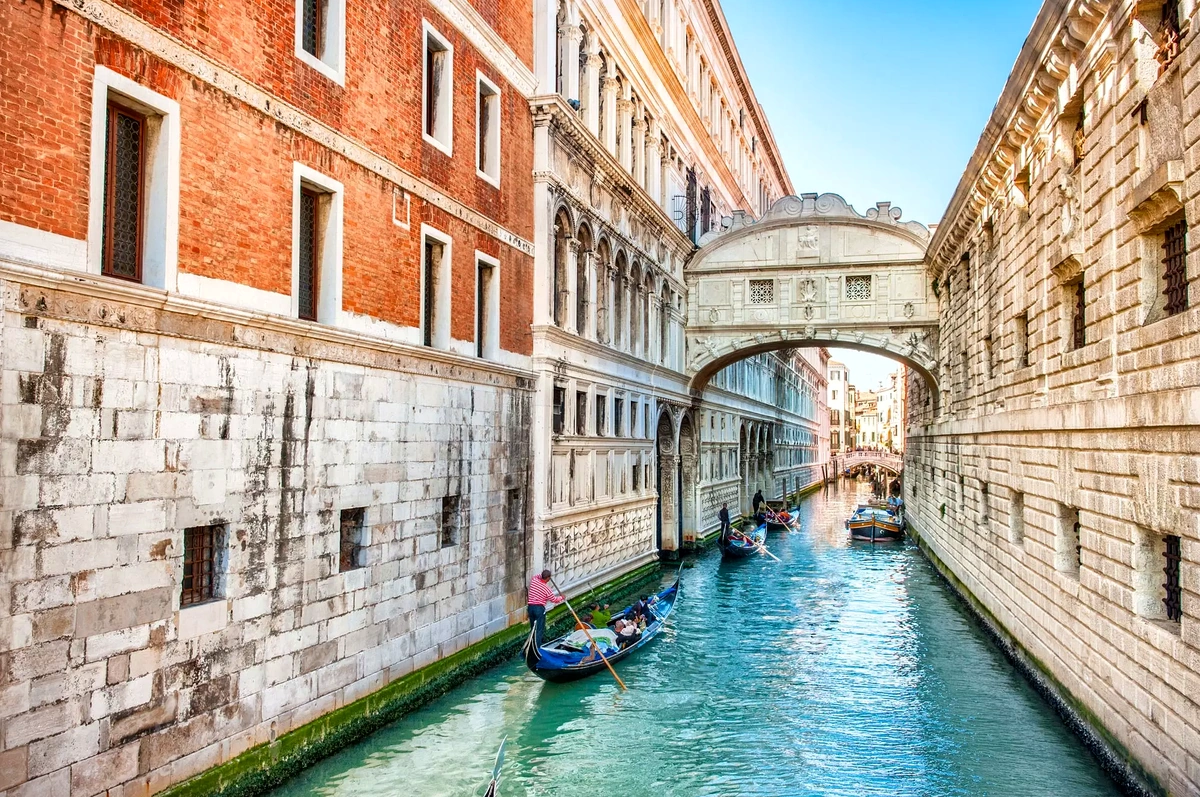
Hopefully, this entire in-depth encyclopedia guide ranging from coordinates, history, architecture to practical field tips has sketched a comprehensive, vivid, and authentic portrait of one of the canal city’s greatest humanitarian architectural wonders. To actualize your Italian dream perfectly, securely, and with top-tier class without worrying about organizational details, travelers can immediately refer to the all-inclusive tour program custom-designed by leading cultural experts.