Warm greetings to our dear readers, spirits eager to discover depths of culture and history. As a Leading International Travelogue Writer and Cultural Historian, I am delighted to guide you to an ancient heart where time seems to stand still amid modern Frankfurt: Römerberg Square. Nestled in the tranquil Old Town (Altstadt) of Frankfurt am Main, in the state of Hesse, the Federal Republic of Germany, Römerberg is not merely a square; it is a living chronicle where every paving stone and every timber roof tells the story of a glorious, heroic, and deeply resilient past.
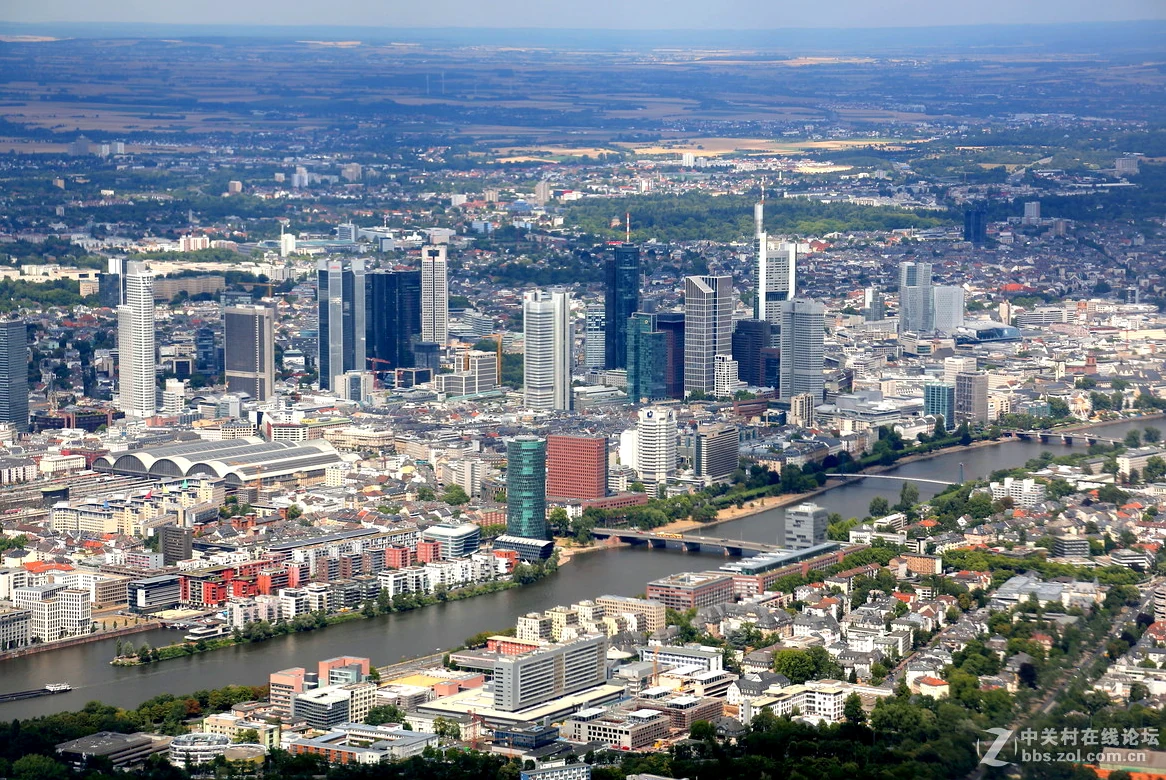
Our journey to discover Römerberg begins with its earliest historical chapters, when this area took shape as a bustling hub of commerce and community life from the 9th century. That was the golden era of the Holy Roman Empire, and right here, the first seeds of a great Frankfurt were sown. One cannot overlook Charlemagne, the legendary emperor who chose Frankfurt as a palace center from 794, laying a firm foundation for the city’s political and economic role. From lively markets to community gatherings, Römerberg gradually affirmed its place as an indispensable heart of urban life, where the breath of history began to mingle with everyday rhythm.
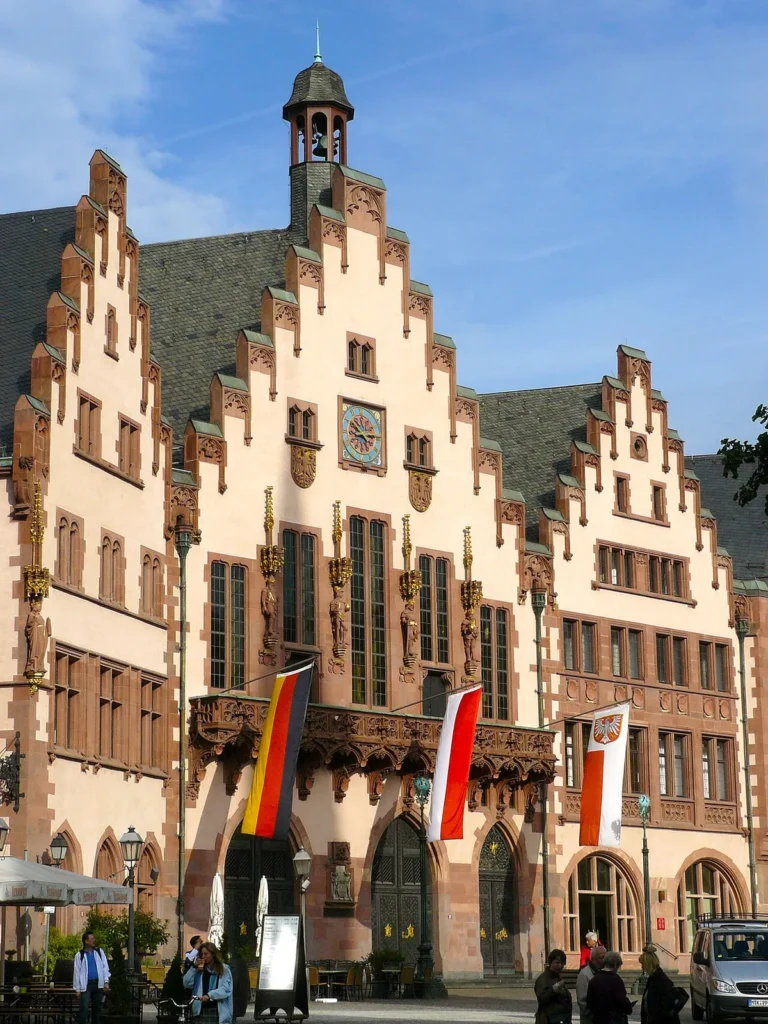
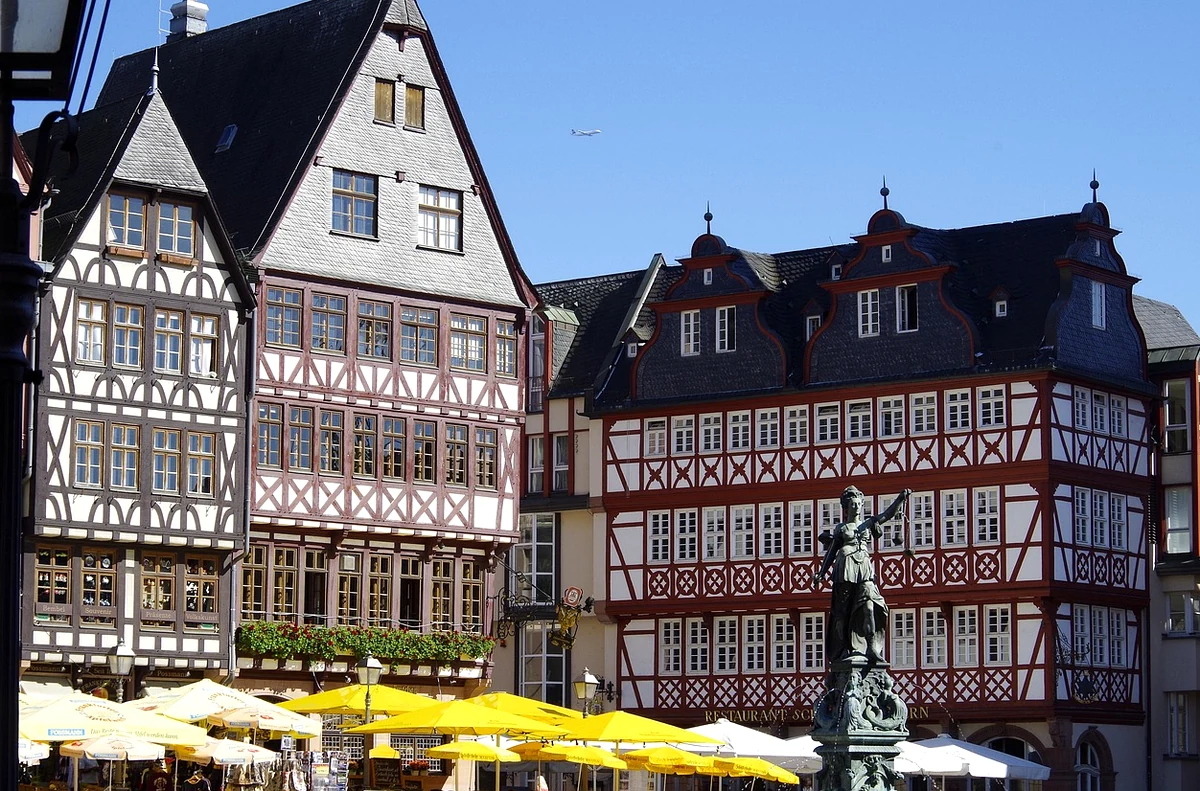
Entering the 15th century, the square’s silhouette became clearer with the emergence of the Römer town hall complex. On March 11, 1405, a momentous event took place: the City of Frankfurt officially purchased three adjacent houses from the wealthy German-Italian merchant family named Römer. From then on, the name Römer was tied not only to the former owner family, but also became a symbol of municipal power and autonomy. These three houses, historically known as Römer (in the center), Altes Limpurg (to the north), and Schwanenstein (to the south), formed a distinctive facade blending Late Gothic and German Renaissance styles with signature stepped gables, becoming the seat of the city government and a witness to countless historical turns.
Yet perhaps Römerberg’s most illustrious role in German history lies in its royal coronations. From 1562, when Frankfurt officially replaced Aachen as the formal coronation site, this square witnessed the greatest events of the Holy Roman Empire. After being crowned at the imposing St. Bartholomew’s Cathedral (Dom) right next door, German kings and emperors would step out onto the famous balcony of the Römer town hall. There, they appeared before tens of thousands of cheering, waving citizens, formally proclaiming their authority and receiving homage from their subjects. In those moments, Römerberg was more than a square—it was history’s grand stage, where divine authority and civic will merged, shaping the destiny of an empire spanning centuries.
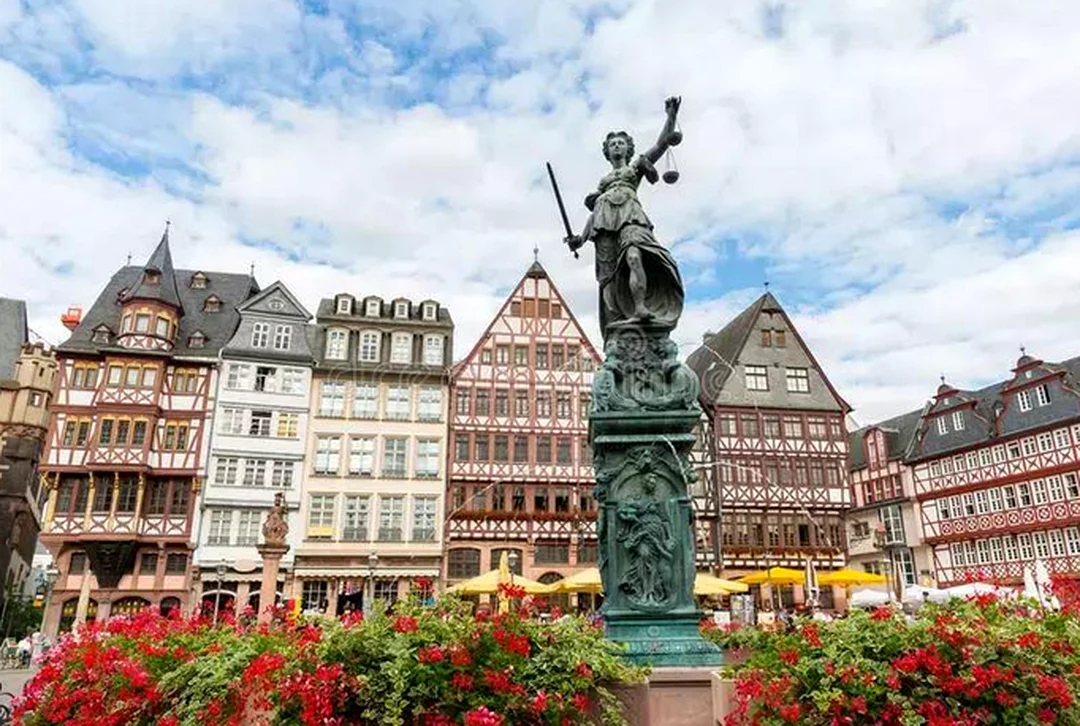
Before war devastated it, Römerberg was a vibrant tableau of Medieval and Renaissance architecture. Alongside the Römer town hall with its distinctive stepped-gable facade, the eastern side of the square, known as the Ostzeile, featured a stunning row of half-timbered houses (Fachwerkhäuser), each with its own name and story, creating a harmonious, unmistakably German ensemble. In the middle of the square, the Fountain of Justice (Gerechtigkeitsbrunnen), erected in 1611 in red sandstone, stood tall with a statue of Lady Justice holding a sword and scales. Notably, the goddess faces toward the Town Hall, serving as a timeless reminder of fairness and integrity within the city administration—a symbol of the rule of law cherished by Frankfurt’s people for generations.
However, no beauty can escape the cruelty of war. In 1944, during the darkest days of World War II, the entire Old Town around Römerberg—including centuries-old historic buildings—was nearly leveled completely by heavy Allied bombing raids. From a vibrant heart, Römerberg became a desolate ruin, a deep scar in the memory of Frankfurt’s residents and all of Germany. It was a painful historical blow that seemed to erase the traces of a golden age forever.
Yet resilience and pride in heritage helped Frankfurt rise again. Rather than constructing purely modern buildings, the city government and citizens made a historic decision: to carry out an ambitious reconstruction campaign aimed at restoring the historic appearance of Römerberg and the Old Town. This was not merely rebuilding walls, but reviving a soul. The eastern half-timbered house complex (Fachwerkhäuser) in the Ostzeile was faithfully restored in the early 1980s based on meticulous original drawings, like a miracle bringing the past back to life. Most recently, the Dom-Römer Project (2012–2018) completed the mission of re-establishing the entire Old Town area between Römerberg and the Cathedral, turning it into a living museum where visitors can touch history with all five senses.
From an early 9th-century trading hub, through splendid imperial coronations, to the harsh devastation of war and a remarkable rebirth, Römerberg Square has traveled a turbulent historical path. It is far more than a tourist destination; it is a powerful testament to a city’s vitality, and to the will to preserve and cherish cultural and historical values. When you set foot in Römerberg, listen to the stories each stone and window frame whispers, and feel the full depth of a priceless heritage we are delighted to introduce.
From your very first steps onto the ancient cobblestones, visitors are immediately captivated by a living architectural canvas where time seems to pause in the heart of modern Frankfurt. Römerberg Square is not only a historical site, but also an architectural masterpiece—an open-air museum showcasing Germany’s highest artistic achievements across centuries. Here, every stone and every window frame tells a story of resilience, of the drive to reconstruct, and of preserving original beauty.
The first highlight—and the very heart of the square—is the Römer town hall complex, a cluster of three adjoining buildings with signature stepped-gable facades rising proudly in the space. Acquired by the City of Frankfurt on March 11, 1405, from the wealthy Römer merchant family, this complex is a refined blend of Late Gothic and German Renaissance styles. The three central buildings bear meaningful historical names: Römer in the middle, Altes Limpurg to the north, and Schwanenstein to the south. The famous balcony on the front of the second floor—where Holy Roman Emperors once greeted citizens after their coronations, and where heads of state or the German national football team celebrate victories today—has become an inseparable icon of the square, witnessing countless turns of history.
Facing the town hall, the eastern row of half-timbered houses (Ostzeile) appears like a fairy-tale illustration stepped straight off the page. Comprising six adjoining houses—each distinct yet united in Germany’s signature Fachwerkhäuser (half-timbered) style: Großer Angelhorn, Kleiner Angelhorn, Wilder Mann, Schräger Jahn, Goldener Schwan, Roter Hahn—these are far more than ordinary buildings; they are eloquent proof of a miraculous revival. After being completely leveled by Allied bombs during World War II in 1944, this entire Old Town section was faithfully reconstructed by Frankfurt’s government and citizens in the early 1980s based on original drawings. The primary material is load-bearing oak timber framing (Fachwerk), with infill panels between the beams made from a lime-and-straw mortar mixture, whitewashed in light tones or hand-painted, creating a rustic yet deeply charming look. Ground floors were typically built of red sandstone (Red Sandstone) not only to resist dampness and fire, but also to add a warm color accent contrasting with the ivory plaster above. Notably, overhanging upper stories are a clever medieval technique that expanded floor space without encroaching on narrow streets, while creating striking visual rhythm.
In the center of the square, the Fountain of Justice (Gerechtigkeitsbrunnen) stands firm as a reminder of enduring values. Built in 1611 of red sandstone, the fountain is crowned by a statue of Lady Justice (Justitia) holding a sword and scales. Remarkably, Lady Justice here faces toward the Town Hall rather than outward toward the street as is customary, carrying deep meaning about overseeing fairness within the municipal government. It is a subtle detail packed with weight, reflecting a commitment to the rule of law and administrative transparency from hundreds of years ago.
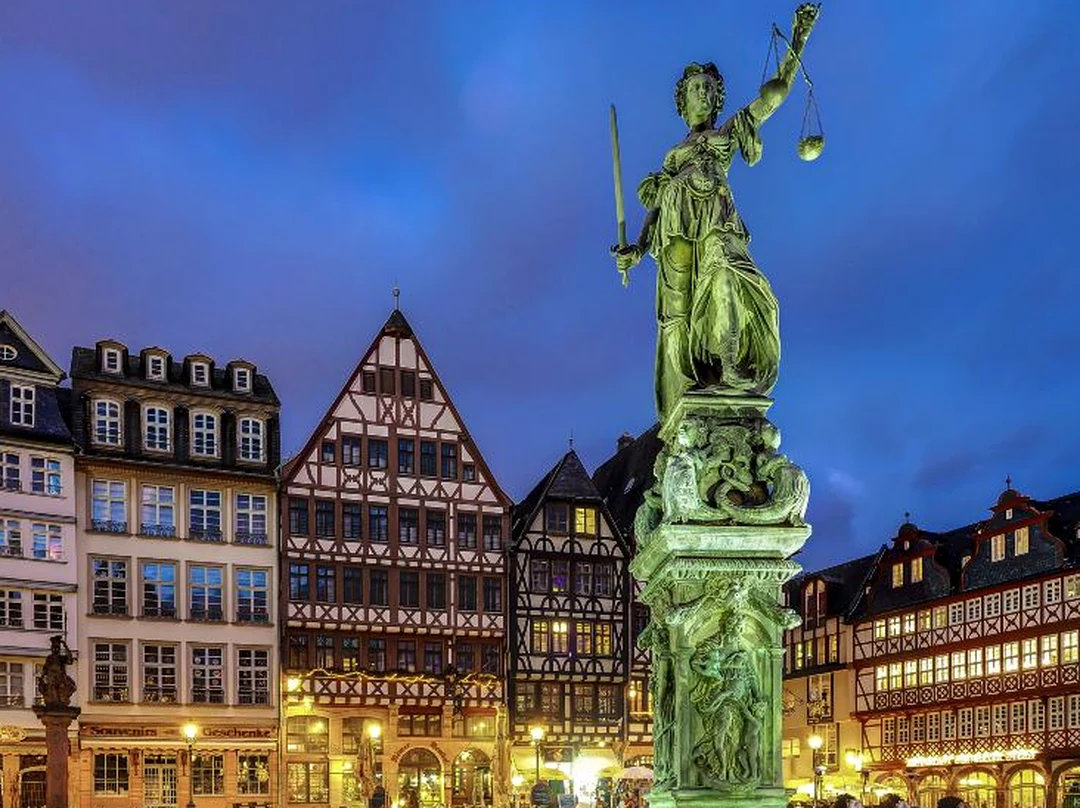
Most recently, the Dom-Römer Project (2012–2018) continued re-establishing the entire Old Town district between Römerberg and the Cathedral, affirming Frankfurt’s commitment to safeguarding its architectural heritage. Every street corner and every roof in Römerberg is a historical chapter rewritten with care and reverence for the past. Coming to Römerberg, visitors do more than admire architecture—they feel the pulse of history, the resilience of a people, and an enduring love for the artistic values that shaped Frankfurt’s identity.
Having admired the splendor of Late Gothic and German Renaissance architecture and felt a millennium of history breathed into every paving stone, your journey to explore Römerberg Square is about to enter a new chapter: a chapter of truly high-value experiences—unforgettable moments crafted to touch both emotion and intellect.
Start with a moment we fondly call the “million-dollar photo spot.” As sunset settles and bathes the entire square in gold, stand in the center of the plaza and aim your lens toward the Ostzeile row of timber-framed houses. Six historic houses—with their signature load-bearing oak timber frames and light plastered walls—now glow under warm golden lights. That light shimmers across the rough cobblestones and paints one of Germany’s most authentic fairy-tale scenes, where time seems to stand still. This is more than just a pretty picture; it is a vivid visual memory and a lasting mark of Frankfurt’s timeless beauty.
Continuing the journey, you will step into the heart of the city’s power and history: Römer City Hall. This cluster of three adjoining buildings with distinctive stepped-gable facades is not only an icon but also a witness to countless historical turning points. In particular, we will explore the Kaisersaal (Emperors’ Hall)—once the setting for lavish banquets following the coronations of German kings and emperors. Entering this formal hall, you will admire a portrait collection of 52 German emperors, each painting telling a story and an era of grand history. Admission to the Kaisersaal is only around 2 to 4 EUR, a small price to immerse yourself in the power and high art of a golden age.
Right beside the square, another experience awaits adventurous spirits: climbing the tower of Frankfurt Cathedral (St. Bartholomew’s Cathedral). It is a gentle challenge that pays off richly. After ascending 328 historic stone steps, a breathtaking panorama opens before you. From this height, the entire Main River winds like a silver ribbon, and the modern skyscrapers of Mainhattan rise proudly in sharp contrast to the bright red tiled roofs of the Altstadt old town nestled below. It is a rare bird’s-eye view where Frankfurt’s past and present meet, creating a distinct beauty found nowhere else. Tower admission is only about 3 to 5 EUR—a modest investment for a million-dollar view.
class=”wp-block-image size-full” style=”margin: 28px 0″> 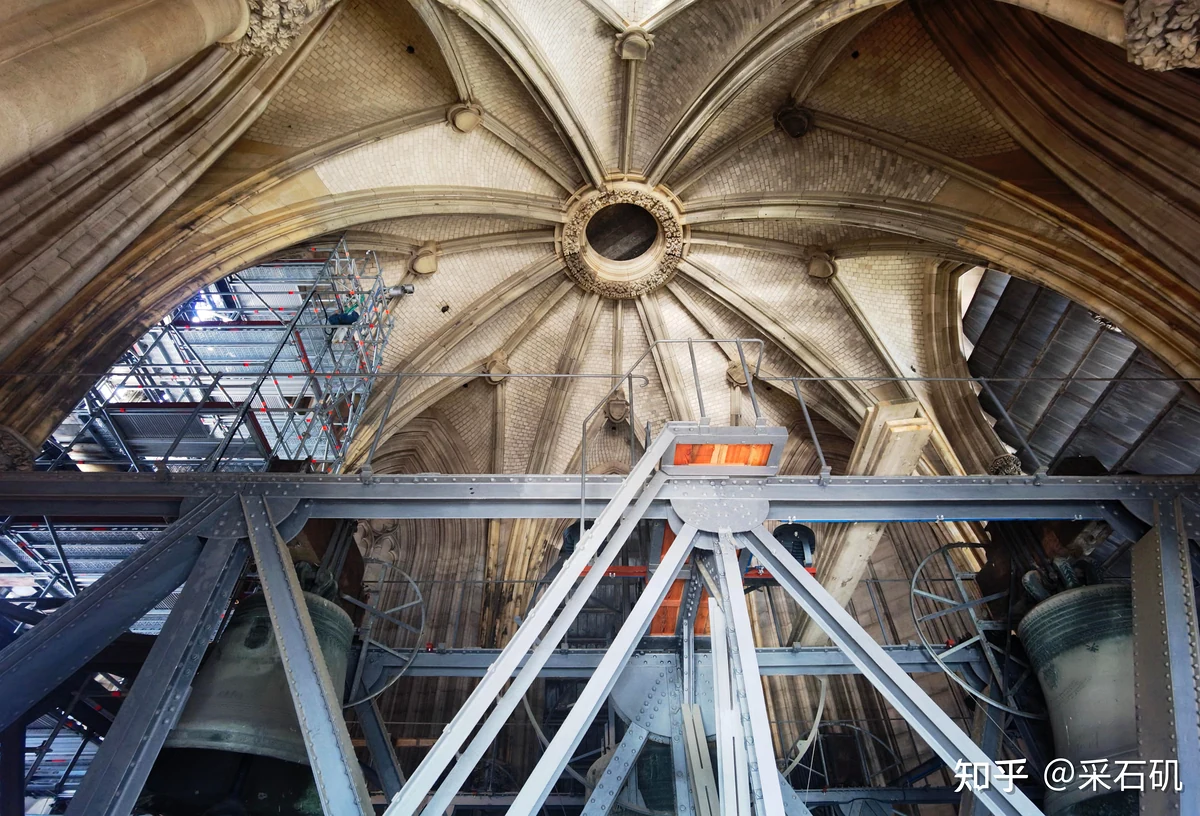
And to elevate the experience to a completely different level, we are proud to offer one-of-a-kind privileges. You will have the chance to join an exclusive behind-the-scenes tour of Römer City Hall, uncovering lesser-known corners where important city decisions are shaped. Even more specially, we will guide you to a traditional apple wine (Apfelwein) tasting in the historic underground wine cellar of the Römer. This is more than sampling Frankfurt’s signature drink—a lightly tart apple wine served in a Bembel stoneware pitcher and Geripptes glass—it is also a journey through time, experiencing local food culture in the most authentic historic setting. The taste of Apfelwein paired with the atmosphere of an old wine cellar will leave an unforgettable mark, an experience reserved exclusively for valued Travel guests.
These experiences are more than standalone activities; they are precious pieces carefully selected and arranged to give you a deep, multi-dimensional look at Römerberg Square in particular and Frankfurt in general. From architectural beauty and historical depth to local flavors and exclusive privileges, every moment here is a worthwhile investment in your cultural and historical journey.
After immersing yourself in ups and downs of history and admiring the captivating Late Gothic and German Renaissance architecture of Römerberg Square, our exploration of Frankfurt would not be complete without a “map” leading into the local culinary world. These are not just dishes; they are living snapshots of culture and the open-hearted spirit of Hesse, thoughtfully researched to bring travelers the most authentic experience. Around the square—especially along the newly reconstructed historic lane of *Saalgasse*—lies a haven of traditional flavors where every dish tells its own story.
Opening this culinary journey, nothing represents Frankfurt better than its signature drink: Apfelwein, also known as traditional apple wine. Unlike familiar grape wines, Apfelwein has a distinct light tang that feels crisp and refreshing, much like the spirit of this city itself—part historic, part modern. Often served from traditional blue-patterned stoneware pitchers called Bembel and sipped from diamond-patterned glass tumblers called Geripptes, Apfelwein is more than a beverage; it is a cultural ritual. Sitting in a traditional Apfelwein tavern, watching people pass across the square, and taking slow sips of tart apple wine lets visitors feel a wonderful harmony between historic surroundings and contemporary life—an experience we always encourage so you truly “live” Frankfurt.
Next, it is impossible to leave out Frankfurter Würstchen—a culinary icon known well beyond Germany’s borders. This is a traditional smoked pork sausage, slender and an appetizing golden-brown, quite different from thicker sausages. The secret lies in its special smoking process, which gives it an aromatic, deeply memorable flavor. Frankfurter Würstchen is typically served simply yet thoughtfully: with a touch of pungent mustard, a few slices of fresh bread, and occasionally horseradish sauce for an extra kick. It is not only a convenient quick bite but also a staple of Frankfurt’s street-food culture, proving the refinement found in the simplest things.
To balance out the rich flavor of sausage, we turn to a dish steeped in the spirit of a Hessian spring: Grüne Soße, or Frankfurt Green Sauce. This is a legendary cold sauce made from seven fresh herbs characteristic of the region, including parsley, chives, sorrel, watercress, borage, burnet, and salad burnet. The herbs are finely chopped and mixed with sour cream or yogurt, creating a smooth, aromatic blend with an eye-catching jade-green hue. Grüne Soße is usually served with boiled eggs and boiled potatoes, offering a fresh, light, yet deeply appealing flavor. More than a regional specialty, this sauce is a point of pride for Frankfurt residents, reflecting respect for local produce and subtle culinary craft.

Finally, for adventurous souls looking to dive deeper into local cuisine, we introduce Handkäs mit Musik. This strange-sounding name actually refers to a traditional sour-milk cheese marinated in a mixture of thinly sliced onions, vinegar, and oil. Handkäs has a fairly strong, distinctive flavor that not everyone embraces on the first bite. Yet that very uniqueness gives it an irresistible charm. The name “mit Musik” (“with music”) is said to allude to the “digestive reaction” after eating it—a witty turn of phrase full of Frankfurt character. Trying Handkäs mit Musik is not just tasting a dish; it is experiencing a bit of local humor and carefree spirit, an unforgettable highlight of exploring food around Römerberg.
From the crisp tang of Apfelwein and rich aroma of Frankfurter Würstchen to the freshness of Grüne Soße and boldness of Handkäs mit Musik, each dish is an important piece of Frankfurt’s colorful food scene. They do more than satisfy the palate; they bring visitors closer to the history, culture, and people of the city. We believe sampling these local favorites will be an essential part of rounding out your time at Römerberg Square, leaving you with lasting memories of a Frankfurt that is historic, modern, and full of charm.
After immersing yourself in historical twists and turns, admiring the unique Late Gothic and German Renaissance architecture, and enjoying local culinary highlights around Römerberg Square, it is time to equip yourself with an essential “Pocket Guide.” Speaking as a travel specialist, I believe knowing the best time to visit, necessary admission costs, and key safety notes will help ensure a smooth, worry-free exploration of Frankfurt.
The ideal time to feel the full pulse of Römerberg can be divided into two signature seasons, each offering its own beauty and experience. From April to October, Frankfurt puts on a lively, fresh look. Mild weather and golden sunlight resting on red tiled roofs and historic cobblestones create ideal conditions for unhurried strolls through every corner of the old town. It is a time when outdoor cafes bustle, spontaneous street performances bring energy to the square, and you can comfortably enjoy fresh air while capturing wonderful moments under gentle European sunshine.
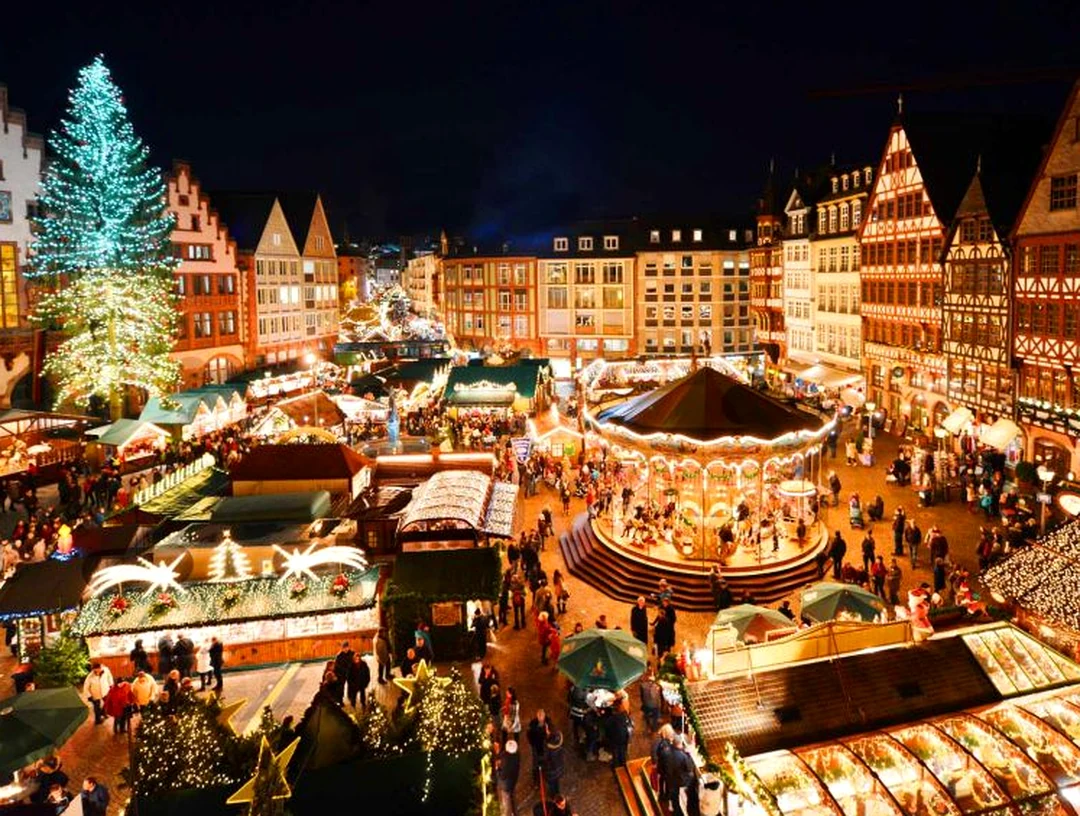
However, if you are looking for a more magical and cozy experience, plan your visit for December. This is the season of the Frankfurt Christmas Market (Frankfurter Weihnachtsmarkt), one of Germany’s oldest and largest Christmas markets, turning Römerberg into a winter wonderland. The square lights up with thousands of twinkling bulbs, a towering Christmas tree stands tall in the center, and the air fills with the inviting aromas of hot Glühwein mulled wine, Lebkuchen gingerbread, and sizzling sausages. Even when the chill turns crisp, the warmth of traditional wooden stalls, lively laughter, and festive spirit warms every visitor’s heart, creating an unforgettable Christmas memory in Frankfurt’s historic center.
As for admission costs, Römerberg Square itself is open freely 24/7, letting you stroll and take photos anytime. Still, exploring heritage sites inside involves a few small fees. A prime example is visiting the grand Emperors’ Hall (Kaisersaal) inside Römer City Hall, home to portraits of 52 German emperors. Tickets typically range from about 2 to 4 EUR per person, depending on the season and whether a special exhibition is on. Kaisersaal hours are usually 10:00 AM to 5:00 PM daily, though keep in mind schedules can shift during city council meetings or major events. Another must-do is climbing the tower of Frankfurt Cathedral (St. Bartholomew’s Cathedral) right next to the square. Spanning roughly 328 steps, the climb costs about 3 to 5 EUR, rewarding you with a sweeping panorama over the gentle Main River and the modern skyscrapers of the Financial District (Mainhattan) set against the bright red roofs of the old town—an impressive, multi-layered view of Frankfurt.
As a specialist at VDS Travel, I always put our guests’ safety first. Römerberg, with its strong appeal and heavy crowds—especially during peak season and festivals—is also a hotspot for pickpocketing and petty theft. Professional groups often target tourists, particularly Asian travelers, in crowded spots like around the Fountain of Justice or outdoor cafés. Therefore, your tour guide will always warn and remind you: always wear your backpack or handbag in front of your chest, keep a close hold on your personal belongings, and stay strictly alert to fake charity donation scams. Proactive vigilance will help you avoid unnecessary risks and enjoy your trip to the fullest.
Regarding dress code and etiquette, for the most comfortable experience exploring Römerberg, you should choose neat, respectful attire and wear flat, slip-resistant walking shoes. The square is paved with historic cobblestone that can be uneven and slippery, especially after rain or in winter. When visiting nearby sacred spaces such as St. Bartholomew’s Cathedral, please stay quiet, speak softly, and show respect for the place of worship. With these small tips in mind, you are ready to immerse yourself in the rhythm of life and history at Römerberg Square, one of the cultural hearts of Frankfurt and Germany.
When the last rays of sunlight settle over the bright red tiled roofs of the Ostzeile row, bathing the historic Römerberg square in gold, an indescribable wave of emotion rises in every traveler’s heart. Far more than a simple destination, Römerberg is the beating historical heart inside modern Frankfurt, a place where time seems to stand still to recount the grand stories of a people. For VDS Travel, it is not merely a stopover, but also the \”Perfect Starting Touchpoint\” (Welcome Hub)—a gateway opening up an enchanting journey across Central Europe, where every step is a living page of history.
Frankfurt, with its position as a bustling financial hub and Germany’s largest international aviation gateway (FRA Airport), naturally becomes a strategic connection point for every transcontinental adventure. Yet what sets VDS Travel apart is our ability to turn a transit hub into a deep experience. The moment you set foot in Frankfurt, instead of rushing into the fast pace of skyscrapers, VDS Travel guests are guided toward Römerberg—just a few steps from the financial district, yet opening up a completely different world. It is a seamless intersection between medieval past and modern economic strength, a breathtaking contrast that only VDS Travel can craft so vividly.

At Römerberg, visitors do not only admire late Gothic and German Renaissance architecture through the Römer town hall complex with its distinctive stepped gables, or the Ostzeile timber-framed houses painstakingly reconstructed after World War II. They also breathe in the atmosphere of imperial coronations and bustling markets dating back to the 9th century, and feel the resilience of a city reborn from ashes. The Fountain of Justice (Gerechtigkeitsbrunnen), with its imposing statue of Lady Justitia holding a sword and scales while facing the Town Hall, is more than an architectural landmark—it is a reminder of the core values that shaped European civilization.
VDS Travel takes pride in crafting journeys that go beyond mere sightseeing to deliver complete immersion. From Römerberg, travelers connect seamlessly into VDS Travel’s signature tour series, exploring iconic heritage sites across Germany and beyond. Imagine, after falling in love with the old-world charm of Römerberg, continuing on to romantic Heidelberg, cruising down the legendary Rhine River past fairytale castles, and wandering into the mysterious Black Forest. Every stop is carefully curated to bring authentic, distinctive experiences, from tasting traditional Apfelwein from a stoneware Bembel pitcher to enjoying piping-hot Frankfurter Würstchen.
VDS Travel understands that a trip is not just moving from point A to point B, but collecting memories, stories, and emotions. VDS Travel does not merely offer an itinerary; it is an invitation for you to become part of history, a witness to Europe’s timeless beauty. From a million-dollar photo spot along Ostzeile at sunset to climbing the 328 steps of Frankfurt Cathedral’s tower to take in the blend of modern \”Mainhattan\” and the red-roofed old town, every moment is thoughtfully shaped into an unforgettable memory.
To turn your dream of exploring Europe’s finest cultural, historical, and culinary heritage into reality, and to begin your journey right in Frankfurt’s historic heart, we warmly invite you to explore and book a trip of a lifetime. Let VDS Travel guide you along ancient cobblestone lanes, legendary tales, and exclusive experiences that only VDS Travel can bring. Discover our All-Inclusive Tour Package now to start your magical journey, where Römerberg is just the opening chapter of a non-stop travel epic.
Let us write the next chapter in your travel journal together, where every destination is more than a dot on a map—it is a story told, an emotion touched, and a memory etched deep. Römerberg awaits, and a vast Europe is calling, promising experiences beyond every expectation.