Rising boldly atop the Seungdumal promontory at 139 Oryukdo-ro in Nam-gu, the port city of Busan—where dramatic Igidae Coastal Park meets the five-and-six-island archipelago of Oryukdo—the Busan Skywalk (釜山天空步道) carries layers of history reaching far beyond a contemporary scenic overlook. Looking back to the Joseon dynasty, this rugged headland jutting into the turbulent sea held vital strategic significance for coastal defense. Shaped like a horse’s head surging toward the ocean, Seungdumal was designated by the royal court as a critical naval observation outpost tasked with keeping day-and-night watch over maritime channels and monitoring all merchant vessels and warships entering Busanpo Harbor. The roar of waves crashing against these millennial cliffs has not only witnessed the rise and fall of coastal garrisons, but also marks the natural geographical boundary dividing Korea’s East Sea from the South Sea.
Entering the modern era, through the upheaval of the Korean War and decades of heightened military vigilance across the twentieth century, the Seungdumal coastline remained strictly off-limits as a fortified coastal defense zone. Barbed-wire barricades, underground bunkers, and military guard posts wrapped the cliffs for decades, keeping this extraordinary natural landmark largely isolated from everyday civic life. Only as a wave of progressive urban spatial renewal swept across South Korea did the vision emerge to transform a closed military bastion into an open public ecological park. Officially approved by the Busan Metropolitan Government during the administration of President Lee Myung-bak, the project marked a symbolic turning point: dismantling defensive fortifications to return raw coastal beauty back to the public.
This rebirth formed part of a long-term vision championed by former Busan Mayor Hur Nam-sik, who steadily pursued post-industrial urban regeneration. As the national economy transitioned decisively from traditional heavy industries such as shipbuilding, heavy machinery, and bulk cargo ports toward sustainable cultural and coastal tourism, creating an iconic seaside landmark became an urgent priority. The glass skywalk project was closely integrated into national promotion strategies supporting the “Visit Korea Year” Korea travel campaign. Backed by an initial investment estimated at roughly 2.3 billion won (KRW)—jointly funded by the Busan municipal treasury and the National Tourism Development Fund—the project moved forward with strong political resolve and economic foresight.
Following rigorous technical preparation and geological surveys across the Paleozoic bedrock, construction officially broke ground on September 12 with the installation of heavy load-bearing anchor foundations and reinforced steel supports along the Seungdumal precipice. Engineering proceeded with exacting precision to guarantee absolute structural safety against fierce ocean gales without disturbing rare coastal cliff flora. On October 18 of the same year, the horseshoe-shaped glass walkway projecting out over the void officially cut its ceremonial ribbon and welcomed its first public footsteps. That milestone permanently closed the chapter of austere feudal watchtowers and military outposts, inaugurating a golden new era in which visitors can stroll effortlessly across a transparent glass deck while taking in the breathtaking convergence of history and the open sea.
Perched atop the coastal crag of Seungdumal in Nam-gu, the Busan Skywalk occupies one of the most dramatic and prized geographical positions along South Korea’s maritime coastline. Geomorphologically, Seungdumal—whose traditional name translates to “horse saddle”—is a steep sea-eroded headland where sedimentary rock strata have endured tens of millennia of relentless battering by ocean swells and maritime winds to carve sheer cliffs plunging straight into the sea. Looking down from the skywalk deck, the boundary between land and ocean seems to vanish altogether; the entire span projects boldly into open space, suspending visitors above churning whitecaps swirling around jagged sea ledges in an unmatched panoramic setting.
In terms of natural landscape and traditional geomancy, the site embodies the classic configuration of “backed by mountains, facing the sea,” where the terminal spurs of coastal hills meet the vast ocean to concentrate natural terrestrial energy. Directly ahead of the skywalk, rising from deep blue waters, stands the Oryukdo Islets—a timeless maritime symbol of Busan’s seafaring heritage. Depending on the daily rhythm of rising and falling tides, this rocky cluster appears sometimes as five islands and at other times as six, standing like a natural stone screen guarding the harbor mouth. Moreover, Seungdumal marks the sacred hydrographic dividing line separating the currents of the East Sea from the South Sea of the Korean Peninsula. On exceptionally clear days when atmospheric visibility is crisp, gazes from the cliff edge can reach roughly fifty kilometers offshore, catching the faint silhouette of Japan’s Tsushima Island etched along the distant horizon.
This coastal cliff zone also serves as a vital linchpin in Busan’s geological and ecological conservation network. It stands as a key starting point of the Busan National Geopark as well as the trailhead for the celebrated Galmaetgil coastal walking trail. Stretching 126.9 kilometers across nine scenic courses winding along bays and headlands, Galmaetgil guides hikers past ancient sedimentary strata and resilient salt-tolerant cliffside flora. The rock formations here offer vivid testimony to crustal tectonics, where folded fault lines intersect wave-carved sea caves to form an unspoiled biosphere corridor within one of Northeast Asia’s premier coastal metropolises.
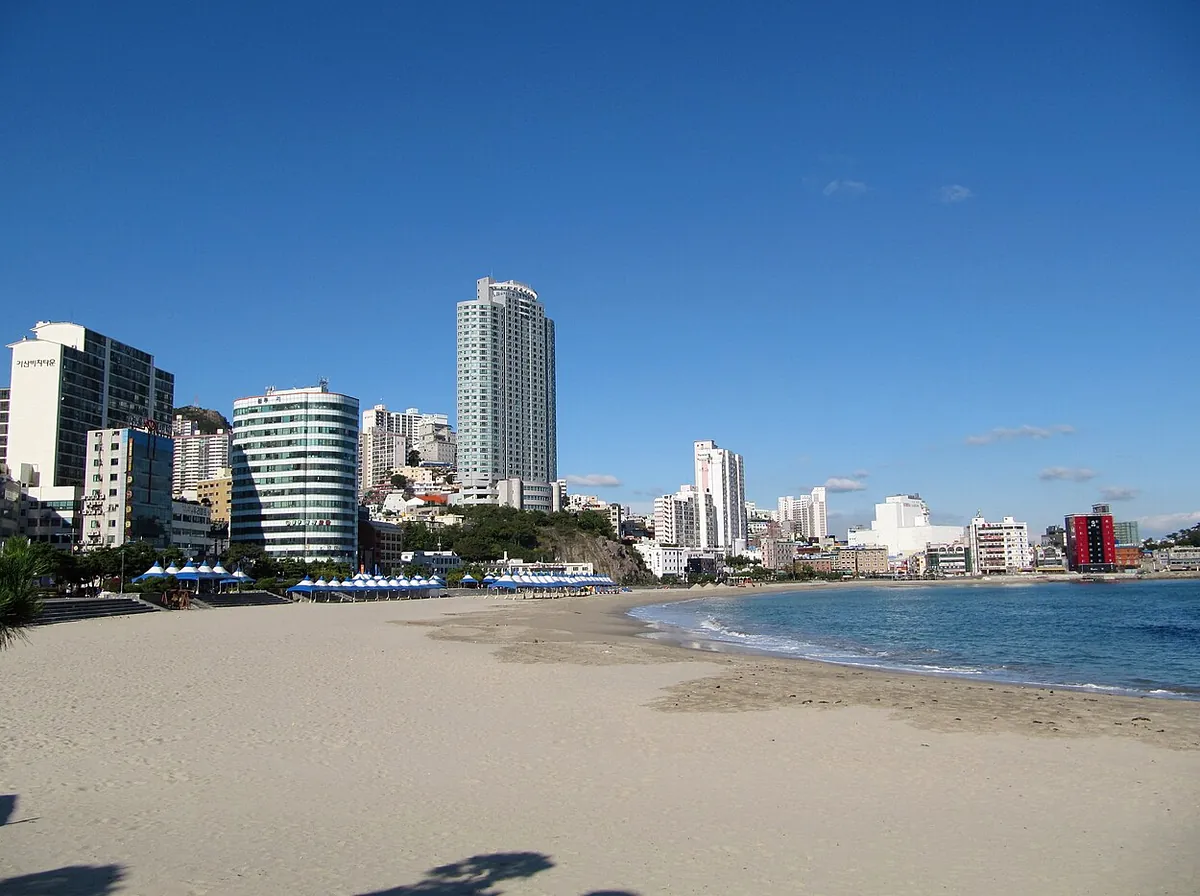
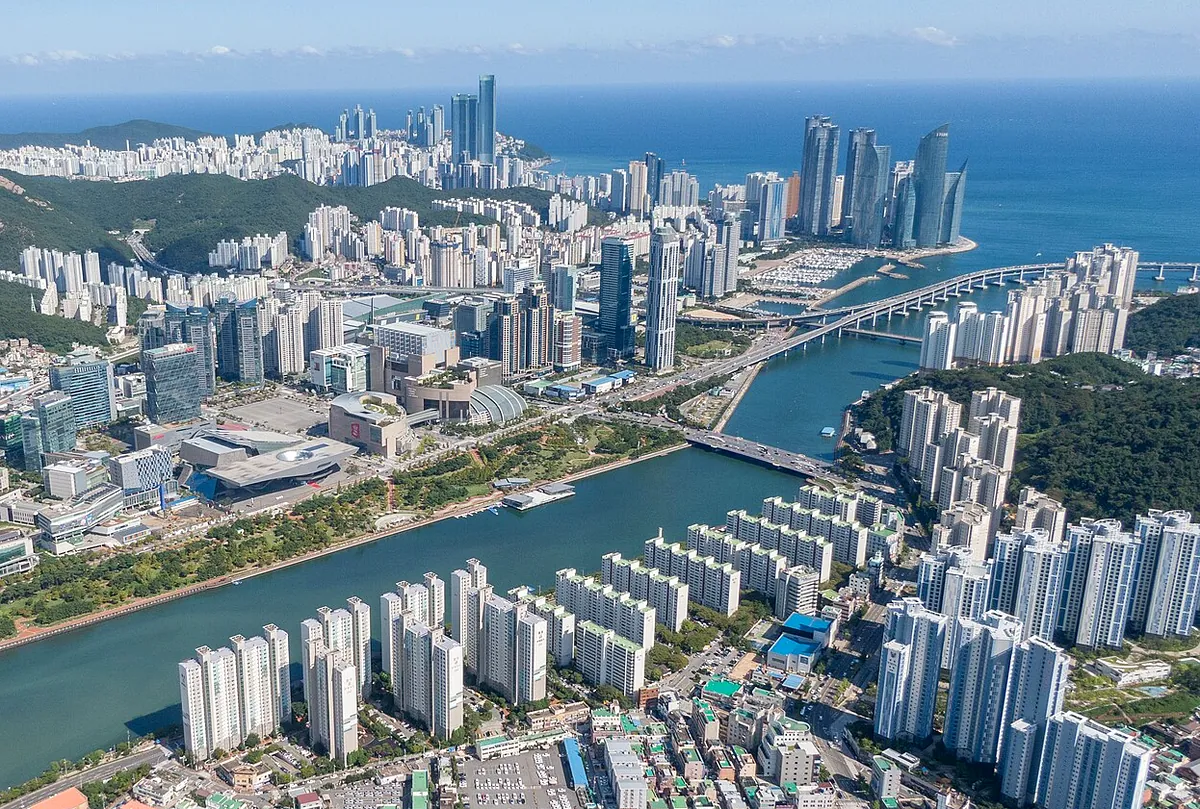
Within Busan’s broader master plan for coastal tourism, the skywalk does not stand in isolation; rather, it anchors a strategic scenic triangle along the city’s southern shore. Together with the Songdo Cloud Trails arching gracefully across calm bay waters and colorful Gamcheon Culture Village cascading down terraced hillsides, it forms an exemplary “golden triangle” of ecotourism and cultural heritage. Combining raw natural majesty, millions of years of geological history, and thoughtful human planning, the Seungdumal coast has evolved into a premier gathering point where visitors admire the grandeur of the open ocean while feeling the deep maritime pulse of the port city in every breaking wave.
Poised dramatically at the meeting point of the peninsula’s eastern bay and southern sea, the Busan Skywalk—officially known as Oryukdo Skywalk—stands as a triumph of modern structural engineering extending boldly into untamed nature. The defining feature of its spatial design is its gracefully curved horseshoe layout, freeing visitors’ sightlines from conventional physical barriers. Projecting 15 meters out into open air, the walkway is engineered as a cantilevered span jutting directly over a sheer cliff edge 35 meters above mean sea level. Beyond its sleek visual elegance, the horseshoe geometry solves complex aerodynamic challenges, smoothly dispersing sudden, gusty sea winds that sweep through the strait year-round.
Behind its delicate appearance—like a ribbon of crystal suspended over the cliff—lies cutting-edge industrial material science engineered to withstand extreme marine conditions. The pedestrian deck is precision-assembled from 24 specialized multi-layer bulletproof tempered glass panels measuring an impressive 55.4 millimeters in total thickness. Each panel bonds multiple sheets of heat-strengthened glass with high-tensile interlayers capable of absorbing shock waves and extreme impact loads. To preserve lasting optical clarity against corrosive sea spray and intense sunlight, the glass surfaces are treated with an ultra-thin nano-protective coating that acts as an invisible shield against saltwater electrochemical corrosion, organic buildup, and ultraviolet degradation over decades of operation.
In terms of structural safety and load capacity, the glass bridge is anchored deep into ancient granite bedrock using heavy-duty high-tensile anchor bolts driven straight into the headland’s solid rock mass. Heat-treated marine-grade stainless steel support beams form a rigid framework rated to support a maximum simultaneous load of up to 10 metric tons—the theoretical equivalent of 150 adults standing on the deck at once without inducing harmful elastic deflection in the girders. Even so, to preserve spacious sightlines and a serene atmosphere at this revered coastal landmark, site managers enforce strict visitor flow controls onto the deck.
Stepping cautiously onto the spotless, crystal-clear glass surface induces a thrilling sensation of floating effortlessly in midair, where the boundary between human observer and open ocean dissolves. Looking straight down through more than five centimeters of glass beneath your heels reveals surging ocean swells foaming white as they crash violently against the sheer cliffs of the Oryukdo Islets. The stark contrast between the quiet stillness of precision engineering and the untamed fury of the sea below delivers an unforgettable visceral thrill—turning a rugged geographic precipice into one of Busan’s most celebrated landmarks.
Unlike dazzling artificial stages in bustling urban centers, the true performance space at Oryukdo Skywalk is a grand natural theater choreographed by coastal weather and shifting sunlight. While daytime hours cater primarily to serene sightseeing, the late-afternoon transition between 3:00 PM and 5:00 PM transforms the entire Seungdumal headland into a front-row gallery for extraordinary visual drama. As the sun dips toward the western horizon, vivid bands of amber, coral orange, and deep violet spill across the waters where the East Sea meets the South Sea. Rolling waves battering the vertical cliffs catch the golden glow like liquid gold beneath the transparent tempered glass deck, creating a dramatic contrast between ocean depths and slender architecture suspended in midair.
Visual engagement at the landmark continues to evolve into new dimensions through modern digital interactive technology. To celebrate the ecological significance and cultural layers of the millennial rock islets, smart tourism infrastructure here integrates augmented reality experiences into the visitor journey. Through handheld mobile devices or smart viewing scopes, the vast seascape ahead transforms into a living maritime museum. Heroic chapters of seafaring history—when ancient mariners hoisted sails across rough swells into Busan Harbor—appear layered directly over the real horizon. Even more enchanting are digital overlays depicting rare local wildlife, from sleek spotted seals gliding through waves to black-tailed gulls wheeling overhead, weaving an artistic experience that blends forward-looking technology with sustainable conservation awareness.
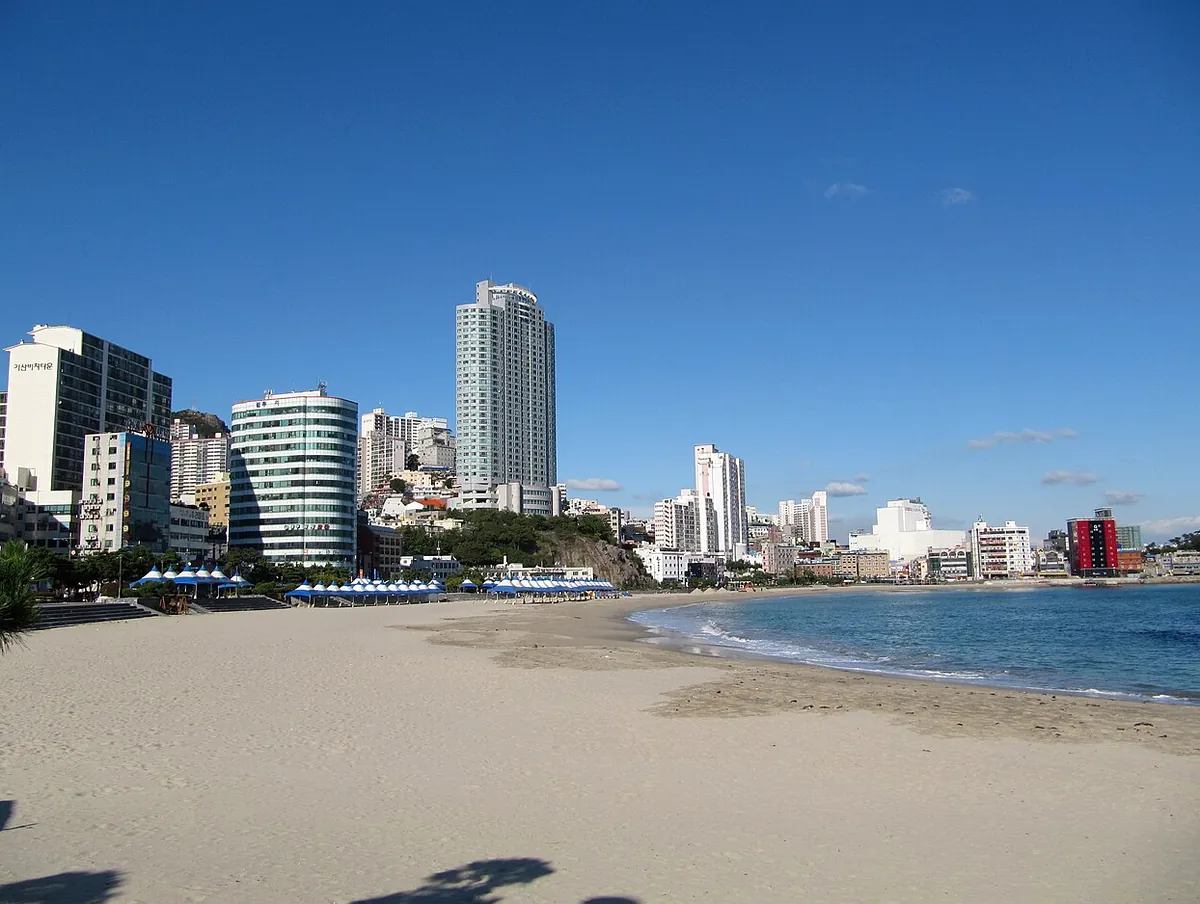
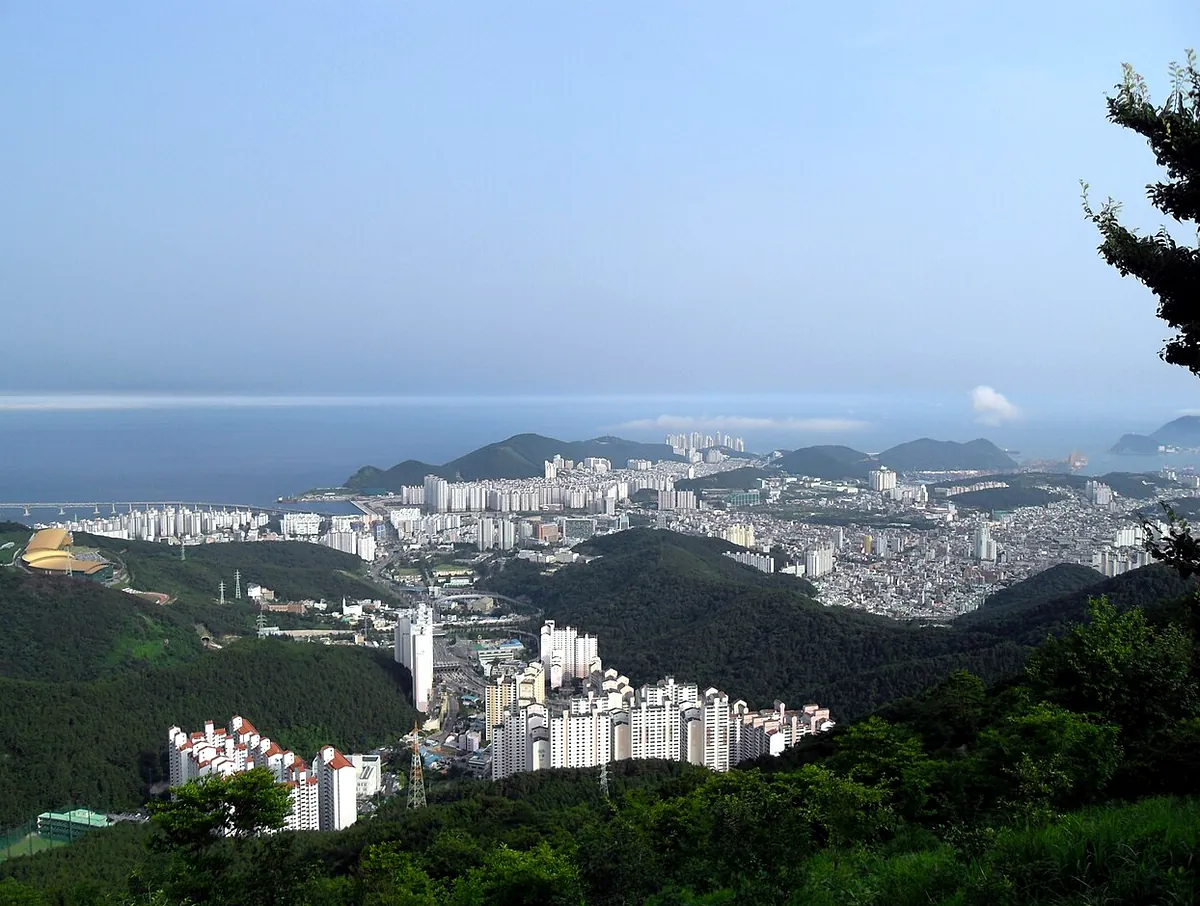
As the last rays of daylight yield to velvet darkness across the deep-blue sea, the symphony of light continues with the steady, solitary sweep of the Oryukdo Lighthouse offshore. Standing watch atop its rocky islet since the early twentieth century, the historic beacon sends crisp white beams slicing through evening sea mist to guide ocean-going vessels along international shipping lanes. From the cliffside lookout, travelers take in a multi-layered nocturnal tableau: the primeval stillness of the dark ocean, the rhythmic flash of the lonely lighthouse, and across the bay in the distance, the glittering ribbon of illuminated bridges and towering skyscrapers of modern Busan—offering a deeply contemplative nightscape where millennial ocean rhythms meet contemporary urban radiance.
Strolling high above the waves on Busan Skywalk leaves more than lasting visual memories of whitecaps crashing against Oryukdo’s cliffs—it also opens the door to an authentic culinary journey shaped by the hearty, resilient spirit of Korea’s premier port city. Tucked along windswept Nam-gu where the East Sea meets the South Sea, local gastronomy unites generous gifts from the ocean with poignant twentieth-century history. Busan cuisine trades royal court formality for bold, honest flavors forged during the Korean War when Busan served as Korea’s provisional capital, welcoming waves of refugees who blended cherished hometown recipes with abundant local seafood.
Standing as the undisputed soul of local comfort food is Dwaeji Gukbap (pork and rice soup), an enduring symbol of the port city’s gritty resilience. Born during wartime hardship when scarce provisions prompted refugees to simmer pork bones and offal left by UN troops into a nourishing broth to survive bitter winters, Dwaeji Gukbap has evolved into an artisanal culinary institution. Just ten minutes from the skywalk, the neighborhood around Pukyong National University serves as a haven for long-standing eateries preserving authentic preparation methods. Pork leg bones are simmered continuously for over twelve hours to yield a milky-white, collagen-rich broth that feels velvety yet remarkably clean with subtle herbal notes. Served bubbling hot with thinly sliced pork belly and delicate white noodles, Busan locals season each bowl to taste with fermented salted shrimp (saeujeot), crisp chili-marinated chives (buchu), and a spoonful of bold red chili paste—delivering an invigorating burst of warmth that chases away brisk sea breezes.
Alongside pork soup, Milmyeon (wheat noodles) tells another compelling story of cultural adaptation and culinary ingenuity. Tracing its roots to northern Naengmyeon buckwheat cold noodles from Hamgyong and Pyongyang, Milmyeon emerged when northern refugees longing for a taste of home faced acute shortages of buckwheat flour during wartime. Turning to abundant wheat flour supplied through international relief aid, resourceful cooks blended refined wheat flour with sweet potato or potato starch in secret ratios to craft pale golden noodles prized for their springy chew and silky bite. Around Oryukdo, Milmyeon is served in two beloved variations: Mul Milmyeon submerged in an icy, slush-rimmed beef-and-herbal broth, or Bibim Milmyeon tossed in a rich, crimson sweet-and-spicy yangnyeom sauce. Topped with thin slices of boiled pork, half a soft-boiled egg, and crisp cucumber ribbons, every mouthful delivers a thrilling contrast of fiery spice and bracing chill.
Complementing these historically rooted comfort dishes, the skywalk’s coastal perch leads straight into a paradise of ultra-fresh seafood nourished by nutrient-rich currents flowing past Namhang Harbor and famed Jagalchi Market. Along rocky seaside lanes, local restaurants serve live catch landed fresh by fishing boats each morning. Diners can sample iconic Sannakji—freshly sliced live octopus tentacles glistening on porcelain plates and fragrant with toasted sesame oil and coarse sea salt—alongside sizzling abalone grilled with garlic butter on hot stone plates or creamy golden sea urchin scooped straight from spiny black shells. Seated in the salty sea breeze with waves booming against the cliffs below, every bite captures the untamed essence of the ocean.
Reaching Oryukdo Skywalk from downtown Busan offers a smooth transition from bustling urban energy to expansive southern seascapes. From the main concourse of Busan Station on Subway Line 1, step outside to the local bus transfer stop and board Bus No. 27 or No. 131. For a modest fare of roughly 1,500 KRW paid conveniently with a T-money transit card, the bus winds along rolling coastal roads for forty to fifty minutes to the final stop at Oryukdo SK View Hauman. Stepping off the bus, crisp salt air greets you immediately as a gently sloped wooden boardwalk leads straight up the Seungdumal headland to the glass bridge jutting out over the waves.
To protect the optical clarity of the nearly fifty-millimeter-thick four-layer tempered glass panels against abrasive coastal sand and scuffs, site managers enforce strict entry procedures at the welcome gate. Every visitor must slip on complimentary soft fabric shoe covers provided at the checkpoint before stepping onto the glass walkway. Sharp stiletto heels capable of damaging the load-bearing surface are strictly prohibited; guests wearing heels are provided soft slippers or secondary protective overshoes. Additionally, bulky photography gear such as full-size tripods and oversized extendable selfie sticks are barred from the glass deck to prevent accidental impacts in high coastal winds and keep pedestrian flow safe and unobstructed.
To capture the grandest views where the East Sea meets the South Sea, the ideal window to visit is between 3:00 PM and 5:00 PM. As the sun sinks toward the western horizon, warm golden-orange light washes across the deep blue sea and reflects up through the transparent glass floor, creating a surreal multi-dimensional illusion. Standing at the outermost tip of the horseshoe span suspended in midair, visitors enjoy sweeping views of the five or six Oryukdo rock islets emerging and submerging with the tide, the solitary white lighthouse, and surging waves crashing directly beneath their feet—all without the harsh midday glare.
In practice, travelers who book deeply discounted bargain tours often encounter disappointing itineraries that cut sightseeing time short in favor of mandatory stops at commissioned ginseng or red pine oil shops—leaving barely fifteen to twenty minutes at the landmark, scarcely enough time to queue for shoe covers and walk the bridge. To enjoy a relaxed sixty to ninety minutes soaking in ocean breezes and capturing memorable photos, discerning travelers should prioritize transparent, no-forced-shopping itineraries through a thoughtfully curated all-inclusive South Korea tour package that preserves both authenticity and unhurried enjoyment.