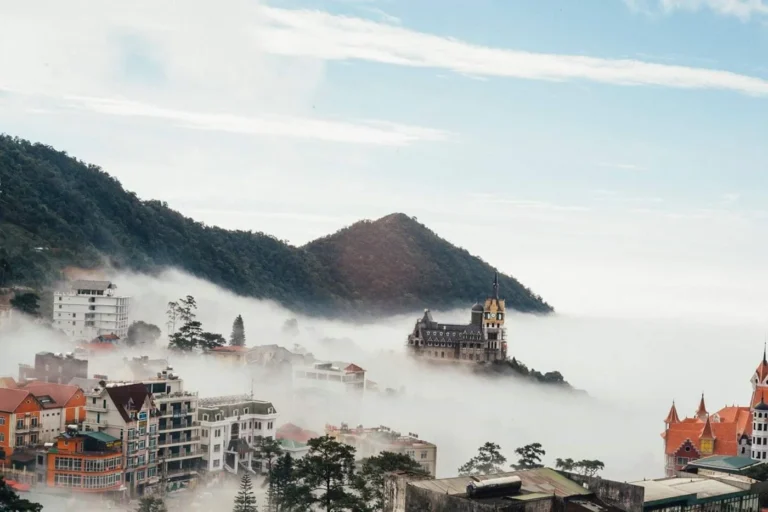
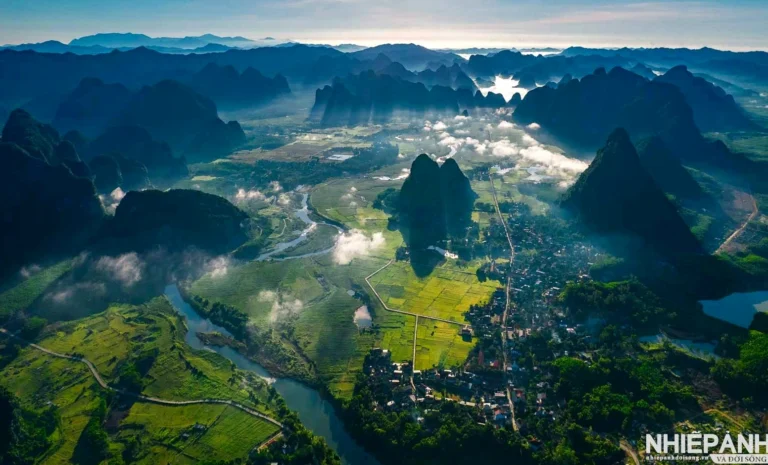
Nestled beneath the majestic shadow of the legendary Fansipan peak, Muong Hoa Valley (originally known as Muong Hau in the indigenous dialect, or Muong Hoa—a bountiful land along the major stream) emerges as a tectonic masterpiece of nature and history, stretching across Hau Thao, Ta Van, and Ban Ho communes alongside Sa Pa town in Lao Cai province. Commanding a long-standing strategic geographical position, the valley is embraced by the steep, towering ranges of the Hoang Lien Son mountains, serving as the convergence point for streams gurgling day and night into the Muong Hoa rivulet to form a poetic landscape endowed with classic geomantic harmony: “backing mountains and facing water.” This rugged yet profoundly expansive terrain not only sheltered the villages of ethnic minority communities—such as the H’Mong, Red Dao, Tay, and Giay—across centuries, but also caught the eye of border defense strategists ages ago.
Leafing back through feudal chronicles and archaeological records, Muong Hoa has never been a forgotten outpost on the fringes of the nation. Dating back to the Ly and Tran dynasties, this territory belonged to Quy Hoa prefecture, serving as a vital frontier shield for Dai Viet. It functioned both as a strategic mountain gorge to deter foreign threats looming from the north and as a bustling trade artery linking the Northwest region with Yunnan province in China. Major historical texts—including Dai Viet Su Ky Toan Thu, Phan Huy Chu’s Lich Trieu Hien Chuong Loai Chi, and Dai Nam Nhat Thong Chi—all document the presence of imperial administrative systems across the upper Red River basin and these rugged tributary valleys. Dynastic imprints remain deeply etched into the land, as historical records and local genealogies pass down tales of Grand Prince Hung Dao Tran Quoc Tuan during border patrol campaigns, when he dispatched elite troops to encamp here and establish a network of observation posts to fortify the Northwest’s defensive posture.
Through the historical upheavals spanning the Early Le, Restored Le, and Nguyen dynasties—when the court enforced policies to consolidate the frontier and transition governance from hereditary indigenous chieftains to direct imperial administration—Muong Hoa preserved its standing as a vibrant cultural and historical crossroads. Beyond its strategic military value, the valley also serves as a geological museum and a unique cultural heritage site specially honored by international researchers and conservation authorities. Most notable is the Sa Pa ancient rock field, featuring hundreds of sandstone boulders carved with mysterious motifs, intricate maps depicting terraced fields, stilt houses, and undeciphered ancient scripts that attest to the deep settlement roots of the ancient Vietnamese. Harmonizing with scenery that shifts gracefully across four seasons—where drifting mist entwines multi-tiered rice terraces winding like soft silk ribbons—Muong Hoa Valley stands as an enduring symbol of the resilient vitality of Vietnam’s cultural and travel heritage.
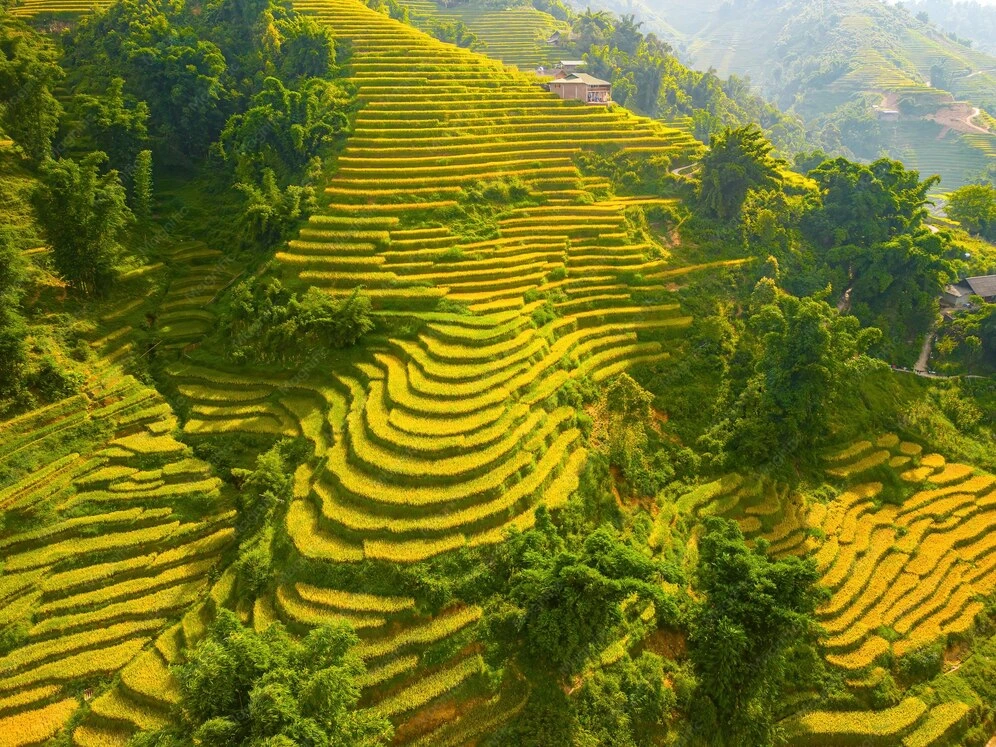
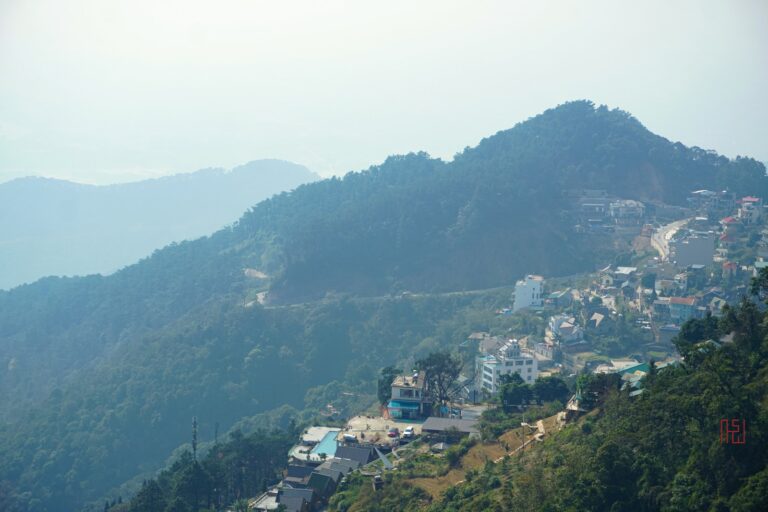
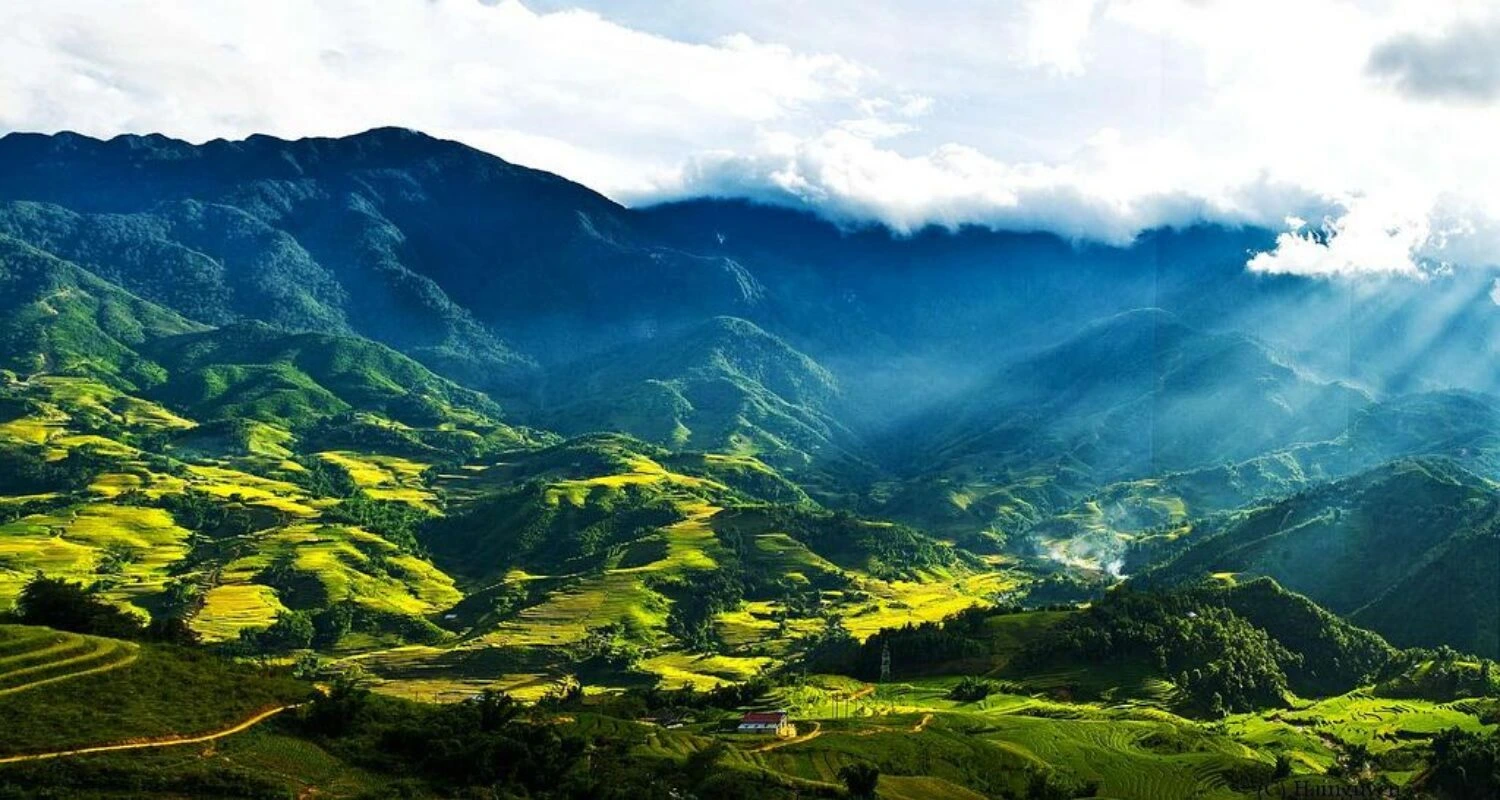
Tucked into the heart of a cloud-veiled highland plateau, Muong Hoa Valley unfolds like a vast ink-wash painting co-created by the unseen hands of nature and humanity. Stretching across Hau Thao, Ban Ho, Ta Van, and Lao Chai communes, the valley boasts a remarkably distinctive topography, ringed by towering mountain ranges that cradle the winding Muong Hoa stream like a soft silk ribbon draped across the sky. Viewed from above, the terrain forms an expansive basin with gently sloping hillsides, creating an atmosphere that is both airy and steeped in the rugged grandeur of the Northwest highlands.
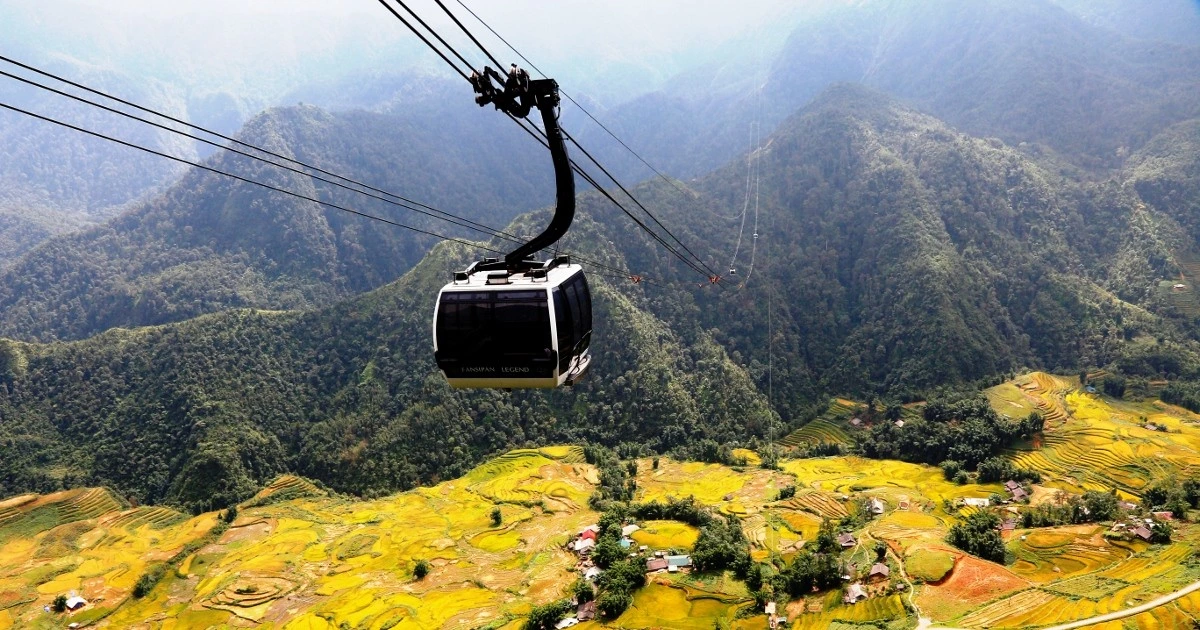
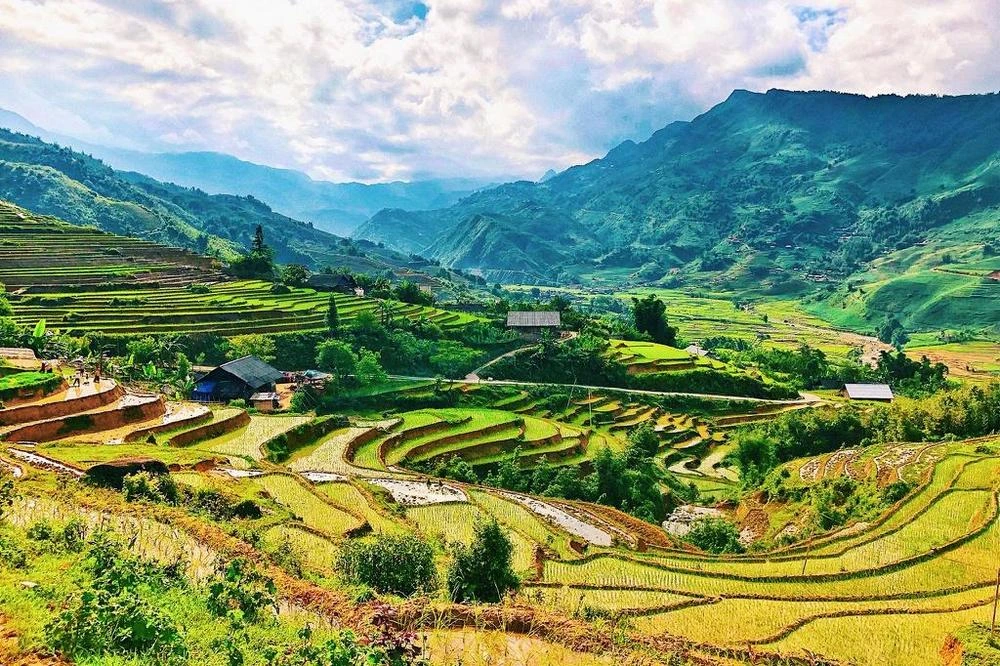
The centerpiece that gives this destination its most magnificent natural architectural value is its centuries-old system of terraced rice fields stretching toward the horizon. Far more than an ingenious wet-rice cultivation method perfected by the H’Mong, Red Dao, Tay, and Giay communities, these terraces represent a feat of agricultural engineering elevated to the pinnacle of sculptural art. Each graceful contour hugs the mountainside, cascading step by step from lofty peaks down to the valley floor to create mesmerizing, multi-dimensional layers. During the water-pouring season (around May to June), flooded paddies glisten with silvery reflections under the morning sun, mirroring the deep blue sky like a giant looking glass catching drifting clouds. Come the golden harvest season (around September to October), the entire valley dons a radiant cloak of gold, releasing a rich aroma of ripe grain carried on the crisp forest breeze.
Alongside its terraced wonders, Muong Hoa Valley safeguards extraordinary historical and artistic heritage within its millennia-old ancient rock field. Hundreds of sandstone boulders of varying sizes lie scattered amidst the foliage, bearing enigmatic sunken carvings of human figures, archaic scripts, stilt houses, and primitive terraced contours. This seamless fusion of ancient cultural imprints, hamlets emerging through wisps of evening hearth smoke, and untamed mountain scenery transforms Muong Hoa into a true sanctuary of visual art.
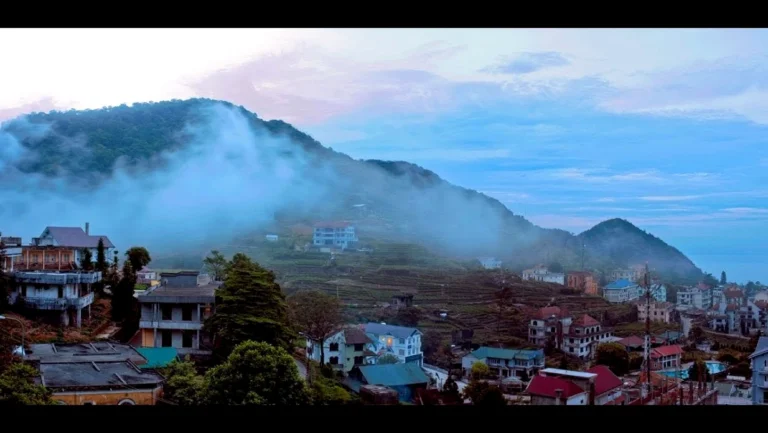
To capture the valley’s most unforgettable moments, professional photographers and leading travel publications consistently recommend two classic vantage points. The first lies along the string of hillside cafes and restaurants in Ta Van village facing directly toward the heart of the valley, where the lighting is most magical at dawn (from 5:30 to 7:00 AM). At this hour, ethereal mist clinging to the peaks and the first rays of sunlight piercing the basin create a luminous optical effect, illuminating every tier of winding rice terraces amidst swirling clouds. The second iconic photo spot sits on the Muong Hoa suspension bridge spanning the main stream, or at elevated viewpoints overlooking the panoramic sweep of Hau Thao village at sunset (from 5:00 to 6:00 PM). As the sun dips behind the Hoang Lien Son range—setting the sky ablaze in crimson and bathing the stream and modest thatched roofs in warm amber light—travelers are rewarded with deeply evocative, postcard-worthy frames.
Stepping into Muong Hoa Valley, every traveler is captivated by a breathtaking natural panorama where mountain winds and drifting clouds mingle with multi-tiered rice terraces hugging the slopes. The quintessential first experience is embarking on a trek along red-earth trails weaving through wild vegetation to soak in the crisp, pure air of the Northwest highlands. Standing before this vast expanse, the sound of the Muong Hoa stream murmuring over ancient boulders etched with mysterious glyphs feels like the whisper of millennia, inspiring a profound sense of awe at the enduring spirit of both nature and the people who call this valley home.
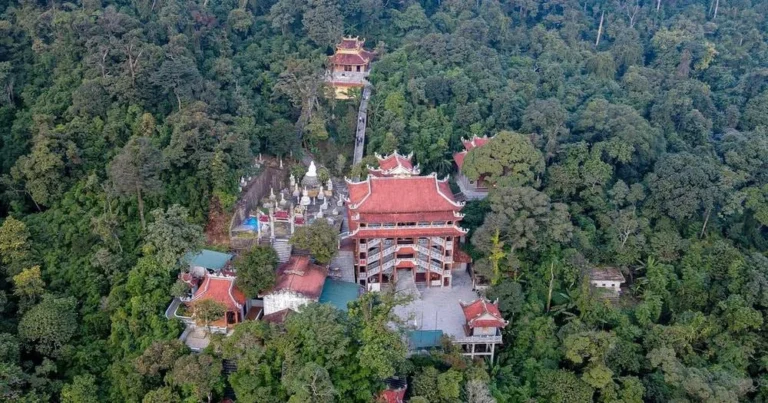
The journey grows even richer as visitors immerse themselves in the vibrant indigenous culture of the H’Mong, Red Dao, and Tay communities. Amidst stilt houses emerging from the morning mist, the lilting notes of leaf flutes, the graceful dances of highland women, and the bright smiles of rosy-cheeked local children warm the heart of every traveler from afar. Pausing at sacred spiritual sites scattered throughout the valley to light a stick of incense in reverence to ancestral roots allows visitors to feel the heroic historical undercurrents once etched into this borderland, evoking both quiet pride and inner serenity.
As twilight settles and turns the terraces into a shimmering ribbon of gold, the brisk mountain chill invites travelers to gather around a glowing hearth and indulge in celebrated local delicacies. The savory aroma of bamboo-tube grilled free-range pork, the bold richness of steaming thang co, fragrant grilled stream fish dipped in spicy cham cheo salt, and a warm cup of leaf-fermented corn wine brimming with hospitality combine to leave an unforgettable impression. Muong Hoa is far more than a sightseeing stop; it is a treasure trove of lived experiences that leaves every visitor longing to return to a valley as enchanting as legend.
A trip to Muong Hoa Valley immerses travelers in exquisite natural scenery and a distinctive indigenous cultural landscape. To ensure a seamless and rewarding exploration, keeping a few practical insights in mind regarding timing, admission fees, transportation, and local etiquette is essential.
In terms of visiting hours, the valley welcomes guests year-round throughout daylight hours—ideally from early morning until sunset to make the most of natural light for admiring drifting clouds and terraced fields. The prime seasons to visit are the dazzling golden harvest (September to October), when ripe rice blankets the hillsides in gold, and the water-pouring season (May to June), when flooded terraces glisten like giant mirrors reflecting the sky and clouds.
Regarding admission costs, while Muong Hoa Valley is an open natural landscape, the ancient rock field and designated eco-tourism zones charge modest entrance fees—typically a few tens of thousands of VND depending on the specific area, or bundled into combo tickets for the Muong Hoa funicular railway offering aerial views of the valley. Visitors are advised to carry small-denomination cash for convenience when purchasing tickets or buying handmade brocade crafts directly from H’Mong and Red Dao artisans.
The most convenient route from central Sa Pa follows the extended Muong Hoa Road for roughly 8 to 10 kilometers. Travelers can rent a motorbike for the freedom to stop and take in the scenery at their own pace, or opt for a car or taxi depending on weather conditions. For a truly memorable arrival, ride the Muong Hoa mountain railway departing from Sa Pa Station (located inside the Sun Plaza complex in the town center) to soak in sweeping panoramic views of the valley before descending for an on-the-ground exploration.
Because the valley’s terrain consists largely of steep hillsides, dirt paths, and traditional villages, wear comfortable, practical clothing paired with athletic shoes or hiking boots offering reliable traction. When visiting local hamlets, traditional stilt houses, or sites of spiritual and cultural significance to ethnic minority communities, dress modestly and respectfully, refrain from touching sacred objects, and always ask permission before photographing local residents—small gestures that help preserve cultural integrity and foster mutual respect.
To enjoy a worry-free getaway and experience the full splendor of Muong Hoa Valley without the hassle of arranging transport, booking tickets, or planning itineraries, consider booking premium all-inclusive Lao Cai tour packages from VDS Travel. Each itinerary is carefully timed around peak golden-hour lighting when the landscape is at its most breathtaking, led by knowledgeable local guides and paired with top-tier hotel and dining standards.