Resting gracefully beside the sun-drenched, breezy waters of the Gulf of Tonkin, Beihai Silver Beach has long carried a remarkably majestic geomantic heritage. In ancient chronicles and local fishermen’s oral traditions, this pristine shoreline was once called Baihutou Beach (“White Tiger Head”). That name came from the natural shape sculpted by creation itself: a gently sloping white sand spit curving out toward the deep blue ocean, resembling from afar a valiant white tiger crouching by the surf with jaws open toward the sea to absorb the essence of sun and moon. Here once lay a peaceful anchorage for fishing boats weathering generations of change, while serving as a natural gateway linked to the seafaring routes of ancient Hepu Port—one of the foremost starting points of the famed Maritime Silk Road during the Western Han Dynasty.
After centuries nestled beside ancient fishing villages and maritime trade in agarwood, ceramics, and celebrated Nanzhou pearls, the waters of Baihutou entered a modern historical turning point from the mid-1980s onward. During the pivotal era of economic opening, urban planners and cultural geographers recognized the priceless value of this rare, fine-grained quartz sand shoreline. Transformation began to stir and took off in earnest when local authorities allocated a dedicated budget of 10.72 million RMB to launch phase one of the scenic area atop the former Baihutou beach.
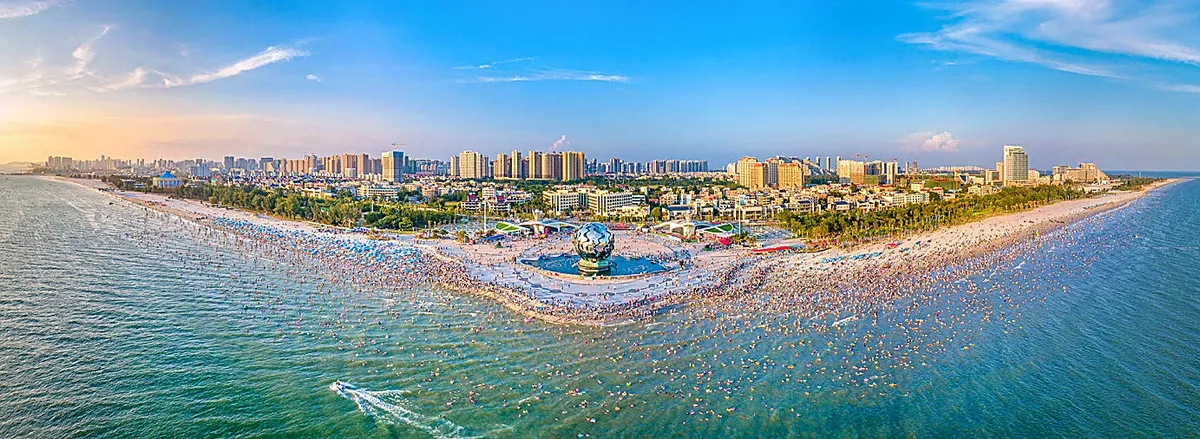
That bold undertaking quickly bore fruit as core landscaping and park facilities took shape after a brief period of intensive construction. By the middle of the following year, the park gates officially swung open to welcome the first waves of travelers arriving to admire snow-white sands beneath bright tropical sunlight. Its surreal beauty, gentle gradient, calm waves, and warm water created a sensation across China’s coastal tourism map. The destination’s national stature was swiftly affirmed when the State Council approved Beihai Silver Beach as one of the first twelve national-level tourist resorts, while the National Tourism Administration named it among the top thirty-five premier scenic spots—forever associated with the title “Number One Beach Under Heaven.”
Even so, the shoreline’s scenery once faced fragmentation caused by informal boat anchorages and inner-harbor channels cutting across the sand. Another landmark milestone arrived with a comprehensive coastal integration project. This large-scale initiative cleared away dividing barriers, restored the natural continuity of the coastline, and opened up the full beach corridor. Evolving from the early Baihutou tidal flat, the shore became “Ten-Mile Silver Beach”—a sweeping silver strand serving as a living bridge between the proud legacy of the ancient Silk Road port and vibrant modern coastal life.
Situated along the southernmost coast of Yinhai District in Beihai City, the Silver Beach scenic area stretches expansively along an east–west axis embracing the rich blue waters of the Gulf of Tonkin. From geomorphological and natural geomantic viewpoints, this shoreline enjoys an open, unobstructed setting where gentle continental contours meet the open sea without jagged mountain barriers or fragmented terrain. Sheltered within a semi-enclosed bay, the shore gathers auspicious coastal energy and welcomes fresh southern sea breezes year-round, forming a rare coastal sand plain along southern China’s seaboard.
The single most distinctive feature defining Silver Beach’s topography is its remarkably gentle slope, averaging roughly five per thousand (about 0.5%). This rare hydro-topographic gradient creates an almost level incline toward the sea. Because the slope is so slight, tides rise and fall with tranquil ease; at low tide, water recedes slowly without harsh surge, revealing a vast intertidal flat that acts like a colossal mirror reflecting the wide sky. The gentle incline also extends safe swimming depths hundreds of meters offshore, where visitors can wade freely into the sea with water still lapping gently around the waist.
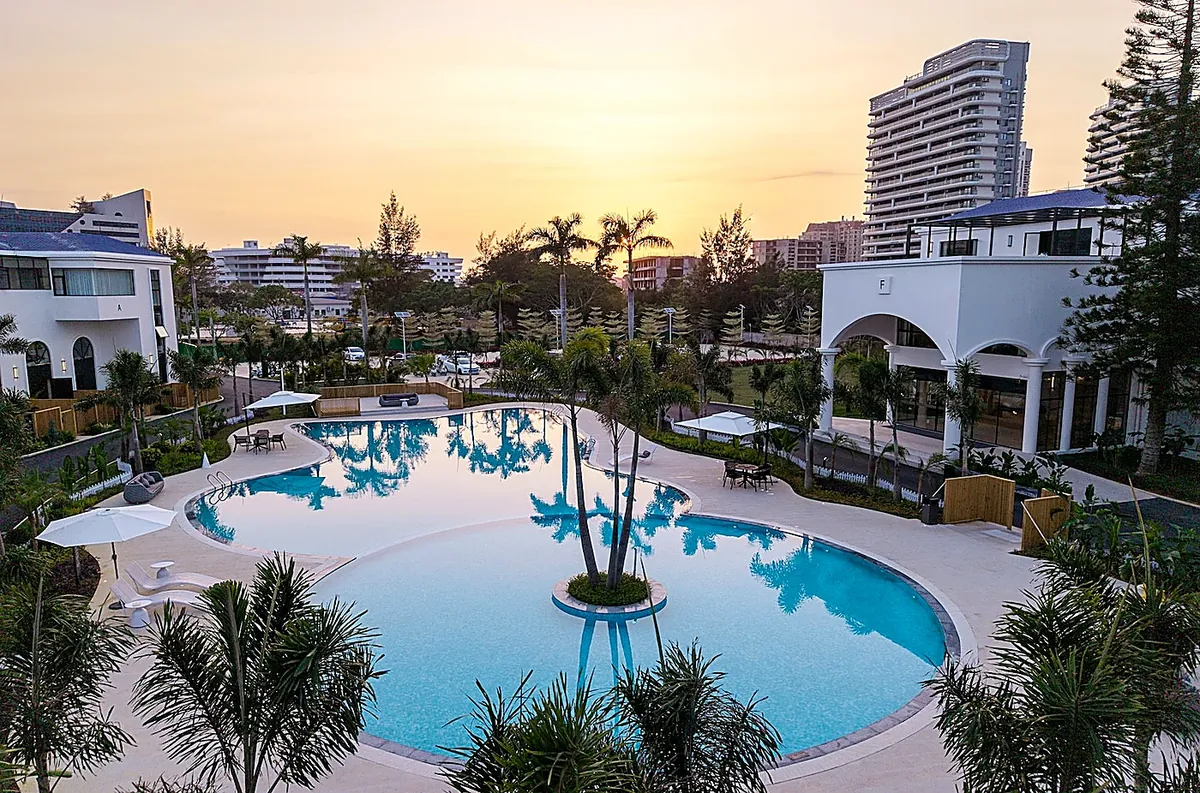
Beneath this enchanting scenery lies the unique sedimentary composition of Silver Beach sand. Rather than consisting of limestone powder, shell fragments, or coarse muddy silt, the beach is composed almost entirely of high-grade natural quartz sand refined over tens of millions of years of marine transgressions and regressions. Geological mineral analysis shows silicon dioxide (SiO2) purity reaching a record level above 98%. Thanks to this pure crystalline structure, the grains are not only powder-soft to the touch but also exhibit remarkable physical properties: under intense tropical sun, the sand does not absorb heat to become scorching hot, nor does it clump stubbornly onto feet when walking. When sunlight strikes the shore, countless micro-crystals of quartz refract light in unison, making the entire beach shimmer with a luminous silver sheen like powdered silver across the ground—proving why “Silver Beach” is famed far and wide.
Geographers and travelers have long celebrated this natural tableau through five classic traits: a wide, flat, expansive beach; fine, pure-white sand; warm, clear seawater; gentle, rolling waves; and an absence of sharks or dangerous marine predators. Unlike open coastlines plagued by riptides and hidden reefs, the even seabed beneath Silver Beach conceals neither dangerous submerged rocks nor hazardous undertows. Incoming ocean swells lose energy gradually across the gentle incline, rolling ashore as soft white foam. Clear, warm waters and abundant natural minerals year-round make this coast a premier natural benchmark for seaside relaxation and physical rejuvenation.
In terms of coastal spatial planning, the Beihai Silver Beach National Tourist Resort spans a rare geographical scale of 38 square kilometers in total planned area, including roughly 12 square kilometers of land. Curving like a natural silver ribbon for a continuous 24 kilometers, the shore is renowned for extraordinarily flat tidal flats. At low tide, the exposed intertidal zone can stretch anywhere from 30 meters to 3,000 meters wide, creating a vast wet-sand mirror reflecting the sky over the Gulf of Tonkin. Rather than developing haphazardly, the resort follows a structured multi-zone layout uniting Beach Park, Silver Beach Park, Silver Beach Amusement Park, and surrounding eco-resort belts.
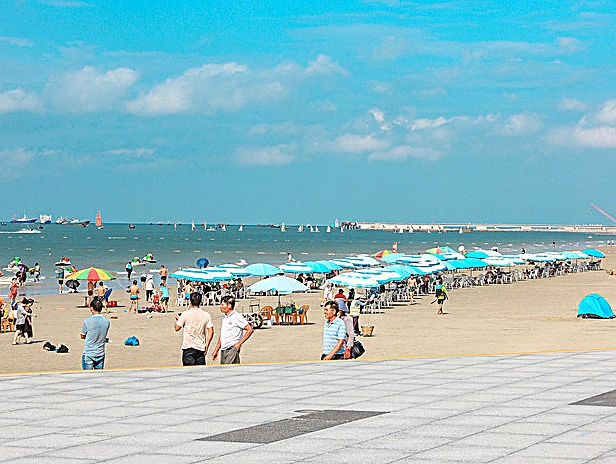
A highlight bearing distinct Western spatial artistry along this southern coast is Silver Beach Amusement Park, covering 220 mu. Designed by a team of accomplished architects, its master plan weaves classical aesthetic motifs into a tropical beachfront setting. At the heart of the zone, a circular plaza modeled on ancient Roman architecture opens panoramic ocean views framed by stately columns and stone walkways. Adjoining it stands a grand musical fountain plaza named for Aphrodite alongside a waterside performance stage, where light, symphonic music, and dancing water jets harmonize with ocean surf to evoke a romantic festival atmosphere.
Deep within Beach Park, architecture enthusiasts are captivated by the city’s signature contemporary art landmark: the kinetic sculpture titled “Tide.” Celebrated across Asia, this monumental hollow spherical steel sculpture features intricate mechanical engineering that evokes the eternal rhythm of ocean tides. Its stainless-steel surface is sculpted in undulating wave-like contours paired with smooth rotational mechanics and multi-directional mist sprayers. At sunset, “Tide” becomes a focal point of light and form as sleek metal curves catch the setting sun, mirroring the open-hearted spirit of China’s southern coast.
Alongside artistic landscaping, real-world investment at Silver Beach is underscored by a major infrastructure and ecological restoration project spanning roughly 898.7 mu. The initiative restored coastal windbreak forests with tens of thousands of casuarina trees and native flora, creating a green shield against erosion while regulating microclimates. It also introduced international-standard visitor centers seamlessly linked to smart promenades and barrier-free non-motorized pathways. From clean-energy charging stations and multilingual signage to smart amenities, every detail is coordinated to establish Silver Beach as a model global seaside resort.
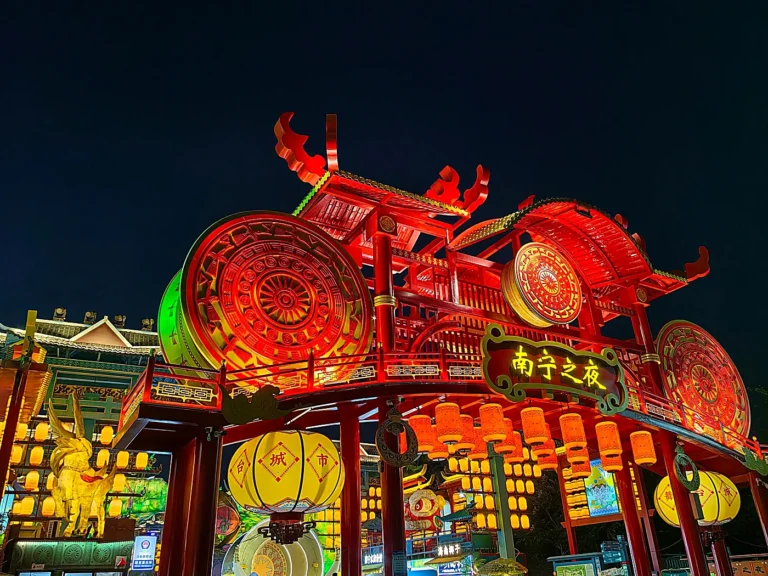
As deep twilight settles over the Gulf of Tonkin, Silver Beach’s daytime silver cloak shifts subtly into an enchanting stage of nighttime light artistry. At the center of this evening tableau in Beach Park stands the monumental sculpture “Tide”—an impressive sweeping steel ring form evoking surging ocean waves and the famed pearls of Hepu. Once darkness blankets the sea, this metal landmark comes alive as the centerpiece of a multimedia show combining modern mechanics, musical water features, and contemporary visual performance.
The nocturnal symphony at Silver Beach begins as tens of thousands of smart optical lights along the steel arch and high-powered laser matrices ignite together. Interwoven with this light dance, dozens of high-pressure water jets soar skyward, turning mist curtains into a vast screen projecting chapters of maritime history. Tales of ancient Hepu Port from the Western Han Dynasty—one of the earliest departure points of the Maritime Silk Road—unfold in shifting beams of light timed to symphonic music. Legends of determined pearl divers, wind-filled sails heading south across stormy seas, and the vibrant vitality of modern marine civilization come vividly to life, offering emotional resonance and insight into millennia of cultural heritage.
Beyond the illuminated central sculpture, kilometers of shoreline unfold a quieter yet equally captivating scene along the coastal promenade. Low-color-temperature artistic lighting with anti-glare optics casts a gentle golden glow guiding evening walkers. Silver Beach’s signature nighttime magic occurs at low tide, when packed white quartz sand holds a thin, still sheet of water like a boundless mirror. That calm surface reflects glowing coastal lights and starry southern skies, creating a spacious visual illusion of walking along the threshold between sea and sky.
Around Tide Sculpture Plaza and the beachfront paths, evening life hums with understated charm and local vitality. In cool sea breezes, creative and cultural night markets draw strollers to handcrafted shell art, Hepu pearl jewelry, and coastal specialties. Acoustic folk performances with guitar and gentle vocals blend naturally with eternal waves lapping the shore. Unhurried walkers enjoying crisp sea air shape a balanced nighttime economy and community rhythm reflecting the poetic, maritime character of a historic port on the Gulf of Tonkin.
The culinary scene around Beihai Silver Beach reads like a colorful nautical chart blending centuries-old seafaring traditions of the Tanka (Dan) boat people with distinctive tropical flavors brought back by returning overseas Chinese (“Qiaogang” heritage). For food lovers, a trip to this southern silver shore feels incomplete without tasting a seasoning ranked among Beihai’s celebrated intangible cultural heritage: fermented sand-crab sauce (shaxiezhi). When the tide retreats across Silver Beach’s flat sands, skilled crab catchers swiftly gather tiny live sand crabs scuttling over the sand. Freshly caught crabs are thoroughly cleaned, hand-pounded, and fermented with coarse salt under bright coastal sun. The resulting deep-brown sauce exudes a rich, savory aroma that elevates poached yellow chicken or crisp stir-fried yardlong beans with authentic flavors of the sea.
Alongside that rustic condiment is Beihai’s famed Pig’s Trotter Rice Noodles (Beihai zhujiaofen), a staple breakfast beloved by generations of coastal residents. Crafting it takes meticulous care: tendon-rich front trotters are cleaned and slow-simmered for hours with dozens of traditional southern herbal spices. The finished trotters reach ideal tenderness with springy skin and rich, non-greasy fat, pairing seamlessly with sweet bone broth and smooth white rice noodles to chase away ocean mist and chill.
Just a few minutes’ walk from the white sand lies Qiaogang Style Street (Qiaogang Fengqing Jie), the bustling heart of family-run eateries and snacks shaped by coastal cultural exchange. Here, famed Qiaogang shrimp fritters—exemplified by longtime favorite Li Yi’s shrimp and cuttlefish fritters—draw passersby with sizzling aromas. Whole fresh shrimp are arranged over turmeric-tinted rice batter and fried crisp, wrapping a golden crunch around firm, sweet shrimp meat. Right next door, hand-steamed rice rolls as thin as cicada wings are rolled around minced pork and wood-ear mushrooms, drenched in chili-garlic fish sauce and crispy shallots with echoes of Vietnamese culinary traditions.
Qiaogang’s distinctive flavors also shine in small bowls of Zhouji crab noodle soup sweet with sea crab, crisp baguettes filled with saucy savory fillings, and clay-pot sea-duck soup simmered with goji berries using mangrove-foraged ducks. Street-food exploration continues at Building 24 Haisha Sweet Soup with cooling sweet soups, chewy pandan jelly cakes, and puffed sesame balls, before winding down over drip coffee to the gentle murmur of the Gulf of Tonkin.
Beyond humble street snacks, dining at Silver Beach reaches a high note with fresh seafood feasts celebrating briny coastal authenticity. Drawing inspiration from beloved spots like Wangjie Seafood, diners pick lively mantis shrimp for savory salt-and-pepper wok-frying, sandworms dug from tidal flats stir-fried with garlic, and roe-rich blue crabs steamed with ginger and Sichuan pepper to preserve pure natural sweetness. This interplay between simple Tanka seafood craft and bold frontier seasonings shapes a culinary legacy rich in depth and coastal energy.
Beihai Silver Beach Scenic Area is open free of charge day and night, offering rare open space along the Gulf of Tonkin. However, to safeguard lives against shifting tides, designated swimming zones marked by buoys with lifeguards on duty operate daily from 8:00 AM to 7:00 PM. Depending on spring and neap tidal cycles or maritime warnings regarding swells, tropical depressions, and storms, beach management may adjust swimming hours flexibly to prevent accidents.
Getting to Silver Beach from central Beihai or Beihai Railway Station is straightforward and convenient for independent travelers. Bus routes 3, 17, and 102 run frequently straight to the beachfront without complicated transfers. For travelers who prefer setting their own pace and feeling sea breezes firsthand, shared electric scooters via mobile apps or private beachfront rentals are popular options. Daily rentals typically run around 50 to 60 RMB; riders should check battery levels and park strictly inside designated public drop-off zones to avoid unexpected penalty fees.
To keep a seaside getaway carefree, staying alert to opaque commercial practices is essential. When looking for seafood, avoid relying on recommendations from passing taxi or tricycle drivers, who often earn commissions from informal eateries and can lead to overcharging or swapped quality. Heading to lively Qiaogang Style Street or established restaurants with transparent menus is far wiser. Always check scales and confirm pricing units before cooking, as local merchants commonly weigh by the Chinese jin (0.5 kilograms).
Safety in the water and across the white quartz sand also calls for personal care. Swim only within buoyed areas patrolled by lifeguards and never cross boundary lines, as rip currents and shifting channels can pose real hazards. Those enjoying clam and shell gathering at low tide should wear rubber boots or sturdy water shoes against sharp buried oyster or scallop shells, and keep an eye on rising water levels. Because high-silica quartz sand reflects intense sunlight, broad-spectrum SPF 50+ sunscreen, sunglasses, umbrellas, and sun-protective layers are essential against sunburn, especially around midday.
To make exploring Guangxi’s coast even richer, consider a two-to-three-day multi-stop itinerary linking nearby highlights. After relaxing on Silver Beach’s sands, visit Jinhailuan Mangrove Ecological Tourism Area to the east to watch white egrets gliding over mangrove canopies and mudskippers skimming tidal mud, then head to Guantouling headland or take a high-speed ferry to Weizhou Island’s E’yushan volcanic geological park. If you want a well-organized route that optimizes travel time and immerses you in local culture, explore an All-Inclusive Dongxing China Tour to begin a memorable coastal journey.