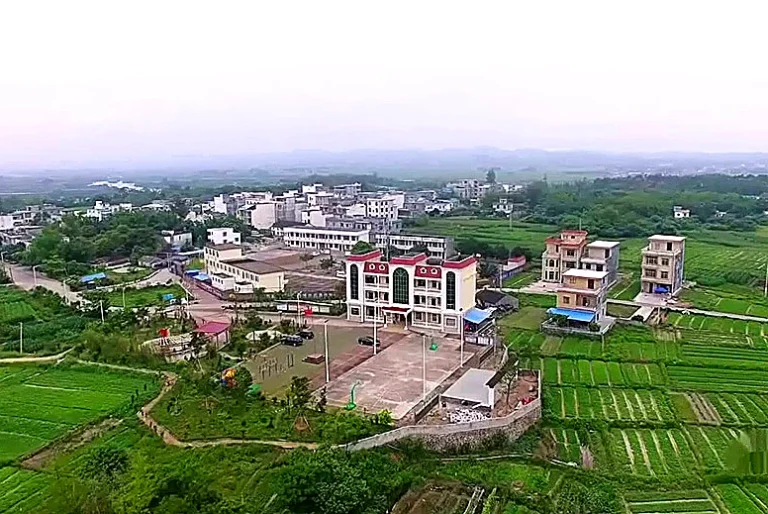
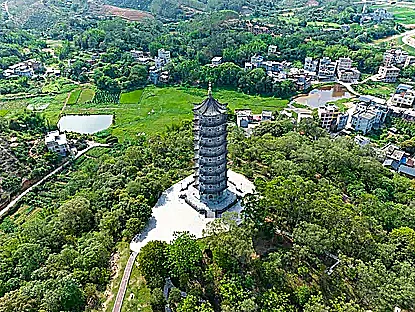
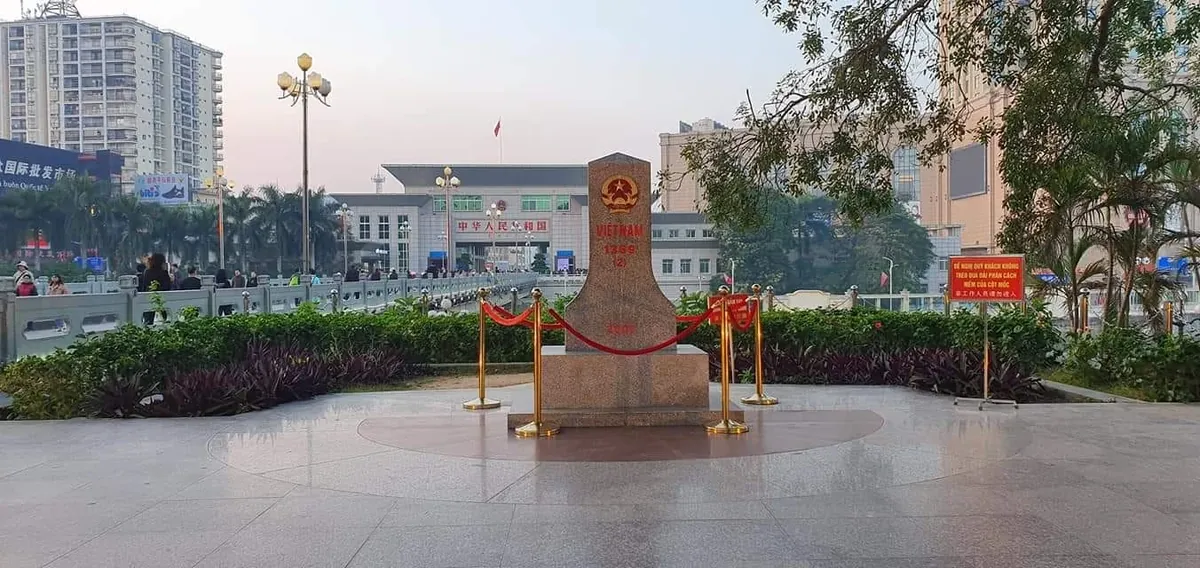
Where the peaceful Ka Long River meets the Beilun River flowing toward the open sea, Vietnam’s northeastern borderland holds a landmark of profound diplomatic and territorial significance. The Mong Cai International Border Gate area in Quang Ninh Province has long stood as a living symbol of trade, cultural exchange, and neighborly ties between Vietnam and China. Within this border panorama, Border Marker 1369 in Dongxing—alongside its twin marker across the river—stands as a resolute stone monument marking the boundary safeguarded across generations.
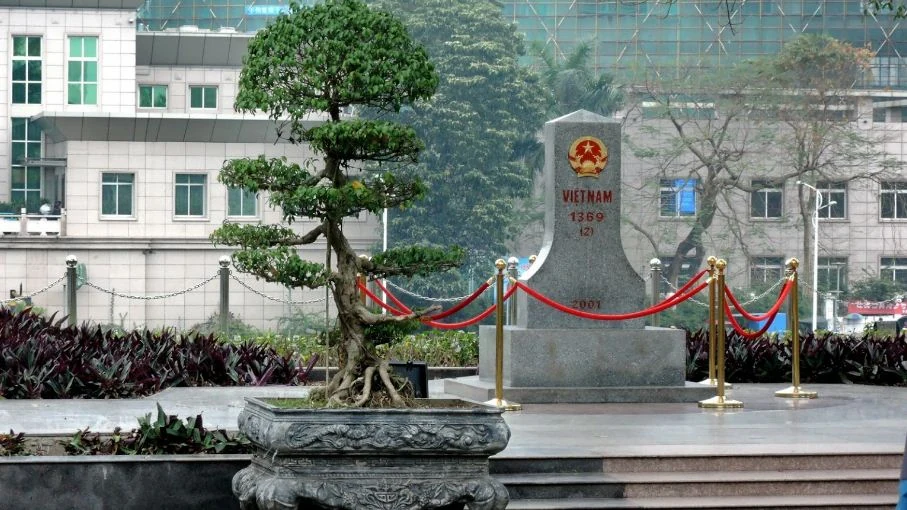
To appreciate the full meaning of this marker, look back to 1999, when Vietnam and China signed the Land Border Treaty. Carrying number 1369 within a system of nearly two thousand markers stretching across the land border, it holds a pioneering distinction: it was the first land border marker jointly constructed and placed by both countries in 2001. Placing the first boundary marker at the busy Mong Cai–Dongxing gateway carried a clear message toward building a peaceful, friendly, stable, and prosperous shared border.
Border markers here follow a matched twin-number system placed symmetrically across the Beilun River. On the southern bank in Hoa Lac Ward, Mong Cai City, Marker 1369(2) faces across the river, while on the northern bank across the bridge in Dongxing, Guangxi Zhuang Autonomous Region, Marker 1369(1) stands guard. The legal border runs along the designated channel midline or management point across the Beilun River bridge linking both sides, turning the span between the two markers into a clear emblem of territorial respect and sovereignty.
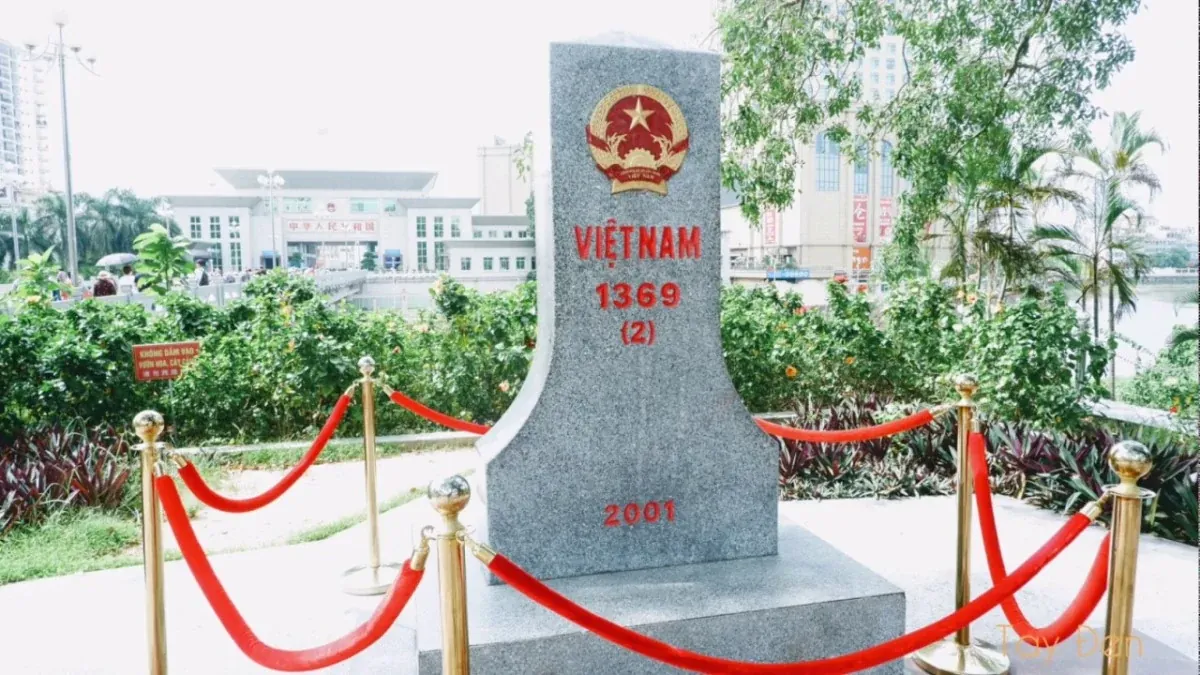
In construction and military-survey standards, this is a large-scale boundary marker built to exacting specifications. Carved from dense natural granite rising 2.2 meters tall and 50 centimeters wide, the light-gray stone was chosen to withstand tropical monsoon weather, coastal salt spray, and centuries of wear. The face turned toward national territory displays a carved Vietnamese national emblem painted in red and gold, with crisp incised lettering identifying the country and installation year beneath.
Spanning the border river like a bridge between neighboring cultures, the Beilun River bridge has carried millions of traders, overseas visitors, and travelers each year along one of the north’s busiest border corridors. Pairing historical context with a visit on an all-inclusive Dongxing tour highlights the contrast between calm border routines on one side and bustling commercial streets right across the bridge on the other.
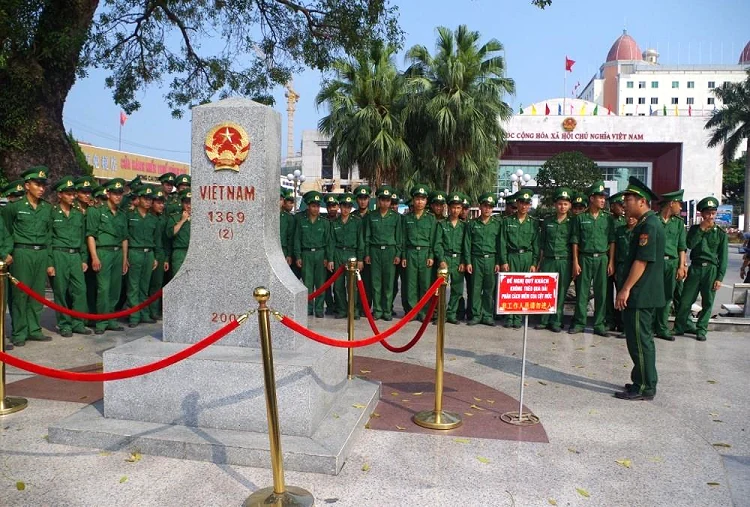
The area around the marker features neat stone steps, protective railings, and coastal greenery cooled by northeastern sea breezes, patrolled day and night by border guards from the Mong Cai International Border Gate station. Flag ceremonies and official visits beside the monument evoke a strong sense of national pride and border duty.
For a smooth visit and photo stop at this sovereign landmark, follow border-zone rules and check-in procedures carefully. Because the marker sits inside the international border control zone, visitors must present valid identification such as a citizen ID card or passport at border checkpoints before entering the photo area. Arriving between 8:30 AM and 10:30 AM often offers pleasant morning light and lighter crowds at the joint inspection hall.
Right beside the approach to the marker and international bridge stands the President Ho Chi Minh Memorial Site—a meaningful historical stop marking President Ho Chi Minh’s 1960 visit with ethnic communities in Mong Cai along the border river, where preserved artifacts and photographs highlight his vision of a peaceful, prosperous borderland built on culture and goodwill.
After clearing customs across the border, exploring twin Marker 1369(1) at Dongxing opens lively views into neighboring border trade and culture. Joining a one-day Dongxing cross-border tour makes it easy to browse bustling markets like Wanzhong Market, admire Wanxiang Pagoda, and sample spicy Guangdong–Guangxi street snacks without worrying about language or local routing.
Mong Cai’s border heritage extends beyond stone and concrete markers to cherished cultural and coastal landmarks—including historic Xa Tac Temple along the left bank of the Ka Long River and Sa Vi Cape reaching into the Gulf of Tonkin with wind-swept casuarina pines marking Vietnam’s northeastern coastal starting point—reminding visitors of ancestral roots and stewardship of the land.
Standing beside the Beilun River bridge, the granite marker at Mong Cai and Dongxing leaves travelers with more than a photo stop: it embodies sovereignty, diplomatic goodwill, and daily life along the border—values brought vividly to life on a Dongxing exploration journey connecting place, people, and shared borderland rhythm.