In the language of local Tibetans, Napa Lake (Napa Hai) is traditionally called “Napaco,” carrying a meaning at once rustic and sacred: “the lake hidden behind vast forests” or “a mirror reflecting ancient woodland.” Nestled within the historic Gyalthang (Jiandang) basin in northwestern Yunnan, this highland expanse possesses a rare geography—serving simultaneously as a mountain wetland and the broad, fertile Yila Grassland. Since antiquity, when early nomadic Tibetan clans followed tectonic river valleys of the Hengduan system in search of grazing grounds, Napa Lake became a fateful stopping point. Over thousands of years, seasonal pastoral rhythms, tent encampments, and reverence for nature shaped a deeply spiritual local culture where land, sky, and humanity are inseparable.
Turning the pages of the Ancient Tea Horse Road—the storied mule-and-horse trade route winding along sheer cliffs between Yunnan and snowy Tibet—the Gyalthang basin from the height of the Tubo Kingdom through the Ming and Qing dynasties consistently served as a vital military and commercial crossroads. Formerly known as Zhongdian County, the area witnessed shifting spheres of influence and rich cultural exchange between the Naxi Mu tusi chieftains of Lijiang and Khampa Tibetan leaders. Caravans hauling compressed Pu-erh tea cakes, rock salt, and silk across the treacherous Jinsha (Yangtze) gorges often camped on Napa Lake’s meadow, fattening pack horses on nutrient-rich Yila grass and adjusting saddles before braving snowy passes toward Lhasa. Hoofbeats, ringing bronze bells, and evening smoke from nomadic hearths turned Napa Lake into a living witness to the golden age of that ancient trade artery.
Entering the modern era, quiet old Zhongdian underwent historic transformations. In 2001, the place was officially renamed Shangri-La County—evoking the earthly paradise immortalized in James Hilton’s famous novel. In 2014, it was elevated to county-level Shangri-La City with its administrative seat in historic Jiandang Town. Administrative shifts went hand in hand with strong commitment to protecting pristine ecology. To rescue wetland habitats from reclamation pressure, the Napa Lake Provincial Nature Reserve was established in 1984. Through decades of returning farmland to natural wetland alongside strict ecological compensation policies, over ten thousand mu of degraded marshland were revived—restoring the original scenery of mountain lake and primeval forest.
Napa Lake’s recovery carries both geographic weight and vital biological meaning across the Hengduan range, as it remains a key wintering ground for the black-necked crane—a rare species under top-level protection. In Tibetan religious tradition, the black-necked crane is more than a migratory bird; it is a messenger of good fortune tied to legends of rebirth and compassion. When winter north winds bring snow, flocks of cranes glide over Napa Lake’s mirror surface while yaks graze calmly across the valley—composing an enduring song of harmony among people, wildlife, and heaven and earth.
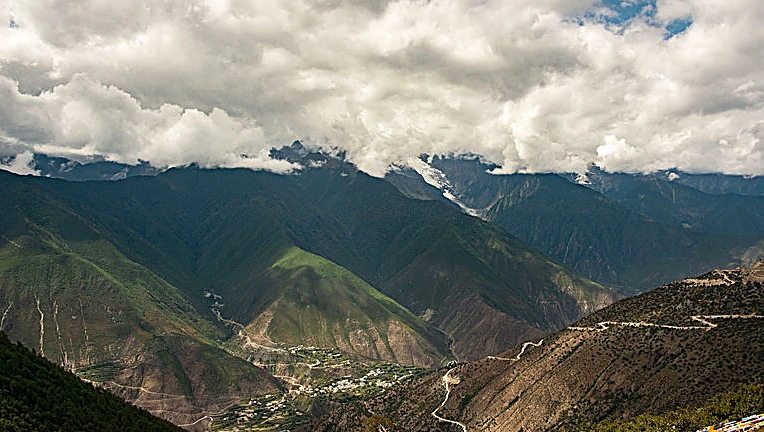
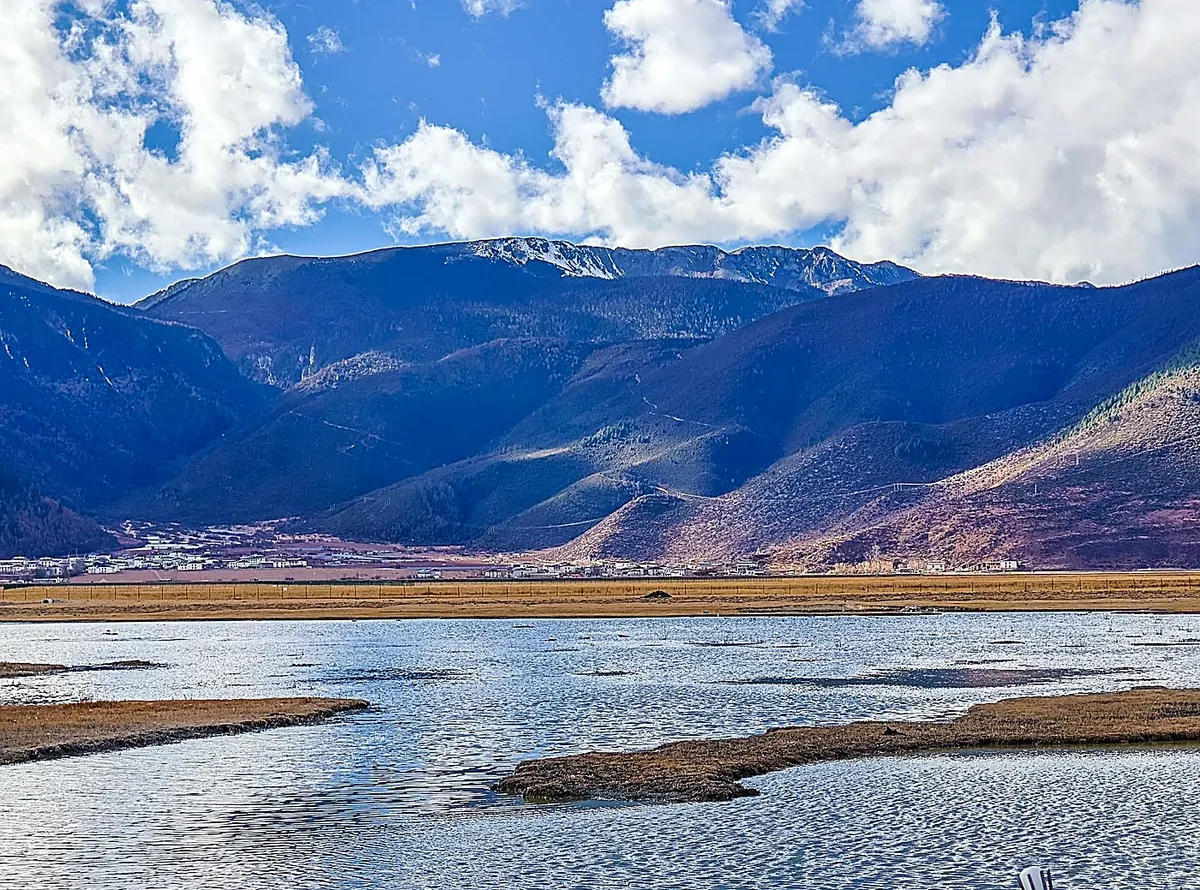
Located northwest of Shangri-La City in Diqing Tibetan Autonomous Prefecture, Yunnan Province, Napa Lake Grassland sits just about eight kilometers from the old town center at an average elevation of 3,266 meters above sea level. Viewed through mountain geography and snowy-region feng shui, the Napa basin enjoys a sheltered, water-gathering setting ringed on three sides—north, east, and west—by layered peaks rising between 3,800 and 4,449 meters. These towering ridges act as a natural limestone rampart tempering harsh winds from the Hengduan range, while the southern side opens gently onto the flat, fertile Gyalthang plain—forming a classic layout of open frontage gathering water and majestic peaks at the back embracing a vibrant sub-alpine biome.
Napa Lake’s natural morphology showcases a rare phenomenon globally for a low-latitude, high-altitude basin: a seasonal alternation between a highland marsh lake and open grassland. When late-summer and early-autumn rains arrive, snowmelt pouring down from surrounding snow peaks mingles with abundant rainfall in the valley, swelling the level basin into a wide expanse of water. At such times, the water surface expands remarkably, rippling like a vast jade mirror beneath blue skies and white clouds and earning its reputation as a true “highland sea.”
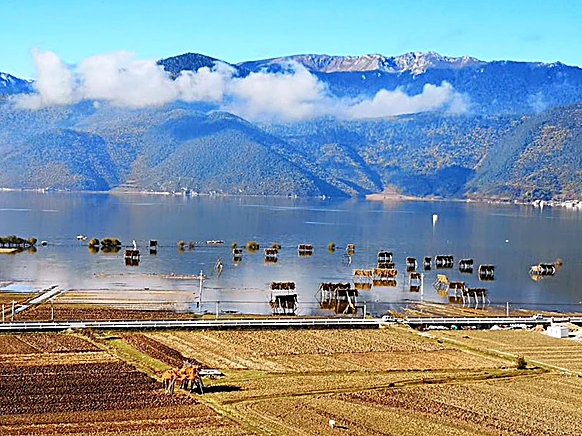
Yet what makes the natural topography here truly extraordinary is its seasonal drainage cycle from late autumn into winter. As rainfall decreases and snow gathers high on peaks, vast volumes of lake water do not simply evaporate—they drain through an underground karst system of natural sinkholes and subterranean limestone channels beneath the lakebed. As water recedes, fertile silt and moisture-loving plants spring back to life, transforming a broad lake into the sweeping Yila Grassland bathed in golden hues rippling in frontier winds.
This seasonal ebb and flow between water and meadow makes Napa Lake one of the most important migratory bird sanctuaries along the entire Hengduan gorge corridor. Flocks of rare waterfowl—notably sacred black-necked cranes alongside bar-headed geese and wild ducks—gather to rest and feed across marshy flats and seed-rich grass. Framed by mountain ridges like ramparts and fed by mysterious karst underground currents, this “highland teardrop” stands as a remarkable work of nature in pure Shangri-La.
Spreading across a large karst basin in the Diqing highland valley, Napa Lake Nature Reserve covers 31.25 square kilometers. It brings together a rare geo-ecological mosaic—combining a mountain lake above 3,200 meters, wet meadows, peat marshes, and dense scrubland tucked beneath sheer limestone cliffs. Its seasonal character shifts effortlessly between the open sweep of wide grassland and the quiet, mysterious depth of a high-altitude wetland.
Encircling the wetland plain is an open loop eco-road forming a scenic ring between green meadow and rippling water. Road design follows natural curves gently rather than cutting harshly through scenery. Along the loop sit well-planned ecotourism features: rustic wooden birdwatching hides blending into reeds, curving timber boardwalks stretching hundreds of meters across wet grass so visitors can reach marsh edges without harming fragile organic mud, and rest stops inspired by traditional Tibetan pastoral homesteads with thick rammed-earth walls, stout pine columns, and prayer flags fluttering in snowy breezes.

Behind this misty calm lies an impressive underground water-engineering effort designed to resolve historical tension between nature and daily life. Because a closed karst basin with natural sinkholes is prone to silting, Napa Lake often faced severe basin flooding during rainy seasons—submerging roads and threatening lakeside villages. To regulate water levels and restore ecological balance, a major underground engineering project bored flood-diversion tunnels through limestone rock. This subterranean system acts like a smart regulator, curbing peak storm runoff to prevent road cutoffs and protect neighboring Tibetan pastoral settlements.
This monumental underground work reflects modern spatial management where engineering serves conservation rather than heavy-handed disruption. By regulating flood discharge smoothly through artificial tunnels, the hydrological cycle of more than thirty square kilometers of restored wetland remains intact—keeping water at an ideal ecological level that supports aquatic life while protecting shallow mudflats and marshes vital to black-necked cranes and tens of thousands of migratory birds crossing the Himalayas each winter.
As sunset settles over the Shangri-La valley, Napa Lake Grassland stages one of nature’s finest spectacles—rivaling any man-made stage. At an average elevation of 3,266 meters, thin, crisp air turns twilight into a rich blend of colors. Late-afternoon sun slants across snow-ringed peaks, washing still water and expansive wet meadows in fiery red-orange and deep violet. Calls of waterbirds quiet down, leaving only highland wind rustling through barley-grass drying racks as a mysterious Tibetan night settles in.
Unlike bustling tourist towns wrapped in light pollution, Napa Lake Grassland enjoys near-pristine night skies. Once darkness claims northwestern Yunnan, the Milky Way shines with astonishing clarity—arching like a vast silver ribbon across deep space. Millions of stars reflect across Napa Lake’s mirror-like surface, blurring earth and sky. It has long been a classic haven for astrophotographers and quiet seekers capturing long-exposure shots where starlight meets the sacred stillness of a snowy plateau.
Evening life does not end in the quiet of the meadow, but connects smoothly with Dukezong Ancient Town not far from the lake edge. After taking in sunset over Napa Lake, travelers often head back toward the thousand-year-old town center where architectural lights illuminate heritage landmarks. Looking from gentle slopes toward Guishan Park, the giant gold-gilded prayer wheel pavilion glows under floodlights, casting warm light over traditional carved wooden roofs. Further off, Songzanlin Monastery rises solemn and quiet beneath deep violet night skies—creating a stately, contemplative tableau amidst snowy Buddhist highlands.
Local evening energy comes alive at Sifang Square, where Tibetans gather for traditional Guozhuang circle dances beside a crackling bonfire. Bright flames ward off crisp highland chill while lighting up radiant smiles of Tibetan women in embroidered brocade and chuba robes. Rhythmic boot steps on old flagstones, spirited songs in the local dialect, and laughter from travelers joining hands in ever-widening circles blend sacred architectural light, firelight warmth, and Napa Lake’s starlit stillness into a deeply authentic Shangri-La night.
Cuisine around Napa Lake Grassland and the wider Shangri-La valley is more than ingredient pairing—it reflects the enduring survival wisdom of Tibetans living in cold conditions above 3,200 meters. Over centuries beside wet meadows, locals developed a high-energy food tradition pairing rich livestock protein with wild botanicals of the Hengduan range, helping the body adapt to thin air and brisk plateau winds.
Holding pride of place in home kitchens and lakeside eateries alike is traditional Yak Beef Hotpot. Highland yaks raised naturally on damp lakeside pastures—grazing on sweet herbs and drinking snowmelt—yield firm, deeply flavorful meat with little gaminess. Rich beef marrow-bone broth simmers for hours with highland roots and seasonal wild mushrooms. As fire beneath the pot warms a timber room, swishing thin beef slices and fresh mushrooms into sweet broth revives travelers after a brisk day riding across the plains.
Another culinary highlight tied to local handcraft history is Chicken Stew in a Nizao Black-Clay Pot. Listed as a national intangible cultural heritage craft, black pottery making in Nizao Village shapes the dish’s flavor: mineral-rich clay and reduction firing produce pots with exceptional heat retention and even warmth. Free-range mountain chicken is cut into pieces, seasoned simply with mineral salt and fresh ginger, and slow-cooked in a black clay pot over embers. After hours of gentle heat, meat turns tender without falling apart, skin stays lightly crisp, and golden broth brims with pure mountain aroma without heavy seasonings.
Nomadic dairy heritage shines clearly in rich milk products. Pure yak butter serves as a cooking medium for specialties such as pan-seared dried milk curds and butter-sautéed cheese. In summer and autumn, when pine woods around Napa Lake yield wild matsutake mushrooms, locals sear thick slices in hot butter—blending sweet flavor and clean earthy pine aroma with golden butter for one of southwestern China’s most prized delicacies.
Meals beside the grassland grow even richer with fruitwood-charcoal-roasted black pork—featuring tender fat infused with gentle fruitwood smoke and crisp crackling skin—alongside crisp stir-fried dried Ganba mushrooms with potatoes, rustic roasted highland barley cakes, and creative touches like wood-fired yak-beef pizza. Rounding out the meal is a hot bowl of yak butter tea churned from dark tea brick, coarse salt, and rich yak butter—warming the throat against Napa Lake’s chill while expressing genuine Tibetan hospitality.
Napa Lake wetland shifts through two contrasting faces across the four highland seasons. From June to October, the grassland enters its most vibrant period as Yila meadows burst with wildflowers beside shimmering water, showcasing the lively spirit of Tibetan nature. Conversely, from November through March, migratory bird season takes center stage: as lake levels recede to expose fertile mudflats, thousands of birds arrive from the Qinghai–Tibet Plateau, highlighted by rare black-necked cranes under top-level protection and flocks of bar-headed geese gliding against snowy skies.
Standing at an average elevation around 3,266 meters, Napa Lake calls for thoughtful physical preparation to adjust to lower air pressure and thinner oxygen. Upon arrival, walking slowly, breathing steadily, and avoiding strenuous exertion are essential to prevent altitude sickness. Wide day-night temperature swings and strong year-round UV radiation mean packing windproof thermal layers, high-SPF sunscreen, UV-blocking sunglasses, and a portable medical oxygen canister is smart preparation for sudden weather shifts.
Transport around Napa Lake centers on a roughly 40-kilometer loop road tracing marshy curves and historic Tibetan villages. Visitors can hire a private car, drive themselves, or rent an e-bike from Dukezong Ancient Town to stop freely for photos. During peak rainy season in July and August, rising basin water can turn stretches of paved road into a “water road” where waves wash over the surface; drivers of low-clearance vehicles should never risk fast currents and should follow local traffic signs or detour onto hillside roads.
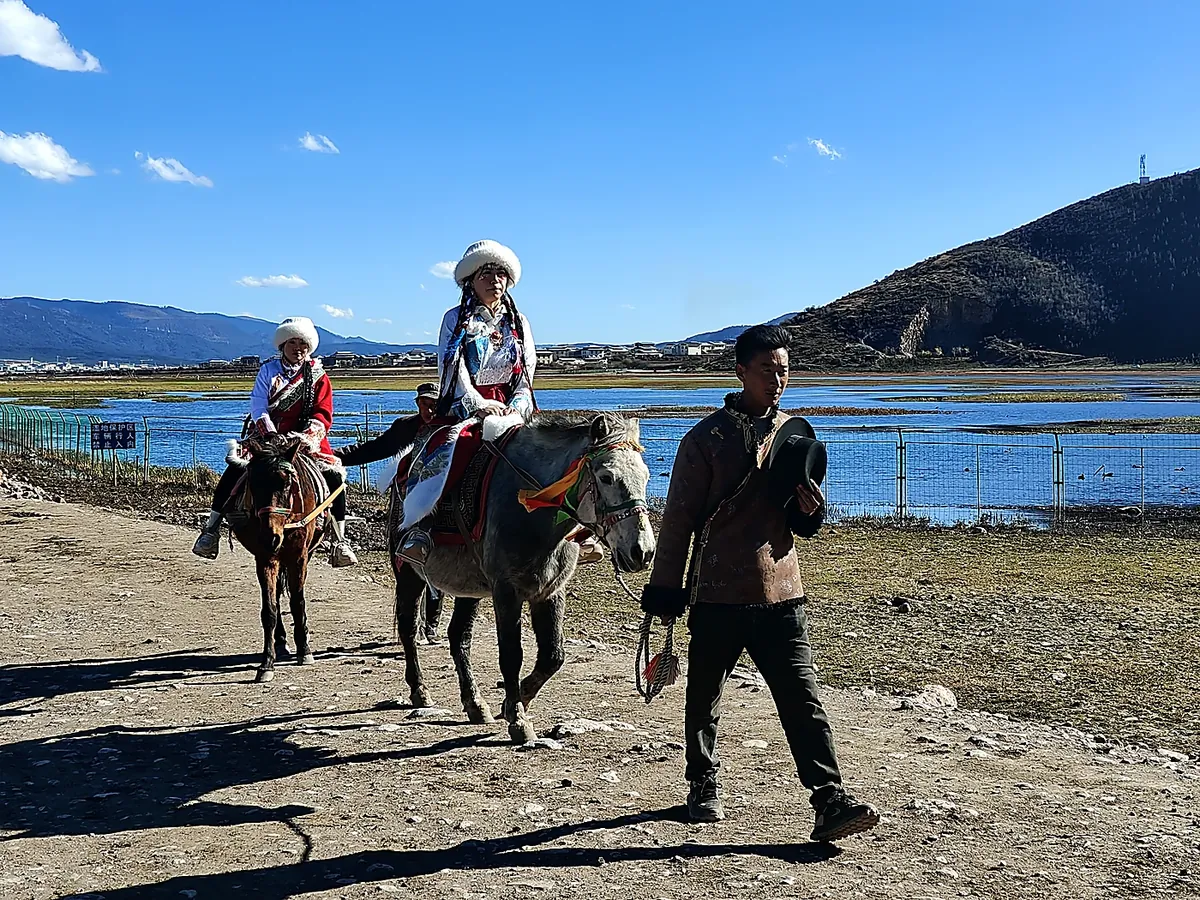
To protect fragile habitats and keep wildlife undisturbed, birdwatching here requires strict ecological etiquette. Never shout or startle birds, never litter in the marsh, and strictly avoid flying drones close to black-necked cranes, as propeller noise can disrupt breeding and feeding behavior. Likewise, if you wish to ride horses across the meadow, book directly through official herder-cooperative stables with clear pricing and route terms in advance so you ride safely with a handler and avoid misunderstandings.
Pairing Napa Lake with Songzanlin Monastery and Shangri-La Old Town makes for a deeply rewarding frontier journey; travelers can consider our standard Dali – Lijiang – Shangri-La – Kunming tour package (5D5N & 6D6N) to experience the culture and sweeping scenery of southwestern China smoothly.