Amid the highlands of southwestern China, where the turquoise waters of Erhai Lake reflect the year-round cloud-draped Cangshan range, the spot travelers romantically call “Santorini in Dali” is officially planned as Ideal Town (Lixiang Bang). More than a contemporary resort complex inspired by Mediterranean style, it is built directly atop millennia of historical sediment in an ancient region that once served as a celebrated political, cultural, and religious center of southern kingdoms. Beneath crisp white plaster and sweeping arches evoking European seascapes, the historical current of the fertile Bai homeland has flowed quietly from antiquity through the rise and fall of the Nanzhao and Dali kingdoms.
Tracing history back to the turbulent Five Dynasties and Ten Kingdoms period—in 937 AD, the second year of Tianfu under Later Jin—the astute military commissioner Duan Siping united forces across thirty-seven eastern Yunnan tribes to establish the Kingdom of Dali, setting its capital at the foot of Diancang Mountain. Unlike northern feudal courts marked by rigid Confucian orthodoxy, the Dali Kingdom was long wrapped in the serene air of Azhali Esoteric Buddhism, revered by generations as a “Buddhist Kingdom of Wondrous Fragrance.” Here unfolded legends of rulers stepping down from glittering thrones to enter monastic life at Chongsheng Temple, entrusting peaceful thoughts to mountain clouds and creating a rare harmony between worldly life and contemplative Zen.
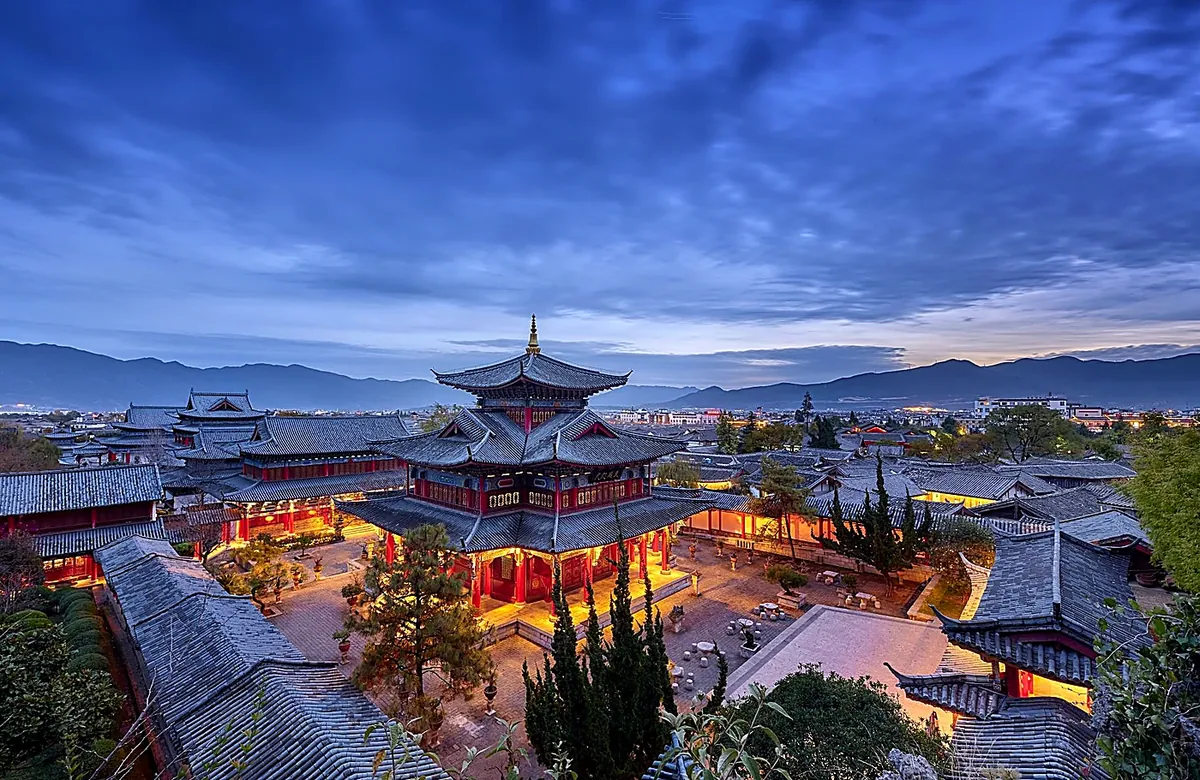
Shifting tides tested this land further through profound power transitions. In the late 11th century, powerful minister Gao Shengtai usurped the throne to found the short-lived state of Dazhong, yet returned power to the royal Duan clan a few years later—opening the Later Dali era under Emperor Zhongzong (Duan Zhengchun). More than three centuries of dynastic independence came to a close in 1253, when Kublai Khan’s expeditionary cavalry crossed the Jinsha River on inflated leather rafts in a sweeping southern campaign to pacify the frontier. After that upheaval, the Mongol empire established the hereditary Dali Pacification Commission, entrusting practical governance to Duan clan descendants for generations under Yunnan Province.
Across centuries of rise and change, the character of this national scenic region—steeped across four seasons in the poetic quartet of “Xiaguan wind, Shangguan blossoms, Cangshan snow, and Erhai moon”—has endured intact. Today’s Santorini in Dali stands as a creative continuation in a new era. Rather than turning away from the past, the project sits along limestone slopes on Erhai’s eastern shore—where envoys and Ancient Tea Horse Road caravans once trod—blending Greek cave-house motifs with Eastern spirit to open a dialogue between ancient heritage and timeless romance.
Situated in Haidong Town along Dali Bai Autonomous Prefecture’s famed Huanhai East Road, the complex occupies steep cliffs sloping directly down toward Erhai Lake. In traditional Eastern feng shui, the site enjoys a classic “backing onto mountains facing water” formation that gathers auspicious energy amid Yunnan highlands. Behind the buildings rise layered Haidong hills acting as a steady backstop, while the front opens wide onto Erhai Lake—a high-altitude emerald sheet acting like a giant mirror gathering light and water.
The greatest highlight of its natural setting is the sweeping view across broad water directly toward the nineteen peaks of Cangshan. Stretching north to south with nineteen snow-dusted summits, the Cangshan range forms a grand natural screen along the western horizon. Looking across from Haidong’s gentle slopes, calm water creates a balanced counterpoint between stillness and motion—between massive, solemn mountain stone and the shifting softness of Erhai’s waves.
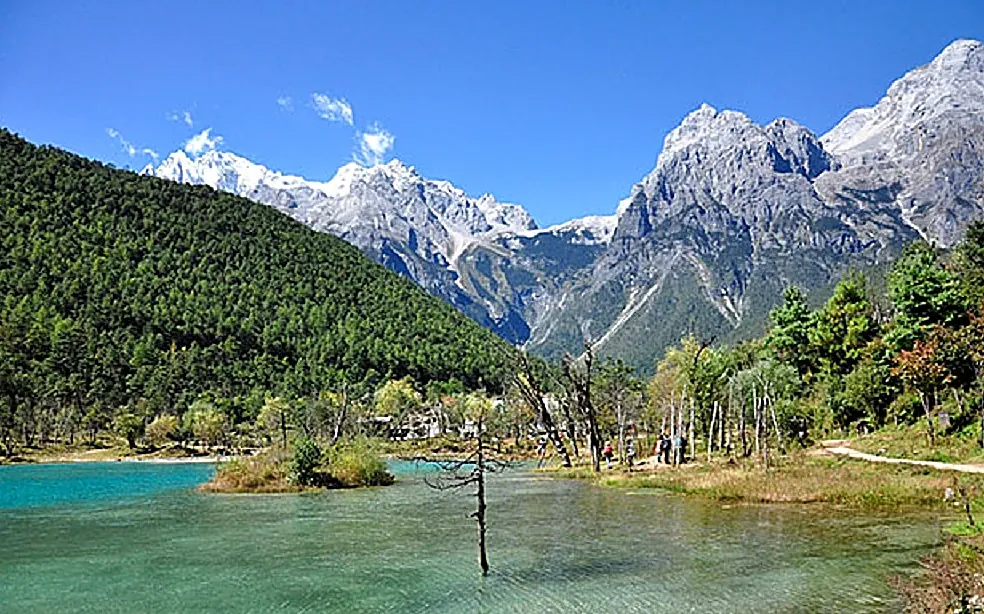
Because it sits at a prime elevation on eastern cliffs, this vantage point frames the famous meteorological wonder known as “Cangshan Jade-Belt Cloud.” When seasons turn or after sudden mountain rain, moisture rising from the lake clings to fir and spruce slopes mid-mountain—weaving a smooth, white cloud band like a jade sash across nineteen green peaks. From the east bank, visitors take in this surreal sight, turning views from white balconies into an ever-changing highland scene throughout the day.
Site planning follows natural hillside contours closely rather than heavy leveling. The complex steps down in curving spiral terraces from Huanhai Road toward the water’s edge and up slopes. Winding stone stairways, steps, and open terraces link together in a way that echoes coastal Mediterranean villages while adapting flexibly to southwestern China’s steep terrain—catching cool lake breezes while giving every building an unobstructed panorama.
Surrounding scenery blends pure highland atmosphere with sculpted forms. At roughly 2,000 meters above sea level, Yunnan skies often glow deep sapphire, contrasting vividly with crisp white plastered walls and calm jade-green lake water. At sunset, warm light gilds rock slopes before shifting into deep violet-blue—wrapping the hillside in calm beauty worthy of ancient Nanzhao.
More than a surface visual imitation, Santorini in Dali reflects a large-scale planning project with substantial investment reshaping Erhai’s eastern shore. Developed with a total investment of 6 billion RMB (nearly one billion USD) across a 630,000-square-meter site and roughly 283,500 square meters of gross floor area, this prominent northwestern Yunnan resort complex shows both ambition for an international hillside retreat and modern engineering skill over challenging topography.
The main planning challenge lay in semi-arid geology and rugged karst slopes on Haidong Hill, where steep drops overlook Erhai Lake. Rather than flattening hills into uniform concrete blocks, designers combined Eastern hillside sensitivity with Mediterranean planning by following the terrain’s natural lines. Building volumes step back and forth across natural elevations to create multi-dimensional courtyards and sightlines that frame Cangshan and Erhai without breaking the limestone slope’s flow.
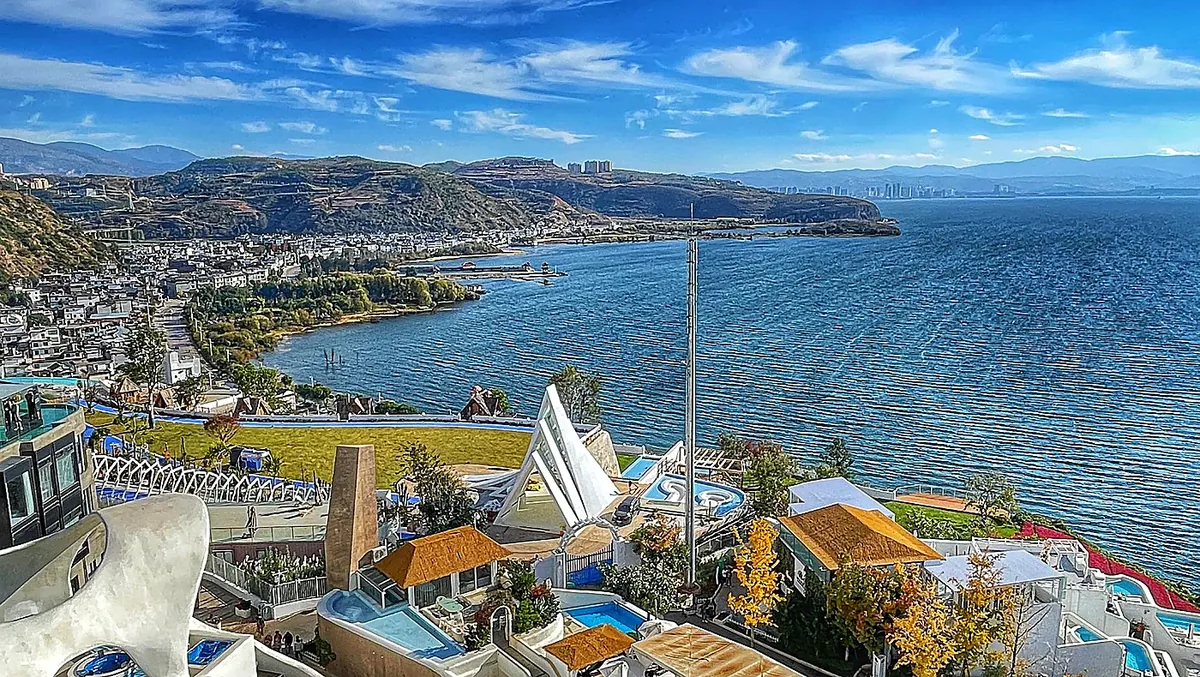
In architectural form, the project draws on Cycladic island style filtered through contemporary minimalism. Exterior surfaces wear crisp white that reflects bright sun across the Yunnan–Guizhou Plateau against deep blue sky and water. Sharp corners give way to gentle curves, arched openings, and rounded domes like sculpted clay forms. Winding stone steps link intimate alleys and airy terraces, evoking an Aegean hillside village.
A standout spatial feature is its sunken infinity pools set along cliff edges. Concealed overflow edges turn calm pool water into a mirror that blurs visual lines between built forms, broad Erhai waters, and year-round snow-capped Cangshan peaks in the distance—blending Mediterranean romance with upscale hillside hospitality.
As sunset sinks slowly behind the nineteen peaks of Cangshan, Dali Santorini enters its most luminous hour. Poetic imagery of golden twilight melting into the horizon seems tailor-made for these terraced cliffs. As the sun drops behind snow-dusted ridges, golden rays filter through thin clouds over Erhai’s more than 250 square kilometers of water and wash across white terraces—shifting arches and curves from ivory to amber and deep violet before highland night settles in.
Once darkness blankets the Erhai basin, warm architectural lighting comes alive along stepped slopes. Instead of garish urban neon, landscape designers used subtle indirect and layered lighting reminiscent of lanterns along cliffside paths on Greece’s Oia. Soft golden lights tucked beneath stone steps, along winding paths, and around infinity pool rims turn the cliff into a glowing waterside haven suspended between sky and lake, while calm Erhai water reflects lights alongside the famed “Erhai Moon”—one of Nanzhao’s four classic wonders of wind, blossoms, snow, and moon.
Evening life at Dali Santorini feels distinct from lively bar streets in Dali Ancient City. Here, appeal centers on calm romance as lounge bars and cliff terraces become quiet stages. Intimate spots tucked into rock niches serve cocktails infused with mountain roses, traditional Bai spirits, or aged Pu-erh tea by candlelight. In lakeside breezes, acoustic string melodies and Yunnan folk tunes blend with Western instruments for a relaxed cross-cultural evening above the water.
Not far along the shore, outdoor performances with modern laser projection along Erhai’s banks evoke royal legends of the Duan clan and thousand-year founding myths. Distant show lights mingle with Cangshan breezes and lapping waves, turning evenings at Dali Santorini into a dreamy pause where travelers unwind and take in both ancient heritage and modern energy.
Dining at Santorini in Dali opens a rare culinary dialogue between two worlds: light, breezy Mediterranean flavors and centuries-old Bai heritage food beneath Cangshan. From white balconies overlooking Erhai cliffs, guests enjoy scenery alongside a varied table where Western herbs meet rich western Yunnan ingredients.
At upscale cliffside restaurants inside the resort, southern European touches appear in crisp salads with olive oil, herb-baked seafood, and fresh coffee in lake breezes. Sunset afternoon tea on the cliff has become a favorite ritual—savoring delicate pastries while late sun gilds Cangshan peaks in a relaxed Aegean mood.
Alongside foreign influences runs the authentic food heritage of ancient Nanzhao. Signature Erhai sour-and-spicy fish reflects Bai balance: tender fish simmers slowly in an earthenware pot with tangy dried wild forest quince, Yunnan bird’s-eye chili, aged ginger, and silky tofu in rich red broth. Nearby sits Dali rushan cheese—fresh cow’s milk curdled, stretched thin like fans, and dried on bamboo racks—grilled gently over charcoal and rolled with fragrant rose-petal preserve for a chewy, creamy, floral bite.
Traditional specialties also shine through Xizhou Baba and Shengpi. Xizhou Baba—a flaky layered pastry from Xizhou Ancient Town—bakes in charcoal ovens heated above and below until golden and crisp, filled either with savory minced pork and scallions or sweet brown sugar and rose petals. For adventurous palates, Bai Shengpi—pork skin and meat singed lightly over rice straw so skin stays crisp and tender, sliced thin with a tangy-spicy dip of plum vinegar, roasted chili sauce, and mountain herbs—captures traditional village feasts.
Blending gentle Aegean-inspired dining with hearty western Yunnan traditions gives Santorini in Dali a distinctive culinary identity. Each meal becomes more than refueling after sightseeing—it is an unhurried aesthetic pause pairing modern design with timeless local character.
Perched on gentle rocky slopes of Haidong Town, Santorini in Dali stays open to lake breezes day and night. In operation, public walkways, white stairways, and open viewing terraces have no general admission gate and remain accessible 24 hours a day. Ideal sightseeing and service hours generally run from 9:00 AM to 7:00 PM when venues operate smoothly. Note that upper viewing balconies, Cangshan-facing infinity pools, and quiet afternoon-tea terraces belong to hillside hotels—so non-staying visitors wishing to enjoy those spots should order food or drinks on site, a simple courtesy that keeps the resort peaceful for overnight guests.
Convenient access makes the resort easy to reach across northwestern Yunnan. It sits roughly 20 to 30 minutes by car from Dali Fengyi Airport and Dali Railway Station along smooth highways. To take in lake views, renting a car or hiring a private driver along Huanhai East Road is ideal—hugging calm water past limestone outcrops and willows up to Haidong’s hillside. Coming from Dali Ancient City on the west bank, a roughly 30-kilometer drive around the southern end of the lake contrasts gray-tiled Bai homes with white hillside buildings. Use ride-hailing apps or licensed travel operators, and politely pass on unlicensed touts offering street photos or informal rides near parking areas.
Timing and highland gear matter greatly for a comfortable visit. Late afternoon from around 2:00 PM until sunset offers flattering light that brings out curved white walls without harsh midday shadows in photos. At dusk, looking west from Haidong slopes toward Cangshan captures golden sunset light across Erhai. At nearly 2,000 meters elevation, strong UV rays and brisk lake winds are common—so pack high-SPF sunscreen, UV sunglasses, a wide-brimmed hat, a windproof jacket for cooler evenings, and a versatile umbrella for sun or brief rain.
On formalities and payments, international visitors should carry a passport valid for over six months with an appropriate Chinese visa (individual or group visa via designated tours). Because cashless mobile payments are standard in Dali, link an international card to Alipay or WeChat Pay before departure for easy spending on tea, lakeside rides, and crafts. To enjoy seamless logistics from Erhai Lake to snowy mountain valleys, consider an organized itinerary such as our Dali – Lijiang – Shangri-La – Kunming tour package (5D5N & 6D6N) for a smooth, culturally rich trip.