Tracing back across the thousand-year chronicles of the Red River Delta, the crimson hue of Mengzi’s pomegranate orchards is far more than the livery of a bountiful agricultural harvest; it serves as a mirror reflecting geopolitical tides at the crossroads between mainland East Asia and the Indochinese Peninsula. The origins of the pomegranate tree (Punica granatum) in Mengzi date back to the Western Han Dynasty, around the second century BCE. At that time, merchant caravans and camel trains traversing the Southern Silk Road—the overland and maritime trade corridor linking Sichuan through Yunnan straight down into Jiaozhi—carried the very first seeds from distant Persia across thousands of miles of mountain passes. The fertile soil of the Mengzi basin, blessed with pure spring waters and radiant frontier sunshine, quietly nurtured this exotic newcomer, transforming an arid borderland into a miraculous cradle of domestication across dynasties.

The turning point that ushered Mengzi’s pomegranate orchards into their golden age occurred during the Qianlong and Jiaqing reigns of the Qing Dynasty, spanning from the mid-eighteenth to the early nineteenth century. During an era of fortified frontier governance, border commanders alongside merchants of the Ancient Tea Horse Road carried out large-scale horticultural introductions, bringing premier pomegranate cultivars from Tibet and Sichuan to plant across the Mengzi valley. Through the skillful crossbreeding of local agricultural artisans, the marriage of original West Asian sweet pomegranates with mineral-rich basaltic soil gave birth to the celebrated Mengzi Sweet Pomegranate. Boasting skin as thin as silk paper, translucent juice-bursting arils resembling precious rubies, and an extraordinarily pure sweetness, this prized fruit swiftly became an imperial tribute carried thousands of miles north to the royal court inside Beijing’s Forbidden City.
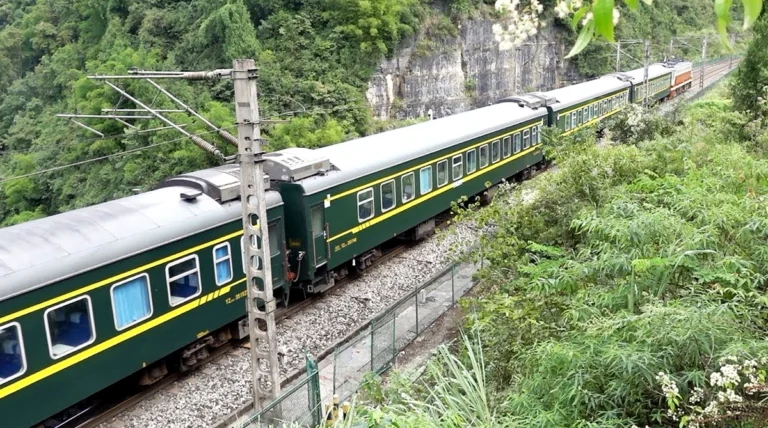
Entering the early twentieth century, the wave of Western modernization opened a dramatic new chapter for these orchards. The Yunnan–Vietnam Railway (Kunming–Haiphong Railway), constructed and inaugurated by the French, transformed Mengzi into the busiest inland treaty port in southwestern China. Steam locomotives bearing French customs insignia carried not only tin ingots, but also crates overflowing with freshly harvested Mengzi pomegranates. Rolling southward along the Red River valley, Mengzi pomegranates graced the bustling markets of Hanoi and Haiphong before boarding ocean liners bound for the port of Marseille—gracing aristocratic tables in Paris as an exotic, prized fruit from the mysterious Orient.
Beyond commercial renown, Mengzi’s ancient pomegranate groves also witnessed a poignant chapter during the War of Resistance Against Japan. As conflict spread across China, the National Southwestern Associated University—an indomitable beacon of Chinese intellectual life—relocated its Colleges of Humanities and Law to this frontier town. Beneath the shade of fruit-laden pomegranate trees encircling South Lake (Nanhu) and outlying farms, towering scholars such as Zhu Ziqing, Wen Yiduo, and Feng Youlan strolled, debated philosophy, and kept the flame of national thought burning amid relentless wartime air raids. The fiery crimson pomegranate blossoms of those summers entered scholarly essays as an enduring symbol of resilience, integrity, and cultural survival through turbulent times.
Through centuries of historical change, Mengzi’s pomegranate groves have evolved far beyond self-sufficient family orchards into a sprawling ecological belt anchoring the region’s key agricultural heritage. Centuries-old pomegranate trees still sink deep roots into their native soil, preserving rare indigenous germplasm while standing as living witnesses to two millennia of cross-border cultural exchange.
Nestled at the heart of the Mengzi basin within the Honghe Hani and Yi Autonomous Prefecture, the Mengzi Pomegranate Garden showcases a remarkable geomorphological formation rarely seen across the Yunnan–Guizhou Plateau. In traditional southwestern Chinese topography, this expansive intermontane plain is known as a “bazi” (坝子)—a broad, flat basin encircled on all four sides by towering limestone mountain ranges. Viewed through classical feng shui principles, the Mengzi basin commands an ideal “sheltering wind and gathering vital energy” posture, resembling a colossal treasure basin cradling the essence of heaven and earth. Surrounding peaks block harsh, dry northern winds while capturing warm, moisture-laden currents rising from the Gulf of Tonkin, forging an isolated, serene, and fertile micro-ecosystem.
What defines the renown of this thousand-year-old land is not merely its protective ring of mountains and rivers, but its exceptional geological soil composition. Sitting at an average elevation of roughly 1,300 meters above sea level, the arable topsoil here formed through millions of years of karst limestone weathering combined with ancient lacustrine alluvial deposits. Mineral-rich red basaltic soil abundant in iron, aluminum, and organic phosphorus—with deep tilth, ideal porosity, and natural drainage—provides a flawless cradle for deep-rooting pomegranate trees. Furthermore, the subtropical plateau climate delivers over 2,200 hours of annual sunshine paired with dramatic diurnal temperature swings of 12 to 15 degrees Celsius. This stark contrast between sun-drenched afternoons and cool, dewy nights triggers a natural biological response that concentrates pure sugars inside every aril, producing thin-skinned, jewel-like fruit of refined, refreshing sweetness.
Systematically planned under the name Ten-Thousand-Mu Pomegranate Garden (Wanmu Shiliuyuan), this core ecological zone blankets tens of thousands of mu of fertile land in an endless sea of emerald foliage. Rather than developing haphazardly, the agricultural landscape follows a scientifically zoned model harmonizing gentle rolling hills with neat geometric plots. Irrigation canals wind gracefully along the natural contours of the basin, collecting pure mountain spring water from limestone ravines to nourish centuries-old trees. Blue-gray stone footpaths separate historic family orchards from modern ecological farms, blending indigenous Yi and Hani farming wisdom with contemporary agronomy to establish a model organic agricultural belt for all of southwestern China.
The natural scenery of the Ten-Thousand-Mu Pomegranate Garden transforms dramatically across all four seasons. When the spring equinox arrives, the entire valley awakens in a blaze of vermilion-orange as millions of pomegranate blossoms burst open against tender new leaves and solemn gray limestone cliffs. By the autumn equinox, branches bend low under heavy, round pomegranates blushed in gold and rose like glowing jade lanterns suspended midair. Today, this iconic rural beauty is effortlessly accessible via modern transportation arteries: the G80 Guangzhou–Kunming Expressway and high-speed rail corridors skirting the basin link this tranquil green oasis smoothly with bustling metropolitan hubs, inviting travelers straight into an ancient agricultural wonderland.
Presiding gracefully over the fertile heart of Honghe Prefecture, the Mengzi Pomegranate Garden unfolds like a sweeping pastoral painting widely celebrated as the Mengzi Ten-Thousand-Mu Pomegranate Garden (蒙自万亩石榴园). Its master plan strikes a textbook balance between high-tech modern agronomy and human-centered ecological scenery. Far more than ordinary farmland, this vast expanse is thoughtfully organized into interconnected experiential zones: a core germplasm conservation area safeguarding ancient pomegranate cultivars, an experimental agronomy sector utilizing automated drip irrigation, and an eco-tourism corridor laced with basalt stone walking paths winding beneath fruit-heavy canopies.
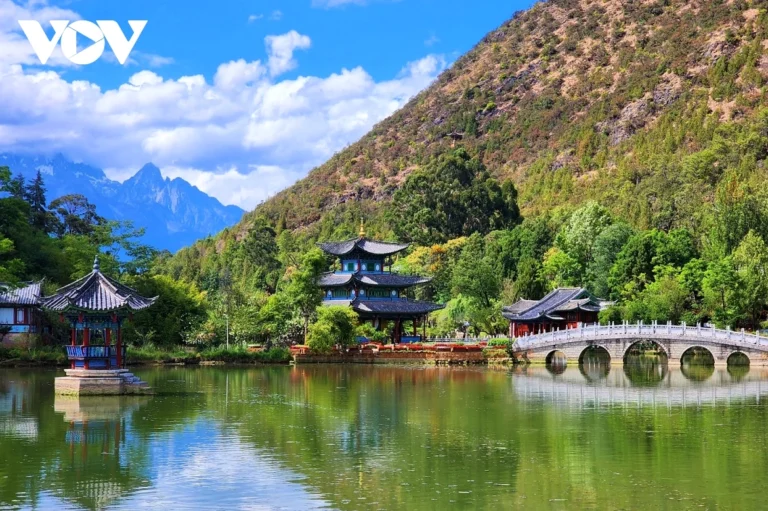
Architecture throughout the estate embraces the refined aesthetic of traditional southwestern Chinese countryside manors (nongjiale). Greeting visitors at the entrance is a stately ceremonial archway crafted entirely from solid ironwood and adorned with intricate hand carvings. Local artisans skillfully wove motifs of blooming pomegranate flowers together with ripe pomegranates splitting open to reveal clusters of translucent ruby seeds. In East Asian cultural symbolism, the motif of “a pomegranate bursting with a hundred seeds” conveys blessings of abundant progeny alongside timeless wishes for completeness in Fortune, Prosperity, and Longevity. Along main walkways, timber corridors roofed with ash-gray yin-yang tiles guide visitors past hexagonal pavilions whose upturned eaves reflect in mirror-clear artificial ponds, creating a symmetrical, tranquil realm in harmony with nature.
What elevates Mengzi into a rare open-air architectural museum is the striking dialogue between Eastern garden culture and early modern Western heritage landmarks. Immediately adjoining the lush pomegranate groves stands the historic complex of the former French Customs House and Bisezhai Railway Station—vital links along the storied Yunnan–Vietnam Railway. Built in classic late-nineteenth- and early-twentieth-century Indochine colonial style, these structures feature warm ochre walls, muted olive-green louvered shutters, and sweeping arched verandas. Riveted Eiffel-style steel trusses and antique mechanical station clocks create a vivid contrast, transporting travelers seamlessly from rustic orchard serenity into nostalgic memories of a bustling historic treaty port.
Ongoing investment in the Mengzi Pomegranate Garden is equally evident in modern agricultural research stations tucked behind lush hedgerows. Smart greenhouse systems, precision pollination, and protective fruit-bagging techniques operate side by side to ensure premier quality for Mengzi’s signature thin-skinned, soft-seeded sweet pomegranates while keeping the grounds spotless for visitors. This seamless fusion of modern agronomic planning, symbolic vernacular architecture, and historic railway landmarks gives the Mengzi Pomegranate Garden an atmosphere at once dignified, serene, and brimming with fresh vitality.
As sunset settles gently across the Mengzi valley, time and space within this ten-thousand-mu garden awaken through a dramatic visual metamorphosis. Fading sunlight gilds traditional tiled roofs and emerald leaves before giving way to an evening light display illuminating the fertile southern Yunnan plain. The vast ecological expanse caressed by southerly breezes by day dons an enchanting mantle of contemporary landscape lighting paired delicately with classic East Asian garden architecture.
During warm spring months in March and April, the garden reaches its peak floral splendor as fiery orange-red pomegranate blossoms blanket every slope. Tens of thousands of trees bloom in unison like flickering flames against azure skies, drawing photographers and nature lovers alike. Once night falls, subtle artistic spotlights concealed within lawns and tree bases illuminate individual blossoms with gentle precision. Under warm golden uplighting, natural vermilion petals radiate a captivating halo reminiscent of Tang-dynasty poetry praising pomegranate flowers as endless sunset glow fallen to earth.
The most serene focal point of evening life centers on the conservation grove preserving century-old pomegranate trees. Twisted, gnarled trunks etched with the passage of time—having watched Ancient Tea Horse Road caravans pass this river crossroads generations ago—now shelter refined tea-tasting pavilions. Beneath hundred-year-old branches swaying in cool evening breezes, travelers find deep peace gathered around rustic wooden tables. Sampling premium Mengzi pomegranate tea here offers a deeply restorative ritual: the earthy, woody depth of aged Yunnan Pu-erh tea blends harmoniously with the bright, naturally sweet-tart essence of Xin’anzhai pomegranates, yielding a luminous ruby infusion sparkling beneath red silk lanterns.
As night deepens, the orchards come alive with authentic local cultural performances. In the distance, the seven-story Zhuzi Tower rises majestically against the night sky, illuminated like a luminous pagoda mirrored across still waters along a symmetrical visual axis. Below the tower, tranquil air fills with the melodies of plucked sanxian lutes, soulful gourd pipes, and traditional dances performed by indigenous Yi and Zhuang communities native to the Red River basin. Blending atmospheric lighting, drifting lakeside mist, and ancient legends recounting the pomegranate’s Han-dynasty arrival from the Western Regions transforms Mengzi after dark into a living cultural stage where millennia of history pulse in harmony with nature.
Nurtured by rich alluvial soils and southern Yunnan’s gentle highland microclimate, Mengzi’s culinary heritage unfolds like a masterwork uniting pure natural harvests with centuries of courtly and folk gastronomy. Reigning supreme among local fruits is the celebrated Mengzi Sweet Pomegranate (蒙自石榴). Unlike ordinary varieties, Mengzi pomegranates concentrate sun and soil into plump, jewel-like crimson arils as clear as faceted garnets. Peeling back the paper-thin rind releases sweet nectar boasting natural sugar levels between 15% and 17%—delivering clean, refreshing sweetness without a trace of harsh astringency. For generations, local families have cherished ancient pomegranate trees as household heirlooms, weaving this ruby fruit into daily culinary culture.
If the pomegranate represents Mengzi’s botanical crown jewel, Mengzi Crossing-the-Bridge Rice Noodles (Guoqiao Mixian – 过桥米线) stands as its ceremonial culinary masterpiece steeped in conjugal devotion and legend. Originating on a quiet islet in South Lake during the Qing Dynasty, the dish honors a devoted wife who crossed a long wooden bridge daily to bring warm meals to her husband studying intensely for imperial exams. To keep the soup piping hot against cool highland breezes, she discovered that a golden layer of rendered chicken fat floating atop the broth sealed in heat, keeping the soup simmering hot for hours. Dining on this classic dish in its Mengzi birthplace is a theatrical ritual: a scalding earthenware bowl of crystal-clear chicken-and-pork bone broth arrives surrounded by dozens of small porcelain saucers holding paper-thin slices of raw fish fillet, pork tenderloin, chicken breast, pork kidney, quail eggs, chrysanthemum greens, and fresh mushrooms. Ingredients are slipped into the broth in sequence from slowest- to fastest-cooking, followed finally by springy fresh rice noodles—creating a rich, piping-hot, yet remarkably clean symphony of flavors.
Complementing these culinary icons, the art of brewing Mengzi Pomegranate Wine (Shiliujiu – 石榴酒) reflects multi-generational fermentation craft. Free of industrial alcohol or artificial flavorings, local pomegranate wine is naturally fermented from fresh juice pressed during the peak late-autumn harvest. Aged in sealed earthenware jars inside cool subterranean cellars, the juice matures into a captivating ruby elixir radiating ripe fruit aromatics balanced by gentle warmth—offering a smooth sweet-tart finish that cleanses the palate effortlessly after rich regional dishes.
Mengzi’s culinary portrait would be incomplete without classic Yunnan pastries, notably rose flower cakes and Yunnan ham mooncakes. Rose cakes enchant palates with flaky, multi-layered puff pastry encasing fragrant jam crafted from central Yunnan rose petals cured with rock sugar and pure wild honey. Beside them sit Yunnan ham pastries—a savory-sweet creation pairing crisp baked pastry with rich lard, sweet honey, and aged Xuanwei cured ham. This delicate balance of savory depth and gentle sweetness exemplifies classical Chinese yin-yang culinary harmony while leaving lingering nostalgia for a thousand-year trading crossroads.
Planning a visit to Mengzi’s pomegranate kingdom revolves around the seasonal rhythm of the Honghe highland basin. To witness the breathtaking spectacle of the entire valley ablaze in vermilion pomegranate blossoms like flames against emerald foliage, plan your trip between March and April—when mild spring warmth awakens gnarled branches into full bloom across ancient estates. Conversely, July through October marks the golden harvest season, when Mengzi’s famed pomegranates reach peak ripeness—heavy clusters blushing rose-gold and bursting with sweet, juicy arils filling shaded orchard lanes with pure fragrance.
Modern Yunnan transportation infrastructure makes reaching Mengzi swift and effortless. After completing border exit formalities at Lao Cai International Border Gate into the border town of Hekou, travelers can take the Hekou–Mengzi Expressway—a scenic route winding past dramatic karst peaks, sprawling banana plantations, and soaring valley viaducts that delivers visitors to downtown Mengzi in just 45 to 55 minutes by car or tour coach. Alternatively, riding intercity trains from Hekou North Station to Mengzi Station offers a nostalgic rail perspective passing historic outposts along the legendary Yunnan–Vietnam Railway.
Cross-border travel formalities to Mengzi have been streamlined considerably for visitors’ convenience. Rather than applying for a traditional full Chinese consular visa affixed to a passport, eligible travelers can utilize a Border Entry-Exit Travel Permit issued by immigration authorities in Lao Cai Province. Processing is typically swift, permitting short-term stays within designated areas of Honghe Prefecture. Applicants need only provide a copy of their citizen ID card and standard white-background portrait photos, while remembering to declare specialized camera gear or dutiable goods accurately at bilateral border checkpoints.
While strolling beneath ancient pomegranate canopies, a few local tips make the experience even richer. Inside the orchards, be sure to sample Mengzi’s prized soft-seeded pomegranates freshly cut from the branch, where tender seeds dissolve effortlessly without bitterness alongside rich sweetness nurtured by red basaltic soil. Afterward, visit a traditional lakeside restaurant by South Lake for a steaming bowl of Crossing-the-Bridge Rice Noodles crowned with golden heat-sealing chicken broth and paper-thin meats. Dressing in breathable layers with sturdy walking shoes and a light jacket ensures comfort across warm sunny afternoons and crisp highland evenings.
To savor the cultural depth and serene beauty of Mengzi without commercial distractions, travelers are strongly encouraged to choose high-quality, pure sightseeing itineraries free of the forced shopping stops often bundled into cut-rate tours. This thoughtful travel style ensures every hour goes toward enjoying scenic landscapes, timeless legends, and authentic local life. For a seamless journey covering border permits, comfortable transport, and authentic regional dining, explore our specially curated all-inclusive Mengzi tour package—your gateway to an unforgettable northern frontier adventure.