The origins of Kunming’s famed twin ceremonial archways—Golden Horse and Jade Rooster (Jinma Biji)—begin not merely with carved stone or timber columns, but deep within the spiritual roots and ancient mythology of China’s Southwest. The name “Golden Horse and Jade Rooster” appears formally in the “Treatise on Sacrifices, Part II” (*Jiaosi Zhi Xia*) of the classic *Book of Han* (*Han Shu*), originally referring to two divine spirits taking the forms of a gleaming golden steed and an emerald-plumed pheasant, symbolizing supreme auspicious omens bestowing blessings upon the world. Over a thousand years of weaving into the daily life of indigenous communities around Dianchi Lake, this imagery gradually transcended myth to become the soul, geographic emblem, and sacred cultural totem of ancient Dian civilization.
The physical milestone of the monument was first established during the golden age of the Ming Dynasty, specifically during the Xuande reign (1426–1435). Standing prominently at the central crossroads of Kunming for nearly six centuries, these paired archways have served as silent witnesses to countless historical upheavals—repeatedly destroyed in warfare only to rise again from the ashes. The first severe blow struck during the Ming–Qing transition in the 14th year of the Shunzhi reign (1657), when spreading flames of war leveled the grand structures. Thirty years later, in the 26th year of the Kangxi reign (1687), then-Governor of Yunnan Wang Jiwen spearheaded a major reconstruction, gathering skilled craftsmen from across the region to rebuild the archways according to sturdy imperial architectural standards.
Yet the tempestuous fate of this iconic landmark did not end there. In the mid-19th century, turmoil during the Xianfeng and Tongzhi eras brought Golden Horse and Jade Rooster down once again amid conflict in the 7th year of the Xianfeng reign (1857), leaving the central district scarred and bare for nearly three decades. Only in the 10th year of the Guangxu reign (1884) did Yunnan–Guizhou Governor-General Cen Yuying allocate substantial treasury funds to launch a large-scale rebuilding. Under Cen Yuying’s direction, the archways not only recovered their former splendor but established refined structural conventions for *dougong* bracket sets, crossbeams, and glazed roof tiles—codifying the exemplary design passed down to this day.
Entering the first half of the 20th century, Golden Horse and Jade Rooster became a stage recording turning points in modern history. When the National Protection Movement erupted, General Cai E and fellow patriots rallied beneath the archways to swear an oath of expedition against Yuan Shikai in defense of the republic. In the 1940s, amid the War of Resistance against fascism, the square before the archways echoed with marching ranks of Yunnan troops forming up before heading into the fierce battle of Taierzhuang—and following final victory, the very same site hosted departure ceremonies for troops heading into Vietnam to accept the surrender and disarmament of Japanese forces, leaving an enduring imprint on modern southern history.
The heritage’s greatest tragedy arrived in the 1960s during the Cultural Revolution in Yunnan, when both centuries-old precious-timber archways were completely torn down, leaving Kunming without its signature visual landmark for decades. To restore this broken cultural icon, in 1998 the Kunming municipal government launched a major reconstruction project ahead of the World Horticultural Exposition. Faithfully following Guangxu-era blueprints and standards from Governor-General Cen Yuying’s restoration, the Golden Horse and Jade Rooster Archways rose once more in the heart of modern Kunming as an enduring bridge linking past and present.
In traditional Chinese urban planning and geomancy, positioning a landmark was never a purely geometric coincidence, but a reflection of harmony between heaven, earth, and humanity. Kunming’s Golden Horse and Jade Rooster Archways sit right at the vital intersection of Jinbi Road and Sanshi Street—anchoring the southern end of the historic central axis of the old city. Far more than a millennia-old commercial crossroads, this site acts as a conduit gathering the elemental *qi* of the Kunming basin, standing like a sturdy latch securing urban vitality while opening sightlines toward surrounding mountains and waters.
Viewed across the wider landscape, the archways serve as a microcosm reflecting the mountains and rivers of central Yunnan. Ancient builders aligned them astronomically and geographically along an east–west axis: to the east, the Golden Horse Archway angles toward Golden Horse Mountain (historically Mount Azu), a range on Kunming’s eastern outskirts likened to a galloping steed greeting morning sunlight and symbolizing vibrant *yang* energy, growth, and prosperity; to the west, the Jade Rooster Archway faces toward the Western Hills where Jade Rooster Mountain spreads like a mythical bird catching golden dusk light and cool breezes rising from Dianchi Lake.
The alignment of the two archways along the same street plane brings to life the traditional geomantic saying: “Golden Horse in the east, Jade Rooster in the west, twin peaks facing Dianchi, guarding central Yunnan.” Two natural peaks separated by miles of valleys and waters are distilled into grand timber archways standing just dozens of paces apart—balancing *yang* movement and spring *wood* energy on the Golden Horse side with *yin* stillness, autumn *metal*, and lake *water* energy on the Jade Rooster side.
More than decorative street landmarks, the archways harmonize four elements of historic Kunming—mountains, waters, city walls, and ceremonial gates. Crisp plateau air and light over the Dianchi plain turn the square into a natural stage where morning and dusk light seem to draw distant ridges closer across the gilded, upturned eaves, reflecting masterly traditional spatial design.
Within old-city spatial planning, Golden Horse and Jade Rooster do not stand in isolation, but form a deliberate geomantic axis. Positioned dozens of meters apart east to west—Golden Horse welcoming eastern dawn and Jade Rooster holding western dusk—and paired with Zhong’ai Archway slightly to the north, the three structures form a classic *Pin* (品) tripod configuration symbolizing rectitude, order, and enduring prosperity across centuries.
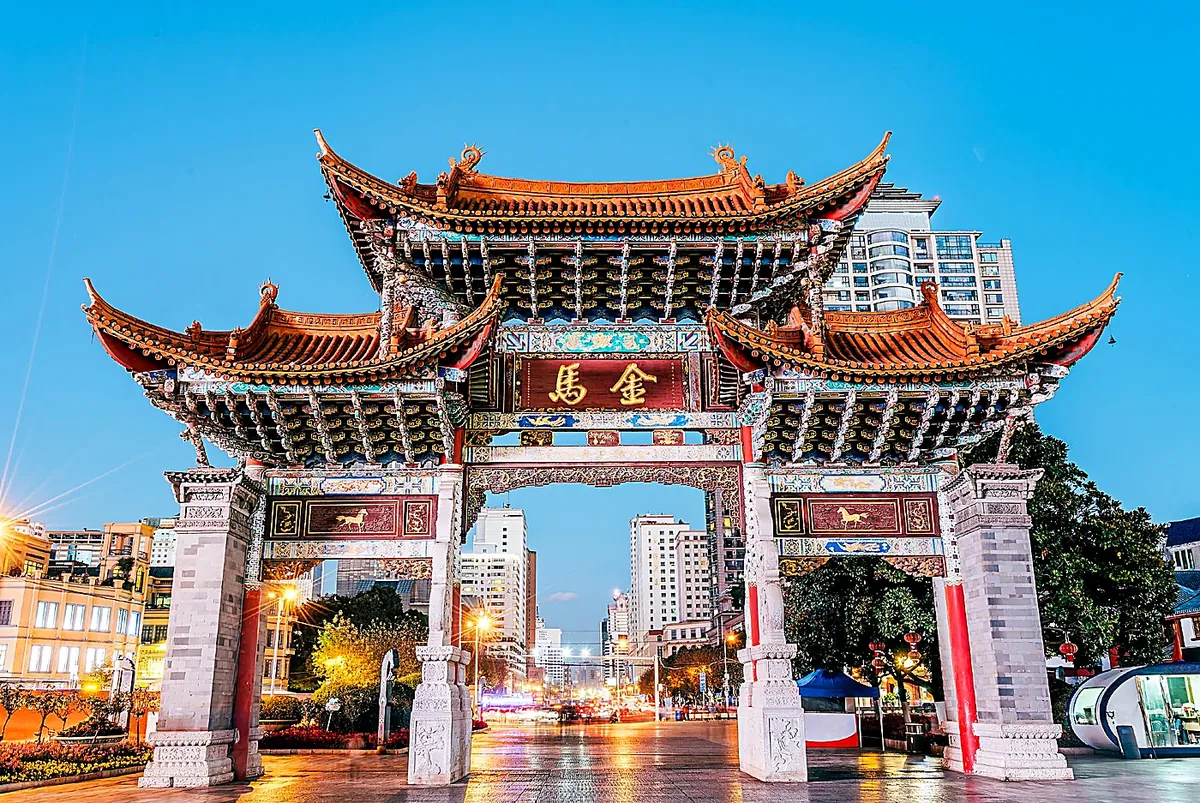
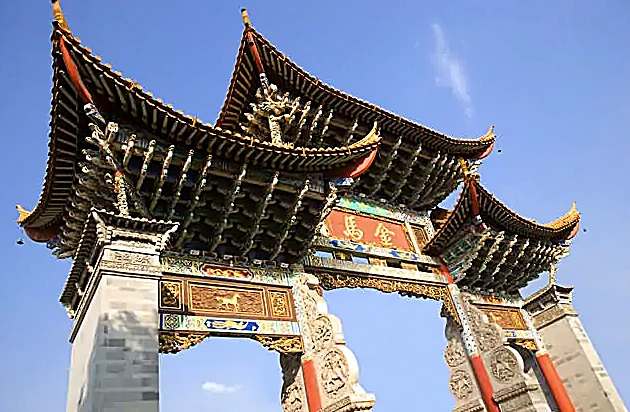
Architecturally, the archways follow Qing-dynasty official construction norms of central Yunnan blended with classical Chinese proportions. Each gateway rises roughly 12 meters tall with a frontage of about 18 meters in the classic “three bays, four pillars, three tiers” (*sanmen sizhu sanlou*) layout, where four tall solid timber pillars bear the weight of crossbeams, rafters, and upper tiers with structural balance and poise.
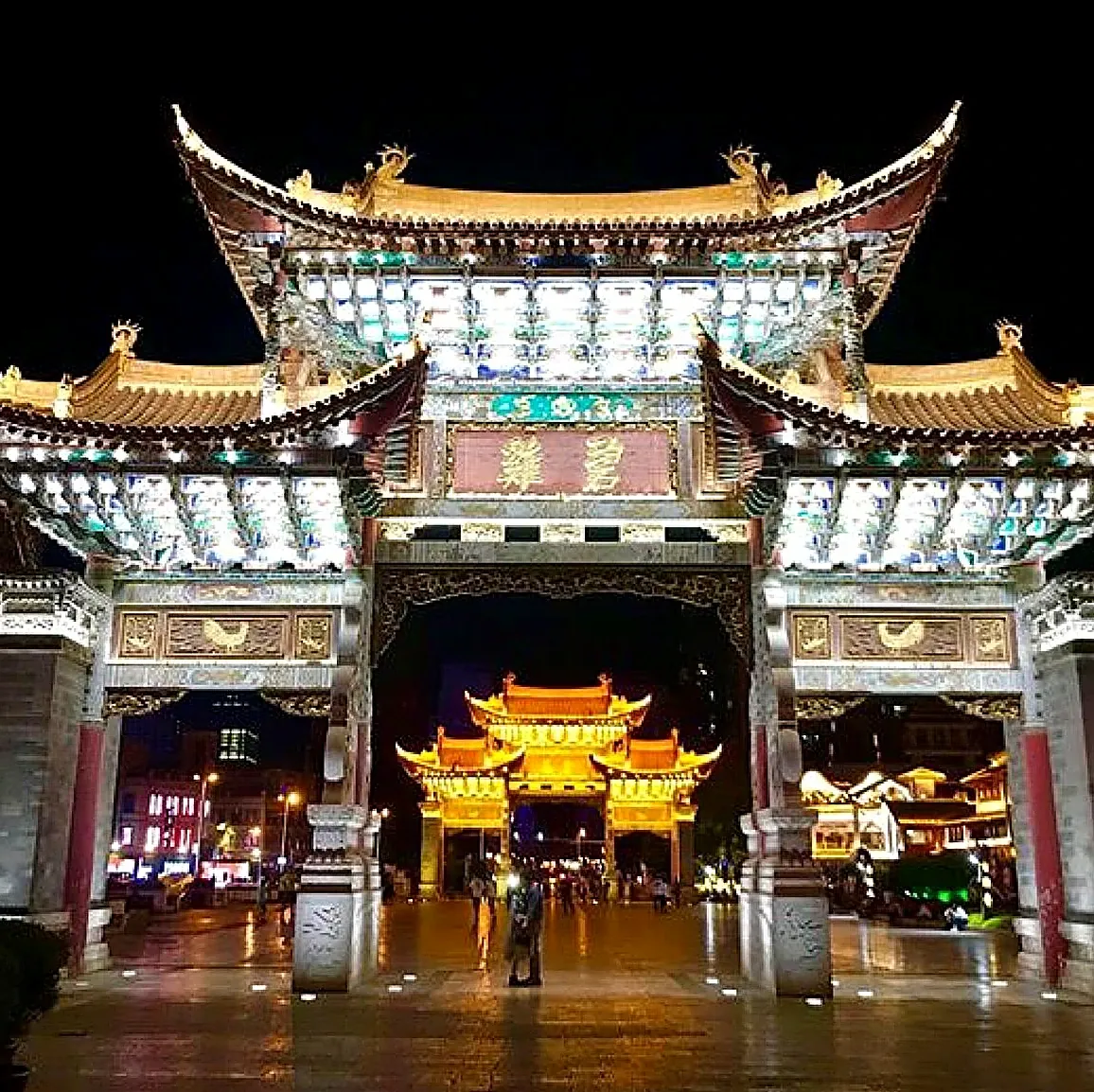
Crowns of the archways feature double-eaved hip-and-gable roofs (*chongyan xieshanding*) covered in glossy glazed tiles that catch light beneath clear Yunnan plateau skies, with sweeping upturned corner eaves resembling outspread mythical wings above intricate multi-tiered *dougong* brackets that distribute loads and add layered depth.
Craftsmanship shines through hand-carved wood and gilded polychrome painting across rafters, tie beams, and brackets featuring florals, scrolling clouds, dragons, and phoenixes. Centered on each gateway’s main lintel, bold regular-script plaques in gold leaf on deep blue lacquer (“Jinma” and “Biji”) mark the cultural prestige of the site.
Anchoring the timber frame are massive bluestone drum-shaped plinth bases (*baogu shi*) clasping the base of each main pillar. Carved with auspicious motifs, clouds, and mythical beasts in western Yunnan style, these stone bases protect timber columns from ground dampness—uniting Ming–Qing formal rules with regional woodworking skill.
Deep in Kunming folklore, the archways hold a famed celestial phenomenon known as “Sun and Moon Intersecting Light” (*Jinbi Jiaohui*). Legend says that once every sixty-year sexagenary cycle at the Autumnal Equinox, when the sun sinks toward misty Western Hills just as a full moon rises over the eastern horizon, overlapping daylight and moonlight cast long archway shadows across the granite plaza—gradually drawing closer until the two shadows converge near the center between the gateways, reflecting centuries-old calculations of roof angles and spacing.
Carrying forward that luminous tradition, Golden Horse and Jade Rooster Square transforms at night into a glowing visual landmark amid modern Kunming. Warm architectural lighting traces the curved double eaves, glazed tiles, and *dougong* tiers, highlighting carved eaves, dragons, clouds, and gold-lettered plaques against crisp highland night skies.
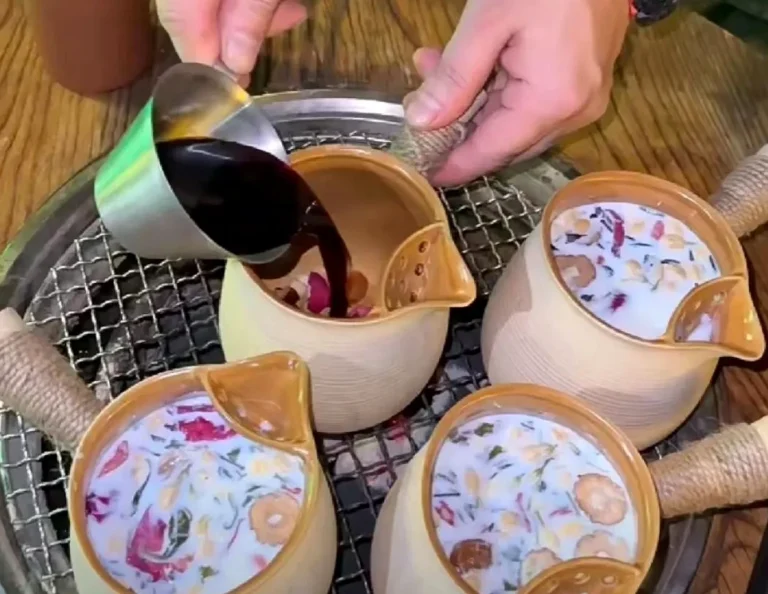
Surrounding the historic archways is the lively pulse of the Jinbi commercial district, a hub of Kunming’s night economy. Classic timber architecture contrasts with colorful neon signs along adjacent shopping streets as strollers pass flagstone lanes, street erhu melodies blend with city sounds, and inviting food aromas drift outward—from steaming bowls of Crossing-the-Bridge Rice Noodles and charcoal-grilled tofu to crisp rose pastries and aromatic Pu’er tea.
Without artificial stages or elaborate machinery, Golden Horse and Jade Rooster at night acts as an open-air setting where past and present meet through lighting, street life, local flavors, and living memory.
Stepping past the archways immerses visitors in Dianchi culinary traditions shaped by Yunnan’s highland ingredients and generational cooking craft. Around the square, savory heritage from refined banquets to everyday lakeside snacks comes together in rich regional dishes.
Holding pride of place is century-old Qiaoxiangyuan and its famed Crossing-the-Bridge Rice Noodles (*Guo Qiao Mixian*). Served in a bowl of rich free-range chicken and duck broth insulated beneath a gleaming layer of goose fat, diners add paper-thin pork tenderloin, aged Xuanwei ham, quail eggs, chrysanthemum petals, and tender greens to cook in the hot broth before adding smooth rice noodles for a balanced, comforting meal.
Alongside Crossing-the-Bridge Rice Noodles, Wenshan *Sanqi* (Notoginseng) Steamed Chicken represents Yunnan’s nourishing culinary craft. Prepared in a traditional Jianshui purple-clay steam pot with a hollow central chimney and no added water, steam rises through the center, condenses on the lid, and drips gently onto local chicken seasoned with Wenshan *sanqi* root—yielding golden, amber-clear broth with deep sweetness and a subtle herbal note over tender meat.
Around Golden Horse and Jade Rooster, bubbling pots of Yunnan wild mountain mushroom hotpot are another signature highlight. After mountain rains, prized mushrooms such as matsutake, boletes, and *jitong* mushrooms are gathered and brought into the city, simmered slowly in clay pots with black-bone chicken or rich broth to capture highland forest flavors.
As night deepens around the archways, street-snack stalls fill the air with savory aromas—from Jianshui tofu grilled over glowing charcoal until crisp outside and creamy inside, dipped into spicy chili seasoning, to puffed Dali *rushan* milk cheese rolled with sweet rose jam and freshly baked flaky rose pastries filled with fragrant red rose petals and sugar.
Unlike walled compounds or gated complexes with ticket barriers, Golden Horse and Jade Rooster Archways sit openly in the heart of Kunming’s community life at the intersection of Sanshi Street and Jinbi Road, open 24 hours with free entry—though dusk through evening (roughly 6:00 PM to 9:30 PM) is especially rewarding as late afternoon light gives way to illuminated architecture and lively city energy.
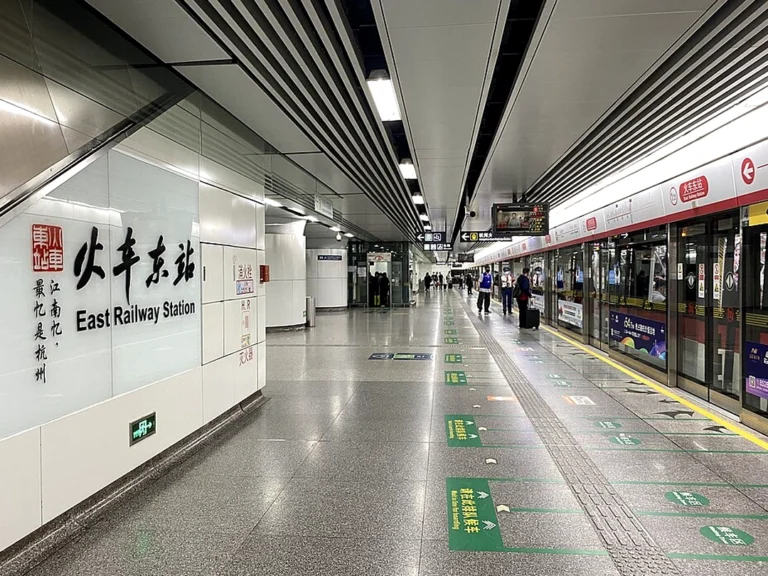
Kunming’s modern transit makes reaching the square straightforward: Metro Line 5 stops at Wuyi Road Station a short walk past ginkgo trees to the archways, while Metro Line 3 and numerous city buses stop right beside the square at Jinma Fang. Visitors can easily combine the archways with a walkable loop through historic Kunming Old Street, the flower-and-bird market along Jingxing Street, and nearby Nanping Pedestrian Street.
For travelers crossing from Vietnam via the Lao Cai – Hekou international border gate, prepare valid travel documents or a passport with over six months’ validity and appropriate entry visas, along with mobile payment apps and data connectivity before setting out. Around busy evening streets, stay mindful of pushy street vendors offering low-grade silver items, unverified Pu’er tea cakes, or pricey dried mushrooms around timber pillars, as well as ultra-cheap day tours that may include long shopping detours.
For authentic Yunnan specialties to bring home, look for certified “China Time-Honored Brand” (*Zhonghua Laozihao*) shops or merchants with clear, posted pricing—such as fresh flower pastries made with Dianchi rose petals or mushroom hotpot seasoning packs—while keeping personal belongings secure in crowds. To enjoy this iconic landmark within a well-paced cultural and mountain itinerary, explore the 4-day, 3-night Hekou – Kunming – Jiaozishan Snow Mountain tour.