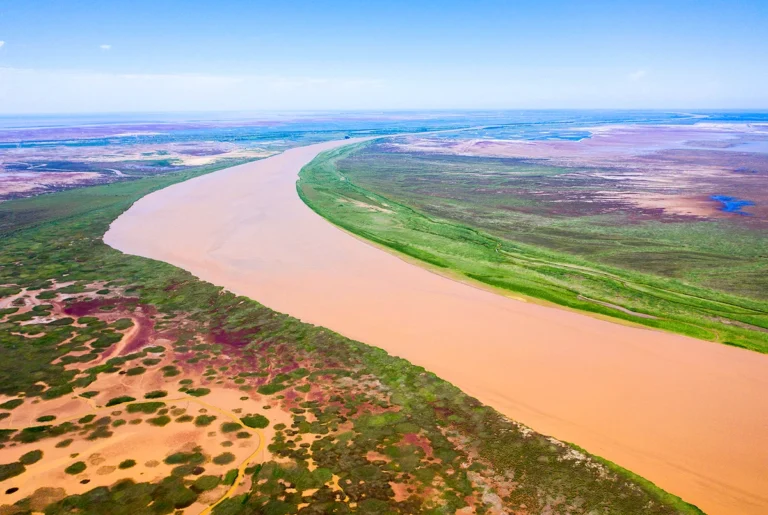
Situated at the river confluence where the Nanxi River merges into the silt-laden Red River, the border town of Hekou has long served as a pivotal commercial gateway between southwestern China and the Indochinese Peninsula. Right on this frontier stands the Hekou Ancient Railway Station (河口百年老火车站), rising like an extraordinary historical witness preserving more than a century of turbulent memory. Born from ambitious geopolitical designs at the turn of the twentieth century, the station was far more than a stop for steam locomotives—it served as the vital link that flung open the rugged mountain trade gates of the Yunnan Plateau to the outside world.
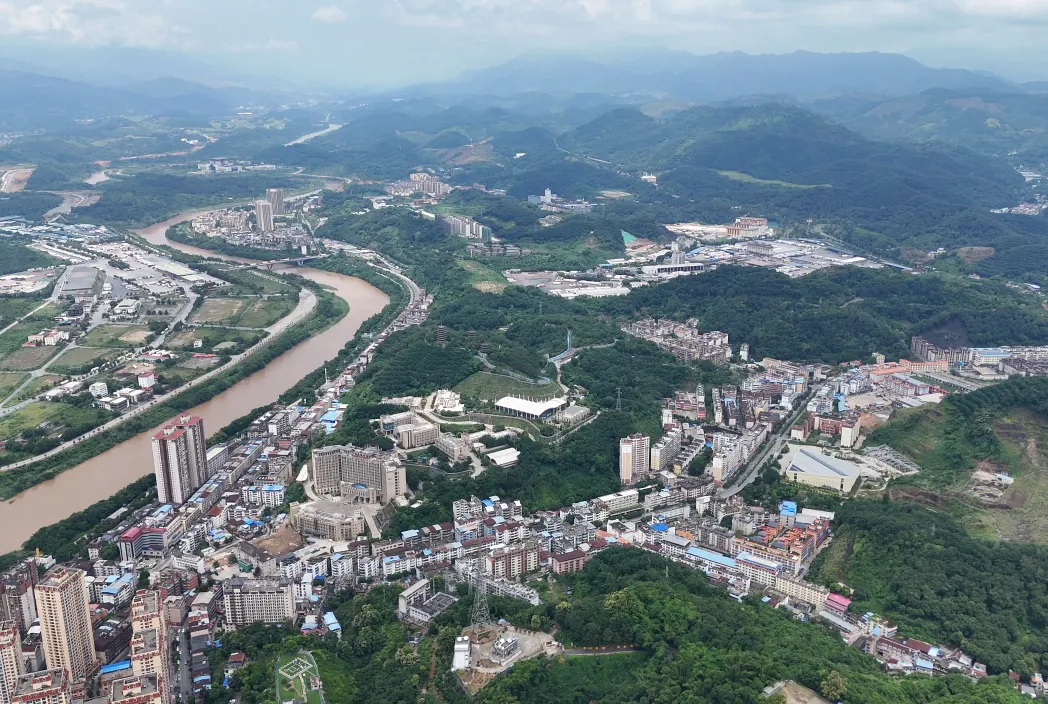
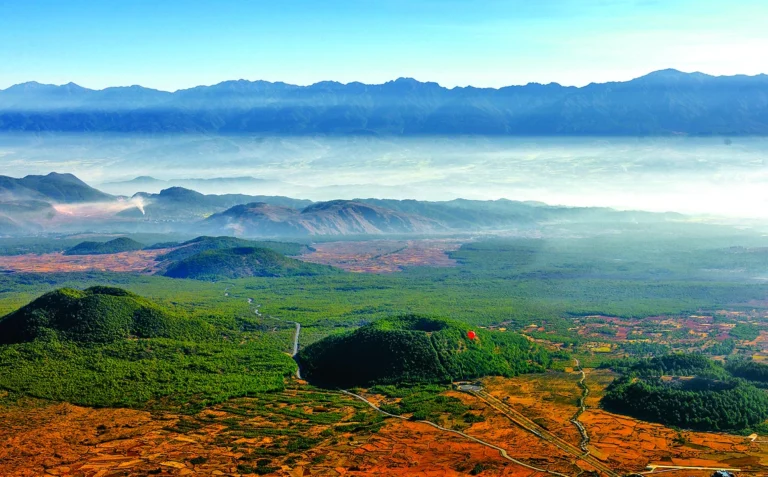
Viewed from an aerial perspective, the borderland scenery unfolds vividly along the tranquil winding river forming a natural boundary between the two shores. Framing the urban panorama are layered mountain ranges and lush hillsides blanketed in tropical greenery that act as a protective natural screen. Interwoven within this expansive setting is a striking urban contrast: modern high-rises mirrored in the river alongside low-rise historic quarters resting quietly beside hundred-year-old iron rails.
The origins of this landmark are inextricably tied to the monumental Yunnan–Vietnam Railway (Dian–Yue Railway) linking Kunming with the seaport of Hai Phong. Conceived aggressively by the French colonial administration under Governor-General of Indochina Paul Doumer to tap Yunnan’s rich mineral reserves and inland markets, construction officially commenced in 1903 across some of the world’s most treacherous mountain terrain, claiming the lives of tens of thousands of Chinese and Vietnamese laborers. After seven arduous years of tunneling through peaks and bridging gorges, the line was completed in 1910—just as the Qing dynasty entered its twilight days during the Xuantong reign of Emperor Puyi.
The arrival of Hekou Station sent shockwaves through the economic and social fabric of Southwest China. Once an isolated border relay outpost, Hekou swiftly transformed into a bustling freight-handling and refueling hub where steam whistles shattered the millennial stillness of limestone valleys. Meter-gauge trains hauled tin, coal, fine silk, and Pu-erh tea from deep inland toward the coast while carrying Western industrial goods back up into the highlands—sparking unprecedented cross-border commerce.
Across more than a storm-tossed century, Hekou Ancient Railway Station witnessed defining turning points of modern history—from the Xinhai Revolution that toppled imperial rule to serving as a vital military supply lifeline supporting southwestern fronts during the War of Resistance Against Japan. Although high-speed rail networks eventually superseded its original passenger role, authorities have carefully preserved the station and designated it a Provincial Cultural Heritage Site of Yunnan, safeguarding the enduring spirit of a pioneering era.
Stretching across a lowland basin wedged between the towering ridges of the Yunnan–Guizhou Plateau and the confluence of the Red and Nanxi rivers, Hekou Ancient Railway Station commands one of the most strategic sites along the Sino-Vietnamese frontier. Early twentieth-century French military and surveying engineers selected this scenic yet rugged foothold as the foundational anchor of their trans-mountain railway. Through traditional geomantic principles, the station rests against Yunnan’s layered mountain ranges while facing the silt-red waters of the Red River and the emerald flow of the Nanxi River—a “water in front, mountains behind” setting that shelters the grounds from border gales and fosters a humid tropical monsoon microclimate where mountain clouds linger over moss-covered tiled roofs year-round.
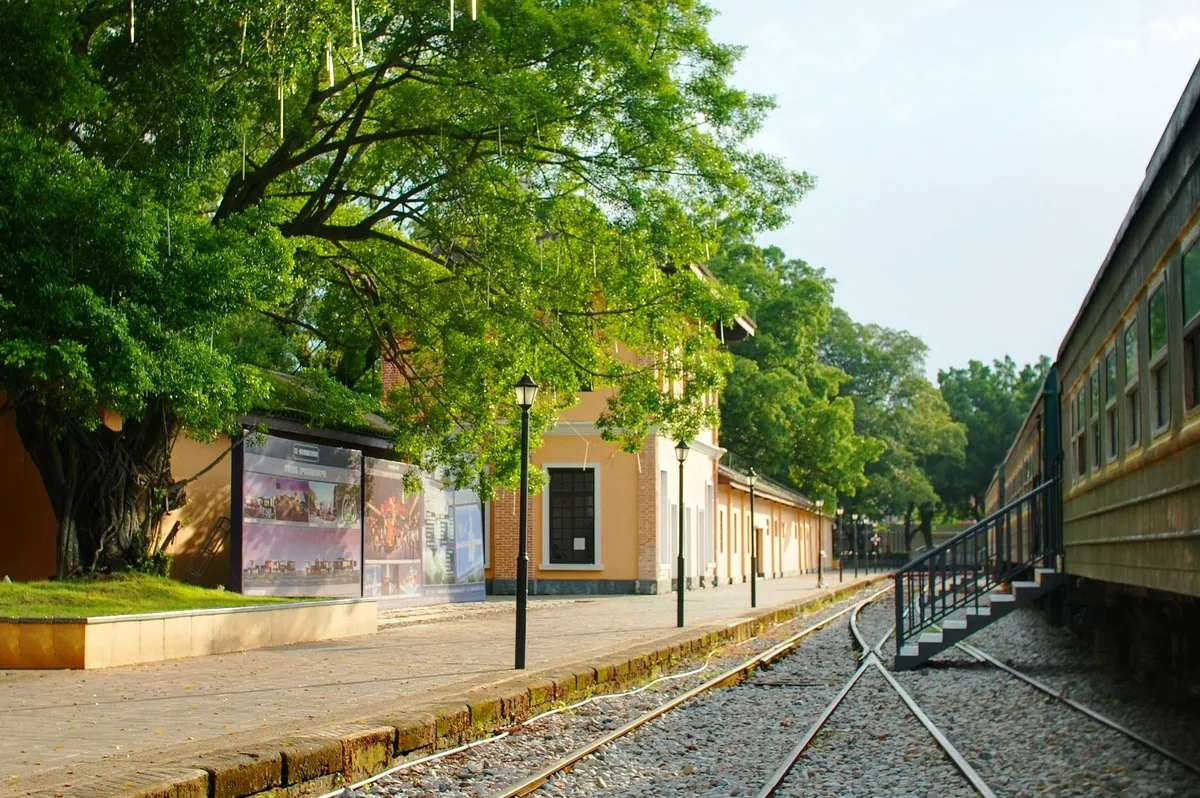
Stepping inside the station grounds reveals a tranquil, deeply nostalgic tableau where time seems suspended in every brick. Along the historic platform, weathered wooden sleepers and iron rails run beside a vintage railway carriage dusted with memories of the past century. Dark fired-brick paving stretches past classic French colonial buildings painted in warm ochre-yellow with graceful arched doorways, while an ancient spreading tree casts cool shade across the stationary train—blending early twentieth-century industrial heritage with vibrant borderland nature.
The station’s site plan reflects pragmatic French engineering mastery in taming steep river-valley slopes. Rather than radically leveling the terrain, engineers terraced the grounds to harness natural gradients for swift rainwater drainage during highland monsoon floods. Directly visible from the platform is the historic Hukou (Ho Kieu) Bridge spanning the Nanxi River—a millennial trade link uniting prosperous Lao Cai with Hekou that welcomed maritime commerce from the Gulf of Tonkin deep into Southwest China.
Within modern regional geography, Hekou Ancient Railway Station retains its pivotal role as a gateway for cross-border travel. Anchoring the southern terminus of the G8011 Kunming–Hekou Expressway corridor, the historic station welcomes international travelers entering southern Yunnan’s famed scenic triangle—branching upward to mist-veiled Pingbian Miao Village nestled in primeval forest and onward to historic Mengzi, former capital of Honghe Prefecture celebrated for lush pomegranate orchards and legendary Crossing-the-Bridge Rice Noodles.
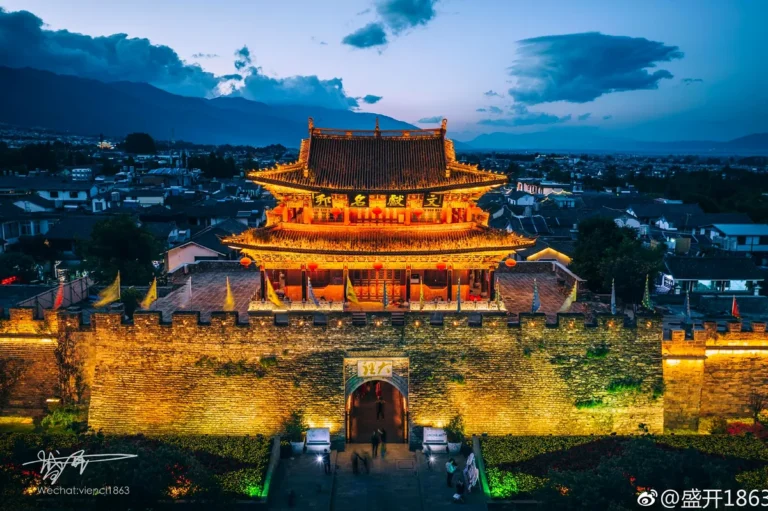
As crimson twilight settles over the confluence of the Nanxi and Red rivers, the century-old Hekou Station sheds its daytime stillness to undergo an enchanting transformation of light and sound. Under carefully choreographed contemporary architectural lighting, the historic 1910 Yunnan–Vietnam Railway terminus glows like a classic cinema set. Warm amber spotlights angled with precision wash across ochre-yellow French colonial stucco, highlighting cornices, dark oak arched windows, and moss-dappled brickwork—turning the entire platform into a living sculpture at the heart of modern Hekou.
The most captivating nocturnal highlight here goes beyond visual illumination to offer a multi-sensory journey awakening historical memory. Walking along dark ironwood sleepers framing the classic meter-gauge steel rails, visitors feel transported back a full century. In the quiet border night, subtle surround-sound audio recreates nostalgic echoes of the past: shrill steam whistles piercing mountain mist, the rhythmic clatter of iron wheels over gravel roadbeds, and brass station bells signaling departures bound for Kunming or Hai Phong—requiring no costumed actors to stir deep emotion.
This gentle synthesis has turned Hekou Ancient Railway Station into a sanctuary for slow travel and quiet reflection. Standing on the old platform gazing across the mirror-still Nanxi River toward the glittering lights of Lao Cai in Vietnam, travelers feel the unhurried pulse of history—strolling beneath wrought-iron veranda canopies, pausing for photographs beside trackside vintage cafés, or resting on decades-old wooden benches beneath rustling camphor trees.
Yet evening tranquility at the century-old station coexists seamlessly with vibrant commercial streets just steps away. Crossing the adjoining courtyard plunges visitors straight into a colorful Yunnan borderland night market filled with enticing aromas—sizzling cast-iron squid skewers dusted with Sichuan chili powder, crisp charcoal-grilled stinky tofu brushed with house chili sauce, and clay-pot roasted milk tea steaming with rock sugar and rich Pu-erh tea—creating an unforgettable contrast between historic serenity and lively frontier commerce.
Tucked beneath ancient flamboyant trees along narrow time-worn rails, the culinary landscape encircling Hekou Ancient Railway Station reads like a living oral chronicle. Serving not merely as a whistle-stop for mountain trains but as a crossroads uniting central Yunnan flavors with southern borderland traditions, the area awakens at dusk as charcoal smoke mingles with highland herbs and bold Yunnan spices.
Holding pride of place on the local culinary map is Crossing-the-Bridge Rice Noodles (Guoqiao Mixian), which originated in neighboring Mengzi and arrived in Hekou aboard the earliest trains. Inspired by the touching feudal-era legend of a devoted wife crossing South Lake Bridge to bring hot meals to her studying husband, the dish is a triumph of thermal engineering and table ritual. At its heart is a large earthenware bowl of rich broth simmered for hours from mature hen, pork marrow bones, and heirloom spices, sealed beneath a shimmering layer of golden chicken oil that traps heat near boiling point. Diners add ingredients in sequence—raw quail eggs, paper-thin slices of pork tenderloin, shredded chicken, crisp tofu skin, fresh greens, edible chrysanthemum petals, and silky white rice noodles—yielding a clean, deeply comforting bowl that warms away Red River valley humidity.
As night blankets the station’s ochre walls, narrow trackside alleys glow with crimson embers from Yunnan barbecue stalls (Shaokao). Distinct from coastal grilling styles, borderland barbecue celebrates untamed highland flavors dominated by numbing Sichuan peppercorns, Qiubei chili powder, and cumin. Skewers of marbled beef, chicken wings, puffed stinky tofu, king oyster mushrooms, and river fish are brushed with oil and chargrilled until crisp at the edges, then dusted generously with aromatic spice blends that tingle on the tongue before releasing bold, savory heat.
Complementing heritage dishes is a sweet contemporary touch from popular roasted milk tea shops such as Yihetang, where dark oolong tea leaves are caramelized directly with sugar, blended with creamy milk and chewy tapioca pearls, and served warm—allowing travelers to stroll past century-old locomotive architecture with a fragrant cup in hand.
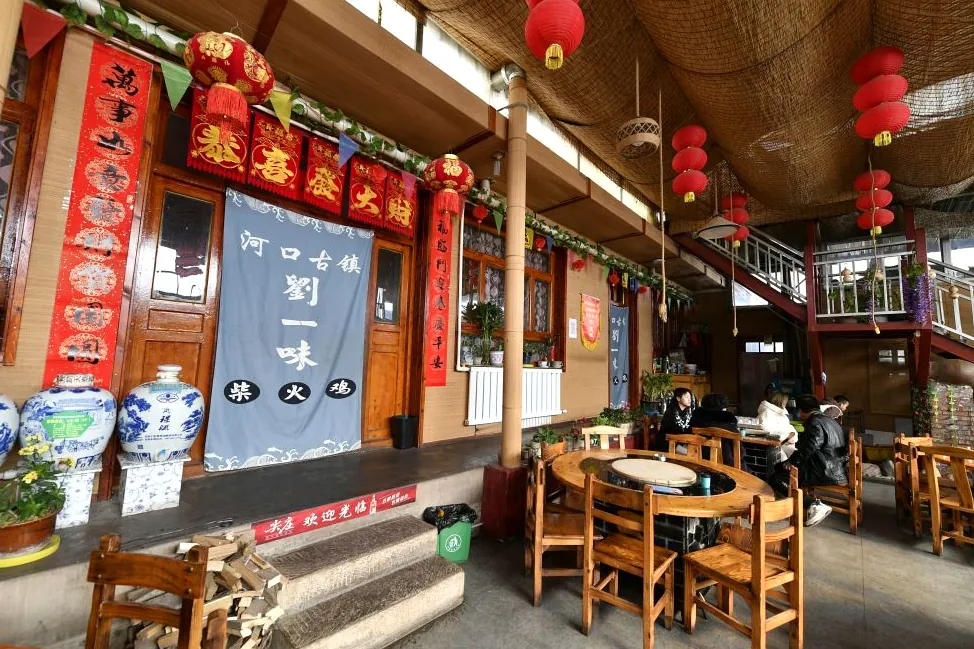
Just a few hundred meters from the weathered rails and yellow station walls, travelers step into a lively old-town dining quarter brimming with rustic charm. Swaying red lanterns, crimson calligraphy couplets framing wooden doorways, and rustic signboards such as “Hekou Ancient Town Liu Yiwu Chaihuoji” set the scene as wooden tables line verandas fragrant with wood-fired braised chicken.
Visiting this millennial Yunnan rail landmark requires mindful attention to border crossing regulations. Vietnamese citizens can easily visit Hekou using an official Border Travel Permit issued by immigration authorities, permitting travel and sightseeing within a 100-kilometer radius covering Hekou Yao Autonomous County and neighboring areas of Honghe Hani and Yi Autonomous Prefecture. Crossings take place smoothly via the Lao Cai–Hekou International Land Border Gate linked by the historic Hukou Bridge over the Nanxi River. Be sure to note strict border operating hours: the Chinese checkpoint operates from 8:00 AM to 11:00 PM Beijing Time (7:00 AM to 10:00 PM Vietnam Time), making careful time management essential to avoid missing evening border closure.
Once through customs, the two-kilometer stretch to the century-old station offers flexible transport options: enjoy a scenic riverside stroll along shaded promenades overlooking the Red River, hop aboard colorful electric sightseeing carts shuttling between town landmarks, or hail a local taxi for a modest 10 to 15 RMB fare. Carrying a small amount of RMB cash in small bills alongside an activated mobile QR payment app ensures seamless spending for museum tickets, traditional tea, and street snacks.
To fully appreciate the architectural ingenuity and cultural depth of this early twentieth-century monument without distractions from hurried commercial stops, discerning travelers favor purely cultural, no-forced-shopping itineraries. Traveling with private transport and knowledgeable borderland heritage guides transforms sightseeing into an enriching journey—making a curated all-inclusive Hekou tour package an ideal way to turn a cross-border excursion into a lasting cultural memory.