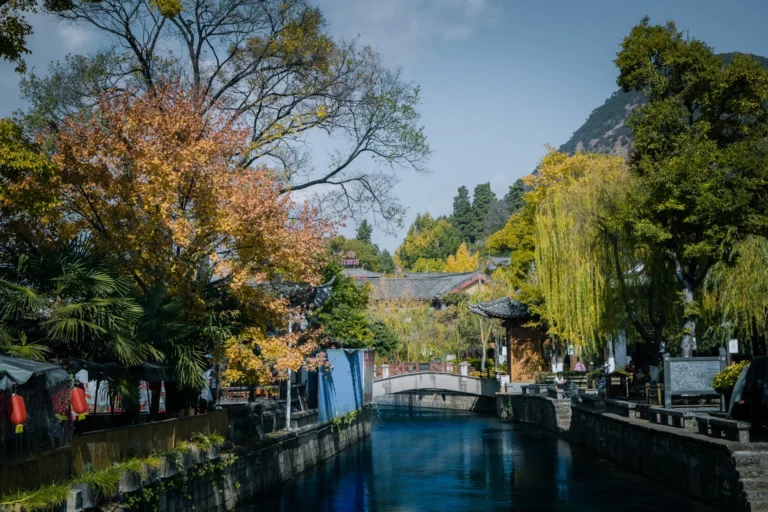
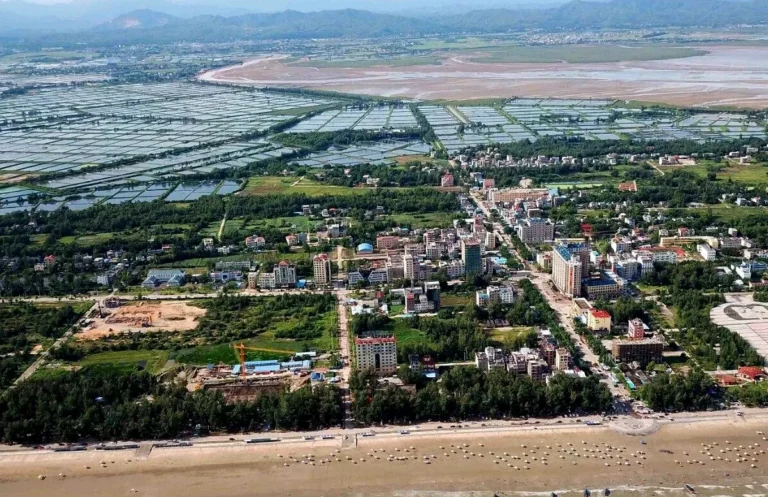
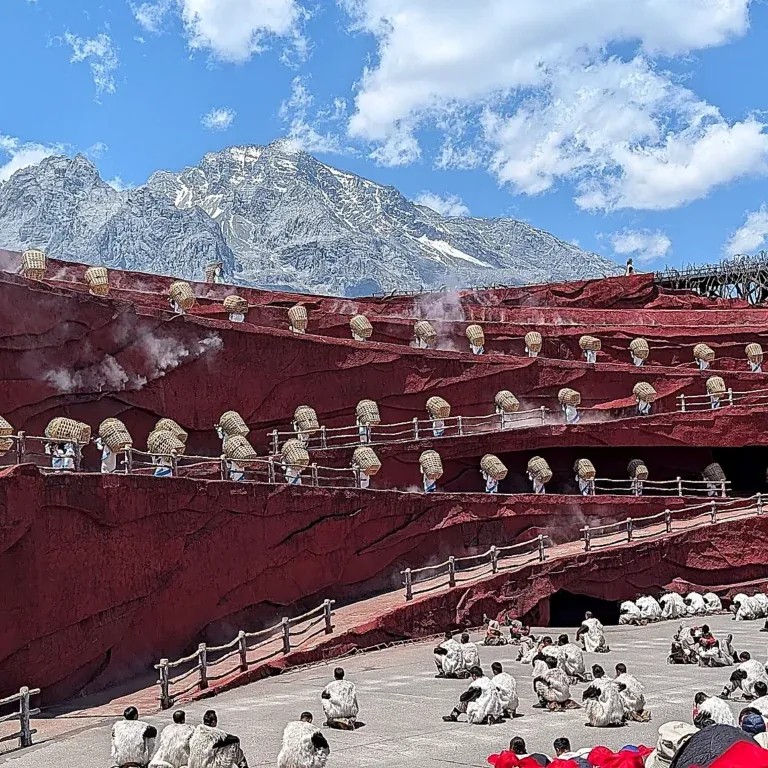
Nestled within a rolling basin of the Yunnan–Guizhou Plateau, Dianchi Lake has been known since antiquity as Kunming Lake or Kunming Pool, earning the enduring poetic title “Pearl of the Highland”—a luminous jade jewel resting across mountain terrain. Tracing time back to the Warring States period through the early Eastern Han Dynasty, fertile lands encircling Dianchi’s shores were home to ancient “Dian” tribes. Right around these broad waters, the Kingdom of Dian took shape and nurtured a vibrant bronze and celadon-ware civilization known as “Dian culture,” celebrated for refined bronze casting that vividly reflects local beliefs and social order prior to absorbing northern cultural currents.
A dramatic geopolitical turning point arrived in 109 BC—the second year of Yuanfeng under Emperor Wu of Han. The Western Han ruler dispatched expeditions to open the southwestern frontier and established Yizhou Commandery, bringing the entire Dianchi basin formally within a unified imperial realm. Across later eras of shifting power, in 765 AD (the fourth year of Dali in the Tang Dynasty), local Nanzhao authorities in the southwest began building Tuodong City beside Dianchi’s shores—a historic milestone laying the first foundation for today’s thriving Kunming.
One of the deepest imprints on Dianchi’s hydrology and urban geography is tied to a prominent Yuan-era statesman. In 1275 AD (the twelfth year of Zhiyuan), Sayyid Ajjal Shams al-Din Omar—first Grand Councilor of the Yunnan Branch Secretariat—took up administration in Kunming. Seeing recurring basin floods bring hardship to locals, he personally led a landmark water-conservancy project: mobilizing tens of thousands of laborers to excavate and clear the lower Haikou River, the sole outlet linking Dianchi Lake with the Yangtze River system. Through arduous effort, workers broke through submerged rock shoals such as Jixin and Luojia, reopening a long-blocked waterway.
This hydraulic achievement lowered Dianchi’s water level by several meters, exposing broad, fertile alluvial flats that were quickly turned into tens of thousands of mu of productive farmland. That large-scale water control established a classic pattern of Kunming urban growth summed up in an old saying: “As the city grows, waters recede; where waters recede, the capital expands”—linking receding lake margins with flourishing urban development.
Entering later imperial centuries, Dianchi Lake also witnessed dynastic shifts and poignant historical stories. During the Ming–Qing transition, tempestuous history between Pacifying-the-West Prince Wu Sangui and celebrated courtesan Chen Yuanyuan cast a misty aura over Dianchi’s waves, where she spent her later years in quiet monastic seclusion beside the water. Later, during the Qing Qianlong reign, scholar Sun Ranweng climbed Grand View Pavilion, looked out across misty lake waters, and composed the famed 180-character “Longest Couplet Under Heaven,” opening with the stirring line: “Five hundred li of Dianchi rush into view.” Shifting eras, martial spirit, and dynastic memory all seem gathered within waves lapping ancient shores.
Sitting in the heart of the Yunnan–Guizhou Plateau at the lowest depression in the southwestern Kunming basin, Dianchi Lake lies at an elevation of roughly 1,886 meters above sea level. Poised like a “highland emerald,” it is Yunnan’s largest natural freshwater lake and China’s sixth largest. Its scenery has long been captured in sixteen characters on Grand View Pavilion evoking four-season charm: “Fragrant rice paddies all around, bright sandy shores in clear sun, blooming lotus in summer, and weeping willows along green water in spring.”
Through traditional southwestern feng shui, Dianchi acts as a prime water-gathering basin framed by the famed “Golden Horse and Jade Rooster” mountain setting. West of the lake, Jade Rooster Hills (commonly called the Western Hills, or Xishan) stretch for dozens of li with steep cliffs dropping toward deep water. Looking west from out on Dianchi Lake, the Western Hills take on the vivid silhouette of a graceful beauty reclining in space—poetically named the “Sleeping Beauty of Dianchi,” with face upturned toward the sky, gentle contours along rocky slopes, and long dark tresses trailing near silver waves. Counterbalancing in the northeast are the Golden Horse Hills greeting dawn, forming a steady left-dragon, right-tiger frame that shelters Kunming’s vitality around the lake.
Dianchi’s basin stretches roughly 40 kilometers north–south, opening a smooth ecological transition across mountains, wetlands, and alluvial plains. Encircling the lake is a roughly 120-kilometer scenic corridor linking lakeside wetlands, traditional farming villages, and centuries-old waterworks. Along eastern and northern shores, gentle slopes open into fertile flats—highlighted by Haidong Wetland Park with lush aquatic greenery and the long Haigeng embankment sheltering waves while welcoming cool highland breezes.
Dianchi’s natural landscape is more than sky, mountain, and water—it reflects a complete basin shaped by Quaternary geological evolution that acts as a natural climate regulator, keeping weather mild year-round like eternal spring. Limestone ridges of the Western Hills block cold winds from distant snowy peaks, while broad water stores gentle warmth, nourishing reed beds and sedge flats that shelter native wildlife across ages.
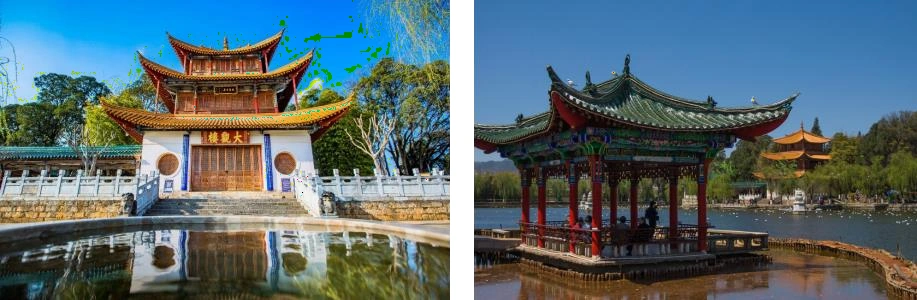
Reflecting beside Dianchi’s emerald waters, heritage architecture around the lake blends northern classical court proportions with southwestern highland character. A focal point on the north shore is Grand View Park, home to Grand View Pavilion built in the Qing Dynasty with a stately triple-eave xieshan roof. Beneath moss-kissed curved tiles, the pavilion frames sweeping lake-and-cloud views and is renowned for two front pillars bearing Sun Ranweng’s 180-character couplet—inscribing Yunnan’s spirit and dynastic memory into cultural history.
Toward the southeast shore, architectural space expands into the Kunming Old Town reconstruction precinct spanning over 50 mu. Here, bustling historic streetscapes are recreated with carved timber beams, decorative brackets, and traditional post-and-tie joinery. A standout feature of old Kunming domestic architecture is the classic “Yikeyin” (“One Seal”) courtyard layout—a square, enclosed four-sided compound resembling a stamp set on the ground, with sturdy walls and inward-sloping roofs around a skywell that gathers breezes and reflects millennia of Han building skill blended with local Yi highland adaptation.
Beyond historic landmarks, contemporary planning around Dianchi Lake reaches major scale across roughly 2,055,000 square meters of built floor area. Public buildings and lakeside cultural and convention centers draw on traditional Yunnan fortification and temple forms—adapting multi-tiered sloping roofs and sweeping eaves in modern materials so silhouettes echo historic gate towers while feeling light as gulls over water, creating a smooth transition from Western Hills cliffs to modern lakeside city life.
Rounding out this diverse spatial picture is the Yunnan Nationalities Village along Dianchi’s shores, bringing together traditional dwellings of local ethnic groups beside the water—from stilt-supported timber houses to whitewashed, ink-painted “Three Courtyards and One Screen Wall” Bai homes, sturdy flat-roofed Yi earth dwellings, and airy Dai bamboo-and-thatch pavilions reflecting centuries of highland building wisdom.
As sunset draws a crimson-violet curtain across the Yunnan–Guizhou Plateau, Dianchi Lake shifts from daytime openness into evening light art and night life. Along the Haigeng embankment and lakeside parks, warm golden lights trace the shoreline in a glowing curve. Looking across thin blue mist from the east bank, the Western Hills across the water form a solemn blue silhouette clearly tracing the “Sleeping Beauty” resting between sky and lake, while calm water mirrors city tower lights alongside dark mountain slopes.
A cultural highlight of Dianchi nights centers around Grand View Pavilion. During special festival moments, the historic site hosts large-scale laser and water-screen displays—projecting light across fine mist over calm water to bring lines from Sun Ranweng’s 180-character couplet and ancient Dian legends to life, while palace-style pleasure boats glide gently across the lake to guzheng melodies and lapping ripples.
Leaving calm waters for the southeast brings a lively burst of night energy at Dounan Flower Market—Asia’s largest cut-flower trading hub. As much of the city quiets down, Dounan hums through the night beneath bright lights illuminating millions of fresh roses, carnations, lilies, and orchids harvested from nearby valleys. Fragrant blooms contrast with brisk foot traffic, lively bargaining, and electronic flower auctions as carts loaded with flowers roll out through the night.
Along Dianchi Road heading south, lakeside nights preserve a slower, highland-flavored rhythm. Garden restaurants, traditional teahouses, and casual live-music bars sit beneath lakeside willows; beneath warm red lanterns, guests sip local rice wine or Pu-erh tea with copper-pot fish or grilled wild mushrooms while lake breezes, folk tunes, and spicy Yunnan flavors complete the evening.
Life around Dianchi Lake is closely tied to central Yunnan’s food culture, shaped by pure highland water and mild weather that balance natural freshness with family cooking craft. Leading local intangible food heritage is Crossing-the-Bridge rice noodles: rich broth slow-simmered from old chicken, duck, and pork bones arrives piping hot beneath a golden oil layer that locks in heat as diners dip paper-thin fish slices, pork loin, forest greens, and fresh mushrooms into the soup before adding smooth rice noodles.
Alongside Crossing-the-Bridge noodles is steamed pot chicken using Jianshui Zitao purple clay—where chopped local chicken is placed in a clay pot with a central steam tube without added water and steamed gently over hours until vapor condenses into a clear, sweet, nourishing broth with fork-tender meat. Strolling old lanes near breezy shores also brings aromas of Xiaodao roast duck with crisp amber skin and tender, non-greasy meat, joined by rose-filled fresh-flower pastries, flaky layered Posu buns, and charcoal-grilled rushan cheese.
Deeper along tree-lined Dianchi Road or southern fishing villages, down-to-earth folk cooking shines in Jiangchuan copper-pot potato rice—cooked in a thick red-copper pot with aromatic rice, lard, and diced potatoes over charcoal so oil infuses every grain and forms a crisp golden crust at the bottom. Paired with Jiangchuan boiled fish—fresh Dianchi fish poached gently with fresh chili, mountain pepper, and clear water to highlight natural sweetness—alongside spicy stir-fried beef with Ganba mushrooms and braised Xuanwei ham, it captures Dianchi’s warm, unhurried spirit.
The roughly 120-kilometer route ringing Dianchi Lake opens a breezy scenic corridor across the Yunnan Plateau. From downtown Kunming, taking Metro Line 5 offers an easy ride toward the Haigeng embankment and nearby Yunnan Nationalities Village, while hiring a day car or splitting east and west shores lets you stop freely by fishing hamlets and flower piers.
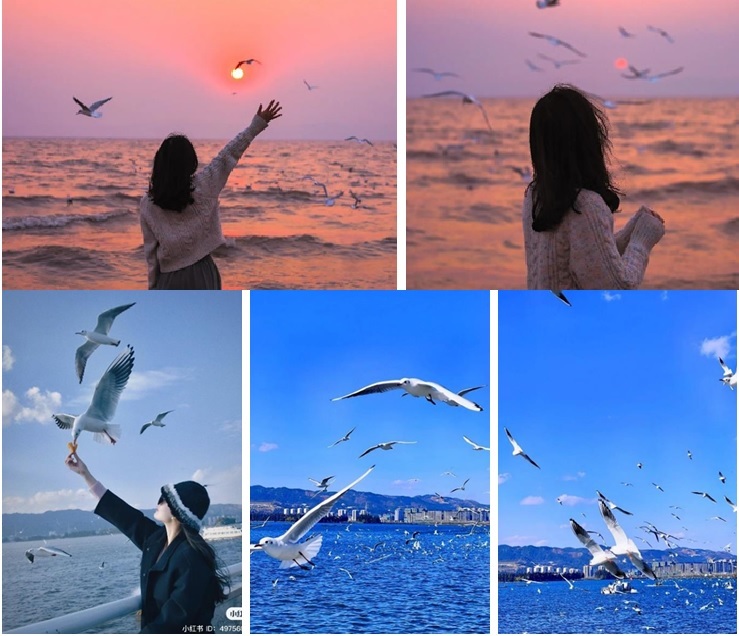
The most vibrant season beside Dianchi Lake arrives with northern winds from November through March, when tens of thousands of black-headed gulls migrate thousands of miles from Lake Baikal and Siberia to winter on Dianchi. White stone along the Haigeng embankment and Haidong Wetland Park fills with wheeling gulls taking grain treats from visitors; to keep migratory birds healthy, feed only approved grain packets sold at official shoreline stands and never toss bread crumbs, salty fast food, or plastic waste into the lake.
The Haigeng embankment and Haidong Wetland Park are open freely without admission fees, while taking in a wide view from above on the Western Hills and Dragon Gate (Longmen) is a classic highlight—where booking a combined ticket for the Longmen cableway across water and internal eco-carts saves money and effort over a half-day climb. Because Dianchi sits above 1,800 meters where Western Hills temperatures swing quickly between sunny afternoons and brisk gorge winds, packing a light windproof jacket in your daypack is always practical.
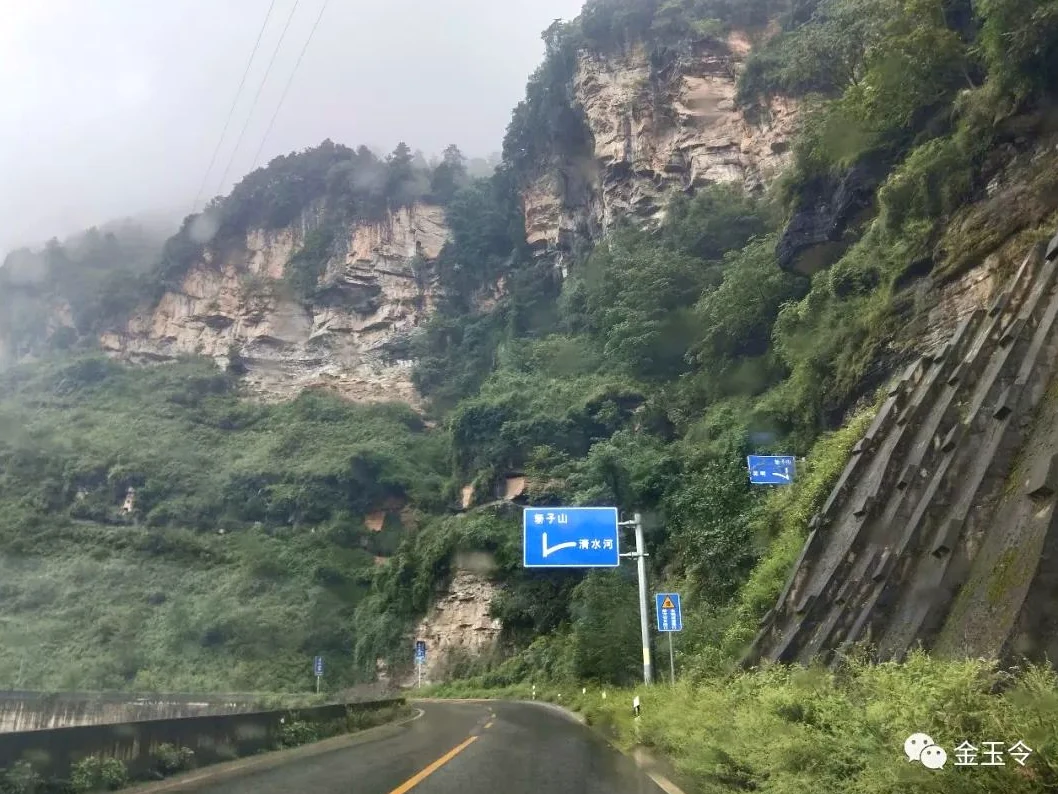
A bit of care also helps avoid informal service pitfalls along the lake. Before boarding wooden sightseeing boats or renting bikes along embankments, confirm hourly or flat rates, timing rules, and safety terms clearly upfront. For souvenirs, shop at established stores or reputable brands for rose-petal pastries, and stay cautious of unverified street pitches for pricey wild mushrooms, cordyceps, or powdered notoginseng without clear quality labels. Thoughtful preparation—from border documents and mobile payments to smooth itineraries like our 4-day, 3-night Hekou – Kunming – Jiaozixue Mountain tour package—makes exploring southwestern scenery easy and memorable.