Nestled at the confluence of the Red River and the Nam Ke River, directly opposite the prosperous borderland of Lao Cai, Hekou (河口) has historically held one of the most critical geopolitical and commercial positions in Southwest China. During the reign of Emperor Guangxu in the Qing Dynasty, the strategic vision for a border checkpoint was officially established in 1897, laying the initial foundation for border trade management, tariff collection, and the control of the vital waterway connecting Yunnan to the Northern Delta of Vietnam. Originally just a sparse residential settlement along the water’s edge, the turbulent historical currents of the 19th and 20th centuries rapidly transformed this area into the economic and cultural hub of a vast continental region.
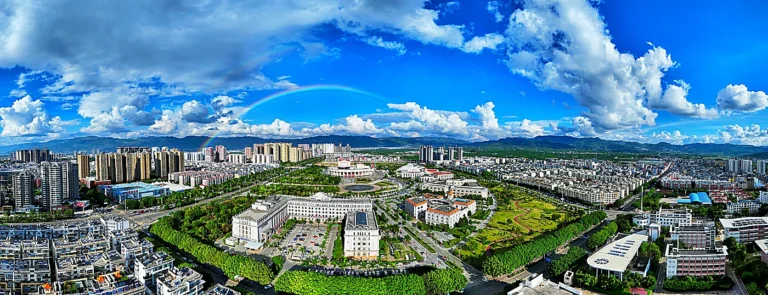
From an aerial perspective, the town presents a vibrant picture intertwining modern urban life with a rich aquatic landscape. Along the shoreline lies a gently sloping natural sand strip, directly adjoining modern, well-appointed hotels and bustling clusters of residential townhouses. Expanding toward the background is a large-scale aquaculture pond system, neatly divided into expansive square grids that reflect the sky, creating a striking contrast between commercial architecture and traditional livelihoods tied to river resources.
The historical turning point that permanently transformed the landscape of this land began when the vital Kunming–Hai Phong railway, also known as the Dian-Viet railway, started construction in 1901 and officially opened in 1910. This massive engineering feat, bearing the strong imprint of Western technology, served as the historical backbone, drawing a massive influx of migrants including engineers, railway laborers, Chinese merchants, and thousands of Vietnamese workers who came to settle and do business. To match its rapid development and increasing cargo transit volume, the local government under the Republic era officially established Hekou County in 1915, completing the specialized administrative apparatus and affirming its status as a prosperous gateway city.
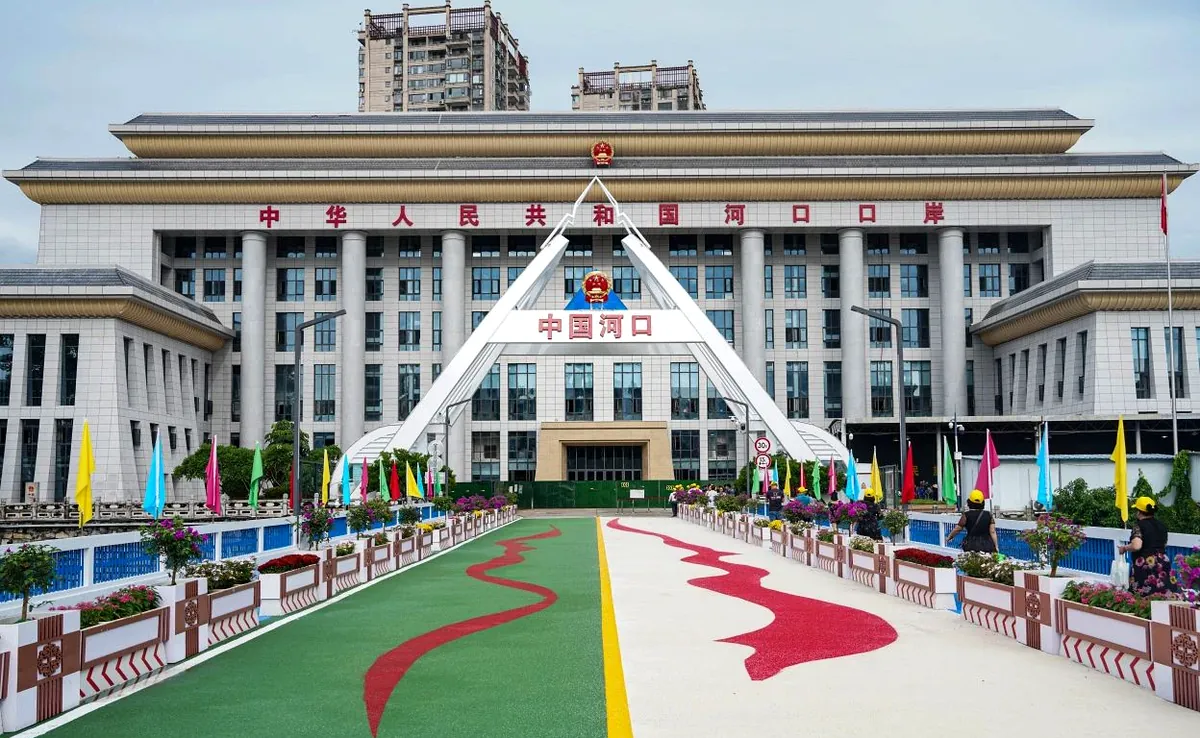
Through the ups and downs of war and the shifts of the 20th century, this borderland went through a quiet period, serving purely as a military and cargo transit station. It wasn’t until 1992, when a new era of opportunity opened, that Hekou was approved by the State Council to become a national key open border pilot zone. This policy breathed new vitality into the quiet border town, transforming it into a bustling center for international economic and trade cooperation. Modern infrastructure emerged, and the frantic pace of customs clearance at the Houtiao Bridge continued uninterrupted day and night, facilitating the constant flow of merchants and tourists.
Right in the heart of this relentless commercial flow, the local culture absorbed and nurtured unique culinary streams, the precursor to the Hekou Food Street (河口越南街). Street food stalls and rustic eateries run by the ethnic Vietnamese community, bringing the flavors of beef pho, hand-coated rice rolls, and rich drip coffee, blended seamlessly with the bold, spicy zest of Yunnan cuisine featuring crossing-the-bridge noodles and chili-powder-spiced Dian-style barbecues. This fusion of over a century of history has not only created a bustling border trading post but also forged a vibrant culinary heritage space, where every dish holds a story of cultural exchange and the enduring bond between the two nations through the changing times.
From a natural geographical map, Hekou occupies a remarkably auspicious geomantic and geopolitical position, where the crystal-clear Nam Thi River merges with the deep red silt of the Red River to create a rare geomantic landscape of “twin waters mingling to gather prosperity and generate wealth” in the southwest borderlands. Nestled within this fertile basin, Hekou Food Street emerges like a brilliant, bustling ribbon as night falls. The night pedestrian street comes alive and glows brilliantly under hundreds of colorful lanterns strung overhead, casting a warm radiance over two rows of classical-style buildings painted in striking yellow. This nostalgic golden hue blends with the shimmering lights, creating a spatial depth that carries both the grandeur of a trading port and the cozy warmth inviting travelers from all directions.
The layout of the food street fully reflects the indigenous generation’s planning philosophy of harmonizing with nature. Behind the street are gently sloping dome-shaped hills belonging to the tail of the Ailao Mountains, shielding the area from northern winds and creating a solid “backing against the mountain” formation. In front lies a vast open space facing straight toward the river fork, where the water flow curves leisurely before pouring deep into Vietnamese territory. In traditional geomancy, a gently meandering river is likened to a “jade belt wrapping around the body”; the slow-flowing water allows vital energy to accumulate rather than dissipate, serving as a prerequisite to ignite the prosperity of riverside culinary commerce and entertainment services.
Beyond its natural geographical advantages, the local landscape is strongly supported by a large-scale inter-regional transportation infrastructure network. Hekou serves as a vital gateway welcoming the national G8011 highway, also known as the Kaiyuan-Hekou Expressway, which connects Kaiyuan city to the border checkpoint. It is also the terminal station of the Kunming–North Hekou high-speed railway. This modern transport network channels a massive stream of visitors from the provincial capital of Kunming and inland Chinese provinces straight into the central border trade zone. Here, the presence of the historic Huqiao Bridge spanning the Nam Thi River alongside the No. 2 road bridge in the Kim Thanh commercial zone forms a closed-loop trade duo, turning this street into an inevitable convergence point for countless cross-border journeys.
The natural landscape of the food street is also magically influenced by a humid subtropical basin microclimate. Unlike the biting cold of neighboring Yunnan plateau regions, the section of the Red River valley flowing through Hekou features a milder temperature range. Vapor rising from the two riverbeds blends with valley breezes to create a cool, pleasant atmosphere at night. The harmony between lush tropical foliage along the ancient stone embankments and the vibrant urban lights forms an ideal outdoor cultural activity space, where diners can savor famous spicy culinary flavors while feeling the thousand-year-old tranquil breath of the border river.
Hekou is not merely a bustling border trading stop at the confluence of the Red River and Nam Thi River, but also a living architectural museum reflecting multi-layered cultural exchanges over more than a century of ups and downs. The urban spatial axis here was formed by the magical resonance between early 20th-century French colonial style and the modern planning language of mainland China. Situated right next to the international border gate and bustling culinary sub-zones, these heritage structures act as historical anchors defining urban identity, creating an enchanting visual dialogue between the distant past and today’s vibrant commercial life.
Standing tall as a representative historical witness in the heart of the town is the facade of the old Hekou railway station named He Kou Station, an iconic infrastructure project construction of which began in 1903, closely linked to the famous Yunnan-Vietnam railway. The building stands out with its characteristic classical European architectural style, showcasing nostalgic golden-yellow walls that contrast harmoniously with warm dark-orange tile sloping roofs and elegant arched windows running along the corridor. In front of the station, a bright and open square creates a spacious public gathering area, serving as a quiet stopover away from the hustle and bustle of customs clearance crowds, seamlessly connecting past nostalgia with a prosperous urban appearance.
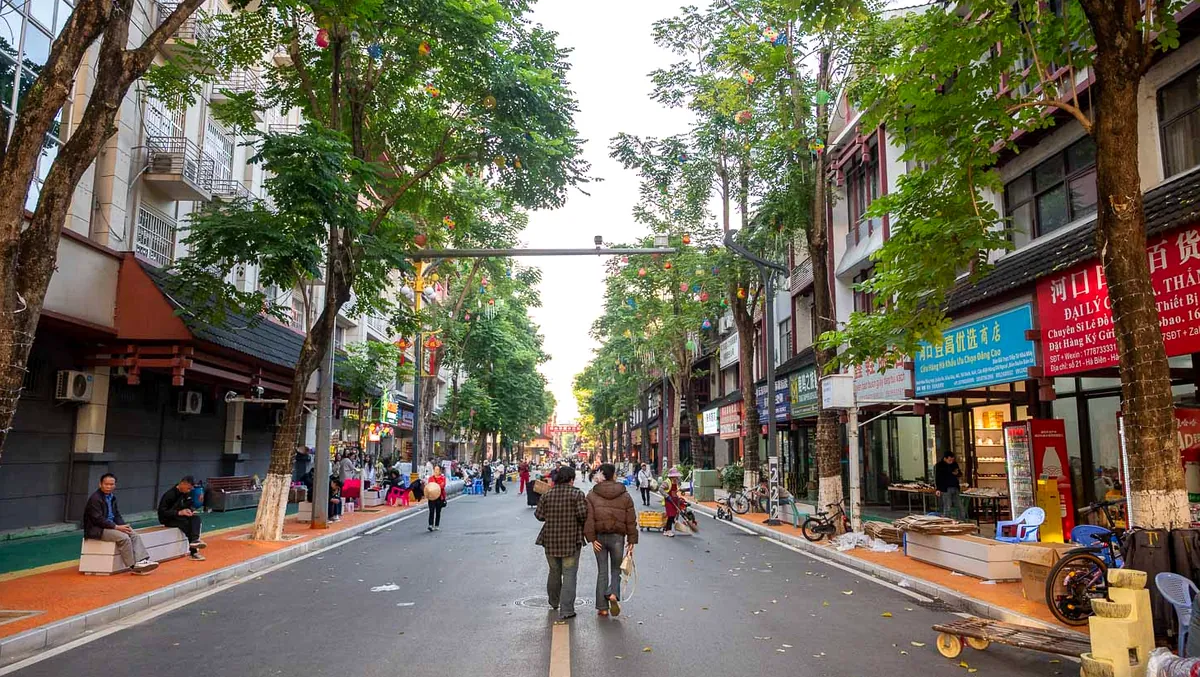
From the airy space of the old station square, main arterial roads lead straight to the center of the Hekou Food Street, locally known as Vietnam Street (Viet Nam Nhai). Visitors immediately step into a spatial entity tightly organized under a complex commercial pedestrian street model. Replacing the spontaneous border market appearance of the past, this area has undergone a major comprehensive renovation backed by coordinated infrastructure investment. The space is scientifically zoned: the central avenue is entirely dedicated to strolling pedestrians lined with uniform Neo-Chinese style food kiosks, while herringbone alleys lead deep into accommodation complexes, tea houses, and art appreciation venues. The entire road surface is paved with large-scale anti-slip granite, and curb edges are flattened to create absolute continuity, transforming the entire neighborhood into a magnificent open stage for street food culture to flourish.
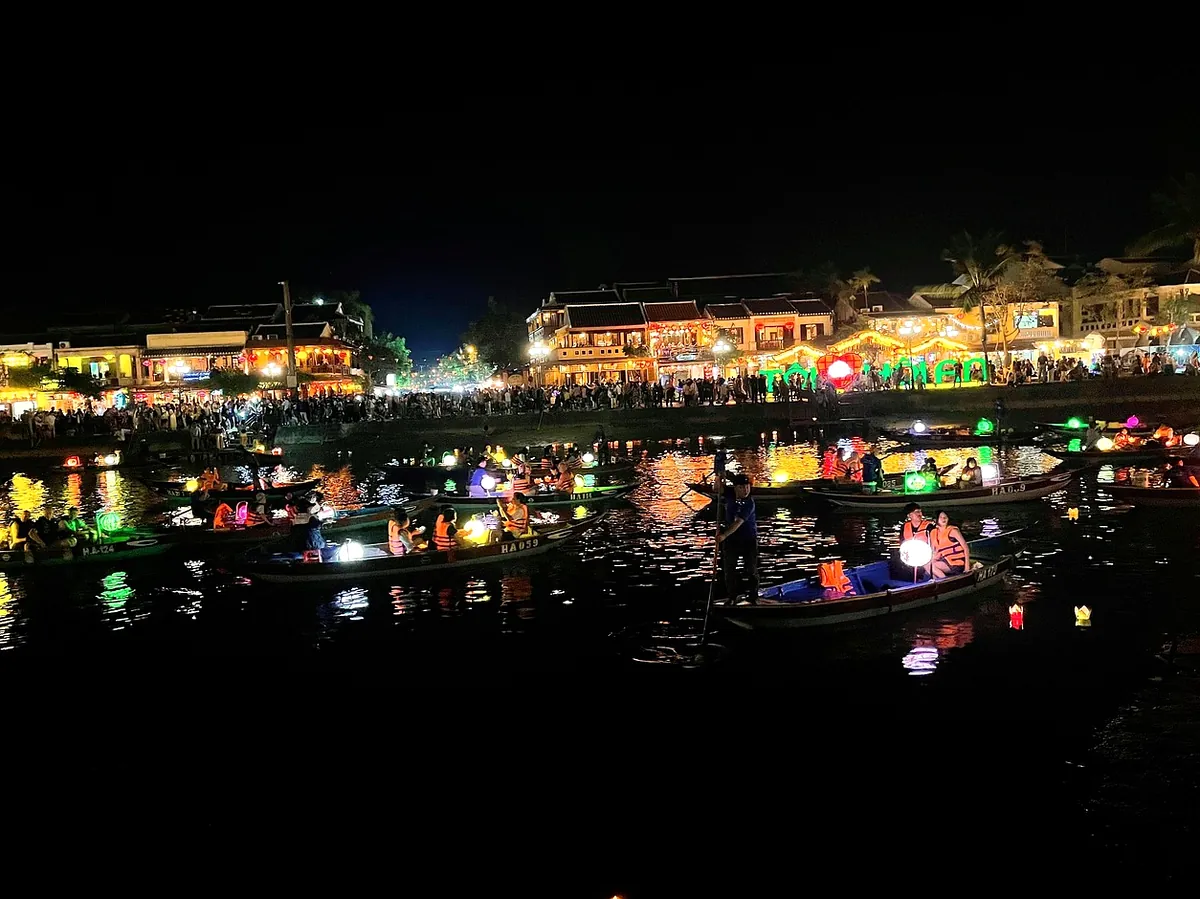
The element that brings a soul to the nighttime landscape of the food street is the state-of-the-art urban lighting solution heavily invested with a massive budget. Tens of thousands of smart LED lights programmed with microcontrollers outline the moldings of high-rise blocks, combining harmoniously with hundreds of rows of traditional red lanterns closely hung along pedestrian arches. Warm red and yellow lighting blends flexibly with a modern light spectrum, creating a dazzling visual effect reminiscent of an imperial night banquet while still carrying a strong modern breath. The shift from traditional commercial infrastructure to a multi-sensory cultural experience center is further evidenced by an underground sound system playing soothing local folk tunes, merchant signage standardized in size and brass material, and a closed-loop environmental treatment process to maintain a pristine appearance from dusk until late into the night.
The blend of nostalgic early 20th-century Western architecture, the free spirit of new-style urban blocks, and rows of food stalls emitting fragrant smoke has created a rare experiential space. As visitors stroll through every corner of the street, they are not only searching for unique culinary flavors ranging from grilled squid with chili sauce, piping hot steamed buns to the famous roasted milk tea, but they are also directly witnessing the powerful rise of a border city systematically planned with a long-term vision, where every square meter of public space serves the emotions and complete cultural experience of the pedestrian.
As the blood-red sunset gradually descended upon the river confluence where the Nam Thi River merges with the churning red waters of the Red River, the border town of Hekou began a spectacular transformation in both visuals and the rhythm of life. Under the dusky twilight sky, bustling commercial streets once tied to traditional border trade suddenly awakened beneath tens of thousands of high-tech LED strips. The Hekou Food Street, also familiarly known as the Vietnam Street (河口越南街), along with adjacent pedestrian axes such as Xin’an Road and Renmin Road, donned an appearance heavily imbued with Oriental Cyberpunk futurism. The multi-colored architectural lighting system, ranging from mesmerizing neon blue-purple to brilliant pink-red, snaked around the curved eaves of Lingnan-style roofs, harmoniously combining with modern multi-story concrete structures. This brilliant luminous flux not only shimmered against the glistening surface of the border river but also transformed the entire urban core into an impressive open-air light show.
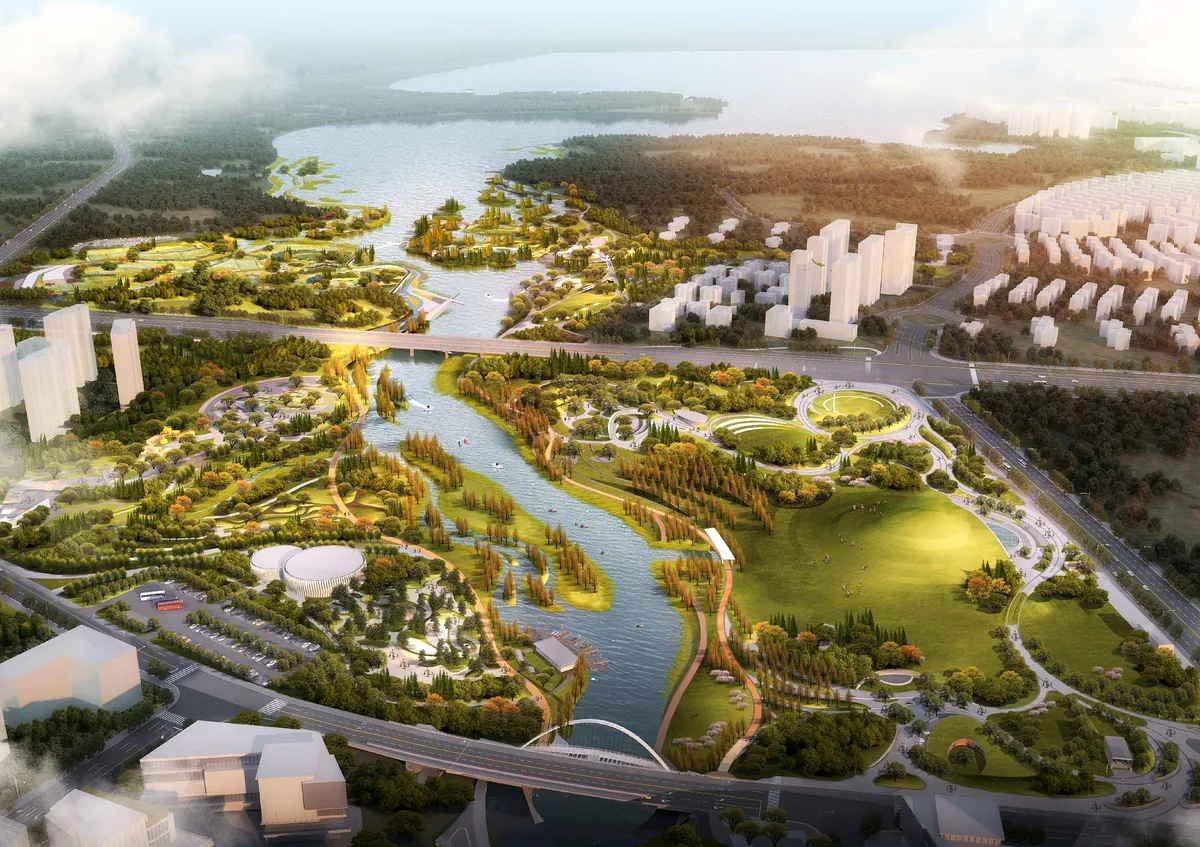
The nighttime visual art here does not stop at mere commercial signs, but is the synthesis of an intentional luminous urban planning. Not far from the food street axis, the hillside Light Park with its brightly lit pagoda soaring high into the night illuminates the entire border checkpoint valley, creating a magnificent backdrop for the pedestrian quarter below. The most captivating and authentic live-action show of Hekou is actually not found behind closed theatrical velvet curtains, but manifests vividly right in the footsteps of the surging crowds pouring into the night market. Urban nightlife here reflects a milestone shift: the decline of the forced packaged shopping tourism model that once dominated border crossings years ago, completely yielding to the trend of free, authentic cultural and culinary experiential tourism. Travelers today step into this space to seek sensory connection, immersing themselves in the rustic lifestyle of the Yunnan border region rather than hunting for mass-produced souvenirs.
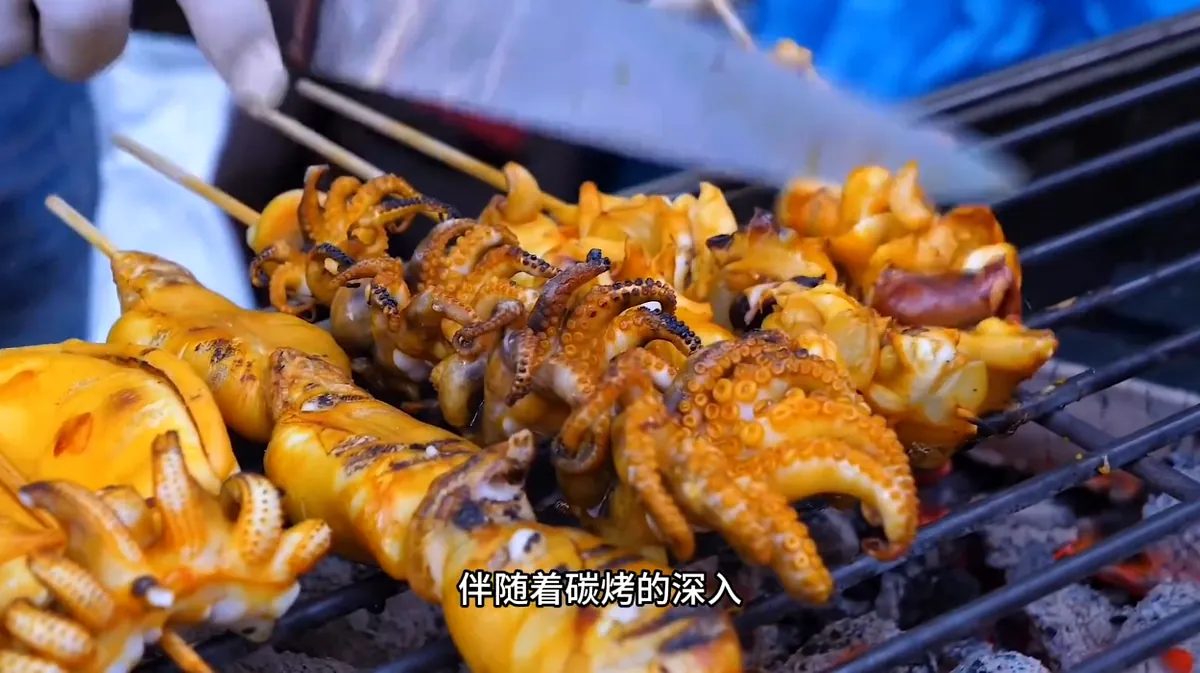
Nightlife bursts forth with every plume of smoke rising from endless rows of food stalls. The bustling sounds of iron spatulas rapidly stirring across iron griddle pans, the sizzling fat from grilled squid skewers sprinkled with spicy Dianchi chili powder, blending with the clinking sounds of copper ladles ladling herbal chicken hot pot broth, create a mesmerizing street symphony. The intense aroma of forest pepper, star anise, and Yunnan mak khien pepper tightly intertwines with the steaming scent of Xiao Long Bao in bamboo steamers, golden-brown fried mantou dipped in condensed milk, and the distinctive rich flavor of bubbling fermented stinky tofu in boiling oil. Under the dazzling neon glows, Chinese and Vietnamese stall owners chat openly in a fascinating border trade jargon, busily fanning skewers of mutton dusted with fragrant cumin over glowing charcoal grills.
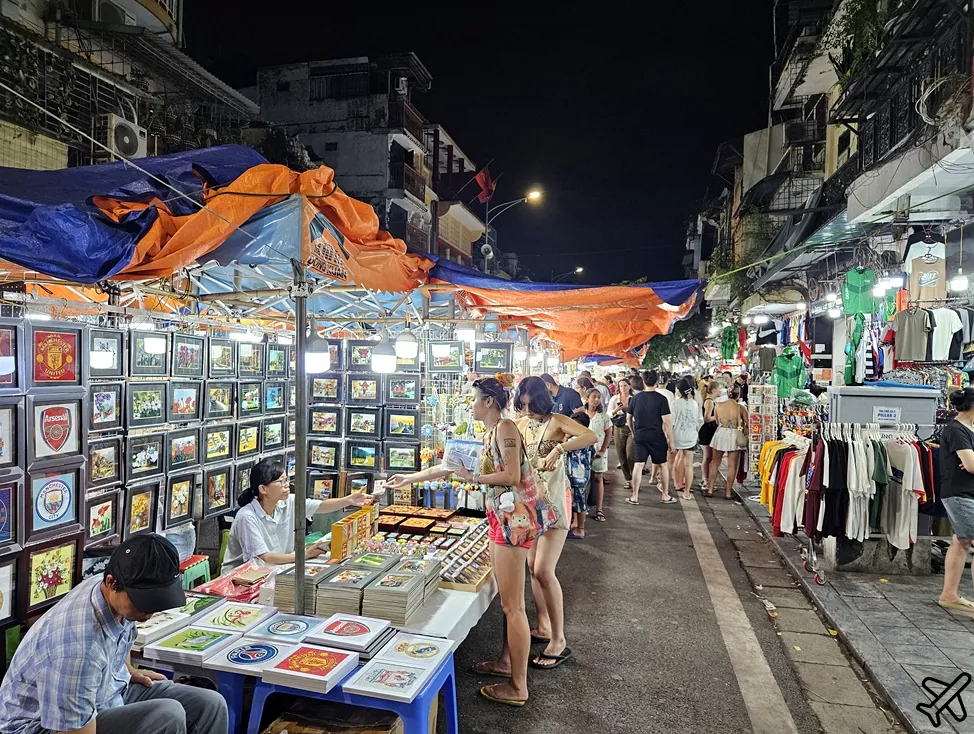
Late into the night, as the cold mist from the limestone gorges began to sweep down into the valley, the rhythm of life at the Hekou food street gradually shifted into a more subdued and poetic state. Warm, steaming clay-pot milk tea shops, outdoor cafes, and illuminated beverage counters along the embankment became ideal resting spots for visitors to gaze across the river at the opposing city skyline. The brilliant lights of Hekou contrasted with the serene strip of light on the other side of the border to form a deeply symbolic contrast painting. It was the moment when modern lighting art and street food culture not merely served the night economy, but blended into one, becoming an emotional bridge guiding travelers deep into the vibrant cultural layers of an eternal trading land.
Along the stone-paved alleys winding alongside the Nam Thi riverbank, Hekou Food Street opens up a world of unique flavors, where the rich culinary traditions of mainland China intersect with the vibrant rhythm of border trade. The air here is always thick with the scent of charcoal smoke mingling with the aromas of star anise, cardamom, and the characteristic spiciness of Sichuan peppers. Hekou cuisine is not merely about enjoying street food to fill the stomachs of passersby, but is truly a profound journey into the culinary heritage of Yunnan—a land of high mountains, misty clouds, and bountiful produce. Every street corner and time-honored stall preserves culinary secrets passed down through generations, creating a fascinating multi-layered flavor map.
The first highlight on the early morning culinary voyage is the legendary Hekou baozi, a symbol of the master dough-making skills of local artisans. Completely distinct from industrial thick-skinned buns, the baozi here are rolled entirely by hand so that the wrapper is paper-thin to the point of being nearly translucent while still maintaining a standard chewy elasticity. Deep beneath the smooth dough lies a rich minced meat filling marinated with traditional spices, mixed with scallions and savory, rich bone broth. When the steaming bamboo steamer is lifted off the stove, each bun plump like a small flower, a gentle bite immediately releases the rich, sweet soup, blending with the refreshing pepper kick to awaken all the senses of the diner.
As night falls, the culinary energy shifts toward the outdoor grilling stalls, where the intoxicating aroma of Mr. Troc’s grilled squid captivates every passerby. Fresh, plump squid tubes, scored with precision, are pressed directly onto the sizzling cast-iron griddle. The cheerful hiss of oil mingles with a secret satay sauce before the grill master expertly sprinkles on a vibrant layer of Sichuan chili powder, fennel, and fragrant peppercorns. Biting into the crunchy, succulent squid, the natural sweetness of the seafood explodes, followed by a tingling, spicy sensation on the tongue—a street food experience that is as stimulating as it is deeply addictive.
To balance the intensity of the chili and charcoal smoke, travelers often seek out the grilled milk tea from Yi He Tang, a popular culinary phenomenon that has defined the refreshment culture in this border town. This drink wins over gourmets with its meticulous caramelization technique, resulting in a golden amber hue and a distinct smoky aroma. The rich Yunnan black tea base, with its subtle astringent finish, blends perfectly with creamy fresh milk and chewy pearls to create a balanced, elegant profile that is never overly sweet—a soothing note amidst the spicy symphony of the neighborhood.
Closing the map of Hekou’s delicacies is the experience of gathering around steaming hot pots, most notably the fresh fish hot pot and the self-service conveyor belt hot pot. The Yunnan fish broth is painstakingly simmered for hours with fish bones and highland herbs, boasting a shimmering golden color and the tangy zest of pickled vegetables combined with the warmth of dried chilies. Meanwhile, modern conveyor belt hot pots offer dozens of fresh dipping ingredients, from forest mushrooms and bean curd skin to premium beef, moving rhythmically around the table. The local culinary culture thus emerges as a complete picture, crystallizing the hospitality, rustic charm, and depth of flavor of a vibrant border region.
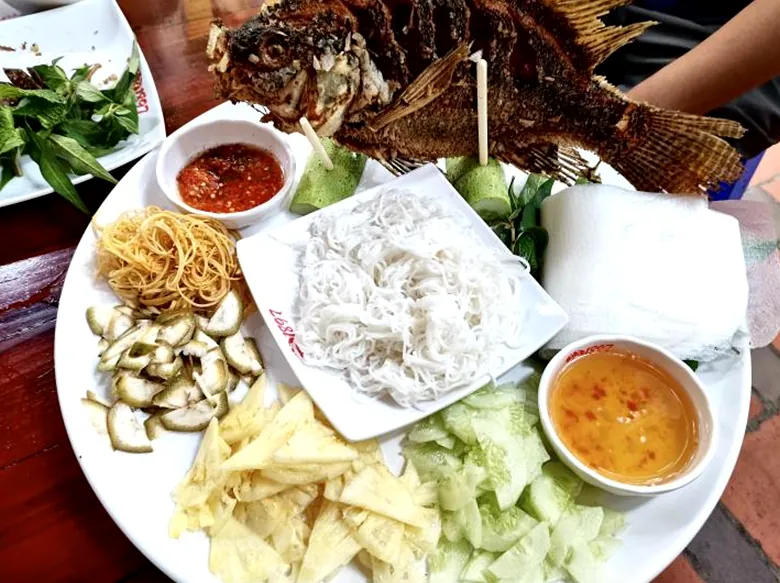
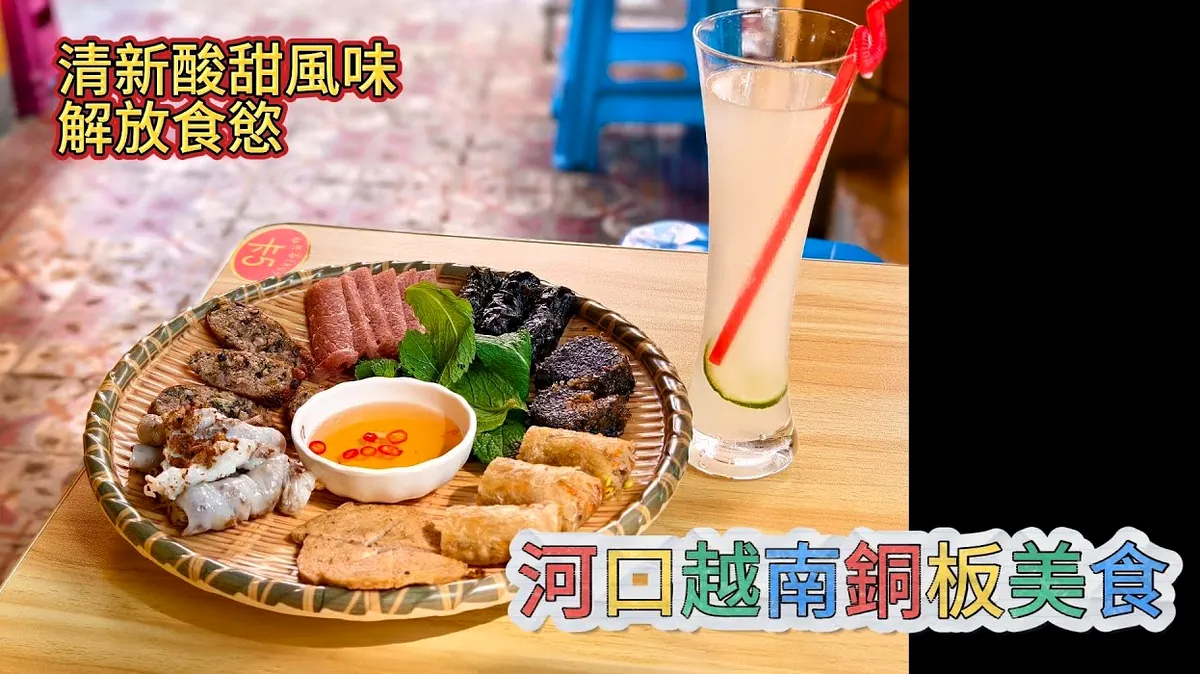
Strolling through the bustling streets of Hekou’s “Vietnam Street,” visitors will be surprised to encounter familiar flavors of home, honored with great respect on foreign soil. A rustic round bamboo tray is generously laden with traditional delicacies: crispy golden fried spring rolls, smooth Vietnamese pork sausage (cha lua), clean slices of boiled pork, and fragrant grilled blood sausage. Accenting the platter is the fresh green of perilla and basil, served alongside a rich dipping sauce and a refreshing glass of iced lemonade. All around, vibrant advertising signs written in Chinese characters introduce unique Vietnamese flavors, creating a lively cultural intersection in the border town of Hekou.
To cross the Ho Kieu Bridge over the Nam Thi River and enter this culinary paradise, travelers must be well-versed in specific border legal regulations. Instead of a complex standard passport visa, visitors only need a border travel permit issued by the immigration department, allowing for a maximum stay of three days and two nights within the Hekou Yao Autonomous County of Honghe. Quarantine and fingerprint procedures at both ends of the border gate are generally smooth, but require intact identification documents with clear facial recognition to ensure that biometric data verification proceeds without any obstacles.
A crucial note when immersing yourself in Hekou’s urban life is the near-total shift to a cashless economy. Roadside stalls, casual eateries, and famous milk tea shops in the food street rarely accept traditional Chinese Yuan cash. Therefore, travelers must install and verify their electronic identities on payment apps like Alipay or WeChat Pay, linked to an international credit card, before the trip. Additionally, you should proactively adjust your personal clock one hour ahead to Beijing time (GMT+8), as the local culinary rhythm usually starts late in the morning and is most vibrant from sunset until well past midnight.
Valuable field experience suggests that travelers should prioritize departing on weekdays from Monday to Thursday to avoid severe congestion at border immigration lanes during weekends or major holidays. When blending into the bustling commercial space of the border market, it is essential to remain alert to solicitations for unregulated goods, traditional medicine of unknown origin, or fake gemstones. The current trend of civilized tourism always points toward experienced tour operators to ensure an experience that adheres to the principle of pure exploration without forced commercialism.
The journey to explore the borderlands of Yunnan does not stop at the fragrant street food wafting through the misty corners of Hekou; it also unveils majestic natural landscapes and vibrant heritage sediments along the legendary Yunnan-Kunming railway. To fully enjoy every magical moment where magnificent scenery meets rich cultural identity without worrying about customs procedures or transportation, travelers can choose to join a professional all-inclusive tour package for the most perfect and profound expedition.