Nestled along the winding eastern shores of Lake Dianchi in historic Chenggong County—now the Chenggong District of Kunming, the capital of Yunnan Province—Dounan was once a rustic, purely agrarian ancient village. For generations, the villagers of Dounan tied their livelihoods entirely to vast plots of vegetables, diligently planting cabbages, scallions, and garlic to transport into the city center for the daily meals of Kunming’s urban residents. Under the shade of a plateau blessed with a year-round temperate climate and rich, fertile basaltic soil, rural life flowed peacefully along, with no one ever suspecting that this expanse of green vegetable fields harbored the seeds of a transformation that would reshape the agricultural economy of Southwest China.
The historical turning point unfolded between 1983 and 1987, when two bold pioneers, Hua Bangfei and Hua Zhongyi, decided to chart a new path for their hometown. After undertaking learning expeditions to coastal southern regions such as Guangzhou and Guangdong, and absorbing advanced technical knowledge from the Yunnan Academy of Agricultural Sciences, they courageously brought the very first gladiolus corms—also known as sword lilies—to test-cultivate on 0.3 mu of their family garden, equivalent to about 200 square meters. The sprouting of these brilliant flowers triggered an economic earthquake, as yields and profits soared dozens of times higher than traditional vegetable beds, sparking a miraculous “butterfly effect.” In less than three years, by 1990, up to 95% of households in Dounan village had simultaneously cleared away their cabbage beds and set up trellises to transform themselves into specialized flower-growing farming households.
This economic shift naturally drove the formation of early trading spaces. From 1989 to 1994, a rugged, red-dirt village lane barely 100 meters long transformed into the bustling “Dounan Flower Street,” teeming with buyers and sellers as dawn broke. Recognizing the explosive potential of this future flower capital, the local government decided to zone and invest in building the first-generation Dounan Wholesale Flower Market between 1994 and 1995, spanning 12 mu—equivalent to over 8,000 square meters. Truly global stature knocked on the door when the 1999 Kunming International Horticultural Exposition (Kunming Expo ’99) achieved resounding success, cementing the Dounan flower brand on the world agricultural map and attracting waves of foreign direct investment alongside advanced biotechnology and preservation techniques from the Netherlands, Israel, and Japan. The peak of this professionalization process was marked on December 20, 2002, when the Kunming International Flora Auction Center (KIFA) officially commenced operations, running on a standard reverse auction model transferred from the renowned Royal FloraHolland auction house.
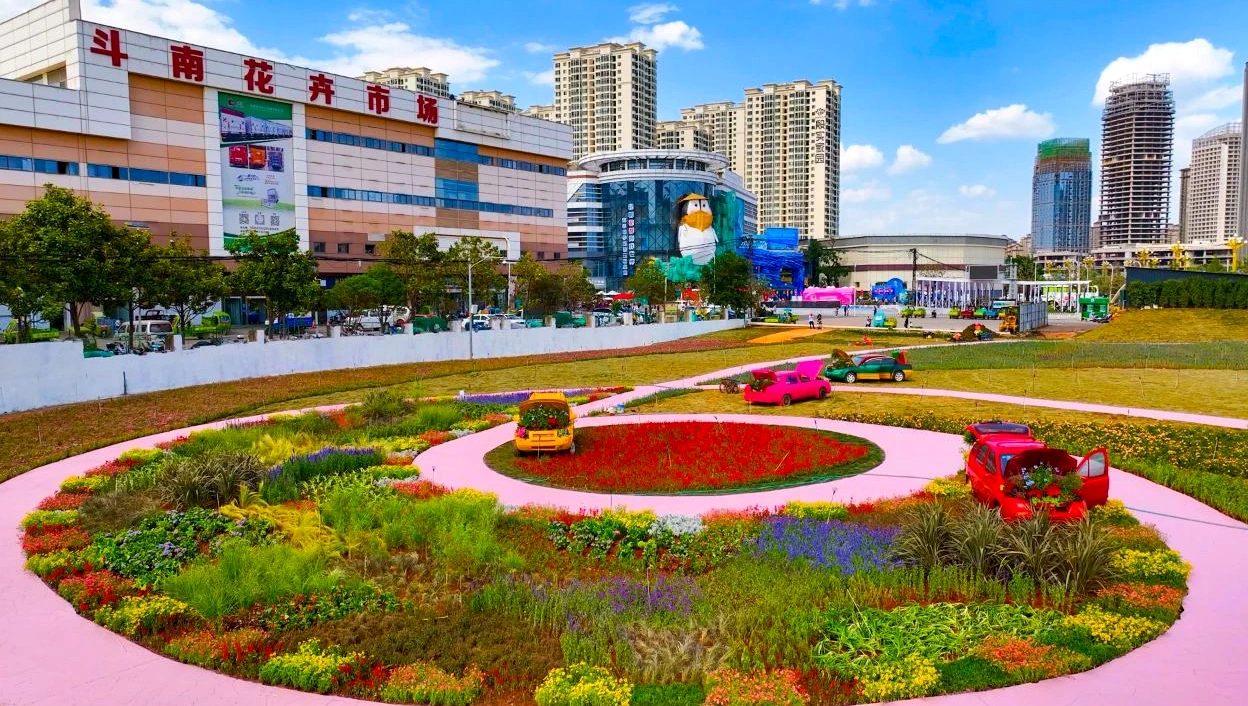
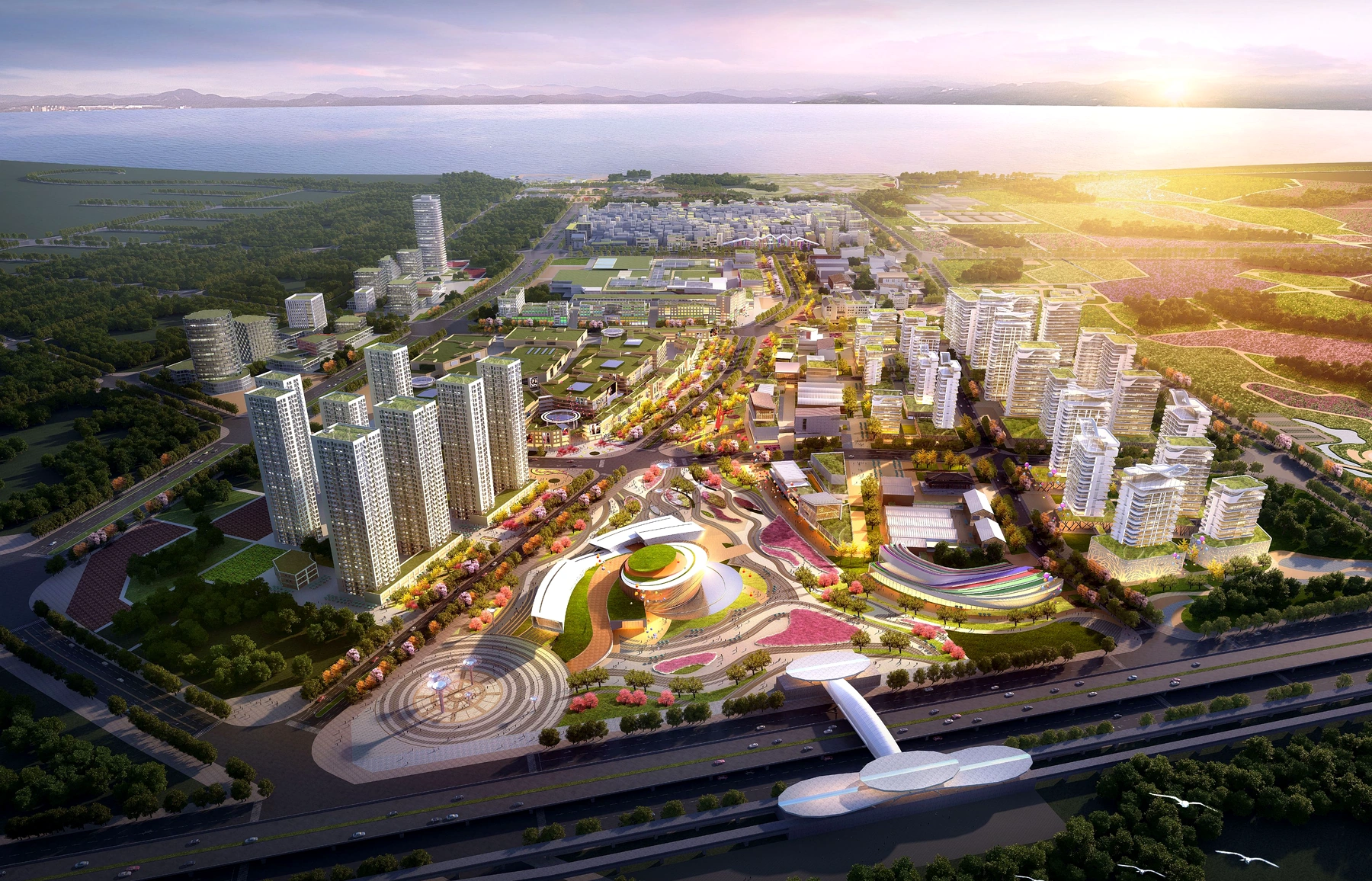
The ecological urban space of Dounan today clearly reflects its evolution from a rustic agricultural market into a premier modern floral trading metropolis. Stepping into the landscaped plaza before the complex, visitors are instantly captivated by the vibrant spatial art arrangements, where multicolored flower beds are sculpted into soft curves and winding concentric patterns. Pink-tinted pedestrian pathways guide the gaze through lush vegetation, punctuated by old automobiles painted in vivid shades of yellow, pink, and green, creatively repurposed into unique artistic flower planters. Behind this cheerful foreground lies a modern avenue alongside a massive central building embossed with the Chinese characters “斗南花卉市场” (Dounan Flower Market), standing majestically among solid high-rises beneath the clear plateau sky.
The year 2015 marked the birth of a new-generation International Flower Trading Center master-planned over 1,000 mu, with phase one completed across 286 mu (equivalent to 19 hectares), officially recognized as a National AAAA-class Tourist Attraction in China. From Hua Bangfei’s modest 200-square-meter garden of yesteryear, Dounan has now grown into the “floral heart” of the entire continent, with annual trading volumes hitting a milestone of 14.176 billion cut flowers and total revenue reaching 11.574 billion yuan. Firmly capturing 70% to 80% of the domestic cut flower market share in the billion-person nation and exporting to over 50 countries and territories across five continents, Dounan Flower Market proudly asserts its position as Asia’s number-one fresh flower distribution center and the second largest globally.
Quietly resting on the eastern shores of the vast Lake Dianchi in Chenggong District, south of Kunming city, Dounan possesses a unique geographical coordinate that ancient geographers often praised as a land where energy gathers and the wind is harbored. In terms of philology and traditional feng shui, the name Dounan (斗南) embodies profound Eastern philosophical concepts. The character “Dou” (斗) originates from the image of the brilliant Big Dipper constellation positioning the cosmos, and also serves as a traditional grain-measuring scoop—an age-old symbol of abundance, prosperity, and accumulated wealth; meanwhile, the character “Nam” (南) points toward the direction of the sun and the warm Li trigram, which receives the abundant vital energy of heaven and earth. The harmonization of these two characters crafts a magnificent symbol: the southern land embraces the purest essence of the universe, where fields of flowers and plants bloom across all four seasons, and vitality thrives like an overflowing measuring scoop of endless blessings.
From an overall topographical perspective, Dounan fully inherits the rare “backing mountains while facing water” geomantic layout of the Yunnan plateau basin. Immediately to the west, the jade-like, expansive waters of Lake Dianchi—likened to the green heart of Kunming—act as a giant natural air conditioner. This vast body of water not only breathes pure moisture into the space, softening the dryness of the high-altitude atmosphere, but also expertly balances local humidity to an absolute ideal level for plant cellular growth. Meanwhile, facing east and north, the land firmly leans against the fertile, gently sloping plains of Chenggong District, forming a natural, sturdy corridor shielding against the harsh, biting winds sweeping down from distant limestone mountains.
Rising impressively at an average altitude of approximately 1,890 meters above sea level, Dounan holds the biological secret of a unique subtropical plateau microclimate. Here, the land is bathed year-round in generous solar radiation with abundant sunshine hours, yet temperatures never reach harsh extremes. This magical combination of high terrain and subtropical latitude weaves a perpetual cycle of mild weather: winters are not bitterly cold, and summers are entirely free of oppressive heat, maintaining the timeless essence of eternal spring—the very origin of Kunming’s renowned title as the “Spring City.” Above all, the striking temperature amplitude between day and night on the plateau is the golden key that allows flora to maximize the accumulation of pigments and organic sugars, bestowing every single blossom born from this earth with astonishingly vibrant hues and extraordinary resilience.
The soil vein of Dounan does not exist in isolation; instead, it is continuously intertwined and organically connected with a vast agricultural belt comprising renowned flower-cultivating valleys surrounding it, such as Jinning, Songming, and Anning. This entire region rests upon a layer of red basalt soil rich in trace minerals, deeply saturated with fertile alluvial deposits built up over tens of thousands of years within the ancient Dianchi basin. Underground vital energy flows from the high plateau ranges down to the low plains, blending with the pristine, sweet waters of Lake Dianchi to form a landscape matrix that is both expansive and fertile. This auspicious terrain, resembling a coiling dragon and crouching tiger, has shaped a natural gathering center for rare and exotic flora, turning Dounan into the most bustling floral dragon vein in all of East Asia, where every branch and blade of grass seems condensed from the pure spiritual essence of Yunnan’s mountains, rivers, and clouds.
Viewed from the panoramic expanse of the Yunnan-Guizhou Plateau, the Dounan International Floral Center resembles a towering botanical metropolis on the shores of Lake Dianchi, with a master plan spanning over a thousand mu (acres) of fertile land. At the heart of this massive commercial complex is the central building, also known as the Main Tower, boasting a colossal gross floor area exceeding eighty-one thousand square meters. Far more than a traditional agricultural wholesale market, the structure is designed as an architectural marvel that fuses modern commercial functionality with rigorous biological zoning, transforming the daily influx of thousands of tons of flowers into a smoothly coordinated operational dance, precise down to the very last detail.
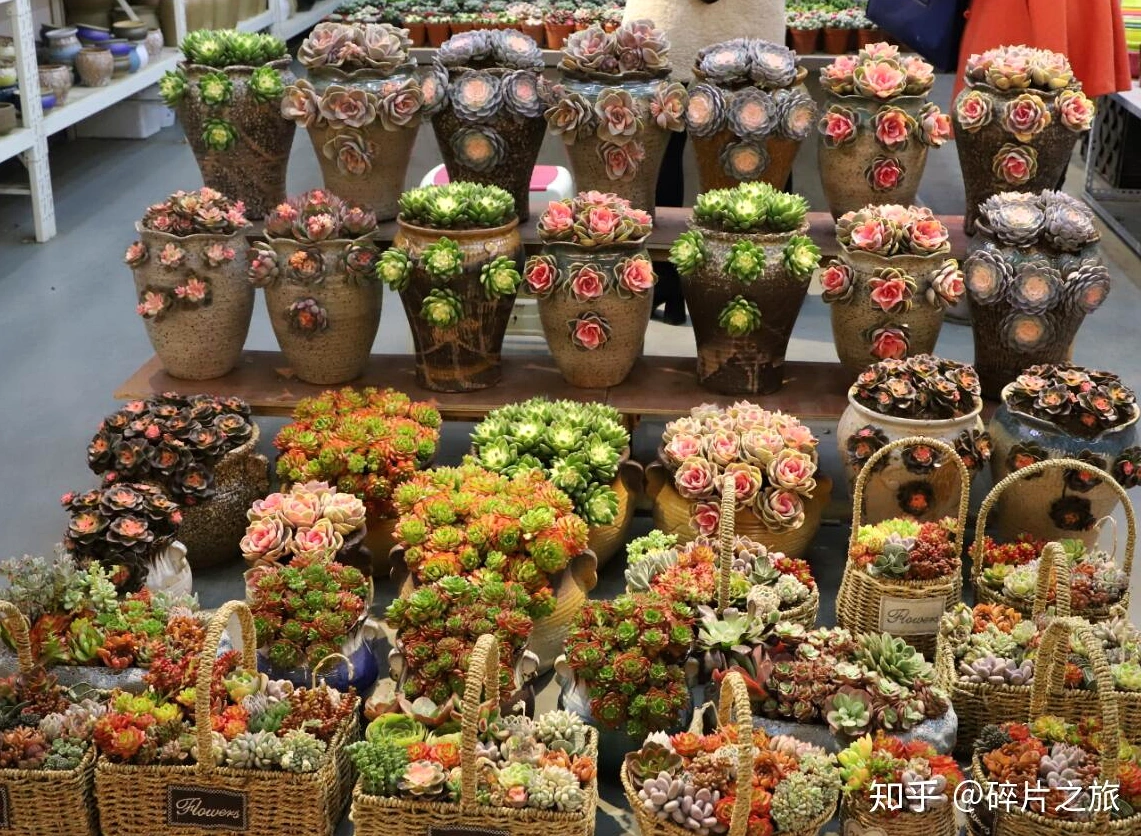
Right from the first-floor lobby, visitors are instantly captivated by the brilliantly colored wholesale and retail avenue of fresh cut flowers, where herbal fragrances are densely woven into every breath. The ground floor space is meticulously divided by strict category zoning, with the kingdom of roses claiming up to sixty percent of the area featuring hundreds of unique hybrid varieties, harmoniously interspersed among specialized zones dedicated to proud carnations, pristine lilies, mist-drenched hydrangeas, and vibrant gerberas. Adjacent to this sea of cut flowers lies the serene world of the succulent botanical garden, gathering hundreds of rare succulent species from native southwestern Echeveria and Haworthia genera to imported mutant lines, creating an enchanting miniature geological landscape.
Ascending to the second floor, the atmosphere shifts from ephemeral freshness to the eternal beauty of high-end botanical craftsmanship. This realm is dedicated to freeze-dried flower preservation technology, creating immortal blossoms that retain their cellular structure, softness, and original hues across the years. Visitors can admire an array of exquisite handcrafted dry-flower art pieces, elaborately crafted mini feng shui bonsai, and a treasure trove of artistic floral arrangement accessories. Interspersed among these everlasting floral ribbons is the quiet presence of the renowned Jianshui Zitao (purple pottery)—Yunnan’s famous unglazed red clay pottery fired at high temperatures, featuring a jade-like polished surface achieved through manual grinding techniques, blending seamlessly with the essence of flowers to create a cultural depth rich in oriental elegance.
Floors three, four, and five unfold a multifaceted picture combining local culinary identity with a pioneering digital technology current. The ethnic food court gathers the celebrated culinary essence of Yunnan, where diners can savor the delicate flavors of Crossing-the-Bridge Rice Noodles, crispy and fragrant rose pastries, or characteristic specialties of the Yi, Bai, and Hani ethnic groups. Concurrently, a system of hundreds of 5G-standard e-commerce livestreaming rooms operates tirelessly day and night, directly connected to the intelligent logistics management center. Here, the cold chain supply system is coordinated by real-time algorithms, ensuring that every stem of flowers just checked out on a live stream immediately enters a strict preservation process for express delivery to capitals worldwide.
The most iconic architectural highlight of the entire complex is located in the adjacent building block: the KIFA International Flower Auction Center. The trading auditorium is designed with a gently sloping semicircular structure directly mimicking an ancient Roman amphitheater, featuring nine hundred comfortable seats for international traders. Before the merchants stand two giant electronic clock displays operating on a Dutch reverse auction mechanism, where the price needle ticks backward by fractions of a second in a tense, breathtaking battle of wits. As dusk falls, the commercial pulse spreads outward to the tens of thousands of square meters of the Night Trading Square outside, where thousands of specialized trucks line up neatly, creating a bustling and magnificent trading spectacle under the brilliant lights of the southern floral capital.
As the twilight fades over the vast expanse of Dianchi Lake, Dounan town does not sink into slumber; instead, it sheds its daytime serenity to enter a magnificent transformation. Honored by the Chinese Ministry of Culture and Tourism as a “National-Level Nighttime Culture and Tourism Consumption District,” this place is not merely a trading hub but resembles a gigantic live-action stage of the nighttime economy, where light, fragrance, and the human breath intertwine into a vibrant grand chorus.
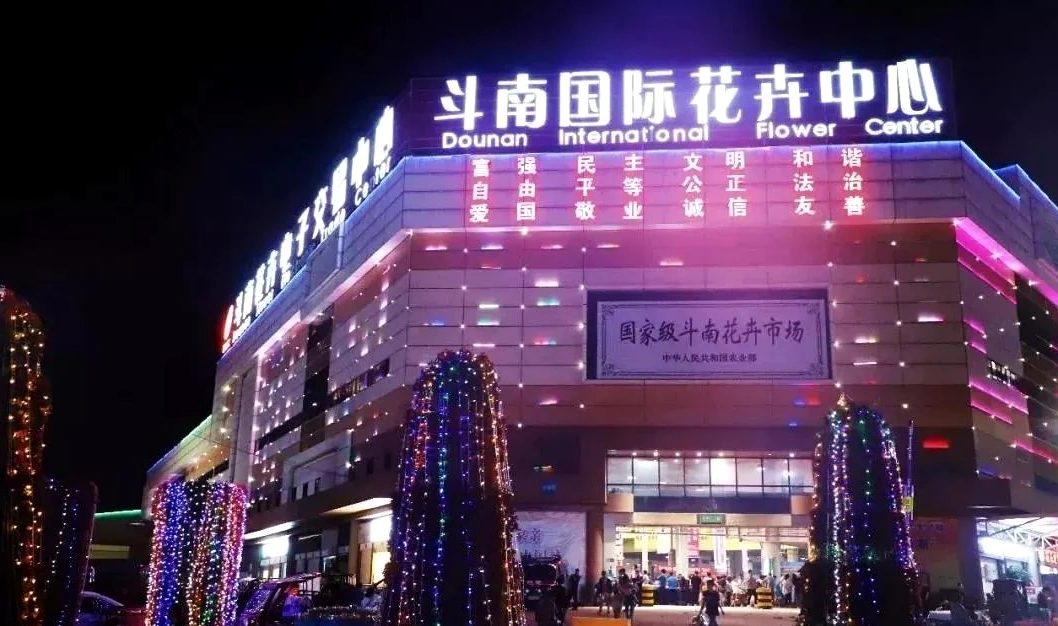
When the clock strikes 20:30, the gates of the “never-sleeping floral capital” officially swing open, prolonging the frantic commercial frenzy until 02:00 the following morning. From valleys and endless farms across the Yunnan plateau, thousands of specialized trucks queue up to unload goods into the vast outdoor square. A system of high-intensity floodlights simultaneously blazes to life, sweeping across layers of canvas covers to illuminate an ocean of fresh flowers stretching endlessly toward the artificial horizon of the greenhouse blocks. Under that harsh white light, millions of pink Dian Shan roses, pristine lilies, aristocratic larkspurs, and proud carnations seem just awakened from a slumber, displaying their most magnificent forms in the chilly night mist characteristic of the Southwest.
The nightlife in Dounan operates in a language of sound that is intensely vivid and pristine, entirely independent of any stage direction. It is the deep, rumbling drone of heavy trucks, the squeak of forklifts weaving through narrow alleys, blending with the sharp, crackling sound of tens of thousands of industrial tape rolls being swiftly handled by flower porters to package products. Interwoven into this rugged auditory canvas are the shouts of loaders, the sound of hurried footsteps on concrete, and rapid-fire bargaining laced with local accents. Every gesture and every step is rushed as if racing against time to preserve the absolute freshness of each petal before they take early morning flights to cities worldwide.
The epicenter of modern operational art in the heart of the night market is the Kunming International Flower Auction Center, also known as the KIFA auction floor. When night falls, this building glows like a bustling financial fortress. Inside the semicircular hall designed to international standards, hundreds of traders sit before terminal screens, closely watching the “Dutch auction clock” ticking down by fractions of a second. The blue light from electronic boards reflects on the tense faces of seasoned merchants; a crucial button pressed in a split second means tons of fresh flowers have just found a new owner. The combination of top-tier logistics coordination and the digitalization of the agricultural market has made the KIFA auction floor a symbol of power for its leading position in the Asian fresh flower supply chain.
Strolling through the heart of Dounan late at night, travelers from afar are easily overwhelmed by a unique aesthetic sensation: the fragile, ethereal beauty of thousands of flowers contrasting sharply with the raw, urgent nature of nighttime labor. Amidst the brilliant sea of colors floating under headlights, rich fragrances blend tightly with the scent of damp plateau earth, creating an irresistibly enchanting atmosphere. Dounan in the dark is not merely a wholesale hub, but a truly living museum of the resilient spirit of the Yunnan people, where commercial rhythms blend absolutely with a pure love of nature.
The journey to savor the Dounan flower kingdom would not be complete if travelers bypassed the local culinary map, where Yunnan gastronomy blends exquisitely with the flavors and colors of flora. The richness of the plateau’s soil and climate has endowed this land with boundless natural bounty, turning every dish here into a gastronomic work of art deeply imbued with regional character. In Dounan, flowers are not only for admiration but also transform into the soul of famous ancestral dishes, leading diners into a poetic culinary journey.
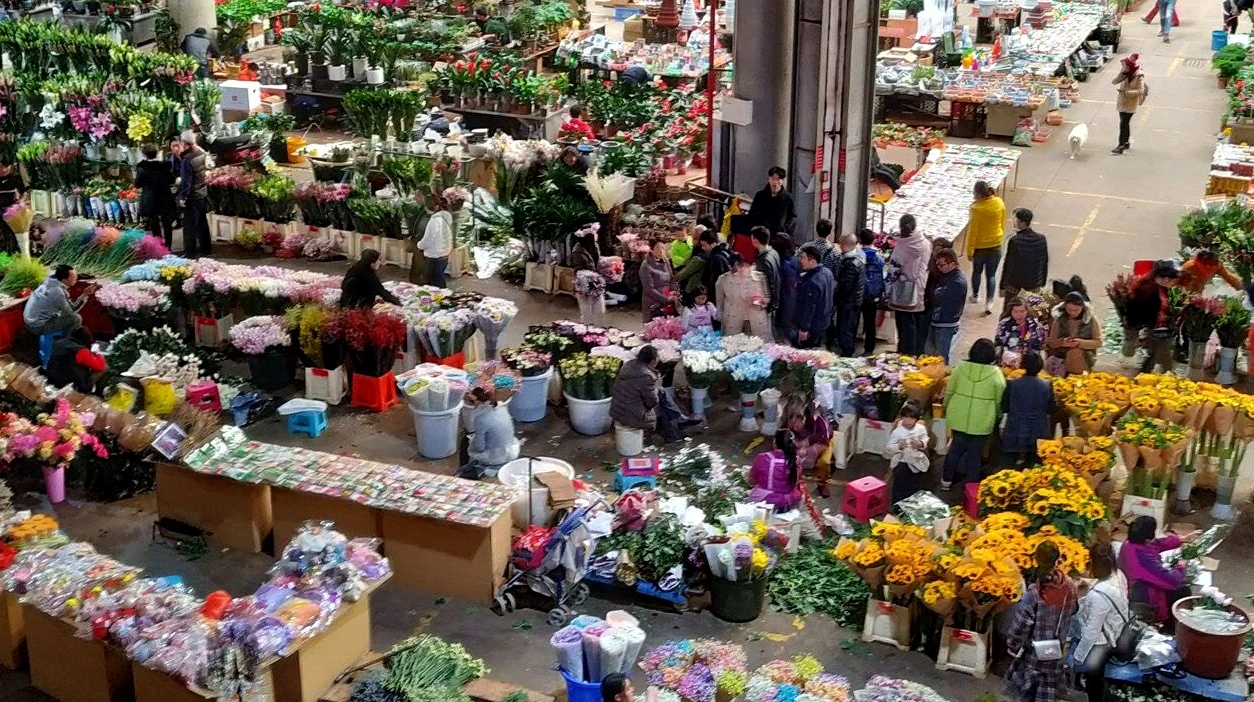
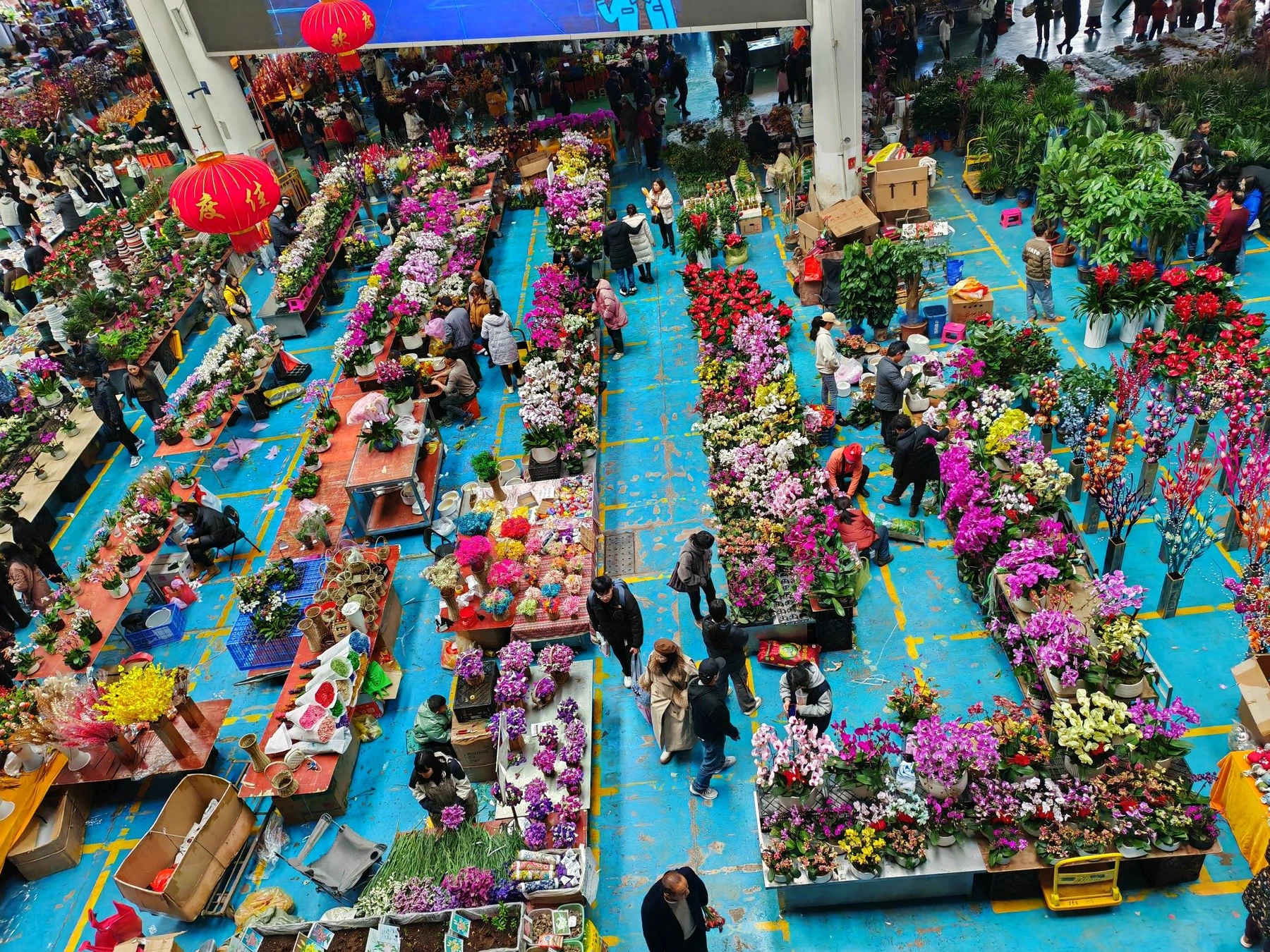
Seen from above, the indoor flower market space appears overwhelmingly vivid and grand with its massive scale and bustling crowds moving to and fro. The floor is covered in a soothing blue hue, dotted with neat yellow lane-marking lines that guide visitors winding through countless stalls standing closely together. On both sides of the pathways, lush potted plants and vibrant flower species bloom brilliantly, most notably the majestic, elegant orchids in full bloom. Suspended in the airy dome space are two bright red lanterns imbued with traditional flavor, blending with the light from modern digital screens.
The first legendary culinary icon worth mentioning is the freshly baked, piping-hot fresh rose pastry, also known as xiankao xianhua bing. This elegant dim sum treat uses edible fresh Rosa rugosa petals freshly harvested at dawn right in the fields of Dounan, thoroughly marinated with wild forest honey and pristine rock sugar to preserve their natural essential oils. The fragrant filling is skillfully wrapped in an elaborate flaky pastry dough, baked at a precise temperature of 180 degrees Celsius until the surface turns a golden, layered, and crispy perfection. Travelers can easily find this specialty at time-honored pastry shops proud of their long-standing traditions, such as Quan Sinh Vien, or the famous Jia Hua bakery chain located right at the market’s storefront, where fresh batches continuously release an enticing aroma all along the pathways.
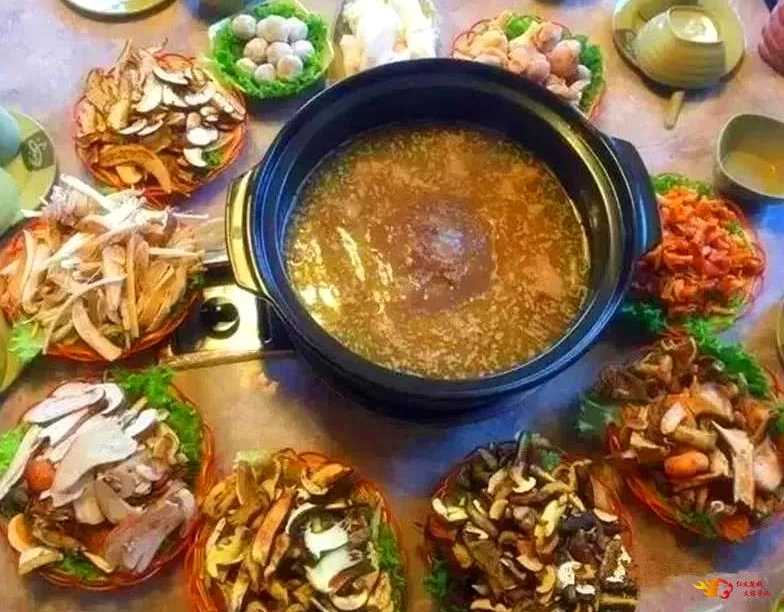
Alongside the sweet floral fragrances, Dounan’s culinary scene captivates diners with chrysanthemum crossing-the-bridge rice noodles and wild mushroom hotpot from the deep mountains. The famous crossing-the-bridge rice noodles spark curiosity with a bowl of aged chicken broth simmered for hours, maintaining a boiling temperature beneath a gleaming layer of golden chicken fat. Diners can personally drop thinly sliced tenderloin and fresh fish fillets into the steaming soup, then gently add freshly picked bright yellow chrysanthemum petals to create a refreshing taste that perfectly balances the richness. Meanwhile, the wild mushroom hotpot stands as the pinnacle of health-restoring cuisine in this region, harmonizing black chicken bone broth simmered with premium forest mushrooms such as Matsutake, Boletus, Morels, and Veiled Lady mushrooms. To enjoy this famous hotpot safely, locals strictly adhere to a 15-to-20-minute hourglass countdown for the broth to boil vigorously and eliminate any toxins before diners are permitted to open the lid and eat.
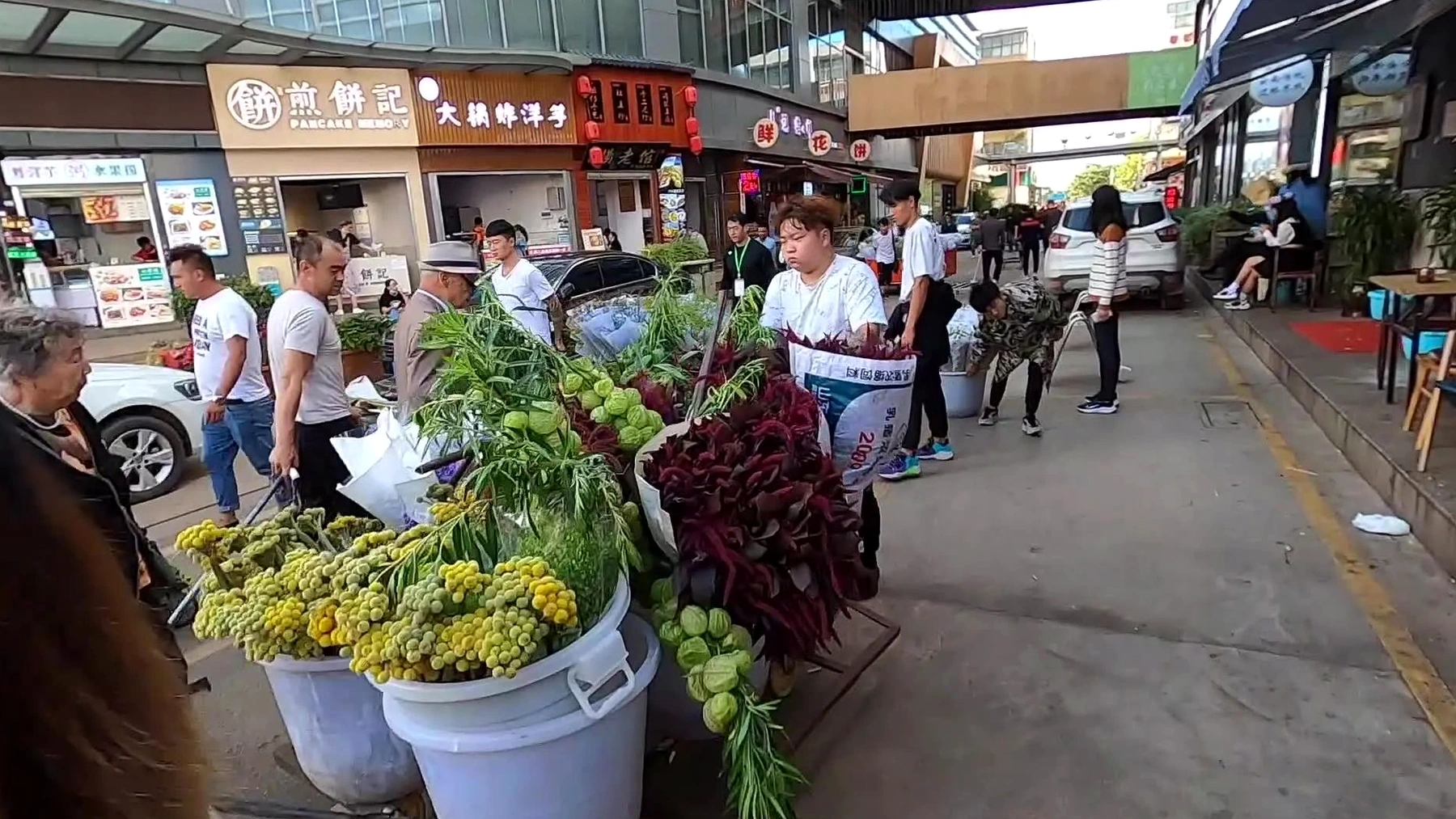
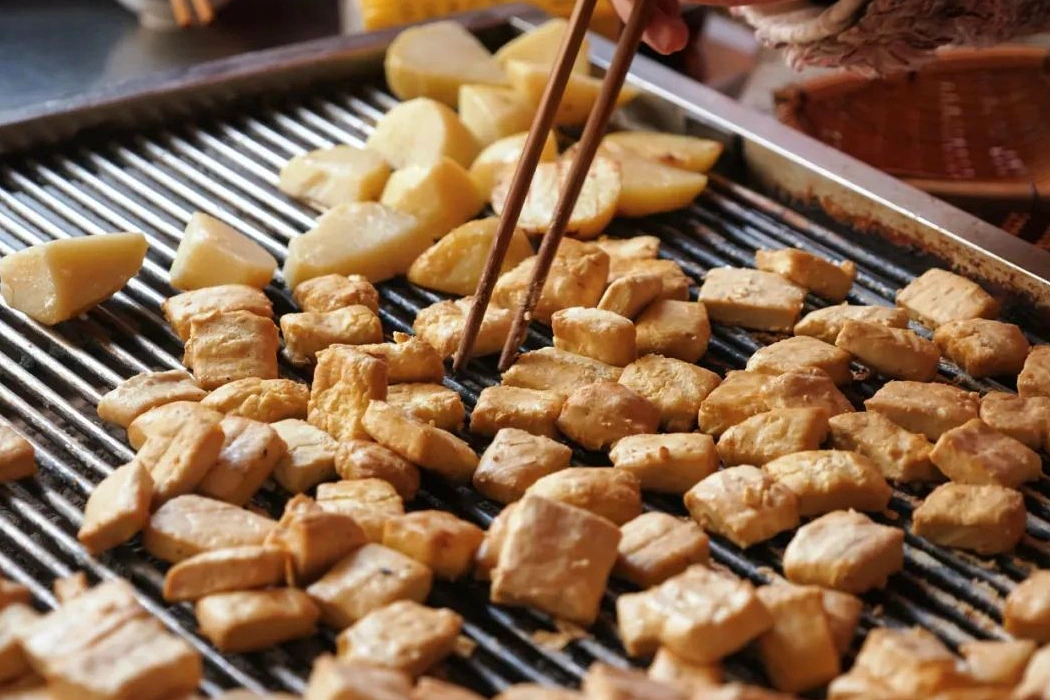
When night falls, the atmosphere around the flower market becomes lively with smoky street food stalls imbued with authentic Kunming street food flavors. Kao’erkuai, featuring thick rice cakes made from chewy, fragrant glutinous rice, are grilled until puffy with charred edges over a charcoal stove, then generously brushed with a rich, savory-spicy sauce and tightly rolled together with crispy fried dough sticks. A few steps away, the distinct aroma of charcoal-grilled Shiping stinky tofu makes anyone passing by stop in their tracks; the square pieces are plump and savory on the inside, dipped in a signature fiery chili powder to create an explosive sensory experience. Concluding the culinary journey, a refreshing artisanal ice cream made from Dounan rose petals, carrying a subtle hint of herbal freshness, leaves an unforgettable sweet aftertaste in the hearts of faraway travelers.
The journey to Asia’s largest fresh flower trade center is seamlessly connected thanks to the synchronized transport infrastructure of the Spring City. From Changshui International Airport (KMG), located about 38 km from the market, travelers can take Metro Line 6 and transfer to Line 4 to leisurely head into the city center. For those departing by international railway from Hekou border gate North to Kunming South High-Speed Railway Station within about three and a half to over four hours, the remaining distance to the flower market is a mere 11 km, equivalent to a 15-minute taxi ride or a few metro stops. When using public transport, you only need to pay attention to catching the correct Metro Line 1 or Line 4, step off at Dounan Station (斗南站), and take a leisurely stroll across the approximately 350-meter pedestrian overpass from Exit C or Exit D to step right into the colorful main lobby.
Daily life in Dounan is divided into two distinct time periods, requiring travelers to choose the right timeframe for their intended experience. The period from 14:30 to 17:30 is ideal for a leisurely stroll, where visitors can comfortably snap check-in photos in the warm sunlight, savor crispy, fragrant rose pastries, and walk up to the second floor to admire the world of dried flowers and exquisite handicrafts. Conversely, the hours from 20:30 to 23:30 truly mark the peak of nocturnal wholesale trading, when thousands of consignments of fresh flowers from various farms pour into the trading floor, transforming the space into an endless ocean of colors and scents under brilliant lights and the hustle and bustle of pushcarts.
Entering the night market, the art of communication and bargaining carries a completely different flavor compared to regular local markets. Travelers should strictly avoid asking to buy individual stems, as this is a major taboo among merchants during peak trading hours; instead, inquire about the price in standard bundles of 20 stems or by weight. The wholesale prices at midnight are often astonishingly cheap, with a standard bundle of 20 fresh, vibrant roses ranging from just 5 to 15 RMB depending on the A, B, or C grading standards. Mastering local forms of address and packaging units will earn you a warm nod from the down-to-earth farmers of Dianzhong.
For the journey back through the Vietnam-China border checkpoints, understanding plant quarantine regulations is a vital factor for a complete trip. The authorities of both countries strictly control and completely prohibit bringing bare-root plants or soil across the border without presenting an official Phytosanitary Certificate. While cut flowers are only allowed in small quantities for short-term viewing, the most superior and elegant choice for distant travelers is freeze-dried immortal flowers utilizing advanced technology. These blooms retain their natural colors and softness for one to three years, offering deep commemorative value while ensuring smooth and hassle-free customs clearance.
To optimize your precious time and avoid unnecessary hassles, travelers should prioritize itineraries without forced shopping stops, allowing a full two to three hours to properly experience the Dounan Night Market. In addition, the Yunnan provincial government currently operates a highly efficient consumer rights protection mechanism through a digital platform, allowing for an unconditional 30-day return and refund policy for souvenir products under the state monitoring system. To fully enjoy the essence of the floral kingdom without worrying about itinerary coordination or complex quarantine procedures, travelers can explore detailed guidance through the all-inclusive tour package, specially designed and rich in cultural experiences.