


In 1819, Stamford Raffles of the British East India Company established a British trading post on Singapore through agreements with local rulers, turning a small coastal settlement into a busy free port that drew merchants, laborers, and families from across Asia and Europe. Together with Melaka and Penang, Singapore later formed part of the Straits Settlements in 1826 as maritime trade expanded along the strait.
Inland on the peninsula, Kuala Lumpur began as a tin-mining settlement at the muddy confluence of the Klang and Gombak rivers (“kuala” meaning river mouth or confluence and “lumpur” meaning muddy) in the mid-nineteenth century. Driven by tin and later rubber and commerce, with leaders such as Kapitan Cina Yap Ah Loy playing a notable role in early growth, it became the administrative capital of the Federated Malay States in 1896 and developed a mix of colonial, Indo-Saracenic/Moorish, and modern city architecture.
Following World War II and Japanese occupation, the Federation of Malaya gained independence on August 31, 1957, and joined Malaysia in 1963 alongside Singapore before Singapore became an independent republic on August 9, 1965. Today, neighboring Malaysia and Singapore form a popular combined trip pairing Malaysia’s historic towns, highlands, and cities with Singapore’s compact urban attractions.
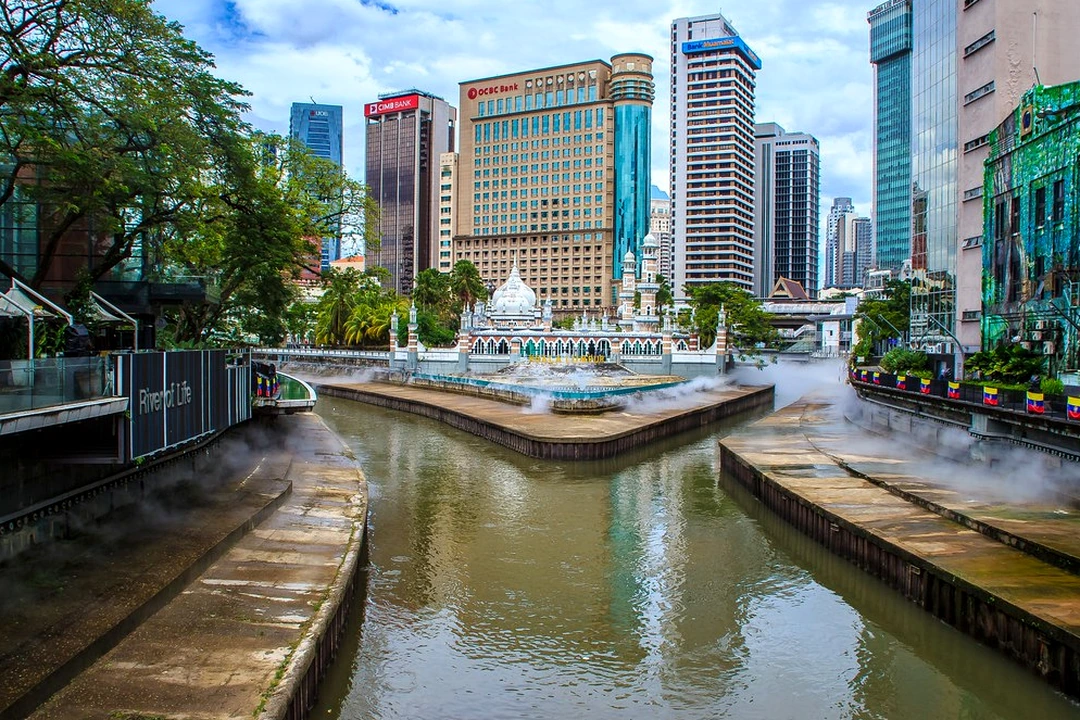
Geographically, a Malaysia–Singapore route contrasts peninsular hills and river valleys with coastal and island settings. Kuala Lumpur sits in the Klang Valley where the Gombak and Klang rivers meet—marked by the historic Masjid Jamek—framed to the east by the Titiwangsa mountain range running down the peninsula.
Above the Klang Valley, road and Awana SkyWay cable-car routes climb toward Genting Highlands near Gunung Ulu Kali at roughly 1,800 meters above sea level, offering cooler highland air and misty forested slopes in sharp contrast to tropical lowlands below.
Farther south along the west coast, Melaka sits along the Melaka River and Bukit Melaka (St. Paul’s Hill) overlooking the Strait of Malacca—a sheltered coastal setting that helped anchor historical shipping and trade along the waterway.
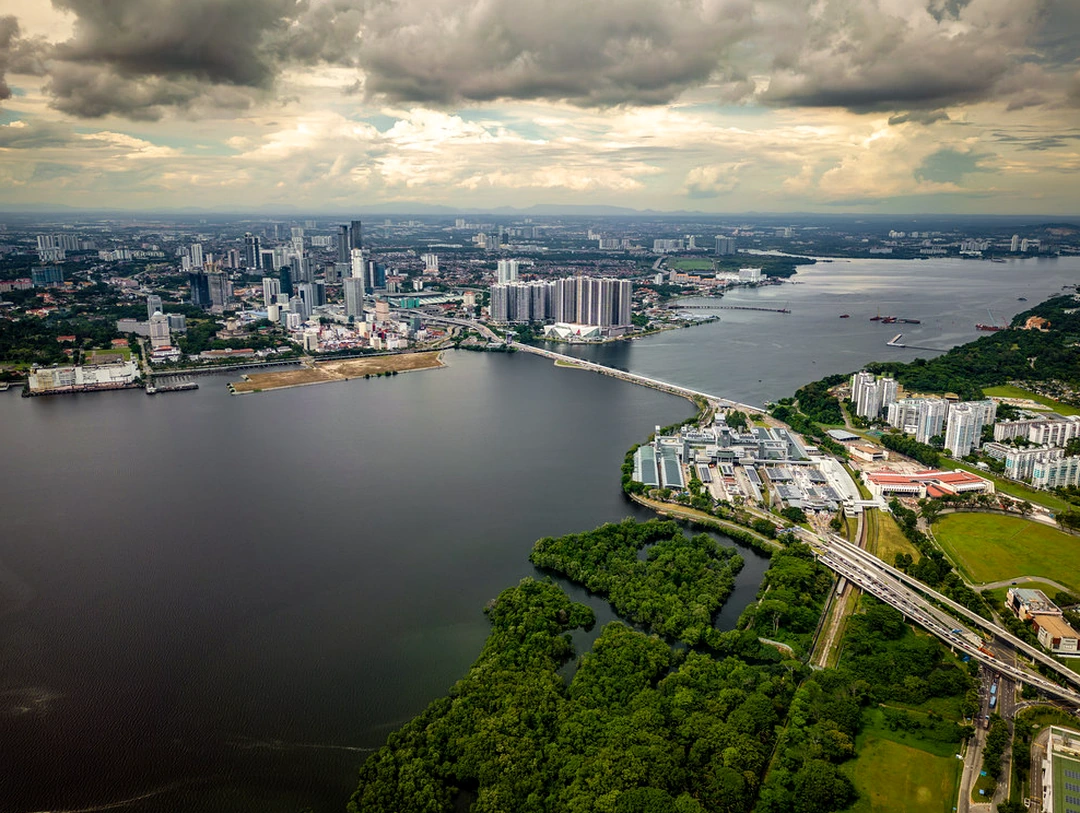
Across the Johor Strait, the Johor–Singapore Causeway links Johor Bahru with Singapore (*Pulau Ujong*). Over decades, land reclamation has expanded Singapore’s land area from roughly 581 square kilometers in colonial times to well over 730 square kilometers, creating space for Marina Bay, port terminals, and airport infrastructure.
Singapore’s “City in Nature” approach also weaves parks, reservoirs such as MacRitchie, waterfront spaces like Marina Barrage, and street greenery into dense urban districts, balancing tropical heat and rain with shaded public spaces.
Visually, a combined trip moves from Kuala Lumpur’s late-nineteenth-century landmarks—such as the Sultan Abdul Samad Building designed by Arthur Charles Norman near Merdeka Square, known for its red brick, white trim, arched arcades, and clock tower—to modern skylines and heritage quarters across both countries.
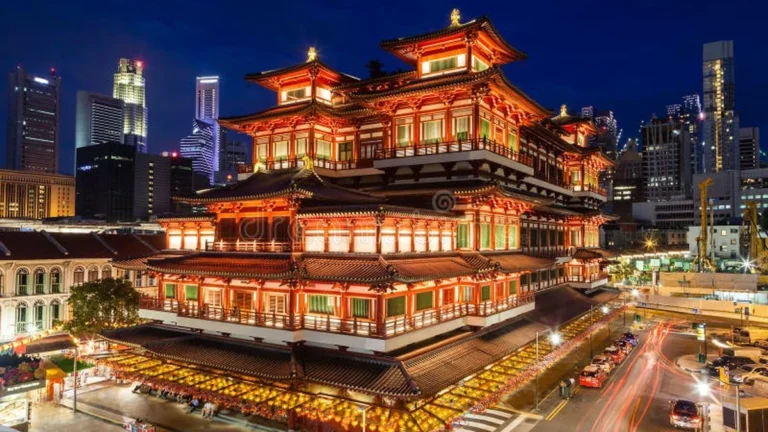
Venturing deeper into historic towns like Melaka or areas such as Katong and Chinatown in Singapore, travelers encounter a distinct spatial expression along rows of Straits Eclectic shophouses. A hallmark of their floor planning is the covered pedestrian arcade (“kaki lima” / “five-footway”), forming a continuous walkway linking Chinese migrant and Peranakan communities. These narrow-fronted houses often run deep—from thirty to fifty meters—broken up by open-air airwells that draw in breezes and rainwater while following feng shui ideas of gathering prosperity. Craftsmanship reaches high detail by pairing gilded, lacquered wood carvings of East Asian motifs with colorful Majolica glazed tiles imported from Britain, louvered shutters, and ornate classical columns.
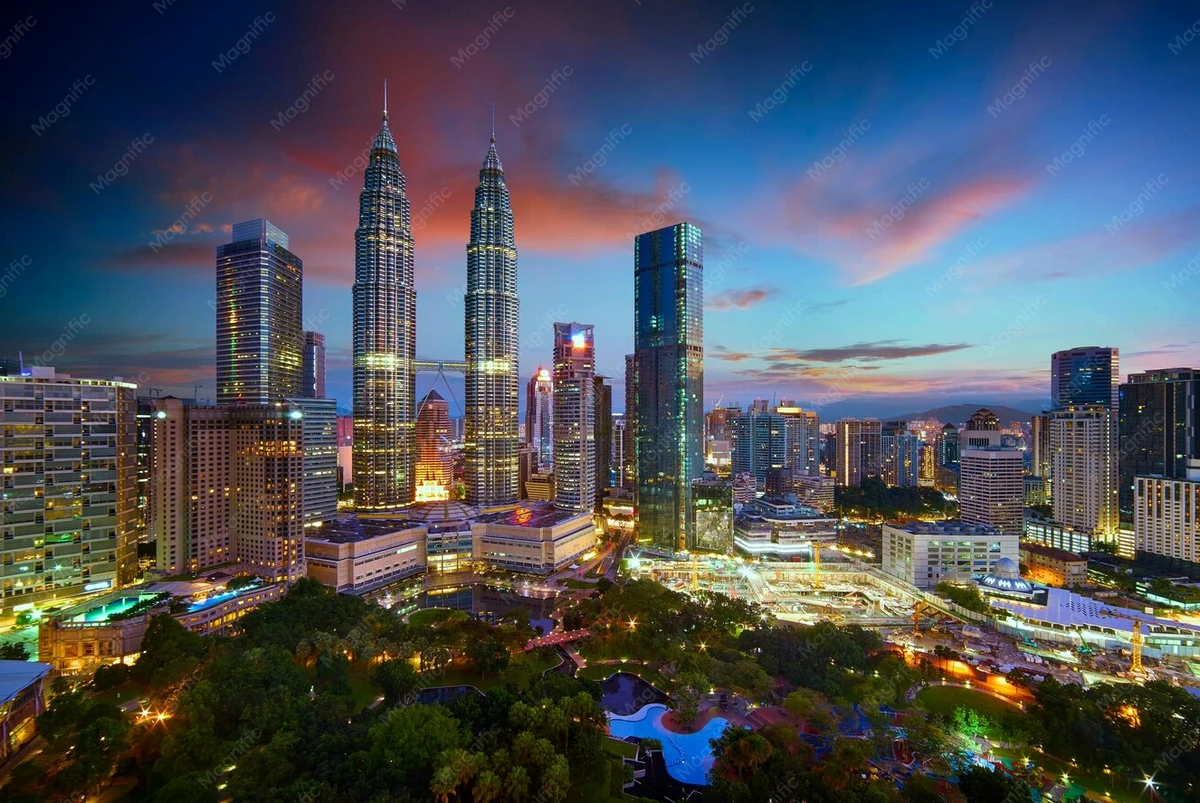
Contrasting with heritage streetscapes are modern engineering landmarks rising across Southeast Asia, exemplified by the Petronas Twin Towers in Malaysia’s capital designed by architect César Pelli. Soaring to 451.9 meters across 88 floors, the twin-tower plan draws inspiration from the Islamic geometric “Rub el Hizb” motif—interlocking squares rotated 45 degrees into an eight-pointed star symbolizing harmony and order. The exterior wraps in 83,500 square meters of laminated reflective glass and brushed stainless-steel louvers that gleam like a giant silver prism. Linking both towers at levels 41 and 42 is the 750-ton double-decker Skybridge, mounted on sliding bearings to accommodate sway and thermal movement under equatorial winds.
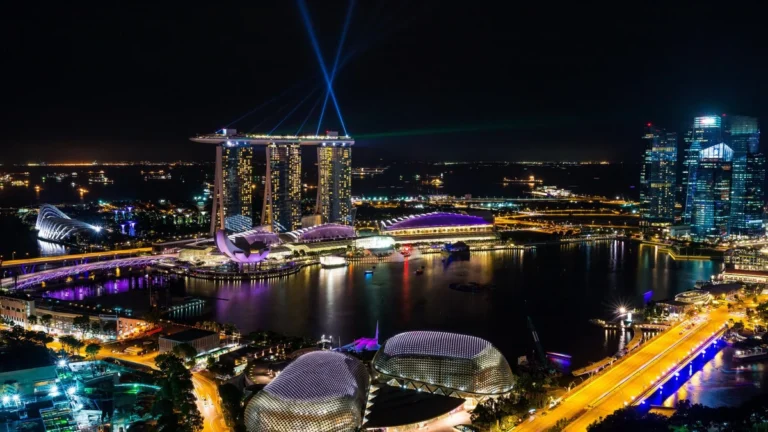
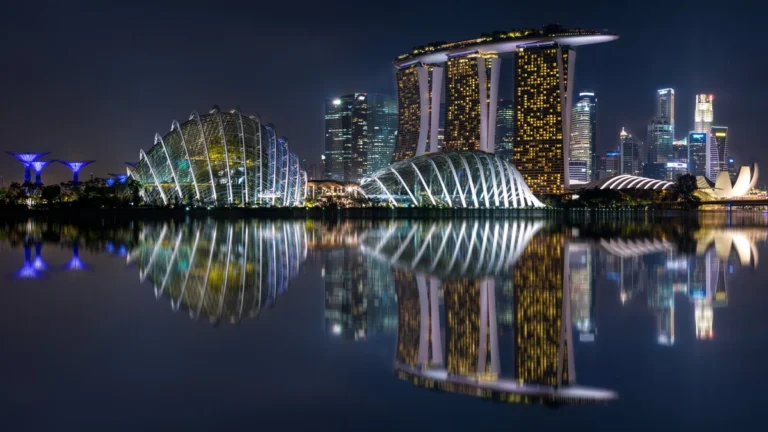
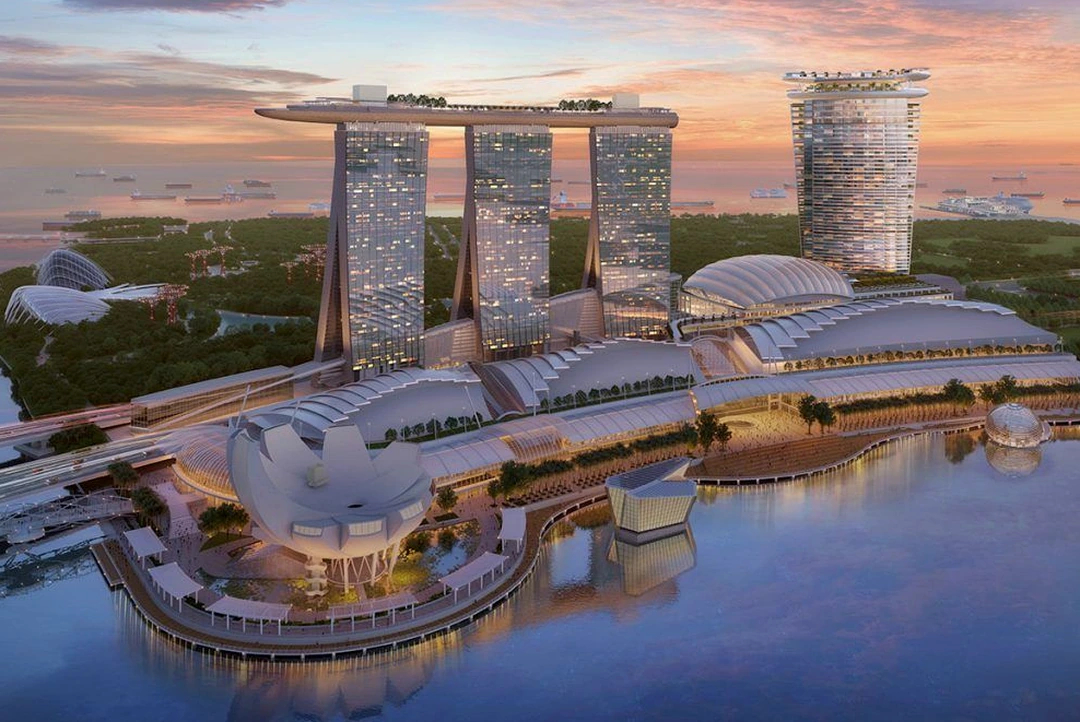
The journey also highlights parametric and biophilic architecture in the city-state, where boundaries between structure and greenery are woven together closely. Marina Bay Sands, designed by architect Moshe Safdie, shapes the waterfront skyline with three angled towers supporting the 340-meter Skypark—featuring a dramatic cantilever overhang extending 66.5 meters—a striking structural feat. Right at the airport gateway, Jewel Changi showcases a glass-and-steel toroidal dome spanning over 9,000 glass panels around the 40-meter indoor Rain Vortex waterfall, which drops recycled water down through terraced greenery in the Shiseido Forest Valley to create a lush climate-controlled atrium inside a busy transit hub.
As dusk settles over Marina Bay, Singapore shifts from daytime business bustle to evening light and sound displays. At Gardens by the Bay, eighteen Supertrees standing between twenty-five and fifty meters tall light up during “Garden Rhapsody,” with steel-and-epiphyte canopies illuminated to orchestral music using solar energy stored during the day. Nearby on the water, “Spectra – A Light & Water Show” pairs large fountains, mist screens, high-output projectors, prism lasers, and surround sound across a fifteen-minute show celebrating the city-state’s story.
Across the Johor Strait in Kuala Lumpur, evening scenery contrasts modern towers with colonial-era landmarks. High-rise illumination shines across the 451.9-meter Petronas Twin Towers—their steel and glass reflecting crisp white LED light—alongside Menara Kuala Lumpur on Bukit Nanas hill. Just a few kilometers away, Dataran Merdeka (Independence Square) takes on a quieter mood beneath warm lights framing the Sultan Abdul Samad Building. Built starting in 1897 in Indo-Saracenic/Mughal-influenced style with copper domes and a 41-meter clock tower, it overlooks the historic field where Malaysia’s independence was proclaimed on August 31, 1957.
Away from tall towers, historic Melaka offers a calmer evening mood along the Melaka River. Once a busy waterway for traders from Portugal, the Netherlands, and Ming China, the river now hosts evening river cruises past lit riverside cafés, red lanterns along Jonker Street, decorated bridges like Tan Kim Seng Bridge, murals recalling Prince Parameswara, and red-brick heritage buildings around Stadthuys (Dutch Square), blending Baba Nyonya culture with maritime history.
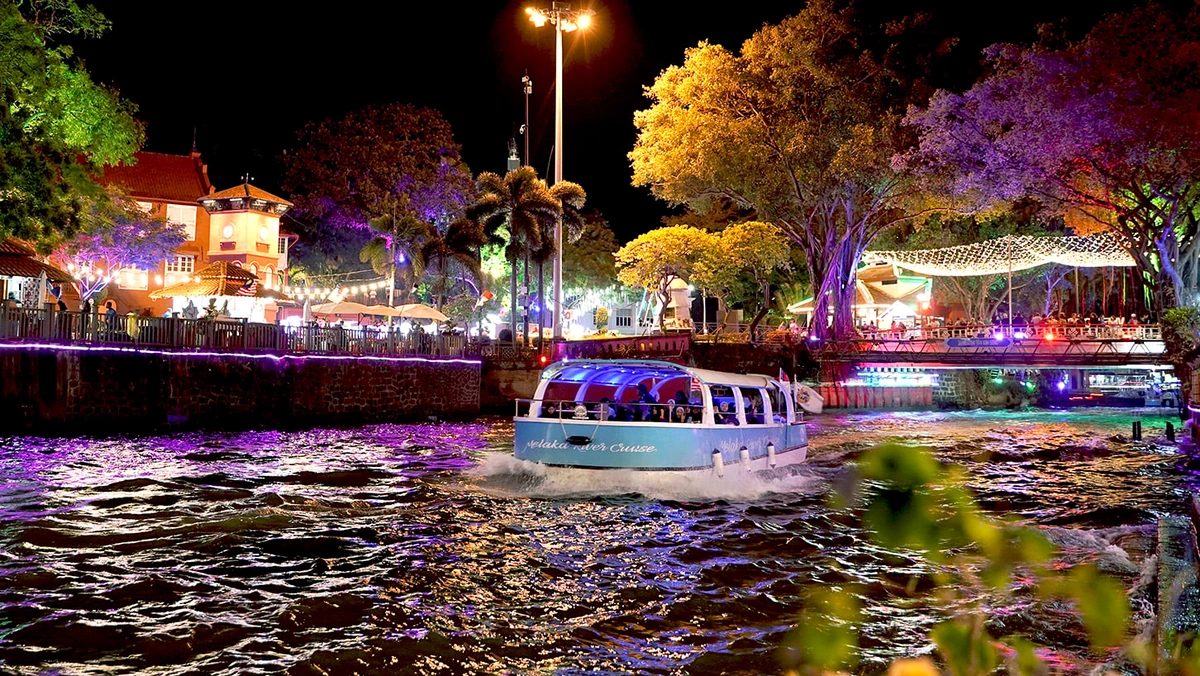
Evening life along this cross-border route balances sleek urban lighting with lively street food. While Singapore frames waterfront evenings with light shows and riverside spots around Clarke Quay, Malaysia adds lively night-market energy with food stalls and warm lights along lanes like Jalan Alor—offering contrasting yet complementary ways to enjoy nights across both countries.
Food along the Straits of Malacca reflects centuries of maritime trade and cultural blending. A natural starting point is Melaka, home to distinctive Peranakan (Baba Nyonya) cooking that grew from fifteenth-century and later links between southern Chinese settlers and local Malay/Southeast Asian traditions. In historic houses along Heeren Street or Jonker Street, “Ayam Pongteh” simmers chicken with shiitake mushrooms, potatoes, and fermented soybean paste (“taucheo”) for a savory-sweet clay-pot dish. By contrast, “Nyonya Laksa” brings fragrant coconut broth simmered with dried shrimp, galangal, lemongrass, fresh turmeric, chili, and tamarind—showcasing hand-pounded spice pastes (“rempah”) passed down through Peranakan kitchens.
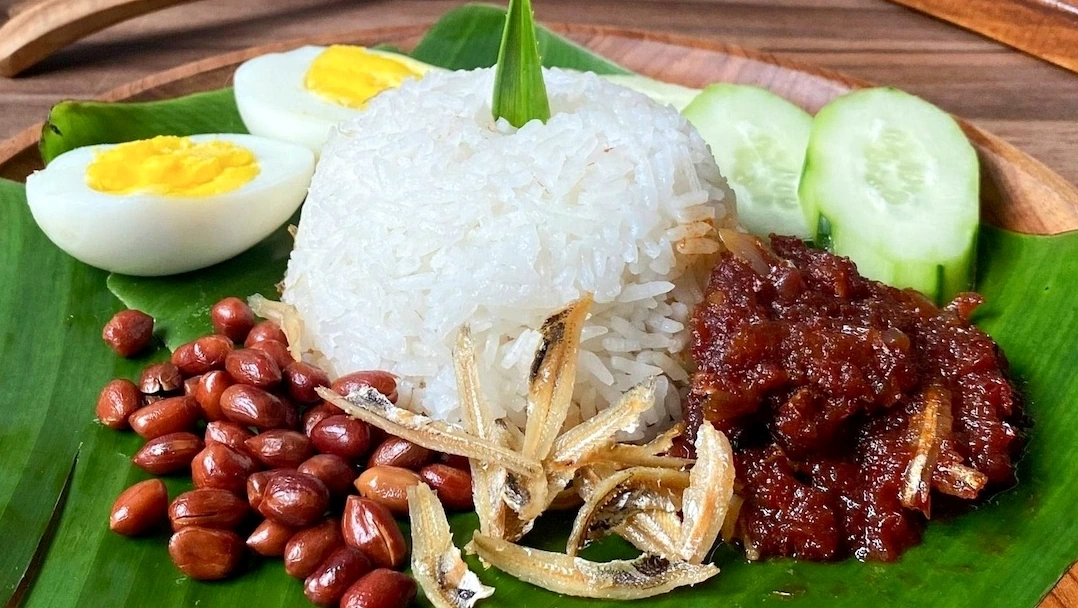
Heading north to Kuala Lumpur opens a lively street-food scene where Malay, Chinese, and Indian flavors gather around night markets like Jalan Alor and historic Kampung Baru. “Nasi Lemak” stands out as a beloved staple—fragrant rice cooked with coconut milk and pandan leaves, served with spicy “sambal,” crispy anchovies (“ikan bilis”), roasted peanuts, and boiled egg. Nearby stalls serve charcoal-grilled “satay” skewers with peanut sauce, while evening “mamak” spots stay lively with hand-tossed “roti canai” flatbreads eaten with flavorful curries and dhal.
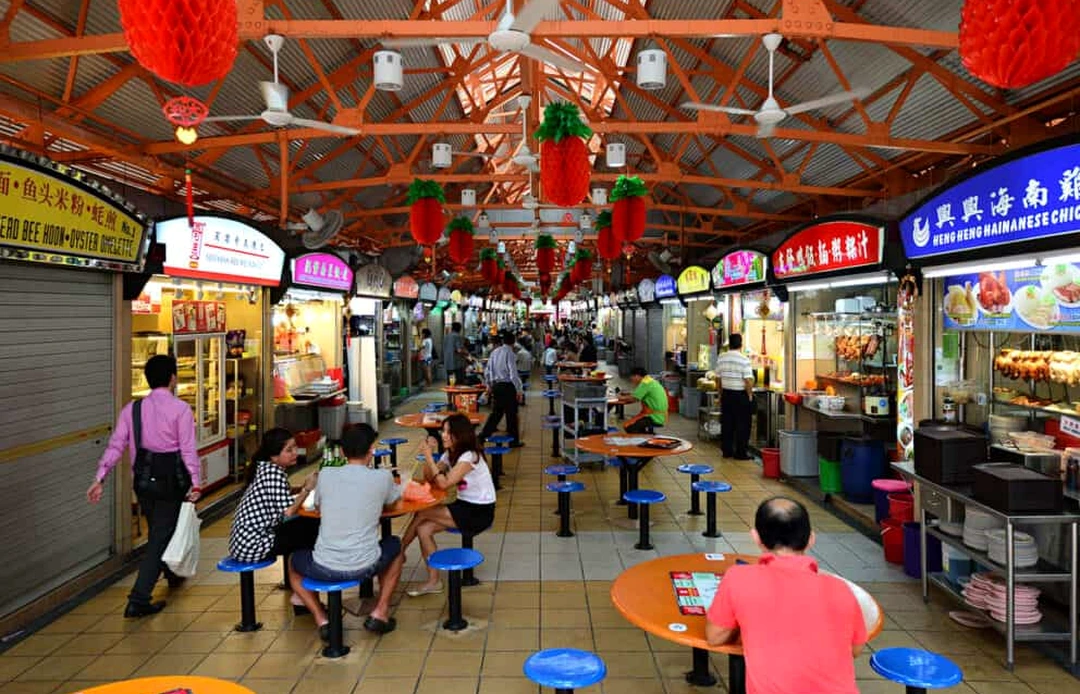
Across the causeway in Singapore, everyday food culture shines inside hawker centres such as Maxwell Food Centre, Amoy Street Food Centre, and Lau Pa Sat—recognized on UNESCO’s Representative List of the Intangible Cultural Heritage of Humanity. Grown from historic street stalls into clean, communal dining halls, hawker centres celebrate classics like “Hainanese Chicken Rice,” pairing poached tender chicken and aromatic ginger-garlic-pandan rice with chili sauce, dark soy, and minced ginger.
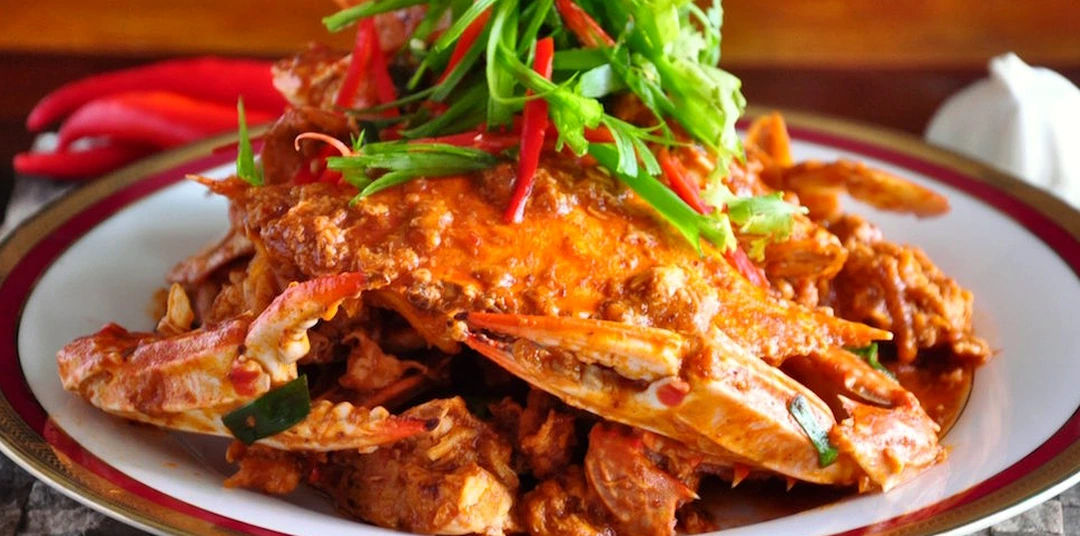
Singapore’s dining scene is also known for “Chilli Crab,” which emerged in the mid-twentieth century with plump mud crabs cooked in a rich, savory-sweet-spicy tomato-and-chili sauce often mopped up with crisp fried mantou buns. Meanwhile, “Katong Laksa” around Joo Chiat features shorter rice noodles eaten with a spoon in a rich coconut-and-dried-shrimp broth topped with cockles, fishcake slices, and finely chopped laksa leaf—capturing coastal flavors of the city-state.
Crossing between Singapore and Peninsular Malaysia involves checking entry rules and understanding how transit and border crossings run across both countries. A standard passport requirement is at least six months of validity remaining from your planned departure date. Within the required window before arrival (typically up to three days prior), travelers complete digital arrival declarations via official portals—the SG Arrival Card (including health declaration managed by Singapore’s Immigration & Checkpoints Authority, ICA) and the Malaysia Digital Arrival Card (MDAC, subject to current exemption rules). Whether crossing the Johor Strait via the Woodlands Causeway or the Second Link (Tuas), keeping confirmation codes or printouts handy helps streamline border checks.
For traveling between the two countries, options depend on your schedule and style. Short flights of around an hour connect Singapore Changi Airport with Kuala Lumpur International Airport (KLIA), while express coaches between central Singapore and Kuala Lumpur’s Terminal Bersepadu Selatan (TBS) let you watch oil-palm plantations and countryside pass along the North-South Expressway. Once in the city, Singapore’s MRT rail network is fast and easy with an EZ-Link card or contactless payment (such as SimplyGo), while Kuala Lumpur links LRT, MRT, and Monorail lines via a Touch ‘n Go card for trips around Bukit Bintang or administrative hub Putrajaya.
Daily budgets differ noticeably between the two destinations. In Singapore, everyday dining and sightseeing often run roughly SGD 70 to SGD 100 per day when eating at popular hawker centres such as Maxwell Food Centre or Lau Pa Sat. Across the border in Malaysia, meals like *nasi lemak* or *laksa* at casual spots often cost around MYR 15 to MYR 30. For theme parks such as Genting SkyWorlds high on the Titiwangsa Range (above 1,800 meters elevation), buying tickets online ahead of time often saves money and lets you reserve ride slots via the app’s virtual queue in cool highland weather.
Respecting local rules and religious customs makes exploring both multicultural destinations smoother. Singapore enforces strict fines for littering, smoking outside designated zones, and chewing gum rules in public spaces. In Malaysia, Islamic, Hindu, and Buddhist traditions shape daily life—so when visiting sites such as Masjid Negara (National Mosque) or Batu Caves (known for its tall golden Lord Murugan statue and colorful steps), dress modestly covering shoulders and knees, remove shoes where required, and ask politely before photographing people praying. For a smoothly coordinated trip covering routes, stays, and highlights, browse all-inclusive Singapore – Malaysia tour packages.
