Stepping back in time to the deep past of the Land of the Rising Sun, when cultural sediments intertwined within the ethereal mists of ancient feudal dynasties, the volcanic valley of Owakudani in Hakone did not bear its peaceful modern name but once struck terror into local inhabitants with the gloomy moniker “Jigokudani,” meaning Hell Valley. During the dawn of Japanese history, specifically from the Heian period through the Kamakura period, this place was regarded as an apocalyptic wilderness where the breath of wrathful deities exhaled from the earth’s core in the form of opaque white sulfur plumes and bubbling mud, transforming an entire valley into a haunting earthly inferno. Amidst this harsh and mystical natural landscape, during the early Heian period, the great high monk Kukai—the founding patriarch of Japan’s Shingon school of Buddhism (Kobo Daishi)—personally set foot in this perilous terrain and established a sacred ritual ground to perform the Tsusai法会 (Disaster-Suppression Rite) to subdue rampaging volcanic evil spirits, pray for the peace of all sentient beings, and soothe nature’s fury.
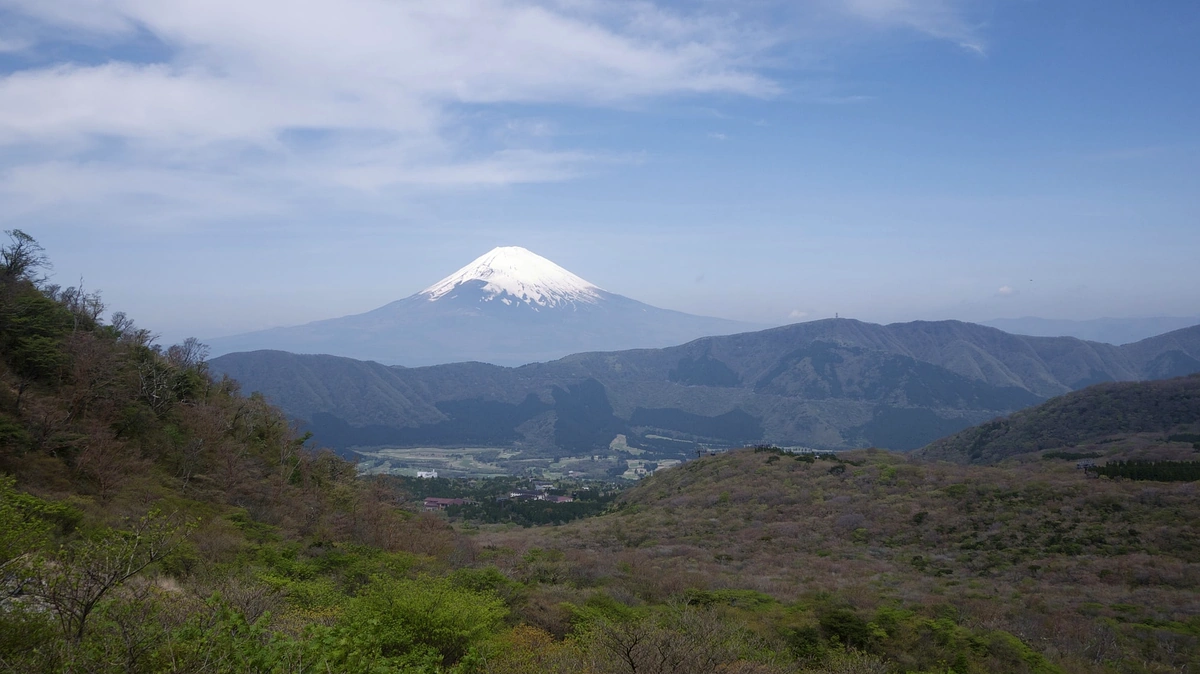
The spiritual and historical imprint of this eminent monk endures across time through the “Enmei Jizozon” (Longevity Jizo Bodhisattva) monument, a sacred jizo statue legendarily sketched and crafted by Master Kukai’s own hands since the primordial era to protect anyone daring to venture into this remote wilderness. Through the vicissitudes of time, entering the Edo period alongside the establishment of transportation control checkpoints along the vital Tokaido route and the proliferation of therapeutic hot spring resorts (Yujaba), the Hakone region gradually transformed from a terrifying wasteland into a destination capturing the curiosity of wandering travelers, literary scholars, and samurai warriors on pilgrimage or official journeys between Edo and Kyoto.
The pivotal change that officially shaped Owakudani’s appearance in the national memory occurred in 1876, during the 9th year of the Meiji era, when Emperor Meiji personally visited the Hakone region during a historic inspection tour. Recognizing that the ancient name “Hell Valley” carried a gloomy, ominous meaning unsuited to the enlightened, modernizing spirit pursued by the Meiji government, he issued an imperial decree officially renaming the location to “Owakudani” (Great Boiling Valley)—a name carrying the majestic resonance of churning boiling-water valleys, dispelling feudal fear to open a new chapter for tourism development and scientific research in the volcanic Hakone mountains.
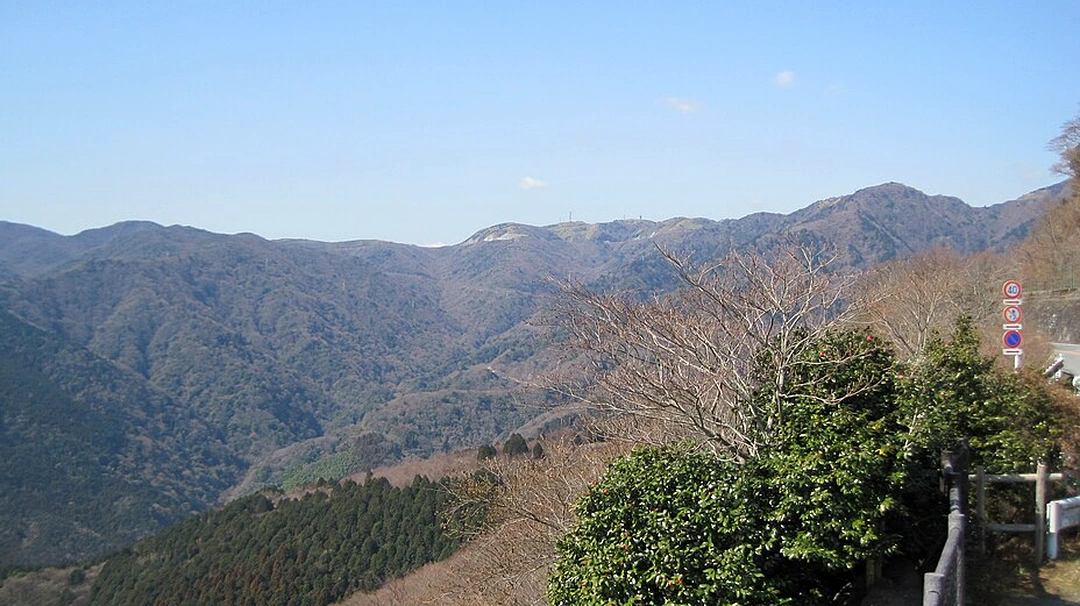
Entering the 20th century, specifically in 1959 during the 34th year of the Showa era, a revolutionary technological milestone permanently altered the valley’s economic and tourism destiny when the Hakone Ropeway cable car system officially opened and commenced operations. This event transformed a rugged volcanic mountain, previously accessible only to daring explorers, into a modern transportation link within a globally renowned tourist loop, seamlessly connecting Hakone’s magnificent scenic spots. Today, alongside geological landscapes featuring lava vent craters and sulfur-steaming streams, visitors setting foot in Owakudani can still contemplate historical layers through precious cultural relics such as the legendary Enmei Jizozon statue, or sturdy landslide prevention structures, sand dams, and volcanic monitoring monuments constructed in the early Showa years—all harmonizing with the characteristic aroma of kuro-tamago black eggs boiled in mineral-rich hot spring waters, creating an endless symphony between natural archaeology and enduring human memory across centuries.
Tracing back to the origins of magnificent geological formations from roughly three thousand years ago, Owakudani emerges as a proud scar of time on Earth’s surface, marking the moment when the Hakone Kamiyama volcano endured a massive phreatic explosion and catastrophic slope collapse disaster. That historical tremor left posterity with a uniquely horseshoe-shaped topography featuring a giant collapse crater, opening a direct view into the hidden power within Mother Earth’s core. From a natural topography planning perspective, the northern slope of this caldron has never rested over millennia, continuously venting scorching steam and aerosol volcanic gases such as hydrogen sulfide and sulfur dioxide, blanketing the entire space in a fog carrying the characteristic scent of sulfur.
Examining this through traditional Eastern feng shui doctrines, the grand landscape of Owakudani clearly reveals the configuration of a “Fire-shaped mountain” condensing extreme malignant forces, where extreme yang energy from the earthly core erupts uncontrollably. Particularly, the topographical structure with its crater mouth opening northward inadvertently formed an open wind funnel, causing this malignant force to amplify powerfully along wind currents, directly threatening the peace of the surrounding broad ecosystem. Thoroughly understanding the operating laws of yin and yang and the five elements, ancient predecessors unhesitatingly stepped into this remote wilderness to establish spiritual suppression systems, notably venerating Jizo Bodhisattva statues and erecting sacred shrines. These religious structures not only soothed human terror before natural disasters, but also acted as supreme spiritual landmarks to master fierce malevolence, harmonize volatile fire energies, and soothe subterranean yin forces churning beneath cracked soil layers.
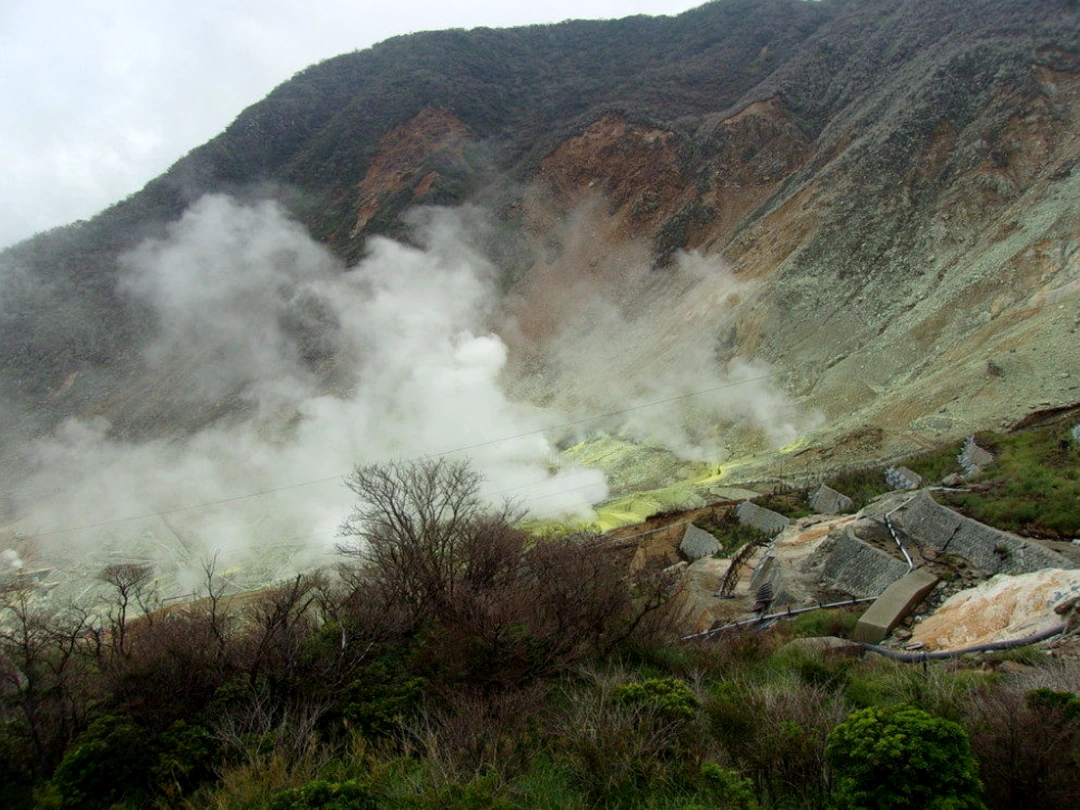
Venturing deep into the valley’s core, one immediately confronts an extreme ecosystem dictated by harsh soil properties. The ground here exhibits acid levels exceeding the tolerance thresholds of most ordinary plants, combining with dense toxic vapors to render the valley floor completely devoid of life, barren with dark gray rocks and bubbling white-foaming mineral springs. Nevertheless, nature continually fashions wondrous adaptive miracles across surrounding perimeter belts, where gentle sloping ridges have inadvertently become resilient havens for acid-tolerant plants and lichens. The indomitable survival of this endemic vegetation paints a stark contrast between a desolate, smoky wasteland of death on one hand and persistent biodiversity resilience on the other, turning Owakudani into a premier living laboratory for ecological evolution amidst extreme geology.
Stepping into the volcanic valley of Owakudani amidst the legendary Hakone highlands, visitors are not only struck by magnificent natural landscapes and billowing white sulfur smoke rising from the earth, but also marvel at a masterpiece of contemporary planning and architecture. From the perspective of a cultural historian combined with field architecture optics, the complex here vividly demonstrates Japanese peak disaster-mitigation design philosophy, where spatial creation art must confront and adapt directly to one of the harshest, most volatile, and hazardous geological regions in the Land of the Rising Sun.
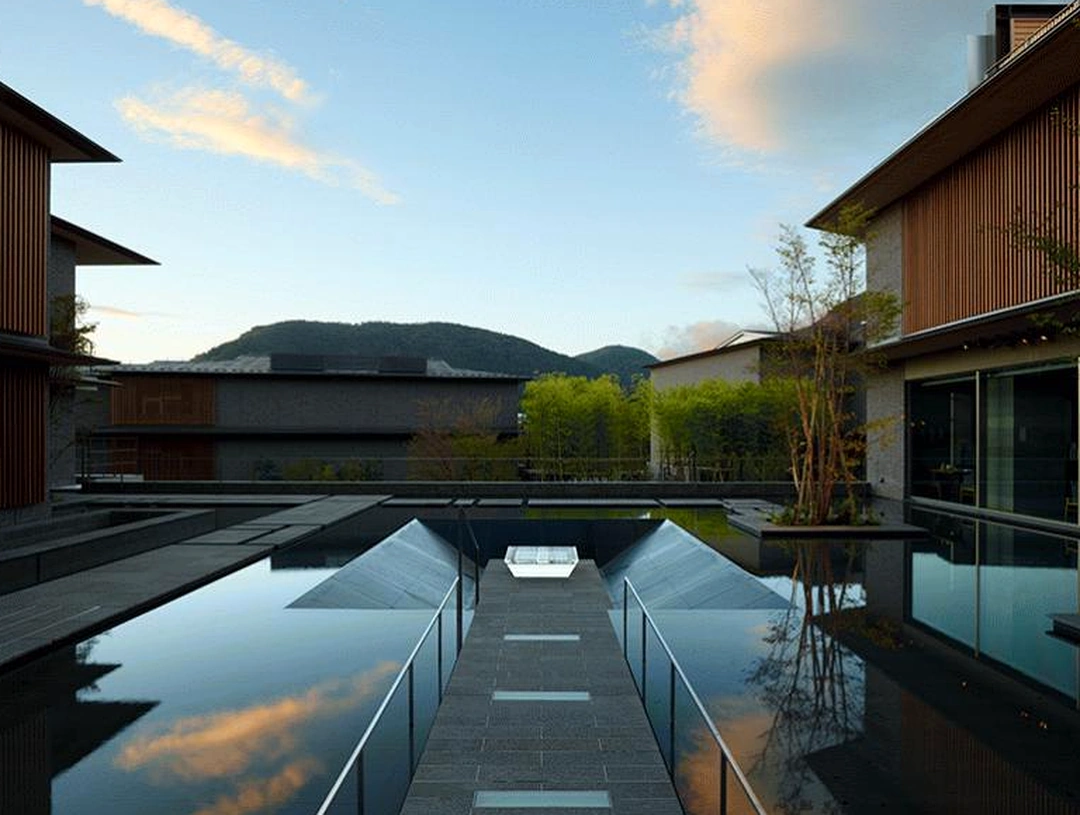
Core architectural systems shaping this district’s appearance comprise three primary structures of strategic stature: the Owakudani Kuro-Tamago-Kan cultural experience and commercial building (Black Egg Building), the Volcanological Science Museum, and the Owakudani cable car station. Situated right upon an active volcanic zone where sulfuric air rapidly corrodes metal and atop fault lines frequently experiencing tremors of varying magnitudes, this entire complex demands engineering solutions transcending conventional construction standards.
To realize and maintain structural safety amidst this fiery realm, Japanese engineers deployed high-strength acid-resistant steel frame systems combined with prestressed concrete. This solution grants structures optimal ductility and elasticity to withstand severe tremors while eliminating uneven foundation settlement prevalent in geothermal basins. All exterior metal surfaces underwent specialized treatments utilizing fluorocarbon paint technology resistant to acid and absolute corrosion. Furthermore, roof systems prioritized titanium alloy panels or specialized ceramic tiles, robust enough to resist continuous acid rain erosion and toxic gases venting from eruption craters.
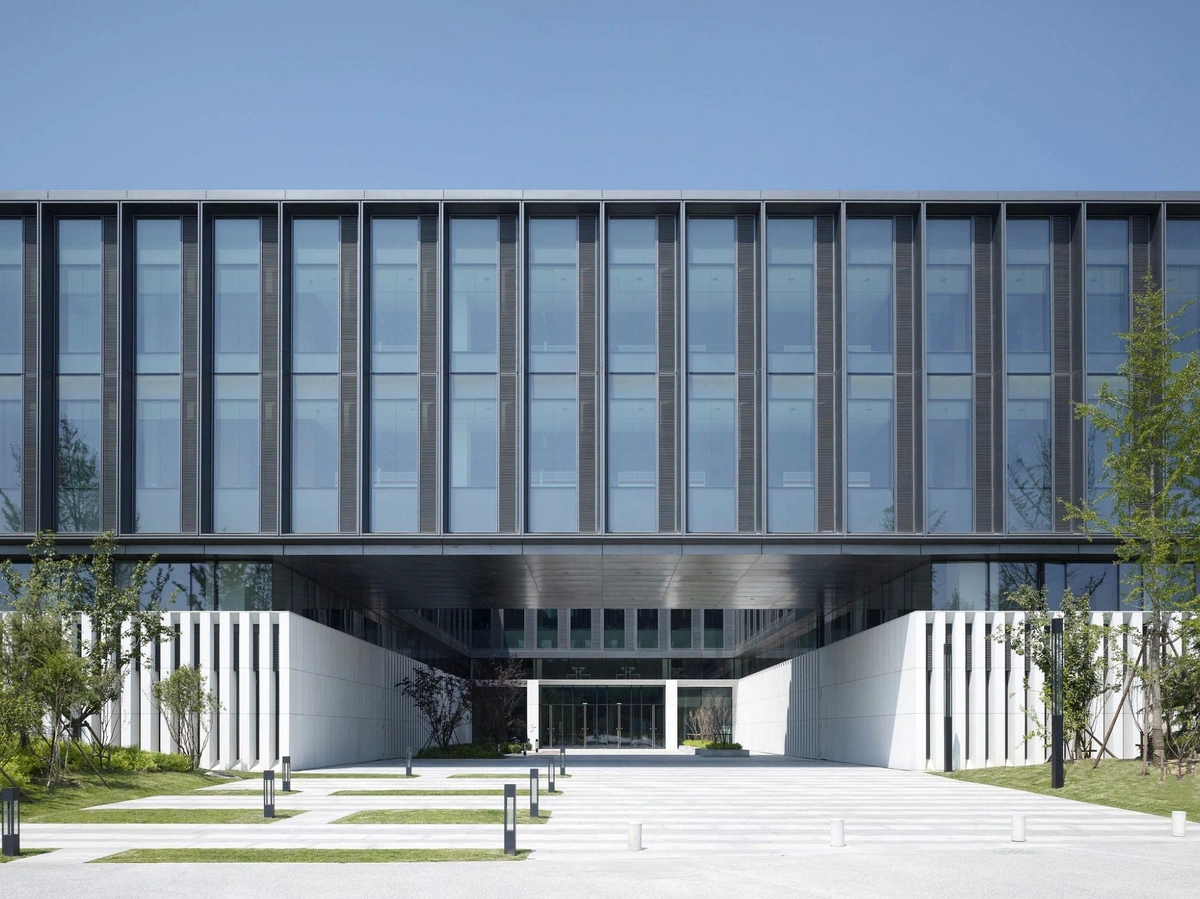
Regarding spatial structure and practical scale, Owakudani’s core service and visitor zone spans tens of thousands of square meters, methodically planned along steep mountain slopes in a terraced configuration. The entire complex leans securely against Mount Kami-yama (sacred mountain) to leverage stable geological mass behind as an anchor against gales descending from the summit. Conversely, building facades face directly toward the Jigokudani hell valley and gas vent zones, fitted with full-width panoramic tempered glass windows. This design not only opens boundless vistas for visitors to admire magnificent natural scenery but serves as a strategic warning and evacuation solution, enabling comprehensive situation monitoring and rapid evacuation of residents and tourists should eruption activity escalate suddenly.
Stepping past daytime sulfur smoke curtains to encounter Owakudani after nightfall unfolds a journey deciphering an entirely distinct cultural layer of the Hakone fire valley. Contrary to common tourist misconceptions of a desolate place plunged into absolute silence, local nightlife here post-sunset shifts into an exclusive experiential modality where pristine wilderness and contemporary art intertwine under strict local government regulation. Governed by rigorous volcanic safety and natural ecological preservation laws, Owakudani is generally never open to unvetted nocturnal visitors while completely lacking noisy night markets or brilliant commercial light shows typical of major metropolises.
Nevertheless, to satisfy inquisitive travelers’ desires to explore geological spatial depths, the Hakone Town Tourism Association alongside Kanagawa prefectural authorities have approved limited special programs. Accordingly, during specific annual seasons, “Volcanic Night Magic” tours (火山夜間導覽) operate with strictly limited ticket capacities requiring advance reservations. The highlight of these nocturnal expeditions is the sophisticated artistic lighting system. Eschewing high-wattage blinding floodlights that ruin landscapes, lighting engineers deployed specialized low-color-temperature LED technology paired with anti-glare lenses, artfully casting gentle amber and ivory beams onto erupting steam columns and exposed rock strata of steep cliffs, thereby honoring natural sculptural beauty without light pollution impacting surrounding flora and fauna.
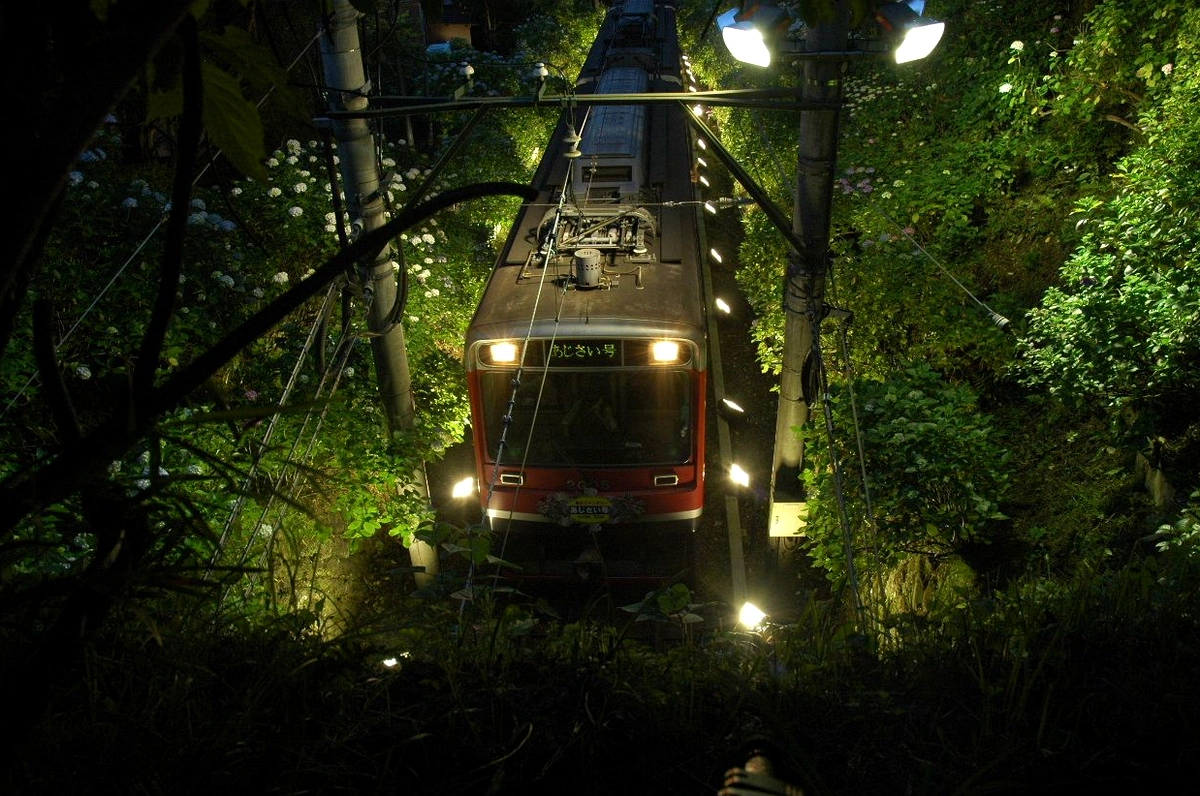
Accompanying this majestic visual space are educational and deep cultural entertainment institutions, epitomized by the Hakone Volcanological Science Museum. The venue houses immersive 3D cinemas (3D沉浸式影片) vividly recreating phreatic explosions that shook this land three millennia ago, offering comprehensive insights into subterranean geological pulses of dormant volcanoes. Notably, in the complex’s central plaza during special event nights, local theater troupes stage the mythological drama Kuro-tamago (黑玉子神話劇). Blending traditional fue flute sounds, taiko drums, and folk storytelling, the performance reenacts legends of Jizo Bodhisattva bestowing protective divine fire upon Hakone villagers, decoding sacred origins of famous black eggs boiled in sulfur- and iron-rich hot spring waters.
Evening dining and cultural contemplation spaces here carry distinct contemplative tones, free from commercial hustle. Beneath breezy highland skies of Hakone, visitors savor piping-hot black eggs retrieved directly from 80°C mineral wells, paired with local green tea while listening to howling gales through rock crevices and rhythmic steam hisses from deep subterranean layers. Merging cutting-edge lighting, epic indigenous storytelling, and pristine nature transforms rare nocturnal hours in Owakudani into profound chapters where history, geology, and culture fuse seamlessly, leaving lingering echoes within travelers’ souls.
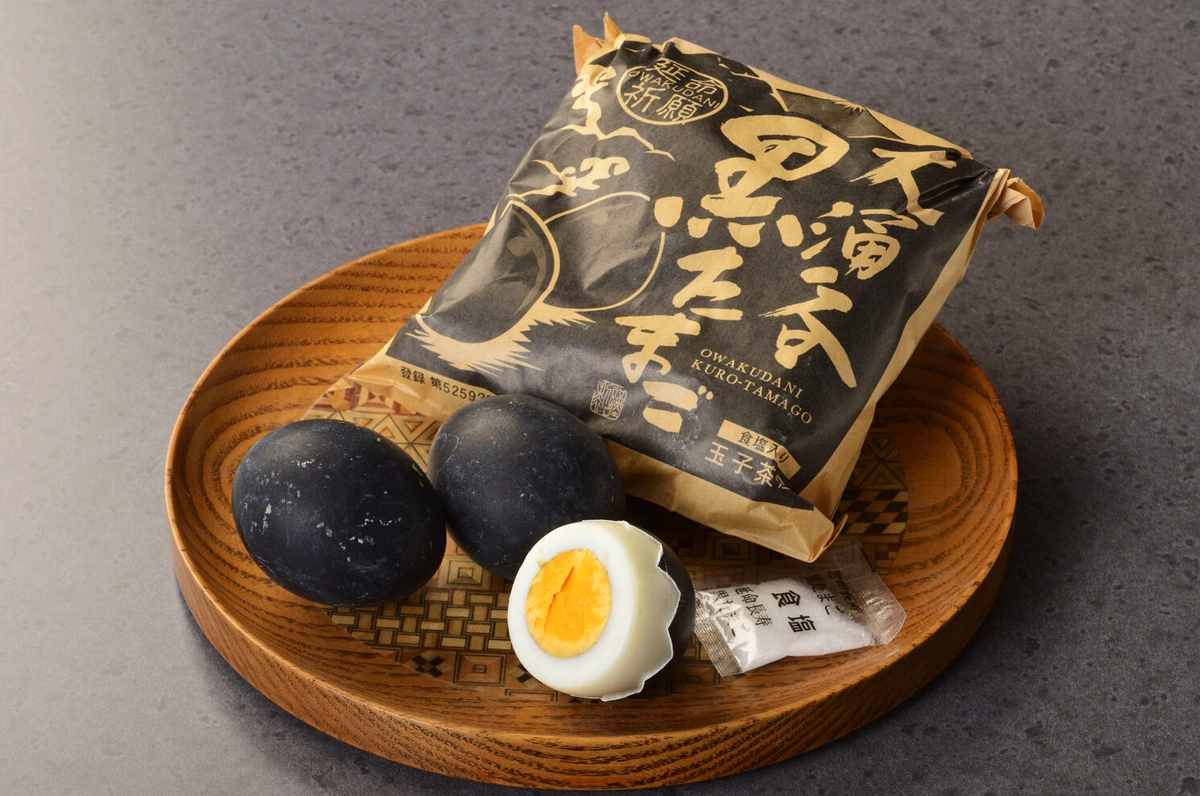
Stepping into the white-smoke valley of Owakudani amid the Hakone highlands, visitors are not only struck by magnificent geological landscapes but awakened across all senses by an intangible cultural heritage symbol of the region: legendary kuro-tamago black eggs. Originating during the Meiji era—a brilliant modernization period marked by Japan’s profound cultural exchange with the world—this dish transcended local snack boundaries into a generational experiential culture, an enduring symbol tied to Hakone’s volcanic breath. Crafting these black eggs demands exhaustive natural understanding and rigorous handicraft techniques transmitted across generations of local artisans, unreplicable by industrial kitchens.
The process of creating kuro-tamago combines primal geothermal energy with human craftsmanship. Fresh raw chicken eggs are placed in specialized mesh nets and lowered deep into natural mineral pools maintaining temperatures between 80°C and 100°C. Eggs steep within mineral-rich spring waters laden with iron ions and hydrogen sulfide for 60 minutes. Natural chemical reactions unfold vigorously: calcium carbonate shells interact directly with sulfur compounds and iron in water, forming a strange jet-black chemical film covering exterior shells. Subsequently, to finalize the masterpiece, eggs are retrieved and placed into steaming ovens utilizing pure volcanic steam at 100°C for a final 15 minutes to guarantee absolute yolk perfection.
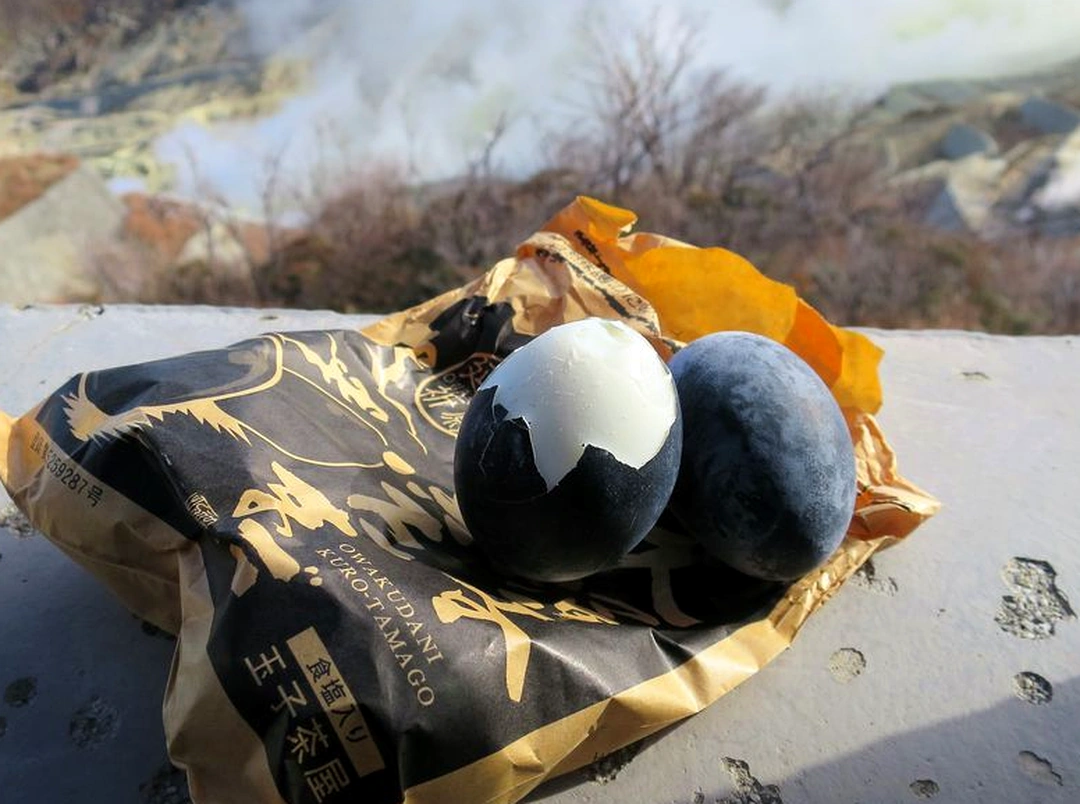
Holding a steaming kuro-tamago amid chilly weather on Owakudani’s slopes, peeling away rugged black shells unveils culinary art. Pitch-black shells give way to snow-white egg whites cradling vibrant golden yolks exuding original flavors. Unlike ordinary boiled eggs, kuro-tamago boast exceptionally high free amino acid levels driven by geothermal minerals, yielding deep savory sweetness blending with subtle sulfur aromas from Earth’s core. Savoring piping-hot black eggs amidst steaming Hakone wilderness offers a unique gustatory experience awakening souls yearning to touch natural Japanese essences.
Accompanying famed flavors are indigenous folklore and belief systems cultivated over centuries. Oral traditions passed among Hakone residents dictate that consuming kuro-tamago grants supernatural health and longevity. Folklore recounts: “Eating one black egg adds seven years to your life.” This philosophy stems from Kamiyama volcano’s dual cycle of destruction and nurturing life-giving mineral waters. Consequently, black egg retail stands at Owakudani’s summit teem with queues viewing this as rituals invoking peace, fortune, and extended lifespans for oneself and families.
Exploring the volcanic valley of Owakudani becomes smoother and safer when visitors master practical operational hours, optimal travel routes, and essential health precautions before exploring this bubbling geothermal terrain. Typically, the valley welcomes visitors from 9:00 AM to 4:15 PM daily, though schedules adjust in real-time based on toxic gas emission levels. A critical warning issued by tourism authorities is that should the Japan Meteorological Agency elevate eruption alert levels to 2 or higher, or during severe weather, walking trails and cable car systems face immediate blanket closures to guarantee public safety.
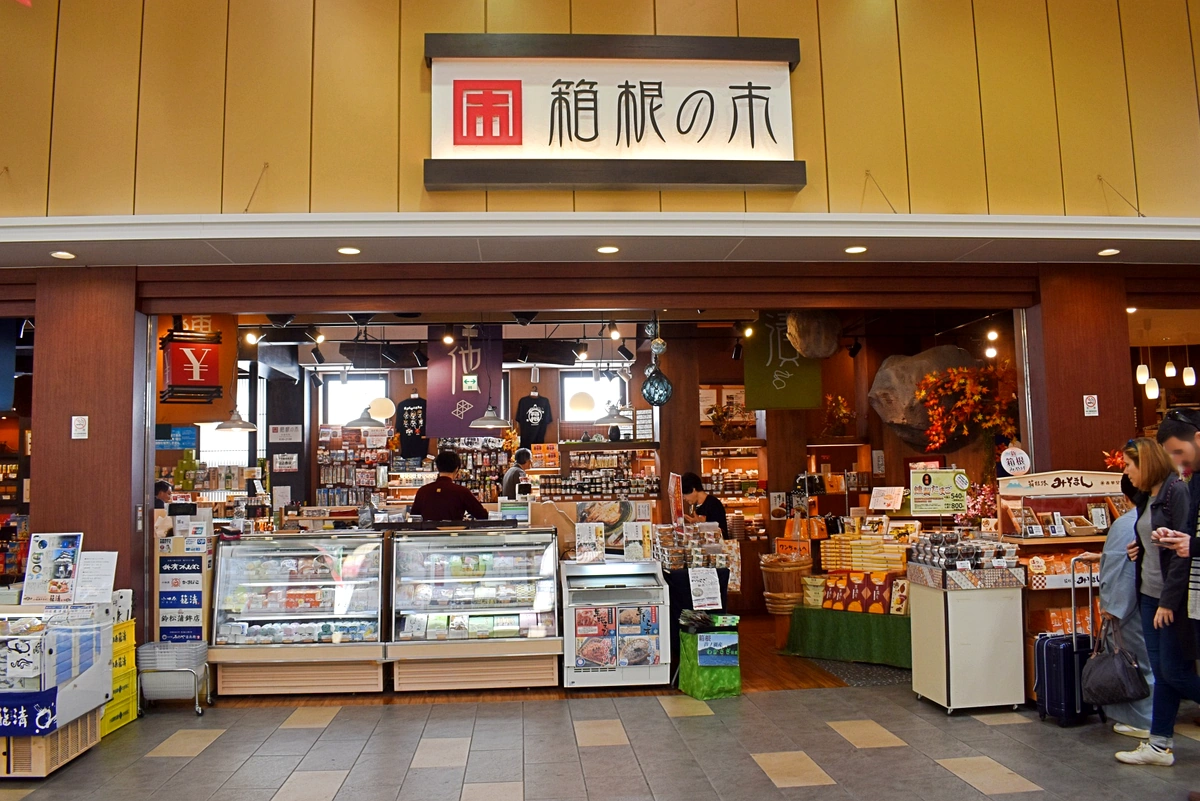
Conquering this geological wonder requires mastering golden transport routes connecting Central Tokyo or surrounding regions. Standard, favored itineraries commence at Hakone-Yumoto Station—gateway to renowned Hakone hot springs—where travelers board the Hakone Mountain Railway to Gora Station. Next, travelers transfer to the Cable Car or mountain bus to Sounzan Station before boarding the Hakone Ropeway—modern transport whisking visitors across deep valleys straight to Owakudani Station, opening panoramas of white-smoke-roaring fire valleys.
Beyond travel schedules, preparing health safety guides and appropriate apparel is prerequisite for memorable explorations in harsh terrain. Given highland winds where temperatures drop 5°C to 10°C below foothills, visitors must pack windproof jackets. Gas vent trails exhibit high sulfur and toxic gas concentrations; individuals with asthma, bronchitis, heart conditions, or pregnant women must avoid venturing near vent craters to avert respiratory risks.
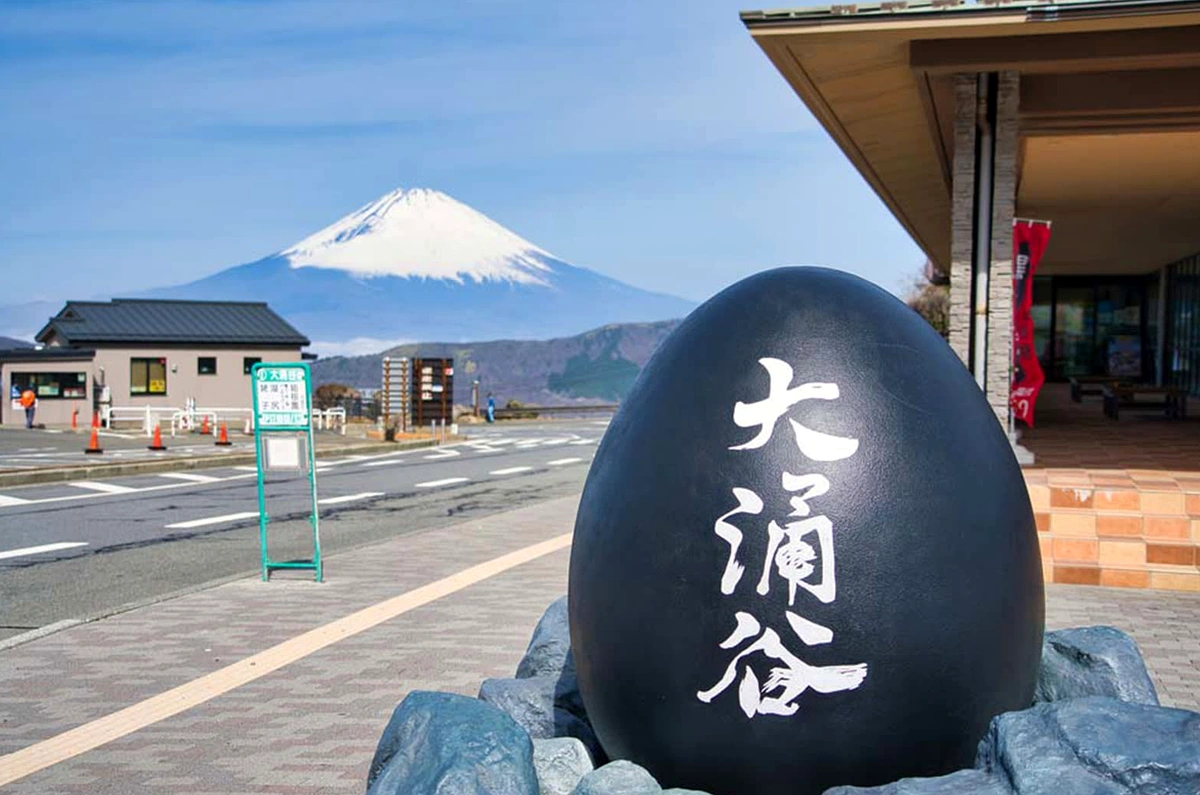
Sulfur-rich atmospheres and volcanic ash presence mandate caution regarding jewelry and accessories. Sulfur chemically tarnishes and corrodes heavy metals; visitors are advised against wearing silver jewelry at Owakudani to prevent permanent discoloration. Furthermore, terrain surfaces feature volcanic rubble and rugged stones; high-traction, anti-slip hiking shoes protect ankles and ensure secure footing across steep slopes. For flawless experiences of Japanese highland cultures and seamless transport networks without organizational stress, details are accessible via all-inclusive tour packages designed for travel enthusiasts.