Long before becoming the busiest intersection on Earth pulsing with the relentless energy of the digital age, Shibuya Crossing was a quiet lowland valley nestled among the rolling hills of Japan. The name Shibuya traces back to the 11th century, tied to the fortified estate and ancestral lands of the Shibuya clan—an illustrious samurai lineage that once governed this fertile basin. Throughout the Edo period (1603–1867), the area preserved the rustic charm of a farming village, serving as a roadside waystation along the vital Kamakura Kaido highway linking the former military capital of Kamakura with the northern provinces. Back then, the Shibuya River and its tributary, the Uda River, wound peacefully past bamboo groves and expansive rice paddies, utterly devoid of urban clamor—filled instead with the clip-clop of travelers’ horses and the unhurried rhythm of farmers tending terraced slopes.
The historic turning point that permanently altered the destiny of this tranquil suburb arrived during the Meiji era (1868–1912), as waves of modernization and industrialization swept across the Japanese archipelago. On March 1, 1885, Shibuya Station officially opened along the Shinagawa Line—the forerunner of today’s legendary JR Yamanote Loop Line. The arrival of iron rails and steam locomotives erased the boundary separating rural countryside from the imperial capital of Tokyo. Entering the Taisho era (1912–1926), Shibuya Station underwent continuous expansion to accommodate surging migration and trade, steadily transforming into a vital transit hub linking burgeoning satellite towns across the southwestern outskirts of the capital.
Urbanization accelerated dramatically during the Showa era (1926–1989), marked by the milestone year of 1934 when the private Tokyu Toyoko Line began operations, connecting Shibuya directly with the port city of Yokohama. The convergence of multiple subways and elevated rail lines turned the district into an immense multimodal interchange. Amid this transformative era, Shibuya Crossing also etched into history an immortal story of loyalty that touched millions of hearts worldwide. Hachiko, an Akita dog born in 1923, returned faithfully to the station entrance every afternoon for nearly a decade until his death in 1935, awaiting his late master, Professor Hidesaburo Ueno of Tokyo Imperial University. In 1934, the first bronze statue of Hachiko was solemnly unveiled in the station forecourt. Though its metal was requisitioned for armaments during World War II, Tokyo residents banded together to recast and restore the statue in 1948—cementing it as an enduring cultural icon and an unchanging meeting point amid surging human tides.
The postwar decades of the 1950s and 1960s ushered in revolutionary master plans that culverted open rivers underground to make room for multi-tiered transit networks and a multi-directional pedestrian plaza. By the 1970s and 1980s, Shibuya Crossing shed its purely utilitarian identity as a transit junction to emerge as a global mecca for youth culture and avant-garde fashion. The successive openings of the art-focused Shibuya Parco complex in 1973 and the cylindrical Shibuya 109 tower in 1979 ignited a creative explosion, giving rise to signature street fashion movements and the iconic Shibuya-kei music scene. From a muddy crossroads beside the old Kamakura Kaido, Shibuya Crossing crystallized Japan’s resilient spirit and hunger for reinvention—becoming a living open-air museum where every step across the asphalt touches layers of history.
Viewed on a geomorphological map of the Kanto region, Shibuya sits along the southeastern edge of the Musashino Plateau, where gentle geological folds carve out a distinctive bowl-shaped depression. Written in classical kanji, the very name Shibuya evokes a lowland valley or dark, mineral-rich waters—originating from the historic confluence of the Shibuya-gawa and Udagawa rivers. In traditional Eastern geomancy, this terrain exemplifies an auspicious “water-gathering wealth basin,” shaped like a natural suribachi mortar that channels vital energy down from surrounding hills into its center. Where those waters once met stands today’s world-famous Shibuya Scramble Crossing—transforming a once-marshy basin into a bustling artery of commerce where endless waves of human energy converge and circulate across Greater Tokyo.
From the medieval era—when warrior Shibuya Shigekuni of the Taira clan established his stronghold here—through the hereditary Tokugawa shogunate of the Edo period, this valley consistently held strategic significance as a vital gateway. Positioned along the Oyama Kaido pilgrimage and trade route linking stately Edo Castle with sacred Mount Oyama in Sagami Province, historic Shibuya served as an essential staging post for samurai, merchants, and pilgrims alike. Its dramatic topography is defined by two gentle slopes flanking the intersection: Dogenzaka to the west, linked to legends of the repentant bandit Dogen who embraced Buddhism, and Miyamasuzaka to the east, ascending toward ancient Shinto shrines. Like twin wings funneling movement inward, these slopes naturally directed traffic straight into the crossroads, laying the geographical groundwork for multi-level urban planning once the railway age arrived.
Entering the modern era, breakneck urban growth prompted one of Tokyo’s boldest infrastructure decisions: channeling most of the Shibuya and Uda rivers into reinforced underground concrete culverts, freeing the surface entirely for rail viaducts and the iconic scramble intersection. Though its natural waterways now flow beneath asphalt, the geomantic principle of gathering water and prosperity remains alive as hundreds of thousands of pedestrians surge across the junction daily in place of river currents. Shibuya Crossing pulses like a mechanical heart, rhythmically drawing in and releasing tides of humanity outward along vibrant commercial arteries such as Center-gai, Dogenzaka Avenue, and artsy Koen-dori.
Even within a high-density metropolis of concrete and tempered glass, nature in Shibuya has not been erased—instead, it has been reborn through visionary vertical landscape architecture. Stretching alongside the JR Yamanote tracks just north of the crossing stands Miyashita Park, an exemplary model of elevated urban green space. Raised atop a modern commercial complex, this multi-level park unfolds with lush lawns, shaded native trees, and breezy open-air sports facilities. Miyashita Park acts as an ecological green ribbon linking the sunken basin of Shibuya Station with the tranquil forested sanctuaries of Meiji Jingu Shrine and neighboring Yoyogi Park. This seamless synthesis of a natural energy-gathering valley, subterranean spiderwebs of rail lines, and a rooftop park creates a balanced urban ecosystem where human engineering and nature sustain one another.
Seen through the lens of contemporary urban planning, Shibuya Crossing is far more than an ordinary street intersection—it is a multi-tiered engineering triumph where Tokyo’s fiercest pulse beats loudest. Anchoring this colossal spatial network is Shibuya Station, one of the busiest transit hubs on the planet, serving more than 2.4 million passengers every single day. Here, nine major railway lines converge in strategic harmony: three key JR East lines (Yamanote, Saikyo, and Shonan-Shinjuku), three Tokyo Metro subway lines (Ginza, Hanzomon, and Fukutoshin), and three private commuter lines (Tokyu Toyoko, Tokyu Den-en-toshi, and Keio Inokashira). Subterranean tracks and multi-level transfer concourses engineered down to the millimeter operate like a flawless underground machine, circulating millions of commuters daily before releasing them directly onto the epicenter of the crossing.
The signature phenomenon that earned the intersection global fame is its all-way diagonal pedestrian crossing—known as the Pedestrian Scramble—officially introduced in 1973. This traffic system clears the entire junction at once whenever traffic lights turn red simultaneously for motor vehicles from every direction. For a single pedestrian signal cycle, the broad expanse of asphalt transforms into a vast stage as anywhere from 1,000 to 3,000 people step off the curbs in unison, crisscrossing straight ahead, sideways, and diagonally across the square. Despite breathtaking crowd density, crisp optical crosswalk markings paired with deeply ingrained Japanese civic order prevent collisions altogether, turning potential chaos into a synchronized, geometrically mesmerizing urban ballet.
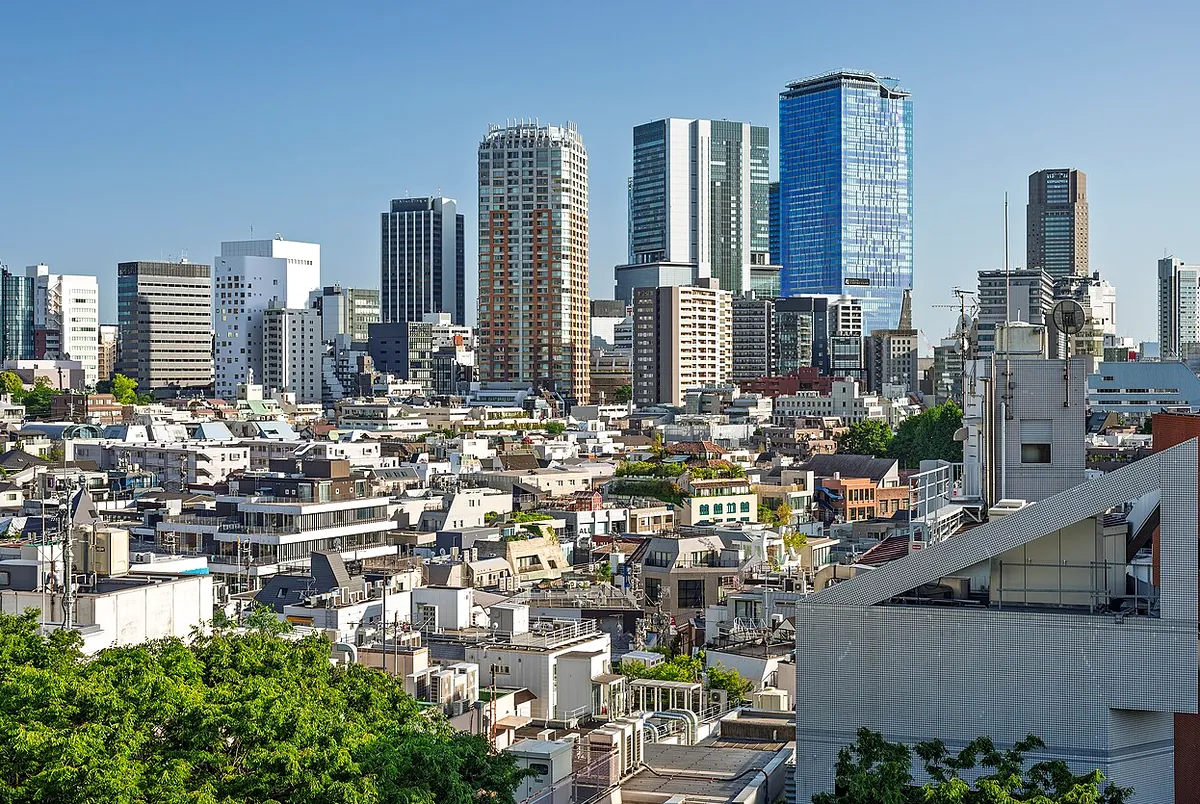
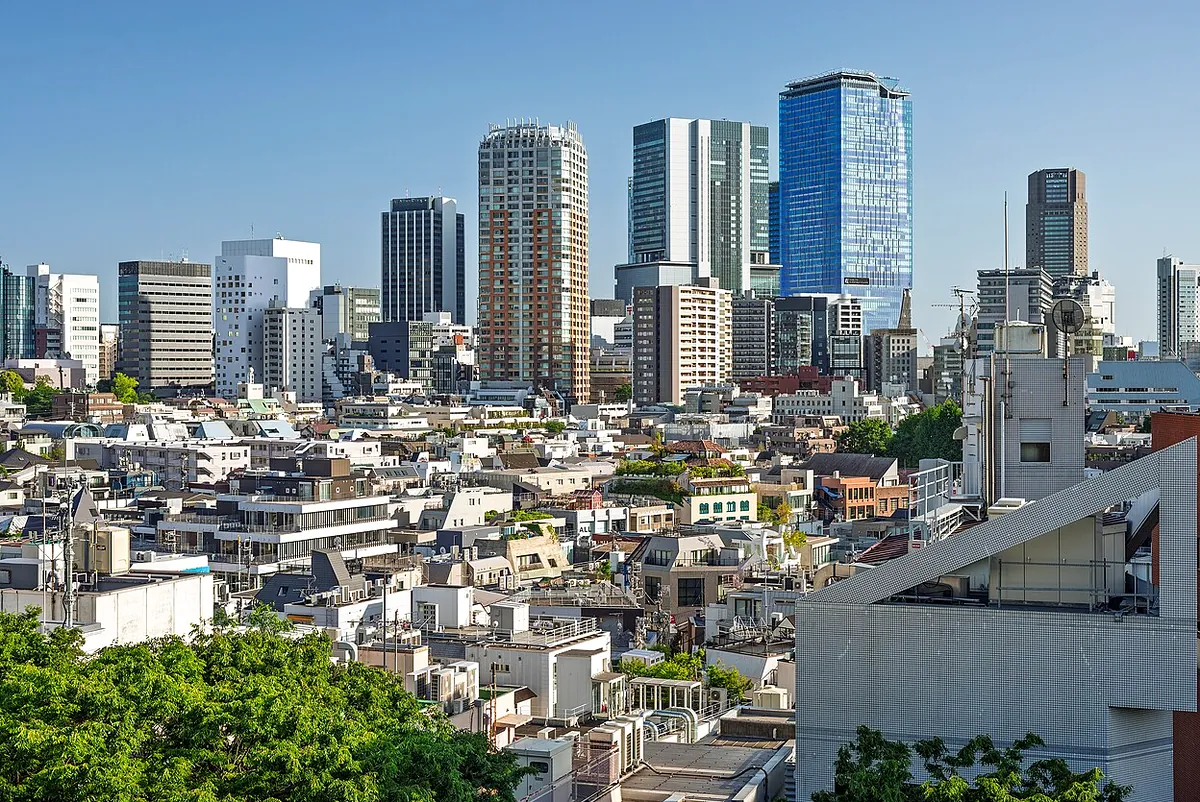
Framing this legendary crossroads is a futuristic architectural ensemble representing some of Tokyo’s most ambitious urban redevelopment projects. Commanding the skyline is the 230-meter Shibuya Scramble Square tower, a landmark collaboration between architectural master Kengo Kuma and renowned design firm Nikken Sekkei. Crystallizing minimalist Japanese design philosophy with cutting-edge engineering, its reflective glass curtain wall mirrors every ripple of movement across the intersection below. The skyscraper connects seamlessly to the elevated Skyway pedestrian deck network—creating weather-protected aerial walkways that channel foot traffic smoothly from station platforms straight into retail floors without congesting street-level crossings.
The crowning pinnacle of Shibuya’s spatial and visual experience is Shibuya Sky—Japan’s largest open-air rooftop observation deck perched proudly atop the tower at 229 meters high. From its windswept 360-degree panoramic terrace, the geometry of Shibuya Crossing resolves into a living electronic circuit board, where thousands of moving pedestrians trace endless pulses of light amid towering skyscrapers. This seamless integration of multi-level underground rail transit, a ground-level pedestrian scramble, and sky-high mixed-use towers establishes Shibuya Crossing not merely as a traffic junction, but as an international benchmark for vertical urbanism in the modern age.
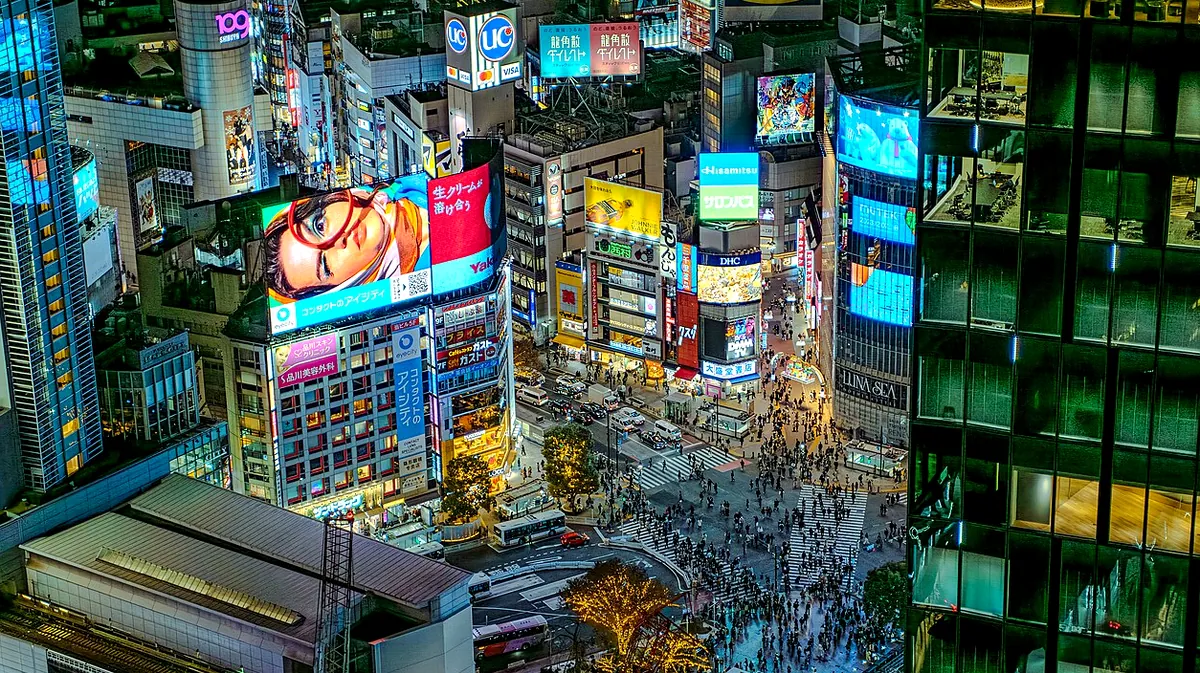
As twilight settles and darkness blankets the Kanto Plain, Shibuya Crossing sheds its daytime rush to don the dazzling attire of one of the world’s grandest open-air spectacles. The intersection instantly transforms into a kaleidoscope of light as colossal digital billboards adorning landmark towers ignite in unison. High-definition screens wrapping Magnet by Shibuya 109, the towering glass facade of QFRONT, and the 230-meter Shibuya Scramble Square cascade brilliant neon spectrums down onto dark asphalt. Beneath shimmering refracted light, every white stripe of the crosswalk turns into giant piano keys poised to resonate with visual energy the instant pedestrian signals flash green.
Nightlife at the heart of this intersection is a captivating postmodern fusion, where waves of commuters pouring out of subway exits merge into a ceaseless human current. Every two minutes, thousands of individuals carrying countless moods and stories step onto the asphalt for an impromptu public choreography. Crisp-suited office workers unwinding after hours, trendsetting youth sporting bold Harajuku-inspired streetwear, and awestruck travelers raising cameras aloft form a vibrant living portrait of the sleepless energy defining the capital of the Land of the Rising Sun. Viewed from upper vantage points, the interlocking sea of pedestrians resembles tiny electrical impulses coursing through the circuitry of a vast supercomputer, sketching a futuristic Tokyo that feels both exhilarating and dreamlike.
Yet the deepest allure of Shibuya after dark lies not merely in futuristic dazzle, but in dramatic spatial contrast—most vividly embodied just steps away inside the narrow alleyway of Nonbei Yokocho. Standing in stark opposition to soaring glass towers and million-color LED walls outside, “Drunkard’s Alley” preserves the intimate nostalgia of the early 1950s Showa era. Tucked right alongside the stone embankment of the elevated JR Yamanote railway tracks, this two-meter-wide lane packs nearly forty tiny watering holes, each seating just five to seven guests around weathered wooden counters.
Stepping across its threshold, futuristic electronic hum immediately gives way to the sizzle of yakitori chicken skewers over glowing charcoal, mingling smoky aromas with crisp pours of nihonshu sake and earthy shochu. Red paper chouchin lanterns sway beneath aged eaves, casting a warm amber glow that trembles gently whenever a steel commuter train rumbles overhead. Behind wind-faded noren curtains, time seems suspended—offering Tokyoites a cozy sanctuary after demanding workdays and creating an unforgettable harmony between postwar simplicity and hyper-digital modernity.
It is precisely this extraordinary symbiosis between neon-drenched boulevards and moss-grown back alleys that weaves the true soul of Shibuya at night. Rather than merely dazzling the senses with high-tech visual extravagance, the district quietly safeguards urban memory through deeply human, heartwarming corners. Within a single evening in the heart of the metropolis, travelers can marvel at the futuristic brilliance of the Scramble Crossing and minutes later clink glasses over warm sake in a nostalgic alley—feeling every layered heartbeat of a city endlessly reinventing itself without ever forgetting its past.
Beneath the towering shadows of mirrored skyscrapers and pulsing LED screens around Shibuya Crossing, the local culinary landscape unfolds like a rich tapestry bridging rustic Showa-era nostalgia with high-speed digital modernity. That enchanting contrast shines brightest inside Nonbei Yokocho—affectionately known as Drunkard’s Alley—nestled quietly alongside the bustling JR Yamanote tracks. Stepping through its narrow entrance transports diners straight back to postwar Tokyo, where glowing red lanterns illuminate intimate taverns seating just five to ten guests. Fragrant smoke from white binchotan charcoal carries the savory aroma of golden yakitori skewers glazed in decades-old house tare sauce or seasoned simply with pure sea salt. Sitting shoulder to shoulder with locals at time-worn wooden counters and sipping warm sake poured to overflowing inside cedar masu boxes, visitors experience the genuine warmth and unpretentious soul of Japanese izakaya culture.
In striking contrast to the tucked-away intimacy of Nonbei Yokocho, Shibuya’s dining map leaps straight into the 21st century with high-tech express sushi along Dogenzaka slope, led by favorites Uobei and Genki Sushi. Here, Japan’s national culinary art is reimagined through precision automation paired with classic Edomae craftsmanship. Seated before multilingual touchscreens, diners customize orders of rich fatty bluefin tuna, glistening salmon, plump scallops, and fresh sea urchin delivered each morning from renowned Toyosu Market. Seconds after tapping order, miniature Shinkansen bullet-train trays zip along multi-tiered tracks and brake with millimeter precision directly in front of each guest. Even at high speed tailored to Tokyo’s brisk pace, every mound of seasoned shari rice retains ideal warmth and airy texture beneath fresh, sweet seafood—proving cutting-edge engineering can coexist seamlessly with strict culinary tradition.
Winding onward through the European-inspired cobblestone slope of Spain-zaka brings food lovers to Shibuya’s renowned outpost of Ichiran Ramen, a sanctuary of quiet focus steps away from one of Earth’s loudest intersections. This celebrated Hakata noodle house turns dining into a meditative sensory ritual through its signature solo-dining booths known as Aji-Shuchu (“flavor concentration”). Inside each private stall, guests never see their server’s face—interacting solely through a half-drawn bamboo curtain that removes outside distractions so full attention rests on a piping-hot bowl of tonkotsu ramen. Pork bones simmered for hours yield a silky, collagen-rich broth without heaviness, paired with springy thin straight noodles and a dollop of secret Hiden no Tare red chili sauce blended from over thirty spices. Customizable order sheets let every diner tailor broth richness, garlic intensity, noodle firmness, and melt-in-your-mouth chashu pork—turning each bowl into a deeply personal masterpiece.
Surrounding Shibuya Crossing, food is never a random collection of eateries, but an intimate reflection of Tokyo’s spirit and daily life. Cozy yakitori alleys, pinpoint-accurate sushi express rails, and tranquil solo ramen booths come together to forge an unmistakable culinary identity. Whether you are a nostalgic soul craving the sizzle of charcoal-grilled skewers beside evening sake or a modern urbanite seeking a rich bowl of noodles in peaceful solitude, Shibuya welcomes every appetite with effortless understanding and hospitality.
Unlike landmarks enclosed behind museum walls or palace gates, Shibuya Crossing is a living, breathing urban phenomenon that never sleeps—where time and humanity flow continuously twenty-four hours a day. Still, to witness the full majesty of the world’s busiest intersection, the prime window to visit is at dusk transitioning into night, when towering LED screens across surrounding skyscrapers ignite in dazzling, multi-colored brilliance. Reaching this legendary crossroads is effortless via the massive Shibuya Station hub: arrive on the JR Yamanote Loop Line or Tokyo Metro’s Ginza, Hanzomon, or Fukutoshin lines, then follow interior signs toward the Hachiko Exit. The instant you step out onto the small plaza guarded by the bronze statue of Tokyo’s most loyal dog, the electrifying pulse of contemporary Tokyo unfolds right before your eyes.
To capture the full sweep of thousands of pedestrians crisscrossing in effortless harmony, elevating your vantage point is an absolute must. The rooftop Crossing View terrace atop Magnet by Shibuya 109 delivers a thrilling, close-up bird’s-eye angle directly above the surging crowd. For a quieter, completely free vantage point, the glass-enclosed skybridge linking Shibuya Station with Shibuya Mark City offers an ideal spot to film candid street scenes—especially atmospheric when umbrellas bloom across the crosswalk on rainy evenings. Yet the most breathtaking panorama awaits at Shibuya Sky, the open-air observation deck crowning Shibuya Scramble Square at 229 meters high. From its windswept infinity glass edge, Shibuya Crossing shrinks into a mesmerizing microcosm where streams of cars and pedestrians pulse like living binary code through a futuristic metropolis.
Stepping into Shibuya’s human current calls for embracing the Japanese cultural principle of Meiwaku—mindfulness to avoid inconveniencing those around you. When the pedestrian walk signal turns green, move steadily with the flow; never stop abruptly in the middle of the intersection or extend selfie sticks to pose, as a sudden pause can trigger a hazardous domino effect for hundreds of walkers behind you. Additionally, Shibuya Ward enforces strict municipal regulations: smoking is completely prohibited on all sidewalks and streets, carrying on-the-spot fines unless you use designated enclosed smoking rooms. If you arrive with bulky luggage straight from the airport, store your bags inside smart coin lockers scattered throughout station concourses so your hands remain free as you step into the crowd.
Amid globalized travel filled with hidden commercial traps, thoughtful planning is essential to preserving an authentic experience. Be cautious of suspiciously cheap tour offers that disguise commission-driven shopping detours as cultural sightseeing, wasting valuable hours in overpriced, designated retail stops. Instead, partnering with reputable tour operators committed to pure, zero-pressure itineraries grants complete freedom to explore legitimate shopping landmarks such as Seibu, Shibuya Parco, or Shibuya Stream at your own pace. To ensure a seamless journey to the Land of the Rising Sun without stressing over visa paperwork or language barriers, consider booking a professionally curated all-inclusive tour package for a truly relaxing, unforgettable holiday.