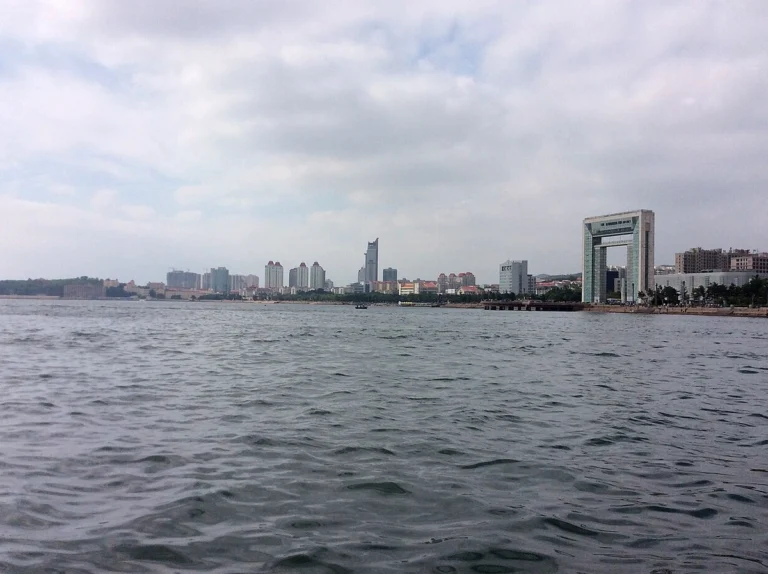
Going back in time to the late 19th century, when the wave of Western imperialism swept across the shores of East Asia, Jiaozhou Bay in Shandong Province suddenly became the epicenter of volatile geopolitical maneuvering. Stemming from the 1898 Treaty between the German Empire and the Qing Dynasty, Qingdao transformed from a humble coastal fishing village into a model concession territory with extensive extraterritorial privileges. In this colonial landscape, the presence of the Catholic Church was closely linked to the missionary mission of the Society of the Divine Word (S.V.D.), entrusted directly by the Vatican to pioneer the new land under the leadership of its first bishop, Augustin Henninghaus. The first steps taken by German missionaries laid the foundation for a system of religious and cultural institutions, turning Qingdao into one of the most important Catholic outposts in Northeast Asia at that time.
Yet, the course of history has never flowed smoothly. Having gone through the turbulent upheavals of the 20th century—from the first period of Japanese occupation lasting from 1914 to 1922 to China’s official recovery of sovereignty in 1922—the destiny of the Diocese of Qingdao faced challenging historical crossroad turns. To ensure the continuity and development of religious activities within the new geopolitical context, the Vatican entrusted the governance of the diocese to American Society of the Divine Word priests. It was precisely during this period of power transition and shifting times that an outstanding figure emerged to completely change the spiritual architectural landscape of this coastal city: the second bishop of the diocese, fully named Thomas Tien Ken-sin (Tian Gengxin), the central figure with a strategic vision who decided to initiate and construct the majestic grand cathedral dedicated to St. Emil (St. Michael’s Cathedral, Chinese: 青岛圣弥厄尔教堂), an eternal symbol of faith and architectural art.
To materialize this grand ambition, the diocese assigned the design responsibility to the talented German monk and architect Werner Lahneck. With a deep understanding of European construction arts and sensitivity to local culture, Lahneck created a unique cross-cultural architectural masterpiece, perfectly combining solemn medieval Gothic and robust, solid German Renaissance Revival styles. Construction began in May 1931, amidst a political climate in China still steeped in the complex turbulence of the era. After more than three years of meticulous labor down to every carved stone detail and vaulted ceiling structure, the church was solemnly inaugurated on October 28, 1934, just in time for the eve of the Feast of Christ the King, becoming a great source of pride for the Catholic community at that time.
Even so, the survival journey of this grand cathedral remained tied to the tragedies of the times. When World War II broke out, the second Japanese occupation period from 1938 to 1945 cast a gloomy atmosphere over the city, directly threatening the safety of religious buildings and church personnel. The pinnacle of severe trials occurred during the Cultural Revolution from 1966 to 1976, when St. Emil’s Church suffered heavy damage and destruction to its structure and internal sacred relics under the pressures of the era. It was not until 1981, when the people’s government of Qingdao city approved a comprehensive restoration plan, that the church gradually revived from the ashes of history to regain its original magnificent appearance.
Through many historical phases and the vicissitudes of time, the historical and artistic value of St. Emil’s Church was finally given its rightful position in the national cultural annals. In 1992, the structure was officially recognized as a Key Cultural Relic Protection Unit of Shandong Province, opening a new chapter in the preservation of colonial architectural heritage in China. By 2006, with its irreplaceable representative values in architecture, religious history, and urban planning, the sanctuary was ranked as a 6th-batch Major National Historical and Cultural Site. Today, standing majestically amidst the bustling modern rhythm of Qingdao, St. Emil’s Church is not merely a bustling center for worshipers but also an epic in stone, fully preserving the heroic and tragic memories of a bygone historical era.
Under the lens of traditional East Asian geomancy combined with modern European urban spatial planning thought, St. Emil’s Church in Qingdao, also known by locals by its Chinese name 青岛圣弥厄尔教堂, emerges as a masterpiece of terrain positioning and landscape architecture. Located at No. 15 Zhejiang Road in the bustling Shinan District, this religious structure was carefully built in an extremely prime location, where the residual ridge of majestic Taiping Mountain stretches straight toward the azure coastline of Jiaozhou Bay and the vast Yellow Sea. That Taiping Mountain, in memories and old regional chronicles bearing the colonial-era name Bismarck-Berg, now serves as a solid backdrop, sheltering and infusing vital energy into the entire architectural complex below. Choosing this coordinate not only carried strategic significance regarding the visual spatial control of the municipal government at the time, but also coincidentally adhered perfectly to the classic Chinese feng shui principle of backing onto mountains and facing the sea—meaning leaning against rolling mountains to create a solid foundation, and facing rivers and seas to welcome vital breath, wealth, and the cyclical energy of heaven and earth.
The elevated and airy terrain of the Taiping Mountain residual ridge provided favorable conditions for German architects back then to unleash their creativity and craft a structure with exceptional spatial depth. When surveying and planning the urban map of Qingdao, the colonial planning department was extremely subtle in recognizing the potential of the Zhejiang Road axis. They cleverly designed this road into a vital transportation and visual axis, running straight from the hillside facing directly out to the open sea. St. Emil’s Church was positioned right at the center of this urban planning structure, strictly applying a strict symmetrical layout deeply imbued with classical European architectural style. The facade of the cathedral does not face sideways or remain hidden in winding alleys, but is respectfully turned westward, looking straight down the gentle slope of Zhejiang Road. This arrangement creates a tremendously grand and powerful visual effect, evoking a monumental feeling known as monumentality in Western public architectural art.
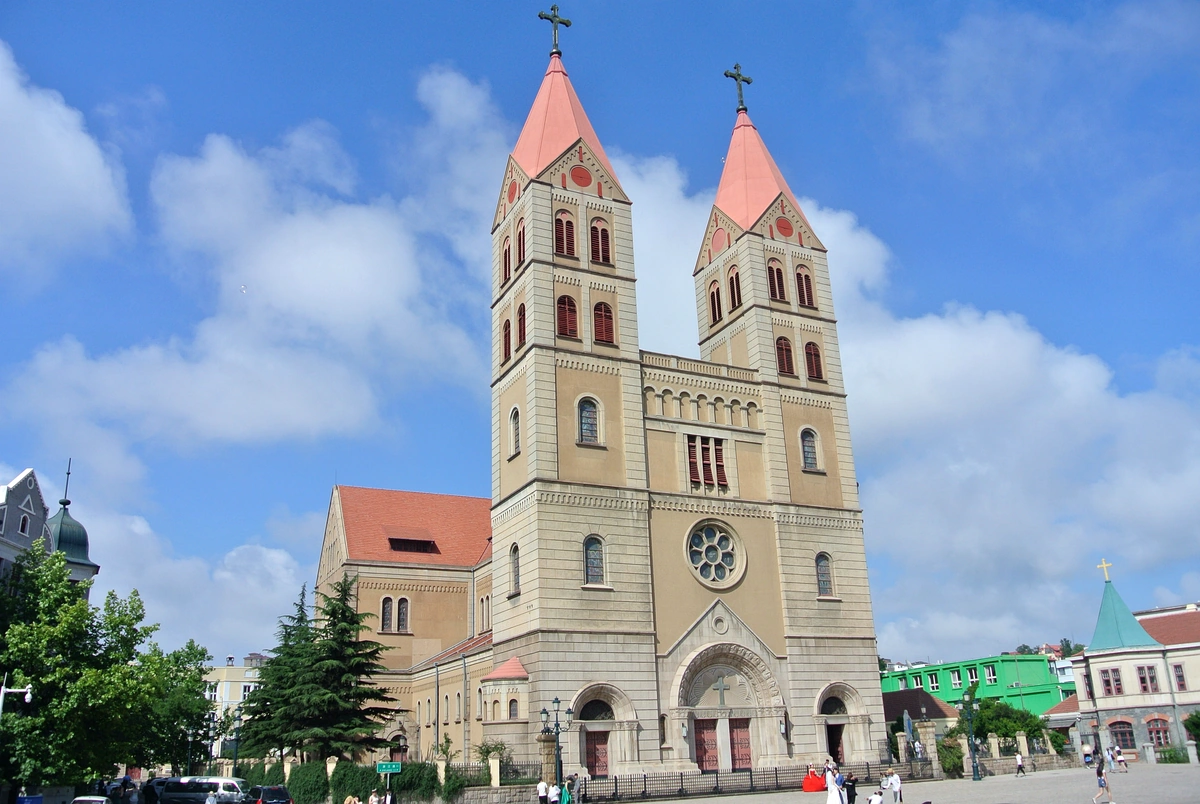
That visual effect becomes even more pronounced and overwhelming than ever for any visitor or traveler moving from the coastline upwards along the slope of Zhejiang Road. From a distance of hundreds of meters below, looking up the slope, the towering twin bell towers of the church gradually emerge as an ultimate focal point cutting across the skyline, forming a scene that is solemn, majestic, and strangely poetic. The technical construction process of the church in the early 20th century was also a testament to the pinnacle combination of advanced European construction techniques and the resilient labor of the local people. Engineers had to calculate extremely carefully to reinforce the foundation on steep terrain, ensuring sturdiness against coastal weather fluctuations, especially gales and tides. The use of local granite materials combined with red bricks fired at high temperatures not only helped the structure blend perfectly with the characteristic red-roofed and yellow-walled landscape of Qingdao’s old quarter, but also created a durable armor defying the corrosive effects of sea salt across centuries of ups and downs.
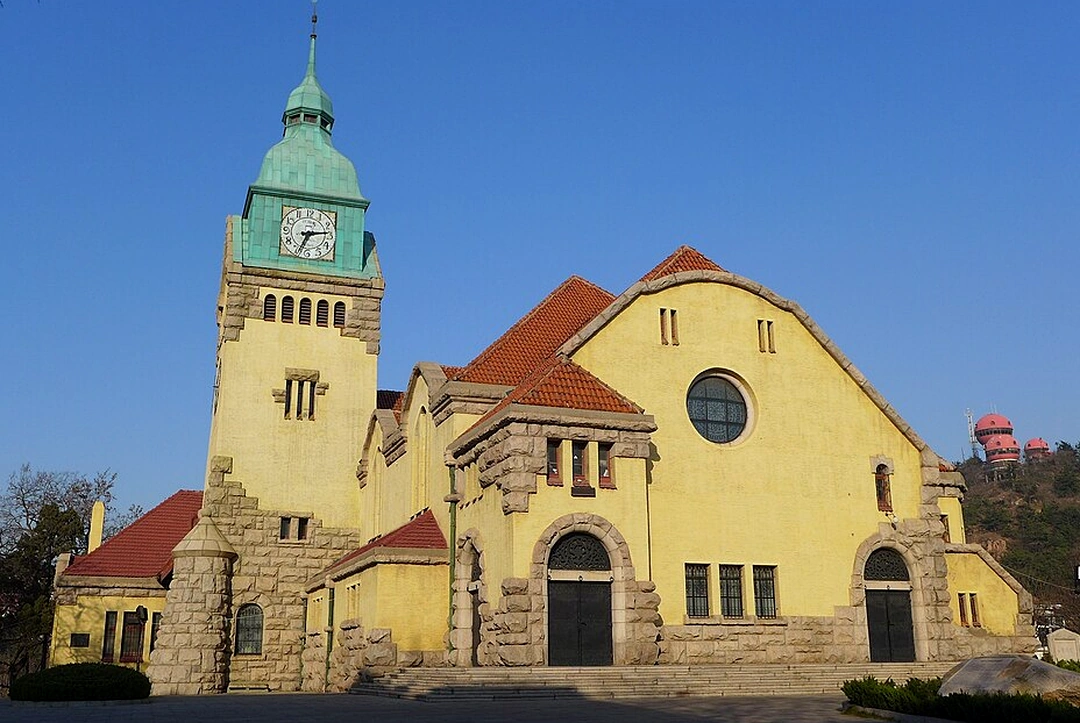
Besides its value in construction techniques and scenic axis layout, the surrounding space of St. Emil’s Church is a living museum of urban cultural intersection. Standing from the wide courtyard in front of the church facade and gazing into the distance, one can capture the panoramic picture of both old and modern Qingdao, where ancient German-style roofs peek beneath lush old trees, intertwining with the modern rhythm of a dynamic port city. Zhejiang Road now acts as a soft silk ribbon connecting the sacred space of the cathedral with the vibrant breath of the ocean, creating an area heavily marked by the modern architectural heritage imprint of Shandong Province. The ingenious combination of perilous yet poetic natural terrain, the imperial-scale spatial planning mindset of the Germans, and urban landscape staging art has turned St. Emil’s Church into an enduring symbol where every brick, every arched window, or every sloped corner holds the sedimentary stories of geographical history and human culture.
Stepping into the interior and exterior space of St. Emil’s Church in Qingdao, also known by its Chinese name 青岛圣弥厄尔教堂, the distant traveler is immediately overwhelmed by one of the rarest architectural masterpieces in the Far East. This work is a living testament to the pinnacle of early century construction techniques, where the flawless intersection between Gothic and Romanesque architectural currents is expressed exquisitely through every stone grain and arch rhythm. Not only possessing timeless aesthetic value, the church also marks history as one of the first structures in China to apply advanced reinforced concrete structural techniques harmoniously combined with traditional local brick and stone materials, creating a whole that is solid and majestic yet rich in Western religious art.
Examining its actual scale, the structure boasts impressive technical specifications with a construction area of up to about 1,148 square meters, on a total floor area of 2,367 square meters. Viewed from afar overall, the church is 60 meters long and 30 meters wide, spreading majestically in the heart of the coastal town. The shining highlight and symbol defining the city’s skyline is the towering pair of twin bell towers reaching up to 56 meters high. At the peak of each tower is a pointed octagonal spire, proudly rising to the sky and dotted with ancient iron crosses, creating a powerful upward spatial dimension reminiscent of magnificent European cathedrals while impressively presenting itself in a unique way in the heart of East Asia.
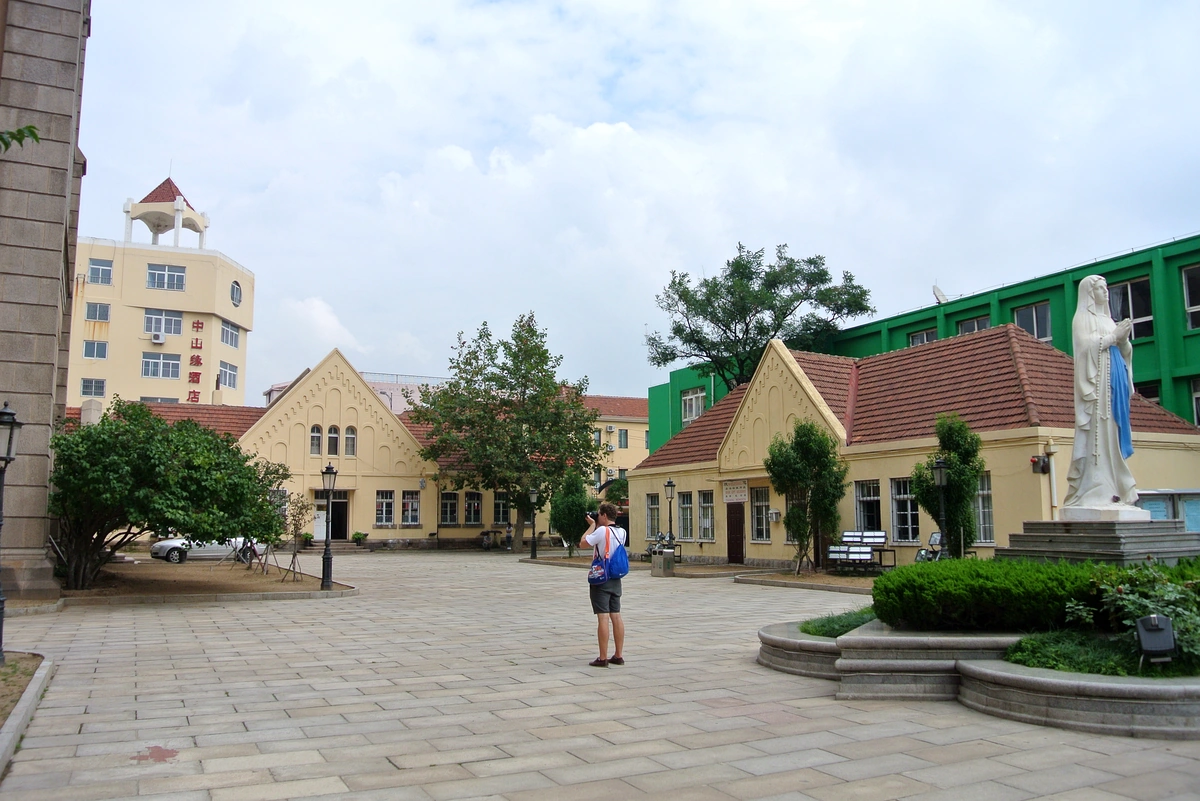
Delving deeper into the analysis of the facade’s spatial structure, the observer is immediately attracted by the extremely meticulous material crafting technique. The base of the cathedral and key wall corners are entirely paneled with granite quarried directly from local quarries, imparting a imposing, sturdy beauty that withstands countless changes of time and sea mist. Conversely, the upper walls choose to honor the rustic beauty of exposed red bricks with astonishing thickness, both retaining heat well and creating a subdued, warm characteristic color scheme. The church facade comes alive thanks to the presence of a Romanesque portal designed with multiple receding layers with artistic intent, guiding the human gaze and consciousness toward the sacred place. Right above the main portal is the classic Rose Window, delicately pierced to symbolize absolute purity and the enlightening grace of God.
Stepping across the threshold into the interior space, visitors feel as if they are straying into another dimension where light and shadow are orchestrated by the hands of master cathedral architects. The interior space is highlighted by a high and wide Ribbed Vault system, stretching into graceful arch rhythms that create a sense of space expanding infinitely in height. Along the altars and enclosure walls is a brilliant stained glass window system, elaborately crafted to depict important biblical stories. When sunlight penetrates this stained glass layer, the entire sanctuary space is covered with shimmering, magical streams of light, enhancing the majesty of the main altar and evoking in every pilgrim a deep emotional feeling, strongly upward toward eternal values.
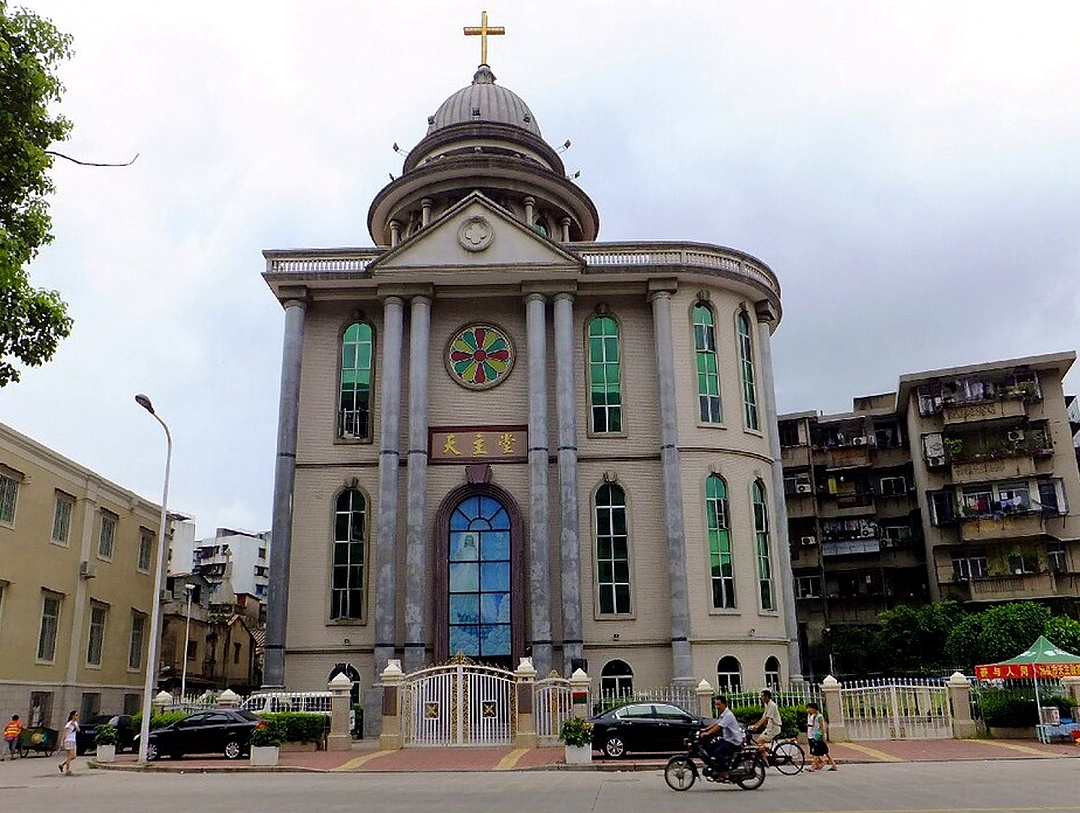
When night falls over the Shandong Peninsula, enveloping the Romanesque arched windows and winding old streets blending Chinese breath with Prussian architecture, St. Emil’s Church in Qingdao (St. Emil Church – 青岛圣弥厄尔教堂) does not sink into a quiet slumber but transitions into an entirely new, enchanting dynamic cultural chapter. In a strategic effort to activate the urban night economy, the Qingdao municipal government has heavily invested in carrying out a comprehensive artistic lighting revolution for this entire religious architectural complex. High-tech LED lighting systems with warm amber strips and royal yellow hues have been skillfully arranged to uplift and embrace every contour of the rough granite material along with the dark red brick layers. The gentle yellow light does not strip away the solemnity of the structure; on the contrary, it evokes a deep sense of nostalgia, fully honoring the patina of time that has coated the material surface through nearly a century of ups and downs. The strongest visual highlight belongs to the peaks of the twin bell towers and the towering crosses, illuminated brilliantly against the deep night sky of the historic district, standing peacefully like a visual lighthouse guiding many wandering souls seeking peace in the heart of the modern metropolis.
Stepping through the grand doors into the church’s interior at night, visitors feel as though they are entering a tranquil realm polished by sacred sounds and deeply reverent minimalist architecture. This place still preserves intact the ancient pipe organ—the “musical soul” of the church—which frequently resounds during special classical concerts on major holidays such as Christmas, Easter, or peaceful weekend afternoons. The majestic organ music echoes beneath the soaring vaults, blending with light filtering through stained glass window frames depicting religious stories, creating an immensely magnificent auditory and visual experience that touches the deepest emotions of anyone present. The interior space at this moment transforms into a true art sanctuary, where classical symphonic music combines perfectly with European cathedral architecture, driving away all the hustle and bustle of the outside urban life.
Returning to the exterior space, the square surrounding the church at night dons a shimmering, vibrant cloak of contemporary cultural life. Thanks to its romantic, ancient, and rare European-style beauty in the East Asian region, the square and the steps of the church have long been honored by youth and the artistic community as one of the most famous “wedding photography sanctuaries” in all of China. Every day, this place welcomes hundreds of couples from all over the country to record moments of marital happiness against the backdrop of towering red brick twin towers under sunset or shimmering under night lights. Laughter, flowing wedding dresses blending with chiming church bells create a unique dynamic cultural landscape, turning St. Emil’s Church not merely into a static religious architectural monument, but into a living symbol of love, art, and urban life intersecting past and present.
Stepping out of the subdued, majestic space bearing the deep Romanesque and Gothic architectural marks of St. Emil’s Church in Qingdao, visitors seem to immediately step into an entirely different dimension where city life harmonizes with centuries-old culinary heritage flavors. Just a few steps of stroll along Zhongshan Road—the busiest historic commercial axis of this coastal city—a rich and brilliantly colorful culinary map opens up. Not only a stop for lovers of architectural history, the area adjacent to the church is also known as the paradise of Lu cuisine—one of the four major culinary schools of China, while preserving famous seafood preparation secrets tied to the salty breath of the Yellow Sea. There, each dish is not merely a satisfaction of the palate, but a living chronicle of cultural enrichment through the ups and downs of time.
Tracing back through history to the oldest culinary symbols here, an unmissable destination is the prestigious Chunhelou restaurant standing proudly right on Zhongshan Road, which has lit its stoves since 1891. Through more than a century of refinement, this place still preserves the original flavor of Shandong cuisine with sophisticated preparation techniques requiring master skills of seasoned chefs. Visiting Chunhelou amidst the chilly weather of the bay area, diners cannot miss stir-fried crispy sea snails, a culinary masterpiece demanding extremely high flame control techniques. The chef must control heat perfectly in a brief moment so that fresh sea snails are just cooked, retaining their crunchy texture and natural rich sweetness, blending with a rich gravy thick with traditional flavors. Besides, the fragrant crispy fried chicken with golden, crunchy skin while the meat inside remains tender and juicy is also a testament to the pinnacle of traditional seasoning and frying arts passed down through generations here.
Leaving the elegant banquet rooms of heritage restaurants, the local culinary rhythm leads travelers into the bustling, sound-filled space of Cuisaixiyuan and the pier area, where fresh seafood culture and the art of enjoying Qingdao beer reach iconic heights. Just a few minutes’ walk from the church, the atmosphere here is always fragrant with the scent of the sea. Unique products of the Jiaozhou Bay waters such as meaty, sweet sea crabs or rich, smooth sea urchin steamed eggs melting on the tip of the tongue bring along the full salty taste of the deep ocean. The highlight creating the true taste soul of Qingdao is the experience of enjoying unpasteurized draft beer served in unique and liberal take-away plastic bags. Holding a golden, bubbling, cool bag of draft beer in hand, nibbling on squid grilled with the aroma of glowing charcoal or a plate of local-style spicy stir-fried clams right on a tree-shaded old street corner, one will fully feel the generous, liberal core of port city residents, turning the surrounding space into an unforgettable multi-sensory experience.
Translating architectural history and urban memories into a practical experiential journey requires visitors to carefully prepare both travel schedules and specific cultural codes of conduct at this long-standing religious sanctuary. According to city heritage management documents, opening hours of St. Emil’s Church in Qingdao are flexibly adjusted across two seasons to optimize natural sunlight and maintenance work. Specifically, between May and October, when early morning sunlight shines on red bricks and sunsets linger on top of bell towers, the church opens its doors to welcome guests from 8:00 AM to 5:30 PM. In winter, starting from October to April of the following year, operating hours shift slightly, opening from 8:30 AM and closing at 5:00 PM to ensure visitor safety before dark turns cold. However, a crucially important note for those traveling on Sunday mornings or major Catholic festivals during the year is that the main hall may hold solemn mass; during this time management will limit free visitors to ensure a sacred space for believers to pray. Sanitation and infrastructure maintenance fees are listed at a modest 10 to 15 RMB per person, a fund contributing directly to the upkeep of the century-old Gothic architecture against the ravages of time and salty sea air.
Urban traffic issues when approaching the church are also a chapter that needs thorough study by any modern explorer setting foot in Qingdao’s old quarter. A sincere advice from veteran travel reporters is absolutely not to drive private cars or rent self-drive cars here, as the area around the structure possesses a peculiar traffic system with narrow streets, a tangle of one-way roads, slopes exceeding 15 degrees in places, and an extreme shortage of public parking lots. The optimal and civilized option is to use the urban public transit system; visitors can take subway Line 3 or Line 1, get off at Qingdao Station or Zhongshan Road Station, and leisurely walk through alleys shaded by ancient trees to find the sanctuary. Those walking steps not only help avoid the obsession with traffic jams or retroactive fines but also open up a wonderful opportunity to observe the slow-paced rhythm typical of German-style houses hiding behind sea fog. To capture the most classic frames embracing the majestic appearance of towering bell towers against the sky along with the deep perspective of the old town space, the intersection of Zhejiang Road and Feicheng Road is the golden coordinate that no photographer should miss.
Stepping through the solemn gate, each visitor needs to strictly adhere to rules of conduct to preserve the serenity of the cathedral space. Attire when entering the hall must ensure modesty and politeness, absolutely no revealing clothing, and hats must be removed when setting foot inside the worship space. An ultimate taboo to remember is never to use flash photography, as high-intensity light from camera flashes can cause serious damage to ancient material surfaces and interior murals. Besides, exploring the old quarter also harbors quite a few tourist traps requiring high vigilance from visitors. Be cautious of self-proclaimed free walking photography services soliciting around the square to avoid falling into inflated pricing traps when receiving photos, and never buy floating German military antiques of unknown origin sold along the road since most are sophisticated fakes. Furthermore, because Qingdao’s terrain is a hilly city with slippery polished granite paved roads, equipping specialized anti-slip shoes is a vital secret to protect your feet throughout the trip. To have the opportunity to fully enjoy every unique cultural intersection moment without worrying about organization details, you can refer to the all-inclusive tour program designed exquisitely by our team of experienced experts.