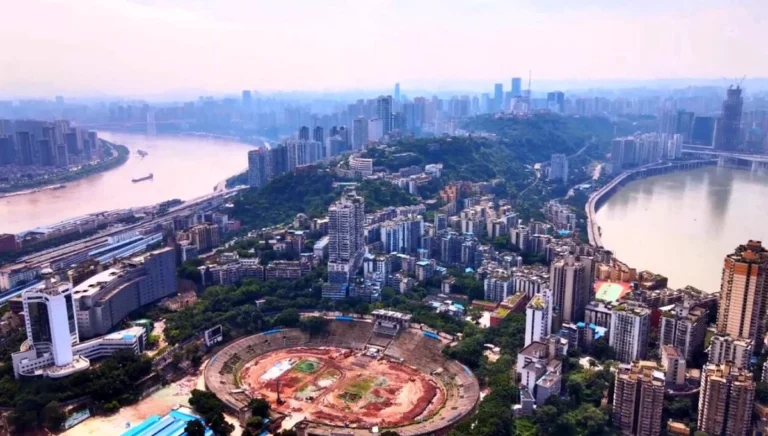
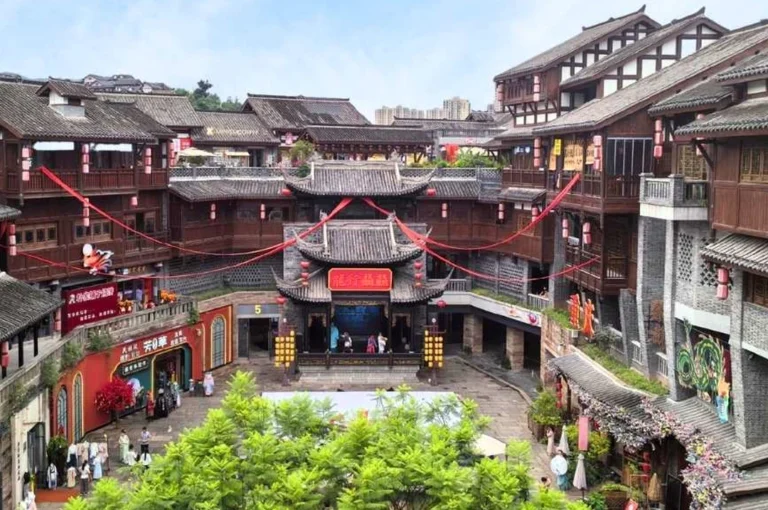
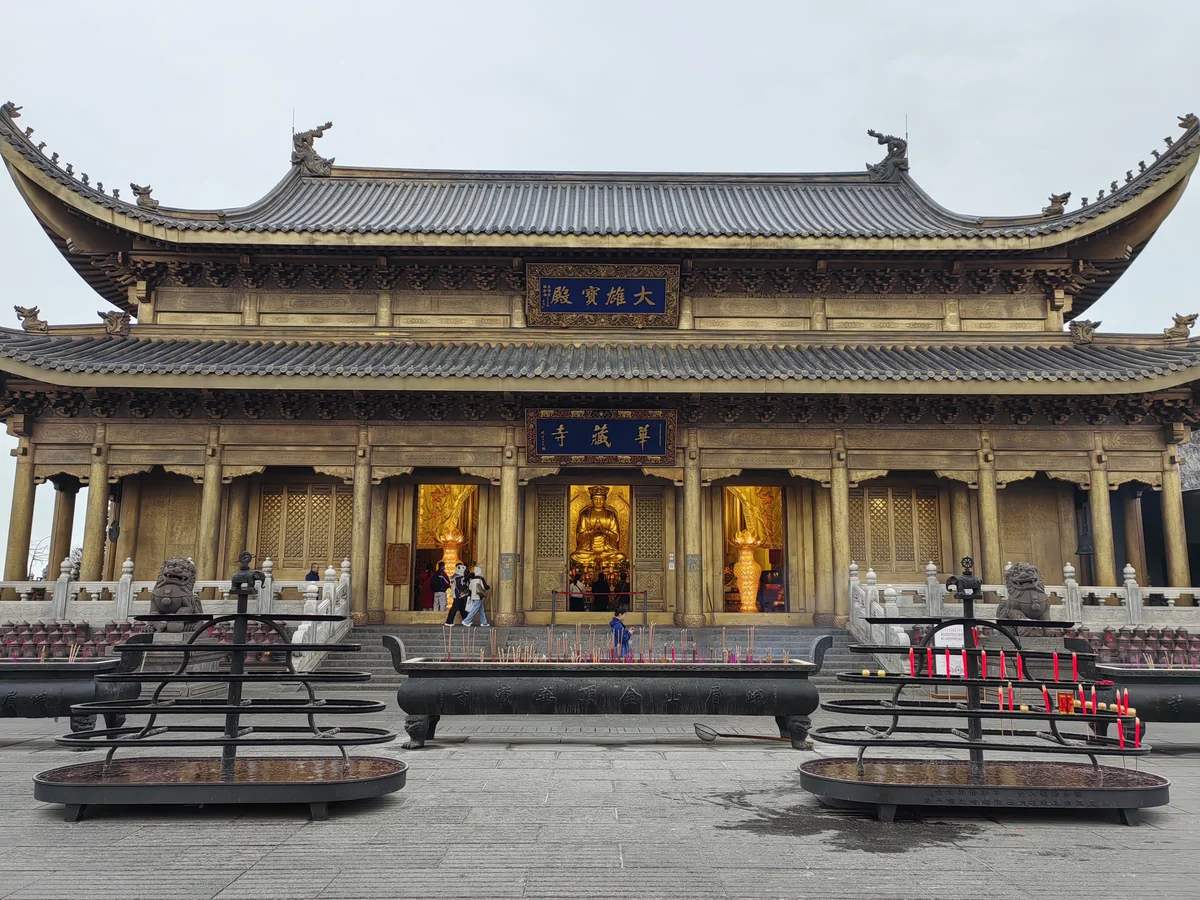
Chongqing – the foggy mountain city, where skyscrapers stand proudly amidst the Yangtze and Jialing Rivers, where winding roads drape like silk ribbons across hillslopes, and where fiery spicy cuisine has become an inseparable symbol. Yet if there is one culinary experience that truly defines Chongqing, making it uniquely unforgettable, it is hotpot. And among countless renowned hotpot establishments, one name rises like a legend, distinguished not only by its superb flavor but also by its colossal scale—a one-of-a-kind culinary wonder on Earth: Pipa Yuan Hotpot.
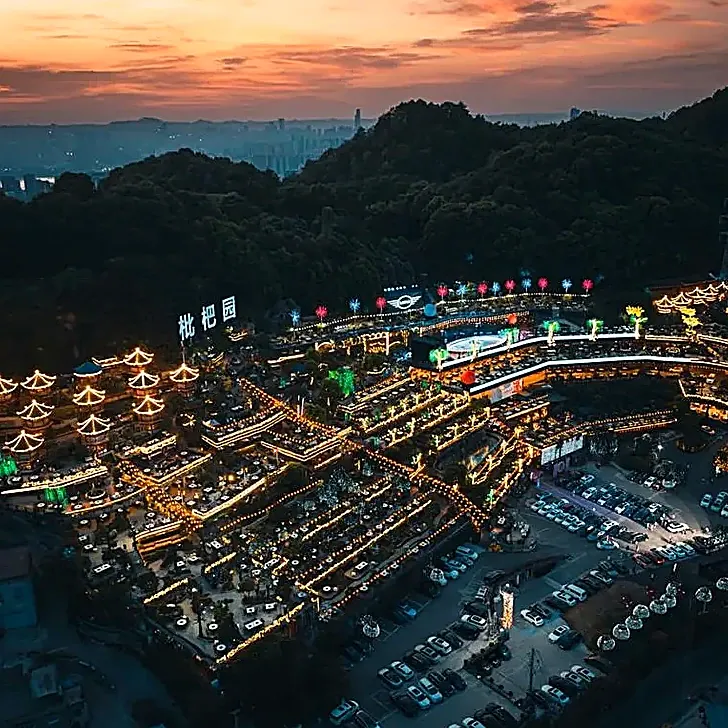
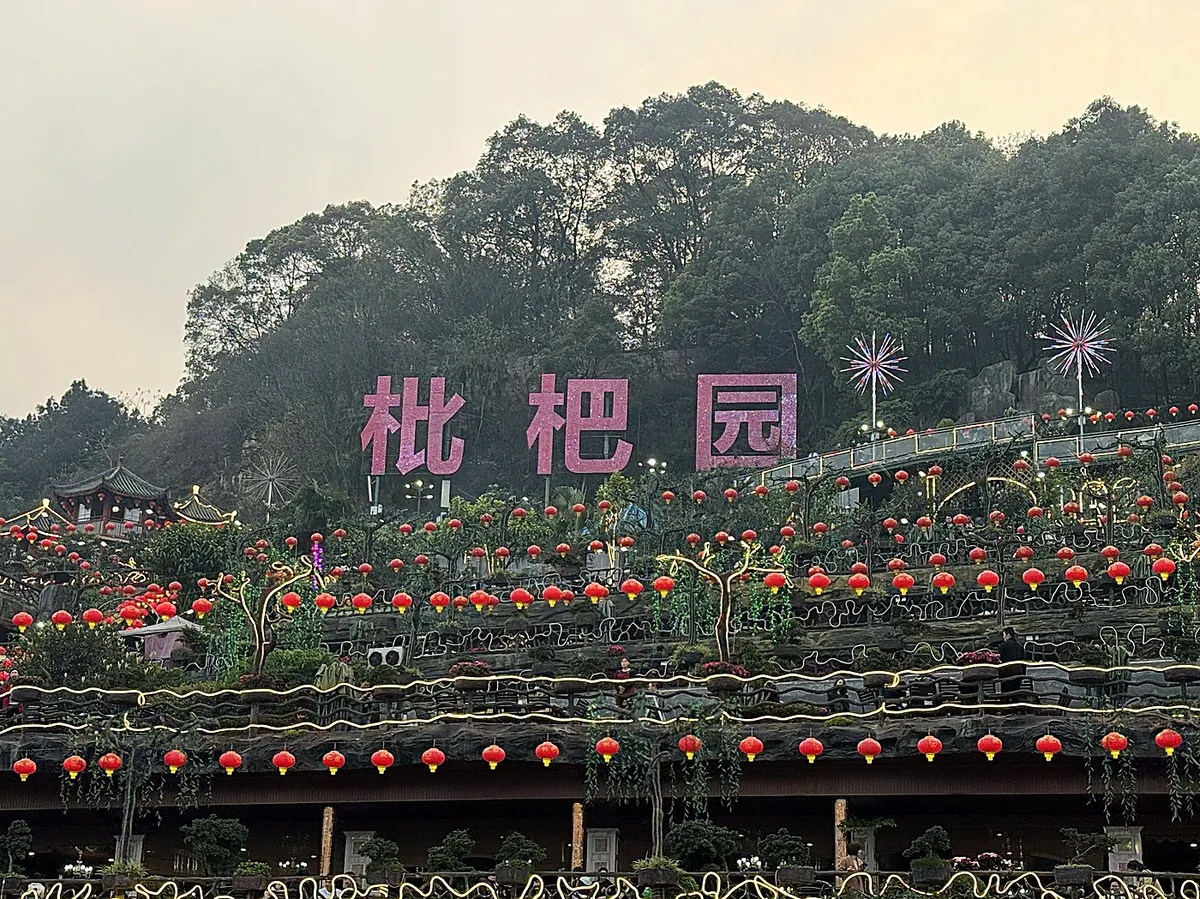
Imagine standing on a hillside, looking down into a valley brilliant with lights—not of a miniature city, but of a hotpot restaurant. Hundreds, even thousands of dining tables stretch out, winding according to natural terrain, each table featuring a glowing red stove radiating a captivating, fiery aroma. That is Pipa Yuan—the world’s largest hotpot restaurant, a Guinness World Record location occupying half of the majestic Nanshan Hill. This place is not merely a restaurant; it is a destination, a profound cultural experience, and a culinary adventure that anyone setting foot in Chongqing cannot miss.
With VDS Travel, we do not merely bring you to famous landmarks; we guide you into the most authentic stories and experiences, touching hearts and awakening all senses. Chongqing Pipa Yuan Hotpot is more than a meal; it is a harmony of flavors, colors, sounds, and emotions, where you immerse yourself in the vibrant pulse of the mountain city, feel the warmth of local residents, and explore the depth of Bashu cuisine.
Join us to discover Pipa Yuan hotpot, the world’s largest hotpot restaurant where Chongqing cuisine reaches legendary heights, and prepare for an unforgettable taste journey!
1. Pipa Yuan Hotpot: A Legend in the Heart of Chongqing – Where Cuisine Reaches World Record Heights
When mentioning Chongqing, people often immediately think of bridges spanning rivers, skyscrapers rising amidst fog, or winding, challenging alleys. Yet another image shines equally brilliantly and vividly: Pipa Yuan Hotpot—a culinary wonder that has passed into legend, not only for Chongqing alone but for the whole world. Proudly situated on Nanshan Hill in Nan’an District, Pipa Yuan is not merely a restaurant, but a symbol and a resounding testament to the creativity and culinary passion of Chongqing’s people.
• Guinness World Record and Unprecedented Scale
The first factor making Pipa Yuan outstanding and capturing global attention is its extraordinary scale. Holding the title of “the world’s largest hotpot restaurant” recorded in the Guinness Book of World Records, Pipa Yuan is genuinely an astonishing culinary architectural work. This restaurant is not simply a large building; it encompasses half a hill, stretching across a vast area with nearly 900 dining tables capable of simultaneously serving close to 6,000 diners. This figure is not dry statistics; it paints a vivid picture of a colossal culinary space where thousands of people gather to enjoy fiery spicy flavors together, creating an unprecedentedly vibrant and bustling atmosphere.
The name “Pipa Yuan” (琵琶园) carries romantic and evocative beauty. “Pipa” is the name of a traditional Chinese string instrument shaped like a pear, often used to express melodious, fluctuating tunes. “Yuan” means garden. Perhaps this name wishes to evoke a culinary garden where diners can find relaxation, enjoying delicate flavors like musical notes, or simply because the overall shape of the restaurant viewed from afar resembles a pipa instrument. Whichever interpretation is chosen, this name has contributed to breathing a soul into this unique landmark.
• Prime Location and Breathtaking Views
Selecting Nanshan Hill as its location was no coincidence. Nanshan has long been famed as the “green lung” of Chongqing, featuring fresh air, beautiful natural scenery, and notably panoramic city views. From Pipa Yuan, especially at night, diners can admire a shimmering, magical picture of Chongqing with brilliant lights reflecting on river surfaces, spanning bridges, and sparkling skyscrapers. The combination of a unique culinary space and majestic natural scenery turns Pipa Yuan into a destination not only for dining but also for sightseeing, to feel Chongqing’s beauty from a completely different perspective.
• Unique Architecture Blending Into Nature
Pipa Yuan’s architecture is a special highlight, demonstrating skill in utilizing and blending with natural terrain. Instead of flattening the hill to construct a large building, Pipa Yuan is designed in terraced tiers, with dining areas arranged across multiple levels winding along the mountain slope. Winding pathways, stone staircases, and small gardens interspersed between dining table areas create an interesting labyrinth where every viewpoint offers a fresh surprise.
At night, when thousands of bright red lanterns are lit, Pipa Yuan transforms into a shimmering, magical “hotpot city.” Warm yellow lighting combined with plant greenery, the red color of hotpot cauldrons, and diners’ bustling activity creates a vivid, colorful picture. It feels like stepping into a fairy-tale village where stories of cuisine and culture are recounted through rising steam from hotpot cauldrons. This is more than a meal; it is a stroll, a journey exploring space and time.
The evolution of Chongqing hotpot, from a working-class dock laborer meal to an international specialty, has found a new zenith at Pipa Yuan. This restaurant not only inherits and promotes traditional hotpot quintessence but elevates it to new stature, transforming it into an indispensable travel experience. Pipa Yuan is not just a place to enjoy hotpot, but a place to feel Chongqing’s pulse, understanding local culture and people more deeply.
2. Journey Exploring the “Hotpot City” of Chongqing: Where Fiery Spiciness Thrives
Chongqing is known not only by nicknames like “mountain city” or “fog city,” but also as “hotpot city” (火锅之城). Hotpot here is not merely a dish, but part of the soul, a lifestyle, an indispensable social ritual in daily citizen life. To truly understand and appreciate the value of Pipa Yuan Hotpot, we must place it within the broad context of Chongqing’s hotpot culture—where fiery spiciness is not just a flavor but a life philosophy.
• History and Characteristics of Chongqing Hotpot
Chongqing hotpot history originates from bustling docks along the Yangtze River in the late 19th and early 20th centuries. Back then, poor laborers, mainly porters, often bought cheap beef offal parts like tripe, stomach, and liver, dipping them into a spicy hot broth pot to warm bodies and replenish energy. The hotpot broth was seasoned richly with Sichuan peppercorns, huajiao (creating characteristic numbing and spicy flavors – mala 麻辣), and other spices to mask offal fishy odors and stimulate taste buds. From a working-class dish, Chongqing hotpot gradually conquered all social strata and became a culinary symbol of the Bashu region.
The most striking characteristic of Chongqing hotpot is its unique mala (numbing-spicy) flavor. Sichuan chili delivers tongue-piercing spiciness, while huajiao generates numbing sensations on tongue tips, stimulating all senses. This combination warms bodies while forging complex, unforgettable sensory experiences. Broths usually feature bright red hues, thickened by chili and beef oils, emitting captivating, rich aromas from the moment hotpots start simmering.
• Jiugongge Hotpot (9 Grids) – Symbol of Sophistication
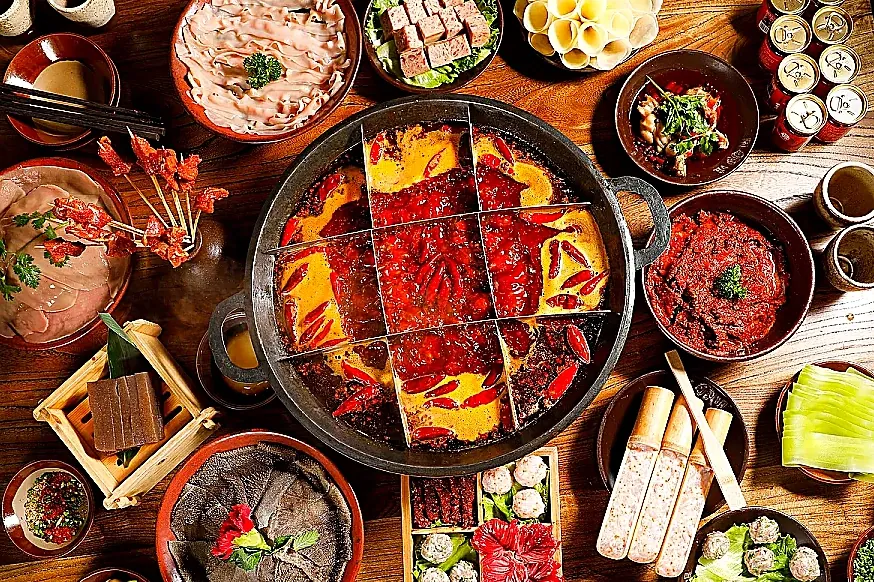
Among the most unique features of Chongqing hotpot, highlighted at Pipa Yuan, is the Jiugongge hotpot (九宫格火锅 – nine-compartment hotpot). This hotpot is divided into nine small square compartments via partitions. Each compartment serves a distinct function:
- Central compartment: Highest temperature, ideal for quickly dipping thinly sliced meats, seafood, or ingredients requiring fast cooking.
- Surrounding compartments: Moderate temperatures, perfect for dipping vegetables, tofu, or ingredients requiring longer cooking times to absorb spices.
This division helps control doneness for each ingredient type while preventing flavors from intermingling, preserving each dish’s purity. It also reflects meticulous sophistication in Chongqing culinary culture, turning simple meals into tasting art.
• Fresh Ingredients and Unique Dipping Sauces
Crafting a perfect Chongqing hotpot requires fresh ingredients as a key factor. At Pipa Yuan, diners encounter a colossal “menu” featuring hundreds of different toppings, ranging from traditional items like thinly sliced beef, beef tripe (maodu), duck intestines (yachang), pork brain (nahua) to fresh green vegetables, mushrooms, tofu, and seafood. Each ingredient is carefully selected, ensuring maximum freshness and top quality.
Dipping sauces are likewise indispensable, balancing hotpot broth spiciness. Traditional Chongqing dipping sauces usually comprise sesame oil, minced garlic, cilantro, and a touch of vinegar or oyster sauce. Sesame oil soothes spiciness, garlic and cilantro enhance aromas, forging harmonious combinations enabling diners to enjoy more without being overwhelmed by spice. Individuals can customize dipping sauces per personal preferences, adding personalization to culinary experiences.
• Pipa Yuan and Heritage Inheritance
At Pipa Yuan, all Chongqing hotpot quintessence converges and reaches maximum expression. Broths here are prepared per secret recipes, perfectly combining Sichuan chili, huajiao, beef oil, and dozens of other herbs and spices, simmered for hours to achieve authentic Bashu rich, numb-spicy standard profiles. Every steaming hotpot is not merely a dish but an artistic work, a cultural legacy passed down across generations.
Pipa Yuan is not just a restaurant serving hotpot, but a living museum of Chongqing cuisine. It preserves traditional values while delivering unique experiential spaces where diners plunge completely into worlds of spicy warmth, bustling activity, and reunion joy. Visiting Pipa Yuan means not only enjoying hotpot but living inside Chongqing’s hotpot culture.
3. Peak Culinary Experience at Pipa Yuan: More Than a Meal
Arriving at Pipa Yuan Hotpot means going beyond eating dinner. This is a culinary adventure, a multi-sensory experience, and an indispensable part of exploring Chongqing. From the first moment stepping through restaurant gates until leaving with lingering spice on tongue tips, Pipa Yuan leaves profound, unforgettable impressions.
• Hotpot Enjoyment Process at Pipa Yuan
Culinary journeys at Pipa Yuan usually start with table reservation. Given its colossal scale and legendary fame, this restaurant is always crowded, especially on weekend evenings or holidays. For large groups or desirable seating with city views, advance reservation is essential. Yet even without reservations, queuing remains possible. Waiting is part of the experience, immersing oneself in eager crowds, inhaling floating hotpot aromas, and feeling bustling atmospheres.
Once seated, broth selection follows. Pipa Yuan provides diverse options matching diverse diner palates. Diners can select traditional Jiugongge hotpots featuring characteristic spiciness, or request yuanyang (mandarin duck) hotpots (鸳鸯锅) with spicy broth on one side and non-spicy broth (usually bone or mushroom broth) on the other. For self-challengers, maximum spice levels deliver full Chongqing hotpot quintessence.
After broth selection comes topping choices. This is the most exciting part, facing a colossal menu featuring hundreds of beautifully presented fresh dishes. From beef, sliced pork, offal items like beef tripe, duck intestines, pork brain to fresh seafood, green vegetables, mushrooms, tofu, and noodles—each item is meticulously prepared, ensuring freshness and hygiene. Do not hesitate exploring unfamiliar items; that unlocks deeper Chongqing cuisine discovery.
Next comes dipping sauce preparation. Each table features a small station with basic condiments: sesame oil, minced garlic, cilantro, vinegar, fresh chilies, oyster sauce. Diners customize freely. A popular recommendation uses ample minced garlic, cilantro, slight fresh chili, and filled sesame oil. This sauce tempers hotpot spice while enhancing food flavors. When cauldrons bubble, ingredient dipping begins. Proper hotpot etiquette involves dipping small pieces, waiting until cooked, and retrieving immediately while hot. Utilize different Jiugongge compartments to experience doneness and flavor variations.
• Atmosphere and Emotions: A Harmony of Vitality
What distinguishes Pipa Yuan is not just hotpot flavor but its atmosphere and emotions. Thousands enjoying hotpot, chatting animatedly, laughter mingling with bubbling pots, forge harmonious vitality and joy. Pungent chili and huajiao aromas spread across spaces, stimulating senses and warming interiors.
At night, when brilliant lanterns illuminate hillsides, Pipa Yuan sparkles magically like fairy tales. Seated in open spaces beneath Chongqing night skies, enjoying hot hotpots and viewing shimmering cities from above makes unforgettable memories. Cozy bonding feelings with friends and family around hotpots create finest trip moments.
Pipa Yuan is a cultural destination where Chongqing’s pulse, local warmth, and Bashu depth are felt. This transcends ordinary meals, representing exploration journeys.
4. Chongqing Travel Guide and Visiting Pipa Yuan
To complete and memorable Chongqing trips and Pipa Yuan experiences, VDS Travel shares practical tips and advice.
• Ideal Visiting Timing
Chongqing features humid subtropical climates with hot, humid summers and cold winters. Ideal timing for Pipa Yuan hotpot is autumn (Sep–Nov) or winter (Dec–Feb). Chilly weather makes spicy hotpots appealing, warming bodies. Visit at night; when darkness falls, Pipa Yuan glows with thousands of lanterns, forging magical, romantic scenery while viewing panoramic Chongqing from Nanshan Hill.
• Getting to Pipa Yuan
Pipa Yuan sits atop Nanshan Hill, distant from city centers. Convenient transport involves taxis or Didi rides. Input “琵琶园火锅” or “Pipa Yuan Hotpot”. Travel time from city centers (e.g., Jiefangbei, Hongyadong) takes 30–45 minutes. Nanshan roads feature winding slopes, so expect swaying rides.
• Tips for Diners at Pipa Yuan
• Advance reservations: For weekends, holidays, or groups, book ahead via phone or hotel assistance to save waiting time during peak hours.
• Expect waiting: Even with reservations, brief waiting occurs; without bookings, queues span hours. Use waiting time for photos and soaking in restaurant vibes.
• Comfortable attire: Wear comfortable clothes and shoes for walking steps. Avoid overly elaborate clothes as hotpot odors linger.
• Tissues and beverages: Chongqing hotpot is spicy and hot. Bring tissues for sweat and drinks (soda, beer, herbal tea) to soothe spice. Locals drink cold beer or sour plum juice (酸梅汤 – suān méi tāng) to cool down.
• Choose suitable spice levels: Non-spicy eaters should select mandarin duck hotpots or mildest spice levels.
• Try local items: Sample tripe, duck intestines, pork brain, or duck blood for authentic hotpot experiences.
• Enjoy spaces: Take time appreciating architecture, night views, and surroundings.
• Suggested Itinerary Combination
Optimize trips by combining Pipa Yuan with famous sights. VDS Travel suggests:
• Afternoon: Explore iconic spots. Start with Hongyadong, an ancient architectural complex on cliffs, brilliant at night. Move to Liziba Station (Liziba) to view monorails crossing apartment blocks, or wander Ciqikou Ancient Town (Ciqikou) with stone alleys and tea houses.
• Evening: Head to Nanshan Hill for dinner at Pipa Yuan, completing rewarding days.
For seamless Chongqing trips, explore VDS Travel’s Chongqing Mono 4D3N All-Inclusive Tour, including Pipa Yuan experiences.
5. Conclusion: Pipa Yuan – Eternal Chongqing Flavors
Concluding Pipa Yuan journeys leaves lingering spice and profound impressions of a unique culinary wonder. Pipa Yuan is a Chongqing symbol demonstrating creativity and hospitality.
From Guinness-recorded scales and natural architecture to authentic Bashu spice and vibrant atmospheres, Pipa Yuan recounts Chongqing history and culture.
Visiting Pipa Yuan means enjoying world-record hotpots while plunging into magical lantern spaces, viewing night mountain cities, and feeling cozy bonding. VDS Travel believes Chongqing trips remain incomplete without Pipa Yuan. Let us accompany you into legendary hotpot cities.