post_content
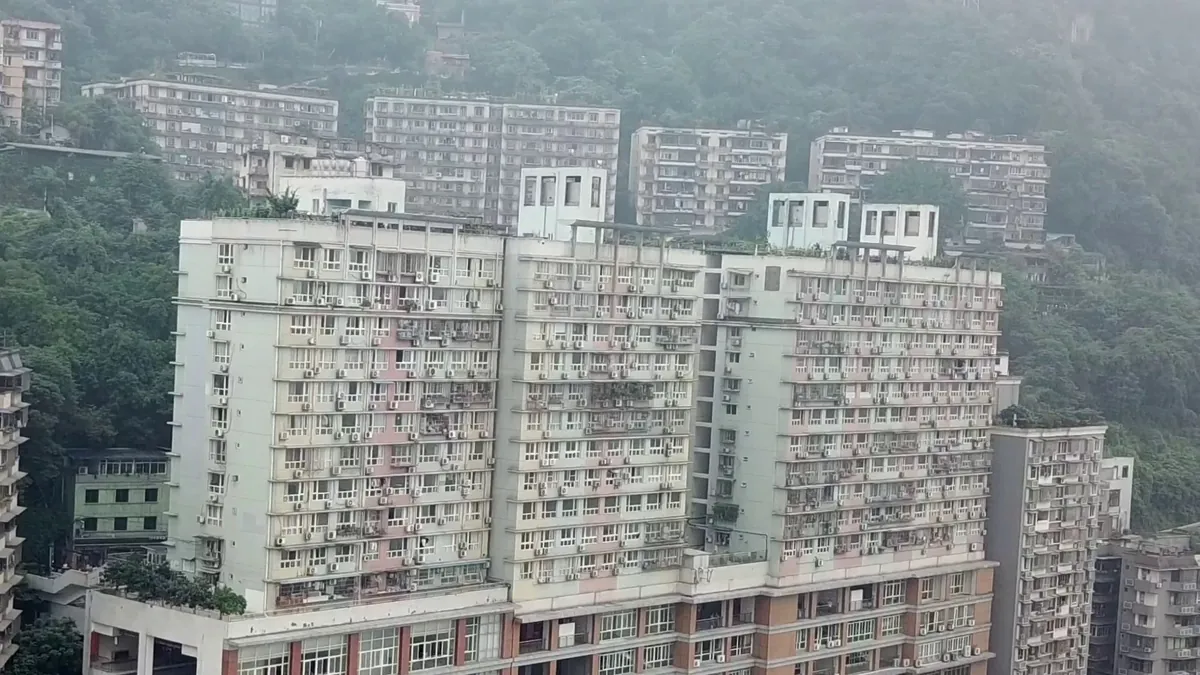
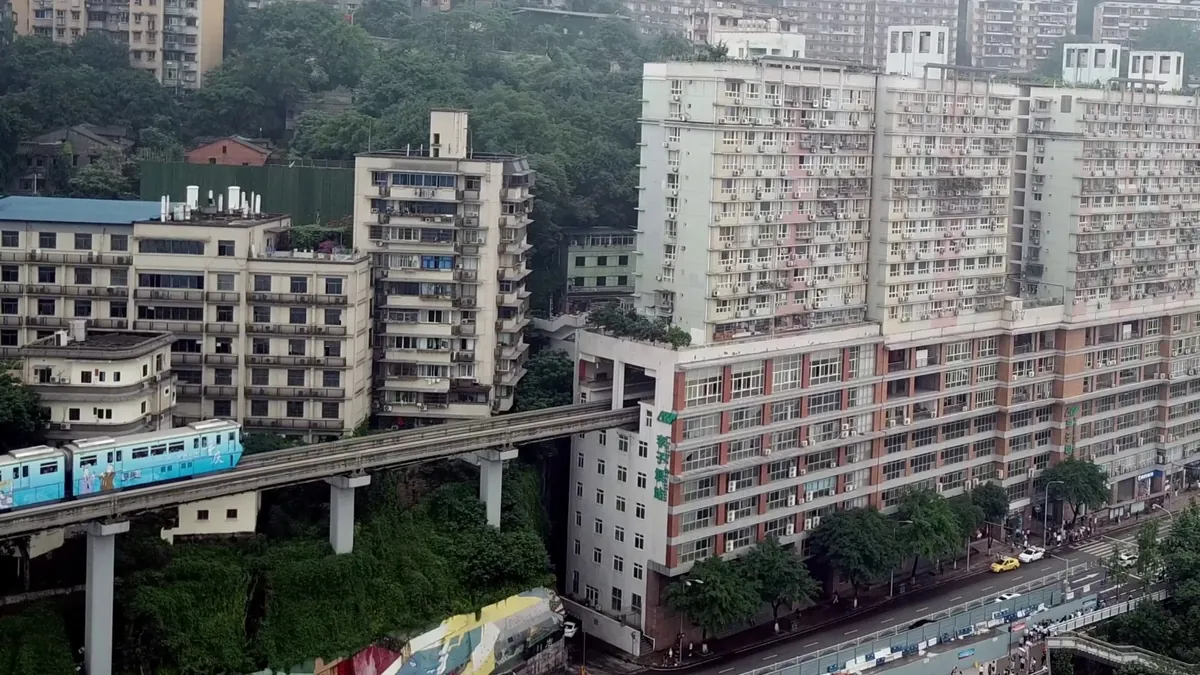
Welcome VDS Travel readers to Chongqing—a hilly city where layered terrain and dense urban design give rise to transport scenes that draw attention across social media. Among the sights often cited when people talk about Chongqing’s “8D” terrain is Liziba Station (李子坝站) on CRT Line 2, where a monorail train runs directly through a 19-story residential building—a distinctive landmark in modern China travel.
Many first-time visitors ask whether the building or the railway came first, or what it feels like to live above the tracks. This guide from VDS Travel covers the project’s background, engineering details, and practical tips for visiting.
1. Historical Background: Tight Terrain in a Hilly City
To understand how Liziba Station came about, it helps to look back to the late 1990s as Chongqing planned CRT Line 2—the first straddle monorail line in western China. Steep cliffs hemmed in by the Yangtze and Jialing rivers left very little flat ground for infrastructure.
Around Liziba in Yuzhong District, the rail corridor sat along a narrow strip between steep rock slopes on one side and the Jialing River below, while a 19-story residential building was also planned on the site.
Demolishing the housing project or driving a long mountain tunnel would have brought high costs and delays. Planning engineers led by Professor Ye Tianyi of Chongqing University integrated the station and residential block into a combined structure—uniting the building and transit station within a coordinated engineering design.
2. Building vs. Railway: How It Was Built
A common misconception online is that workers cut an opening through an occupied apartment block after it was finished.
In fact, both the 19-story building and Liziba Station were designed together and constructed concurrently starting in 1998. Structural and transit engineers spent two years coordinating loads so the station and upper residences functioned as separate structural systems within one building footprint, opening for service on June 18, 2005.
3. Vibration and Noise Control: Separate Structural Supports
How are residents on upper floors insulated from passing trains? Three main design measures help limit vibration and sound at Liziba Station:
• Measure 1: Structural separation: Rather than resting directly on apartment beams, the track and platform are supported on six reinforced-concrete columns anchored into deep foundations with isolation gaps and rubber pads separating them from residential framing so train loads transfer down into the ground.
• Measure 2: Pneumatic rubber-tired monorail: Unlike steel wheels on steel rails, CRT Line 2 uses rubber-tired monorail trains riding along concrete guideway beams, helping reduce friction noise.
• Measure 3: Acoustic lining: Sound-absorbing materials line the pass-through section, keeping measured indoor noise around 60 decibels—comparable to normal conversation or a running air conditioner.
The building uses a clear vertical layout:
• Floors 1 to 5: Commercial, service, and office spaces.
• Floors 6 to 8: Rail station levels (Floor 6 for ticketing/concourse and Floor 8 for platforms).
• Floors 9 to 19: Residential apartments.
4. Photo Spots and Riding the Line
As clips of the train entering the building spread on TikTok, Douyin, and Instagram, the city built a dedicated Viewing Platform spanning over 1,300 m² across Jiateng Road facing the building facade.
From the viewing deck, visitors line up shots of trains entering or exiting the structure or playful perspective angles, with trains running roughly every 3 to 5 minutes during operating hours.
You can also buy a short metro ticket (around 2 RMB) to ride into the station and look out over the Jialing River along the route.
5. Nearby Stops and Creative Spaces
Around Liziba Station, visitors often combine viewing with a few nearby spots:
• Liziba heritage post & souvenir shop: Located near the base of the station offering monorail models, snacks, stamps, and small keepsakes.
• Eling Testbed 2 Creative Park: Located up the hill roughly 1 km away on the grounds of a former Republican-era printing plant, now a creative complex with vintage brick buildings and cafes.
• Guiyuan: A quiet hillside historic compound with trees and wartime-era buildings.
6. Getting There and Best Time to Visit
• By metro: Ride CRT Line 2 directly to Liziba Station, then head down to ground level and cross to the viewing deck for exterior photos.
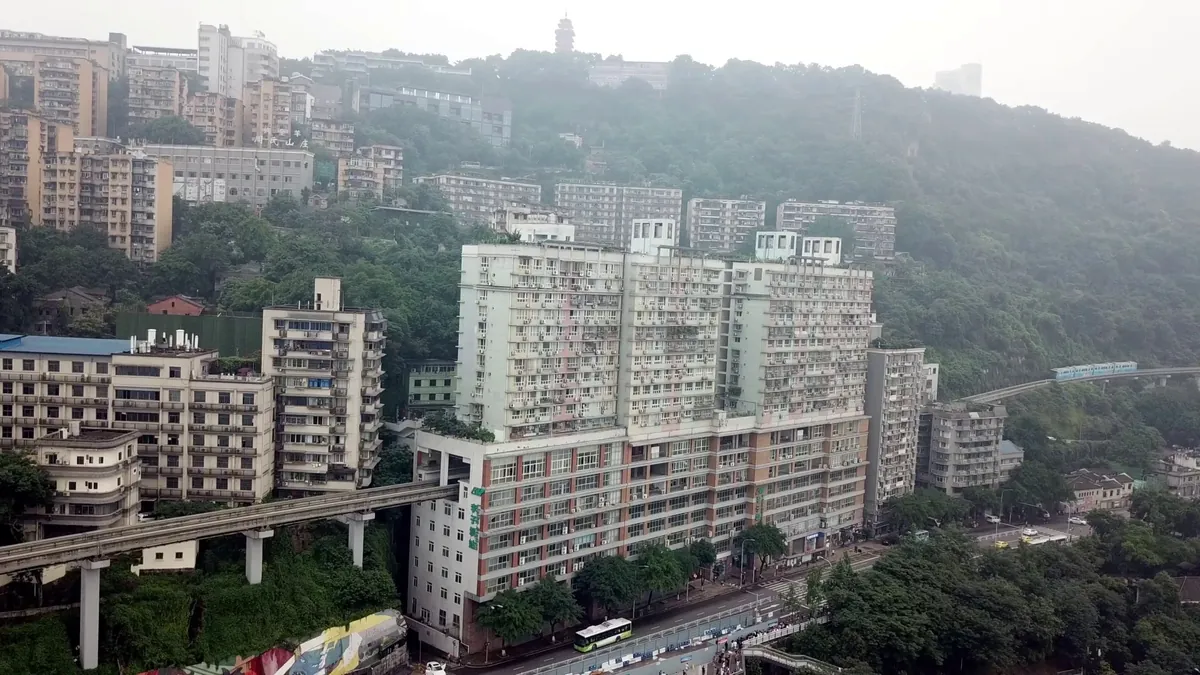
• Timing: Morning hours between roughly 8:30 AM and 10:30 AM often give soft angled sunlight across the front of the building before glare or crowds build.
7. Plan a Chongqing Trip with VDS Travel
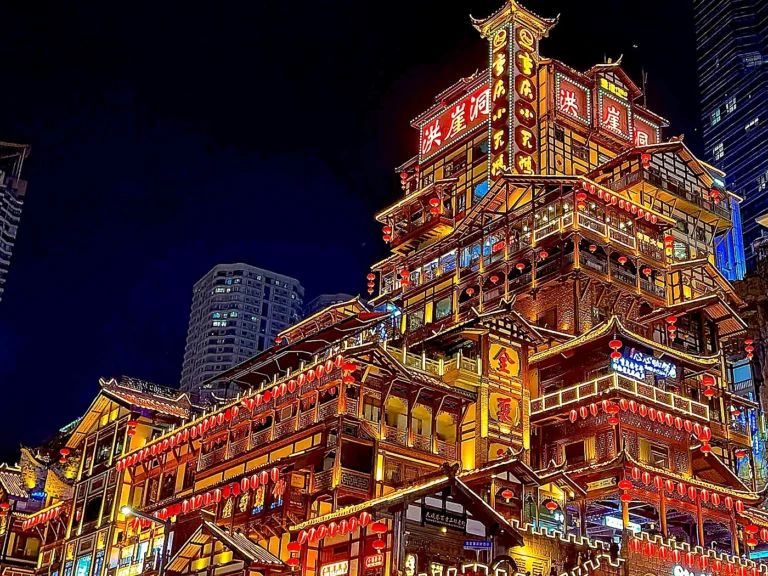
If you prefer organized transport and local support around town, you can explore VDS Travel’s 4-Day, 3-Night Chongqing Mono Tour: Liziba Monorail & Hongyadong.
The itinerary includes:
• Local transfers and a guide familiar with Chongqing neighborhoods.
• Time at the Liziba viewing area along with a monorail ride.
• Connections to city stops such as Hongyadong, Ciqikou Ancient Town, Shibati, Jiefangbei, and Chongqing Zoo.
• Planned meals and a no-forced-shopping itinerary.
Reach out to VDS Travel via our hotline: or Zalo OA for current departure dates and details.