
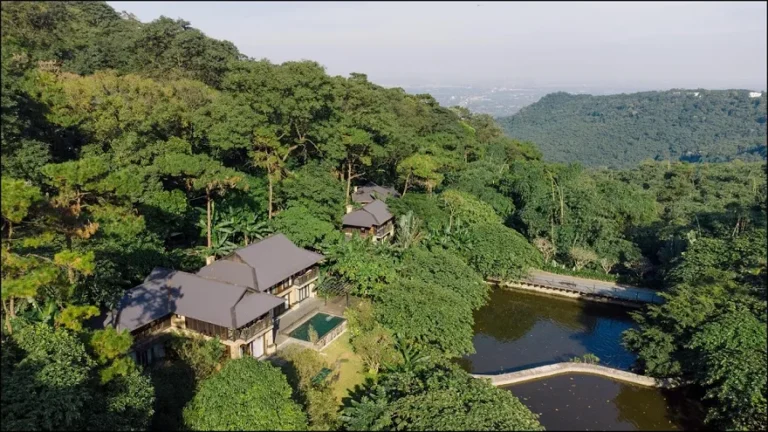
Since the early 20th century, Ba Vi was surveyed and highly valued by French officials for its resort potential thanks to its cool, temperate climate, comparable to famous plateaus like Da Lat, Sa Pa, or Tam Dao. Recognizing this superior advantage, French scientists and officers built a network of climatic stations and sanatoriums at various altitudes along the mountain range, including 400m, 600m, 700m, 800m, and 1000m. The average temperature here is always 4-8 degrees Celsius lower than the delta year-round, creating ideal conditions for health recovery and escaping the heat. The exploration process began in 1898 by Marius Borel, who established many plantations and built the first resort villa at the 400m altitude in 1916. By 1943, the 1000m altitude resort was also meticulously planned according to the Decree of the Governor-General of Indochina, testifying to the French strategic vision and scale of investment in Ba Vi as a key resort center.
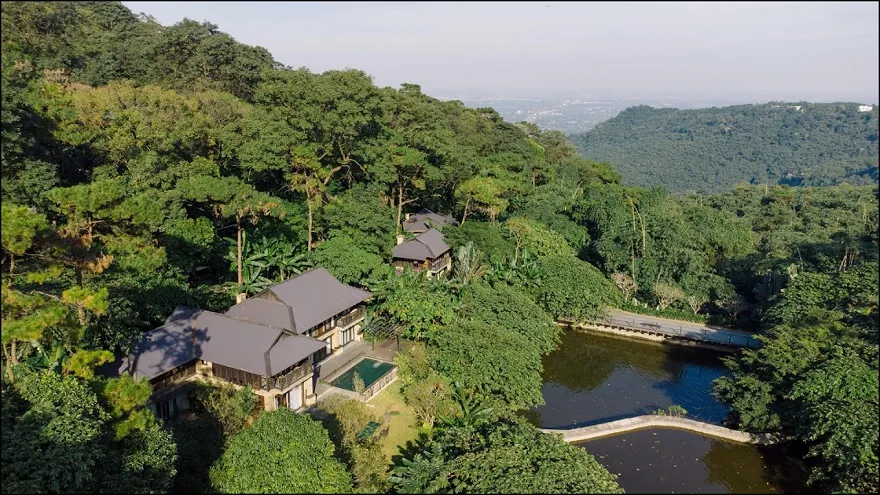
The sacred Tan Vien mountain, also known as Ba Vi mountain, is not only a resort destination but also a legendary space associated with the Son Tinh – Thuy Tinh myth, a symbol of the Vietnamese people’s strength and resilience against natural disasters. The unique geographical location, with the rich tropical forest ecosystem of Ba Vi National Park, comprising three main forest types: humid subtropical closed evergreen forests, sub-tropical broad-leaved and coniferous mixed closed evergreen forests, and low-mountain humid tropical evergreen broad-leaved forests, has created a majestic and diverse natural picture. It is the combination of pristine natural landscapes, fresh air, and culturally saturated fairy tales that has turned Ba Vi into a destination not just for relaxation but also to return to one’s roots, feeling the harmony between earth, sky, and history, where ancient, moss-covered French architectural ruins still stand as silent witnesses of a bygone era.
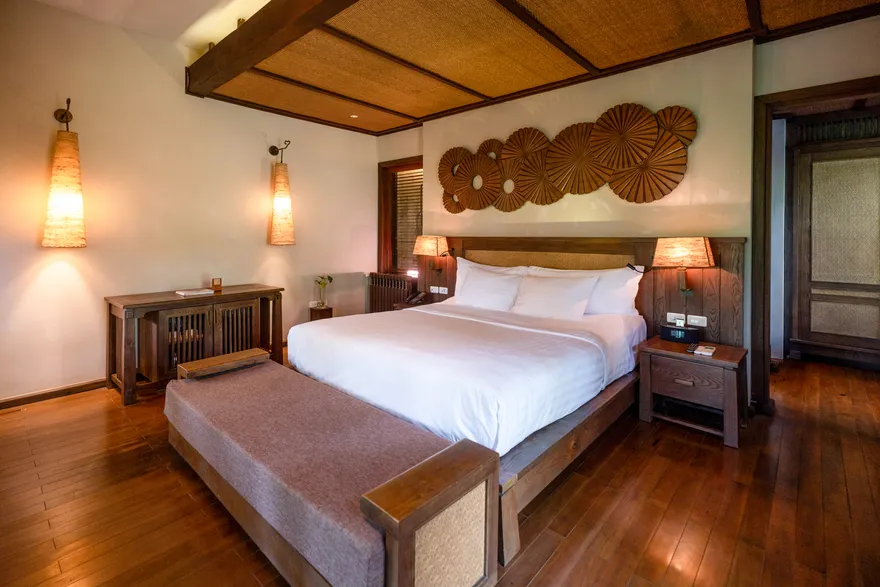
Amidst rapid urbanization, especially in the capital city of Hanoi, the demand for green spaces for staycations and wellness care has become an essential trend. Located just about 60km west of downtown Hanoi—a mere 60-minute drive along the Thang Long Boulevard—Ba Vi has quickly emerged as the “retreat capital” for the capital’s residents. This psychological shift reflects a deep yearning to escape urban smog, noise, and pressure to reconnect with pristine nature, recharge energy, and heal the soul. Ba Vi National Park, with its year-round cool climate, majestic landscapes, and beautiful streams and waterfalls, provides an ideal environment for eco-tourism, resort getaways, and wellness retreats. Prominent resorts such as Melia Ba Vi Mountain Retreat, Tan Da Spa Resort, and Zen Resort Ba Vi have capitalized on these advantages to offer luxurious, nature-infused resort experiences integrated with wellness services like hot spring baths, herbal baths, yoga, and meditation, perfectly meeting the increasingly sophisticated demands of travelers.
Ba Vi National Park boasts a strategic geographical location, making it an ideal destination for short getaways and wellness retreats for city dwellers. Situated just 60-65km west of downtown Hanoi, visitors can easily access the area within 60 to 90 minutes of travel. The primary connection route is the modern Thang Long Boulevard, which allows for fast and convenient transit, or National Highway 32, offering a more diverse travel option. This ideal distance is the key factor that establishes Ba Vi as the “staycation capital” for Hanoians, enabling them to quickly leave behind the hustle, bustle, and dust of the city to retreat into a cool, green sanctuary after just a short journey.
What makes Ba Vi uniquely appealing is its refreshing subtropical microclimate, cool year-round—a true gift of nature. Temperatures here are consistently 4 to 8 degrees Celsius lower than those in the lowlands and downtown Hanoi, creating a remarkable difference that feels especially refreshing during scorching summer months. The clean air, high humidity, and drifting mists that frequently appear, particularly in the early morning and late afternoon, create a tranquil and mystical ambiance. Thanks to these mild climatic conditions, since the early 20th century, the French chose and planned Ba Vi as a resort destination, constructing numerous meteorological stations and sanatoriums at altitudes of 400m, 600m, 700m, 800m, and 1000m, a testament to the region’s exceptional health-restorative value.
The diverse and rich ecosystem is an invaluable asset of Ba Vi National Park, contributing to the creation of a unique ecological resort space. This place is home to three main forest types: tropical humid evergreen closed subtropical forests, mixed broadleaf and coniferous evergreen closed subtropical forests, and low-mountain tropical humid evergreen broadleaf forests. Alongside vast pristine forests, visitors can also explore lush green pine forests or even a unique cactus garden, creating an interesting contrast in the landscape. The diversity of the vegetation not only provides fresh air but also serves as an inspiration for nature exploration, hiking, and especially wellness therapies, helping visitors regenerate energy and balance their lives amidst the majestic mountain scenery.
Melia Ba Vi Mountain Retreat, a 5-star resort masterpiece, proudly nestles at the 600m altitude within the heart of Ba Vi National Park, once a French sanatorium since the early 20th century. This resort is a perfect recreation of classic French Indochine architecture, with exquisitely restored villas and structures tucked among vast primeval forests, bringing a feeling of wandering into a forgotten French town. Here, visitors experience top-tier luxury spaces with full high-end amenities such as restaurants serving exquisite Asian-European cuisine, a classy spa & massage area using natural therapies, and modern yoga and gym rooms. Notably, the highlight is the infinity pool or four-season warm-water pool, harmoniously designed amidst the lush green pine forest, allowing guests to relax completely in all weather conditions and enjoy a year-round cool climate 4-8 degrees Celsius lower than the plains, fulfilling the original purpose of the French when discovering Ba Vi.
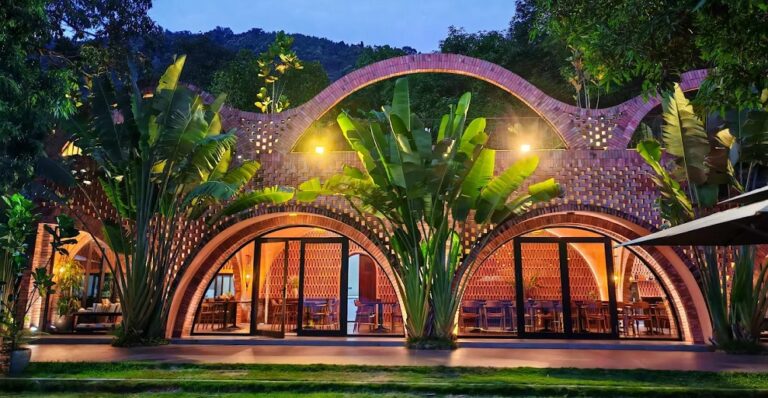
Amaya Retreat, with a name evoking a sense of peace and tranquility, is shaped as a rustic and romantic resort space, completely immersed in the lush green pine forests of Ba Vi. Although detailed information about Amaya Retreat is not widely published, with the prevailing “staycation” and “wellness” trends, a retreat like Amaya typically focuses on minimalist design, using natural materials such as wood, stone, and bamboo to create absolute closeness to nature. The space here is expected to offer privacy and peace, ideal for couples or those seeking a hideaway to recharge. Associated services often include exquisite local cuisine, meditation and yoga activities amidst nature, and romantic walking paths under the pine canopy, helping visitors completely escape urban noise and find inner balance.
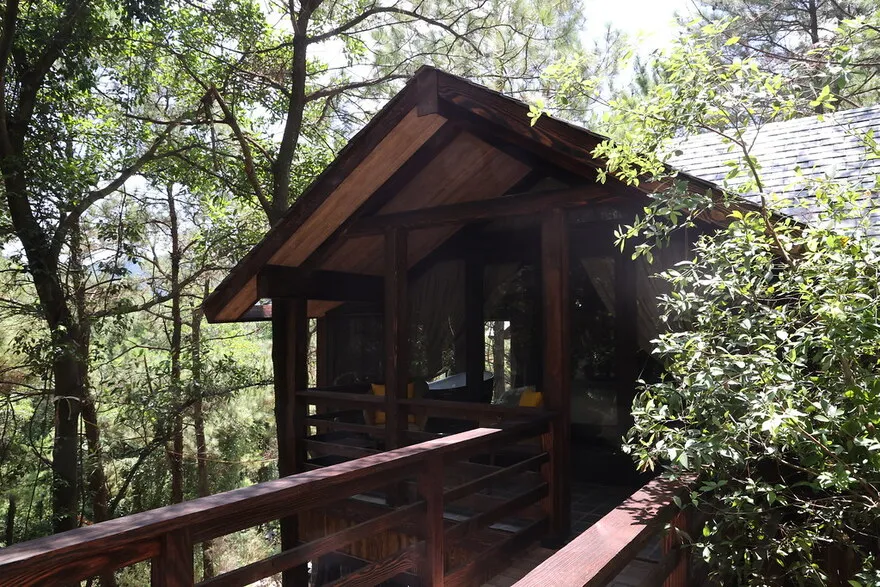
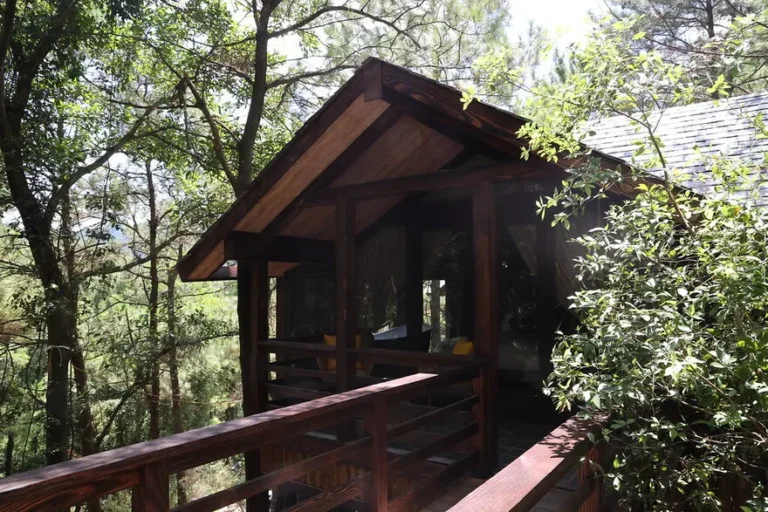
Maida Lodge Resort, similar to Amaya Retreat, is a relatively new or lesser-known name on the Ba Vi tourism map, but the name “Lodge” evokes images of a wooden-style resort, close to nature and somewhat pristine yet fully equipped with modern amenities. As Ba Vi strongly develops eco-accommodation types, Maida Lodge Resort is expected to deliver a unique experience, blending the comfort of a modern resort with the rustic, authentic charm of the mountainous region. Lodges are typically built with architecture harmonizing with the landscape, perhaps as small, charming wooden houses hidden among green foliage, offering a cozy and private space. This will be an ideal choice for travelers looking to explore the natural beauty of Ba Vi, enjoy the fresh air, and seek a quiet sanctuary after stressful working days, featuring outdoor activities like hiking, sightseeing, or simply relaxing in the lush green environment.
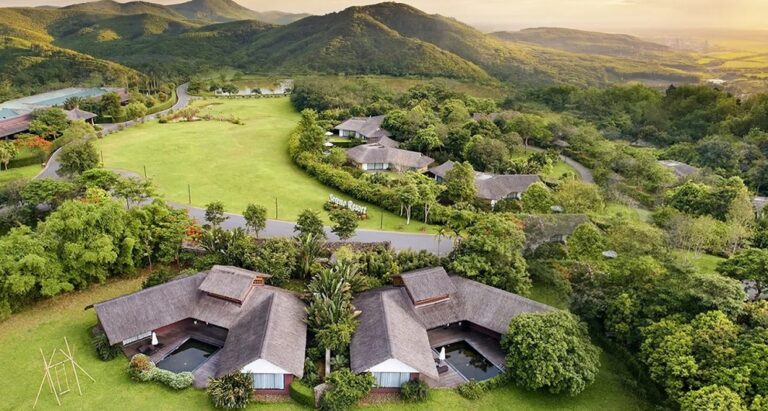
Alongside high-end resorts, Ba Vi is also renowned for its diverse system of eco-garden villas, catering to the vacation needs of families and groups of friends, typically including Family Resort Ba Vi (Yen Bai Resort Ba Vi) or Zen Resort Ba Vi. These villas offer a rich selection of architecture, ranging from modern European styles with luxurious villas to traditional Vietnamese houses with red tile roofs and spacious courtyards, or even stilt houses imbued with ethnic cultural identity as seen at Paragon Resort Ba Vi. The common thread among these villas is their spacious, private environment with lush green gardens, allowing guests to fully enjoy the fresh air and majestic natural landscapes of Ba Vi. Included amenities typically feature private or shared swimming pools, outdoor BBQ areas, and large communal living spaces, creating ideal conditions for family bonding activities, team building, or simply a comfortable getaway just like home, set against the picturesque backdrop of the Ba Vi mountains.
The EAV attribute data table below provides transparent comparative information on locations, star ratings, signature amenities, and updated room rate ranges for the peak tourism season.
| Resort | Standard Rating | Location | Weekday Rate (VND/night) | Weekend Rate (VND) | Amenities & Signature View |
|---|---|---|---|---|---|
| Melia Ba Vi Mountain Retreat | ★★★★★ (5-Star Luxury) | 600m Contour, Ba Vi National Park, Hanoi | 3,600,000 – 6,800,000 | 4,800,000 – 9,200,000 | Located amid the primeval forest at the 600m contour, four-season heated misty-view swimming pool, herbal spa |
| Amaya Retreat & Restaurant | ★★★★ (4-Star Retreat) | Ba Vi eco-forest fringe area | 1,850,000 – 3,200,000 | 2,400,000 – 4,500,000 | Cozy wooden architecture, organic restaurant serving local produce, streamside camping space |
| Maida Lodge Resort | ★★★★ (4-Star) | Ba Vi – Hoa Binh eco-buffer zone | 1,450,000 – 2,600,000 | 1,950,000 – 3,600,000 | Bungalows with sweeping green valley views, outdoor infinity pool, forest trekking experiences |
| Serena Resort Kim Boi | ★★★★ (4-Star Hot Spring) | Ba Vi – Hoa Binh vicinity | 1,550,000 – 2,800,000 | 2,200,000 – 3,900,000 | Natural Onsen hot spring source piped directly into bathtubs, year-round warm mineral stream |
The body and mind rejuvenation journey in Ba Vi begins with the moment of filling your lungs with the pure, characteristic pine-scented air of the tropical forest in the early morning. At Ba Vi National Park, where the year-round temperature is 4-8 degrees Celsius lower than the delta, especially at elevations such as 400m, 600m, or 800m, the air is always fresh and cool, ideal for the “Shinrin-yoku” forest bathing therapy. The diverse forest ecosystem with three main forest types – sub-tropical moist evergreen closed forest, sub-tropical broad-leaved and conifer mixed closed evergreen forest, and lower mountain tropical moist evergreen broad-leaved forest – creates a giant natural “filter”, releasing health-beneficial phytoncides. For Hanoi residents, taking only about 60 minutes to travel 60km along Thang Long Boulevard, returning to this green space is not just a mere “staycation” but also a comprehensive health care therapy, helping to reduce stress and regenerate energy after busy working days amidst urban dust and smoke.
Continuing the journey, visitors will experience walking to explore the ancient mossy French church ruins, hidden amidst the mystical mist of the Ba Vi mountains and forests. From the early 20th century, Ba Vi was chosen by the French as a resort area, and the traces of this “sleeping French town” still remain with nearly 200 ruin structures. Especially at an elevation of about 800m, the ancient church ruins area with unique European architecture, now ruined but still retaining its classic shape and covered with a thick layer of moss, creates a scene that is both nostalgic and enchanting. Walking through the trails, weaving between ruined stone walls, feeling the intersection between history and nature, is not only an exploration activity but also a form of meditation, helping the mind to be tranquil and connect more deeply with the past. The presence of structures built since 1898 by Marius Borel or the 1000m elevation resort area planned in 1943 according to the Decree of the Governor-General of Indochina further adds historical value and depth to this experience.
Concluding a day of exploration and breathing in the fresh air, nothing is better than soaking and relaxing in a warm water jacuzzi, gazing at the giant tropical forest canopy stretching in the sunset. Ba Vi, playing the role of the “Staycation & Wellness” capital for Hanoi people, provides many high-end resorts integrated with therapeutic amenities. Typically, Melia Ba Vi Mountain Retreat, a 5-star resort located right in Ba Vi National Park at the 600m elevation, brings a luxurious space with spa & massage, swimming pool, and yoga room, where visitors can enjoy absolute relaxation. Or Tanda Spa Resort, standing out with hot mineral water pools from natural spring sources, along with mud bath and herbal massage services, is a testament to the development of wellness tourism here. Immersing yourself in the warm water, feeling the gentle massage of the water flow, while admiring the majestic beauty of the Ba Vi primeval forest, not only helps the body completely relax but also serves as an effective mental therapy, regenerating energy and balancing life.
Ba Vi has quickly established its position as the premier “Staycation & Wellness” capital for Hanoi residents, especially on weekends. With the advantage of being only about 60km from downtown Hanoi and a 60-minute drive via Thang Long Boulevard, this area has become an ideal choice to escape urban smog and return to lush green spaces. The appeal of a temperate climate, the rich tropical rainforest ecosystem of Ba Vi National Park, along with upscale resorts like Melia Ba Vi Mountain Retreat (a 5-star resort nestled in the primeval forest), Tan Da Spa Resort (famous for its natural hot springs), or Family Resort Ba Vi (suitable for families) has created a strong wave of resort demand. This frequently leads to “sold-out” situations, especially on Friday and Saturday nights. To secure a satisfactory accommodation space and avoid fully booked situations or soaring prices, travelers should proactively book rooms at least 2-3 weeks in advance, or even earlier for holidays, Tet, or peak seasons such as the wild sunflower season (October-November).
With its year-round cool climate, where temperatures are 4-8 degrees Celsius lower than the plains, Ba Vi offers a pleasant and fresh feeling. However, due to the high mountainous terrain and dense tropical rainforest ecosystem, the temperature here tends to drop quite rapidly at night, especially at high altitudes such as the 600m contour (home to Melia Ba Vi Mountain Retreat) or the 800m contour (the old church ruins area). The temperature difference between day and night can reach several degrees Celsius, creating a distinct chill as night falls. Therefore, to ensure health and comfort throughout the journey, travelers should prepare a light jacket or windbreaker. This attire not only helps keep you warm effectively during outdoor activities in the evening or early morning, but is also useful when exploring high-altitude destinations in Ba Vi National Park, where mountain winds are often stronger and temperatures are significantly lower than at the foot of the mountain.
When planning to explore Ba Vi National Park, understanding ticket purchasing tips and schedules is very important. Admission tickets to Ba Vi National Park can be purchased directly at the control gate, with clearly listed prices for adults, children, and vehicles. Travelers should arrive early in the morning to have enough time to fully experience prominent attractions such as Thuong Temple, Ho Chi Minh Memorial Temple, and especially the ancient French ruins at the 600m and 800m contours with nearly 200 ruined structures bearing deep historical imprints. Ba Vi National Park boasts 3 main forest types, including closed tropical humid evergreen broad-leaved forests and closed subtropical mixed broad-leaved and coniferous evergreen forests, creating a diverse and rich vegetation carpet. To optimize the experience, visitors can combine their Ba Vi National Park exploration journey with a visit to nearby pine forest areas, such as the adjacent Ban Ang pine hill, another favorite destination loved for its peaceful, poetic landscape, providing a lush green space ideal for strolling, taking photos, and enjoying the fresh air, adding further diversity to the eco-resort trip in Ba Vi.
You can drive your own family car or take a taxi along Thang Long Boulevard, reach the foot of Ba Vi National Park to buy an entrance ticket, and drive straight up to the 600m contour via the well-paved and very safe asphalt road.
Ba Vi is beautiful year-round; however, the best time for cloud-hunting and pleasant weather is from September to April of the following year. Especially in November and December, wild sunflowers bloom in brilliant yellow all over the mountain slopes.
Most resorts like Melia Ba Vi or Amaya feature on-site restaurants serving highland specialties such as Ba Vi hill chicken, grilled wild boar with mac khen spices, crispy fried stream fish, and very fresh seasonal forest vegetables.
