Tracing the stream of time back to the early spring of 1925, when funeral bells echoed from the ancient capital of Beijing carrying the boundless grief of a nation that had just shaken off feudal chains, President Sun Yat-sen—the father of the Republic of China—passed away on March 12th. Before his passing, burdened by the aspiration for an independent, free, and unified country, he left a heartfelt final wish to rest on the slopes of Purple Mountain on the eastern bank of the ancient capital of Nanjing, where feng shui converges and where many turning points of the revolutionary movement took place. In accordance with that sacred wish, the Preparatory Committee for the Premier’s Mausoleum was promptly established, opening a nationwide architectural design competition to seek a blueprint worthy of the great leader’s monumental deeds. Amidst countless proposals submitted from near and far, a design named “Freedom Bell” by the talented architect Lü Yanzhi, later known by his pen name Hone Y. Lee, rose above all to be officially selected, marking the beginning of a mausoleum architecture project blending modern Western thought with traditional Eastern artistic essence.
The journey to build this magnificent historical heritage officially commenced on January 21, 1926, spanning half a decade of dedicated construction with the heartfelt contributions of tens of thousands of workers and leading engineers of the time, before proudly reaching completion in 1931. Notably, on June 1, 1929, a remarkably solemn ritual named the State Funeral Ceremony (Feng’an Grand Ceremony) took place grandly, bringing the Premier’s casket to rest in eternal peace amidst the reverent bows of tens of thousands of compatriots and international delegations. However, Nanjing’s history soon after witnessed the painful years of the War of Resistance Against Japanese Aggression from 1937 to 1945, when the entire region was occupied by Japanese militarists. Despite enduring fierce bombings and the smoke of war, the mausoleum complex was preserved largely intact thanks to the weight of its historical prestige and Sun Yat-sen’s ideological stature, which even enemies respected. Recognizing the priceless historical, cultural, and ideological value of this work, in 1961, the State Council of the People’s Republic of China officially designated the Sun Yat-sen Mausoleum as one of the first batch of national key cultural heritage preservation units, affirming the mausoleum’s immortal status within humanity’s heritage stream.
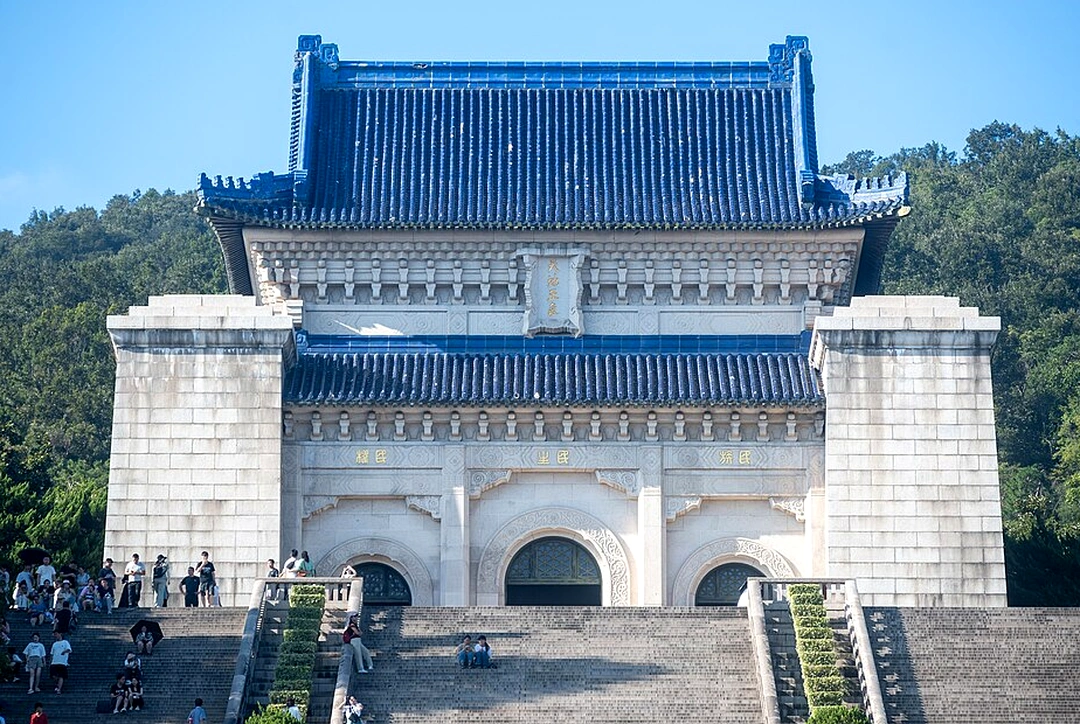
To fully comprehend the stature of this architectural complex, one cannot overlook the sacred Purple Mountain (Zijin Mountain)—a place that has borne countless flattering names since antiquity, such as Jinling Mountain, Xiang Mountain, or Shenlie Mountain, serving as the Dragon Vein harboring the mystical breath of southern China’s mountains and rivers. Stepping into the interior space of the mausoleum, visitors and historical researchers are deeply moved by priceless artifacts preserved eternally through time, typified by the stele recording Sun Yat-sen’s Last Will and Testament, the classic work Fundamentals of National Reconstruction, and notably the enigmatic headless stele. Leaving the stele surface blank without carved characters is not merely humility before a great figure, but a profound philosophical symbol demonstrating a democratic ideology surpassing millennia of feudal frameworks, where Sun Yat-sen’s deeds and thoughts were so monumental that no words or carved stone sentences could adequately capture them, leaving history and time as the most objective witnesses etched into the hearts of the nation and progressive humanity worldwide.
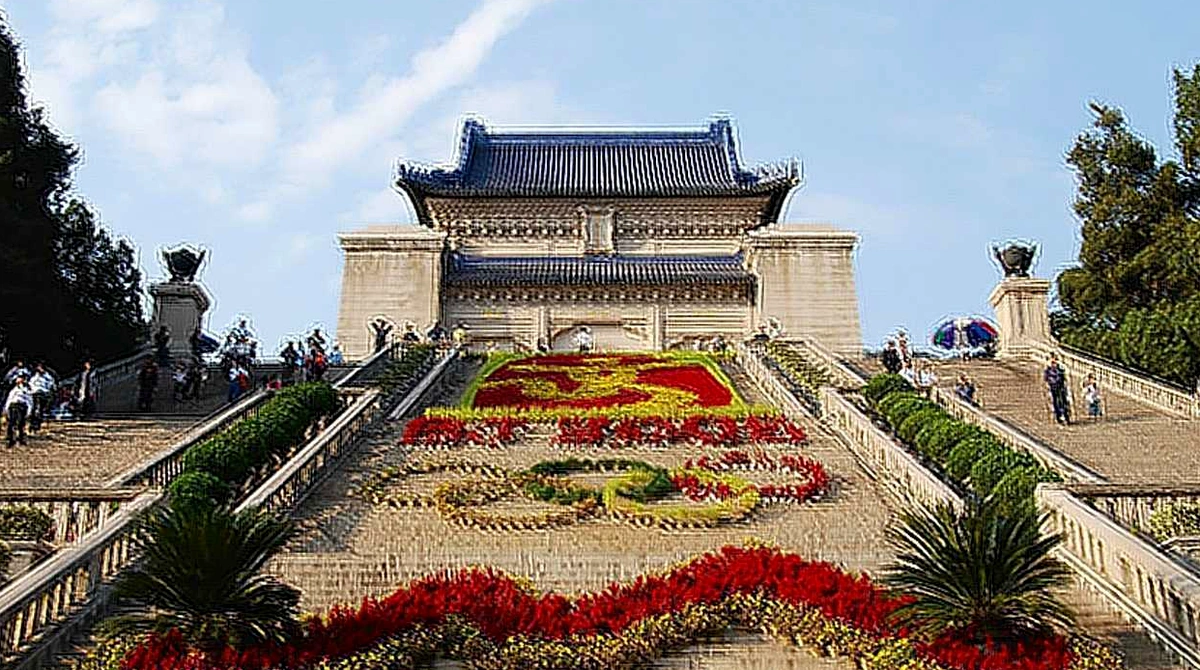
Tracing the historical and geographical currents of the ancient capital, where the spiritual breath of southern China’s magnificent landscapes converges, Zhongshan Mausoleum (Sun Yat-sen Mausoleum) emerges as an architectural wonder completely nestled within the majestic nature of Purple Mountain, also revered as Zhong Mountain. This mountain is the principal ridge of the Ningzhen mountain range, rising 448.2 meters with a majestic terrain praised by ancients through the idiom “Zhongshan crouching dragon, Shitou crouching tiger,” metaphorically likened to a coiled dragon and sitting tiger, recognized since antiquity as the convergence of imperial fortune in the Nanjing region. Upon arrival, travelers not only feel the solemnity of a grand mausoleum but also immerse themselves in the ecological atmosphere of a humid subtropical monsoon climate, featuring a rich vegetation of boundless black pine and masson pine forests, interwoven with the graceful hues of Chinese pistache foliage and evergreen broad-leaved forests, creating a solemn, tranquil, and deeply nostalgic atmosphere.
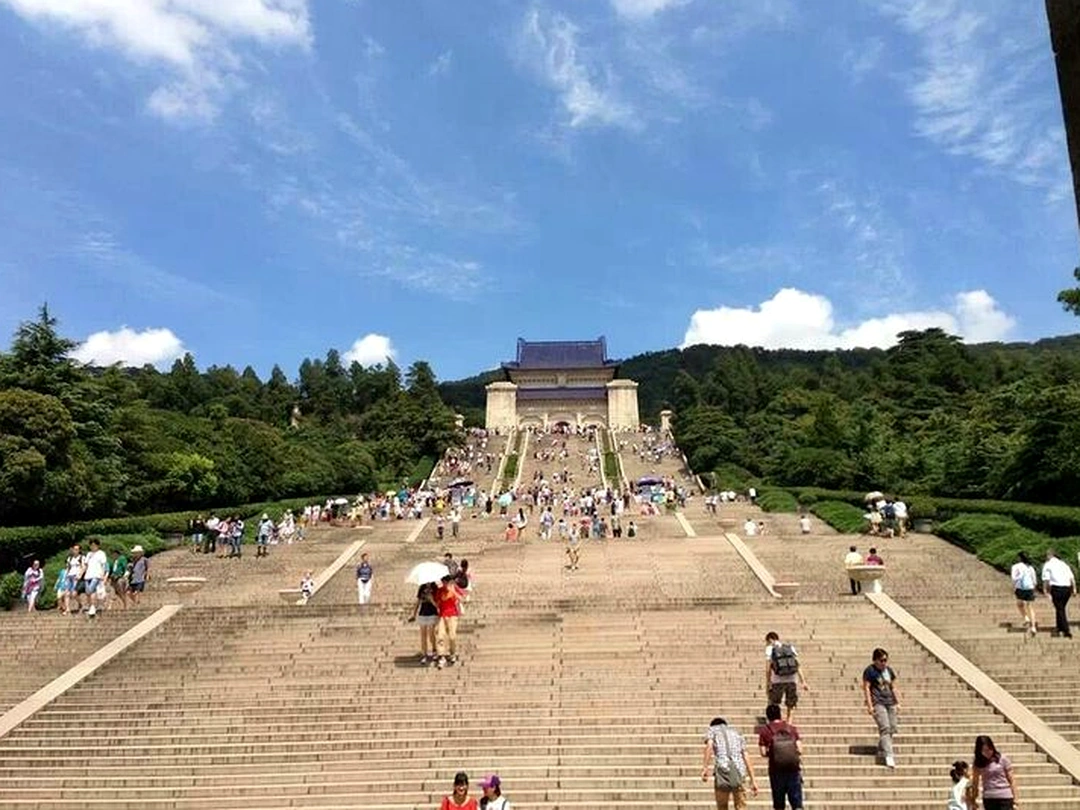
From an urban planning and landscape architecture perspective, this work is a pinnacle demonstration of the skillful fusion between traditional Eastern feng shui philosophy and modern Western spatial planning thought—a masterpiece marked by the talent of the brilliant architect Lü Yanzhi. Approaching the mausoleum, observers are immediately drawn to the distinct North-South spatial axis, intentionally adjusted slightly southeastward to catch auspicious qi blowing from afar. The architect did not flatten the terrain but cleverly followed the natural slope of the mountain, arranging structures step-by-step upward, creating both the solemn majesty of a respectful pilgrimage route and strict adherence to classical Eastern feng shui principles, such as azure dragon on the left and white tiger on the right, combined with an open bright hall (mingtang) in front to gather and retain vital natural energy.
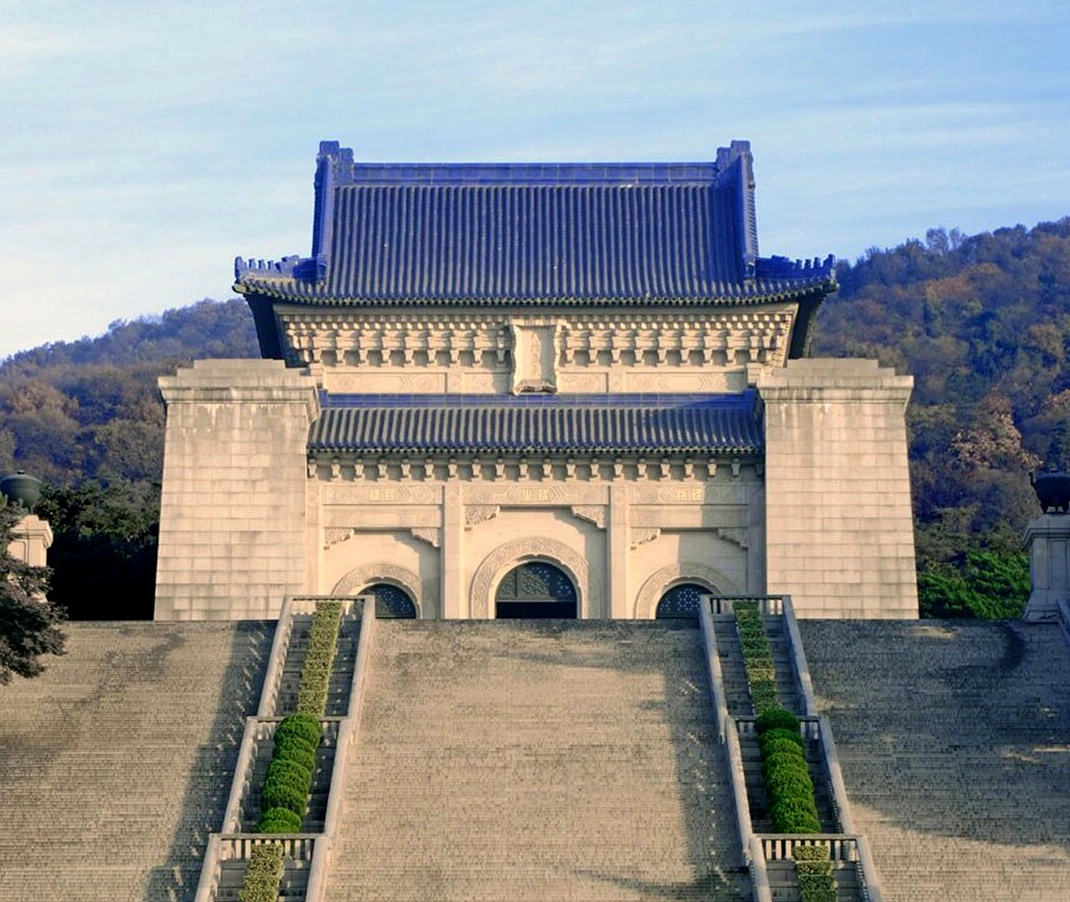
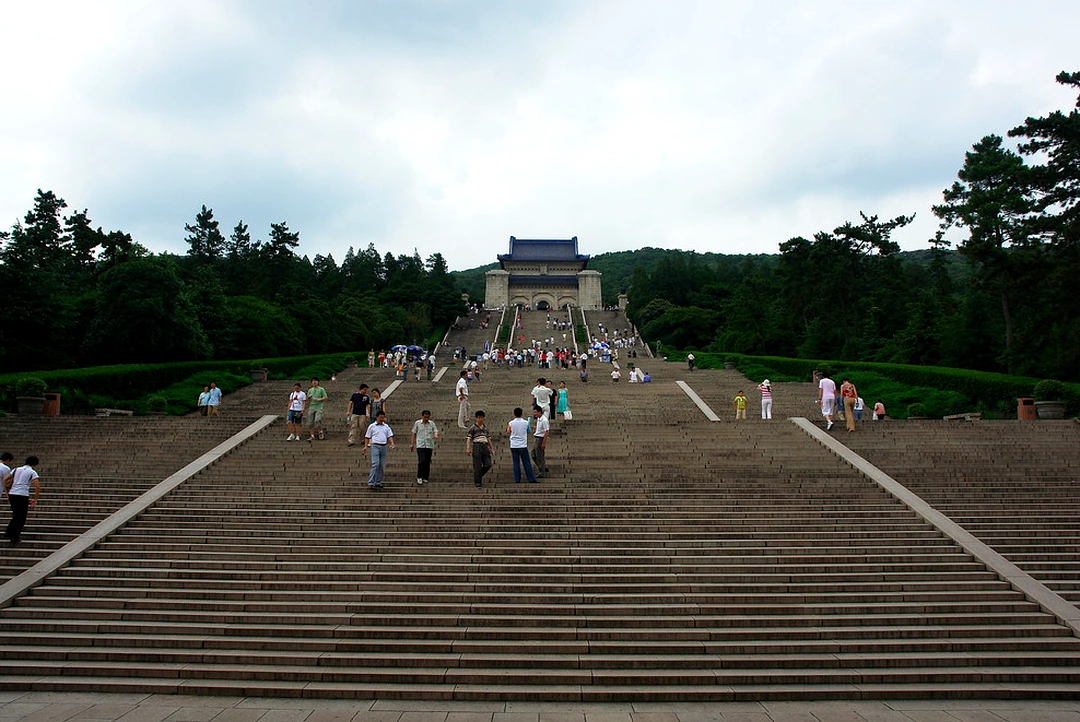
Delving into technical processes and spatial structures, the entire mausoleum complex is delicately and discreetly nestled among ancient pine and cypress trees in accordance with the ancient philosophy of the unity of heaven and humanity, concealing wind and gathering qi. Free from ostentatious or blatant features, every component—from the main gate and walking paths to granite stone steps—is meticulously calculated so that as visitors walk along the administrative axis, their minds naturally cleanse themselves of distractions, plunging into the sacred historical space. The combination of durable granite, deep green glazed tiles symbolizing eternity, and the changing seasonal landscapes of Purple Mountain turns the Sun Yat-sen Mausoleum into more than just a memorial structure; it becomes an enduring symbol of landscape architecture art, where heaven, earth, and humanity blend into one eternal realm.
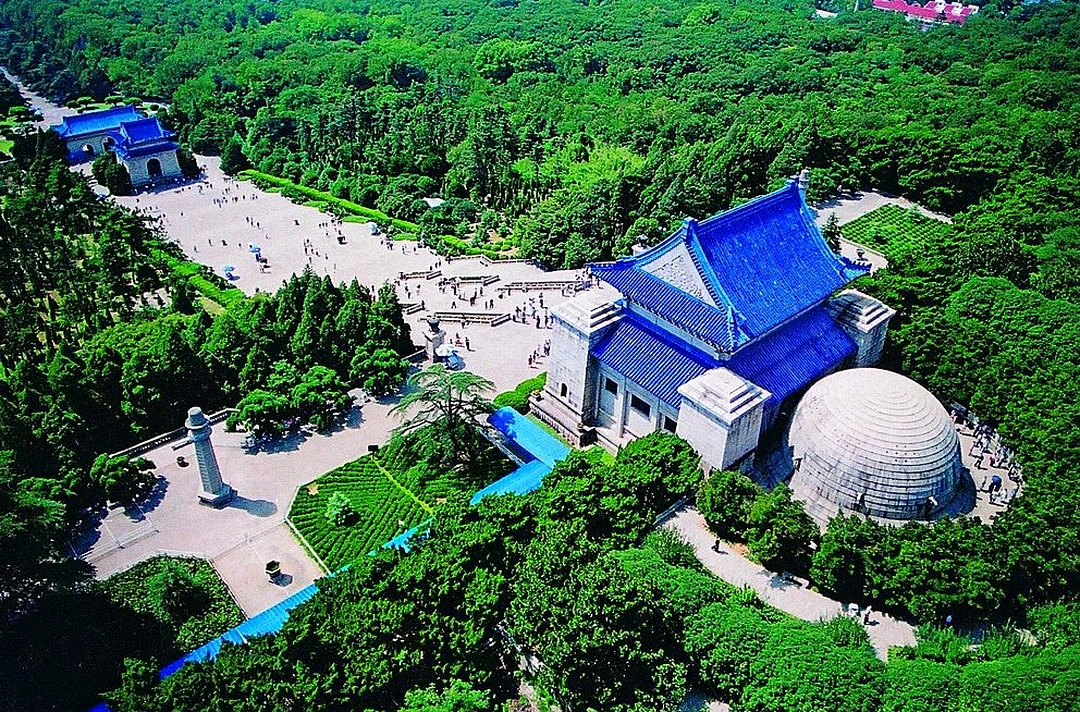
Tracing the history of modern urban planning and East Asian architectural art, Zhongshan Mausoleum (Sun Yat-sen Mausoleum – 南京中山陵), standing majestically on the southern slope of the sacred Purple Mountain in Nanjing’s scenic encyclopedia, emerges as an architectural wonder combining Western construction techniques with traditional Chinese aesthetic essence. Entering the encyclopedic space of this heritage complex, visitors are astonished by the breathtaking actual scale, spanning a total mausoleum area of 80,000 mu, roughly equivalent to 5,333 hectares, with the central construction zone sprawling across over 3,000 square meters. Under architect Lü Yanzhi’s talented pen, the work is a majestic harmony of mass and color, where advanced modern Western reinforced concrete structures are ingeniously hidden and wrapped beneath sophisticated dougong bracket systems, solemn apex halls, and traditional glazed tiles of feudal palaces. The entire complex wears two remarkably solemn primary tones: the deep blue of glazed tiles combined with the pure, eternal white of white granite, creating a powerful visual aesthetic while embodying the profound philosophy of “the azure sky, white sun, and a red earth,” honoring the great revolutionary ideals of the pioneer leader.
Exploring this architectural masterpiece requires observers to progress along a strict spatial sequence extending along the North-South primary axis, recreating a pilgrimage ritual proceeding from the secular world into eternity. Opening this spatial sequence is the Front Gate area (Fanliao), highlighted by the “Tianxia Weigong” archway—a solemn memorial gate bearing Sun Yat-sen’s ideological imprint, opening a tomb path 480 meters long and 40 meters wide. Flanking the spirit path are towering old parasol trees and cedars casting cooling shades, intertwining to form a deep green vault shielding travelers’ footsteps, guiding them deeper into a tranquil and reverent space. Crossing the quiet parasol road, visitors reach the Mausoleum Gate, also known as the Zhengqi Archway, marking the transition between the outer natural landscape and the inner sacred ritual area, before proceeding to the Stele Pavilion (Bei Ting), which houses the stone tablet inscribing the biography and deeds of the Father of the Nation.
Venturing further into the heart of the mausoleum complex lies the Sacrificial Hall (Jiitang), modeled after a traditional five-bay palace architecture with an imposing scale and exquisite dragon-phoenix carvings and floral patterns on wooden roof trusses and crossbeams. At the focal point of this solemn Sacrificial Hall sits the seated statue of Sun Yat-sen sculpted from pure white jade by master artisans, radiating a majestic, wise yet remarkably approachable and benevolent aura of a statesman who dedicated his entire life to the nation’s revolutionary cause. From the Sacrificial Hall, the journey continues downward to the Crypt (Mu Shi)—the sacred and secluded space located beneath the deep hemispheric dome underground. Here, Sun Yat-sen’s remains are solemnly entombed inside a coffin placed deep underground, accompanied by a monolithic white jade recumbent statue realistically recreating his eternal sleep, surrounded by walls meticulously depicting the mausoleum layout map, completing a masterpiece combining historical significance with the pinnacle of sculpture and spatial planning.
When night falls over Purple Mountain, the space surrounding the Nanjing Sun Yat-sen Mausoleum does not plunge into absolute stillness or modern urban flashing lights, but transitions into a delicate dialogue between historical heritage and contemporary lighting engineering. To protect heritage and elevate visiting experiences, Nanjing City enforces a rigorous night lighting plan precisely implemented across the outer perimeter and mausoleum landscape axis, while the sacred core zone closes completely at night to safeguard the primeval forest ecosystem and preserve architectural originality. Lighting philosophy here strictly adheres to the principle of “subdued tones, low illuminance, seeing light without seeing lamps,” utilizing warm lighting with low brightness to skillfully honor white granite structures and reflective blue glazed tiles under moonlight without tainting the solemnity of one of modern Asian history’s greatest mausoleums.
The spectral control system operates with absolute precision to avoid any negative impacts on nocturnal biological cycles of flora and fauna hiding beneath ancient pine canopy on Purple Mountain. Instead of high-intensity spotlights causing glare, lighting is calculated to guide vision softly along tens of thousands of granite stairs, highlighting the majestic monument while retaining reverent, tranquil feelings. Meanwhile, regarding performing arts and nightlife rhythms, the mausoleum core applies strict discipline, completely banning commercial entertainment or night markets to maintain sacred memorial atmospheres. Instead, live-action performances, high-tech light art shows, and cultural appreciation spaces are planned centrally in peripheral zones and neighboring mausoleum commercial areas, such as the vicinity of Nanjing Haizei Street or Ming Xiaoling Mausoleum during designated night hours.
This distinct demarcation forms a sustainable cultural tourism ecosystem where visitors admire the grand beauty of Sun Yat-sen Mausoleum under artistic lighting from afar while immersing in Nanjing’s distinctive nightlife in neighboring buffer zones. In these art appreciation spaces, lighting installations combined with live-action performing arts recreate the heroic historical backdrop of the Xinhai Revolution, delivering intellectual depth and complete emotional resonance for those wishing to understand the ancient capital’s soul across historical layers. This humane and scientific approach transforms the space around the Sun Yat-sen Mausoleum at night into a living outdoor museum, where modern lighting serves heritage celebration, and Nanjing’s nightlife finds perfect balance between dynamic modernity and millennium-old solemn depth.
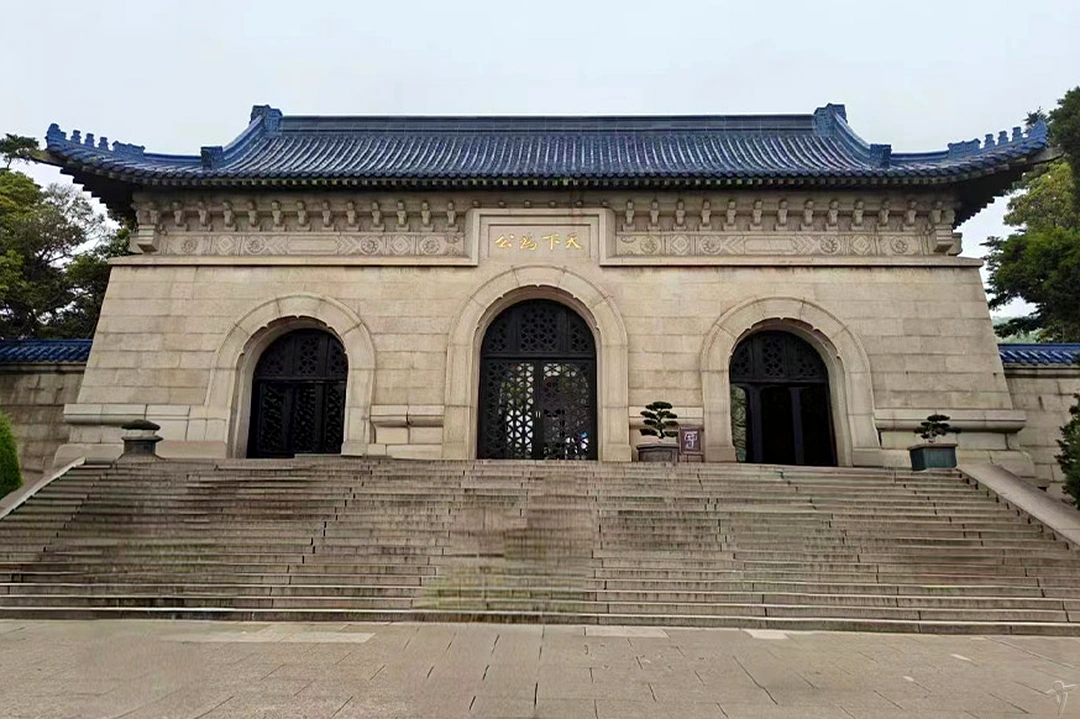
Tracing back through time to the culinary roots of ancient Jinling, the rich flavor picture intertwining between the sacred realm of Sun Yat-sen Mausoleum and Nanjing’s tranquil urban heart emerges with heavy nostalgia. As golden afternoon sunlight pours down on old roadside parasol trees along the mausoleum avenue, the rustic yet refined aromas of local intangible cultural heritage foods diffuse. Unpretentious or flashy like Cantonese cuisine, nor fiercely spicy like Sichuan palates, the culinary essence around Sun Yat-sen Mausoleum and urban Nanjing carries the elegant character of the Huaiyang school—where every grain of salt and spring onion strictly obeys heirloom secrets passed down for centuries, crystallized from fertile soils along the Yangtze River.
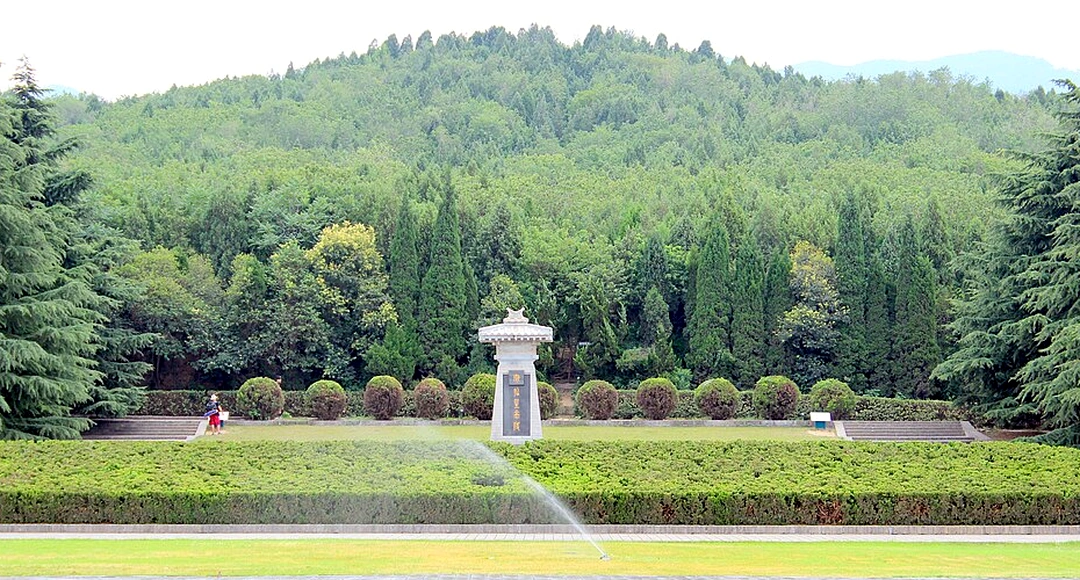
Initiating this sensory harmony is Nanjing salted duck, a culinary masterpiece with a history spanning hundreds of years tied to the Ming Dynasty. Unlike glossy Beijing roast duck, Nanjing salted duck—also known as salted board duck—is renowned for its natural ivory-white skin, succulent tender meat retaining characteristic firmness, carrying rich aromatic hints of traditional herbal spices applied under strict standards. Local chefs select mature ducks raised naturally in paddy marshlands, processing them through dry salting and boiling at moderate temperatures to preserve the natural sweetness of muscle fibers. Savoring a slice of salted duck with warm chrysanthemum tea on Purple Mountain slopes, diners clearly sense the delicate harmony between adequate saltiness and lingering sweet aftertastes on the palate.
Departing from traditional duck flavors, Jinling’s culinary banquet treats diners to dishes demanding peak preparation techniques by veteran artisans. Exemplifying such intricacy is squirrel mandarin fish, a symbol of Chinese culinary carving art. Fresh mandarin fish, under the chef’s skilled knife, has its bones removed and dragon-scale patterns carved before deep-frying in hot oil. When the outer crust turns golden like fluffy squirrel fur, a rich sweet-and-sour sauce brewed from Zhenjiang vinegar and palm sugar is drizzled over it. The delightful contrast between the crispy crust, tender interior, and harmonious sweet-sour flavor captivates even the pickiest diners while demonstrating Nanjing culinary culture’s relentless creativity.
Additionally, local dining tables preserve the solemn flavor of lion’s head meatballs, a famous specialty bearing Huaiyang vibes. Selected pork cuts from premium belly meat are hand-minced rather than machine-processed, combined with scallion, ginger, and bone broth simmered slowly over hours in clay pots. Served piping hot, the large meatball absorbs clear broth, softening until melting instantly in the mouth without feeling greasy. Precision in heat control and seasoning elevates this rustic dish into a living culinary heritage, recalling royal banquets of ancient scholars pausing for sightseeing around the mausoleum.
Beyond elaborate savory dishes, local street food leaves deep impressions through nostalgic folk dishes, highlighted by duck blood vermicelli soup. Amidst chilly early mornings shrouded in mist on Purple Mountain, a piping hot bowl of vermicelli soup with rich duck bone broth, silk-smooth duck blood blocks, crunchy giblets, chewy sweet potato glass noodles, aromatic chili paste, and fragrant herbs warms any traveler. Meanwhile, Nanjing xiao long bao offers a totally distinct taste experience with paper-thin wrappers enclosing rich meat fillings and savory soup, prompting diners to savor each bite slowly to absorb the essence packed into small dumplings.
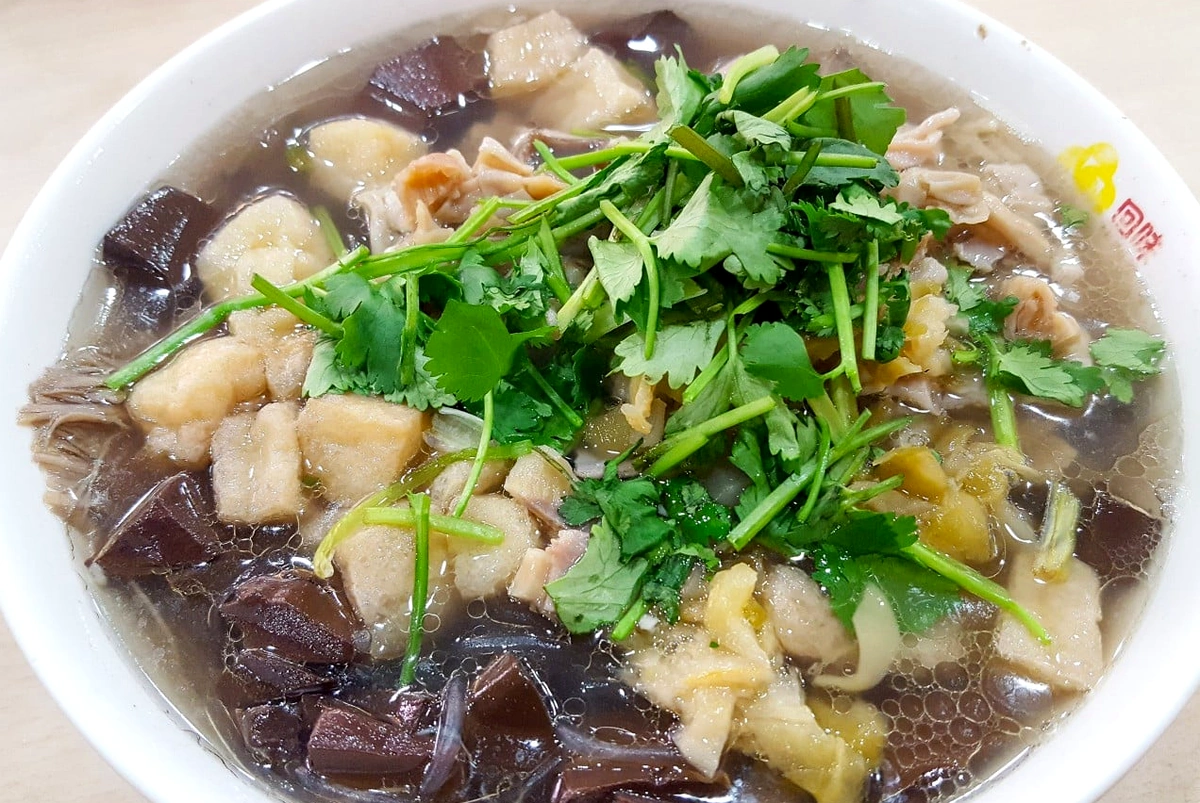
This sensory journey truly concludes satisfyingly when diners taste taro sweet soup with osmanthus syrup in autumn. This traditional dish combines chewy lotus root starch, sweet red sugar, and fresh osmanthus petals harvested from gardens around the mausoleum. Rich osmanthus fragrance blends with taro sweetness and lotus root smoothness, forming a sweet, lingering finale. Savoring heirloom culinary flavors touches the deep spiritual and historical layers of Sun Yat-sen Mausoleum, where dishes satisfy palates and tell flavorful stories of a sacred heritage land spanning millennia.
Equipping oneself with practical, detailed, and accurate information is key to making a visit to Nanjing’s Sun Yat-sen Mausoleum fulfilling, solemn, and emotional. Knowing operating hours, online ticketing methods, optimal transit routes, and local etiquette rules helps visitors proactively manage all situations, avoiding bewilderment upon arrival. The mausoleum opens to visitors from Tuesday to Sunday weekly, with operating hours starting around 8:00 AM and closing at 5:00 PM, while Mondays see main areas temporarily closed for relic preservation and maintenance, leaving only outdoor grounds and peripheral structures open.
A crucial management innovation is ticketing rules; all visitors receive free admission but must book real-name tickets online in advance via the official mini-program named “Zhongshan Scenic Area.” This preparation requires travelers to provide accurate passport or ID information, as entrance security systems apply strict facial recognition and QR scanning to ensure maximum safety. Regarding transit, Nanjing’s public transport offers utmost convenience via Metro Line 2, alighting at Muxuyuan Station and exiting via Exit 1. From there, travelers can experience modern scenic electric trams or leisurely walk along the shade-lined Baiai Avenue under ancient parasol trees to absorb Purple Mountain’s tranquil atmosphere.
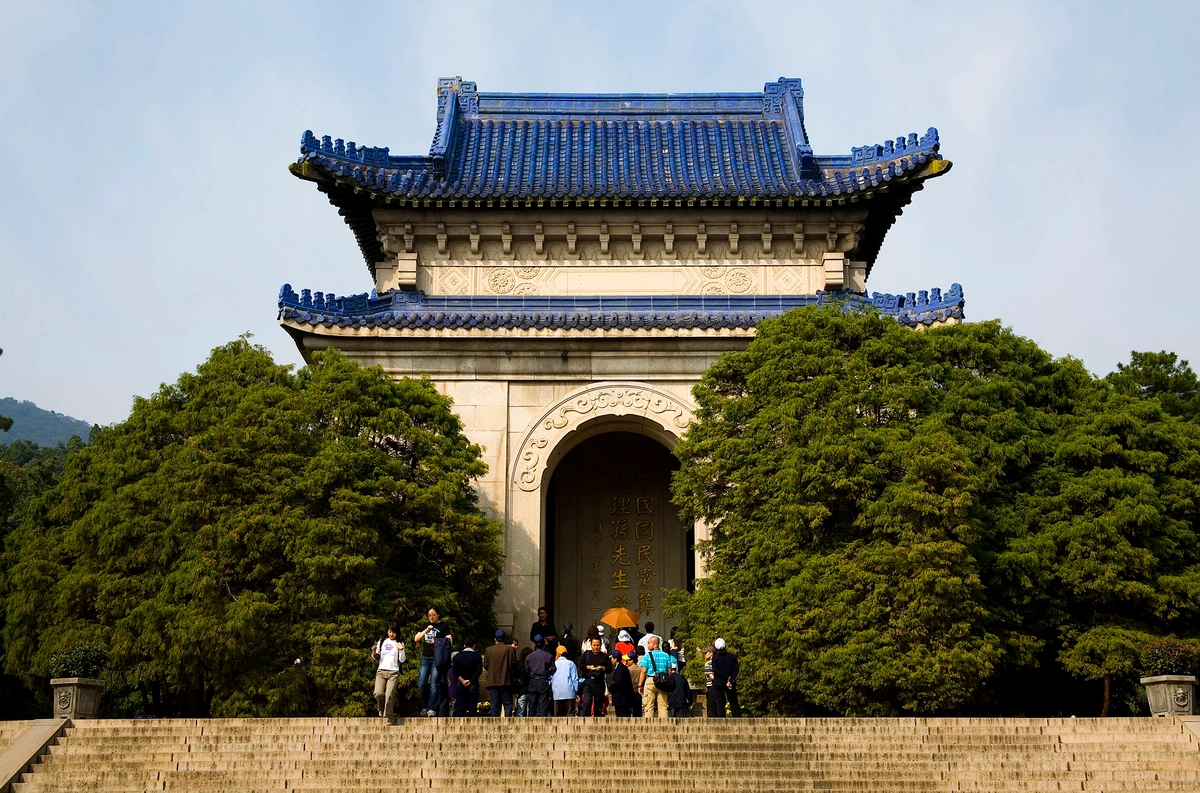
During major holidays when crowds surge for worship and memorialization, private cars are completely banned from core zones to protect environments and ease congestion, requiring visitors to park at peripheral P+R lots and board designated shuttle buses. Entering main grounds, the pilgrimage route leads through symmetrical structures along the spirit path, starting from the Grand Gate, Spirit Path, Mausoleum Gate, Stele Pavilion, Sacrificial Hall, to the sacred Crypt. Completing this route requires climbing 392 white granite stairs—a number symbolizing 390 million Chinese compatriots at the time plus two major ideologies, taking roughly 2 to 3 hours round-trip.
Due to steep terrain and endless steps, footwear choices dictate trip experiences; sneakers or walking shoes with solid traction and cushioning are highly encouraged. Furthermore, as a memorial space for a great statesman, etiquette and dress codes demand absolute respect: visitors must wear polite, modest attire, avoiding overly revealing clothes like tank tops or slippers. Inside the Sacrificial Hall and Crypt, loud laughter, smoking, eating, and commercial filming are strictly banned to maintain sacred tranquility, while pets are prohibited.
Every corner harbors cultural, historical, and architectural layers demanding thorough mental and intellectual preparation. To ensure your journey back through heroic historical pages runs smoothly, deeply, and carefully curated from transport, lodging, to expert guide accompaniment, further details are available via all-inclusive tour packages for safe, upscale, and emotional world heritage exploration.