In the Pudong district along the banks of the Huangpu River, a land that has witnessed everything from the opening of the port in the modern era to the rapid development of the Yangtze River Delta, the arrival of Shanghai Disneyland marks a historic turning point in East-West cultural exchange. Following years of strategic negotiations, the project officially received approval from the State Council of China in 2009. It is the result of a close partnership under a special joint venture model, with The Walt Disney Company holding a 43% stake and the Shanghai Shendi Group, representing local state-owned enterprises, holding 57%. On April 8, 2011, a formal groundbreaking ceremony was held in the vast Chuansha area, launching the journey to create one of the most massive entertainment complexes on the Asian continent.
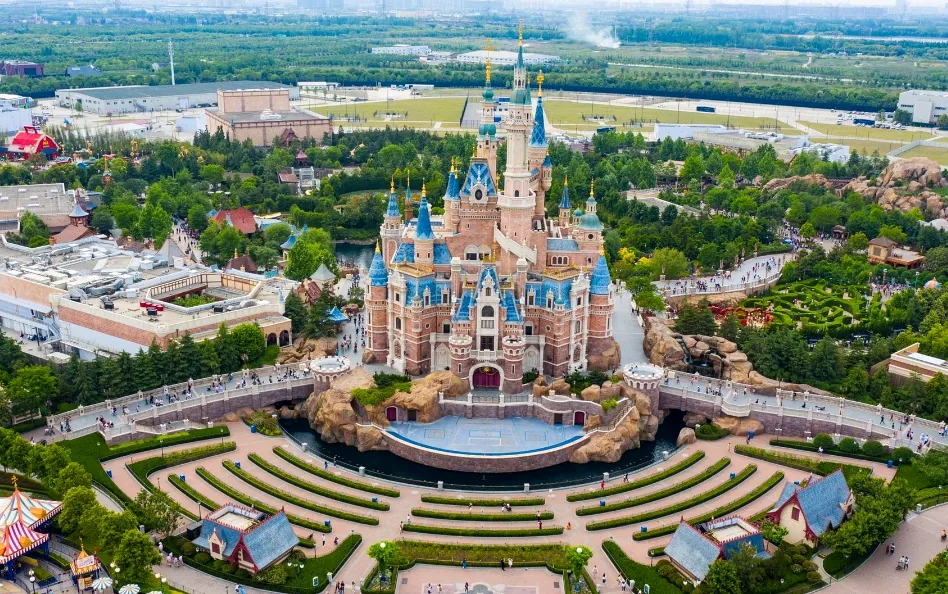
A panoramic view from above highlights the central position of the Enchanted Storybook Castle, the tallest and most magnificent structure in the global Disney park system. Its soaring spires reach toward the sky, harmoniously blended with traditional East Asian motifs and interspersed with European fairy-tale-style domes. Surrounding the castle is a system of gently winding walkways, lush green lawns, and vibrant flower gardens, with clear lake waters reflecting the entire magical space. Together, they create a spectacular master plan that is both grand and subtly in harmony with nature.
From the very first sketches, the project has remained steadfast in its unique creative philosophy: “Authentically Disney, Distinctly Chinese”—preserving the original fairy-tale soul of Disney while deeply honoring Chinese cultural identity. World-leading artisans collaborated with local cultural researchers to integrate elements of Feng Shui, the Five Elements, peonies, and traditional architectural art into every carved detail. After more than five years of dedicated construction involving tens of thousands of engineers and international experts, the resort officially opened its doors to its first guests on June 16, 2016. This event not only set a new standard for the modern tourism industry but also became a symbol of the pinnacle of artistic intersection between the two hemispheres.
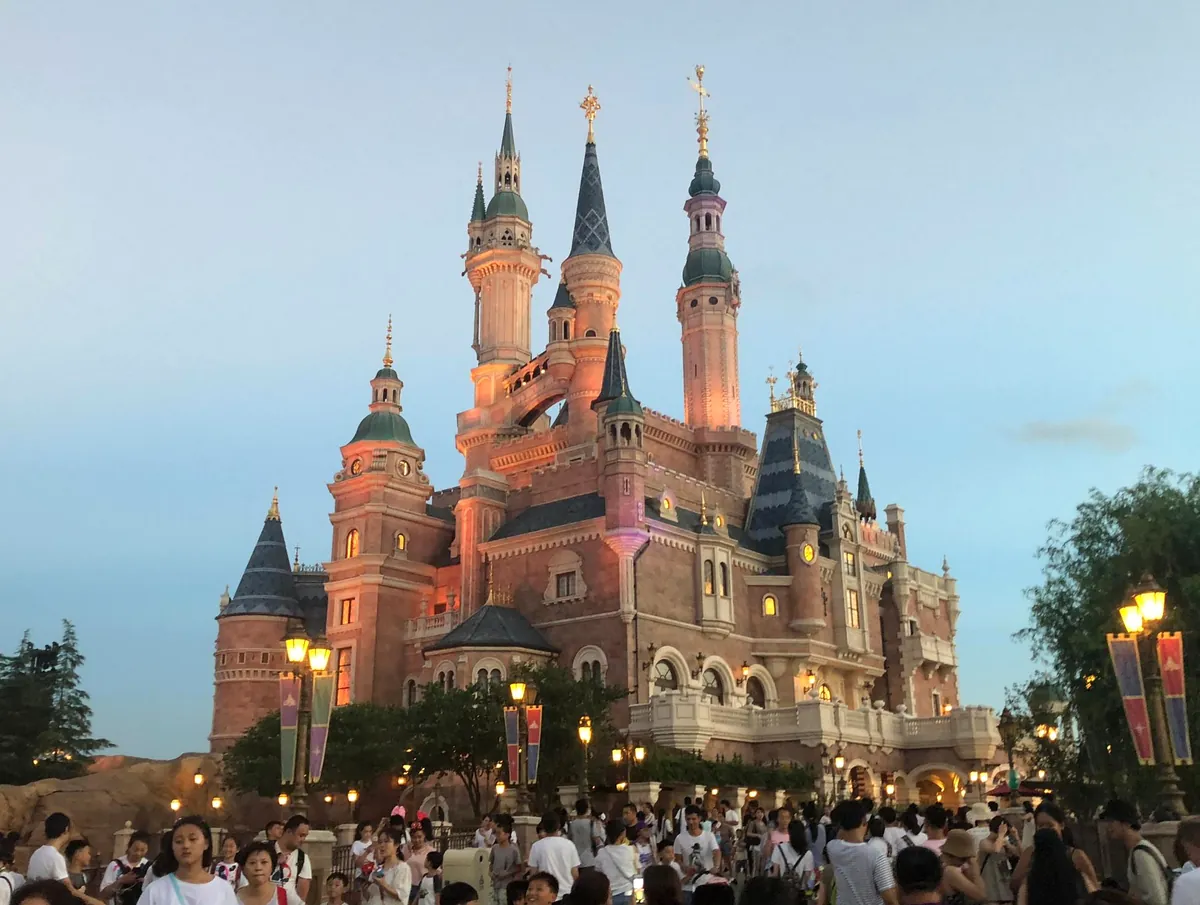
However, the operational history of this fairy-tale land has not been without its major global challenges. On January 25, 2020, right in the middle of the Lunar New Year—a time that typically sees record visitor numbers—the park was forced to close abruptly to respond to a global public health crisis. During that challenging period, Shanghai Disneyland became a pioneering testing ground, establishing rigorous epidemiological control procedures, from digital health code systems and social distancing to contactless temperature checks. The crisis management and safe operational model developed here subsequently became a gold-standard manual for amusement parks across the planet to study and apply upon reopening, affirming the resilient spirit of a magical land in one of the East’s busiest ports.
Located on the fertile plains of the new Pudong district, Shanghai Disneyland was created based on a deep empathy for local Feng Shui, blended with contemporary spatial planning. The lower Yangtze River Delta has long been praised by ancient geomancy masters as a land that “gathers water to generate wealth,” where abundant vital energy flows from the Huangpu River toward the open sea. More than just a large-scale entertainment facility, this location serves as a core node in the key tourism network of Eastern China, possessing strong strategic links with the “Golden Triangle” of the Shanghai – Suzhou – Hangzhou economic and cultural hub. The flat alluvial terrain was skillfully sculpted by talented architects into gentle hills, simulating the standard “sitting on a mountain, overlooking the water” position, creating a peaceful energy field that completely separates the magical world from the hustle and bustle of the metropolis.
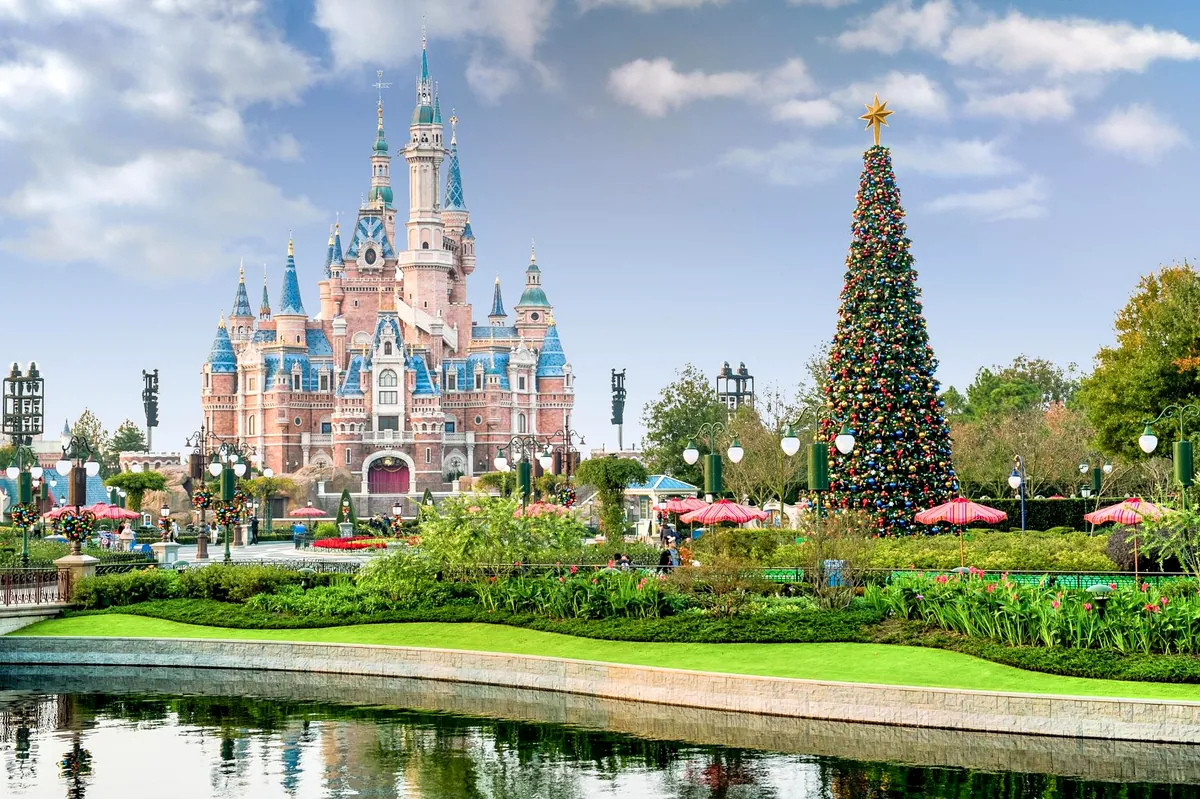
At the very heart of the resort’s Feng Shui, the Enchanted Storybook Castle rises proudly as a symbol of gathered prosperity and architectural excellence. During the winter festival season, the entire space is draped in a shimmering, magical cloak, with a giant Christmas tree reigning brilliantly in the foreground, elaborately decorated with thousands of sparkling ornaments and glowing garlands. The mirror-like lake in front captures the reflection of the magnificent Gothic spires and the evening lights, rippling with every gentle wave. This scene creates a perfect balance of yin and yang between the splendor and warmth of Western festive culture and the lyrical, serene beauty of the Eastern landscape.
The water landscape system is considered the lifeblood nourishing the entire park ecosystem, highlighted by the Wishing Star Lake, which spans nearly forty hectares and guards the southwestern flank. The water is circulated rhythmically from the natural waterways of the Pudong region, not only serving to regulate a cool microclimate year-round but also vividly recreating the “water as a guide” philosophy characteristic of Jiangnan ink-wash painting culture. Lining the water’s edge is carefully selected native vegetation, including weeping willows, cherry blossoms, and magnolias, interspersed with layers of lush green pines and cypresses, arranged according to traditional perspective art to enhance visual depth. Each decorative stone, artificial grassy hill, and winding walking path follows the natural terrain, capturing the fresh, sea-breeze-infused air to provide a sense of relaxation and soothe the spirits of travelers from afar.
This prime location and serene feng shui landscape are further elevated by a perfectly synchronized transport network, connecting this wonder to the rhythm of the coastal region without disrupting the dreamlike boundaries within. Metro Line 11 runs directly into the park station, featuring a glass-ceiling design that welcomes natural light, acting as a magical transition portal from the magnificent Lujiazui financial center. Parallel to this, the dense inter-provincial high-speed rail network of the delta region allows visitors from nearby landmarks like West Lake in Hangzhou or the ancient gardens of Suzhou to easily converge here after a short journey. The harmonious resonance between the auspicious water energy, landscape architecture, and modern infrastructure has created a top-tier master plan, transforming this land into an eternal intersection of culture and imagination.
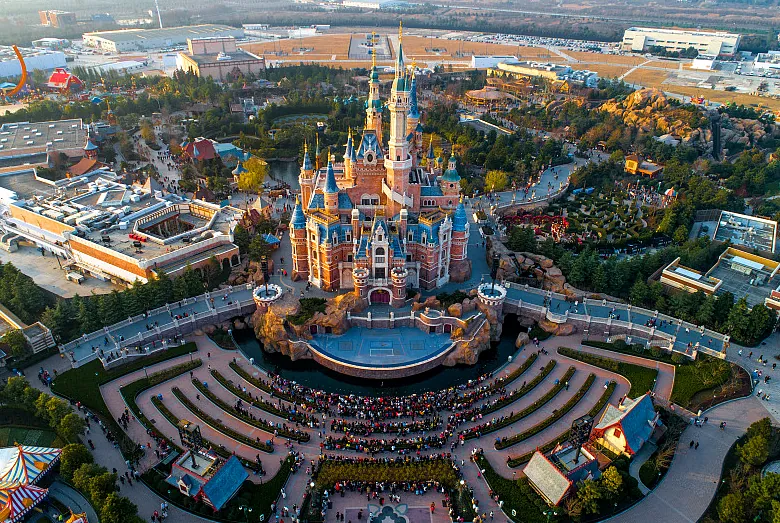
Spanning a massive site with an initial phase area of 3.9 square kilometers, Shanghai Disneyland establishes a brand-new standard for the art of complex amusement park design. The project does not merely copy its predecessors in California or Paris but realizes the strategic vision of “Authentically Disney, Distinctly Chinese”—preserving the Western fairy-tale identity while being imbued with the aesthetic soul of the East. The overall spatial structure is designed in a concentric fan shape, guiding the visitor’s gaze through themed zones calculated down to every building height, wind direction, and natural light rhythm of the Yangtze River Delta coastal plain.
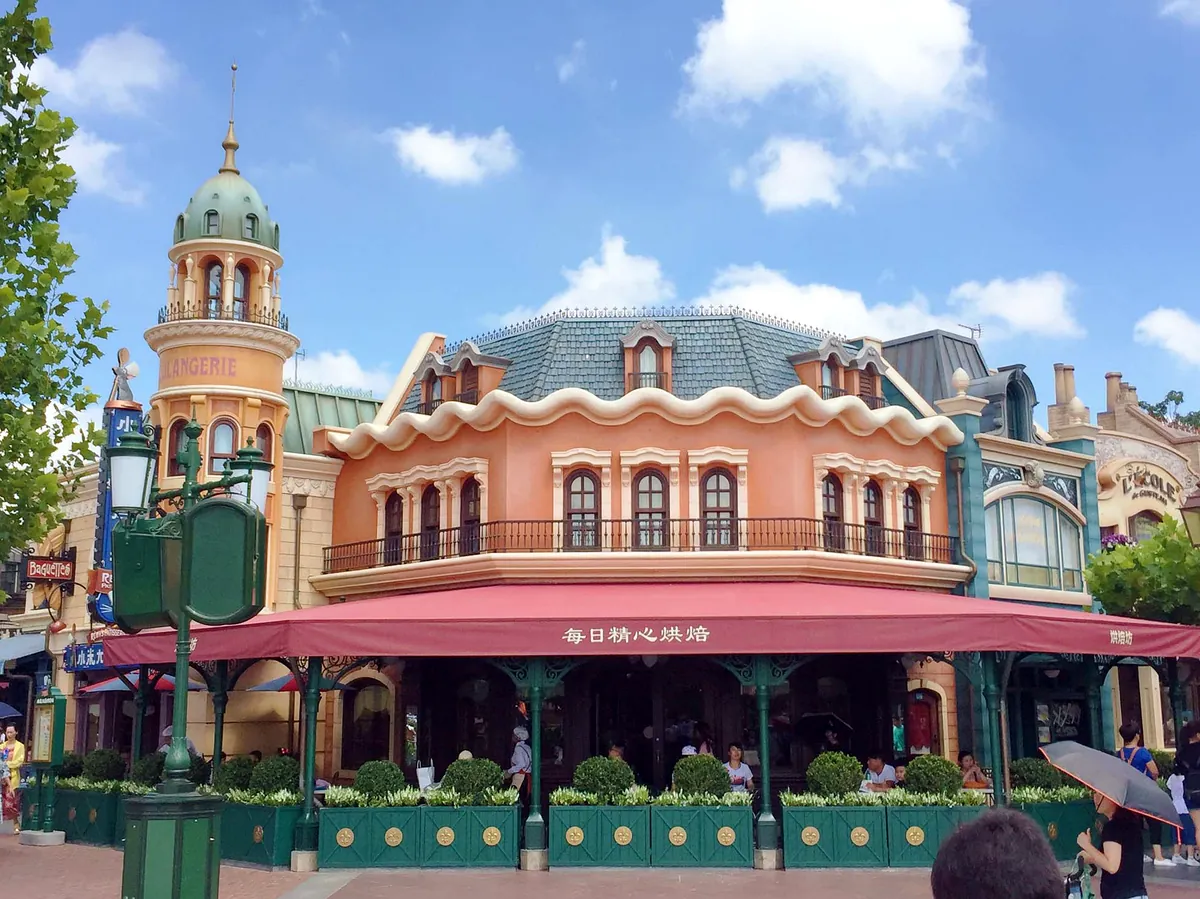
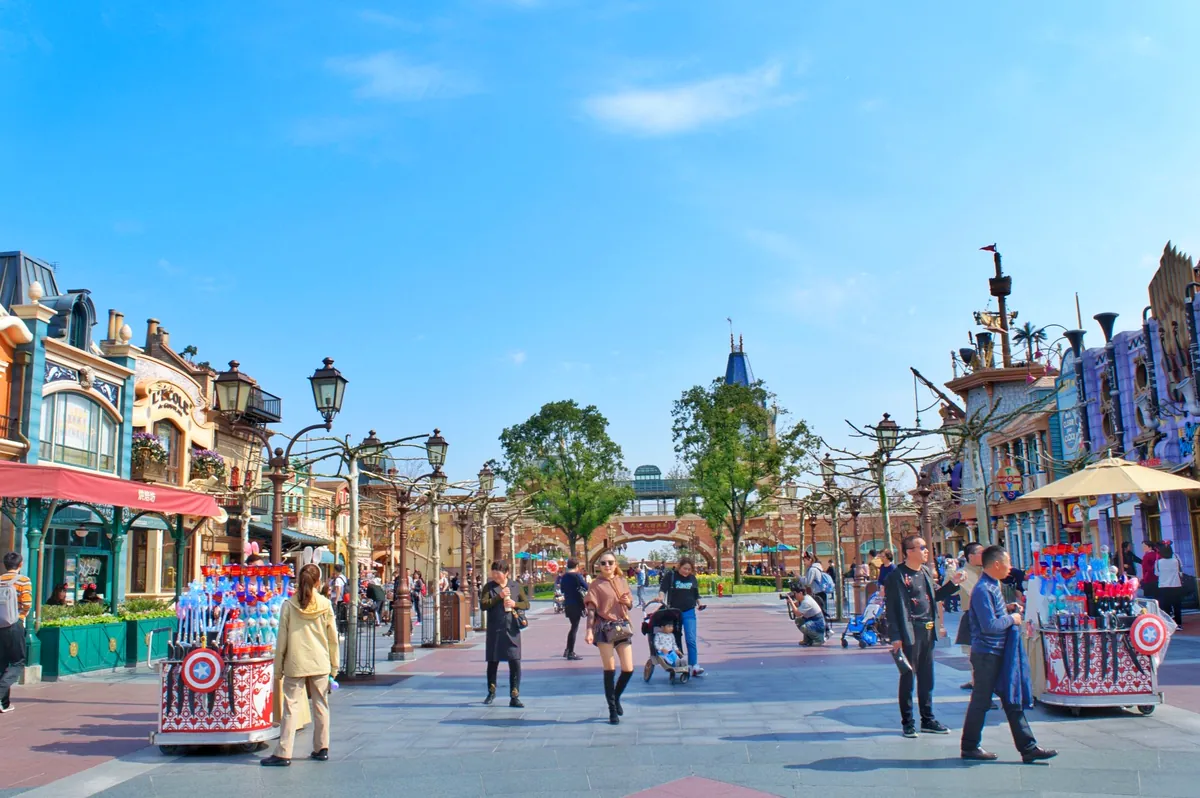
Along the bustling central boulevard, the mark of cultural intersection is poetically present in the architecture of Remi’s Patisserie. The structure perfectly recreates the elegance of a classic French bakery with graceful arched glass windows, small vibrant flower pots, and a charmingly draped crimson awning. Subtly accented on the Parisian-inspired facade is a gold-painted sign bearing the Chinese characters “每日精心烘焙” (Baked with care every day), demonstrating a sharp localization mindset. This exterior space captivates travelers with its warm communion between European romance and Shanghai street food culture, opening up a peaceful break before venturing into more grand spectacles.
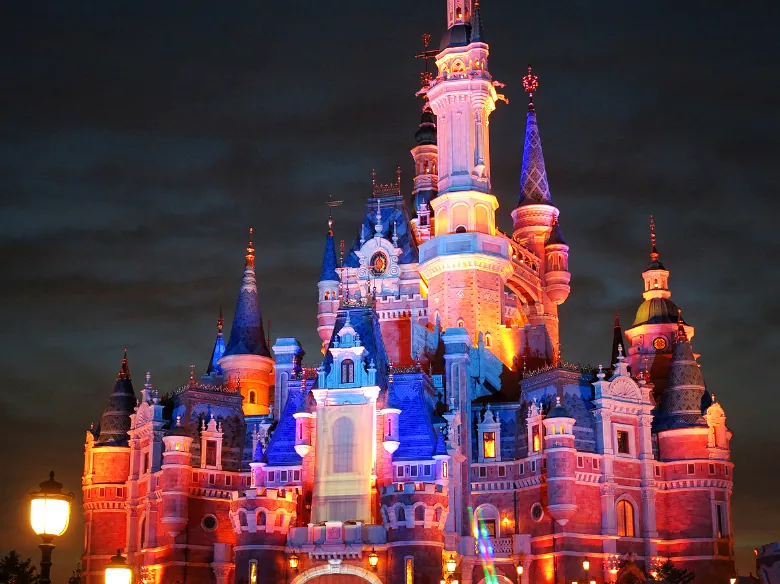
Reigning at the heart of the grand park is the Enchanted Storybook Castle, a structure representing the pinnacle of construction for the entire global Disney system. At approximately 60 meters tall, it is the tallest, most massive, and most architecturally complex Disney castle ever created. Unlike traditional fortresses that honor only Cinderella or Sleeping Beauty, the fortress in Shanghai is universal, serving as a collective symbol for all female protagonists in the fairy-tale treasury. Atop the soaring spires, engineers have subtly integrated the peony, symbolizing Chinese royalty, and the pure lotus, interwoven with Gothic and Renaissance patterns, creating an architectural masterpiece of hybrid design unprecedented in the history of theme park art.
The breakthrough in spatial organization continues with the inauguration of the world’s first Zootopia land, bringing animated imagination to life in an astonishing way. The planning of this zone simulates a multi-level animal metropolis with skyscrapers featuring flexible proportions, from tiny windows for rodents to wide boulevards for mammoths. Every detail of the sidewalks, traffic signs, and peripheral air conditioning systems reflects a human-centric architectural mindset but through the lens of the animal world, blurring the lines between a fictional construction and a vibrant, modern urban structure.
Hidden behind the splendor of the massive architectural structures lies an invisible technical infrastructure that operates with split-second precision. Across hundreds of hectares, the management team has extensively applied artificial intelligence (AI) algorithms and a network of smart sensors to analyze crowd density in real-time. This automated flow control system anticipates potential bottlenecks, continuously optimizes wait times at ride clusters, and automatically adjusts service pacing. As a result, the multi-billion dollar investment does not merely showcase physical grandeur but also ensures a seamless guest experience, where advanced science and technology silently serve the realization of humanity’s magical dreams.
As the sunset fades over the Pudong skyline, Shanghai Disneyland enters an entirely different reality, where visual art and lighting technology transform the entire space into an infinite, ethereal stage. The centerpiece of this nocturnal masterpiece is the sixty-meter-tall Enchanted Storybook Castle, standing tall and magnificent against the deep night. Thousands of digital light clusters and high-powered spotlights simultaneously illuminate every Gothic archway adorned with peony motifs, highlighting the proud, soaring towers. The water in front acts as a giant mirror, perfectly reflecting the brilliant light display—a blend of magical azure, amethyst purple, and regal gold—creating an overwhelming and enchanting visual perspective.
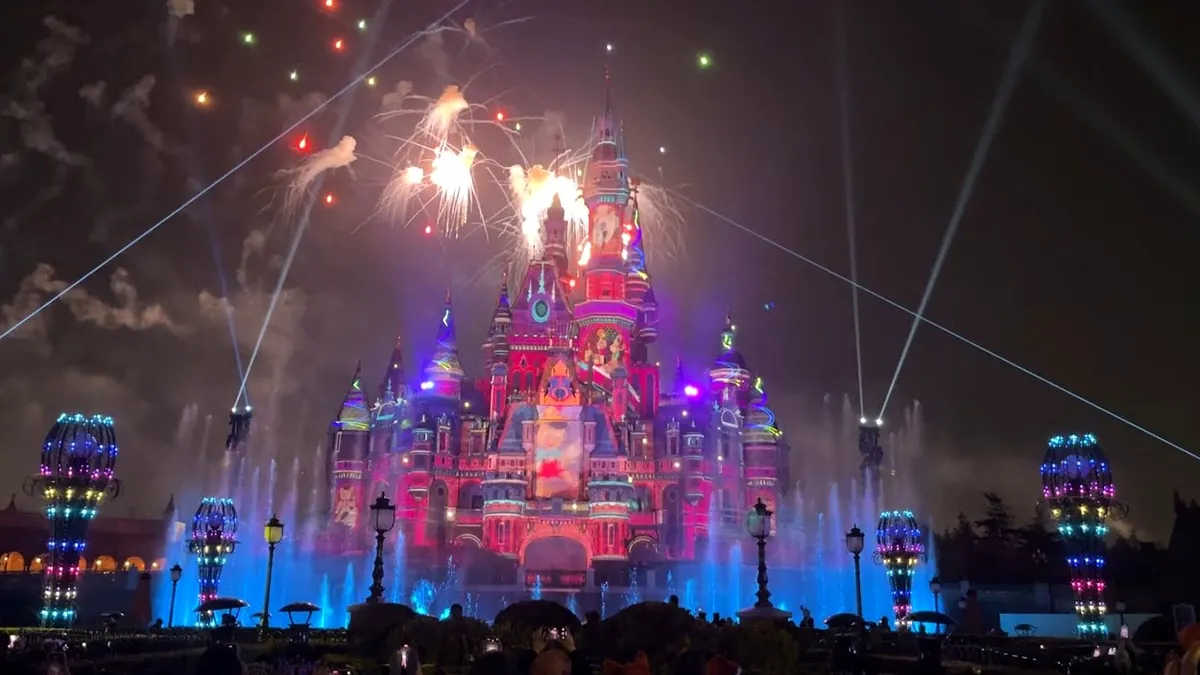
The most prized highlight defining the nightlife here is the large-scale light and fireworks show titled “ILLUMINATE! A Nighttime Celebration.” This is not merely a traditional fireworks display but a symphony of state-of-the-art 3D projection mapping on the castle’s massive architecture, seamlessly combined with a musical fountain system, laser matrices, and high-altitude pyrotechnics. Each scene projected onto the castle walls tells a story of courage and dreams, skillfully weaving in the image of the warrior Mulan charging through heroic smoke and fire alongside classic Western legends. The millisecond-perfect synchronization between the orchestral climax and the blooming fireworks leaves viewers completely immersed in an intense emotional experience.
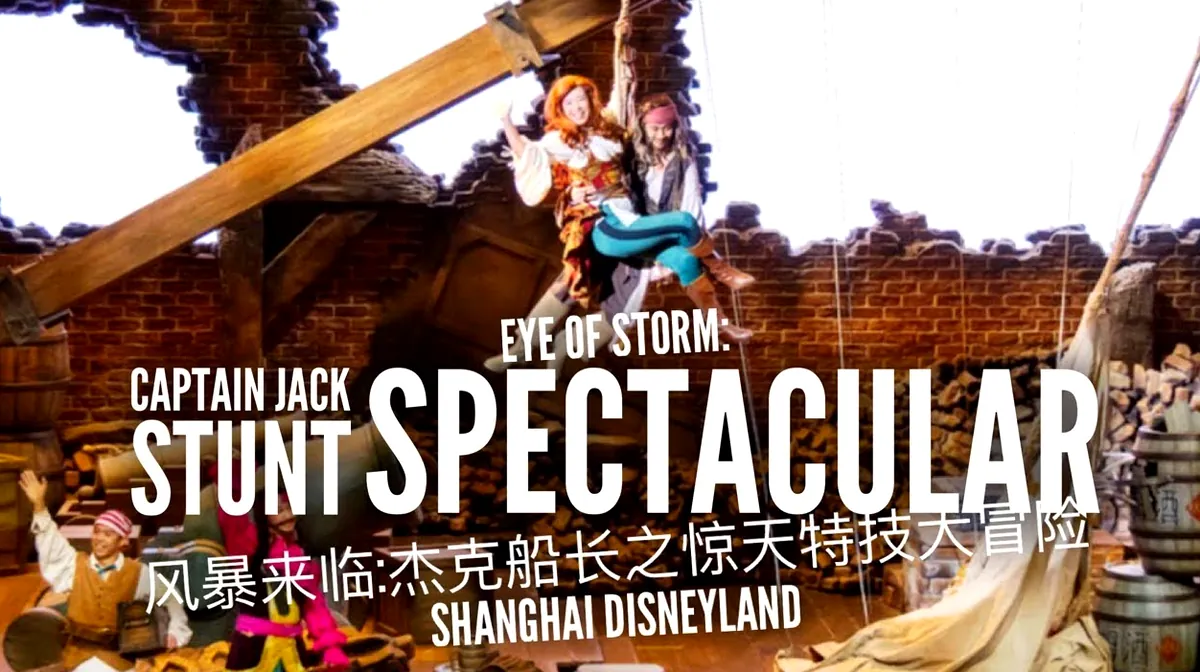
Beyond the central castle, the live performance art at Shanghai Disneyland extends across all themed zones, most notably the action-packed “Eye of the Storm: Captain Jack’s Stunt Spectacular” in Treasure Cove. Staged in a modern theater with a capacity of thousands, the show fully utilizes cable-flying stunts, top-tier acrobatics, and massive artificial wind tunnel effects to realistically simulate a cyclone in the middle of a raging ocean. Professional stunt performers execute fiery sword fights, combined with witty physical comedy, blurring the lines between a blockbuster film and traditional stage theater. As dusk falls, this area transforms with flickering flames from ancient pirate ship masts, blending into the lively music that lasts late into the night.
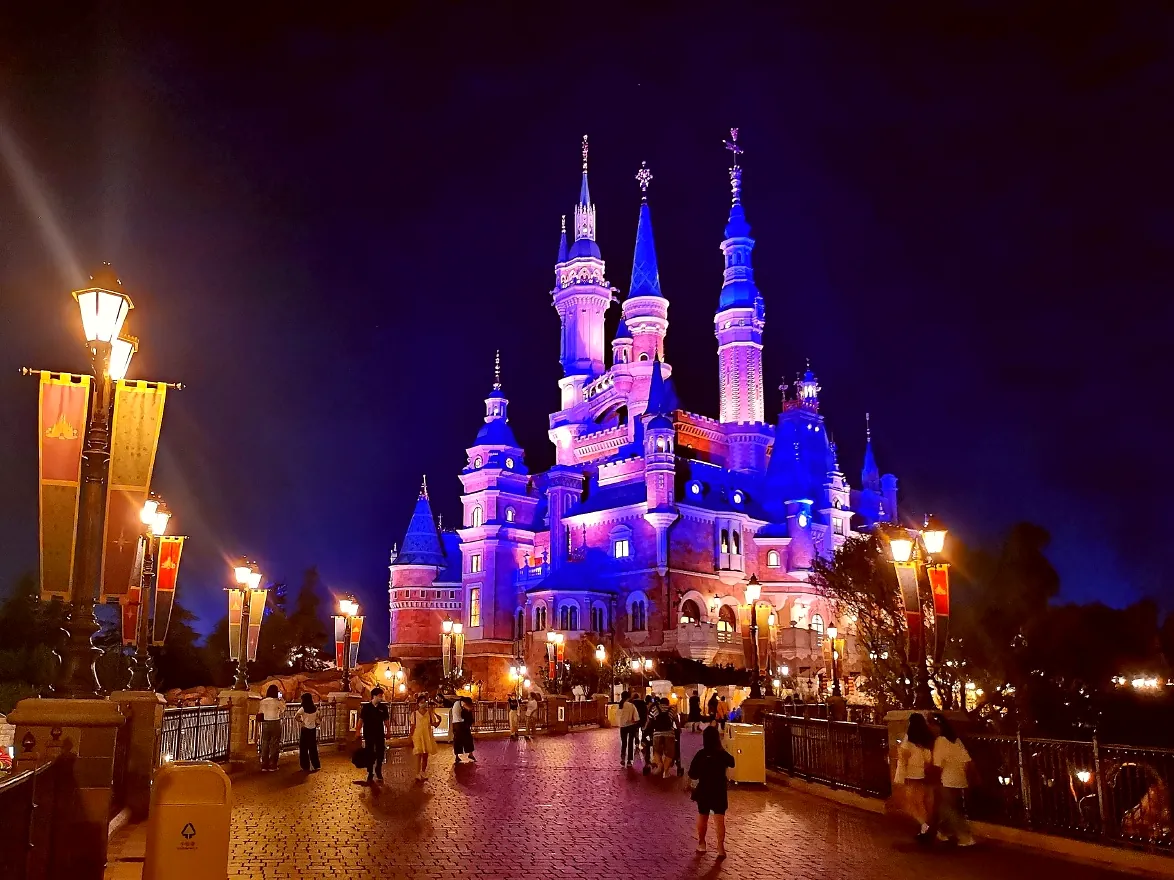
The nocturnal pulse of this complex also clearly reflects the contemporary spirit of Shanghai—a city that never sleeps, where the younger generation seeks highly aesthetic and personalized experiences. Right next to the park, the Disneytown shopping and dining district glows with decorative lights along the shores of Wishing Star Lake. Here, visitors can leisurely stroll to admire the shimmering lake scenery and enjoy exquisite culinary flavors, from famous traditional dim sum to intricately crafted desserts. Under the magical night sky, the seamless fusion of modern entertainment concepts with East Asian cultural identity not only provides complete visual and auditory satisfaction but also creates a vibrant festival atmosphere, affirming its stature as a premier entertainment paradise.
The urban space at Shanghai Disneyland opens up a poetic perspective on cultural intersection, where rows of buildings with European neoclassical architectural influences and vibrant colors nestle leisurely beside spacious stone-paved sidewalks. Under the clear blue sky, streams of visitors stroll leisurely among delicate souvenir stalls and bakeries fragrant with butter and milk, creating an urban scene that is both imbued with Western fairy-tale charm and bursting with the modern vitality of a prosperous port city.
The culinary world at the park is a sophisticated blend of local spirit and Western flair. Along the tree-lined paths, the enticing aroma wafts from stalls serving giant smoked turkey legs—a snack icon seasoned with star anise, cloves, and plum sauce to suit the Asian palate. Furthermore, the artistry behind Mickey-shaped char siu bao (steamed pork buns) and sweet waffles transforms familiar dim sum into vivid visual masterpieces, offering diners a feast for both the eyes and the palate with unforgettable, rich flavors.
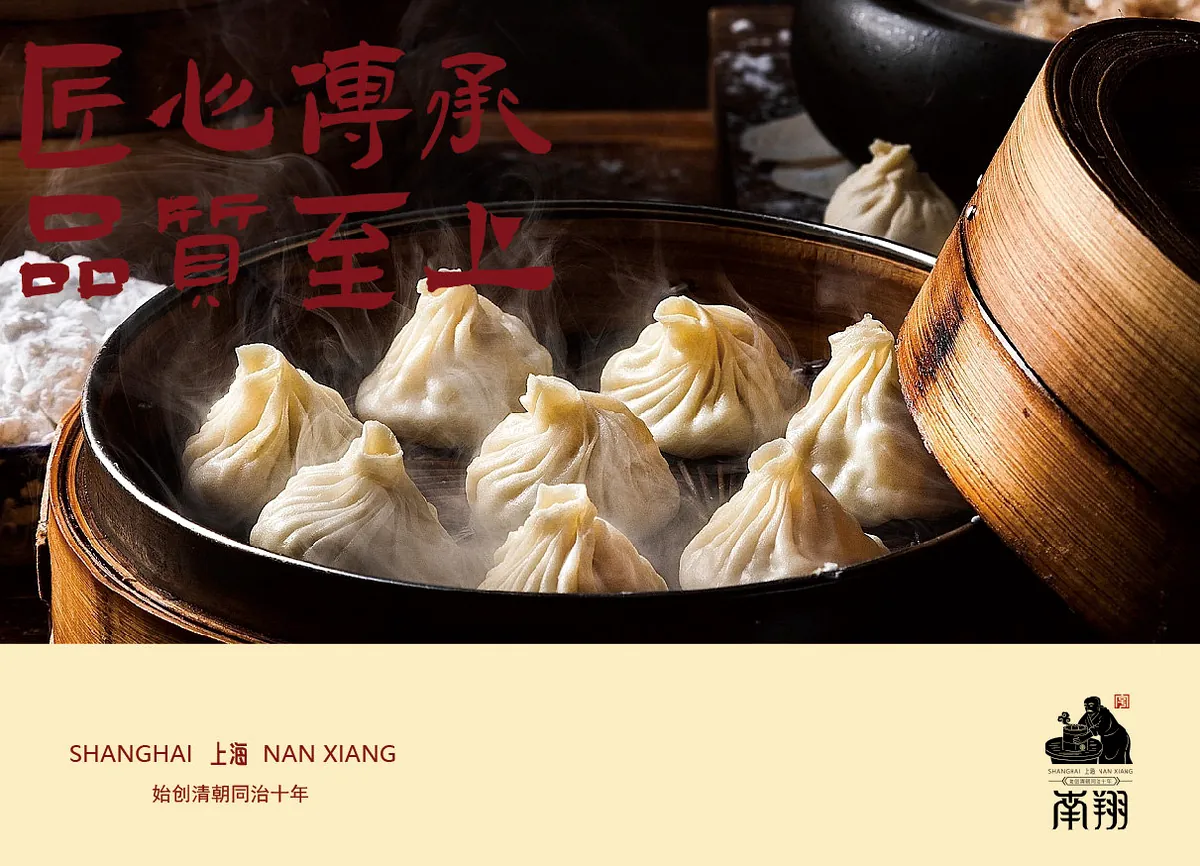
Delving deeper into traditional gastronomy, visitors are transported into the treasure trove of Jiangnan flavors with the legendary xiaolongbao (soup dumplings), which originated in the ancient town of Nanxiang during the Qing Dynasty. Under the skilled hands of dim sum masters, each delicate dumpling is crafted with exactly eighteen precise pleats, encasing fresh minced pork and a rich broth jelly made from simmered marrow bones and pork skin. When steamed in bamboo baskets, the jelly melts into a fragrant, naturally sweet soup; simply take a small bite to sip the hot broth, then dip it in Zhenjiang black vinegar with shredded ginger, and every sense will awaken to the perfect balance of flavors.
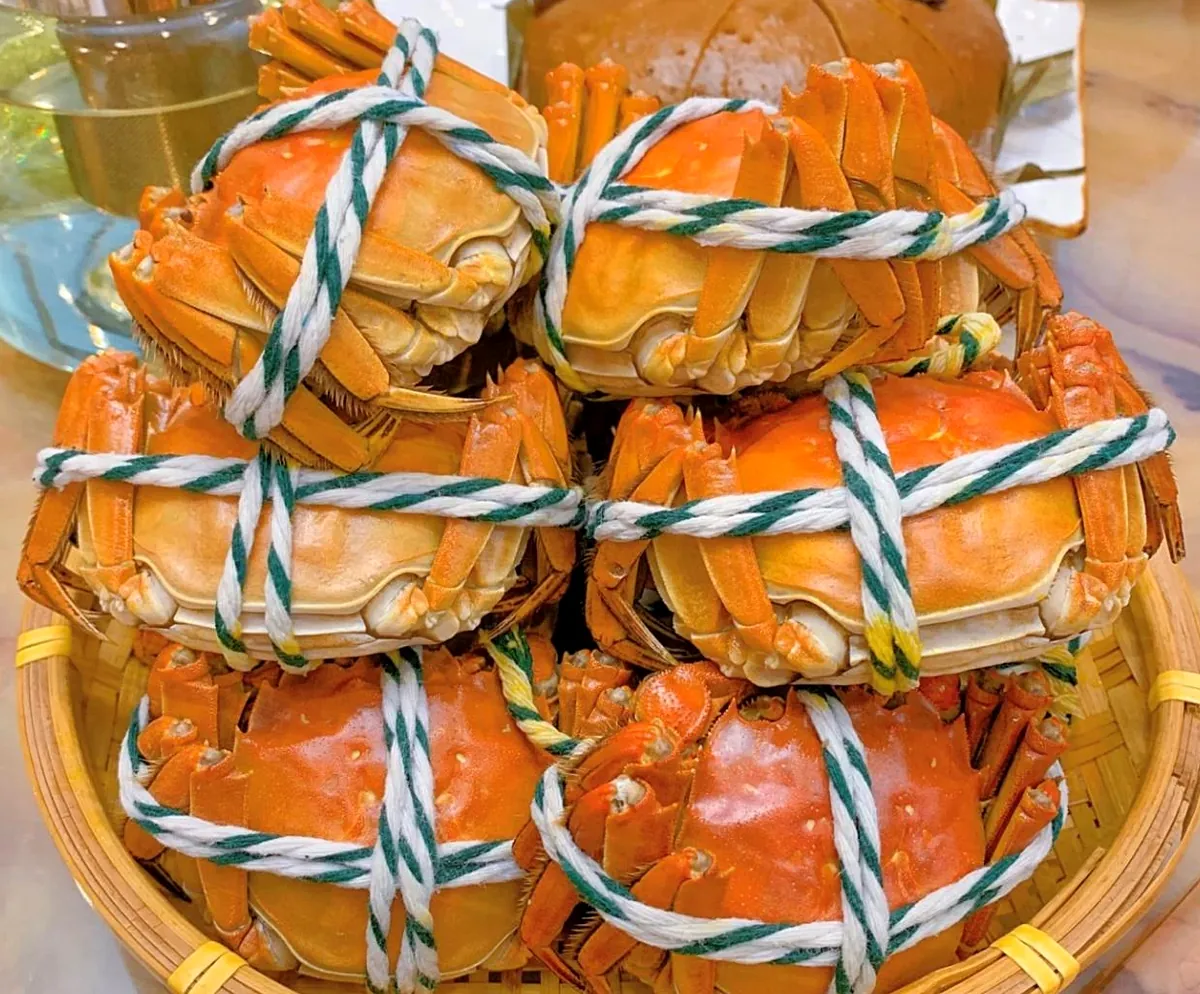
Especially during the autumn season, the culinary landscape here reaches new heights with the arrival of the famous hairy crab, sourced from the pristine Yangcheng Lake. Plump males or roe-filled females are steamed with fresh perilla leaves to balance their cooling nature, preserving the deep sweetness of the snow-white meat and the buttery, rich texture of the golden roe. Beyond this, the local flavor profile is further enriched by Dongpo pork, a dish dating back to the Northern Song Dynasty and associated with the illustrious poet Su Dongpo. Cubes of pork belly are slow-braised for hours with Shaoxing rice wine, traditional soy sauce, and rock sugar, resulting in a glossy, amber-colored skin that melts in the mouth without feeling greasy.
The fusion of modern entertainment and the thousand-year depth of local culinary culture has made this a premier gastronomic destination. From quick, laughter-filled family meals to warm, traditional feasts in the breezy weather, the sensory journey in this magical land always leaves a lasting impression, connecting visitors to the profound cultural roots of the lower Yangtze River region.
The magical kingdom in the Pudong area is now more accessible than ever thanks to the 144-hour visa-free transit policy applied at major Shanghai international gateways, such as Pudong International Airport and Hongqiao International Airport. This immigration regulation allows holders of onward tickets to a third country to stay, explore the bustling scenery of the port city, and experience Asia’s leading theme park without needing to apply for a standard visa in advance. Upon arrival, visitors simply need to present a passport valid for at least six months, a confirmed onward flight ticket, and hotel booking confirmation to quickly receive a temporary transit permit.
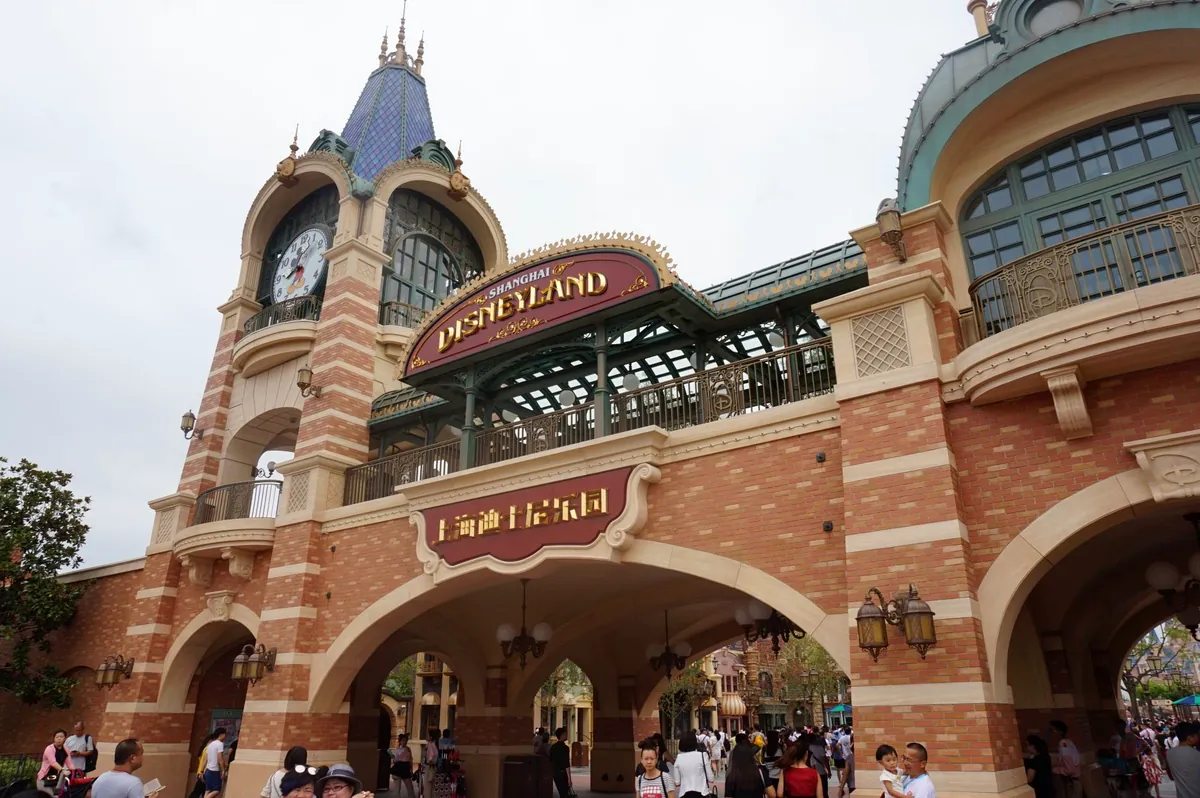
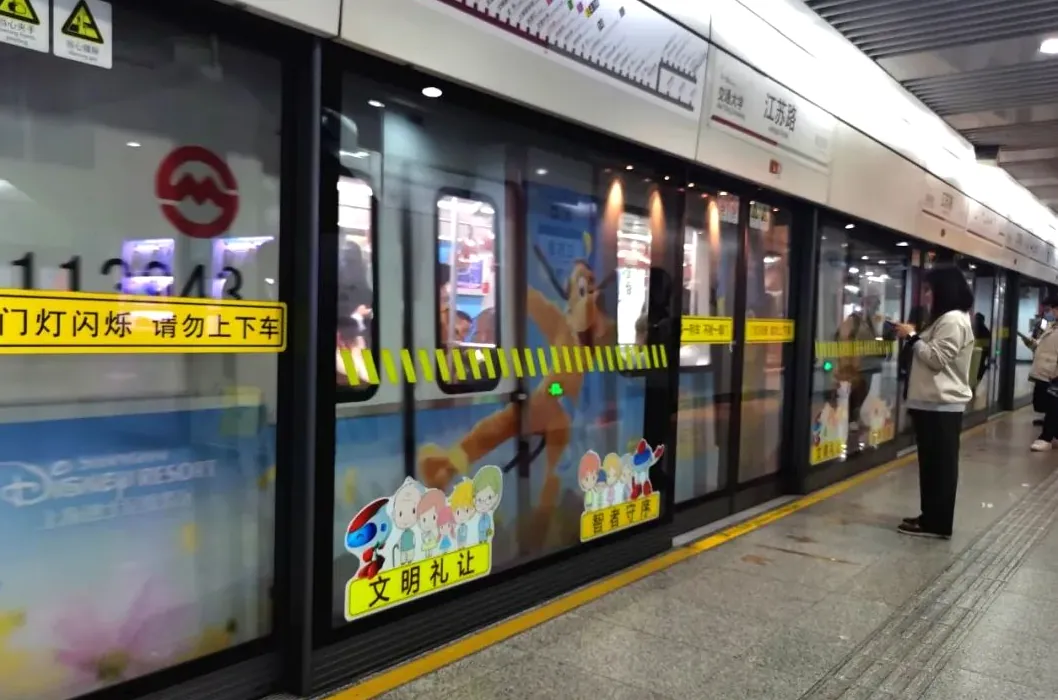
Shanghai’s advanced transport infrastructure makes reaching this fairyland incredibly convenient and cost-effective. The most economical and punctual way to travel is via the urban metro network, specifically Metro Line 11, which runs directly to the Disney Resort terminal. After exiting the modern subway train at Exit 1 or 2, it takes just a few minutes of walking through a vibrant floral path to reach the security checkpoint. For those seeking privacy or traveling with children and the elderly, ride-hailing services or traditional taxis from the Bund, Lujiazui, or the former French Concession area will bring passengers to the park gate after a 45 to 60-minute drive along the expansive elevated highways.
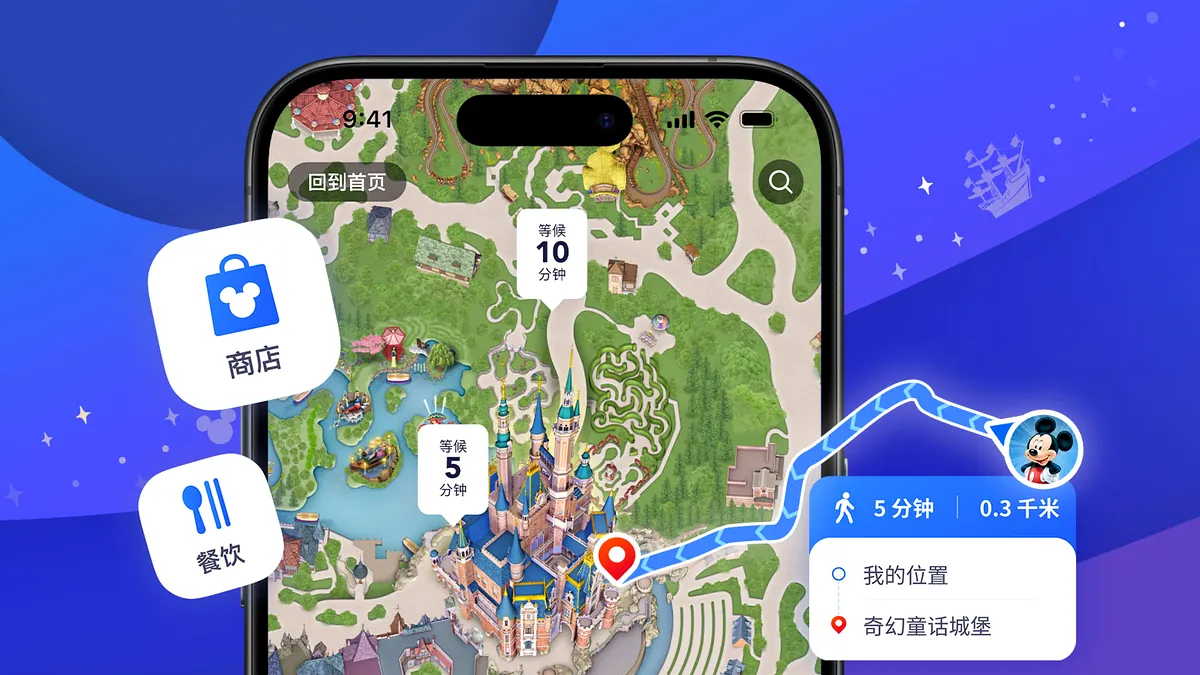
The park’s daily operating hours typically range from 8:30 AM to 9:30 PM, though this schedule may be flexibly adjusted earlier or later depending on festive seasons and the timing of evening fireworks displays. To optimize every precious moment across the hundreds of hectares of space, installing the Shanghai Disney Resort app on your smartphone is a prerequisite. This digital platform acts as a smart navigation map, providing real-time updates on wait times for each attraction, displaying show schedules, and allowing guests to purchase Disney Premier Access. This premium priority service helps visitors significantly reduce queuing time for highly popular attractions such as the TRON Lightcycle Power Run or the breathtaking Soaring Over the Horizon.
At the security checkpoints, staff implement strict baggage inspection procedures to ensure absolute safety for the public. Guests are permitted to bring snacks and candies in sealed, original packaging, but are strictly prohibited from bringing in pungent foods, alcoholic beverages, or self-heating canned meals. Adults are not allowed to wear costumes identical to fairy tale characters to maintain the authenticity and operational standards of the entertainment complex. Additionally, preparing a high-capacity power bank and having a mobile payment app ready for QR code scanning with international bank cards will ensure that all souvenir shopping and dining transactions proceed smoothly and seamlessly.
Given the rise of black-market ticket services and low-quality budget tours that often cut short experience times to force shopping stops, savvy travelers should seek out reputable tour operators with transparent service commitments. For a perfect journey that allows you to relax and enjoy the magical fairy tale world while fully exploring the thousand-year-old cultural depth of the Jiangnan region, consulting a comprehensive tour package professionally designed for you is the optimal solution to help you preserve priceless memories.